






Gjør som tusenvis av andre bokelskere
Abonner på vårt nyhetsbrev og få rabatter og inspirasjon til din neste leseopplevelse.
Ved å abonnere godtar du vår personvernerklæring.Du kan når som helst melde deg av våre nyhetsbrev.

Description:The story of the birth of Jesus in the Gospel of Matthew is told in eight verses. Embedded in this short narrative is ""Joseph''s dilemma."" Listeners are told that, ""When Mary had been engaged to Joseph, but before they lived together, she was found to be with child from the Holy Spirit"" (1:18). What happens next has long been debated. We are made to assume that Joseph discovers that Mary is pregnant, but that he does not know that she is with child from the Holy Spirit. This information is made known to Joseph later by an angel of the Lord who appeared to him in a dream. In the meantime, Joseph must decide what he will do with Mary.We are told, ""Joseph, being a righteous man and unwilling to expose her to public disgrace, planned to dismiss her quietly"" (1:19). The discussion of this verse generally focuses on two questions. First, did Joseph suspect Mary of adultery? Second, if he did suspect Mary of adultery, what were his options? While there is some diversity in the way that these questions are answered, the majority of modern interpreters envision only one option--that of divorce. The dilemma, then, is whether Joseph will divorce Mary ""publicly"" or ""privately.""While these questions are important, neither adequately addresses Joseph''s dilemma. In this book, Matthew J. Marohl argues that early Christ-followers understood Joseph''s dilemma to involve an assumption of adultery and the subsequent possibility of the killing of Mary. Worded differently, Joseph''s dilemma involves the possibility of an honor killing. If Joseph reveals that Mary is pregnant she will be killed. If Joseph conceals Mary''s pregnancy, he will be opposing the law of the Lord. What is a ""righteous"" man to do?Endorsements:""Books that bring a new slant to bear on old disputed texts and unresolved issues are always welcomed. Matthew Marohl''s study of the heated debate concerning the circumstances surrounding Jesus''s conception and birth is such a new slant on a highly controverted story. It is sure to broaden our cultural vista, shed light on an overlooked aspect of Joseph''s dilemma, and rustle not a few feathers along the way.""--John H. Elliott, Professor Emeritus, University of San Francisco""Marohl''s study of honor killings, be they modern or ancient, opens up new avenues of interpretation for the Gospel of Matthew''s infancy narrative. Taking into consideration that honor and shame were pivotal values of the social world in question, this study demonstrates that Mary''s pregnancy, as well as Joseph''s initial reaction to it, originally invoked the familiar social dimensions of damaging and protecting family honor, something now lost to modern readers.""--Markus Cromhout, Department of New Testament Studies, University of Pretoria. ""Marohl''s systematic analysis of the cultural presuppositions of Matthew''s presentation of Mary''s shameful pregnancy leads him to conclude that Joseph contemplated killing Mary which, while shocking, reveals a narrative pattern that is evident throughout the gospel--''from unexpected death comes unexpected, new life.'' It is a pattern that is to be replicated in the lives of the Jesus followers. Marohl''s unique combination of cultural anthropology and honor killings casts new light on the Gospel''s meaning and intended outcome.""--Dietmar Neufeld, Professor of Christian Origins, University of British ColumbiaAbout the Contributor(s):Matthew J. Marohl teaches New Testament at Augustana College, Rock Island, IL. He holds a PhD in New Testament from the University of St. Andrews and is the author of Faithfulness and the Purpose of Hebrews: A Social Identity Approach (Pickwick, 2008).
Description:A strong critique of traditional atonement theology is found in the work of many contemporary feminist theologians. This approach, in large part, is related to the notion of women''s experience--a category that is used widely within feminist theology. But what is women''s experience and how does it affect feminist theology, particularly views on the atonement? The category of women''s experience is pivotal to feminist theology, yet its use may lead to models of atonement that place excessive stress upon the subjective element of Christ''s saving work thereby neglecting to address adequately the objective aspects of the cross. This book focuses on the methodological issues regarding the category of women''s experience generally, its definition and use in feminist theology, with a more detailed analysis of its use in the context of feminist theologies of atonement. Utilizing the work of a wide variety of feminist theologians in conversation with theologies of experience, this work attempts to understand the role of women''s experience as it shapes feminist views on the atonement, noting the strengths and limitations of feminist approaches to soteriology.Endorsements:""Recent discussion of Feminist theologians in relation to the atonement has tended to be either overly dismissive or unduly adulatory. Linda Peacore does a fine job of taking seriously both their contribution and their concerns, while providing a lucid evangelical reading of a theology of experience more generally. In an accessible style, she successfully moderates a critical contemporary conversation that will be increasingly central to the study of theology.""--William DyrnessFuller Theological Seminary ""Appealing to ""women''s experience,"" feminist theology has offered a salutary critique of the Christian theological tradition. The value of this critique notwithstanding, appeals to experience of any kind need to be subjected to critical scrutiny. Linda Peacore undertakes that task in this book with impressive care and academic rigor, and provides an invaluable resource both for feminist theology itself, and for the broader theological tradition.""--Murray RaeUniversity of OtagoAbout the Contributor(s):Linda Peacore (PhD, King''s College, University of London) regularly teaches as Adjunct Assistant Professor of Theology at Fuller Theological Seminary in Pasadena, California.
Description:This book examines how repertoires of speech and action that are often considered to be mutually exclusive--those of church and state--clash or unite during the postdisaster period as local communities and cities struggle to establish a stable collective identity. Based on an analysis of forty in-depth interviews with disaster-response participants and over 325 print-media sources, this study explores, first, the extent to which ministers and citizens challenge statist narratives in order to publicly relay theological views; second, the cultural processes by which local places are nationalized and theologized; and third, the ecclesiological convictions necessary to peaceably advance the work of Christ''s body after disasters.Endorsements:""Santos brilliantly shows how only a politics of the cross provides us with a true theoretical insight into the increasing instance of disaster and a true practical measure of restorative response.""-John Milbank, author of Theology and Social Theory and The Future of Love: Essays in Political Theology (Cascade Books, 2008)""I know of no other book like this one. Santos has taken his training as a sociologist and combined it with astute theological analysis. The book is fascinating because macro-observations about the larger contest and cooperation between the church and the nation-state are rooted in microanalyses of empirical data and interviews of ordinary people responding to disasters. This book will add to social theories about the ''states of emergency'' under which we live. It will also add to theological reckonings with the idea that the whole of the Christian life is a response to disaster.""-William T. Cavanaugh, author of Being Consumed: Economics and Christian Desire""This book offers an original study-disasters and the church-state interactions that follow them-which sheds light on the big questions of civil religion and the use of theological language for political ends. Crises of various sorts have become catalysts in redrawing-or erasing-the lines between church and state, civic and sacred, citizen and believer. Not only does he offer a masterful account of how and why this happens, Gabriel Santos also provides a nuanced theological assessment on why this is harmful to the church and its mission. This is a well-written example of interdisciplinary scholarship done well. This timely and provocative book deserves broad reception and discussion.""-Michael L. Budde, author of The (Magic) Kingdom of God: Christianity and Global Culture Industries About the Contributor(s):Gabriel A. Santos is Assistant Professor of Sociology at Lynchburg College.
Description:C. S. Lewis was concerned about an aspect of the problem of evil he called subjectivism: the tendency of one''s perspective to move towards self-referentialism and utilitarianism. In C. S. Lewis and a Problem of Evil, Jerry Root provides a holistic reading of Lewis by walking the reader through all of Lewis''s published work as he argues Lewis''s case against subjectivism. Furthermore, the book reveals that Lewis consistently employed fiction to make his case, as virtually all of his villains are portrayed as subjectivists. Lewis''s warnings are prophetic; this book is not merely an exposition of Lewis, it is also a timely investigation into the problem of evil.Endorsements:""Few people know Lewis as well as Jerry Root, and few ideas were more central to Lewis''s thought than his critique of subjectivism. Particularly valuable in this study is Root''s insistence that Lewis considered fiction and poetry as key venues for developing that critique and throughout his career saw literature as a tool of thought."" -Alan Jacobs, author of The Narnian: the Life and Imagination of C. S. Lewis""The Greeks knew it as the flaw of Narcissus. Luther termed it curvatus in se. To C. S. Lewis it was ''the poison of subjectivism,'' and throughout much of his corpus he attended to its various dangers, guises, and cures. Jerry Root carefully analyzes this pervasive theme in Lewis''s work and in so doing provides a timely and challenging stimulus to think afresh about the limits of personal perspective.""-Michael Ward, author of Planet Narnia: The Seven Heavens in the Imagination of C. S. Lewis ""Students of the life and writing of C. S. Lewis sometimes wonder if there is anything new or important that can be published on the celebrated Oxford Christian. Jerry Root''s new book not only makes a brilliant and original contribution to our understanding of the wide sweep of Lewis''s works, it is also important and quite timely because it helps us-through Lewis''s mind-examine the core of the problem of evil that plagues us as much as it infected Lewis''s time. Anyone with a serious interest in Lewis or the problem of evil will be fascinated by this major contribution to Lewis studies."" -Lyle W. Dorsett, author of Seeking the Secret Place: The Spiritual Formation of C. S. Lewis""Few people in the world have a richer knowledge of C. S. Lewis''s works or a more energetic intellectual curiosity than Jerry Root. Both qualities inform this unique exploration of evil through genres ranging from literary criticism to theological fantasy. What were Lewis''s ideas on audience and how did he propose to connect with his readers? How did his rhetorical approach square with his theological understanding and life experience of pain and evil? Dr. Root will take you on an extended exploration of these questions and more."" -Wayne Martindale, author of Beyond the Shadowlands: C. S. Lewis on Heaven and HellAbout the Contributor(s):Jerry Root is Assistant Professor of Evangelism and Associate Director of the Institute for Strategic Evangelism at Wheaton College, Wheaton, Illinois. He is also visiting Professor at Biola University and Talbot Graduate School of Theology, La Mirada, California.
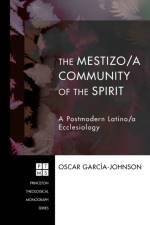
Description:This work models a creative exercise in ecclesiology based on a Latino/a practical theology of the Spirit, which designs theological discourse based on its encounter with the Spirit in human culture. Hence, it is a theology appreciative of and attentive to the ""multiple matrices and intersections"" of the Spirit with cultures. García-Johnson offeres an appreciative and critical analysis of the uses of culture among Latino/a theologians, followed by the proposal for a postmodern Spirit-friendly cultural paradigm based on the narratives of the cross and the Pentecost. He develops a practical theology for a Latino/a postmodern ecclesiology based on three native Latino/a theological concepts: mestizaje, accompaniment, and mañana eschatology. The resulting ecclesial construct-The Mestizo/a Community of Mañana-reflects a transforming mañana vision and models the visible cruciform community in which the transforming praxis and historical transcendence of the Christ-Spirit works from within. The work sets forth practical guidelines for implementation of the ecclesial construct in the urban context of devastated communities and offers suggestions for further development in Latino/a theology.Endorsements:""The most important theological questions at the turn of the twenty-first century are ecclesiological-what is it to ''be'' and ''do'' church? Oscar Garciá-Johnson''s provocative and critical Laino/a postmodern ecclesiology of the Spirit is an important and needed contribution to contemporary theological dialogue. The Mestizo Community of the Spirit is a must read for those interested in ''listening'' to the emerging and creative Latino/a ''voices.''"" --Eldin VillafañeProfessor of Christian Social Ethics and Founding Director, Urban Ministerial Education, Gordon-Conwell Theological Seminary ""In this stunning and original theological work, Oscar Garciá-Johnson dips deep into the flowing stream of the Latino/a community and finds there a new theological paradigm where a culture of the Spirit emerges. This is a culture where revelation and praxis come together and where cruciformity is not only a Christological praxis but is a transforming social ethic. . . . Pastors as well as theologians will soon have this book at the top of their''must read'' book list.""-Ray S. AndersonSenior Professor of Theology and Ministry, Fuller Theological Seminary""García-Johnson challenges the Latino/a church to become a mestizo/a community of mañana by allowing the Spirit to guide it within the complexity, unpredictability, and randomness that is Latino culture in a postmodern world. He presents a contextualized Latino/a theology that recognizes the importance of the Holy Spirit in the community that believes in God''s future. I am grateful to him for showing us how Latino/a churches can be committed communities of survival, hope, and belief.""-Juan MartínezAssistant Dean for the Hispanic Church Studies Department and Associate Professor of Hispanic Studies and Pastoral Leadership, Fuller Theological SeminaryOscar Garciá-Johnson''s postmodern ecclesiology of the Mestizo/a Community is a powerful testimony to the fact that constructive Latino/a theology has not only arrived but has come of age. . . . Here is an inspiring ''commuting story'' of the church that speaks both to the Latino/a communities and the rest of us. --Veli-Matti KärkkäinenProfessor of Systematic Theology, Fuller Theological Seminary; Docent of Ecumenics, University of Helsinki, FinlandAbout the Contributor(s):Oscar García-Johnson is an adjunct Assistant Professor of Systematic Theology and Hispanic Studies at Fuller Theological Seminary. In addition, he is an ordained minister serving as Regional Minister with the American Baptist Churches of Los Angeles. He lives with his wife Karla and his son Chris in Sylmar, California.
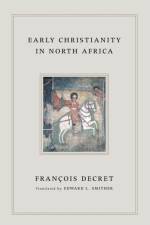
Description:Along with the churches located in large Greek cities of the East, the church of Carthage was particularly significant in the early centuries of Christian history. Initially, the Carthaginian church became known for its martyrs. Later, the North African church became further established and unified through the regular councils of its bishops. Finally, the church gained a reputation for its outstanding leaders--Tertullian of Carthage (c. 140-220), Cyprian of Carthage (195-258), and Augustine of Hippo (354-430)--African leaders who continued to be celebrated and remembered today.Endorsements:""Martyrs, exegetes, catechumens, and councils enlarge this study of North African Christianity, a region often reduced to its dominant patristic personalities. Smither provides English readers a quality translation of an important book that captures the unique spirit of an invaluable chapter of church history.""--W. Brian Shelton, Toccoa Falls College ""Not only does Decret relay social history in a compelling style, he demonstrates political sophistication, theological subtlety, and ecclesiastical sensitivity toward Catholic, heretic, and pagan alike. In sum, this book is both a faithful rendering of history and a great read.""--Malcolm B. Yarnell III, Southwestern Baptist Theological Seminary""I am grateful for Ed''s work, which is a timely contribution on the continuing and increasing scholarship on the foundational place of early African classical Christianity. Though it was a Christianity befallen with shortcomings and challenges, without it the European churches and the global church would not be what they are today.""--Jones Kaleli, Liberty University""Decret and Smither have recognized our dependence on [North African] theologians and given us a thorough and well-presented introduction to that theology. They not only take the reader into that oft-ignored area, but they show why it is so important to appreciate that period.""--Thomas O''Loughlin, University of Wales Lampeter.""Decret''s study masterfully captures the feel and essence of early North African Christianity without sacrificing historical detail or evidence . . . Overall, the work presents not just excellent information, but also a wonderful model of historical argumentation and scholarship.""--David C. Alexander, Liberty Theological Seminary & Graduate School""For over ten years Christians of the French-speaking world have had available to them Francois Decret''s scholarly presentation of the roots, diverse history, expansion, and significant influence of the Christian Church in North Africa . . . And now at last Professor Ed Smither--church historian, theologian, and missiologist--has done the English speaking church an exceedingly great service by making this widely honored work available in English.""--John Douglas Morrison, Liberty UniversityAbout the Contributor(s):François Decret holds a PhD in History and is a recognized authority on early Christianity in North Africa. He has taught at the Universities of Oran (Algeria), Lyon (France), Antilles-Guyane (Caribbean), and the University of Latran (Rome).Edward Smither holds a PhD in Historical Theology from the University of Wales-Lampeter (UK). He has taught at the University of Tunis (Tunisia) and presently teaches at Liberty Theological Seminary.
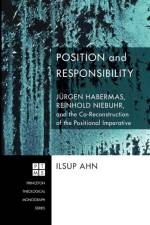
Description:What is the moral criterion for those who hold power positions and authority in governments, corporations, and institutions? Ahn answers this question by presenting the concept of the positional imperative. The positional imperative is an executive moral norm for those who hold power positions in political and economic organizations. By critically integrating the Neo-Kantian reconstructionism of J├╝rgen Habermas with the Neo-Augustinian reconstructionism of Reinhold Niebuhr, through the method of ""co-reconstruction,"" Ahn identifies the positional imperative as an executive moral norm embedded in all power positions: ""Act in such a way not only to abide by laws, but also to come by the approvals of those affected by your positional actions."" By uncovering this executive moral norm, Ahn argues that a position holder is not just a professional working for the system, but a moral executive who is willing to take the responsibility of his or her positional actions.Endorsements:""How should Christians and non-Christians live moral lives in the tightly defined roles characteristic of modern corporate and bureaucratic societies? This is a seldom-asked question in our age that celebrates spontaneity and flexibility. But this fine book both asks this difficult question and answers it with the resources of Christian ethics and political philosophy. It is an important study that creatively investigates new territory in social ethics.""--Don BrowningAlexander Campbell Emeritus Professor of Religious Ethics and the Social Sciences, University of Chicago""In this compelling book, Ilsup Ahn addresses a burning contemporary issue: are there moral criteria for those in corporate, governmental, or institutional positions of power? Engaging the philosopher J├╝rgen Habermas and the theologian Reinhold Niebuhr, Ahn identifies a ''positional imperative.'' In light of this norm, power holders are moral executives who bear responsibility for their actions. In our time when moral responsibility has been denied or ignored in financial institutions and governments, Ahn makes a singular contribution to thought. I highly commended this work for anyone interested in current political and moral questions.""--William SchweikerEdward L. Ryerson Distinguished Service Professor of Theological EthicsUniversity of ChicagoAbout the Contributor(s):Ilsup Ahn is Assistant Professor of Philosophy at North Park University, where he teaches philosophical, religious, and social ethics.
Description:Writing with the pastor and student in mind, Walter Brueggemann provides guidance for interpreting Old Testament texts. He offers both advice for the interpreter as well as examples of working with different sorts of passages: from narratives, prophecies, and Psalms. He also demonstrates how to work thematically, drawing together threads from different traditions. His goal is to work through the rhetoric of these passages to reach toward theological interpretation. These investigations indicate Brueggemann''s conviction that the process of moving from text to interpretive outcome is an artistic enterprise that can be learned and practiced.Endorsements:""One of the best and most esteemed interpreters of Scripture shows here how he does it. A ''how-to'' book with wonderful examples, it is vintage Brueggemann: incisive, penetrating, provocative, and always seeking to uncover the cutting edge of the text. He cares as much about pastoral responsibility as interpretive method. In fact, he doesn''t think you can separate them-one of the many gifts of this compelling and practical book."" -Patrick D. Miller, author of The Religion of Ancient Israel""We have become accustomed to the insightful reflections and the critical theological thinking of many contemporary biblical scholars. However, seldom has an author taken us step-by-step through the actual progression of that thought. This is precisely what Walter Brueggemann does in this book. Insisting that all believers, not merely scholars, should be able to critically read the Bible, he offers a modified, though still critical interpretive approach, that shows us how we might do it ourselves.""-Dianne Bergant, CSA author of Scripture: History and Interpretation""This is the book that those of us who have studied with Walter Brueggemann have been waiting for. Here is the teacher we have known in class: telling us how he has come to read scripture as he does and showing us how he does it. I have been using this method of interpreting scripture with my congregation for the past decade. Together we have found that Brueggemann''s three-step interpretive strategy opens us up to the biblical texts so that they speak to us in powerful new ways. What a wonderful gift this book is to the church.""-Edwin Searcy, University Hill Congregation, Vancouver, BCAbout the Contributor(s):Walter Brueggemann is William Marcellus McPheeters Professor of Old Testament Emeritus at Columbia Theological Seminary, Decatur, Georgia. He is the author of numerous works, including Praying the Psalms (2nd ed., Cascade Books, 2007), Theology of the Old Testament, and Prophetic Imagination.
Description:This work includes essays in preaching method and a series of sermons on Romans 10, a mini-treatise on preaching. It reflects on the tasks of preaching and teaching preaching as a form of communication that is critical to the life of the church. Despite the numerous existing volumes, useful texts are still needed. The quest is for methods of preparation that can be applied with consistency, and that suggest habits for labor, which can be tedious or cause tasteless outcomes. The volume is intended as a contribution to replenishing voices that already have spoken ably and eloquently. It is located in the praxis of one who preaches with weekly regularity, while at the same time teaching homiletics. It aims at absorbing and synthesizing proven methods, while relating them to a generation that lives in the tensions of faithfulness to the gospel of Jesus Christ, the decline of a Christian consensus in the culture, the rise of secularism, and competition from other religions. Added to that is the challenge of vying for space in the public sphere with countless social prophets, such as talk show hosts, radio commentators, screen writers, and entertainers with various agendas.What one finds in the following pages is a venture of service to the newly called, the fledgling preachers, the veterans, as well as those who teach. It dares to challenge proverbs like, ""It is better caught than taught,"" or ""Those who know don''t tell, and those who tell don''t know."" It risks a word in an attempt to speak reflectively about a task that is daunting to the novice and as near to a veteran as a second skin. It is a brazen attempt to step out of ""comfortable skin"" to tell another how it feels from the inside. It hazards a gesture to say how to do the work with confidence without becoming arrogant. How do you scratch the pad or go to a blank computer screen from week to week? By what means does one glean and give a fresh word before the exhaustion of delivering the last word has abated? Web sites that supply sermons are in the public domain and can easily be discovered. The challenge for those who mount the pulpit from week to week does not relent.The labor reflected in these pages is born of the bias that all preaching can be improved with study, reflection, and critical assistance.About the Contributor(s):William Clair Turner Jr. is Associate Professor of the Practice of Homiletics at Duke University Divinity School and Pastor of Mt. Level Missionary Baptist Church in Durham, North Carolina. He is the author of A Journey Through the Covenant: Discipleship for African American Christians and The United Holy Church of America: A Study in Black Holiness Pentecostalism.
Description:New Testament Greek Intermediate is the companion volume to New Testament Greek Primer. The Intermediate text reviews grammar, expands vocabulary, and exposes the student to more New Testament context. Grammar review intends to consolidate gains from the Primer, but deepens the discussion, adds more illustrative paradigms, and includes more syntax. Vocabulary acquisition expands the Primer''s frequency base of 50 or more times down to a frequency of 15 or more times, including second aorist forms. This vocabulary acquisition is divided by frequency into seven vocabulary lists ready for seven vocabulary exams. The exercises have longer passages both to increase the student''s translation stamina and to bring more contextualization to bear on the act of translation. In addition, the text includes informative illustrations and graphics, beautiful layout, full indexes, a glossary, charts, paradigms, and principal parts for even more usability. By the end of this text, the student is thoroughly prepared for Greek exegesis and advanced courses on Greek syntax.Endorsements:""Gerald Stevens'' ''New Testament Greek Intermediate'' follows the time-honored deductive approach to learning second-year Koine Greek. In addition to reviewing morphology, Stevens introduces the student to second-year syntactical issues without overwhelming him with third-year, exegetical concepts. His explanations are exact with copious examples from the New Testament that underscore the concepts. The self-contained homework exercises from the New Testament eliminate the need for purchasing an additional workbook. Stevens'' intermediate grammar is a natural sequel to his Primer, also published by Cascade Books. For the professor looking for a true, intermediate Greek grammar, Stevens'' will not disappoint your expectations.""--CRAIG PRICEAssociate Professor of New Testament and Greek, and Associate Dean of Online Learning,New Orleans Baptist Theological SeminaryStevens meets a special need with his New Testament Greek Intermediate grammar. The field is replete with introductory and advanced texts but few have addressed the needs of students in the middle. Stevens'' text addresses that void, and no one has done it so well. This volume presents a readable, comprehensive overview of Greek grammar arranged topically, utilizing the latest research in linguistics, and there are ample exercises drawn from biblical texts marked by Stevens'' pedagogical deftness. I highly recommend this text for students and teachers alike.-Robert A. Bryant, author of The Risen Crucified Christ in GalatiansThis student-friendly grammar masterfully guides students beyond basic Greek proficiency to translating an entire New Testament book. Students will welcome Stevens'' clarity of presentation and his ability to engage them in the text. This volume both facilitates students'' thorough review of Greek grammar as well as propels them forward to mastery of relevant nuances in translating the lingua franca of the early Christians. -Renate Viveen Hood, Associate Professor of Biblical StudiesLeTourneau UniversityGerald Stevens'' Greek Intermediate text provides a valuable bridge that enables students to make the transition from introductory Koine grammar to the more detailed study of New Testament syntax. The author''s characteristic thoroughness is evident throughout. Integration of student assignments with the primary text ensures that students will apply the concepts as they are introduced, greatly enhancing student learning. The content and organization of the material ensures that students will continue to use this text as a reference as they pursue more advanced studies. -Richard Warren JohnsonAssociate Professor of Greek and New TestamentEast Texas Baptist UniversityAbout the Contributor(s):Gerald L. Stevens is Professor of New Testament and Greek at the New Orleans Baptist Theological Seminary. Stevens has been campus minister, pastor, and interim
Description:Without turning naively to the past, scholars and preachers of the Old Testament are once again making use of figuration--something the church had always done until the modern period. This enlargement of method comes about partly out of disappointment with the exclusive use of historical methods, for to read the Bible theologically for the guidance of its present readers requires more than historical description. The 2006 Tyndale Conference on Biblical Interpretation, held at Tyndale University College in Toronto, Canada, focused on ""figuration in biblical interpretation."" The authors are the conference keynote speakers, Christopher Seitz and Ephraim Radner, as well as Tyndale faculty members in philosophy, history, Bible, and theology. There are also a few additional invited papers illustrating figural interpretation. This volume is a window onto the current hermeneutic ferment within biblical studies, and its title is an invitation to sample and share the excitement!Endorsements:""Reading the Old Testament as Christian Scripture remains one of the central challenges of ecclesially located and ecclesially minded biblical interpretation. Though the hegemony of historical criticism has aggravated the problem, this stimulating collection of essays demonstrates its prominence across the history of interpretation. Emphasizing especially the potential of figural readings both of Scripture and, indeed, within the pages of Scripture itself, Go Figure! presses the conversation forward through fresh reflections of a hermeneutical sort and through penetrating exegesis. --Joel B. Green, Professor of New Testament Interpretation, Fuller Theological Seminary""This collection provides vigorous testimony to the diversity of interpretive possibilities in our time. Long-standing but often long-abandoned ways of reading Scripture are illustrated in accessible ways. The critical approach is not rejected, but it is broadened, and literal interpretation is seen to be much more than the surface reading to which we are accustomed. The essays found here do not provide a single methodology. On the contrary, readers will find themselves confronted with a variety of rich hearings of the Word.""--Patrick D. Miller, Charles T. Haley Professor of Old Testament Theology, Princeton Theological SeminaryAbout the Contributor(s):Stanley D. Walters, the editor, is Professor of Religious Studies at Tyndale University College, Toronto. He is the author of Water for Larsa.
Description:""Radical embodiment"" refers to an anthropology and an epistemology fundamentally rooted in our bodies as always in correlation with our natural and social worlds. All human rationality, meaning, and value arise not only instrumentally but also substantively from this embodiment in the world. Radical embodiment reacts against Enlightenment mind-body dualism, as well as its monistic offshoots, including the physicalism that reduces everything to component matter-energy at the expense of subjectivity and meaning. It also rejects against certain forms of postmodernism that reinscribe modern dualisms.David H. Nikkel develops the perspective of ""radical embodiment"" by examining varieties of modern and postmodern theology, and the nature and role of tradition-in terms of linguistic and non-linguistic experience, the religion and science dialogue on the nature of consciousness, and the immanent and transcendent aspects of God.Endorsements:""David Nikkel''s Radical Embodiment makes a strong and persuasive case against the philosophical fracturing of reality that stems from the modern legacy of mind/body dualism. Nikkel''s alternative is a scientifically informed, philosophically insightful, and theologically sensitive panentheistic model of radical embodiment that aims to counter the postmodern metaphysical ''homelessness'' of both God and human beings. This rich, clear, and engaging work will serve to remind us that, indeed, we are at home in the universe.""--Eric WeislogelVice President for Academic AffairsMetanexus InstituteAbout the Contributor(s):David H. Nikkel is Associate Professor of Religion at the University of North Carolina at Pembroke. He is the author of Panentheism in Hartshorne and Tillich: A Creative Synthesis (1995).
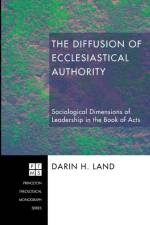
Description:The Diffusion of Ecclesiastical Authority explores the leadership of the church in Acts from a sociological perspective. Two primary models emerge from a sociologically informed investigation of first-century Greco-Roman and Jewish religious leadership: ""manager-leader"" and ""innovator-leader."" An examination of seven passages in Acts reveals that the leaders of the early church, although initially conforming to cultural expectations, are best described as innovator-leaders whose counter-cultural actions resulted in the empowerment of new leaders and the advancement of the gospel. Through the use of fictive kinship language, the voluntary sharing of authority, the fostering of a sense of mutual dependence on God as the common patron, and the redefinition of what is honorable, the leaders in Acts consistently enabled others to share authority in the church.About the Contributor(s):Darin H. Land is an adjunct professor at Fuller Theological Seminary. He lives with his wife in Alhambra, California.
Description:Joseph Tuckerman and the Outdoor Church is about the Rev. Joseph Tuckerman, a Unitarian minister who created and led a street ministry in Boston, Massachusetts, between 1826 and 1839 at the behest of his friend and college roommate, William Ellery Channing. Because of Tuckerman''s innovative approach to encountering and helping the poor people he met near the Boston wharves, he is considered the father of American social work as well as a prescient, dedicated, and socially active minister whose work led directly to the Social Gospel Movement. The book examines and interprets Tuckerman''s theology and ministry of outreach in light of the author''s experience as pastor of the Outdoor Church of Cambridge, Inc., an outdoor ministry to homeless men and women in Cambridge, Massachusetts. The Outdoor Church offers prayer services and pastoral assistance outdoors in all seasons and all weather in order to be accessible to chronically homeless men and women who, because of shame or embarrassment, hostility or illness, cannot or will not enter conventional churches. Joseph Tuckerman and the Outdoor Church is a unique and gripping look at a radically innovative nineteenth-century minister through the prism of the actual application of his thinking and his example to an ongoing ministry to the chronically homeless men and women of Cambridge.Endorsements:""Thank God that parish ministers are writing theology again, as Jed Mannis has done in his brief biography of Joseph Tuckerman, whose life was a lesson in taking the gospel of Jesus to the poor. Jed''s writing and ministry make the call and gift of this quiet, impressive man come alive to us, who need to know that such a ministry is possible.""--Carl Scovel, Minister Emeritus of King''s Chapel in Boston, author of Never Far From Home and An Easter Faith""Part biography, part memoir, and part description of a street ministry to the homeless-Joseph Tuckerman and the Outdoor Church succeeds marvelously on all fronts. You will not be able to put down this well-written biography of Joseph Tuckerman-the first true minister to the homeless in this country-and this memoir of Jed Mannis, who walks today in Tuckerman''s footsteps. But even more compelling is the insight provided into ministry to the homeless and the presence of the divine and wonderfully human on the streets.""--Tom Lenhart, Senior Minister of First Congregational Church, Chappaqua, New YorkAbout the Contributor(s): Jedediah Mannis is pastor to the Outdoor Church of Cambridge, an outdoor church that serves the chronically homeless men and women of Cambridge, Massachusetts.
Description:How does the Bible shape the perspective from which Christians view politics, the manner in which they engage in public debate, and the strategies they adopt when they translate faith into action? In Political Engagement as Biblical Mandate, Hanson suggests that many believers give insufficient thought to the basic principles that biblical study contributes to the lives of those who simultaneously seek to live in obedience to the central confessions of the Christian faith and to engage constructively in the life of a nation guided by the First Amendment and populated by an increasingly religiously diverse citizenry.Endorsements:""A genuine manifesto! But one charged with and rooted in the words of Scripture, calling the church to a renewed faithfulness in its commitment to the well-being of the human community. Hanson''s passionate convictions are matched by his openness to other views. Like the prophets of old, he sets forth a strong critique of our inattention to the sociopolitical world, but that critique is on the way to an imaginative and biblical vision of the way it should and can be. Some readers may find themselves uncomfortable at times, but that is the reason they should keep reading.""--Patrick D. MillerPrinceton Theological SeminaryAbout the Contributor(s):Paul D. Hanson is Florence Corliss Lamont Professor of Divinity at Harvard University. He is the author of numerous works, including The People Called, The Dawn of Apocalyptic, Dynamic Transcendence, and The Diversity of Scripture.
Description:Leaning into the Future seeks to explore what it may mean to believe in the ""Kingship"" of God and wait for his ""Kingdom"" by considering the fundamental role the Kingdom of God plays in the theology of J├╝rgen Moltmann and in the book of Revelation. Part one is devoted to how Moltmann understands ""The Kingdom of God"" as the fundamental symbol of hope for humanity, and how he sees the presence of God''s reign and kingdom in history as hidden and paradoxical. Part two turns to the way the Book of Revelation uses royal and other political language in its portrait of the future and God''s presence in history. In this second part, the book also seeks to explore how Moltmann and the Apocalypse may mutually inform each other, how Moltmann may help us read this biblical book today, and how it in turn may overcome some of the weaknesses in Moltmann''s proposal.Endorsements:""There has been a movement on the part of some biblical scholars and some systematic theologians to bring their disciplines back together after a long period of alienation. This is not a matter of dissolving one into the other, but of finding ways in which serious dialogue can bear fruit. Poul Guttesen''s work is an exemplary contribution to this. By engaging J├╝rgen Moltmann''s theology and the biblical book of Revelation in a mutually illuminating dialogue Guttesen is, of course, hosting such an encounter within the creative theological context of his own engagement with both. He enters with sympathy and perception into both of these visions of the kingdom of God, with their very different theological idioms, and explores both the consonances and the tensions he finds between them.""--Richard Bauckham, from the Foreword""In recent years, there has been an encouraging resolve to bridge the gap between biblical studies and systematic theology. Poul Guttesen contributes to this movement with considerable distinction. Sensitive and qualified in both areas, he shows how enriching it is to use both Moltmann in biblical interpretation and Revelation to correct Moltmann''s eschatology. Poul Guttesen combines theological competence with an awareness of the practical urgency of thinking aright about the kingdom of God.""--Stephen Williams, Union Theological CollegeAbout the Contributor(s):Poul F. Guttesen is Adjunct Lecturer in the Faculty of Education at the University of the Faroe Islands.
Description:In 1948, the Afrikaner Nationalist Government became the ruling party in South Africa and instituted the brutal system known as apartheid. To maintain their power, Afrikaners drew on Christian scripture and traditions to create self-justifying religious narratives that supported their oppressive ideologies, prohibiting inclusion and suppressing pluralism. In time these Afrikaner-Christian narratives began to unravel as counter-narratives within the Christian tradition influenced the Black church to demand equality and democracy. This socio-political and cultural transformation is best understood and interpreted through the vision of ubuntu: a mode of thought in African culture that places a value on humanity in community and shifts the focus from singularity to plurality in South African society. In The Ubuntu God, Samuel A. Paul traces how the dismantling of apartheid led to recognition of the religious other, the recovery of alternate narratives, and the reappearance of ubuntu perspective and practice in the political and public sphere. After the peaceful transition to a democratically elected government, the Truth and Reconciliation Commission created a platform for multiple voices, stories, and religious narratives to be shared in a public political context. This multiplicity of voices resulted, ultimately, in the formation of a new constitution for South Africa that sought to uphold African values of community and inclusion in its institutions. While South Africa''s apartheid system and the Truth and Reconciliation Commission are both rooted in the biblical narrative, the former used its theology to enforce an iron rule while the latter combined Christian and African concepts to create a pluralistic and open society. Such a society is characterized by a culture that emphasizes communality and interdependence. Endorsements:""How is it possible that the country whose name became a byword for injustice, inequality, prejudice, racial redlining and abuse has become a light to the nations? Dr. Samuel Paul, a native of South Africa, has written an insightful book that offers fresh interpretations of how truth-telling and a will to reconciliation has transformed the history, theology, and politics of the South African puzzle. Well thought out, well written, well argued, and very well added to your library.""--David AugsburgerProfessor of Pastoral Care and CounselingFuller Theological Seminary""Anyone who is interested in theology, political liberation, or South Africa will want to read Samuel Paul''s fine work, The Ubuntu God. It is from the Acknowledgment and the Introduction that we see the perspective from which Paul writes: he makes plain how his place as a black south african of Indian descent in the pecking order of racial oppression and the influence of his political activist uncle serve as the backdrop to his writing. In some measure, Paul the intellectual is still ''making sense'' of his nation''s histories of oppression and liberation as well as how theology, an African worldview, and ideology work to imprison and to free. The result is illuminating both for Paul and for us, the grateful readers.""--Father Michael Lapsley, SSMInstitute for Healing of MemoriesCape TownAbout the Contributor(s):Samuel A. Paul is a Research Associate with the University of Southern California''s Center for Religion and Civic Culture, Associate Director of Digitial Resources at the USC Shoah Foundation Institute, and remains an ordained minister with the Apostolic Faith Mission Church, South Africa.
Description:""Can poetry matter to Christian theology?"" David Mahan asks in the introduction to this interdisciplinary work. Does the study of poetry represent a serious theological project? What does poetry have to contribute to the public tasks of theology and the Church? How can theologians, clergy and other ministry professionals, and Christian laypeople benefit from an earnest study of poetry? A growing number of professional theologians today seek to push theological inquiry beyond the relative seclusion of academic specialization into a broader marketplace of public ideas, and to recast the theological task as an integrative discipline, wholly engaged with the issues and sensibilities of the age. Accordingly, such scholars seek to draw upon and engage the insights and practices of a variety of cultural resources, including those of the arts, in their theological projects. Arguing that poetry can be a form of theological discourse, Mahan shows how poetry offers rich theological resources and instruction for the Christian church. In drawing attention to the ""peculiar advantages"" it affords, this book addresses one of the greatest challenges facing the church today: the difficulty of effectively communicating the Christian gospel with increasingly disaffected ""late-modern"" people. Endorsements:""Can poetry matter to Christian theology? To this question, David Mahan''s book comprises a resounding ''yes.''With acute sensitivity and painstaking attention to literary detail, the author shows how Christian wisdom is hugely enriched by three major word-crafters. Far from muddying the waters of theological rigor, ''poetic performance'' renders theology more precise, lucid, and faithful. An immensely important book, demonstrating just how badly the theologian needs the artist today.""--Jeremy Begbie, Thomas A. Langford Research Professor of Theology, Duke University""The engagement of theologians with the poetry of recent times has usually consisted of giving theological warrant to beauty and aesthetic gratification, of finding analogies between poetry and theology, or of discovering Christian themes in Christian and non-Christian poets alike. David Mahan, in An Unexpected Light, has achieved something distinctly new and different. He has taken three examples of Christian conviction inhabiting the contemporary world in the form of poems by Charles Williams, Micheal O''Siadhail, and Geoffrey Hill. With lovingly close attention to both form and content, he has brought to our attention the ''inscape'' of these examples of Christian inhabitation in poetic form. And he has judiciously asked what Christian theologians can learn from a close reading of these poems for their own way of inhabiting our world today. It''s an admirable achievement!"" --Nicholas Wolterstorff, Noah Porter Professor of Philosophical Theology, Yale University.""David Mahan is a superb close reader of poetry and also a rich theological thinker. This book shows how poetry and theology can come together to light up the great questions of human life today. Above all, his profound engagement with three fascinating poets--O''Siadhail, Williams, and Hill--will expand the circle of those who recognize their great significance for the twenty-first century."" --David F. Ford, Regius Professor of Divinity, University of Cambridge ""David Mahan sheds''unexpected light'' on poetry as a Christian discourse. He does this by deftly elucidating common intellectual ground shared by poets and theologians. Where he shines, however, is in showing how a poem means, how ideas actually become incarnate in texts. Mahan offers beautifully lucid analysis of demanding poets who, in his sure hands, become accessible, though never merely easy. He challenges us to see their work as not only speaking to our particular historical condition but, in quirky and reticent ways, as evangelizing our imaginations."" --Peter Hawkins, Professor of Religion and Director of Luce Prog
Description:In its various forms, speech is absolutely integral to the Christian mission. The gospel is a message, news that must be passed on if it is to be known by others. Nevertheless, the reality of God cannot be exhausted by Christian knowledge and Christian knowledge cannot be exhausted by our words. All the while, the philosophy of modernity has left Christianity an impoverished inheritance within which to think these things. In Speak Thus, Craig Hovey explores the possibilities and limits of Christian speaking. At times ethical, epistemological, and metaphysical, these essays go to the heart of what it means to be the church today. In practice, the Christian life often has a linguistic shape that surprisingly implicates and reveals the commitments of people like those who care for the sick or those who respond as peacemakers in the face of violence. Because learning to speak one way as opposed to another is a skill that must be learned, Christian speakers are also guides who bear witness to the importance of churches for passing on a felicity with Christian ways of speaking.Through constructive engagements with interlocutors like Ludwig Wittgenstein, George Lindbeck, Jeffrey Stout, Stanley Hauerwas, John Howard Yoder, Thomas Aquinas, and the theology of Radical Orthodoxy, Hovey offers a challenging vision of the church--able to speak with a confidence that only comes from a deep attentiveness to its own limitations, while also able to speak prophetically in a world weary of words.Endorsements:""Craig Hovey offers us a book of Christian manners. Just as manners are the skills and practices we require to be equally at home in many social contexts, so Hovey shows how the gospel equips us to be equally at home wherever the mission of God takes us, because we are always at home with the Lord. Hovey maintains Christians have not been told what to say, but have instead been shown how to speak. In this book he continues his emergence as one of the most profound and penetrating scrutinizersof what it means to speak, witness, and confess to the Christian faith. To read this book is a masterclass in learning to speak simple truth amid a cacophony of contemporary cleverness.""--Reverend Canon Dr. Sam WellsDean of the Chapel, Duke University; Research Professor of Christian Ethics""Hovey''s finely crafted collection of essays --both persuasive and contentious--manages to combine great clarity with nuance. Apparently opposed positions are exposed as sharing common presuppositions, with Hovey frequently being able to provide an alternative positive conception or perspective. In an un-showy but impressive way, Hovey''s writing is richly informed by the tradition and practices to which he is committed. The voice that emerges is passionate, urgent and wry.""--Christopher Insole, Department of Theology and Religion, Durham UniversityAbout the Contributor(s):CRAIG R. HOVEY (PhD, University of Cambridge) teaches religion and ethics at the University of Redlands and Fuller Theological Seminary Extension in Southern California. He is the author of To Share in the Body (2008).
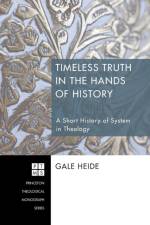
Description:""What is the purpose of theology for the church?"" Systematic theology provides an inroad into this question by offering both a method for doing theology and an explanation for the purpose of that method. However, ""system"" is itself the product of a specific understanding of knowledge grounded in rational demonstration of facts. This study attempts to address the historical debate over when systematic theology began. Much of the debate is centered on the definition of system and revolves around the use, or lack thereof, of external philosophical categories or language. Specific historical figures have been selected to serve as illustrations of how theological prolegomena functioned in works prior to and following the influence of Enlightenment thought. In the early chapters it will be seen that theology was neither totally saturated with, nor totally devoid of, external philosophical reference points or programmatic intentions. On the contrary, both external points of reference and programmatic intentions have played a role in theology since the church''s inception. In other words, certain elements of system (e.g., logic, non-contradiction, organization) have played a role in theological investigation and construction since, at least, the second century. The last two chapters of this study demonstrate that these may not be the same influences that have marked post-Enlightenment systematics. One of the primary characteristics of pre-Enlightenment theology is its intentional focus on the life of the church. Theology, like the Scriptures, was often written for specific circumstances. Enlightenment influences significantly changed the intentions of much of theology in that theological knowledge was studied and displayed for the sake of knowledge itself. The church no longer mattered, or was at best an afterthought, in the realm of what is now seen as the domain of academic theology.Endorsements:""Gale Heide''s Timeless Truth in the Hands of History demonstrates that not only does theology''s content develop and change over time, its very method and systematic form does as well. And, of course, these two developments are not unrelated. Heide shows that an understanding of how the ''system'' of theology should be conceived illumines just how theology''s own content is developed at various stages in the history of theology. For those concerned with how theology has been done and should be done, this book will provide great stimulation and direction.""--Bruce A. WareProfessor of Christian TheologyThe Southern Baptist Theological SeminaryLouisville, KentuckyAbout the Contributor(s):Gale Heide is Academic Dean and Professor of Theology and Biblical Languages at Montana Bible College in Bozeman, Montana. He is author of This Is My Father''s World (1998), System and Story (2008), and Domesticated Glory (2010).
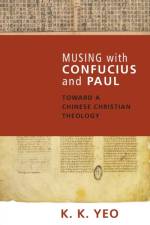
Description:The book is a manifesto or apologia for Chinese Christians. It seeks to articulate how it is possible to maintain a Chinese identity and a Christian identity at the same time without capitulating to some western or other cultural model of Christian identity. To be a Chinese Christian is to adopt a distinctive, unique identity that owes much to both traditions but is sui generis. Providing great resources for the construction of a Chinese Christian theology, Confucius and Paul converge across a surprisingly broad front. Yet, the Christ of the Cross completes or extends what is merely implicit or absent in Confucius; and Confucius amplifies various elements of Christian faith (e.g., community, virtues) that are underplayed in western Christianity. The Christ of God as found in Paul''s letter to the Galatians brings Confucian ethics in the Analects to its fulfillment while protecting the church from the aberrations of Chinese history and while protecting China against the aberrations of Christian history in the west. Chinese Christianity has something to give the church that needs to be heard. China can develop its distinctive vision of Christianity for the sake of the church universal. Chinese Christianity will have its global mission if it can find its own authentic Chinese-Christian identity. Insofar as that identity brings the best of the Confucian tradition into the Christian story, it will help revivify global Christianity.Endorsements:""This brilliant book confronts two fundamental challenges for culture and faith in the globalizing world of the twenty-first century: how can the Chinese honor their rich Confucian heritage yet be transformed by Jesus Christ? And how can the church universal be reformed through its encounter with a Chinese Christian theology? Yeo''s immensely creative juxtaposition of core Confucian concepts with key elements of Christian theology persuade us that Chinese Christians must not jettison in toto their Chineseness . . . Yeo writes with a sociological sensibility that infuses the entire volume and engages the most vexing social problems of our time. He offers wonderfully nuanced and evocative theological reflections on the self, trust, social identity, civil society, social harmony, inequality, and political domination. Read this book imaginatively . . ."" --TERENCE C. HALLIDAYCo-Director, Center on Law and Globalization""With his expertise in Paul and Confucius, K.-K. Yeo has produced a brilliant inter-textual study of Galatians and the Analects. By putting these two works in dialogue with each other, he illuminates each in fresh ways by mutual interpretation, enhancement, and correction. Through autobiographical reflection, he combines the complementary strengths of both writings to forge a creative and innovative Chinese-Christian theology. The result is a profoundly liberating vision of communal life in which unity does not compromise difference as a blessing. Yeo models for all of us the truly cross-cultural nature of all interpretation. Scholars, pastors, students, and general readers will find this volume to be a fascinating and worthwhile study."" --DAVID RHOADSThe Lutheran School of Theology at ChicagoAbout the Contributor(s):K. K. Yeo is Harry R. Kendall Professor of New Testament at Garrett-Evangelical Seminary, an advisory faculty member of the Graduate School of Northwestern University, and a Visiting Professor of Peking University. He is the author of Rhetorical Interaction in 1 Corinthians 8 and 10 (1995), What Has Jerusalem to Do with Beijing? (1998), and Chairman Mao Meets the Apostle Paul (2002). He is also the editor of Navigating Romans through Cultures (2004).
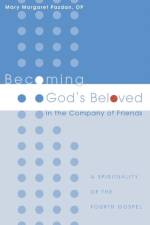
Description:Becoming God''s Beloved in the Company of Friends offers a fresh perspective and invites persons to develop a personal and communal Christian spirituality. It offers a way to deepen commitment to live as a disciple of Jesus personally and with others. It bridges the gap between a first-century biblical text and twenty-first-century readers who hunger for genuine spirituality today. Each chapter focuses on a few stories and a few teachings to illustrate a particular characteristic of becoming a disciple.Endorsements:""Here is a beautifully evocative spiritual reading of the Gospel of John. While resting on sound scholarship, this is kept in the background inviting the reader to engage directly with the Gospel text sensitively and intelligently. Modeling the spirituality of the Gospel the author writes self-consciously and in dialogue with a reader, offering the challenge to enter into the text, then to allow the text to transform the reader''s life. Here is scholarship at its best, as it communicates its depth in a manner accessible to all. Pazdan''s book is a valuable resource for one''s reflective spiritual reading, or for a small group gathering to discuss and pray with the Fourth Gospel. As the Gospel it is based upon, this book invites one into life in the household of God.""--Mary L. Coloe. Australian Catholic University.""[This is] a treatment of Johannine theology that reflects a genuine pastoral sensitivity. Mary Pazdan articulates well the communal dimension of a gospel that all too often seen as only concerned with the believer''s attitude toward Jesus, the Father, and the Spirit. This book will be a valuable resource for individuals wanting to use the gospel of John in a way to genuinely deepen their relationship with both God and their neighbor. Pazdan has the ability to explain Johannine theology in a way that is faithful to the text and yet eminently intelligible to the general reader.""--Urban C. von Wahlde, Loyola University Chicago""This book invites us to journey as friends into the heart of John''s Gospel. We travel with both classical and contemporary companions like Thomas Aquinas, Catherine of Siena, and Henri Nouwen. Mary Margaret''s scholarship provides information, and the insightful questions are informative. ""I look forward to using this with Stillpoint''s Scripture Seminars.""--Kathleen R. Flood, OP, StillpointAbout the Contributor(s):Mary Margaret Pazdan, OP, is Professor of Biblical Studies at Aquinas Institute of Theology in St. Louis. She is coauthor of Wind, Earth and Fire: Biblical and Theological Perspectives in Creation (2004).
Description:Working within two popular genres, gardening books and biblical meditations, God Gardened East offers a meditation on the first twenty-five chapters of Genesis, emphasizing the tropes of cultivation, wandering, and ""the east."" Reconceived in a post-9/11 environment, Ruprecht wrestles with difficult questions about the violent legacy of monotheism and traces some of this violence back to the foundational story of Abraham and his dislocation from his homeland.Endorsements:""God Gardened East is an essay in the tradition of Thoreau and Wendell Berry. It is about important things, such as empire, the responsibilities of a citizen, the joys of getting one''s knees dirty in the soil, and the Book of Genesis. Reading Ruprecht is like taking a walk with a wise friend. He appears to meander, and wears his considerable learning lightly, but he is in fact moving artfully from the personal to the public, from the conflicted present to the conflicted past, and back again.""--Jeffrey Stout, Princeton University, author of Democracy and Tradition""Going forward in the Middle East is never easy for Americans. Too many conflicts mired in too much history seem to baffle even the most sophisticated and good-willed agents of change. No better place for a new beginning exists than the beginning of the Hebrew Bible and its book of beginnings, Genesis. Lou Ruprecht takes his readers on a journey east that also is a journey into our collective future, focusing at once on the obstinacy of violence but also its limits. This book is a penetrating analysis and a must read for all who look to Abraham as a signpost of hope.""--Bruce B. Lawrence, Duke University""God Gardened East is real nourishment for souls hungering for new ways to think about a ravishing, and often frightening, world. Full of biblical and theological insight, as humane as they are sharply intelligent, Ruprecht''s words are both warming and warning, reminding us that there are no easy answers in this all-too-human life of suffering, violence, and misunderstanding on both personal and global levels."" --Lori Anne Ferrell, Claremont Graduate University""In God Gardened East, Ruprecht has achieved a rare feat--a successful combination of extraordinary scholarly originality and insight with an intense personal passion and acute dramatic sensibility. His love for the material--literary and organic--makes him an ideal guide over landscapes from Israel to Greece to downtown Atlanta. At one and the same time, he encourages you to rush out of your library and into your garden . . . and vice versa.""--Mike Lippman, Assistant Professor of Classical Studies at Rollins College""Cultivating a journey of land, people, and religion, Ruprecht reveals new insights about interfaith relations, global politics, and hope after 9/11. In his scholarly hand, the stories of the monotheisms'' founding from Adam through Abraham come alive fertilized by his extensive knowledge of the Greek world, biblical traditions, and Western philosophy. Each chapter weaves insights and questions harvested from Ruprecht''s backyard garden with these Genesis stories of human conflict, transition, and quests for meaning in community. The text''s rich images of gardens, generations, and God keep the reader enthralled.""--Barbara Patterson, Emory University""Ruprecht''s remarkable book combines garden journal, travelogue, treatise, and commentary in a sustained meditation on freedom, faith, politics, and place. God Gardened East challenges its readers to dig into the rich soil of many traditions--Hebraic, Christian, Islamic, and Greek--moving from one, to many, to the infinite. A gardener knows the cadences of light and dark, dry and wet, the march of seasons, and the transformation of death into life. Ruprecht shows us that by growing the soil of our own gardens, we nurture also the patience, attention, and humility in which dialogue can take root across the boundaries of nation
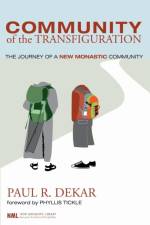
Description:In the 1930s, German theologian Dietrich Bonhoeffer anticipated the restoration of the church after the coming second world war through a new kind of monasticism, a way of life of uncompromising adherence to the Sermon on the Mount in imitation of Christ. Since then, the renewal of Christian monasticism has become a great spiritual movement. Imbued with a love for God and neighbor, and with a healthy self-love, people are going to monasteries to deepen their relationship with God, to pray, and to find peace. While some monastic institutions are suffering a decline in traditional vocations, many Christians are exploring monastic lifestyles. This book introduces The Community of the Transfiguration in Australia, the story of a new monastic community and an inspiring source of hope for the world at another time of spiritual, social, and ecological crisis.Endorsements:""Western civilization was cradled by the monastic movements of the Middle Ages, and many of the discoveries of modern science have their roots in monastic gardens and infirmaries. Paul Dekar gives a glimpse into a Christian movement of our time that promises to provide new energies--from the heart of evangelical Christianity--to enliven the monastic ideal and provide a unique Christian witness to the world. Intentional Christianity, a more intense form of belief and practice, provides all Christians, and indeed all persons, with a window into the possibilities of the gospel of Jesus Christ and the prospect of a world remade.""--Brother Jeffrey Gros, FSC, Memphis Theological Seminary""The Community of the Transfiguration at Breakwater, Victoria, is one of the hidden and unexpected gems of the contemporary Australian Christian scene.  Quietly but purposefully it has grown over the past twenty-five years into a vibrant, Spirit-filled Christian community standing in the great tradition of Christian monasticism.  What is unexpected but all the more exciting is that this community is firmly grounded in and embraced by the Baptist Church while at the same time being thoroughly ecumenical. Paul Dekar''s book is a most timely contextualization of and tribute to the community.""Rt. Rev. Andrew St. John, DD, Rector, Church of the Transfiguration, New York, and Assisting Bishop in the Episcopal Diocese of New York.About the Contributor(s):Paul R. Dekar is Niswonger Professor of Evangelism and Missions, Memphis Theological Seminary. He is author of Creating the Beloved Community: A History of the Fellowship of Reconciliation in the United States (2005) and Holy Boldness: Practices of an Evangelistic Lifestyle (2004). He and his wife Nancy are North American members of Holy Transfiguration Monastery in Australia.
Description:Dietrich Bonhoeffer''s example of self-sacrificing discipleship has for over fifty years inspired Christians around the world in both their resistance to evil and their devotion to Jesus Christ. Yet for some readers--particularly those who suffer trauma, abuse, and other forms of violence--Bonhoeffer''s insistence on self-sacrifice, on becoming a ""person for others,"" may prove more harmful than liberating. For those already socialized into self-abnegation, uncritical applications of Bonhoeffer''s teachings may reinforce submission, rather than resistance, to evil. This study explores Bonhoeffer''s understandings of selfhood and spiritual formation, both in his own experience and writings and in light of the role of gender in psycho-spiritual development. The central constructive chapter creates a mediated conversation between Bonhoeffer and these feminist psychologists on the spiritual formation of survivors of trauma and abuse, including not only dimensions of his thinking to be critiqued from this perspective but also important resources he contributes toward a truly liberating Christian spirituality for those on the underside of selfhood. The book concludes with suggestions regarding the broader relevance of this study and implications for ministry. The insights for spiritual formation developed here provide powerful proof of Bonhoeffer''s continuing and concretely contextualized relevance for readers across the full spectrum of human selfhood.Endorsements:""In light of the nearly legendary stature that Dietrich Bonhoeffer . . . has attained in our time, it is a daunting challenge to tackle the thorny issue of the way his theology can be, and at times has been, employed to further abuse and oppression rather than liberation by a facile confusion of submission to the needs of others with authentic Christian discipleship. Lisa Dahill, herself a Lutheran theologian, has addressed this problem with courage and balance. . . . May this excellent study be read by many.""-Han van den Blink, Professor Emeritus of Ascetical and Pastoral Theology, Bexley Hall Episcopal Seminary""Lisa Dahill''s study of the spirituality of Dietrich Bonhoeffer in relation to the experience of women victims of gender-based abuse is a remarkable combination of unflinching academically-based criticism and deeply appreciative appropriation of Bonhoeffer''s challenging and inspiring spirituality. It also offers a highly original theoretical approach to the study of spirituality as a rich and demanding resource for those who deal pastorally with abuse victims in a faith context as well as for all of us who, in one way or another, deal with the ""underside"" of our own selfhood. Her conclusions about both the value of particular spiritualities for the universal church and the non-universality of particular spiritualities themselves demonstrate precisely the specific contribution of the scholarly study of spirituality in itself rather than as a subset or offshoot of theology, ethics, or the personal or social sciences."" -Sandra M. Schneiders, Professor of New Testament and Christian Spirituality, Jesuit School of TheologyAbout the Contributor(s):Lisa E. Dahill is Assistant Professor of Worship and Christian Spirituality at Trinity Lutheran Seminary in Columbus, OH. She is co-chair of the Bonhoeffer: Theology and Social Analysis Group of the American Academy of Religion and a scholar and translator of Bonhoeffer''s works for the DBWE series from Fortress Press (Conspiracy and Imprisonment, 1940-1945, DBWE 16, published in 2006; and Resistance and Surrender: Letters and Papers from Prison, DBWE 8, in process). In addition, she is author of Truly Present: Practicing Prayer in the Liturgy (2006).
Description:Education is about learning to think. Much of what we call thinking, however, is a hodge-podge of repetitious self-talk, opinion, and cutting and pasting of second-hand ideas. Moreover, thinking in the present has often been alien to scholars who were tempted to think abstractly. But life and thought belong together and require each other, as Plotinus pointed out many centuries ago: ""[T]he object of contemplation is living and life, and the two together are one"" (Ennead 3.8.8). Presently, many women and men in the academic world are thinking concretely within the context of their own lives and with acknowledged accountability to broader communities with whom they think and to whom they are answerable. The essays in this volume consider Christianity as an aspect of North American culture, bringing the critical tools of the academy to thinking about some of the perplexing and pressing problems of contemporary public life.Three interactive and interdependent themes traverse these essays: gender, the effects of media culture, and institutions. Each of these themes has been central to Margaret Miles''s work for thirty years. Each understands corporeality as fundamental both to subjectivity and society. Miles finds that Christianity, critically appropriated, provides ideas and methods for thinking concretely about life in North American society. Endorsements:Through her prolific career Margaret Miles has focused her scholarly sensibilities on the history of Christianity in conjunction with real and abiding social concerns. Not least of these are the problems and promises of gender relations. In this collection of essays, she turns her critical gaze upon food and film, media and mythology, delight and desire, as she examines the verbal and visual dimensions that comprise institutional, personal, communal, and artistic bodies. Miles mines the history of Christianity for ways to overcome our contemporary dis-ease with bodies. Incisively descriptive, Miles nonetheless remains unafraid to write prescriptions.--S. Brent Plate, author of Blasphemy: Art that Offends and Religion and Film: Cinema and the Re-Creation of the WorldThis collection of essays, written over two decades, displays Margaret Miles''s remarkable breadth as a theologian, administrator, and cultural critic. With equal adeptness, she brings ancient theological insights to bear on contemporary culture and sheds critical, historical light on Christianity. The essays are written with elegance, humor, and acuity, and their subject matter offers something for almost everyone--from film to sexuality, asceticism to pleasure, philosophical reflection to institutional strategy. But they are unified by a single quest--for embodied, passionate life in all its fullness. Following that pilgrimage through these essays, one cannot help but breathe and think more deeply.--Kathleen Sands, Associate Professor and Director of Religious Studies at the University of Massachusetts, BostonAbout the Contributor(s):Margaret R. Miles is Emerita Professor of Historical Theology, the Graduate Theological Union, Berkeley. She was Bussey Professor of Theology at the Harvard University Divinity School until 1996, when she became Dean and Academic Vice President of the Graduate Theological Union. Her books include A Complex Delight: The Secularization of the Breast, 1350-1750 (2008), Rereading Historical Theology: Before, During, and After Augustine (2008), The Word Made Flesh: A History of Christian Thought (2005), and Plotinus on Body and Beauty (1999).
Description:A rather acrimonious divorce is underway between evangelical theology and foundationalism--especially among younger evangelical protégés less directly connected with the modernist-fundamentalist controversy than are their professors. These primarily younger evangelical thinkers are almost certainly reading and engaging more of Derrida than Descartes; more interested in doing theology and philosophy for the church than for the academy; more in tune with Wesley''s than Warfield''s theology; more interested in applying the Bible than defending it; more concerned with the hermeneutics of Gadamer and Ricoeur than (Arno) Gabelein and (A.T.) Robertson; more occupied with the philosophical method of Heidegger than Hegel; more moved by the epistemology of Kierkegaard and Barth than by Kant and Bultmann; and finally, more comfortable with postmodern than modern culture. Such major moves are undoubtedly altering the face of evangelical theology--or more accurately, theology done by evangelicals: even more particularly for this study, theological epistemology written by evangelicals. In Revitalizing Theological Epistemology Steven B. Sherman addresses questions about what evangelical theology ought to be doing in light of the changing cultural situation. Should the Christian faith continue to be presented and defended mainly according to Enlightenment principles when growing criticism of modern thought is affecting virtually every discipline? Is this critique merely a matter of the latest societal trend, or is this a much larger phenomenon virtually encompassing the West? Ought evangelicalism and its intellectual leaders to ""wait it out"" or should they ""re-vision"" their theology? And if something does require reconsideration, exactly what is it, and what might this re-examination entail? This book is about contemporary evangelical approaches to the knowledge of God, considering--and suggesting--ways Christian philosophers and theologians envision and make use of theological knowledge in the postmodern context.Endorsements:""In this insightful book, Steven Sherman explores issues that are at the heart of current debates about the foundationalist epistemology that has long held sway in evangelical theology. He does so, not only with philosophical and theological savvy, but also with a deep commitment to the truth of the Gospel.""--Richard J. Mouw, Fuller Theological Seminary""Significant changes are taking place today in Evangelical theology, especially in the area of theological epistemology. This book represents a very important contribution for helping us understand the emerging shape of the Evangelical theological voice. Steven B. Sherman provides the reader with an excellent overview of recent developments in chronicling the rise of post-conservative evangelical theology. He helpfully uses the intellectual journey of Clark Pinnock to illustrate shifts in thinking that are occurring, and then provides an in-depth analysis of the rise of foundationalism and its subsequent critique by recent scholars. His constructive proposal for reframing theological epistemology draws creatively on the work of missiologist Lesslie Newbigin. This is a solid piece of scholarship and a substantive contribution to the literature on the Evangelical movement.""--Craig Van Gelder, Luther Seminary, St. Paul, MN""Revitalizing Theological Epistemology grapples courageously and innovatively with core issues that confront evangelical thought and practice today. Using the writings of Clark Pinnock and Lesslie Newbigin as evaluative lenses, Sherman traces the emergence and essence of a postconservative theological epistemology, considering important factors leading reformist evangelicals toward a more holistic, communal approach to the knowledge of God. Sherman''s focused analysis and assessment concludes with a modest proposal for developing a revitalizing theological epistemology. I recommend it for the study of contemporary theology and
Description:Depression and related illnesses threaten to wreck the lives of many teens and their families. Suicide driven by these illnesses is one of the top killers of these young people. How do teens become depressed? What does depression feel like? How can we identify it? What helps depressed teens? What hurts them? How do families cope with teen depression? In A Relentless Hope Gary Nelson uses his experience as a pastor and pastoral counselor to guide the reader through an exploration of these and many other questions about teen depression. Nelson has worked with many teens over the years offering help to those who find themselves confronted by this potentially devastating attacker. The author also uses the story of his own son''s journey through depression to weave together insights into the spiritual, emotional, cognitive, biological, and relational dimensions of teen depression. Through careful analysis, candid self-revelation, practical advice, and even humor, this pastor, counselor, and father reminds us that God''s light of healing can shine through the darkness of depression and offer hope. A Relentless Hope is written for teens, parents, teachers, pastors, and any who walk with the afflicted through this valley of the shadow of death.Endorsements:""Whether you are a youth struggling with depression, a family member of a depressed teen, or a pastor, counselor or teacher providing support and help in such circumstances, this book is a must read as the most informative and helpful volume available on the subject.""--Merle R. Jordan Professor of Pastoral Psychology Emeritus, Boston University School of Theology""This story of a family is an incredible gift of honest reflection. So many families deal with the issue of teen depression. . . As the dean of a theological school I am aware of the numbers of youth that my students deal with who are in this book. Depression, self-medication with alcohol and drugs, self doubt and even considerations of suicide as an answer--all are in our communities and probably in even a small church. This book is about an attitude that avoids denial, attempts to keep a sense of humor, and believes in the miracle of life. Thank you, Tom, for allowing your story to be told."" --Maxine Clarke Beach, Vice President and Dean, Drew Theological SchoolThis is a story of amazing grace! I love the challenge Gary gave the reader throughout the book: ""Never give up on loving!"" I was reminded in a very tangible way of the limitless capacity of God who loves us the same way--He never stops! What an incredible mantra for all of us: ""Never give up on loving. . . . Never!"" I wonder how different our world would be if we practiced this command?--Rev. Dale Seley, Pastor Downtown Baptist Church, Alexandria, VirginiaAbout the Contributor(s):Gary E. Nelson, DMin, is a United Methodist minister who for thirty years has worked with teens and their families as a local church pastor and as a pastoral counselor. He currently pastors a church in West Virginia.
Description:What is the nature and purpose of the Black Church? What is the relationship of the scholar of religion to the Black Church? While black churches have been a major component of the religious landscape of African American communities for centuries, little critical attention has been given to these questions outside an apologetic stance. This book seeks to correct this trend by examining some of the major issues facing black churches in the twenty-first century. From a challenge to traditional ways of addressing sexism within black churches to African American Christianity''s relationship to popular culture, this set of reflections seeks to offer new perspectives on what it might mean to be Black and Christian in the United States.Endorsements:"Anthony Pinn''s volume seeks to critically understand and sympathetically transform the Black Church. Carrying on in the tradition of William R. Jones, Pinn''s perspective on the Black Church is suspicious, loving, critical, committed, exasperating, and exhilarating. One may not always agree with his conclusions, but one cannot ignore his penchant for ferreting out the truth. This book is a passionate yet balanced argument which must be heard by anyone who is interested in the future of the black church." --James H. Evans Jr.Robert K. Davies Professor of Systematic Theology Colgate Rochester Crozer Divinity School"Pinn is required reading in every Black Church Studies department and theological curriculum that seeks self-understanding, healing, and transformation; and an indispensable interlocutor in the broader public conversation about the American dilemma and its democratic possibilities."--Walter Earl FlukerCoca-Cola Professor of Leadership StudiesMorehouse CollegeAbout the Contributor(s):Anthony B. Pinn is Agnes Cullen Arnold Professor of Humanities and Professor of Religious Studies at Rice University. He is also the executive director of the Society for the Study of Black Religion. Pinn is the author/editor of eighteen books.
Description:People too often enter into conflict with an eye on how to resolve, manage, or transform it, thereby losing sight of the people involved and the end desired. Justice and peace too often serve as abstract ideals or distant shores. We have not yet learned enough about how these ends can also be the means of conflict resolution. Drawing on the imaginations of some leading peace and restorative justice practitioners, Justpeace Ethics identifies components of a justpeace imagination--the basis of an alternative ethics, where the end is touched with each step. In this simple companion to justpeace ethics, Jarem Sawatsky helps those struggling with how to respond to conflict and violence in both just and peaceful ways. He offers practical examples of how analysis, intervention, and evaluation can be rooted in a justpeace imagination.Endorsements:With wisdom and sensitivity, Justpeace Ethics explores how justice and peace become one. There is genius in the way it holds together diverging values: interconnectedness and individual uniqueness, immediate care and long-term thinking, change and humility, needs-focused action and nonviolence, empowerment and responsibility. In such an ethic, life is sacred, relationships are central, and justice is beautiful. A must read for those who long for a better world.- John DerksenConflict Resolution StudiesMenno Simons CollegeWinnipeg, CanadaThis book is an enormously valuable contribution to thinking about doing justice and building peace. . . . Justpeace Ethics provides an immensely practical guide to those seeking to build peace and justice. At the same time, it is anything but a simple ''how to'' book. Rather, the patient reader is rewarded with an account of the values of restorative justice and peacebuilding that is deeply sophisticated, philosophically profound, and rooted in awareness of the complexity of thinking and acting ethically.-Professor Gerry Johnstone, author of Restorative Justice: Ideas, Values, DebatesThis book provides a fresh and provocative perspective on the intersection of restorative justice and conflict transformation. . . . This is a must-read for conflict resolution academics and practitioners.-Neil Funk-Unrau, Conflict Resolution Studies, Menno Simons College, Canadian Mennonite UniversityAbout the Contributor(s):Jarem Sawatsky is Assistant Professor of Peace and Conflict Transformation Studies, Canadian Mennonite University.
Abonner på vårt nyhetsbrev og få rabatter og inspirasjon til din neste leseopplevelse.
Ved å abonnere godtar du vår personvernerklæring.