








Gjør som tusenvis av andre bokelskere
Abonner på vårt nyhetsbrev og få rabatter og inspirasjon til din neste leseopplevelse.
Ved å abonnere godtar du vår personvernerklæring.Du kan når som helst melde deg av våre nyhetsbrev.

Description:""Abuse is a problem that needs to be understood, addressed, and challenged. The abused are humans in the image of God who need to be protected, loved, and empowered to stand with us and walk through life with respect and dignity. When God brings a victim to us, we have a responsibility to love them as we want to be loved and be faithful to that responsibility. We must make sure that they and their children are safe, protected, and given the chance to live in peace and love. Abusers are also humans who are in the image of God, and they need to be taught how to live and respect all others. They must be confronted and challenged to change or face prosecution by our legal system and our spiritual communities.""I believe that the faith community is in a great position to address this problem. We have a God who grieves over the violence that occurs in families. Yet we have a God who grieves even more over the fact that spiritual leaders have failed to act as servants of Yahweh in this respect. ""The rest of this book is an appeal to you to gain an understanding of what it really means to face domestic violence and how to help bring peace and wholeness to victims and their children caught in the web of abuse. It is an appeal to you to confront those who abuse others rather than shut your eyes . . . .""--from the IntroductionEndorsements:Setting the Captives Free should be required reading in every seminary! Ron Clark''s knowledge on the dynamics of domestic violence, including the power and control issues surrounding the cycle of abuse is essential for clergy and Christian Counselors alike. I highly recommend this book to anyone wanting to know more about how they might better assist victims of domestic violence in the faith community. --Patricia Riddle Gaddis,MADirector & Founder of The Family Peace Project Author of Battered But Not Broken: Help for Abused Wives and their Church Families and Dangerous Dating: Helping Young Women Say No To Abuse. Every few years a book comes along which opens the eyes of the church to a critical spiritual need in the world and the alarming gap in our theology which has closed our eyes to that need. ""Setting the Captives Free"" is one of those books. Just as Barna''s books have done concerning the lost, just as Sider''s books have done concerning poverty, so Ron''s book does concerning domestic abuse. Ron opens the church''s eyes to the dark world of domestic abuse victims and the gap in our theology which has kept us blind to their needs. After reading the book, I feel to my knees in repentance for not leading our church to minister to these victims. Ron gave me the tools and the theology to begin talking to our congregation about these needs.--Dr. Chris Altrock, Minister, Highland Street Church of Christ, Memphis, TN Author The Cross: Saved by the Shame of It All and Preaching to Pluralists This is a groundbreaking book that is well worth reading. It really grasps the issues of abuse and provides practical, spiritual answers to anyone who has been impacted directly, or indirectly. --Bettie Williams-Watson, Founder, Executive Director of Multi-Communities (M.I.C.), Seattle, WA.About the Contributor(s):Ron Clark is the Minister for the Agape Church of Christ in Portland, Oregon. He has led training seminars on domestic violence for pastors, law enforcement groups, and congregations. His articles on abuse have appeared in both religion and counseling journals.
Description:Working with selected miracles of Jesus from the canonical Gospel traditions and with background studies in the general understanding of miracles in the Greco-Roman world of the Hellenistic period, this collection of essays shows how we may understand the theological reasons why the early followers of Jesus included these stories in their traditions that constituted the canonical Gospels. Using individual stories from the Gospels, three of the essays demonstrate how literary-critical analysis can show the theological intent of the miracle story. A second set of three essays examines the way Mark and Luke view the miracle tradition within their larger task of writing the story of Jesus. A final set of three articles examines the Hellenistic background of such stories, and the way they were used in secular and Jewish sources, to gain perspective on what the early Christians intended with the miracle stories of Jesus.Endorsements:""Drawing upon insights from the Jewish and Hellenistic culture in which Jesus lived, and judiciously examining how the miracle traditions about Jesus were incorporated into the Gospels, Achtemeier demonstrates the central role that Jesus''s mighty deeds played in his ministry. This volume provides readers with new and rich insights to the miracle tradition, enabling them to understand the theological and historical significance of Jesus''s mighty deeds. For those seriously interested in the Gospel miracles, this is the book to read.""--Frank J. Matera, author of New Testament Ethics""Pastors will value Achtemeier''s careful attention to the narratival function of the miracles. Scholars will appreciate the deft hand as redactional layers are peeled away to the earliest traditions. One of the world''s leading biblical scholars revisits the miracle stories of Jesus--a treasure-trove!""--A. Andrew Das, author of Solving the Romans DebateAbout the Contributor(s):Paul J. Achtemeier is Professor Emeritus of Biblical Interpretation at Union Theological Seminary in Virginia. His other books include The Quest for Unity in the New Testament Church, Romans, and Inspiration and Authority.'' He has served as President of both the Society of Biblical Literature and the Catholic Biblical Association.
Description:Weaving the threads of U2''s lyrics, scripture, and theology into one cord, this book tracks the Irish rock band''s theological insights and perspectives through their poetry. Along this lyrical path we encounter the characters of the Drowning Man, the Wanderer, and the Sojourner. Though seemingly different, they are one and the same, and they represent each of us. If you''re a U2 fan, a theologian, or both, "Religious Nuts, Political Fanatics: U2 in Theological Perspective" will offer a different angle of popular culture and theology.Endorsements:Vagacs isn''t imposing a theological agenda on a secular band. Rather, he is taking up the theological invitation, indeed the theological challenge, inherent in the artistic vision of U2. This book isn''t so much a theological exposition of the meaning of U2 lyrics as it is an entering into a conversation with the band because there are important matters that need to be discussed, places of darkness that need some light. This book opens our eyes to light that is shining in the midst of the darkness of a postmodern world. U2 is not the light of the world. Jesus is. Rob Vagacs joins U2 in following that light, helps that light to shine brighter through his theological engagement with their music, and invites us to walk in that light.--Brian Walsh, from the Introduction"Too much Christian writing about U2 is hampered by not really being about U2 at all: its grasp of the band''s vision stops at citing a few obvious lines from the big hits. Vagacs goes deeper, inviting us to an imaginative roundtable where albums, B-sides, and live performances join Biblical and contemporary authors in conversation on the great U2 themes of exile, eschatology, justice, and redemption. And a stimulating conversation it is: alert to intertextual echoes, always ready with an apt citation, and as interested in analyzing the Wanderer''s postmodern disorientation as in extolling the joys to be tasted in That Other Place. Even those who''ve read every word ever written about U2 will find some new ideas here, and, I hope, follow them home." --Beth MaynardCo-editor of Get Up Off Your Knees: Preaching the U2 Catalog"Vagacs manages the near impossible--he makes fun-to-ponder observations no one else has made before about U2 and their Death and Resurrection Show. He does it by allowing the songs to comment on each other and by letting bright lights like Walter Brueggemann, Richard Bauckham and Trevor Hart in on the conversation. Religious Nuts, Political Fanatics is a lovely book." --Angela PancellaStaff writer, atu2.comAbout the Contributor(s):Robert Vagacs received his theological training at Wycliffe College, University of Toronto. He and his wife reside in Waterloo, Ontario.
Description:This collection of essays, sermons, and prayers urges the church today to "be the sort of community that sustains a vigorous and continuing conversation within itself as to who has called it into being, to whom it is responsible, and what it is called to be and to do." Jones reminds the church that it is an alternative political community called into being by the Gospel. This collection explores what it means to be such an alternative community in "tumultuous times," in times when it is tempting to look to the world for answers, and to confuse loyalty to the nation-state with loyalty to God. A theme throughout all the writings is that "the church is the necessary context for becoming and being a Christian."Endorsements:"Joe Jones is the best unknown theologian in America. That he is unknown has nothing to do with the quality of his work, but rather with the integrity by which he works. He has never hurried but ra ther has attended to the difficulty of theological speech patiently, taking the time to attend to how to say things rightly. His great two-volume systematic theology, A Grammar of Christian Faith, is here complemented by wonderful essays in theology as well as timely interventions dealing with the current cultural challenges before the church. We are all richer for the work done in this book and in particular that Jones has given us sermons and prayers. One of the remarkable things about the book is the interrelation that Jones helps us to discover just to the extent we see good theology is prayer and prayer is theology. I heartily recommend this book." --Stanley Hauerwas author of Disrupting Time"With his provocative and challenging use of subjects, ideas, and language, Jones passionately serves the church as he dares her to be true to her call as the Body of Christ on earth. Throughout all his work, Jones consistently asks one question: Will the Body live the Gospel call of faithfulness to Christ for the benefit of the world and the glory of God? In this time of doctrinal battles, identity confusion, and cultural fragmentation, Jones''s question and his responses are most timely and critical for all Christians--clergy and laity--everywhere." --Rev. Janet Hoover Emerson Avenue Baptist Church"These essays and sermons underscore what was already obvious in Jones''s earlier systematic theology: this is a brilliant theologian. But more than that, they evidence a theologian willing to take risks, willing to engage the most contentious issues of the day. This is theology that is relevant without being trendy, prophetic while being compassionately connected to real, everyday life. What a wonderful feast of theological reflection!" --Mark Thiessen Nation, Eastern Mennonite Seminary"Jones''s A Grammar of Christian Faith: Systematic Explorations in Christian Life and Doctrine is one of the most interesting and important systematic theologies in print today. It is a must read. Now with this publication we have both the rich background for that systematic theology as well as a stand-alone volume on ecclesiology. He offers us a refreshing theological alternative. On Being the Church of Jesus Christ in Tumultuous Times does not sidestep the difficult and perilous situation of the church today, but neither is it alarmist. Jones offers us insightful theological analysis that will be of tremendous use for the church and the academy." --Steve Long Garrett-Evangelical Theological SeminaryThe brilliant clarity, profound insight, and passion of Joe Jones'' classroom teaching has led many mainstream Protestant seminarians to adopt an explicitly Trinitarian Christ-centered theology. The publication in 2002 of his ''The Grammar of Christian Faith and Doctrine'' extended Jones'' influence beyond h
Description:While some of the chapters focus on systemic issues, others probe the depths of individual Gospel passages. The author''s keen eye for textual detail, archaeological data, comparative materials, and systemic overviews make this volume a joy for anyone interested in understanding Jesus in his own context. The volume is organized into three interrelated parts: 1) political economy and the peasant values of Jesus, 2) the Jesus traditions within peasant realities, and 3) the peasant aims of Jesus.Endorsements:""Anyone who has ever wondered why the Lord''s Prayer asks for the gift of bread and the forgiveness of debts has got to read this book. Anyone who has never wondered has even more cause to read this book. Anyone curious about the real value of a denarius or Jesus''s take on the morality of money or how many calories were necessary to keep from starving or how Jesus advised to resist an economic system geared for devouring widows'' houses--anyone, in short, eager to learn of the day-to-day realities of first-century Palestine as the matrix for Jesus''s message can''t get and read this book soon enough.""Behind the rich information on the peasant world of Jesus and his appeal to first-century peasants is a constant hermeneutical question humming in the background: what does this mean for us today? What are those ''general human concerns'' that suggest some link or bridge between ancient Israelite farmers and urban yuppies? How might a ''realist'' stance of reading find in the biblical experience and its symbols voices that speak about ''the essentially human''?""The information that Oakman provides in these essays is essential for understanding the world of Jesus and his peasant perspective. The moves Oakman suggests for bridging the gap from past to present are essential for keeping a reading of the Bible from becoming an exercise in canonical archaeology or an illusion that the Bible is hot off the divine press.""--John Elliott, University of San Francisco, EmeritusAbout the Contributor(s):Douglas E. Oakman is Professor of New Testament and Dean of Humanities at Pacific Lutheran University in Tacoma, Washington. He is also the author of Jesus and the Economic Questions of His Day and coauthor of Palestine in the Time of Jesus.
Description:In the aftermath of World War II, seven American Mennonite graduate students spent eleven days together in Amsterdam discussing their concerns around the state of North American Mennonite churches. Out of this historic gathering came a publication project known as Concern: A Pamphlet Series for Questions of Christian Renewal. While the series extended from 1952 to the early 1970s, the first four volumes, now printed in this single volume, comprise the roots, that is, the foundations that preceded the many articles that were written thereafter.Throughout The Roots of Concern, the discussion revolves around the recovery of an Anabaptist view of church life and discipleship. Here we find the seeds of a theme that would gain much attention in later years: the primary identity of the church as alternative community as opposed to its positive identification with the world. The fourteen articles in this volume cover a variety of issues such as form and spirit in the church, preaching, fellowship, discipleship, dissent, and property. An article coauthored by Yoder reveals his seminal thoughts around Mennonite church organization in relation to both biblical and contemporary denominational structures.Endorsements:""In these essays we see the excitement of discovery and the enthusiasm and passion of youth. We see a theological engagement with ''the Anabaptist vision,'' offered, as the 1954 editorial note said, ''For a strengthening of prophetic Christian faith and conduct.'' Here we have, among these essays, some of the first incisive theological reflections of John Howard Yoder.""-Mark Thiessen Nation, Eastern Mennonite Seminary""The larger world opened to us via a college education was breathtaking. As newly minted Anabaptists the realities of post-World War II Europe confronted us with serious cognitive dissonances. There seemed to be a need for firm ''markers'' to deal with these dissonances, but what and where were they?""-Calvin Redekop, Harrisonburg, VAAbout the Contributor(s):Contributors Include:Paul PeacheyJohn MillerJohn H. YoderDavid ShankNorman Kraus
Description:Steven Lewis''s Landscape as Sacred Space: Metaphors for the Spiritual Journey invites new discussions about our spiritual journeys and allows seekers to rethink approaches to Christian spirituality and theology in light of postmodernity. Landscape metaphors provide a common and accessible language to articulate one''s spiritual journey. Spiritual mountains, deserts, and valleys are dominant landscapes on our journey through life. Most people have experienced the joy of a mountaintop spiritual experience, the pain of spiritual deserts, or perhaps the dreariness too often associated with spiritual valleys. There is a tendency, however, to highlight spiritual mountaintops, while avoiding spiritual deserts and ignoring spiritual valleys. This leaves many Christians ill-equipped either to deal with crises or to integrate God into ordinary life. Each landscape offers rich lessons that, when combined together, lead us toward a maturing faith and into a deeper relationship with God. Landscape as Sacred Space is intended to aid those who search for more meaningful ways to articulate their faith journey. The book grants permission to struggle with life''s landscapes, provides safe spaces to reflect on the journey, and introduces language that enables exploration and discovery.Endorsements:"Mountaintops, deserts, and valleys--physical spaces at once familiar yet strange and apt metaphors for moments in any person''s life. Steve Lewis employs these landscapes to help Christians consider the familiar and the strange, the welcome and the avoided dimensions of their own journeys of life and faith. Drawing on biblical resources and classic traditions in spirituality to develop these landscape metaphors, Lewis invites readers to a deeper appreciation of a disciple''s journey, a fuller sense of the myriad ways God invites a disciple into intimacy, and a more finely honed sensitivity to God''s actions in the world. A refreshing perspective on the spiritual journey."--Patricia O''Connell Killen, Pacific Lutheran Universityco-author of The Art of Theological Reflection.About the Contributor(s):Steven Lewis, PhD, is the Academic Dean at Bangor Theological Seminary in Portland, Maine.
Description:How does one deal with doubt? Are faith and doubt irreconcilable? Does one''s understanding of God affect the answers to these questions? Christian Kettler investigates these questions from a christological perspective, drawing implications from the Scottish theologian T. F. Torrance and his doctrine of "the vicarious humanity of Christ." If we take the humanity of Christ seriously, should we not speak of the faith of Jesus as a vicarious faith, believing for us and in our place when it is difficult if not impossible to believe? How Christians know God ("Jesus Knows God for Us and in Our Place"), who God is ("Who is the God Whom Jesus Knows?"), and how to believe in God in a world of suffering and evil ("Providence, Evil, Suffering, and the God Who Believes") receive new insight in light of this christological exploration. Wendell Berry''s poignant novel of a humble country barber, ''Jayber Crow,'' adds an incarnational context to a discussion with important pastoral and existential dimensions. In the vicarious faith of Christ we are not left, as James Torrance cautions us, to be thrown back upon ourselves, but called to participate by the Spirit in the faith of Jesus.Endorsements:"This relentlessly honest encounter with evil, which refuses to take comfort in the traditional theological bromides, finds no answers anywhere except in Jesus Christ. Written in an engagingly personal style, Kettler''s heartfelt book shows how the doctrine of the vicarious humanity of Christ can function as an effective theodicy." --Dale Allisonauthor of Jesus of Nazareth"Kettler has a keen eye for the quest for faith in contemporary literature and a profound grasp of the mediating power of the vicarious humanity of Christ as the One who assumed doubting humanity in order to create faithful humanity in his own person. This is a book that fills the emotional void left untouched by most evangelical theology and provides a muscular Christology to cover the bare bones of post-liberal theology."Ray S. Andersonauthor of The Soul of God: A Theological Memoir"Christians and non-Christians alike will find many of their theological convictions challenged, overturned, and even corrected when the light of the vicarious humanity of Christ is focused upon those convictions. A must read!"Charles HughesAssociate Professor of Religious StudiesChapman University"Especially well-suited for college and seminary professors, as well as for church pastors, who wish to benefit from a trinitarian-incarnational and pastorally-oriented theology, written by one who has deeply felt what he has creatively conceived."Todd H. Speidell,author of Confessions of a Lapsed Skeptic"Most of us live our lives between faith and doubt. Chris Kettler is a theologian that dares to enter that world in his book, "The God Who Believes." More importantly, Dr. Kettler reminds us that God enters that world for us and with us in Jesus Christ. This is a must read for anyone who is tired of the pat answers and yearns for a robust and Reformed approach to faith and life." --Rev. Dr, Rob Erickson, Pastor,Covenant Presbyterian ChurchAbout the Contributor(s):CHRISTIAN D. KETTLER is Professor of Theology and Philosophy, Director of the Master of Arts in Christian Ministry program at Friends University in Wichita, Kansas, and an ordained minister in the Presbyterian Church (USA). He is the author of The Vicarious Humanity of Christ and the Reality of Salvation, and co-editor (with Todd H. Speidell) of Incarnational Ministry: The Presence of Christ in Church, Society, and Family: Essays in Honor of Ray S. Anderson.
Description:This book initiates a new conversation about how theological education might be re-envisioned for the twenty-first century church. The prevailing curricular structure in today''s seminaries and divinity schools was fashioned in a very different era, one that assumed the continued cultural dominance of Christianity and the continued academic dominance of the canons of Enlightenment reason. Neither assumption is viable in today''s post-Christian world; hence, our new circumstances demand a new vision for theological education.The authors of this volume offer an important resource for this project through their creative appropriation of the classical rhetorical tradition, particularly as it has been rehabilitated in the contemporary context. Like St. Augustine, they believe that the chief goals of Christian theology are similar to those of classical rhetoric: ""to teach, to delight, and to move."" And the authors are united in their conviction that these must also be the goals of theological education in a post-Christian era.This volume arises out of a passionate commitment to the cause of theological education. The authors hail from a wide range of denominational traditions and have taught in numerous seminaries and divinity schools. They have also studied the classical and postmodern rhetorical traditions in both theory and practice. They met as a group on numerous occasions to read one another''s contributions to the volume and to offer guidance for the process of rewriting. As a result, this book is much more than a mere collection of essays; it is a jointly-authored work, and one which presents an integrated vision for the future of theological education. Endorsements:""Questioned by the larger church, marginalized within the Academy, divided internally about its mission, mainline theological education is not well, and most of us in the enterprise know it. In the last twenty years we''ve seen trenchant, insightful diagnoses, but unfortunately few engaging, feasible remedies. This volume may be an exception. While no sure cure is offered, these essays point in a healthy direction opened up by a rhetorical approach to the tasks and topics of theological education. Ranging from the modest but compelling to the comprehensive but controversial, these essays challenge faculty to rethink the enterprise in ways suited to the 21st century. Timely and telling.""Mark U. Edwards, Jr., Associate Dean for Academic Affairs, Harvard Divinity School""''To Teach, to Delight, and to Move'' brilliantly accomplishes the imperatives of its title as it makes bold proposals for reconceiving theological education according to the insights of ancient and contemporary rhetoric. The rich dialogue of its authors over several years has yielded a surprisingly persuasive book. It will be among the handful of books whose reading is required for all those with a passion for better teaching and learning in theological education. It is, however, by no means simply for teachers and administrators of theological schools. All rhetors, pastors and lay persons alike, with responsibility for the gospel''s persuasion in the public, postmodern world will readily join this promising symposium."" M. Douglas Meeks, Cal Turner Chancellor Professor of Theology and Wesleyan Studies, The Divinity School, Vanderbilt UniversityAbout the Contributor(s):David S. Cunningham is Professor of Religion and Director of the CrossRoads Project at Hope College in Holland, Michigan. He holds degrees in Communication Studies from Northwestern University, and in Theology and Religious Studies from the University of Cambridge (England) and Duke University. He has published widely in the areas of Christian theology and ethics, including ''Faithful Persuasion: In Aid of a Rhetoric of Christian Theology'' (Notre Dame, 1992) and ''These Three Are One: The Practice of Trinitarian Theology'' (Blackwell, 1998). His most recent book, ''Reading is Believing: The Christian
Endorsements:""Stanley Hauerwas is a man of many gifts. These include wide and deep learning, passion about the issues of the day, a pastoral heart, a love of the Lord Jesus, and a puckish humor that permeates everything he does. Hauerwas has forged these gifts into a vocation as a daring, candid, imaginative ethicist in the service of the Gospel. All of these gifts are richly on exhibit in this book. In turn, the preacher in these sermons is critical, self-reflective, outrageous, passionate, and wise--all of the practices that constitute ''Stanley Hauerwas'' which this writer performs so well. Beyond the sermons, the prayers show a vigorous faith. The concluding interviews are mesmerizing in Hauerwas''s capacity to make connections. The cumulative effort of it all is breathtaking--just what Stanley intends--or he would not be Stanley."" --Walter Brueggemann, Columbia Theological Seminary""Stanley Hauerwas is always full of insight, but it is a rare treat to hear him speaking in a relaxed mode. Here he steps away from argument and takes time to be awed by beauty, to love good books and good friends, to delight in marriage and grieve at death--and he does all that consciously in the presence of God. This is a wonderfully fresh book."" --Ellen F. Davis,Professor of Bible and Practical Theology, Duke Divinity School ""By his own confession, Stanley Hauerwas loves being a theologian, loves to preach, and is learning to pray. This wise and winsome collection of Sunday sermons, wedding sermons, ordination sermons, eulogies, prayers, and interviews is a gift from these loves. Offered with the grace of confidence that Jesus is who the church proclaims him to be, these ""sundries"" take us to the edge of an extraordinary world--comic, just, and redeemed. And most of all, they take us to a place more real than real. Both singing above his work as a teacher and provocateur and revealing the beat of faith beneath it, they voice Stanley Hauerwas''s wonderful eloquence as a witness, a friend, an interlocutor, and a child of God."" --Wesley Avram,Clement-Muehl Assistant Professor of Communication,Yale Divinity School
Description:This work focuses on a reality central to each human life and basic to every branch of theology; namely, the immanent transcendence of God. This study begins by exploring that theme of mystery hidden yet revealed from the perspective of the interrelationship of transcendence, self-actualization and creative expression. The book goes on to describe the interplay of those three elements in the lives and the works of,Thomas Merton, monk and writer, and Georgia O''Keeffe, artist. People from a wide variety of backgrounds and traditions will find this study a stimulating source of insight for their spiritual quest.Endorsements:What is missing so badly in our current culture is a sensitive, deeply intuitive yet compelling understanding of how meaning and transcendence work and support our ordinary efforts to be the best persons we are called to be. What Dr. Coombs so vividly describes for us, through two very valuable case studies - Thomas Merton and Georgia O''Keeffe - is that we are never alone on this journey. Dr. Michael RockUniversity of Guelph M.A. and MBA programsGuelph, Ontario, Canada''Mystery Hidden Yet Revealed'' is a dynamically engaging work of art. Coombs weaves the threads of paradox into a tapestry of beauty. Like all art, this work needs to be contemplated over and over. Each line, each paragraph opens new insight and wonder, causing the reader to stand back in awe only to be drawn deeper into the creative process which makes this book unique.Through presenting Merton and O''Keeffe as icons, Coombs helps us experience Mystery unfolding and finding expression throughout their lives and their particular works.This book is a mystical vision of the interrelatedness within all of life. Readers will be captivated by its message and excited about its possibilities.--Jean SpringerEREMOS, A center of Contemplative Lifewww.eremos.orgAbout the Contributor(s):Marie Theresa Coombs lives as a canonically recognized hermit at Lebh Shomea, a contemplative-eremitical house of prayer in the desert region of south Texas. She earned a Ph.D. in Theological Studies from Graduate Theological Foundation, South Bend, Indiana. Besides co-authoring several books on prayer and spirituality, she is a frequented spiritual director.
Description:Marketing the church is hot. For many church leaders, marketing might even be the first article of their creed, which goes something like this: ""We believe that our church determines its identity and mission through the tactics of marketing strategies."" Theologians Kenneson and Street offer a thoughtful and provocative protest, with a foreword from Stanley Hauerwas. The authors ""expose the theological presuppositions that inform the marketing project. . . and help us to see that the marketer''s presumption that form can be separated from content of the gospel betrays an understanding of the gospel that cannot help betraying the gift that is Christ.""The authors propose an alternative, constructive account of the church''s mission and purpose that is ""not based on exchange of value but on reminding us that the gospel is always a gift - a gift that makes impossible any presumptions that there can be an exchange between human beings and God that is rooted in the satisfaction of our untrained needs."" The cross and resurrection challenge the world''s understanding of what our needs should be.Endorsements:""A well-written and thought-provoking work that provides a much needed corrective for those of us involved in church planting and church growth.""Paul S. Williams, President, ""''Go Ye''"" Chapel Mission, Inc., East Islip, NY""Kenneson and Street open our eyes to subtle dangers, ambiguous terms, and hidden hazards that we might not have recognized in marketing approaches to the gospel. I am very grateful for their keen insight and biblical wisdom!""Marva J. Dawn, Freelance Theologian for Christians Equipped for Ministry and author of ''Reaching Out Without Dumbing Down''""As Luther posted his theses on the cathedral door, so have Kenneson and Street posted their own point-by-point protest on the door of the market-driven church. And they leave little room for doubt--the issue is still the selling of indulgences. Take it from a pastor who has carefully learned at the feet of some of the best and brightest church marketers, this is the theological counterbalance for which we have long waited.""James E. Baucom, Jr., Pastor, Rivermont Avenue Baptist, Lynchburg, VA and Moderator of the Cooperative Baptist Fellowship of VirginiaAbout the Contributor(s):Philip Kenneson is Associate Professor of Theology and Philosophy at Milligan College. He is the author of ''Life on the Vine'' and has contributed to ''Christian Apologetics in the Postmodern World'' and ''The Nature of Confession'' (both IVP).James L. Street is Pastor of North River Community Church, Lawrenceville, Georgia.
About the Contributor(s):Aída Besançon Spencer (PhD, Southern Baptist Theological Seminary, Louisville, KY; ThM, MDiv, Princeton Theological Seminary) is Professor of New Testament at Gordon-Conwell Theological Seminary, South Hamilton, MA, and Extraordinary Researcher for North-West University, Potchefstroom, South Africa. She is the author or coauthor of thirteen books, including 2 Corinthians (Bible Study Commentary), Beyond the Curse: Women Called to Ministry, and Paul''s Literary Style.
Description:Once upon a time a group of young Anabaptist scholars took it upon themselves to convene a series of incisive conversations that addressed questions of Christian renewal. Among other topics that the CONCERN group (1955-1971) took on was the subject of how to think about higher education in the context of Christian renewal. At the dawn of the twenty-first century, ""intentional Christian communities"" are being created in the context of student leadership development programs, and a new generation of Programs for Theological Exploration of Vocation (PTEV) at church related colleges are providing mini-grants for students involved in the New Monasticism movement. With such endeavors in mind, these essays--by Joanne Zerger Janzen, Walter Klassen, Albert Meyer, John Howard Yoder and company--raise probing questions that remain worth engaging by Christians who are concerned about what it means to seek the renewal of Christian higher education today.About the Contributor(s):Virgil Vogt was a leader for many years of Reba Place Church and Reba Place Fellowship, a Christian community in Evanston, Illinois. He continues as a member of this community but currently serves as Associate Conference Minister for the Illinois Mennonite Conference. He has written and spoken widely about economic issues and building Christian community.
Description:Now and then through the history of the church a great light appears, a prophet who calls the church back to its missional vocation. These reformers are lovers of God, mystics whose lives are utterly given to the divine vision. Yet as Jesus noted, a prophet is often without honor among her own people. In the case of Phoebe Palmer (1807-1874), honor was lost posthumously, for within a few decades after her death her name all but disappeared. Palmer''s sanctification theology was separated from its apophatic spiritual moorings, even as her memory was lost. Throughout most of the twentieth century her name was virtually unknown among Methodists. To this day the Mother of the Holiness Movement still awaits her place of recognition as a Christian mystic equal to Catherine of Siena, Teresa of Avila, or Thérèse of Lisieux. This book locates Palmer''s life and thought within the great Christian mystical traditions, identifying her importance within Methodism and the church universal. It also presents a Wesleyan theological framework for understanding and valuing Christian mysticism, while connecting it with the larger mystical traditions in Catholic, Anglican, and Orthodox communions. While Palmer was a powerful revivalist in her own day, in many ways she could be the patron saint for contemporary Methodists who are drawn to the new monasticism and who long for the renewal of the church. Saint Phoebe is precisely the one who can help Methodists envision new forms of Christian community, mission, and witness in a postmodern world.Endorsements:""Through her perceptive and balanced retrieval of the Christian mystical tradition, Elaine Heath challenges us all with a superbly argued and persuasive presentation of Phoebe Palmer as a major mystical theologian within the Methodist and Wesleyan traditions, one who is a rich gift to the church catholic as a whole.""--William Thompson-Uberuaga, Duquesne University""Heath''s giftedness as a scholar and teacher of Christian faith and practice are clear in this work. The recovery of Phoebe Palmer as mystic and prophet within a Wesleyan theological frame offers an important contribution to both scholars within theological education and the church. This text is remarkably multi-faceted in the accessible way it complicates previous categories allowing the past to inform faithful Christian witness in the twenty-first century.""--Laceye Warner, Duke University Divinity School""Elaine Heath herself says it best: ''Saint Phoebe is precisely the one who can help Methodists envision new forms of Christian community, mission, and witness in a postmodern world.'' Indeed, Phoebe Palmer can also help Methodists recover ancient forms of Christian community, mission, and witness. This book is about more than Phoebe Palmer. Heath restores to us our apophatic and mystical theological foundations, carried by Palmer''s theology, as the fertile soil for growing new faith-forms that can bear much fruit.""--Amy G. Oden, Wesley Theological SeminaryAbout the Contributor(s):Elaine A. Heath is Assistant Professor of Evangelism in the Perkins School of Theology at Southern Methodist University in Dallas, Texas. She is the author of The Mystic Way of Evangelism (2008).
Description:Deep faith meets high tech here in The Renewal of Preaching in the Twenty-first Century. A communications revolution is sweeping through the churches leaving some on fire and others burned out. This work shows what makes the difference for church leaders and communities who are using new media to advance Christian preaching. Join them by recovering the great tradition and expanding it through creative use encouraged by artists and filmmakers as well as preachers and professors. This work explores ways to maximize the promise of preaching and confront the perils leading to the renewal of church and society. Beginning with review of the situation today, we proceed step by step through the preparation and presentation of the sermon leading to transformation. The sermon in the local parish is seen as the microcosm of the macrocosm that is the communication of God''s good news.Endorsements:""Rooted in a knowledge of and respect for traditional worship, David Randolph accurately assesses the difficulty facing mainline traditions in speaking to today''s visual culture. But he doesn''t stop there. He eloquently outlines a course of action that gives emphasis to the visual and, in particular, to the use of what he terms ''new media.'' Renewal of Preaching is a must read, not only as a text for those preparing for ministry, but also for long-time pastors seeking new ways of speaking to today''s generation.""--Joan Brix Carter, Dean of College of Art and Design, Olivet UniversityAbout the Contributor(s):David James Randolph is President and Professor of Theology at Olivet University in San Francisco, California, and Professor in Residence of Communications at the Center for the Arts, Religion and Education at the Graduate Theological Union in Berkeley. He was Senior Minister of Christ Church United Methodist in New York City and other churches. He is the author of On the Way after 9/11: New Worship and Art. He has been featured on the NBC-TV Today Show, NBC National Radio Pulpit, in the New York Times, and is internationally known for his contributions to church and society.
Description:Theologian, poet, public intellectual, and clergyman, Rowan Williams is one of the leading lights of contemporary British theology. He has published over twenty books and one hundred scholarly essays in a distinguished career as an academic theologian that culminated in his appointment as Lady Margaret Professor of Divinity at Oxford University. Williams left this post to serve in the Anglican Church, first as Bishop of Monmouth, then Archbishop of Wales, before finally being enthroned in 2003 as the 104th Archbishop of Canterbury.In this collection of essays, a talented younger generation of Australian theologians critically analyzes the themes that bind together Williams''s theology. These sympathetic yet probing essays traverse the full breadth of Williams''s work, from his studies on Arius, the Desert Fathers, Hegel, and Trinitarian theology to his more pastoral writings on spirituality, sexuality, politics, and the Anglican Church.Endorsements:""I read these essays with surprise and delight. This excellent collection of constructive critical essays are a tribute both to the richness of Rowan Williams''s theology and the intellectual commitment, discernment, and fairness of their authors. Highly recommended.""--Alister E. McGrath Professor of Theology, Ministry, and EducationKing''s College, London.""I welcome this book very warmly. It offers a thoughtful, engaging, and respectful--albeit critical--account of Rowan Williams''s theology that does him justice. Even when disagreeing on crucial areas such as sexuality or war, the contributors to this fresh and well-informed book show much affection and respect for Rowan Williams himself at this difficult time for Anglicanism. Would that all debates among Christians were conducted in a similar manner.""--Robin GillMichael Ramsey Professor of Modern TheologyUniversity of Kent, Canterbury""Neither setting Rowan Williams''s work on an implausible pedestal nor dismissing it in caricature, the essays that Matheson Russell has gathered engage the Archbishop in thoughtful and critical conversation. I found myself by turns intrigued, delighted, puzzled, convicted, and annoyed--but also repeatedly driven to think again about Williams''s work and, more importantly, about the issues that his work explores."" --Mike HigtonSenior Lecturer in TheologyUniversity of ExeterAbout the Contributor(s):Matheson Russell is Lecturer in Philosophy at the University of Auckland. He is the author of Husserl: A Guide for the Perplexed (2006), as well as essays on Heidegger, phenomenology of religion, and political theology.
Description:Meet Me at the Palaver makes the case for a particular approach to pastoral counseling as a response to the destructive impact of colonial Christianity on indigenous African communities. The book opens with stories of destructive change brought to indigenous contexts (such as Zimbabwe, Africa), wherein the culture, values, religion, and humanity of African peoples were often marginalized. Mucherera demonstrates that therapy or counseling as taught in the West will not always suffice in such contexts, since these approaches tend to promote and focus on individuality, autonomy, and independence. Counselors in indigenous contexts need to ""get off their couch or chair"" and into the neighborhoods--into those places made vulnerable to disease and poverty by the collapse of ""the palaver"" and other traditional institutions of social stability. Since storytelling was at the heart of the practices of the palaver and continues to be a way of life in African cultures, Mucherera argues for a holistic narrative pastoral counseling approach to assess and service the three basic areas of human needs in indigenous African communities: body, mind, and spirit.Endorsements:""Mucherera tactfully captures the lost art of storytelling as a mode of communication for therapy and moral values. Though commonly used by indigenous Africans to transmit oral traditions, the narrative approach is a unique tool that creates safe distance for the care receiver and offers ample opportunity to the caregiver to non-judgmentally form an uplifting and therapeutic relationship. This book is a must read for all pastoral caregivers, pastors, counselors, and ministry students, since the narrative approach is an effective communication tool in today''s cross cultural world.""Anne Kiome Gatobu, Assistant Professor of Pastoral Care, Asbury Theological Seminary""The impact of Western colonialism''s attempt to extinguish indigenous peoples'' stories, communities, value systems, and culture--recruiting them into negative identities through colonial strategies--has crippled, for example, African people''s ability to face many contemporary problems such as poverty and the HIV/AIDS pandemic. This book presents a hopeful strategy of recovering stories, cultural traditions, and values that have been subjugated in the past as effective means for dealing with contemporary life in indigenous contexts such as Zimbabwe. This narrative pastoral counseling approach is based on traditional African wisdom as well as the knowledge growing out of the author''s pastoral counseling experience in Africa and the United States. The author challenges dangerous traditional practices in the age of HIV/AIDS, and the need for justice for the poor. A must read for those interested in working with indigenous peoples.""Edward P. Wimberly, Academic Dean & the Jarena Lee Professor of Pastoral Care at I. T. C. in Atlanta. About the Contributor(s):Tapiwa N. Mucherera is Professor of Pastoral Counseling at Asbury Theological Seminary and Assistant Provost, Florida campus. He is the author of Pastoral Care from a Third World Perspective. An ordained United Methodist pastor, he has served churches in Zimbabwe, Iowa, and Denver.
Description:Love, says the apostle Paul, "does not rejoice over injustice, but rejoices in the truth" (1 Corinthians 13:6). The theological explorations undertaken here all deal in one way or another with the liberating promise and the perplexing problem of truth in Christian life and witness, and with the ways that Christian theology and theological education in their various modes struggle both to seek the truth and to foster the aptitude to honor it.Endorsements:"This engaging collection of essays by Charles Wood offers illuminating perspectives on critical theological issues. Wood opens up theological questions in new ways through providing fresh angles of vision and insightful analysis. His ability to bring clarity to sometimes complex issues makes him a joy to read. Whether one is interested in Wesleyan Studies, the contemporary theological task, or the future shape of theological education, this book will be a most welcome and valued resource."--Henry H. Knight IIIDonald and Pearl Wright Professor of Wesleyan StudiesSaint Paul School of Theology, Kansas City, Missouri"Making Wesleyan theology a kind of test case, Charles Wood gracefully shows us the delights and pitfalls of Christian doctrine. Though he gently reminds us of the manifold ways theology can go wrong, he majors in the joy of doing theology devoted to the truth and in service of love. Few theologians are so attuned, as is Wood, to theology''s responsibility in a perilous world and yet so ruled by the gospel''s power to make its own way despite our theological pretensions. Accompanying Wood in these essays is as rewarding spiritually as it is intellectually. That''s the mark of good Wesleyan theology, indeed, of any theology."--M. Douglas MeeksCal Turner Chancellor Professor of Theology and Wesleyan StudiesVanderbilt University Divinity SchoolAbout the Contributor(s):Charles M. Wood is Lehman Professor of Christian Doctrine at Perkins School of Theology, Southern Methodist University, and director of the university''s Graduate Program in Religious Studies. His most recent books are Attentive to God: Thinking Theologically in Ministry (2008, co-authored with Ellen Blue) and The Question of Providence (2008).
Description:The Fourfold Gospel, most often associated with Albert B. Simpson, founder of The Christian and Missionary Alliance, which focuses on the doctrines of Christ as Savior, Sanctifier, Healer, and Coming King, has been identified as a key contributing factor to the birth and development of the modern Pentecostal movement. Through a close observation of the doctrinal themes of select and renowned Evangelical leaders in America (A. J. Gordon of Boston, D. L. Moody of Chicago, A. T. Pierson of Philadelphia/Detroit, and A. B. Simpson of New York), this work shows that the Fourfold Gospel and, therefore, the theological source for modern Pentecostalism, rather than being a marginal movement within late nineteenth-century Evangelicalism was, instead, its very heart. Endorsements:""Denominations rarely begin without a compelling vision, and never merely to have another structure to maintain. Bernie Van De Walle has reminded us of the remarkably influential path of the C&MA--impelled by a missiological vision and formed in a passion for unity. While the particulars of the C&MA journey are interesting, the clear manifestation of this radical vision and passion are transforming. The Church at large would do well to learn and grow from the profound simplicity of the framework that has shaped the C&MA and many others as Christ followers.""--Kevin W. MannoiaChair, Wesleyan Holiness Consortium and Chaplain, Azusa Pacific University""A. B. Simpson''s writings are important sources for reflection on Christian spirituality and theology. Theoretical distinctions he made still have currency. His writings and the story of his life have made significant contributions to the development of Global Pentecostalism and Global Holiness, and these religious movements cannot be understood without taking Simpson into account. Bernie Van de Walle has provided a truly significant analysis of the thought of Simpson in the context of the late nineteenth and early twentieth centuries. His thoughtful work provides a reliable standard work for scholars who need to understand Simpson and his context."" --David BundyAssociate Provost for Library Services, Associate Professor of HistoryFuller Theological SeminaryAbout the Contributor(s):Bernie A. Van De Walle is Associate Professor of Theology at Ambrose University College and Seminary in Calgary, Alberta, Canada. He is the author of a number of articles on both A. B. Simpson and American Evangelical theology and history.
Description:Remembering the Future is a collection of poems, essays, and interviews that ask readers to see their world with double-vision-to imagine the redemptive consequences of engaging the world with a fastidious awareness of both the biblical tradition and the cultural moment. Remembering the Future is gathered from the first years of The Other Journal, an online quarterly positioned at the intersection of theology and culture. The Other Journal examines theology with fresh eyes, probing faith with passion, authenticity, and creativity; and this anthology represents the highlights of that endeavor, including content from some of the most important voices in the field of theology today. Remembering the Future offers readers an engaging, thought-provoking picture of what sound theological thinking can and must offer today''s Christians giving witness to Christ in our contemporary cultural landscape.Endorsements:""The Other Journal is intelligent, creative, wide-ranging, and thoughtful. It explores text, soul, and culture in ways that will do you good.""--Brian McLaren, pastor, speaker, and author of several books, including most recently Finding Our Way Again (2008)""Explorations among theology, culture, and politics are all the rage and subject to trendy, superficial, and predictable conversations. The Other Journal bucks this trend, offering substantive theological engagement that is often surprising but always illuminating. It surprises because it breaks down old walls of division. It is illuminating because it points in a direction that affirms Christian faithfulness with a genuine generosity. It is always worth reading.""--D. Stephen Long, Professor of Systematic Theology at Marquette University and author of Theology and Culture: A Guide to the Discussion (Cascade, 2008)""Other online and print resources explore the connection between theology and culture, but two things make The Other Journal stand apart. First, The Other Journal is more than just popular, but engages the best of cutting-edge academic theology and theologians. Second, no one seems to have more fun with theology than The Other Journal. The Other Journal is always an invigorating read.""--William T. Cavanaugh, Associate Professor of Theology at St. Thomas University and author of Being Consumed: Economics and Christian Desire (2008)""Recovering the classic sense of theology as a form of wisdom meant to aid the faithful in their love of God and neighbor, The Other Journal brings together some of the best contemporary theological insight on a broad range of disciplines and arts, issues and events, all for the sake of enhancing Christian engagement with the world and cultures of the twenty-first century. When I am asked about exciting developments in the North American church today, The Other Journal and the folks behind it are near the top of that list. It is a remarkable and remarkably hopeful achievement, from which I constantly learn, am frequently inspired, and always challenged.""--Daniel M. Bell, Jr., Associate Professor of Theological Ethics at Lutheran Theological Southern Seminary and author of Liberation Theology After the End of History (2001)""The Other Journal sets itself apart among online journals with its orthodox and edgy Christian perspective that is engaged with contemporary culture, theology, art, and politics. If you want to read interesting articles, written for an educated, lay audience, by the leading thinkers in their fields, I recommend putting The Other Journal at the top of your list of bookmarks and checking it regularly.""--Pamela D. H. Cochran, Lecturer in American Religious History in the Department of Religious Studies at the University of Virginia, Faculty Fellow of the Institute for Advanced Studies in Culture, and author of Evangelical Feminism: A History About the Contributor(s):Chris Keller is the cofounder and Editor in Chief of The Other Journal. He is a licensed psychotherapist in private pra
Description:Our known world, the world of twenty-first century Americans, is shaped and defined by consumer choice. The premise of consumer choice is that somewhere the perfect fit between product and purchaser exists. In the books on changing traditions the consumerist tone prevails--fundamentalists looking for an even more literal interpretation of Scripture, Protestants "going home" to Rome, feminists heading to the womyncentric sacred grove, conservatives fleeing inclusive rites, Catholics embracing the independent seeker church. But the consumerist impulse masks the kind of prayer and discernment necessary for living in Christian community and for following God. Twenty-first century Christians do make choices, but the hope is that they do so because they follow God. How then is one to answer the question of whether to stay or leave? Through meditating on the fruits of the Spirit that Paul addressed to the church at Galatia, a community that had several of its members wondering whether to stay or leave, Bennett and Nussbaum offer sage reflections about what it means to be led into and out of Christian communions.Endorsements:"A friend of mine once said, ''You have an aisle seat in the Methodist Church.'' He was right. Like many I have struggled with the question if I should stay or leave the church that formed me and that I love. So many seem to be dissatisfied with their church these days that the movement among churches is dizzying. Liberal Catholics become Episcopalians. Evangelicals turn to Orthodoxy. Nazarenes find freedom with the Methodists. But is this constant back and forth a sign of sin or can it be faithful? Does it violate the need for a vow of stability? Bennett and Nussbaum offer us a careful, biblically grounded means of discerning how we might be ''free to leave'' or ''free to stay'' in the context of the fruits of the Spirit. No one should jump from one church to another without spending significant time with these deeply considered reflections. Hopefully, as Bennett and Nussbaum themselves point out, this will be done in the presence of others."--D. Stephen Long, Marquette University"Searingly honest and beautifully written, Bennett and Nussbaum have given us a book, an amazingly gentle and peaceful book, about the painfully difficult decision they made when they became Roman Catholic. This book, I believe, is destined to be a classic."--Stanley Hauerwas, Duke Divinity SchoolAbout the Contributor(s):Jana Marguerite Bennett is Assistant Professor of Religious Studies at the University of Dayton. She is the author of Water Is Thicker than Blood: An Augustinian Theology of Marriage and Singleness (2008).Melissa Musick Nussbaum is a regular contributor to the liturgical journals Celebration and GIA Quarterly. She is the author of six books and numerous articles. Her work has appeared in Commonweal, Notre Dame Magazine, and National Catholic Reporter. She is a contributor to Take Heart: Catholic Writers on Hope in Our Time (2007).
Description:Raising Spirits: Stories of Suffering and Comfort at Death''s Door springs from Michael Goldberg''s experiences serving dying patients as a hospital and hospice chaplain. Previously, he had held positions as a management consultant, a chaired university professor, and a congregational rabbi. Although each of those careers fulfilled some of his professional aspirations, none filled his spiritual hunger to find purpose in his life. In turning to chaplaincy and helping the gravely ill satisfy their craving for meaning at the end of their lives, Goldberg discovered spiritual sustenance in his.Raising Spirits is the first book to explore care giving at the end of life from a spiritual as well as clinical perspective. It tells the stories of Michael Goldberg''s journeys with patients, their families, and loved ones as they try to face the challenges awaiting them at life''s edges. In the process, Goldberg himself is tested as a committed Jew who, working largely among non-Jews, must continually reassess his identity and convictions. He comes to see that ""spirituality"" need not refer to things occult or otherworldly, but as Raising Spirits makes clear, to things in this world that can at least start to lift our spirits and revive them. The reciprocal process of gaining insight into patients and into oneself is possible, indeed crucial, for all who care for the sick, both lay and professional alike.Endorsements:""In this gem of a collection of stories about care at the end of life, Rabbi and Chaplain Michael Goldberg restores the spirits of his patients (and readers) as he deftly navigates from the intensive care unit to the nursing home, from a patient''s home to their funeral. Across cultures and religious traditions, with steady doses of humility, wisdom, compassion, and humor, Goldberg''s words are a healing balm to the often spiritually uncomfortable journey of dying.""--Nassim AssefiInternist and global women''s health specialist, author of Aria ""With rare honesty and humility, Rabbi Goldberg welcomes the reader to accompany him into the pain-filled world of patients and families at the edge of life. He overcomes the real world challenges of the hospital or hospice stay to bring a measure of compassion and comfort to those who suffer. Proverbs teaches that, ""The heart alone knows its bitterness."" In truth, Goldberg is that rare individual who understands the pain of another''s heart and has the ability to ease that pain.""--Rabbi Sheldon PennesDirector of Spiritual Life at the Los Angeles Jewish Home""This book is not smarmy! The stories are so gripping that you won''t want to put them down. Essential reading for all who care for the dying, including their families.""--Nancey MurphyProfessor of Christian PhilosophyFuller Seminaryauthor of Bodies and Souls, or Spirited Bodies?""These remarkable stories not only reflect the experience of many dying patients, but allow readers to accompany Rabbi Goldberg in his journey of becoming a Chaplain. He reveals his own search through openly sharing his thoughts and feelings. Any Chaplain, caregiver for the dying, or simply a human being on a quest to understand what this life is all about will benefit from reading this book.""--Judith Eighmy, RN, BSN, CHPNHospice ConsultantPacific Healthcare Consultants""Raising Spirits is a gift to anyone who has been deeply affected by experiences in healthcare. All will irresistibly be reminded of the powerfully clarifying and confusing nature of suffering and death. Michael''s pathway from thinker to caregiver might be unremarkable, but for his gift of truth-telling--how many of us receive hope and comfort, even though all too often, we simply can''t help or understand. That is Grace.""--Richard VanceChrysalis Ventures""Poignant and brilliant . . . Raising Spirits is an uncommon resource for practical and pastoral theology and religious education. Be prepared to venture into unfamiliar territory! Rabbi Michael Goldber
Description:Paradox and surprise face those who pursue deeper spiritual practice, theological wisdom, and even a religious calling ""into the ministry."" Unbeknownst to incoming students, the pursuit of theological education in established institutions today furthers a faith that is recognizable in delight and compassion, even as it may just as easily deform it into a moral duty and autonomous professionalism so divisive in today''s religious ecology. How may those drawn into ministry formation today receive its deep theological treasures and sustain a vibrant faith with a theologically expressive delight able to companion the suffering of self and others? Artisanal Theology explores the paradoxes and surprises that await those walking in the worlds of theological education--the local congregation, the academy, the tradition/denomination. Part handbook, part witness, it offers guidance for the path of intentional formation within contemporary institutions of theological education, whose riches may be mined in a disciplined spiritual stewardship and grounded in radically covenantal companionship. Just like artisanal bread blends the classical methods of bread-baking with modern conveniences, so an artisanal theology relies upon the personal and communal touch of human relationship amidst the contemporary forms of programmatic theological education. An artisanal theology offers an articulate and traditionally-rooted faith perspective grounded in covenantal companionships sustained in contexts of church, tradition, and, most importantly, practice. Ultimately, an artisanal theology witnesses beyond the anticipated political divides to the Triune God-among-us, known in a theologically expressive delight, able to companion the suffering of self and others.Endorsements:""A conundrum faced by many undertaking theological education is that the development of contextual spiritual formation is somehow assumed--as if it were some by-product of years of rigorous study. The truth, however, is that this is almost never the case, a truth to which growing numbers of former clergy stand in testament. In Artisanal Theology Lisa Hess explores the practice of this formation: its richness, its nourishment, and its value for both the outward and inward orientations of God''s gifts in ministry.""--Dennis H. Piermont, Executive Presbyter, Presbytery of the Miami Valley ""Lisa Hess is a fresh and wonderfully home-grown voice in the world of theological education. Reading Artisanal Theology is an experience of what Hess calls ''expressive theological delight.'' Anyone aspiring to be a faithful Christian in the seminary context--students and teachers alike--will appreciate the deep wisdom in this book.""--Arthur Holder, Graduate Theological Union, Berkeley""Those who teach and write in the areas of Christian education, spiritual formation, practical theology, and theological education often suffer from the dual problem of articulating a clear intellectual identity and a clear theological voice. Not only does Hess not suffer from either of these problems, her work is a powerful antidote for them. Clear, insightful, and creatively orthodox, this treatment of theological formation announces a powerful step forward for those laboring in those disciplines within a sometimes unresponsive theological academy. Lisa Hess must be heard!""--Willie Jennings, Duke Divinity School""This is the book I was looking for last year when I taught a contextual education discussion section! Lisa Hess''s focus on the sharing of craft and wisdom is a poetic and helpful guide for groups, communities, and institutions seeking intentional yet also unpredictable formation. Artisanal theology joins practical theology, systematic theology, and historical theology as another important form of theological wisdom.""--Carol Lakey Hess, Emory UniversityAbout the Contributor(s):Lisa M. Hess is Assistant Professor of Practical Theology and Contextual Ministries at United Theo
Description:Who will speak for Hagar or Isaac or Sarah or the daughters of Lot? With an interpretive trajectory that moves from the margin to the center, this book gives voice to the marginalized and voiceless in the Abraham Narratives. Further, this approach is based on the premise that there is a continuum of power in the various characters in these narratives and that the most powerful are those who are lodged at the center while those with the least power are on the margin or beyond. The intent of this study is to direct and perhaps re-direct our attention to the text and with fresh eyes seek a sometimes radical realignment of roles and power. It is true that many of the characters focused on in this book are women. This is not, however, only a book about women, though clearly women are the principal characters on the margin.Endorsements:""Gossai is a bold poser of new questions. And when new questions are asked of the text, fresh readings become available. In Gossai''s capable hands, there are no innocent texts. Now there are hidden writs of power that pervade the text. Gossai invites the reader to the thickness of the text that cuts beneath surface meanings to where real life-and-death issues are exposed. Abraham and the cast of characters around him are shown to be, like the reader, summoned to hard choices to make and real risks to run.""--Walter Brueggemannauthor of A Pathway of Interpretation and Divine Presence amid ViolenceAbout the Contributor(s):Hemchand Gossai is Professor of Religious Studies at Georgia Southern University. He is also the author of Barrenness and Blessing: Abraham, Sarah, and the Journey of Faith; Social Critique by Israel''s Eighth-Century Prophets; and River Crossings: Memories of a Journey--A Memoir.
Description:Best-selling author Thomas Friedman says that globalization has made the world flat and that we cannot stop the process. But while it is right to say that globalization tends to flatten our world, it is wrong to say that there are no alternatives to current patterns of economic, ecological, political, and cultural integration. This book argues that the Christian liturgical calendar provides a constructive alternative to the globalization of economics, ecologies, politics, and cultures. It does so by incorporating the church into the fullness of time in the gospel narrative, thereby helping us escape from the dead end of Friedman''s flat world so that we can improvise healthier ways of being globally integrated.Endorsements:""We usually think of globalization as a matter of space--a shrinking globe, porous boundaries, flows of capital. In an insight that is jarring and brilliant, Scott Waalkes argues that globalization is also a matter of time. Diagnosing the corrosive construals of time and space in globalized consumer capitalism, Waalkes shows how ancient Christian practices of time-keeping can remake our world and our economic habits, apprenticing us to the One born ''in the fullness of time.'' A stellar book that deserves wide attention.""--James K. A. Smithauthor of Desiring the Kingdom: Worship, Worldview, and Cultural Formation""In this book Waalkes brings the best of political science and theology to bear on the question of globalization. Waalkes understands that there is more than one way to imagine globalization. In the face of ideologies that treat globalization as fate, Waalkes provocatively argues that Christian liturgical practices provide a truer way of narrating the world. Liturgy can thus help Christians and others to understand and resist the negative effects of globalization. This is an excellent work of practical theology.""--William T. Cavanaughauthor of The Myth of Religious Violence: Secular Ideology and the Roots of Modern Conflict""Scott Waalkes has delivered an integrated analysis of global politics, economics, and the church--timely in its descriptions, analyses, and recommendations. He moves smoothly from global abstractions to the particularities of his--and our--everyday, local church life. This book aims to teach and encourage and succeeds admirably at both.""--Michael L. Buddeauthor of The (Magic) Kingdom of God: Christianity and Global Culture Industries""This book will challenge you to see Christian worship and the global economy in a fundamentally new way . . . For all Christians who have felt overwhelmed by the tsunami forces of globalization or seduced by the mantra that ""time is money,"" this book offers a word of hope . . . and a practical guide to more faithful forms of worship and discipleship.""--John D. Rothauthor of Choosing Against War: A Christian ViewAbout the Contributor(s):Scott Waalkes (PhD University of Virginia) is Professor of International Politics at Malone University in Canton, Ohio. He spent a year abroad as a Fulbright Scholar with his family in 2004-05.
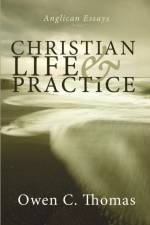
Description:This book is a study of the Christian life and the practice of Christians and the church from an Anglican perspective. It begins with an analysis and explication of the structure and process of the Christian life before God in the church and the world involving a five-fold rule of life and the relation of this to spiritual direction. This is followed by an analysis and critique of the current spirituality movement, which arose in the 1970s and which has come to dominate and mislead the churches. A sequel to the latter explains the origin of the spirituality movement in the current Romantic movement that arose in the 1960s and has influenced all aspects of our culture with ambiguous results. Next there is a critique of contemporary parish ministry as practiced in residential parishes that at best ministers only to the private lives of its members, followed by a fictional story of such a residential parish that suggests a new departure in parish ministry. Then there is a critique of preaching in the Episcopal Church that is generally considered to be poor, and a proposal of a way to overcome this. The concluding three chapters treat a fundamental problem in our approach to private prayer and a way to resolve this, a proposal for a way to overcome the current impasse in the Anglican Communion concerning homosexuality, and a meditation on the responsibility of Christians in public life.Endorsements:""Owen Thomas is a prophet, in the biblical sense of the word, calling a community to examine its way of life and look to the rock from which it was quarried. His book is progressive, at times radical, precisely because it is rooted in the best of a tradition he knows as well as anyone. The scope of these essays is remarkable-from philosophical theology to parish administration-with a solid center in the life of the Spirit, lived amid the perplexities of history."" -Charles Hefling, Professor of Systematic Theology, Boston College""What Owen Thomas has to say about Christian life and practice will delight many, confound others, and challenge all of us to think more critically about things that matter. This is a distinctively Anglican voice crying out on behalf of embodied spirituality, political engagement, and prophetic ministry.""-Arthur Holder, John Dillenberger Professor of Christian Spirituality, Graduate Theological Union""In this legacy of his years as theological reflector on Christian life, Owen Thomas, in his own creative way, articulates the persistent insistence of the Bible and Anglican tradition that faith and practice, truth and action have been so joined together by God that they must never be put asunder. Well worth reading and pondering.""-Harvey H. Guthrie, Former Dean and Professor of Old Testament, Episcopal Divinity SchoolAbout the Contributor(s):Owen C. Thomas is Emeritus Professor of Theology of the Episcopal Divinity School, Cambridge, Massachusetts, and the author of eight previous books in theology and the philosophy of religion. A former physicist, he has been a visiting professor at the Gregorian University and the North American College in Rome, an adjunct professor at the Graduate Theological Union in Berkeley, California, and past president of the American Theological Society.
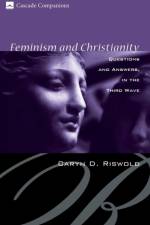
Description:Why should feminists care about Christianity? Why should Christians care about feminism? In Feminism and Christianity Riswold presents a collection of concise answers to basic questions like these in order to generate discussion about how the two can challenge each other and can even work together in the twenty-first century. Situated firmly in the third wave of feminist activism and scholarship as well as in contemporary Christian theology, Riswold addresses issues such as race, class, gender, and sexuality with an affirmation of tradition alongside a push for change. This book is an opportunity for Christians to gain a fuller understanding of feminism, moving beyond stereotypes and assumptions and into history and contemporary society. Simultaneously this book is an opportunity for feminists to understand the ongoing relevance of a religion whose social power and core commitments can contribute to a vision of a just human community.Endorsements:""Riswold''s talent as a teacher comes shining through as she confronts the suspicions Christians and feminists hold of one another, calling for appreciation of the complexity and diversity in both traditions. Rather than simply reviewing past interactions between Christianity and feminism, she boldly takes the conversation into the twenty-first century by engaging the pressing issues of race, ecology, sexuality, and interreligious understanding. A must-read for students, book groups, and scholars alike.""--Deanna A. Thompson,Professor of ReligionHamline University""Even though the conversation between feminism and Christianity has developed for decades, no other book so clearly names and answers the leading questions they ask of each other . . . Riswold''s book is a delightful introductory resource for individuals, classes, and groups as it touches on and aptly answers all the main questions and fears I have heard expressed from students in women''s studies and religion courses concerning feminism and Christianity. All in all, Feminism and Christianity exemplifies Riswold''s gift for thorough, broad scholarship presented in a very clear, engaging, and accessible style.""--Marit A.Trelstadeditor of Cross Examinations: Readings on the Meaning of the Cross TodayAbout the Contributor(s):Caryn D. Riswold is Associate Professor of Religion and chair of Gender and Women''s Studies at Illinois College in Jacksonville, Illinois. She is the author of Two Reformers: Martin Luther and Mary Daly as Political Theologians (2007) and Coram Deo: Human Life in the Vision of God (2006).
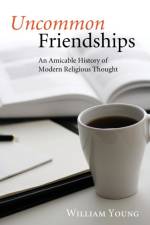
Description:Uncommon Friendships explores the often-overlooked dynamic of interreligious friendships, considering their significance for how we think about contemporary religious thought. By exploring the dynamics of three relationships between important religious thinkers--Franz Rosenzweig and Eugen Rosenstock-Huessy, Emmanuel Levinas and Maurice Blanchot, and Julia Kristeva and Catherine Clément--this study demonstrates the ways such friendships enable innovation and transformation within religious traditions. For each pair of thinkers, the sustained engagement and disagreement between them becomes central to their religious and philosophical development, helping them to respond effectively and creatively to issues and problems facing their communities and societies. Through a rereading of their work, Young shows how such friendships can help us rethink religion, aesthetics, education, and politics--as well as friendship itself.Endorsements:""An utterly remarkable treatise on the inter-religious friendships that joined three pairs of the great thinkers of twentieth-century Europe. I know of nothing quite like this. It is rigorous scholarship that has the sharp edge of cultural criticism and yet the inspiring effect of a philosophic and spiritual poem. Its lesson is indeed uncommon: that critical reason is strengthened by love, that love is deepened by undomesticated difference, and that, in a quiet way, the name of God may have a lot to do with all of the above.""--Peter OchsUniversity of Virginia""An elegantly written and intellectually engaging study, William Young''s Uncommon Friendships offers a refreshing portrayal of the praxis of friendship and its ability to operate as a key element in the development of ideas generally and in efforts towards inter-religious dialogue in particular. Young''s lucid descriptions of the long-term intellectual engagements between Rosenstock/Rosenzweig, Levinas/Blanchot, Kristeva/Clement highlight the embodied, creative, and often unsettling affects of friendship upon the evolution of an intellectual work. Young''s book deepens our understanding of the social character of knowledge and challenges readers to consider the value of a praxis of friendship as a check upon solipsism and the drive for truth and as a tool for cultivating patient listening and an openness regarding the contingency of our beliefs."" --Randi RashkoverGeorge Mason UniversityAbout the Contributor(s):William W. Young is Associate Professor of Humanities at Endicott College. He is the author of The Politics of Praise: Naming God and Friendship in Aquinas and Derrida (2007), and has published numerous articles on Derrida, Levinas, and postmodern religious thought.
Description:This volume brings together twelve scholars from a variety of scholarly fields including biblical studies, history, theology, sociology, anthropology, and missiology in a multi-disciplinary exploration of themes related to women''s leadership within the three branches of the renewal movement: Holiness, Pentecostal and Charismatic traditions. These scholars - women and men - from both within and outside the traditions, draw on various methodologies including hermeneutics, ethnography, critical theory, and historical analysis to explore the experiences and contributions of women from the movement''s inception to the present. They keep before us the challenges that still impact women''s full participation as equal partners in ministry and leadership on both the American and global scene. The volume looks at the multiple roots of women''s marginalization within the renewal movement while suggesting progressive solutions that take seriously the social locations of Pentecostal and Charismatic congregations and the theological foundations on which the movement has been built. At the same time, it locates these discussions within the broader postmodern realities facing the church as it attempts to faithfully live out its witness to the biblical truth that both male and female are created in the God''s image and endowed with the capacity to work creatively toward the unfolding of the Kingdom. Endorsements:""My childhood experience led me to believe God called both men and women to ''full-time ministry.'' My mom and dad were listed as co-pastors of every church they served. They shared all duties of pastoral ministry. I assumed the Spirit coming on ''all flesh'' meant men and women alike. This volume documents, in detail, the complexities of ''Philip''s daughters'' as the Pentecostal-charismatic tradition has emerged and developed. My childhood experience has been impacted by much of what has been carefully researched and analyzed by the contributors to this volume. The stories told and critiques offered reflect lived experiences rather than aloof scholarship. Years of ministry have confirmed the veracity of this volume''s clarion call to a hermeneutic of recovery. The future effectiveness of the Pentecostal movement may well depend on the fullest release of Philip''s daughter to prophesy.""--Byron KlausPresident, Assemblies of God Theological Seminary""The time for this volume is long overdue. The Pentecostal-charismatic movement has been birthed and nurtured by its spirit-inspired women. Its future relevance will depend on its commitment to and inclusion of the ''weaker sex.'' These scholars, writing from inside and outside the movement, provide compelling, thoroughly researched accounts of this history. The editors are leading voices and advocates for the full participation of women in every capacity. Failure to heed their direction will result in an uneven future for the entire Pentecostal-charismatic movement.""--Emerson B. PoweryProfessor of Biblical Studies, Messiah CollegeAbout the Contributor(s):Estrelda Alexander is Associate Professor of Theology at Regent University School of Divinity. She is author of two books including The Women of Azusa Street (2006). Amos Yong is Professor of Theology at Regent University School of Divinity. He is the author of six books, including the award winning The Spirit Poured Out on All Flesh: Pentecostalism and the Possibility of Global Theology (2005).
Abonner på vårt nyhetsbrev og få rabatter og inspirasjon til din neste leseopplevelse.
Ved å abonnere godtar du vår personvernerklæring.