











Gjør som tusenvis av andre bokelskere
Abonner på vårt nyhetsbrev og få rabatter og inspirasjon til din neste leseopplevelse.
Ved å abonnere godtar du vår personvernerklæring.Du kan når som helst melde deg av våre nyhetsbrev.

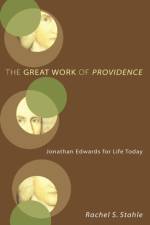
Description:Even though Jonathan Edwards is arguably America''s greatest theologian, the content and value of his work remains a mystery to most. Stahle systematizes and summarizes Edwards''s biblically grounded thought in contemporary language and makes Edwards accessible to pastors, students, and church study groups. Edwards''s conceptions of the Trinity are explained in detail and shown to be the basis for the rest of his theology, including his ideas about sin, salvation, holiness, the purpose of history, Scripture, revivals of religion, heaven and hell, and the church. Reflection and study questions are provided to enrich comprehension and demonstrate the relevance of Edwards''s theology for contemporary life. The wealth of this Puritan''s personal piety and intellectual brilliance is no longer beyond the reach of twenty-first century Christians.Endorsements:""With The Great Work of Providence, Rachel Stahle provides a helpful and practical summary of Jonathan Edwards''s theology for busy pastors, church leaders, and laypeople who recognize the importance of being theologically literate (especially in a culture that seems to see no need for deeper theological study) but do not have the time needed for diving deeply into the writings of Edwards. In the end, the book whets the appetite for more theological reflection and more Edwards.""--Rev. Rich NobleWashington Union Alliance Church, New Castle, Pennsylvania Geneva College, Adjunct FacultyAbout the Contributor(s):Rachel S. Stahle (PhD, Boston University) is pastor of First Presbyterian Church of Carteret, New Jersey, and the author of numerous articles and papers.
Description:From intellectual inquiry to spiritual practice to social reform, Pietism has exerted an enormous influence on various forms of Christianity and on Western culture more generally. However, this contribution remains largely unacknowledged or misunderstood in Anglo-American contexts because negative stereotypes--some undeserved, others deserved--tend to cast Pietism as a quietistic and sectarian form of religion interested in a narrow set of individualistic and spiritual concerns.In this volume, scholars from a variety of disciplines offer a corrective to this misunderstanding, highlighting the profound theological, cultural, and spiritual contribution of Pietism and what they term the ""pietist impulse."" The essays in this volume demonstrate that Pietism was a movement of great depth and originality that was not merely concerned with the ""pious soul and its God."" Rather, Pietists were from the beginning concerned with issues of social and ecclesial reform, the nature of history and historical inquiry, the shape and purpose of theology and theological education, the missional task of the church, and social justice and political engagement. In addition, the essays collected here fruitfully raise the question of the ongoing relevance of Pietism and the ""pietist impulse"" for contemporary problems and questions across disciplines and in the church at large.Endorsements:""Understanding Pietism is critical for grasping the modern manifestations of Protestantism in Europe and North America. This impressive volume illustrates both the diversity and range of American research on Pietism and its promise for scholars on both sides of the Atlantic.""--Hartmut LehmannMax-Planck-Institut für Geschichte, Göttingen""The editors of The Pietist Impulse have assembled a deep and far-ranging collection on an important theme in the history and practice of Christianity. Leading scholars from a variety of fields investigate a unifying theme in a refreshing number of methodological, chronological, and geographic permutations. These works demonstrate the vitality, the centrality, and the many possibilities of Pietist studies today.""--Katherine Carté EngelTexas A&M UniversityAbout the Contributor(s):Christian T. Collins Winn is Associate Professor of Historical and Systematic Theology at Bethel University in St. Paul, Minnesota. He is author of ""Jesus is Victor!"" The Significance of the Blumhardts for the Theology of Karl Barth (2008) and Series Editor for the Blumhardt Series (Cascade Books). Christopher Gehrz is Associate Professor of History and coordinator of the Christianity and Western Culture program at Bethel University in St. Paul, Minnesota.G. William Carlson is Professor of History and Political Science at Bethel University in St. Paul, Minnesota. He is the author of numerous articles on Baptist General Conference history, Swedish Pietism, religion in the Soviet Union, and comparative evangelical political thought. Eric Holst is a graduate of Bethel Seminary, with an interest in contextual theology and theories of Christian education.
About the Contributor(s):Catherine Cornille is the Newton College Alumnae Chair of Western Culture and Professor of Comparative Theology at Boston College. She is the author of The Im-Possibility of Interreligious Dialogue (2008) and editor of The Wiley-Blackwell Companion to Interreligious Dialogue (2013). Cornille is also founding and managing editor of the series Christian Commentaries on Non-Christian Sacred Texts.Jillian Maxey is a doctoral candidate in Comparative Theology at Boston College, working in the area of Jewish-Christian Dialogue.
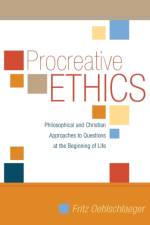
Description:Procreative Ethics addresses questions at the beginning of life from a point of view that is alternatively philosophical and Christian. The author seeks to defend philosophically some positions taken partly on Christian grounds while also trying to make the implications of Christian convictions intelligible to those who do not necessarily share those convictions. The author positions himself neither as a ""moral friend"" nor ""moral stranger,"" preferring instead the role of ""moral acquaintance"" to his audience. From that position, the goal is to find areas of fruitful agreement while clarifying differences that may lead to truer reconciliations further on in the conversation. The book opens with an attempted natural law defense of artificial contraception; devotes four chapters to criticism of current defenses of abortion; and then takes up, in six remaining chapters, such matters as genetic enhancement of children, the justice or injustice of genetic revision, the harm conundrum or non-identity problem, designing for disability, and reproductive cloning.Endorsements:""Fritz Oehlschlaeger has written a remarkable book that needs to be read by everyone with a stake in moral questions at life''s beginning. Displaying theological and philosophical sophistication as well as a profound wisdom, these arguments must be taken seriously by those who agree with Oeschlaeger as well as those who do not.""--Joel James ShumanKing''s College""Writing with a modesty that betrays the depth of argument that characterizes Procreative Ethics, Fritz Oehlschlaeger has written the most important book in bioethics in recent memory. Bioethics has long suffered from a stale imagination. Oehlschlaeger, an acknowledged outsider to the field, brings to his work a fresh imagination shaped by literary texts and a profound humanity. Hopefully many will want to emulate his work in other areas of bioethics.""--Stanley HauerwasDuke University""In this new book Fritz Oehlschlaeger has made masterful and persuasive arguments about the moral challenges looming at the beginning of human life. And he does this as a highly informed non-specialist--an English professor no less!""--Robert BenneRoanoke CollegeAbout the Contributor(s):Fritz Oehlschlaeger is Professor of English at Virginia Polytechnic Institute and State University. He is co-author of Articulating the Elephant Man: Joseph Merrick and His Interpreters (1992) and Love and Good Reasons: Postliberal Approaches to Christian Ethics and Literature (2003).
Description:On the morning after they walked for miles through freezing rain to a prayer vigil outside the White House in March 2007, a group of young war protesters listened to one last speech before heading home to Chicago. Peter Dula, who had served with the Mennonite Central Committee in Iraq, spoke honestly about the caustic combination of guilt and disempowerment the protesters were struggling with. He commended protesting and suggested resisting war taxes, then made two surprising final recommendations: ride a bike and plant a garden.Electrified by Dula''s speech, the group wanted to talk more about their disillusionment and to learn from their elders in activism and the church. So in November 2007 they hosted a conference at Reba Place Church in Evanston, Illinois, where over two hundred people gathered to learn, worship, and contemplate a more hopeful way. This volume is a collection of the major addresses from that conference.The contributors suggest a new way to live in the tension between hope that things will improve and cynicism about whether they ever will. While creating space for lament, they point toward a radical Christian faithfulness in neighborhoods and congregations that can be both hopeful and profoundly political.Endorsements:""Most Christians in the United States still tune their hope to the rhythm of the election cycle. For Reba Place Fellowship, Living Water Community Church and these other contributors, hope is tuned to quieter things a noisy world cannot hear--things like friendship, gardening, sitting down with enemies, and ultimately, Jesus. This collection is bracing in its timeliness.""--Jason ByasseeDirector of the Center for Theology, Writing & MediaDuke Divinity SchoolAbout the Contributor(s):Meg E. Cox is a freelance writer and editor.
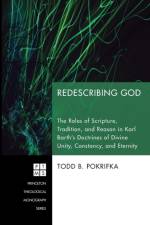
Description:Despite the voluminous and ever-growing scholarly literature on Karl Barth, penetrating accounts of his theological method are lacking. In an attempt to fill this lacuna, Todd Pokrifka provides an analysis of Barth''s theological method as it appears in his treatment of three divine perfections--unity, constancy, and eternity--in Church Dogmatics, II/1, chapter VI. In order to discern the method by which Barth reaches his doctrinal conclusions, Pokrifka examines the respective roles of Scripture, tradition, and reason--the ""threefold cord""--in this portion of the Church Dogmatics. In doing so he finds that for Barth Scripture functions as the authoritative source and basis for theological critique and construction, and tradition and reason are functionally subordinate to Scripture. Yet Barth employs a predominantly indirect way of relating Scripture and theological proposals, a way in which tradition and reason play important ""mediatory"" roles. Barth''s approach to theology involves the humble yet serious attempt to ""redescribe God,"" that is, to say again on a human level what God has already said in the divine self-revelation attested in Scripture.Redescribing God features an original conceptual framework for the analysis of Barth''s method and an extensive application of that framework in the context of close readings of portions of the Church Dogmatics. Through this process it draws from, critiques, and complements a wide variety of Barth scholarship on topics such as the role of Scripture and theological exegesis in Barth, the role of tradition in Barth, the meaning and role of ""reason"" in Barth, and the nature of Barth''s doctrine of divine perfections. The book also provides a fruitful basis for those who wish to learn from Barth''s distinctive way of constructing the Christian doctrine of God as an attempt to obey God''s self-revelation. Endorsements:""A thoroughly up-to-date and well-researched account of how Barth deploys Scripture, especially in doctrinal statements concerning God''s character. Pokrifka moves resolutely and carefully through the secondary literature and offers his own fresh appraisal.""--Christopher R. SeitzWycliffe College, University of Toronto""One fundamental problem for Barth was to find a mode of interpretation faithful to the final form of the biblical text that yet was amenable to critical reason. One way in which Barth did this was to argue that the doctrines on divine unity, constancy, and eternity were themselves part of this mode of interpretation. Pokrifka makes good in showing how this was so.""--Neil B. MacDonaldRoehampton UniversityAbout the Contributor(s):Todd Pokrifka is Lecturer in Theology at Azusa Pacific University (Azusa, CA).
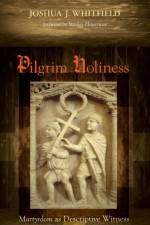
Description:As an explicitly christological witness, martyrdom offers a limited but vital description of the present within the various and unpredictable arenas of living, suffering, and dying. That is to say, martyrdom is not the tragic conclusion of some fatal ideological conflict but a momentary truthful glimpse of present circumstances. Martyrdom reveals, clarifies, and illumines what we take for the real. Martyrs are therefore significant for the church today because they exhibit the sort of truthful living that refuses the claims of history and power without Christ; they show the sort of living and dying that returns forgiveness upon murder, and patience beyond domination. Meditating primarily on the second-century martyrdoms in Lyons and Vienne, France, Pilgrim Holiness offers a view of Christian martyrdom that challenges prevalent misunderstandings about what martyrs are doing in sacrificing their lives. Joshua J. Whitfield argues that martyrdom is a moment of truthful disclosure and thus a moment of forgiveness and peace--gifts for which we are in desperate need.Endorsements:"In a time when critics of Christianity, and religion in general, point to the practices of martyrs as examples of the inherently irrational, violent, and dangerous character of religious devotion, Whitfield challenges Christians to reconsider Christ''s call to "take up one''s cross" by suspending our suspicions and listening to the stories of the martyrs in conversation with contemporary theological voices such as Rowan Williams, Stanley Hauerwas, Sam Wells, and others."--J. Warren SmithDuke University"We are not superior or inferior to those who came before us, we are simply in the same situation as them: called to bear witness--in our lives and perhaps in our deaths--to the nonviolent truth embodied by Jesus Christ. This book, which is steeped in the patristic martyr narratives, unpacks this simple statement in skillful dialogue with contemporary thought. Its goal is to show that the hoped-for unity of Christians has no other plausible basis than peaceful imitation of Christ."--Charles K. BellingerBrite Divinity School"Joshua Whitfield has concocted a perceptive and important antidote to the secular politics of death-making. Insisting that martyrs die for love of truth armed only with the power of description, Whitfield stands against the acrimonious caricatures du jour by uncoupling Christian martyrdom from power but not from truth. This book is a clarion call to any church that has brokered an unholy trade-off in producing members who would more readily kill than die."--Craig Hoveyauthor of To Share in the Body: A Theology of Martyrdom for Today''s Church "In this erudite tome, Whitfield offers an account of martyrdom that refuses the shackles of liberal secular politics. Such refusal, however, is not rooted in a rejection of the world and its attempts to regulate sacred narratives; rather, Whitfield reminds us that its refusal is predicated on the eschatological promise that God will bring all creation to completion. The witness of the martyr, therefore, is not a discourse about the individual agent; it is a discourse about the saving activity of the Triune God."--Tripp Yorkauthor of The Purple Crown: The Politics of Martyrdom About the Contributor(s):Joshua J. Whitfield is an Anglican priest and rector of the Church of Saint Gregory the Great in Mansfield, Texas.
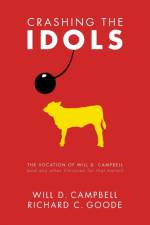
Description:If prophets are called to unveil and expose the illegitimacy of those principalities masquerading as ""the right"" and purportedly using their powers for ""the good,"" then Will D. Campbell is one of the foremost prophets in American religious history. Like Clarence Jordan and Dorothy Day, Campbell incarnates the radical iconoclastic vocation of standing in contraposition to society, naming and smashing the racial, economic, and political idols that seduce and delude.Despite an action-packed life, Campbell is no activist seeking to control events and guarantee history''s right outcomes. Rather, Campbell has committed his life to the proposition that Christ has already set things right. Irrespective of who one is, or what one has done, each human being is reconciled to God and one another, now and forever. History''s most scandalous message is, therefore, ""Be reconciled!"" because once that imperative is taken seriously, social constructs like race, ethnicity, gender, and nationality are at best irrelevant and at worst idolatrous.Proclaiming that far too many disciples miss the genius of Christianity''s good news (the kerygma) of reconciliation, this Ivy League-educated preacher boldly and joyfully affirms society''s so-called least one, cultivating community with everyone from civil rights leaders and Ku Klux Klan militants, to the American literati and exiled convicts. Except for maybe the self-righteous, none is excluded from the beloved community.For the first time in nearly fifty years, Campbell''s provocative Race and Renewal of the Church is here made available. Gayraud Wilmore called Campbell''s foundational work ""an unsettling reading experience,"" but one that articulates an unwavering ""confidence in the victory which God can bring out of the weakness of the church.""Endorsements:""Richard Goode is at it again, much like Will Campbell before him. Both of these southern Christian iconoclasts have helped me to appreciate what Goode calls ''the genius of Radical Christianity.'' I recommend this book as an inspiring introduction to Campbell''s life, prophetic witness, and to all for which he stood. May it embolden others to stand against ''the principalities and powers of the world.''""--Douglas A. Sweeneyauthor of The American Evangelical Story""Here is a book whose radical fidelity to the kingdom of God will shake you to the core. Drawing on the life and teachings of Will Campbell, Goode explains, for example, why Jesus ''was a traitor'' whose ''Way is to commit treason,'' and why there is finally no hope for principalities and powers like the PTA, the Pentagon, Communism, the Methodist Church, or the United States of America. If this book doesn''t turn your world upside-down, then either you missed the point or you''re not serious about following Jesus.""--Richard T. Hughesauthor of Christian America and the Kingdom of GodAbout the Contributor(s):Will D. Campbell was a Baptist preacher in Taylor, Louisiana, for two years before taking the position of Director of Religious Life at the University of Mississippi from 1954 to 1956. Forced to leave the university because of his ardent Civil Rights participation, Campbell served on the National Council of Churches in New York as a race relations consultant. Campbell worked closely with the Rev. Martin Luther King Jr., John Lewis, and Andrew Young toward bettering race relations. Campbell''s Brother to a Dragonfly earned him the Lillian Smith Prize, the Christopher Award, and a National Book Award nomination. The Glad River won a first-place award from the Friends of American Writers in 1982. His works have also won a Lyndhurst Prize and an Alex Haley Award. Richard C. Goode is Professor of History at Lipscomb University in Nashville, and coordinates the Lipscomb University program at the Tennessee Prison for Women.
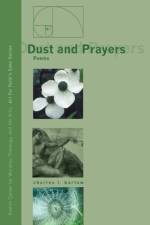
Description:Dust and Prayers offers an evocation of love, human and divine, and of the struggles of believers and unbelievers. It depicts something of the human condition apart from God and, through praise and lament, with humor and pathos it speaks of the divine remedy. It speaks of creation, too, and of the Creator, and of humanity (created in God''s image), as dust and spirit. Its voice at times is free of the constraints of rigorous poetic forms. At other times its voice is set free by adherence to them. Its cry is biblical: Lord, "I believe; help my unbelief" (Mark 9:24)! It references the Psalms, the Prophets, the Gospels, the Apostle Paul''s letters, and strains to come to terms with God''s Holy Presence felt as Holy Absence in, with, under-and in front of-the text. Its hope is grounded in the blessed disturbance with which the Christ, attested in Holy Scripture, proffers the "blessed assurance" that we are his.Endorsements:"Bartow''s poems serve their purposes with dignity and grace. Appropriating and adapting traditional forms, he has commemorated not only the large events that give shape to specific lives--birth, death, marriage--but also the small moments in which grace becomes visible in a squirrel, a shaft of light on a forest path, an awakened memory of an old teacher. We hear in these poems echoes of Herbert, Emerson, and Frost, and of the biblical stories and scenes that deeply inform the poet''s sensibility and frame his understanding of ''ordinary'' life, which insists, like Hopkins, that nothing is really ordinary, because ''it is all a purchase, all a prize.''" --Marilyn Chandler McEntyre, author of Christ, My Companion: Meditations on the Prayer of St. Patrick"Stop, keep still, and listen to the soul stirring poems in this collection. Charles Bartow lays these pieces before us like steppingstones across his passion for God, God''s gospel, and God''s Creation. His work is honest, heart-felt, and inspiring. Take them up, give them voice, and watch them dance in the Spirit!" --Richard F. Ward, author of Speaking of the Holy: The Art of Communication in PreachingAbout the Contributor(s):Charles L. Bartow is Carl and Helen Egner Professor of Speech Communication in Ministry at Princeton Theological Seminary. He is author of God''s Human Speech: A Practical Theology of Proclamation (1997).
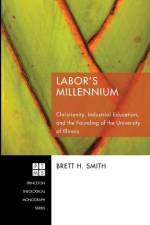
Description:Historians have traditionally interpreted the American land-grant higher-education movement as the result of political and economic forces. Little attention has been given, however, to any explicit or implicit theological motivations for the movement. This book tells the story of how the Christian belief of many founders of the University of Illinois motivated their educational theory and practice. Constructing a social gospel of labor''s millennium (their shorthand for God''s kingdom being enhanced through agricultural and mechanical education), they initially proposed that the university would impart a millenarian blessing for the larger society by providing abundant food, economic prosperity, vocational dignity, and a charitable spirit of sacred unity and public service. Rich in primary-source research, Smith''s account builds a compelling case for at least one such institution''s adaptation of an inherited evangelical educational tradition, transitioning into a new era of higher learning that has left its mark on university life today.Endorsements:""Religious motivations were at the heart of the expansion of higher education in the United States. Brett Smith, using the University of Illinois as a case study, tells the fascinating story of the religious commitments, conflicts, and institutions that were at the heart of the founding of ''state colleges'' of higher education. In today''s more conflicted era, we too often forget how deeply religion has been at the heart of the efforts to expand opportunity, grow educational access, and shape public life in hopeful and healing patterns. Thanks to Dr. Smith for reminding us of this heritage."" --Jack L. SeymourGarrett-Evangelical Theological Seminary""In an age where retreaded historical themes and worn out clichés have been used to explain the history of American higher education, along comes Labor''s Millennium: Christianity, Industrial Education, and the Founding of the University of Illinois. Bringing a refreshingly different perspective, Smith demonstrates the viability of the explanatory power of theological constructs and offers his readers an oft overlooked and underutilized framework to understand the founding of one of America''s greatest public universities.""--J. Gregory BehleThe Master''s CollegeAbout the Contributor(s):Brett H. Smith is the Pastor of the University Baptist Church and the director of the Baptist Housing Ministry in Champaign, Illinois.
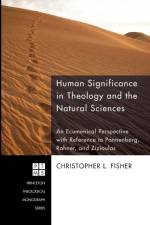
Description:The medieval worldview that regarded human beings as at the center of God''s plans for His universe has long been regarded as obsolete; its synthesis of Christian theology and Greek philosophy having collapsed under the weight of Copernicus, Galileo, and Darwin. The popular stereotype is that Science, both in the Copernican revolution that dethroned the earth-centered view of the cosmos and in subsequent developments in evolutionary theory and general relativity, has marginalized and trivialized human existence, revealing humanity''s ""place in the cosmos"" to be accidental, peripheral, and ultimately meaningless. However, an investigation into both modern Christian theology and contemporary twenty-first century Science reveals just the opposite, providing solid evidence in the interdisciplinary dialogue concerning the significance of humanity within the universe. In this important study, Christopher Fisher analyzes several modern theologians, including Wolfhart Pannenberg, Karl Rahner, and John Zizioulas, to reveal how contemporary ecumenical theology is deeply and intrinsically committed to a high view of human cosmic significance as a consequence of Christianity''s indelible Trinitarian and incarnational faith. Fisher then demonstrates how research in contemporary natural Science confirms this finding in its own way, as recent primate intelligence studies, artificial intelligence research, and even the quest for extra-terrestrial intelligence reveal the wonder of human uniqueness. A contemporary version of the teleological argument also resurfaces in consideration of cosmic evolutionary perspectives on human existence. Even ecological concerns take on a new poignancy with the realization that, among material creatures, only human beings are capable of addressing the world''s situation.This interdisciplinary study uncovers the surprising coherence and convergence of Christian Theology and Natural Science on the subject of human existence and significance here at the beginning of the twenty-first century, and it highlights the very unique role of humanity in global and cosmic history.Endorsements:""Through an incisive study of several leading twentieth-century theologians, Chris Fisher explores the ecumenical consensus for a strong reading of human cosmic significance. While acknowledging problems surrounding earlier forms of anthropocentrism, he argues that Christian theology remains wedded to a high understanding of the place of human beings in the economy of creation and salvation. This is a valuable contribution to an important debate in contemporary theology."" --David Fergusson University of Edinburgh""This is a fascinating work on the interface between theology and science . . . The author''s remarkable breadth of knowledge, clarity of thought, and lucid writing style enable him to help the reader to understand the coherence between science and faith. This scholarly work is an irenic and well-informed presentation of the Christian faith and will become one of the primary textbooks in theology, philosophy of religion, and philosophy of science.""--Laurence W. WoodAsbury Theological SeminaryAbout the Contributor(s):Christopher L Fisher is Adjunct Professor of Theology at Asbury Theological Seminary in Wilmore, Kentucky. He is an ordained elder in the Eastern Pennsylvania Conference of the United Methodist Church and serves as Senior Pastor of First United Methodist Church in Schuylkill Haven, Pennsylvania.
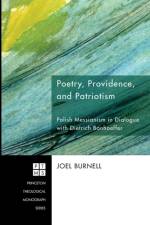
Description:Polish messianism tells the story of a nation struggling to survive and regain its independence. As narrated by the poets Jan Pawe_ Woronicz and Adam Mickiewicz, its vision of patriotism and civil responsibility, first told two hundred years ago, contains promising resources today for a world facing challenged by pluralism, secularization, nationalism and religious fundamentalism. Yet this messianism has a dark side. The romantic philosophy of history that funded this messianism proved an inadequate defense against Prussian and Russian military might, and failed to inoculate Poles against the rising spirit of nationalism, xenophobia and anti-Semitism that swept Europe in the nineteenth and twentieth centuries.In seeking to address the problematic and promising feature of Poland''s particular messianism, Burnell draws up on the theology of Dietrich Bonhoeffer, arguing that his theology offers a much-needed critique of the myths and values of romantic national messianism. Where such messianism asks how Christ could serve a nation''s cause and freedom, Bonhoeffer declared that by it is by following Christ in discipleship that people and nations become truly free. Recently, a new wave of Polish religio-political fundamentalism has appeared, as a response to the rapid secularization of society since the end of the Cold War. Certain members of the Polish clergy have again joined conservative politicians to promote nationalistic, populist, xenophobic, and anti-Semitic attitudes. Bonhoeffer, in contrast, argued for leaders who ennoble and empower those they serve, and modeled how patriots can honor their nation''s achievements while freely confessing its failures. His legacy facilitates dialogue and reconciliation in the ongoing struggle against ethnic, religious and national bigotry. Following his lead, the messianic myth of ""Poland, the Christ of the nations,"" can be recast as a call to follow the One who is ""God-for-us"" and ""the-man-for-others"" by standing with the suffering, by speaking for the disenfranchised, and serving alongside other nations in the cause of freedom and justice. Endorsements:""Joel Burnell is not only well-versed in the origins of Polish Messianism, but also in more recent, modern Polish history. Here he succeeds in drawing together this rich history with the insights of Dietrich Bonhoeffer in a dynamic, creative, and critical dialogue. His concluding chapter offers solid guidance, not only for Poland, but for anyone interested in navigating the challenging course, as we enter the twenty-first century, between secularism and fundamentalism.""--John W. MatthewsPresident of the International Bonhoeffer Society-English Language Section ""Europe--like other world regions--badly needs models of how faith can interact creatively and not destructively or demonically with national, cultural, and religious traditions so as to create true communities of justice and peace. Joel Burnell''s penetrating study on how the thought of one of Europe greatest twentieth-century Christians, Dietrich Bonhoeffer, aided the renewal of one of Europe''s most enduring and precious traditions, the Polish, will admirably serve this end.""--Keith ClementsFormer General Secretary, Conference of European Churches""This is a book that brings the reader into intimate contact with the hopes and aspirations of a courageous people in their struggles for independence and their eventual post-war and post-communist-control liberation and their eventual taking their place in modern European and world history . . . [It] offers insights not only into the troubled history of the Polish nation but also into the ways in which the theology and ethics of Dietrich Bonhoeffer can impact a society seeking to be a valued partner in a new European community of nations.""--Geffrey B. KellyLa Salle University, PhiladelphiaAuthor of Reading Bonhoeffer (Cascade Books)About the Contributor(s): Joel Burnell is in a Lecturer in Dogm
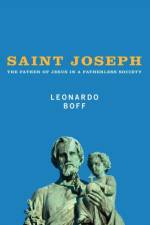
Description:In Saint Joseph Leonardo Boff seeks to provide a vigorous critique and theological analysis of Saint Joseph and in so doing attempts to undo historical misconceptions, misunderstandings, and cliches that surround the figure of Joseph. The book provides a comprehensive view of the topic as it takes into account biblical references, including the apocrypha, church tradition, papal edicts, liturgical expressions, and various viewpoints proposed by theologians. Boff is also concerned with updating the figure of Saint Joseph; his first step in this direction is to provide a clear understanding of the life of Joseph as an artisan, husband, father, and educator. He then deals with the issue of the importance of Saint Joseph for current issues concerning family and fatherhood. Lastly, Boff argues that Saint Joseph helps us to understand new facets of the mystery of God, and the author does this through his argument concerning the order of hypostatic union, where, according to his argument, there is a relation between Jesus and the Son, Mary and the Holy Spirit, and Joseph and the Father. Boff seeks here to fill a gap in the theological literature, given that theologians have concentrated their efforts on Jesus and the Son and Christology, and Mary and the Holy Spirit and Mariology; but these same theologians have, by and large, given very little time to the figure of Saint Joseph and the Father and Josephology.About the Contributor(s):Leonardo Boff was born in Brazil in 1938 and received a doctorate from the University of Munich in Germany in 1970. For the following 20 years he worked as Professor of Theology at the Franciscan School for Philosophy and Theology in Petropolis, Brazil. During the 1970s, he and Gustavo Gutierrez helped to define Liberation Theology. Since 1993 he has been a professor at the State University of Rio de Janeiro, where he is now Emeritus Professor of Ethics, Philosophy of Religion, and Ecology. He is also a member of the International Earth Charter Commission. Boff is the author of more than 70 books, including Jesus Christ Liberator: A Critical Christology for Our Time. In 2001 he was awarded the Right Livelihood Award (which is considered to be the ""alternative"" Nobel Prize) by the Swedish Parliament. Alexandre Guilherme, the translator, does research and teaches at the University of Durham, UK.
Description:Since the Renaissance of the 14th through 17th centuries, and particularly since the Enlightenment of the 18th century, the ancient creeds of faith have been under serious fire, and the struggle has not gone well for popular religion in America. The rapid advances made by the physical sciences in the 19th and 20th centuries and the corresponding reliance on scientific accomplishments in American life have been matched by the growing influence of reason in the way Americans think about religion. Except for pockets of resistance, these developments have negatively influenced the practical role of traditional religion in American life. These essays-published over a twenty-year period as newspaper editorials addressed to the general public-confront popular beliefs and morals with the challenge of human reason. At issue in this meeting of faith and reason is nothing less than the nature of religion in the twenty-first century. Will faith embrace reason to create a House where both dwell in harmony or will faith ignore the claims of reason and continue to live in an Enchanted Forest? Each essay, written in the practical language of the streets, attempts to dialogue with the general reader and gently provoke critical thinking on sensitive issues of belief.Endorsements:""Charles Hedrick is a scholar who has come clean. From the ""buckle on the Bible Belt"" comes this honest, intelligent, and creative reflection on the struggle between reason (and/or science) and personal faith. Charlie''s reminder to take our personal absolute truths (house of faith) a little less seriously and enjoy the diversity of thought and experience (enchanted forest) is practical, powerful, and incredibly timely.""--Glenna S. Jackson, Professor, Department of Religion and Philosophy at Otterbein College.""House of Faith or Enchanted Forest? is a personal and lively journey along the path of faith and doubt. Charles Hendrick poses deep questions that for centuries have haunted philosophers, historians, and theologians alike. This book awakens and celebrates critical thinking yet remains warmly accessible and resolutely honest. Anyone who wishes to re-think life''s great questions in light of the changing face of Christianity will find joy in reading this book. Here is an excellent resource for discussion groups, book clubs, and inquiring individuals."" --David Galston, Director of the Eternal Spring Learning Centre, Hamilton, Ontario""Charlie Hedrick asks a lot of questions in this provocative collection of short essays. One specific question that, perhaps, sums up the others, ''Can a critical thinker also be a person of traditional religious faith?'' Spanning a wide range of topics, Hedrick offers readers challenging questions to ponder, rather than easy answers to swallow. Yet, by pondering such questions, careful readers will find themselves closer to honest answers than they were before they read this helpful book."" --J. Bradley Chance, Professor and Chair, Department of Religion, William Jewell CollegeAbout the Contributor(s):Charles W. Hedrick is Distinguished Profesor of Religion Emeritus at Missouri State University. He is also the author of Parables as Poetic Fiction, When History and Faith Collide, and Many Things in Parables.
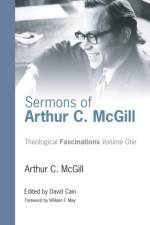
Description:Throughout the 1960s and 1970s, Arthur McGill had numerous opportunities to air his rich theological musings outside of the classroom. We are now fortunate, some twenty-five years after his death, to have seventeen sermons brought to us by the aid of his wife Lucille McGill and editor David Cain (University of Mary Washington). These homilies reveal the core themes that distinguish his theological writings: relaxing in our neediness before God, participating in the death-to-life pattern of self-expenditure, and rooting our hope in the unique power of Christ. The collection culminates with what Cain notes as McGill''s ""signature"" sermon on The Good Samaritan, wherein we see that the reception of grace always precedes the extension of grace. In addressing day-to-day issues such as possessions, speech, loneliness, and anger, McGill is both prophetic and pastoral. He does not hesitate to say that ""the wickedness of Nineveh--alas!--is the wickedness of the United States."" At the same time, he brings a refreshing word with theological depth about human suffering and the God who models ultimate vulnerability.
Description:This unique theological biography traces the emergence of William Stringfellow''s theology and the place of biblical politics within it. It highlights the centrality of life and work to his theology, and the inseparability of one from another. It tells the story of an ordinary life made less ordinary, radicalized through becoming a biblical person. Amidst periods in America of threat and prosperity (1950s), and later dissent and protest (1960s), Dancer examines not only how Stringfellow held America to account, but the way in which he offered a hopeful alternative in which the place of the Bible and the world were both central. It explores the way Stringfellow learned that the Bible makes sense of us and not us of it. This is biblical politics--a radicalizing, organizing engagement with the person and the world of which the church seems to sadly have lost both sight and interest.The advocacy of Karl Barth, his love of the circus, his scholarship to LSE, the National Conference on Religion and Race, his love for his parable of hope, Anthony Towne, and his prophetic confrontation with Johnson''s ""Great Society,"" all offer clues and insights into this radicalizing force at work in his life. Yet it was a life-threatening illness and personal confrontation with death in many ways became the final point of radicalization that lead to the production of Ethic for Christians and Other Aliens in a Strange Land-ethics as pertinent to today as they are to any age.Endorsements:""For me and many others, the life and work of William Stringfellow were seminal in developing a biblical public theology. In what Anthony Dancer calls ''biographical theology,'' this book lays out the social and political context that influenced and informed Stringfellow''s theology of public discipleship. I commend it to anyone seeking for an authentic way of living faithfully, and enacting what Stringfellow called ''biblical politics.''""--Jim Wallisauthor of Rediscovering Values: On Wall Street, Main Street and Your Street""Few American Christians have borne such powerful witness to the word of God and the life of the Christian as did William Stringfellow. While superbly situating him in his own turbulent historical moment, Anthony Dancer also makes clear how powerfully we need to listen to the voice of Stringfellow today.""--William O''BrienCoordinator of The Alternative Seminary""This book is a gift. In the absence of a definitive biography, for which we may yet hope, Dancer provides us the most thorough reflection to date on William Stringfellow''s life. In the process he establishes himself, not only as a biographic theologian, but a voice in the Stringfellonian tradition. May his own summon a new generation to ''Listen to this Man.''""--Bill Wylie-Kellermanneditor of Keeper of the Word: Selected Writings of William StringfellowAbout the Contributor(s):Anthony Dancer works as the Social Justice Commissioner for the Anglican Church in Aotearoa, New Zealand and Polynesia. He is editor of William Stringfellow in Anglo-American Perspective (2005).
Description:""We offer this collection as a token of our affection and admiration of our friend and colleague James Weldon Thompson. . . . His studies of the letter to the Hebrews and of Paul in their intellectual contexts (especially Middle Platonism) have contributed significantly to the ongoing quest for placing the New Testament in its socio-intellectual setting. Although his publications in this area date back more than thirty years, his best work is occurring now, and we may anticipate path-breaking contributions ahead. His more recent work on preaching and pastoral care in Paul both situate the Apostle in his own world and, just as importantly, offer correctives of some contemporary ministerial practices and invitations for improvements. Since 1993 Thompson has served as the editor of Restoration Quarterly, a significant venue for research in biblical studies, church history (especially of the Stone-Campbell Restoration Movement), and contemporary theology. His more popular works make available to a lay audience thoughtful, well-informed, and spiritually rewarding interpretations of much of the New Testament. ""His achievements, however, do not end at the printing press. For more than thirty years, he has taught ministers and others at the Institute for Christian Studies (now Austin Graduate School of Theology) and Abilene Christian University. Students of the past and the present speak of him as a prepared, stimulating, and creative teacher unafraid of experimentation for a new generation of learners. At both institutions he also served as an administrator, first as President of ICS and then as Associate Dean of ACU''s Graduate School of Theology. His colleagues respect his ability to enlist them for work as needed and otherwise to get out of their way, certainly a too rare set of skills in university administrators!"" --from the PrefaceAbout the Contributor(s):Mark W. Hamilton is Associate Professor of Hebrew Bible at Abilene Christian University and author, most recently, of The Body Royal: The Social Poetics of Kingship in Ancient Israel.Thomas H. Olbricht is Distinguished Professor Emeritus of Religion at Pepperdine University. He is the author and editor of numerous works including, most recently, Lifted Up: Crucifixion, Resurrection, and Community in John.Jeffrey Peterson is Wright Professor of New Testament at Austin Graduate School of Theology. He is the author of many essays on early Christianity and its applicability to contemporary life.
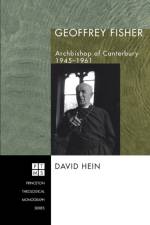
Description:A major figure in twentieth-century Christianity, Geoffrey Fisher worked to modernize the Church of England and to develop the worldwide Anglican Communion. His historic meeting with Pope John XXIII, his participation in national debates on the Suez Crisis and nuclear weapons, and his role in crowning Queen Elizabeth II made him a well-known figure in postwar Britain. His neglect by professional historians is partly remedied by this new biography, the first scholarly account of Fisher''s life and career.Endorsements:""This is a fascinating book--biographical, analytical, and thorough. Particularly interesting is the section that details Fisher''s role in the creation of four Anglican provinces in Africa between 1951 and 1960."" --The Living Church"Hein''s book is an excellent introduction to Fisher, and his bibliography is superb. The book is well written, and the final chapter is an admirable summing up not only of Fisher''s career but also of the state of the Church of England before, during, and after the years of his archiepiscopate."--James Dunkly, Sewanee Theological Review""What a splendid book. Thought-provoking, exceedingly well written, wise and balanced in its account--not only of Fisher''s abilities and achievements but also of his deficiencies and missed opportunities, Hein''s work skillfully blends biography and theological analysis with political, cultural, and social history.""--David L. Holmes, College of William and Mary ""David Hein here offers an elegant appraisal of his subject, placing Fisher in a succession of shifting landscapes and measuring his role with an acute eye. A superb portrait, it is the work of a historian of genuine distinction.""--Andrew Chandler, George Bell Institute at the University of Chichester ""Whilst eminently scholarly and appropriately demanding for the reader, this biography holds one''s attention--a significant achievement, and much to be commended!""--Ann Loades, University of Durham, UK, Emerita""One of the best historians of church and society at work today, David Hein provides us with a keen and much-needed assessment of Fisher''s archiepiscopate. This book is essential reading for anyone interested in the development of today''s Anglican Communion."" --Fredrica Harris Thompsett, President, Historical Society of the Episcopal Church""By highlighting the career of Geoffrey Fisher against the background of the dramatic times and cultural changes through which he lived, David Hein offers a judicious and insightful portrait. Fisher''s accomplishments and shortcomings stand out in this lucid biography.""--Bishop Frederick Borsch, Lutheran Theological Seminary at Philadelphia""David Hein''s treatment of Archbishop Fisher''s career throws a great deal of light on the Church of England, Britain in the mid-twentieth century, and the place of religion in Europe and in the developing world following World War II. His assessment of Fisher as leader of the international Anglican Communion is particularly illuminating.""--W. Brown Patterson, University of the South, Emeritus""This short, accessible book is helpful to both the professional scholar and interested amateur who wish to gain a greater understanding of the Church of England and the Anglican Communion more widely during the turbulent post-war period.""--Wendy Dackson, Ripon College, CuddesdonAbout the Contributor(s):David Hein is Professor of Religion and Philosophy at Hood College and coauthor of The Episcopalians.
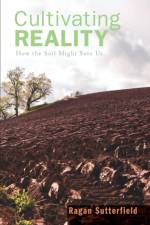
Description:We are, at our base, humus-beings. Our lives are dependent upon the soil and we flourish when we live in this reality. Unfortunately, we have been a part of a centuries-long push to build a new tower of Babel--an attempt to escape our basic dependence on the dirt. This escape has resulted in ecological disaster, unhealthy bodies, and broken communities. In answer to this denial, a habit of mind formed from working close with the soil offers us a way of thinking and seeing that enables us to see the world as it really is. This way of thinking is called agrarianism. In Cultivating Reality, Ragan Sutterfield guides us through the agrarian habit of mind and shows Christians how a theological return to the soil will enliven us again to the joys of creatureliness.Endorsements:""Like tenacious alfalfa roots, which reach deep into the ground and transfer essential nutrients to the soil''s surface, Ragan Sutterfield digs deep into the subsoil of agrarian thought, Christian faith, and his own experience as a farmer, and brings up life-giving nourishment for all to share. In this world of smartphones and dumbed-down culture, Cultivating Reality points us toward those habits of mind that deepen our relationship with the world, with God, and with each other. Here''s to ''the priesthood of all farmers'' and ''the farmerhood of all peoples.'' Take this book, and eat.""--Fred Bahnson, author of Soil and Sacrament: Four Seasons, Five Gardens, and the Search for a New American Spirituality""Sutterfield wants to cure our rapacious apathy toward reality by infecting us with an agrarian mind. His comprehensive argument exposes just how fantastical it is to ignore food and farming as matters of faith. Like farming, this book is also ''a dance of effort and grace''--at once conservingly creative, strenuously imaginative, a disciplined and artful cultivation of our capacity to recognize with equal clarity the idols eviscerating us and the gifts by which we are sustained.""--D. Brent Laytham, Dean of the Ecumenical Institute of Theology, St. Mary''s SeminaryAbout the Contributor(s):Ragan Sutterfield is a writer, teacher, and agrarian living in his native Arkansas. Ragan is the author of Farming as a Spiritual Discipline, a contributor to the book Sacred Acts: How Churches Are Working to Protect the Earth''s Climate, and the author of numerous articles on food, faith, and ecology. He works to live the good life in partnership with his wife, Emily, and daughter, Lillian.
Description:The story of secularization and religious disestablishment in American higher education is told from the standpoint of a lively community of professors, students, and administrators at the University of Michigan in the late nineteenth century. This campus culture--one of the most closely watched of its day--sheds new light on the personal and cultural meanings of these momentous changes in American intellectual and public life. Here we see how religion was not so much displaced or marginalized in the heyday of university reform as translated into new arenas of public service and scholarly pursuit. The main characters in this story--professors Calvin Thomas and Henry Carter Adams--underwent profound religious crises of faith accompanied by major adjustments in their interpersonal relationships. Together, with students and administrators, their lives constituted a communal biography of religious deconversion. A close examination of these private and public worlds provides a more complete understanding of the dynamics behind new academic policies and intellectual innovations in a leading public university. The non-cognitive, intersubjective, gendered, quasi-religious shadings of academic modernism and early pragmatist philosophy, in particular, come to light in vivid ways. As John Dewey later observed, Michigan became an experimental laboratory for ""new meanings to unfold, new acts to propose.""Endorsements:""By focusing on two individuals of note--neither of them so noted that we have them typed in advance--he provides a picture of the striving and struggling that went on among students whose crises cannot be written off as merely adolescent. This he follows with a story of how they worked through their struggles and how sensitive they had to be to people they feared they would hurt, or who they were sure would not understand. And Harrold serves well also by providing that close-up of a struggle at a single place, not an insignificant one: the University of Michigan was the largest university in the United States in the period in which these dramas took place. Michigan was much observed as a scene of experiment, and this book shows what the experimenting looked like. . . . I want to invite readers to enjoy, be informed by, and to reflect after reading this previously untold story."" --Martin E. Marty from the ForewordAbout the Contributor(s):Philip Harrold is Associate Professor of Church History at Winebrenner Theological Seminary. He completed his PhD in the History of Christianity from the University of Chicago Divinity School.
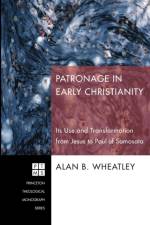
Description:How did the community we glimpse in the New Testament become an institution quite willing to have the emperor Constantine as a primary public partner? By tracing the use of resources, titles, and functions of leaders and patterns of honor giving, Wheatley traces from a wide variety of sources both acceptance and revision of Roman patronage in this countercultural community. Along the way, it is possible to see dissident groups like the Montanists and Marcionites more clearly and sympathetically, and to ask ourselves some pertinent questions about how a Christian community might function in the twenty-first century.Endorsements:""Once you''ve read this excellent book, you may wonder why long ago no one called your attention to this subject, so critically important for understanding the interpersonal challenges faced by the developing Christian movement. Without the knowledge about patronage and benefaction that Wheatley makes so accessible, students of both the New Testament and early Christian history miss perceiving the depth of Jesus'' dynamic reversal of social values and the subsequent struggles of his followers to follow him.""--S. Scott BartchyProfessor of the History of Religion, UCLA""Alan Wheatley''s book is a fine elucidation of how the reciprocity of ancient Greco-Roman patronage is continued, challenged, and transformed in the world of the early Christians. Wheatley''s study not only treats the Pauline texts but most valuably continues his investigation of the ideology of Christian patronage through the end of the third century CE.""--Ronald MellorDistinguished Professor of History, UCLA""Ideals associated with Jesus and Paul challenged the systems of patronal honor and benefaction long entrenched within Greco-Roman society. This learned and provocative book examines the revolutionary nature of those ideals and their impact on writers and authorities of the early church. The result is a refreshing assessment of the influence and vitality of radical Christian social teachings in the age before Constantine, and an important starting point for future scholarship.""--Daniel F. CanerAssociate Professor of History & Classics University of ConnecticutAbout the Contributor(s):Alan B. Wheatley is Associate Professor of History and chair of the Department of History and Political Science at Northwest Nazarene University in Nampa, Idaho.
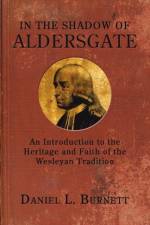
Description:John Wesley (1703-91) was a unique character in history who left a disproportionately large imprint on the world. That imprint was a contagious passion for what he called real Christianity--the Good News of saving grace and scriptural holiness. This book examines Wesley''s life and faith in order to better understand what it means to be a present-day participant in that legacy. The book begins with the story of Wesley''s search for an authentic Christian experience. His steps are traced from his early days of struggle, through his conversion at Aldersgate, to his long years of remarkable ministry. The second part of the book outlines the basic Wesleyan understandings of sin, grace, redemption, new birth, sanctification, and perfection. A concluding exploration of some practical implications of the Wesleyan doctrine of holiness is found in the third part. This book celebrates the Wesleyan tradition, especially that branch known as the Holiness Movement. It is, however, not entirely uncritical. It seeks to provide an honest and sympathetic consideration of the heritage and faith of Wesley''s lasting imprint.Endorsements:""Dan Burnett''s new book In the Shadow of Aldersgate has captured the person of John Wesley and the theological movement that followed him with clarity and freshness. . . . This doctrinal overview refers to other spiritual traditions with respect and grace but assists the reader to understand Wesleyanism in respect to other faith perspectives. [It] is a gift to those who want to understand historic Wesleyan doctrine."" --Dr. Don BrayGeneral Director, Global Partners, The Wesleyan Church""For anyone interested in a concise biography of John Wesley, and an excellent summary of his doctrine of salvation, one could not go wrong in choosing In the Shadow of Aldersgate. I certainly intend to use it as a text in my course ''The Life and Theology of John Wesley.''""Mark L. Weeter, Professor, Division of Religion and PhilosophyOklahoma Wesleyan University""In the Shadow of Aldersgate . . . moves from John Wesley''s life to the thought and potential of the tradition that flows from that life. . . . Besides aiding the Wesleyan tradition in understanding its inaugural springs of authentic Christianity, this book will be an introductory source to those in the wider Christian community . . . . The evangelical spirit of the writer is evident throughout, but this posture does not diminish the book''s use for an ecumenical audience."" Richard K. EckleyProfessor of TheologyHoughton CollegeAbout the Contributor(s):Daniel L. Burnett has worked in various capacities of ministry and theological education in both the USA and England. A graduate of Nazarene Theological Seminary (M.Div., D.Min.), he now serves as pastor of Central Wesleyan Church in Anderson, Indiana.
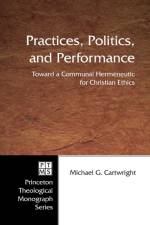
Description:Drawing on the hermeneutical reflections of John Howard Yoder, Stanley Hauerwas, and Mikhail Bakhtin, Cartwright challenges the way twentieth-century American Protestants have engaged the ""problem"" of the use of scripture in Christian ethics, and issues a summons for a new debate oriented by a communal approach to hermeneutics. By analyzing particular ecclesial practices that stand within living traditions of Christianity, the ""politics"" of scriptural interpretation can be identified along with the criteria for what a ""good performance"" of scripture should be. This approach to the use of scripture in Christian ethics is displayed in historical discussions of two Christian practices through which scripture is read ecclesiologically: the Eastern Orthodox liturgical celebration of the Eucharist and the Anabaptist practice of ""binding and loosing"" or ""the rule of Christ."" When American Protestants consider ""performances"" of scripture such as these alongside one another within more ecumenical contexts, they begin to confront the ecclesiological problem with their attempts to ""use"" the Bible in Christian ethics: the relative absence of constitutive ecclesial practices in American Protestant congregations that can provide moral orientation for their interpretations of Christian scripture.About the Contributor(s):Michael G. Cartwright is Dean of Ecumenical and Interfaith Programs at the University of Indianapolis. He is the editor of The Jewish-Christian Schism Revisited, The Hauerwas Reader, and The Royal Priesthood.
Description:Care for the environment is an ever more pressing concern in today''s world in which narrow self-interest has blinded us to the growing pollution of atmosphere and seas and the destruction of animal species caused by our indifference and neglect. Christianity has been blamed in part for this because of a misunderstanding of the Biblical call to ""have dominion"" over creation. Our spiritual tradition has indeed so focused on human salvation that the Earth has been seen simply as a transient environment that will be left behind in the end. In response, this little book highlights another spiritual tradition within Western Christianity that affirms that creation itself will also be transformed with humanity through the self-emptying love of God. God''s dominion, after all, is service rather than despotic control, the raising up of the lowly of this Earth and of the Earth itself as part of a cosmic community. The Spiritual Exercises of St. Ignatius are examined in this light as a call not only to join Christ in redeeming humanity, but also in extending Christ''s care and love to ""all creation"" that longs ""for the freedom of the children of God.""Endorsements:""Sears and Bracken provide a valuable set of theological reflections that explore new possibilites in our understanding and practice of the Ignatian ''Exercises.'' Their work admirably integrates the Ignatian heritage into the rich Catholic tradition of reverence for all creation as the temple of God''s presence."" --Howard Gray, SJ John Carroll University""The Ignatian ''Spiritual Exercises'' are like a many-sided diamond. FathersSears and Bracken have looked at this diamond from an environmental perspective and furnished us with valuable insights for all who conduct and make Ignatianretreats."" --Al Fritsch, SJ Director, Earth HealingAbout the Contributor(s):Robert T. Sears, SJ, is Superior of Gonzaga Jesuit Community at Loyola University of Chicago. He is also adjunct professor at the Institute of Pastoral Studies at Loyola, a spiritual director, a counselor, and a writer on various aspects of healing. See his website: www.familytreehealing.com. He is co-author, with Al Fritsch, SJ, of Earth Healing: A Resurrection-Centered Approach.Joseph A. Bracken, SJ, is Professor of Theology emeritus at Xavier University in Cincinnati, Ohio. Among his many publications are Christianity and Process Thought (2006), World without End (2005), and The One in the Many (2001).
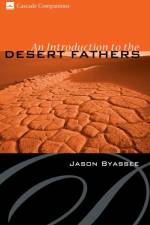
Description:The desert fathers wanted to get away from a church co-opted by empire and a Christian faith grown cold and listless. They retreated to the desert to do battle against demons and against their own worst desires. They had no intention of being famous; yet ironically their Sayings have inspired millions of imitators over the centuries. This guide is meant to accompany a reading of the Sayings of the Desert Fathers, in hopes that readers with lives quite different than those third- and fourth-century dwellers of the Egyptian desert might nevertheless come to imitate their lives of poverty, chastity, and obedience; and more importantly, that readers might grow more imaginative and passionate in their following of the same Lord.Endorsements:""Contrary to the Protestant caricature, the Egyptian monks of the fourth century went to the desert not to escape reality, but to confront it. They fled the disorienting distractions of city life so that in the quiet of their cells and their chapels they might overcome the self-will of sin and reorient their thoughts, affections, and actions wholly toward God. Jason Byassee''s An Introduction to the Desert Fathers is an excellent companion to all who seek to glean wisdom from the monks'' encounters with the realities of God and of their sin. By drawing together the world of fourth-century monasticism with our consumerist culture of the twenty-first century, Byassee helps us discern the call of the desert today.""--J. Warren Smith, Assistant Professor of Historical Theology, Duke Divinity School""In this beautiful, informative, probing, and wise introduction to the spirituality of the desert, Byassee both immerses us in, and invites us to embrace, an older, sometimes alien, way of inhabiting our relationship with the triune God.""--Lauren F. Winner, author of Girl Meets God and Real Sex: The Naked Truth about ChastityJason Byassee has established himself as the master of explaining complex subjects and helping us understand why they matter.  He has done it again with the Desert Fathers.--James C. Howell, pastor of Myers Park United Methodist Church, Charlotte, North Carolina""Making the desert accessible might seem a paradoxical goal. Nevertheless, just as the sick and not the healthy need doctors, so do we affluent and self-indulgent moderns need the desert fathers. Jason Byassee is the perfect guide--an intrepid all-terrain interpreter in the heart of the desert. He always knows what we are thinking and never forgets that the severity of the fathers is disconcerting to us. Yet he thinks with these ancient monks as well--with their profundity and difficulty--and never lets us get away with dismissing a single saying cavalierly. If you have ever struggled with self-control, lust, materialism, prayer, humility, obedience, patience, or any of the other vices and virtues addressed in these chapters, An Introduction to the Desert Fathers is for you.""--Timothy Larsen, McManis Professor of Christian Thought, Wheaton College""Jason Byassee''s Introduction to the Desert Fathers is presented in a spirit of humility that befits the subject. He offers simple yet rich engagements with the Sayings that use humor, insight, and life experience to prompt readers to reflect with the same tools. Readers who are looking for a place to begin their interaction with the often paradoxical teachings of the desert fathers would do well to begin here.""--Amy Frykholm, Special Correspondent, Christian CenturyAbout the Contributor(s):Jason Byassee received his Ph.D. in theology from Duke University and is currently Assistant Editor at The Christian Century, where he has won numerous awards for excellence in journalism. He is author of two forthcoming volumes: Praise Seeking Understanding (Eerdmans) and An Introduction to the Desert Fathers (Cascade Books). He has been invited to teach courses on Augustine to undergraduates, seminarians, and graduate students at Garrett-Evangelical Theological
About the Contributor(s):T. Michael W. Halcomb is a PhD candidate at Asbury Theological Seminary. He is the author of People of the Book: Inviting Communities into Biblical Interpretation, Entering the Fray: A Primer on New Testament Issues for the Church & Academy, and A Handbook of Ancient Greek Grammatical Terms: Greek-English and English-Greek.
Description:""One of the great joys of the academic life is to pay homage in a Festschrift to a scholar who has influenced both colleagues and students over years of interaction and friendship both professional and personal. This volume honors a scholar and theologian of historical theology, a theorist and a practitioner of religion and the arts, and a keen analyst of cultural trends both ancient and modern. . . . ""[Margaret R.] Miles''s prodigious production as a scholar has legendary qualities. Her dozen-plus books alone explore history, patristics, ancient philosophy, art and art history, spiritual formation and religious practice, critical theory, film, ethics and values, personal growth, gender and women''s studies, as well as her true academic loves, Augustine and Plotinus. . . . The breadth and depth of her own work and her influence upon others demands an expansive volume, which the editors of this Festschrift unfortunately had to restrict to four categories--Historical Theology, Religion and Culture, Religion and Gender, and Religion and the Visual Arts--in order to capture the heart of our appreciation for her."" --from the IntroductionAbout the Contributor(s):Richard Valantasis is Professor of Asceticism and Christian Practice and the Director of the Anglican Studies Program at Candler School of Theology / Emory University. Among his numerous publications are The Gospel of Thomas, The New Q: Translation and Commentary, Third-Century Spiritual Guides, Centuries of Holiness, and The Beliefnet Guide to Gnosticism. He is also the editor of Religions of Late Antiquity in Practice and co-editor of Asceticism.An artist as well as a teacher and scholar, Deborah J. Haynes is Professor of Fine Arts at the University of Colorado at Boulder.James D. Smith III is Associate Professor of Church History at Bethel Seminary San Diego and Lecturer in Theology and Religious Studies at the University of San Diego. He also serves on the pastoral staff of College Avenue Baptist Church.After many years on staff at several scholarly and educational publishers, Janet F. Carlson is currently an independent editor and writer. She has been a friend and admirer of Margaret R. Miles for twenty-five years.
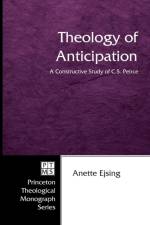
Description:Is hope an attitude of wishful thinking or is it a volitional appropriation of what is to come? What does it mean to believe in a divine promise, anticipating but not experiencing its fulfillment? Theology of Anticipation responds to these questions with a constructive study of C. S. Peirce''s philosophy. It explores Peirce''s strong but ambiguous links to the tradition of 19th century classical German philosophy and the unique way he resurrected this tradition''s theoretical content in the American context. Then introducing Wolfhart Pannenberg''s philosophical theology of anticipation in a discussion of Peirce''s epistemological application of the theory of abduction, Anette Ejsing reads these two in light of each other, with the goal of proposing a Peircean theology of anticipation. With this proposal, she offers a new model for how both rational inquirers and believing theologians can take for real in the present what belongs permanently to the future. This model describes the human pursuit of cognitive as well as personal fulfillment (of understanding and meaning) as anchored in a promise of fulfillment, which makes it an expression of anticipatory hope. Considering Peirce''s religious writings of systematic importance for his philosophy, Theology of Anticipation offers critical comments to two existing interpretations of Peirce''s philosophy of religion: Michael L. Raposa''s theosemiotic and Robert S. Corrington''s Peircean theology of divine potentialities.About the Contributor(s):Anette Ejsing is a native of Denmark and she completed her PhD at the Lutheran School of Theology at Chicago. She currently teaches theology at Augustana College in Rock Island, Illinois
Description:""Most of the following essays reveal my interest in the significance of literary forms--both the short literary forms in the Gospels, such as pronouncement stories, and an entire Gospel as a formed narrative. I am interested in the significance of these forms, not just in literary classification systems . . . . I am interested in literary form as a clue to how the text may engage hearers and readers--impact their thought and life--if they are sensitive respondents. The Gospel stories have been shaped in ways that give them particular potentials for significant engagement. Study of literary form can help us recognize these potentials."" --from the IntroductionContentsPart I: Gospel Sayings and Stories1 Tension in Synoptic Sayings and Stories2 The Pronouncement Story and Its Types3 Varieties of Synoptic Pronouncement Stories4 Types and Functions of Apophthegms in the Synoptic Gospels5 The Gospels and Narrative Literature6 ""You Shall Be Complete""--If Your Love Includes All (Matthew 5:48)Part II: The Gospel of Mark7 The Disciples in Mark: The Function of a Narrative Role8 The Gospel of Mark as Narrative Christology9 Reading It Whole: The Function of Mark 8:34-35 in Mark''s StoryPart III: Paul''s Gospel10 Paul as Liberator and Oppressor: Evaluating Diverse Views of 1 Corinthians11 Participation in Christ: A Central Theme in Pauline SoteriologyEndorsements:""For anyone who thinks that the study of literary forms is equivalent to Formgeschichte and hence obsolete for interpreting the Gospels, Tannehill''s The Shape of the Gospel should cause reconsideration. . . . Any appropriation of the Gospels for ethical reflection should be informed by the rhetorical and literary issues addressed by Tannehill in these essays.""--Review of Biblical LiteratureAbout the Contributor(s):Robert C. Tannehill is Professor Emeritus of New Testament at Methodist Theological School in Ohio. He is also the author of TheShape of Luke''s Story, The Sword of His Mouth, Dying and Rising with Christ, and The Narrative Unity of Luke-Acts.
Description:Wrestling With God is concerned with conceptualizing a Christian pluralist theology of religious experience primarily in dialogue with Buddhism, but also in conversation with Confucian, Daoist, Hindu, Jewish, and Islamic traditions as well as dialogue with the natural sciences. It is through such dialogue as a form of theological reflection that Christians can hope for the emergence of new forms of faith and practice that are relevant to the complexities of contemporary life. The author''s style and openness make this accessible to the general reader as well as the scholar.Endorsements:""As a longtime participant in the ongoing Buddhist-Christian dialogue and as a student of the philosophy of Alfred North Whitehead, Paul Ingram is well equipped to mediate a ""trialogue"" between the worldviews of Christianity, Buddhism, and contemporary natural science. Written in a conversational rather than a heavily academic style, Wrestling with God challenges Christians, Buddhists, and natural scientists to reach out to one another for assistance in dealing with the complex ethical issues of our times.""--Joe Bracken, Professor of Theology Emeritus,Xavier University, Cincinnati, OhioAbout the Contributor(s):Paul O. Ingram is Professor of Religion Emeritus at Pacific Lutheran University (Tacoma, Washington). He is the author of Wrestling with the Ox, The Modern Buddhist-Christian Dialogue, and The Dharma of Faith.
Abonner på vårt nyhetsbrev og få rabatter og inspirasjon til din neste leseopplevelse.
Ved å abonnere godtar du vår personvernerklæring.