







Gjør som tusenvis av andre bokelskere
Abonner på vårt nyhetsbrev og få rabatter og inspirasjon til din neste leseopplevelse.
Ved å abonnere godtar du vår personvernerklæring.Du kan når som helst melde deg av våre nyhetsbrev.

Description:In Life in Freedom Michael Amaladoss analyzes the many rich and complex strands of Asian religious thought on the notion and nature of the path toward liberation. As he shows, Asian ""liberation theology"" departs significantly from the Latin American model, with which it is commonly compared. Rather than put primary emphasis on economic issues, Asian cultures give much greater priority to the role of religion in the composition of a healthy society.In Part One Amaladoss discusses current liberation movements and thought in Korea, the Philippines, and India. In two other chapters, he shows also that the awakening of women is integral to the search for human freedom and development and the growing importance sound ecological policies in any valid approach to liberation in Asia.In Part Two Amaladoss discusses non-Christian approaches to human liberation and freedom, showing how the lives and thought of influential figures of other faiths have given distinctive shape to Asian approaches to liberation. Buddhists such as Thich Nhat Hanh and Hindus such as Mahatma Gandhi and E.V. Ramaswamy show that hostility to religion is remote from the most characteristic Asian liberation movements. Gandhi''s entire politics was rooted in the notion that ""to attain Truth or to realize God is the goal of human life."" But God [for Gandhi] is realized concretely in the world and particularly in other people. Service to others then becomes a way to God and ultimately to human liberation. Similarly, Confucian traditions embody a deeply indigenous, Asian way of constructing reality as a sacred whole. In that construct, liberation and freedom take on meanings and dimensions functionally religious in the way they anchor individuals and the community to the cosmic whole.In Part Three, Amaladoss gives his own analysis and prophetic overview on how the plurality of images of liberation enriches the possibility for interreligious cooperation in overcoming the forces of oppression in Asia.Endorsements:""Exciting and refreshing . . . This book breaks our stereotypical images of Asian religious traditions as ''world-denying,'' ''fatalistic,'' ''individualistic,'' and presents a lucid account of the liberative message of these traditions, as embodied in the lives and struggles of Asian women and men empowered by their religious vision."" --Ruben L. F. Habito, Southern Methodist University""A valuable contribution to a deeper understanding and appreciation of theological efforts in Asia.""--Choan-Seng Song, Pacific School of ReligionAbout the Contributor(s):Michael Amaladoss, SJ, a former president of the International Association of Mission Studies, teaches and writes on issues of interreligious concern and inculturation at the Vidjajyoti College of Theology in Delhi, India.
Description:Dick Armstrong was thoroughly committed to his promising future as a major league baseball front-office executive until something happened that completely changed his life and steered him in a totally new direction. In A Sense of Being Called, Armstrong tells the story of what he calls his ""Damascus Road"" experience, an awesome encounter with the God he had always believed in but had never given the slightest thought to serving. The dramatic theophany initiated a remarkable pilgrimage of faith in which he and his supportive wife, Margie, learned how God guides, provides for, and equips those who respond to the divine call.What the unbelieving world would label coincidence Dick and Margie viewed as the miraculous providence of God--of a God whose timing, they came to understand, is often surprising and always perfect. As the doors to entering seminary kept opening or closing in unpredictable ways, Dick was eventually led to Princeton Theological Seminary, where he met then-president John A. Mackay, who was to have a powerful impact on Dick''s life.Dick and Margie''s departure from the Baltimore Orioles and their transition to becoming a full-time seminary couple was traumatic. Their five-and-a-half-year-old son died on the Seminary''s convocation day. The poignant story of Ricky''s death provides another inspirational illustration of how God is able to work for good, even in the death of a child, with those who are called according to God''s purpose.The three years at seminary were transformational for Dick Armstrong, who traces the often -humorous events leading to his ordination and call to be the pastor of the Oak Lane Presbyterian Church of Philadelphia. Armstrong''s hope is that this book will move readers to consider how God has been at work in their lives and will awaken in them their own sense of being called.Endorsements:""This is a providential publication. At a time when God''s people are challenged to rediscover their calling, Dick Armstrong''s beautiful story can help people do just that. It is a powerful reminder that when God enters our lives, life''s direction often changes, even dramatically. By the gift of faith we realise that our story has always been intended to be God''s story. The author invites the reader to accompany him on his remarkable journey of faith. This is a journey that I could observe for the almost thirty years that Prof. Armstrong has been my close personal friend and colleague. He and his writings have greatly impacted my ministry and the ministries of many hundreds of pastors and many more lay leaders in South Africa. They will be eager to read his amazing story, and I''m sure they will conclude, as I have, that his passionate commitment and powerful witness to the gospel are an impressive fulfilment of his ''sense of being called.''"" --Malan NelFounding Director of the Centre for Contextual MinistryFaculty of Theology, University of Pretoria, South Africa""I am so glad Dick Armstrong has at last written the story of his call to ministry. My unique friendship with Dick began soon after he announced that he was leaving his position as Public Relations Director of the Baltimore Orioles to enter Princeton Seminary. He became a vital partner and indispensable colleague in shaping and enabling the mission of the Fellowship of Christian Athletes. In the early days of the FCA he served as a most needed interpreter of the unfolding vital relationship being forged between religion and sports. With the publication of A Sense of Being Called he has added another very helpful, adventurous, intriguing, and joyful book to his excellent and varied writings.""--Don McClanenFounder and first Executive Director Fellowship of Christian Athletes ""Dick Armstrong has been a friend and inspiration to me for decades. I thought I knew Dick, but now I really know him after reading A Sense of Being Called. This book will stir your soul and lift your spirit just as it has done for me.""--Pat
Description:Technologies are deeply embedded in the modern West. What would our lives be like without asphalt, glass, gasoline, electricity, window screens, or indoor plumbing? We naturally praise technology when it is useful and bemoan it when it is not. But there is much more to technology than the usefulness of this or that artifact. Unfortunately, we tend not to consider the inherently social and moral character of technology. As a result, we are prone to overlook the effects of technology on our spiritual lives. This book investigates the role technology plays in helping and hampering our Christian practice and witness.Endorsements:""Only Brad Kallenberg could have written this book. Drawing on an engineering background, schooled by Wittgenstein''s philosophical work, and shaped by Christian theological convictions, he enables us to see how technology can exercise power over us to our detriment without asking us to abandon technology in service to human life.""--Stanley Hauerwas, Duke Divinity School""Kallenberg does a masterful job of helping his reader see the blind spots of modern, technological culture. His insights are provocative, instructive, and often redemptive. You will find yourself asking a whole new set of questions after reading this book--questions you might wish you started asking long ago!""--Rick LangerTalbot School of Theology/Biola University""Brad Kallenberg brings a strong philosophical and theological acumen to God and Gadgets. The very idea that technology is a mixed blessing is a true act of Christian witness in a culture immersed in all that is ''new-fangled'' and thus considered almost in god-like terms. Kallenberg addresses in trenchant and true ways the claims of God and the Gospel on our gadget-infested culture. His prophetic voice rings true from a Christian perspective, much as an earlier philosopher, Ernesto Grassi, did in his insistence that technology has its own set of hazards. This is a must read for preachers and other scholars in our time.""--Rodney Wallace KennedyBaptist House of Studies, United Theological SeminaryAbout the Contributor(s):Brad J. Kallenberg is Associate Professor of Theology at the University of Dayton He is the author of Live to Tell: Evangelism for a Postmodern Age (2002) and Ethics as Grammar: Changing the Postmodern Subject (2001).
Description:Where in the world was Jesus when he prayed? Where is any one of us when we pray? Since we are embodied creatures, our prayer location can be mapped onto space-time coordinates. Since we are social creatures, our prayers are also situated within our social locations. But do these sets of coordinates exhaustively identify the place that prayer takes when truly entered into? Conversely, can either set totally prevent prayer from taking place there? These questions lie at the intersection of resolutely religious vis-à-vis resolutely secular understandings of existence. The studies in this volume explore dimensions of these issues traced in selected texts from both parts of the Christian Bible.Endorsements:""Janzen has been looking at these biblical texts all his life. Every time he looks again, he sees something else by way of connection or nuance . . . It is a delight to salute this long-loved colleague on this rich offer that, as always from him, is a gift of newness.""--Walter Brueggemann, Columbia Theological Seminary""Rare is the exegete who is wise beyond his or her own specialty. Rarer still is the interpreter who explores the text down to its minutest of details with infectious wonder. Janzen is that exegete: text critic, theologian, philosopher, and poet. His exegetical forays are unhurried expeditions of a vivacious mind that will touch the heart, indelibly."" --William P. Brown, Columbia Theological Seminary""Janzen models what the exegetical imagination can do when it is focused on significant questions and disciplined by wide-ranging study, thorough and exact knowledge of the biblical text, and the life of prayer itself. These essays invite us to slow down and savor Scripture.""--Ellen F. Davis, Duke Divinity School""In these essays, both old and new, Janzen delves into detailed exegetical and intertextual analyses of biblical texts, crossing both Testaments and constantly appealing to the original languages with a sensitivity that generates profoundly existential reflection on one''s own relationship with God. I found his essays transformative both for my reading of Scripture and for my own life.""--J. Richard Middleton, Northeastern Seminary About the Contributor(s):J. Gerald Janzen is MacAllister-Petticrew emeritus Professor of Old Testament at Christian Theological Seminary in Indianapolis. He has published commentaries on Genesis 12-50, Exodus, and Job, and his most recent book is At the Scent of Water: The Ground of Hope in the Book of Job (2009).Brent A. Strawn is an associate professor of Old Testament at the Candler School of Theology and Graduate Division of Religion at Emory University. He recently edited The Bible and the Pursuit of Happiness: What the Old and New Testaments Teach Us about the Good Life (2012).Patrick D. Miller is Charles T. Haley Professor of Old Testament Theology emeritus at Princeton Theological Seminary. He recently authored The Ten Commandments (2009).
Description:"If this book moves, I hope it moves in the way pop songs do. There will be a lot of talk about songs, but inasmuch as this is a book about listening to music, it''s also about how listening to music makes us who we are, or at least about how it makes me who I am, and so it is an exploration, an idiosyncratic and opinionated and particular one, of a self shaped by the oddly intersecting forces of the American evangelical Protestant church and the American popular music scene. I don''t mean for that to sound hoity-toity--if this were fifteen years ago, I would say that this book was about Christian music, and I would know exactly what I meant. My purpose now is not only to talk about "Christian music." I am not here to explicate Christian music, to explain why it exists and whether it is any good. Instead, think of what you''re about to read as like an iPod playlist, a collection of essays and thoughts on listening to music and having faith and how they have made me, and a lot of people like me, and maybe you.            Also, there will be some jokes about Stryper."Endorsements:"If you can name the exact musical connection between Michael W. Smith and Sufjan Stevens, then you don''t need to read this book. But you can''t do that, can you? None of us can. But Joel Hartse can, and he does that kind of s#*! on Every. Single. Page. I''m pretty sure he knows everything. Plus, he''s witty and wise. I can''t imagine a better book on the weird world of Christian rock."--Patton Doddauthor of My Faith So Far: A Story of Conversion and Confusion"Part personal narrative and part cultural history, Joel Heng Hartse''s musical memoir is a lovingly written ode to all that is weird and wonderful, disturbing and divine about the world of Christian rock. Conversant in everything from White Town to Rebecca St James, Radiohead to Michael W. Smith, Hartse provides a richly observant, nostalgic document of the shaping artifacts and sonic ephemera of his evangelical youth. His book paints a picture of the recent past that will be funny, poignant, and therapeutic for anyone who grew up in a similar milieu."--Brett McCracken author of Hipster Christianity: When Church and Cool Collide"Joel Heng Hartse grew up during an era when Christian rock was actually kind of decent, but he was never shy about exploring all music. He emerged equal parts Jesus freak and music geek. His memoir is utterly charming . . . but seriously, dude, Genesis? --Andrew Beaujonauthor of Body Piercing Saved My Life"Joel Heng Hartse''s travels--and travails--through the world of rock and roll (spiritual, secular, and all those artists who aim to land somewhere in between) add up to something like a lesson in music history. But mostly, it''s a warm, witty, and downright entertaining trek down one man''s memory lane, a lane lined with insight, humor, and, of course, just enough love and sects to keep the pages turning. Joel knows music, and after reading this book, you''ll feel like you know Joel--and that''s a good thing."--Mark MoringPop Culture Editor, Christianity Today"There''s so much to love here: nostalgia tempered by wry humor; a slice of rock and roll history rich in detail yet anchored in emotions we all share; a series of tart but ultimately generous insights into the foibles of a religious subculture. Joel Hartse''s memoir is a postmodern ''pilgrim''s progress,'' the story of a young man in search of truth and beauty, rendered in a voice that is at once self-deprecating and heartfelt.--Gregory WolfeEditor, IMAGE"I basically stopped paying attention to Christian rock music right around the time Joel was getting into it. But even though I recognized only a handful of the bands he cites here, I still found his account of growing up with church and pop music easy to relate to, and fun to read. In an accessible, opinionated, and humorous way, he gets at what the music means--and how that meaning has changed, for him personally and for the
Description:U.S. audiences know Latin American liberation theologies largely through translations of Latin American Catholics from the 1970s and beyond. Most of the few known Protestant authors were students of Richard Shaull, whose critical thinking on social change, prophetic Christianity, and dialogue with Marxism and Christian use of Marxist analysis precedes the emergence of the formal schools of liberation theology by two decades. His own education at Princeton, and the education he provided in Brazil, charts the course of Protestant influences into this stream of theological reflection that became a global phenomenon in the latter decades of the twentieth century.Also, Shaull''s career roughly parallels the emergence of the World Council of Churches and the engagement of the Catholic Church--in Latin America and around the world--after the Second Vatican Council. He himself was engaged, and became the flash point, in some of the major conferences, movements, and institutions of the 1960s and beyond.Santiago-Vendrell documents the entrance of the ecumenical movement in Brazil, among the most dramatic transformations in Catholic-Protestant relations around the globe, as well as Shaull''s role in that development. Along the way he notes Shaull''s prophetic and destabilizing role in the worldwide student movement in the 60s and 70s, charting decisions that mark the ecumenical movement. Shaull''s contributions are important for an understanding of the ethical debates in the worldwide, ecumenical Protestant and Orthodox communities.Santiago-Vendrell examines primary, secondary, and historical documents that shine a light on Shaull''s transformation into a contextual theologian of the poor. He offers a definitive view of this North American Protestant missionary who wrote extensively on Latin American liberation theology, the base Christian communities, and how conversion to solidarity with the poor offers transforming possibilities for the mainline churches'' theological identity and practical faith.Endorsements:""Long before there was such a thing as liberation theology, the ''revolutionary theology'' of Presbyterian missionary Richard Shaull was heralding a new and more just world born out of solidarity with the poor and the oppressed. This biography of Shaull fills a gap in understanding a complex man who sought to hold the church accountable while inspiring Christians to a more radical and biblical form of social engagement. A wonderful adventure in contextual theology.""--Bryan StoneE. Stanley Jones Professor of EvangelismBoston University School of Theology""We can be grateful to Dr. Santiago-Vendrell for making available to us a story that has required research in both Spanish language and American resources not widely available to the U.S. reading public. Probably nothing has done more to change perspectives on U.S. foreign policy and journalistic knowledge about the realities of Latin American politics and the plight of its peoples than the presence of U.S. missionaries during the crucial mid-decades of the twentieth century. This theological biography will be as interesting to those concerned about interAmerican politics and economic policy as it will be to theologians and church historians.""--Jeffrey GrosDistinguished Professor of Ecumenical and Historical TheologyMemphis Theological SeminaryAbout the Contributor(s):Angel D. Santiago-Vendrell (ThD Boston University) is Assistant Professor of Mission and World Christianity at Memphis Theological Seminary.
Description:Christian ethics is less a system of principles, rules, or even virtues, and more of a free and open-ended responsible witness to God''s gracious action to be with and for others and the world. Postmodernity has left us with the risky uncertainty of knowing and doing the good. It also leaves us with the global risks of political violence and terrorism, economic globalization and financial crisis, and environmental destruction and global climate change. How should Christians respond to these problems? This book creatively explores how Christian ethics is best understood a witness to God''s action, thereby providing the ethical framework for addressing the various problematic social issues that put our world at risk. Haddorff develops the notion of witness through a detailed study of Karl Barth''s theological ethics. Barth, he argues, provides a language enabling us to know what a Christian ethics of witness actually looks like in both theory and in practice. In correspondence to God''s gracious action, Christians remain free to think and act in faith, hope, and love in respondence to their unique circumstances, even in a world at risk. In their witness, Christians remain confident that God has not abandoned the world but loves and cares for its future.Endorsements:""At a time when one might be tempted more than ever to offer an ethics of self-help, David Haddorff presents us with a truly theological ethics of ''witness'' based on the truth of the Gospel that is at once hopeful and realistic because its hope is found in the God who empowers us to do the good and not in our attempts to live any sort of self-chosen good. Relying on the theology of Karl Barth, Haddorff skillfully holds together theology and ethics as well as theory and practice. This is a compelling book that will be of great interest to theologians, ethicists, and to students of the theology of Karl Barth.""-Paul D. MolnarSt. John''s University, Queens, New York""That Barth is a moral theologian is now firmly established; this presentation offers its readers sure guidance as they explore the large landscape of Barth''s ethics, and is much to be commended.""-John WebsterUniversity of Aberdeen, Scotland""Far more than a summary of Barth''s ethics, David Haddorff''s book is a first-class effort to think in company with Barth about the source of our knowledge of the good and about the meaning of human freedom and ethical responsibility as faithful correspondence to God''s free grace in Jesus Christ. Employing witness as the interpretive key of his work, Haddorff shows that Barth''s ethics is radically Christocentric, and just for that reason is highly dialectical, free to recognize its limitations and avoid absolute claims, and free to engage in conversation with and learn from other ethical perspectives without becoming captive to them. In particular, Haddorff underscores the difference between Barth''s ethics of witness on the one hand and the ethics of both reductionist secularism and theological isolation on the other. In the final section of the book, the author offers a highly creative deployment of Barth''s ethics as it bears on the political, economic, and ecological crises of our time."" -Daniel Migliore Princeton Theological Seminary, Princeton, New JerseyAbout the Contributor(s):David Haddorff is Associate Professor of Theology and Ethics at St. John''s University, New York. His previous works include Dependence and Freedom: The Moral Thought of Horace Bushnell and a lengthy introduction on Barth''s political theology in the reprint of State, Community, and Church (Wipf and Stock).
Description:What is Christianity really all about? Is it-in its essence-about proper religious rituals, or correct religious beliefs, or acceptable moral behavior? What is at the heart of an authentic Christian faith and life?In From Resurrection to New Creation Michael Pahl provides an introduction to Christian theology which attempts to answer these questions, proposing that the heart of Christianity is not a set of rituals or beliefs or behaviors, but an event-the resurrection of the crucified Jesus from the dead-that prompts a story-the gospel or ""good news"" of salvation through Jesus. Jesus'' resurrection, Pahl claims, is the starting place and the compass in the journey of Christian theology, our journey to understand God, God''s work in the world, and how we should live out God''s purposes for humanity. Thus, beginning with Jesus'' resurrection and using this event as a guide, Pahl surveys the terrain of classic Christian belief and practice. The Trinity, the identity of Jesus, the work of the Holy Spirit, the nature of humanity, Christ''s atonement for sin, salvation and the gospel, baptism and the Eucharist, the church and the future state-all these landscapes and more are explored in this concise introductory survey of essential Christian theology.Endorsements:""In this clear and compelling introduction to Christian theology, Michael Pahl explains the biblical roots and practical significance of the most important Christian convictions. He rightly directs our attention to God''s resurrection of the crucified Jesus as the center of Christian faith and practice. Readers will come away both informed and inspired.""--Michael J. GormanSt. Mary''s Seminary and University""This is the way to do theology, as rooted in Story, God''s own Story that emerges with yearning for resolution at the time of Jesus and which only Jesus Christ resolved. Theology has too often lost sight of this Story, but Michael Pahl''s book calls us back once again to the Bible and to the earliest theologians'' way of doing theology-let the gospel story be told and let that Story shape how we understand theology.""--Scot McKnightNorth Park University""Michael Pahl profoundly grasps what too many Christians miss: that the death and resurrection of Jesus transforms everything. Carefully interpreting these events and their relationship to other areas of Christian faith, From Resurrection to New Creation shows us how the entire story of God, humanity, and the cosmos can only be rightly read in light of Jesus'' saving work. This book is remarkable for its breadth of biblical engagement, its incisiveness of theological perception, and its lucid and accessible prose. Those taking a first journey in Christian theology could ask for no better guide.""--Daniel KirkFuller Theological Seminary""A splendid little book that explores the essentials of Christian theology in a fresh, lively, and insightful manner. By beginning with the resurrection, Pahl is able to make a point about both the center of Christian theology and how to do theology in a way that takes seriously the New Testament''s historical context. Highly recommended!""--David M. MillerBriercrest CollegeAbout the Contributor(s):Michael W. Pahl (PhD Theology, Birmingham, UK) is Pastor at Lendrum Mennonite Brethren Church in Edmonton, Alberta, Canada. He has taught biblical studies and theology for over ten years in college and seminary settings in Canada and the UK, and he is the author of Discerning the ''Word of the Lord'' (2009) and co-editor of The Sacred Text (2010).
Description:What practices might a community of faith take up that will bear witness to the alternative world Jesus envisions and calls us towards? That is the question that Grandview Calvary Baptist Church, an initially small and fragile group of Christ followers, has kept asking over the last twenty years. Along the way, this small group has spawned a vibrant community of faith that has traveled along four trajectories towards a shared life in community, radical hospitality, justice for the least, and confession leading to transformation. In a culture where individualism, consumerism, injustice, and autonomy shape us all, these practices have re-shaped not only the people of this church but also the neighborhood they inhabit in the East side of Vancouver, British Columbia.For anyone wanting to recover ancient but newly shaped practices of the first disciples, Plunging into the Kingdom Way offers renewed hope. By relating their story in conversation with a host of theologians, sociologists, and philosophers, Tim Dickau sparks the imagination for how you and your friends, your community, or your church can live out the radical vision of Jesus in your neighborhood today. Plunge in and you will discover renewed hope that you can actually follow the way of Jesus today.Endorsements:"". . . a deeply compelling and engaging portrait of a community that practices hospitality and justice while nurturing a strong spiritual and communal life. Tim Dickau''s careful description of a single congregation gives his readers excellent resources for imagining what a fuller commitment to a Kingdom way might look like in their own contexts.""-Christine D. PohlProfessor of Social Ethics, Asbury Theological SeminaryAuthor of Making Room: Recovering Hospitality as a Christian Tradition""It is one thing to ''talk the talk.'' It is quite another to ''walk the walk.'' This book exhibits the way in which Grandview Calvary Baptist Church (led by Tim Dickau) walks the walk in freedom and courage and wisdom. The current crisis in the church leads us to fall back on specific narratives, so that we may learn what is true and transferable from one community of discipleship to another. Dickau offers a full measure of practical theology that is permeated with justice, generosity, hospitality, and forgiveness. This book will guide and empower others to walk by faith where our sight increasingly fails us.""-Walter BrueggemannColumbia Theological Seminary""The story that Tim Dickau tells here is the story of a congregation that has heard and received the good news: ''The kingdom of God has come near. Repent and believe the good news.'' That is, this congregation has dared to submit their life to this coming kingdom and its Lord. In doing so, they have learned to serve where they have been placed. The life that they have found in this submission has not been hoarded or protected behind high walls and thick doors. Instead this life has been given away in their neighborhood, on their streets, in their homes, coffee shops, and markets. It is a public faith shaped in community by joyful and hard discipline. The story is not complete but its end is certain because the vision that empowers their witness is the crucified and risen Messiah sent by the love of the Father and present today in the power of the Holy Spirit. Anyone who reads this story takes the risk of being captured by that same vision and called to deeper life in the kingdom. Surely that is the good news of Christ.""-Jonathan R. Wilson Carey Theological College Author, Living Faithfully in a Fragmented World""Multiculturalism is on everyone''s lips these days, but we are still struggling with entrenched barriers that perpetuate exclusion and suspicion. This book shows us why diversity must be pursued along with hospitality, repentance, and justice. Tim Dickau warns us that the kingdom of God is no simple excursion and has provided a pilgrim''s roadmap honed by prayer, failures, awkwardness, su
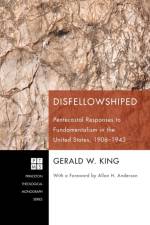
Description:Employing studies in population ecology as a framework for understanding the growth of religious movements, Disfellowshiped traces the growth of the Pentecostal movement. The author explores how the Pentecostal movement developed in relationship to Fundamentalism from its roots in the Holiness movement to the formation of the National Association of Evangelicals. Particular attention is given to the various critiques and rebuttals exchanged between Fundamentalists and Pentecostals, exploring how these two movements influenced and shaped one another. This book shows how, despite their mutual antagonism, these two movements held far more in common than in contrast. This book will be of great importance to all those interested in the history of Fundamentalism and the rise of Pentecostalism.Endorsements:""Pentecostalism emerged in the early years of the twentieth century, shortly followed by Fundamentalism. The adherents of the two movements shared an Evangelical heritage and yet they disagreed sharply with each other. Members of each group denounced the other as betrayers of the gospel and worse. Gerald King has analyzed their antagonistic rhetoric and its theological premises, vividly illuminating a world in which the two sides ''disfellowshiped'' each other.""--David Bebbingtonauthor of Victorian Nonconformity (Cascade, 2011)""For too long historians, following the lead of a handful of anti-pentecostal preachers from the 1920s, have treated fundamentalism and pentecostalism as totally distinct movements. As Gerald W. King''s compelling book reveals, the relationship between pentecostals and fundamentalists has been far more complicated than most scholars realize. Disfellowshiped is a carefully researched book that makes a significant contribution to the religious history of the interwar era.""--Matthew Avery Suttonauthor of Aimee Semple McPherson and the Resurrection of Christian America (2007)About the Contributor(s):Gerald King is a recent PhD graduate of the University of Birmingham (UK).
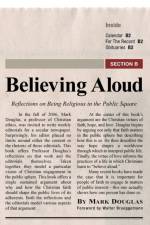
Description:In the fall of 2006, Mark Douglas, a professor of Christian ethics, was invited to write weekly editorials for a secular newspaper. Surprisingly, his editor placed no limits around either the content or the rhetoric of those editorials. This book offers Professor Douglas''s reflections on that work and the editorials themselves. Taken together, they model a particular vision of Christian engagement in the public sphere. This book offers a single sustained argument about why and how the Christian faith should shape the public lives of its adherents. Both the reflections and the editorials model various aspects of that argument.At the center of this book''s argument are the Christian virtues of faith, hope, and love. Douglas begins by arguing not only that faith matters in the public sphere but describing how this is so. He then describes the way hope shapes a worldview through which to interpret public life. Finally, the virtue of love informs the practices of a life in which Christians learn to ""believe aloud."" Many recent books have made the case that it is important for people of faith to engage in matters of public interest-this one actually shows how one person has done so.Endorsements:""Mark Douglas consistently finds ways to surprise the reader--not with gimmicks, but with hope so truthful it reveals the world anew. That hard-won hope lets Douglas make a crucial contribution to academic debates about religion and politics. It also helps him write editorials that crackle with good humor and fresh insight. Douglas calls his readers to believe aloud--and then gives rich samples of what that sounds like for our time.""--Ted A. Smithauthor of The New Measures: A Theological History of Democratic Practice""Mark Douglas''s Believing Alou is a wonderful book, or really two books: one a collection of his newspaper columns, the other a series of meditations (which connect the columns) on what he was trying to do in the columns, and how he thought he did. Combining theological depth, political and cultural acumen, and a vivid and sharp writing style, the book is both an education in Douglas''s wise and persuasive understanding of religion''s role in public life, and an education about how to communicate that understanding to others. A delight.""--Charles Mathewesauthor of A Theology of Public LifeAbout the Contributor(s):Mark Douglas is Associate Professor of Christian Ethics at Columbia Theological Seminary in Decatur, GA. He is the author of Confessing Christ in the 21st Century (2005).
Description:Jesus used parables to teach his disciples certain truths about the gospel. The parables employed word pictures, such as of planting seeds and other agricultural images, that were familiar to his listeners. What kind of imagery could be used today to talk about the gospel? Baseball, ""America''s pastime,"" might be one source of such familiar images. In this book Currie has attempted to find theological themes and to describe the gospel in the sport of baseball.Endorsements:""From Jim Currie''s superbly assembled community of historical baseball players, baseball aficionados, and biblical parables and characters, God''s grace, light, healing, and new life emerge, even to those who may think they have little in common with either baseball or the Bible. Readers will smile, belly laugh, remember struggles and losses, and nod affirmatively, deeply grateful for many new insights received.""-Ted Foote""Jesus'' kingdom parables are few and short, and I long for more. That desire is satisfied in these pages: provocative, enticing, enriching, inviting. Those who love God, baseball, either, or both will find interwoven in this book refreshing gifts from God''s kingdom in Currie''s love for the game''s people and story and his grounding in grace and holy texts. The line between them is shown gloriously blurry, a joyous new parable . . . and home run.""-Howard Reed""Baseball fan and theologian, Jim Currie, gives us a wonderful look at ways the national pastime embodies themes that form the fabric of Christian faith. Each chapter is filled with delightful baseball lore that brings memories flooding back to baseball fans. But Currie goes on to relate these stories, events, and sentiments to what matters most in life: what Jesus said and did when he talked about the kingdom of God. No fan with faith should miss this book!""-Donald K. McKim""James Currie''s The Kingdom of God Is Like . . . Baseball is theologically intriguing and fascinatingly written for the Community of Saints. As one who has ''used'' baseball as a place to go and mourn, to be ''lost'' and, therefore, to be comforted until, on each occasion, I made my way back ''Home,'' I relished each comparison. Centered on the parables of Jesus, each chapter draws the reader in to react, to make choices, to find the ''Holy'' in the ''ordinary'' Game of Life. We who call ourselves followers of Jesus, get ''Home'' when we have the eyes to see and the ears to hear the word of God.""-Ann WeemsAbout the Contributor(s):James S. Currie has been a Presbyterian minister since 1979 and currently serves as pastor of First Presbyterian Church in Pasadena, Texas. He is the author of Austin Presbyterian Theological Seminary: Completing a Century of Service (2002) and Planting Trees: A History of the Presbyterian Pan American School (forthcoming).
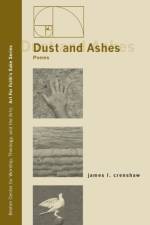
Description:In the wake of excessive evil--the Holocaust, genocide in Africa, tsunamis in Indonesia, terrorism, earthquakes, and floods--must one surrender belief in a good God? The poems in this volume, honest and reverent, arose from the struggle to answer that question with an emphatic ""No."" They exhibit the tension that also exists in the Bible where the expression ""Dust and Ashes"" occurs. When Abraham questioned God''s justice involving the wholesale destruction of the inhabitants of Sodom and Gomorrah and an aggrieved Job responded to speeches from a whirlwind, their status as mortals gave rise to different approaches, boldness in one, humility in the other. Following their examples and the voice of dissenters within much of Scripture, these poems chronicle the journey of a lonely ""man of faith,"" the agony and ecstasy of one who refuses to abandon belief in God despite much evidence that brings it into question. They discover the Sacred in Nature, a book written by the finger of God, and they lovingly reflect on biblical texts, a human record of encounter with the Sublime.Endorsements:""Like photographs or glimpses through a window that capture a moment and reveal an unsuspected truth, these poems by James Crenshaw are encounters with the pain and joy of nature, biblical characters, and human relationships. Through these poems Crenshaw wrestles with that enigmatic God from whom he seeks a costly blessing.""--Carol Newsom Emory University ""A fish called Methuselah and a cat called JOY, the Babel and beauty of the church, the joys of family and of study, and the anguish of cancer--James Crenshaw beautifully articulates these and many more aspects of a rich life, viewed by a mind that is sharply critical and yet humble. The poems are both complex and lucid; many are peopled by the characters of Scripture. These are poems to share with other Christians, and to read again and again.""--Ellen F. Davis Duke Divinity School""James Crenshaw''s prose always makes me think slowly yet also furiously, and refuses me the luxury of easy answers. Now his poems do the same, though they also open up avenues to hope and trust.""--John GoldingayFuller Theological SeminaryAbout the Contributor(s): James L. Crenshaw is the Robert L. Flowers Professor of Old Testament Emeritus, Duke University. Among his recent books are Defending God (2005) and Prophets, Sages, & Poets (2006).
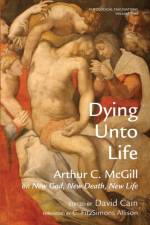
Description:""McGill has the power to make ideas, concepts, differing perspectives vivid--to ''in-flesh'' them. . . .Then comes the ""switch"" or reversal or inversion empowered by the very confrontation McGill has arranged. . . . McGill leaves only the demonic as the object of our worship. Just when we supposed that he was about to come to the defense of this ""world-governing, background God,"" he dismisses such a God, leaving us with the demonic, leaving us room to affirm our own doubts and perplexities, leaving us with a harsher formulation than we might have ventured, leaving us attentive to what he is going to do next and to where he is going to lead us. Because by now we are following him."" --From the ""Introduction.""Endorsements:One of Art McGill''s favorite passages from the Gospel of John (12:24) notes that a grain of wheat becomes fruitful not when it is on the stalk but when it falls to the ground and dies. The stalk of wheat must expend itself in letting a new crop flourish. Nourishment rather than domination described McGill''s sense of the Christian life. It is the theme of this collection of his writings on the New God, New Death, and New Life. David Cain has admirably, painstakingly, and patiently expended himself in making McGill''s work available for our tasting and nourishment.--William F. May, Testing the National Covenant: Fears and Appetites in American PoliticsAbout the Contributor(s):Arthur C. McGill was the Bussey Professor of Theology at Harvard Divinity School. A distinguished philosopher and theologian, he also taught at Amherst College, Wesleyan University, and Princeton University.David Cain is Distinguished Professor of Religion at the University of Mary Washington, Fredericksburg, Virginia, and minister in the United Church of Christ. He is editor of Sermons of Arthur C. McGill, (Cascade Books, 2007), and author and photographer of An Evocation of Kierkegaard / En Fremkaldelse af Kierkegaard (1997).
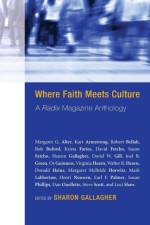
Description:Where Faith Meets Culture is a Radix magazine anthology. What does Radix usually contain? Interviews and features. Reviews of significant books, films, and CDs. Informed opinions in ""The Last Word."" Eye-catching graphics. Mind-stretching prose. Image-rich poetry. Radix assumes that Christians live in the real world and takes lay Christians seriously. As one subscriber wrote: ""Radix is a more worldly magazine than one would expect from its deep commitment to Christ."" Radix monitors the cultural landscape, questions assumptions, and introduces new voices, remaining deeply rooted in Christ.Sociologist Robert Bellah wrote in a Radix article: ""Though social scientists say a lot about the self, they have nothing to say about the soul and as a result the modern view finds the world intrinsically meaningless."" Radix continues to talk about meaning and hope in a culture that has lost its way.The articles in this volume reflect the magazine''s wide-ranging interests: literature, art, music, theology, psychology, technology, discipleship, and spiritual formation. They''re written by some of the outstanding authors whose work has graced our pages over the years:Peggy Alter, Kurt Armstrong, Robert Bellah, Bob Buford, Krista Faries, David Fetcho, Susan Fetcho, Sharon Gallagher, David W. Gill, Joel B. Green, Os Guinness, Virginia Hearn, Walter Hearn, Donald Heinz, Margaret Horwitz, Mark Labberton, Henri Nouwen, Earl Palmer, Susan Phillips, Dan Ouellette, Steve Scott, and Luci Shaw. About the Contributor(s):Sharon Gallagher is editor of Radix magazine and Associate Director of New College Berkeley. She is the author of Finding Faith: Life-changing Encounters with Christ.
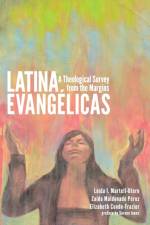
Description:Latina Evangélicas: A Theological Survey from the Margins is a constructive and postcolonial examination of the theology of Protestant Latinas who reside in the United States. Written by three Latinas who have pastored and who teach in Latina/o communities, the book seeks to expand beyond Latina feminist and mujerista voices to include those whose perspectives have not yet been heard. It thus introduces an important theological perspective to a wider audience, and provides an important resource that has been lacking for evangelicas/os and other marginalized groups who study in various theological programs. Key terminology, such as evangélica, is defined throughout, and a glossary is included for non-Spanish-speaking readers. Each chapter considers theological themes important to the Latina Protestant worshiping community, beginning with a constructive discussion of the doctrine of the Holy Spirit and followed by the doctrines of salvation and Jesus Christ, the Trinity, the church, Scripture, and ""the last things"" (eschatology). Given that one of the characteristics of Latina/o theologies is their dialogical and collaborative nature, the book concludes with a conversation among the three authors about the theological thinking that took place in its composition. Study questions are included at the end of each chapter.Endorsements:""A groundbreaking book destined to shape Latina theology for years to come. Rooted in praxis and community, the authors are prompted by the transformative power of the subversive Spirit. I highly recommend it.""--Kwok Pui-lan, Professor of Christian Theology and Spirituality, Episcopal Divinity School""Latina Evangelicas is a powerful and provocative treatise by three Latina theologian-practitioners. Here we have rich and prophetic voices that go beyond Latina feminist, mujerista, or womanist works. The traditional theological themes addressed in this book may seem common to some, but watch out! In the hands of these Latina theologians, these themes--be they the Holy Spirit, salvation, the Trinity, or Scripture--are insightful, constructive, and explosive.""--Eldin Villafane, Professor of Christian Social Ethics, Gordon-Conwell Theological Seminary""A welcome and necessary addition to the theological table, and in particular to la mesa latina. This labor of love is a spirited and spirit-filled example of teología en conjunto. These three authors, Latinas evangélicas, rooted in the richness and diversity of their daily places and communities, expand theological vocabulary and offer fresh perspectives on traditional systematic themes by drawing on lived experience latinamente.""--Carmen Nanko-Fernández, Associate Professor of Pastoral Ministry, Catholic Theological UnionAbout the Contributor(s):Loida I. Martell-Otero is Professor of Constructive Theology at Palmer Theological Seminary of Eastern University in King of Prussia, Pennsylvania. She coedited Teología en Conjunto with José D. Rodríguez (1997) and has published on topics related to Christology, soteriology, vocation, and spirituality.Zaida Maldonado Pérez is a former Dean of the School of Urban Ministries at Asbury Theological Seminary, Florida-Dunnam Campus, and Professor of Church History and Theology. Her publications include The Subversive Role of Visions in Early Christian Martyrs (2010) and An Introduction to Christian Theology (2002), coauthored with Justo L. González.Elizabeth Conde-Frazier is the Academic Dean of Esperanza College of Eastern University in Philadelphia. Among her contributions are Listening to the Children (2011) and A Many Colored Kingdom (2004).
Description:""Dad. I''ve got very, very, very bad news. Peter was killed tonight . . .""With that middle-of-the-night phone call, life for the Mayer family plunged from ""best-ever year"" to months and years of dealing with the oppressive presence of Peter''s unending absence.A letter from his father to the freshly deceased Peter, intended for the memorial service, became the first in a torrent of letters from his dad to Peter, though which his dad poured out agonized and angry grief. In the letters, Peter''s dad laments the way events otherwise beautiful for Peter''s wife, five-year-old daughter, and the rest of the family are relentlessly punctuated with the pain of the loss. ""Dammit, Peter, why didn''t you . . .?""Ultimately, slowly, the letters begin to reflect on the strange mystery of healing. How is it that in spite of the pain, in spite of the unending loss, comfort does come, opening the way once again for unbelievably deep joy? ""It was all so rich and beautiful that with a certain private touch, and exchange of glance, your mom and I signaled an agreement . . . slipped to our cave . . . with playful freedom and deep gratitude."" So for Peter''s dad, the confirmation of the odd observation from Jesus: ""How blessed are those who grieve!""Endorsements:""So how does a minister address the sudden, potentially faith-shattering loss of his adult son, Peter? I wondered . . . In each letter, I heard the soulful humanness of grief calling out. Letters to Peter affirmed and expanded my understanding of the mysterious and expansive nature of faith and of God. The religious and theological underpinnings became universal and philosophical in probing for meaning. What an extraordinary relationship evolves through these letters . . . Father and son become one.""--Molly Greiststone sculptor, bereaved parent""These poignant letters testify to the great affection between a father and son. Mayer''s plaintive cry of ""how could you?"" points up the apparent senselessness of the sudden death of a young person. His lamentation echoes some of the great biblical sorrows down through the centuries. The letters will be of particular help to all those suffering grief and loss, no matter what the circumstances.""--Patrick Howell SJRector, Jesuit Community, Seattle UniversityFormer dean of the School of Theology and MinistryAbout the Contributor(s):Donald E. Mayer is a retired minister of the United Church of Christ, advisory board chair, and adjunct faculty for the School of Theology and Ministry, Seattle University.
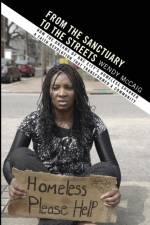
Description:What does it mean to be church? Is it spending an hour on Sunday with people who look, think, and act much as we do? Or is it something more incarnational that seeks out those who are different, the ones living on the margins? For centuries Christians have presumed that we are to take the gospel to the poor. Instead, Wendy McCaig invites us to receive the gospel from the poor. Through a series of encounters with incarcerated, homeless, and impoverished individuals, Wendy McCaig experienced the mysterious power of Christian hospitality that turns strangers into family. Her gift for storytelling brings this mysterious transformation to life. Inspired by the dreams of a homeless mother who wanted to help her neighbors, McCaig started a ministry that empowers formerly homeless individuals to live out their dreams. Together these dreamers are transforming their city one person, one community, and one church at a time. Her true stories of the least, the lost, and the forgotten in her community will show you the Good News becoming reality in the midst of injustice in ways that will inspire you and deepen your faith. These twenty stories-within-a-story about what ordinary people can do when they come together across racial, economic, and geographic divides to fight poverty will expand your vision of what it means to be the church. With your eyes opened to the needs and gifts of your neighbors, you too can begin to dream God-sized dreams for a hurting world. And as you pray ""thy kingdom come on earth,"" you will be inspired to live in such a way as to make it happen in your own community.Endorsements:""From the Sanctuary to the Streets is the story of how one person began to help others--the broken of our world--dream and realize those dreams. She invites us into her world and introduces us to her friends. It is through this eye-opening account of Wendy''s story and the individual stories of her friends that we get a glimpse of God''s power to heal and mend the broken and transform them into a community of dreamers.""--Eric Swansonco-author of The Externally Focused Church""McCaig''s vision of Christian hospitality involves opening ourselves to the most vulnerable-the abused wife, the drug addict, the ex-felon, the abandoned elderly-and discovering there the presence of God. Friendships with those close at home-family and neighbors-as well as with those across racial and class lines illustrate how ''God never works alone.'' This beautifully written book is a call to all of us to embrace our dreams, whether large and small, and in so doing respond to God''s call to be Christ''s body for the world.""--Elizabeth Newmanauthor of Untamed Hospitality: Welcoming God and Other Strangers""This is one of the best, most challenging, and hope-filled books I''ve read in a long time. What makes From the Sanctuary to the Streets so different from other books on the subject is it''s narrative quality--it reads like a novel, chalk-full of personal stories and wisdom born of experience. McCaig has captured qualities of holiness and hope that blossom in some of the most desolate corners of the inner city.""--Stephen Brachlowauthor of The Communion of Saints: Radical Puritan and Separatist Ecclesiology 1570-1625""Years ago, God gave Joseph an unpopular but ultimately redemptive dream that altered the course of his nation. Today, God has spoken a dream of the same fabric to my friend and courageous leader Wendy McCaig. Those who are wise enough to listen to this dreamer will become a part of a movement of the Church Distributed and will touch their communities with grace and hope.""--John P. Chandlerauthor of Courageous Church Leadership: Conversations with Effective PractitionersAbout the Contributor(s):Wendy McCaig is the founder and Executive Director of Embrace Richmond, an urban ministry in inner-city Richmond, Virginia. She holds a MDiv and has worked for more than ten years as a leader in the local church, and for
Description:The work of John Howard Yoder has become increasingly influential in recent years. Moreover, it is gaining influence in some surprising places. No longer restricted to the world of theological ethicists and Mennonites, Yoder has been discovered as a refreshing voice by scholars working in many other fields. For thirty-five years, Yoder was known primarily as an articulate defender of Christian pacifism against a theological ethics guild dominated by the Troeltschian assumptions reflected in the work of Walter Rauschenbusch and Reinhold and Richard Niebuhr. But in the last decade, there has been a clearly identifiable shift in direction. A new generation of scholars has begun reading Yoder alongside figures most often associated with post-structuralism, neo-Nietzscheanism, and post-colonialism, resulting in original and productive new readings of his work. At the same time, scholars from outside of theology and ethics departments, indeed outside of Christianity itself, like Romand Coles and Daniel Boyarin, have discovered in Yoder a significant conversation partner for their own work. This volume collects some of the best of those essays in hope of encouraging more such work from readers of Yoder and in hopes of attracting others to his important work.Endorsements:""The New Yoder is John Howard Yoder as dialogue partner both with and against the grain of Adorno, Foucault, Derrida, de Certeau, Horkheimer, Rowan Williams, Said, Stout, Volf, and many more. Here is patient, Christian theological pacifism beyond the either/ors that burdened a previous generation: beyond universalism vs. isolationism, Church vs. world, politics vs. quietism, Scripture vs. social activism. Here the eschaton meets postmodernity. The result? Anguished laughter, exilic politics, apocalypse, and dialogue: the work of Yoder-reading for our time.""--Peter OchsUniversity of VirginiaAbout the Contributor(s):Peter Dula is Assistant Professor of Religion and Culture at Eastern Mennonite University. Chris K. Huebner is Associate Professor of Theology and Philosophy at Canadian Mennonite University.
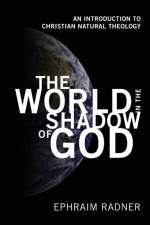
Description:In The World in the Shadow of God, Ephraim Radner argues for a vigorous Christian natural theology and insists that such a theology must, of necessity, be performed poetically. The peculiar character of such a theology is found in its disclosing of the natural limits that indicate indirectly the impinging and more fundamental reality of the divine life. Natural theology represents the encounter between created reality and the "shadow" of God''s creative and revelatory grace. However, the encounter is a morally demanding task for the Christian church if it is to be held accountable to the truth on which its life is based. The first portion of the book offers an extended critical essay on the nature of this sort of natural theology, while the second provides a developed set of examples through poems that display the natural world in light of the truths articulated in the Apostles'' Creed. Those interested in the intersection of theology, literature, history, and the natural world will be challenged by this attempt to renew a basic element of Christian knowledge and culture.Endorsements:"Never sweetly pious, always directly quarried from the particularity of life, Ephraim Radner''s poetry beautifully and movingly reflects the straining, searching, God-desiring pathos of natural theology. Shoes and suitcases speak as eloquently--and as obliquely and uncertainly--as the reliable routines of the lowly ant."--R. R. RenoCreighton University"Radner''s style in the introduction where he wrestles with the nature of natural theology as that which ''beats us on the head'' is one of vast but lightly worn learning in service of spiritual discipline, the life of somehow joyful penitence. The poetry that follows is crafted and careful, full to bursting with Scriptural imagery, gained from a wise American harvest of both the European (one detects the modernism of Rilke, Celan, and Milosz) and global (Burundi, Haiti) traditions where the world viewed up close in God''s holding presence is as cruel as it is colorful. It is as though the wandering children of Israel camp on the northern prairies to dream dreams of wild nature which has possessed the familiar (cats, raccoons, and small children!) One might call this post-Darwinian theology."--Mark ElliottUniversity of St. Andrews, School of DivinityAbout the Contributor(s):Ephraim Radner is Professor of Historical Theology at Wycliffe College, Toronto. He is the author of several volumes on ecclesiology and hermeneutics including The End of the Church (1998).
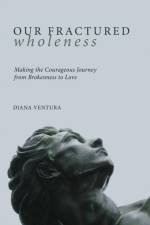
Description:Born with cerebral palsy, Diana Ventura has known brokenness her entire life. Through telling her story, she shares what it means to live with and overcome brokenness of all kinds.As she reflects on her own experience and that of others, Diana offers understanding and insight. There is a mystical path through the landscape of suffering, she says, and those who travel it can find God and healing even in the midst of pain and sadness. Readers who join her on this journey of prayer and faith will be better equipped to meet the everyday challenges of living with brokenness with hope, dignity, and true love.Endorsements:""From the first stunning sentence of this book, Diana Ventura invites us to listen to the voice of her body. Lean in close and prepare to be transformed. Her book is a testimony to the power of the incarnation ablaze in the life of the body.""--Stephanie PaulsellHarvard Divinity School""Diana Ventura is a model of a theologian thinking through the most difficult issues of suffering and faith. I have known her work for several years and invite others to listen to her distinctive voice.""--David TracyUniversity of Chicago Divinity SchoolAbout the Contributor(s):DIANA VENTURA, currently a PhD student in Practical Theology and Spirituality at the Boston University School of Theology, is an ethical reviewer for New England Institutional Review Board and head of standardization for the Center for Biostatistics in AIDS Research at Harvard University. Contact information is available at www.dianaventura.com.
Description:A Fellowship of Baptism is a critical rereading of Karl Barth''s ecclesiology, arguing that reading his ecclesiology through the lens of his mature view of baptism best enables one to understand Barth''s view of the church. Barth''s insistence on believer''s baptism is connected to the free-church ecclesiology he develops in the Church Dogmatics. The church, for Barth, is a gathered, concrete community formed by the Holy Spirit. The result of believer''s baptism should be a community that is free from cultural and political control so that it can serve the world and witness to it. At the same time, questions are raised about Barth''s rejection of the sacramental nature of baptism and the implications this has for ecclesiology. The strengths of believer''s baptism and the weakness of his non-sacramental view are both seen in his writings on the church and are brought into conversation with one another. Reading Barth''s ecclesiology and doctrine of baptism together helps to show the interdependence of baptism and ecclesiology in Barth as well as in all church teaching and practice.Endorsements:""Considering Barth''s view of Baptism, Tracey Stout helpfully demonstrates how and why Baptism, Ecclesiology, Christology, Pneumatology, and Ethics are all intimately connected. Stout judiciously maintains that, despite Barth''s later tendency to separate the church''s sacramental actions from the action of the Holy Spirit, we can still learn from Barth how and why it is important to understand that divine action enables free human action and thus encourages Christians to develop an appropriate Ecclesiology, Ethics, and Political Theology. This book serves its subject well and deserves to be widely read.""--Paul D. MolnarProfessor of Systematic TheologySt. John''s University, New York""Even the most vigorous of Karl Barth enthusiasts often remain perplexed at his late turn concerning baptism, as he rejected infant baptism in favor of believers'' baptism. In this masterly study of Barth on baptism, Tracey Stout demonstrates that Barth''s drastic shift was not made in opposition to Christian sacramentalism so much as for the sake of Christian freedom, most especially for the liberty of the church. For Barth, it is only when the entire Body of Christ makes its intentional witness to the world that it can become God''s truly confessional community. Stout''s treatment of this crucial matter will thus garner the interest of students and professors, of pastors and laypeople alike.""--Ralph C. WoodUniversity Professor of Theology and LiteratureBaylor UniversityAbout the Contributor(s):Tracey Mark Stout is Associate Professor of Christian Studies at Bluefield College in Bluefield, Virginia.
Description:What does the Bible say about the American future? Does it contain an apocalyptic vision in which conflicts are to be resolved by war? Or does it contain a vision of coexistence under some system of conflict management? While both visions have biblical foundations, the apocalyptic alternative has dominated public discussion in the past generation. Most people are not even aware that another vision can be derived from the same Bible and that it transcends the usual definitions of liberal, conservative, or evangelical politics. The essays in this book, written by distinguished scholars from various sectors of the theological spectrum, throw surprising new light on these questions. They were presented as lectures at an extraordinary theological conference sponsored by a large Methodist church in Lincoln, Nebraska, in October 2009. In contrast to the usual shouting matches between partisans, this conference--and this book--featured liberal and conservative Protestant and Catholic scholars who calmly unearthed new insights about the Bible''s relevance for the future of America and the world. Readers will be astonished to see these differing viewpoints on the pages of a single book, and even more amazed at the new common ground that is prepared by these fresh and profound furrows. About the Contributor(s):Robert Jewett is on the faculties of Morningside College and Garrett-Evangelical Theological Seminary. He is the author of Mission and Menace: Four Centuries of American Religious Zeal, and is Theologian in Residence at St. Mark''s Methodist Church in Lincoln, Nebraska.Wayne L. Alloway Jr. is Senior Pastor of St. Mark''s United Methodist Church in Lincoln and is also a member of the Board of Trustees at St. Paul School of Theology in Kansas City, Missouri.John G. Lacey is Executive Pastor of St. Mark''s United Methodist Church in Lincoln, Nebraska. He is a lifelong student of the Bible with a passion for teaching and writing about the Scripture.
Description:Reading Daniel as a Text in Theological Hermeneutics sets out to read the book of Daniel as a narrative textbook in the field of theological hermeneutics. Employing such disciplines as historical criticism, literary criticism, narrative theology, and hermeneutics, this work seeks to maintain an interdisciplinary outlook on the book of Daniel. Two inherently linked perspectives are utilized in this reading of Daniel. First is the perception that the character of Daniel is the paradigm of the good theological hermeneut; theology and hermeneutics are inseparable and converge in the character of Daniel. Readers must recognize in Daniel certain qualities, attitudes, abilities, and convictions well worth emulating. Essentially, readers must aspire to become a ""Daniel."" Second is the standpoint that the book of Daniel on the whole should be read as a hermeneutics textbook. Readers are led through a series of theories and exercises meant to be instilled into their theological, intellectual, and practical lives. Attention to readers is a constant endeavor throughout this thesis. The concern is fundamentally upon contemporary readers and their communities, yet with sensible consideration given to the historical readerly community with which contemporary readers find continuity. Greater concentration is placed on what the book of Daniel means for contemporary readers than on what the book of Daniel meant in its historical setting. In the end, readers are left with difficult challenges, a sobering awareness of the volatility of the business of hermeneutics, and serious implications for readers to implement both theologically and hermeneutically. Endorsements:""Aaron Hebbard''s new book is a genuinely interdisciplinary exercise that will be of immense help to scholars in literature, theology, and biblical studies. It offers a wholly new perspective on hermeneutics through a highly creative reading of the book of Daniel that introduces Daniel himself into the company of interpreters as relevant and immediate as Paul Ricoeur and Hans-Georg Gadamer. This is scholarship of the highest quality and sharpest imagination.""--David Jasper, Professor of Literature and Theology, University of Glasgow""A noteworthy student of Daniel once wearily commented that it is hard to say anything new about Daniel. Aaron Hebbard claims to have done so, and he soon persuaded me that he has. Anyone interested in Daniel or in hermeneutics (whether or not they like that word prefaced by the word ''theological'') will be intrigued by this book.""--John Goldingay, David Allen Hubbard Professor of Old Testament, Fuller Thological SeminaryAbout the Contributor(s):Aaron B. Hebbard is Associate Professor of Theology and the Arts at Community Christian College in Southern California. He earned his PhD in literature, theology, and the arts at the University of Glasgow.
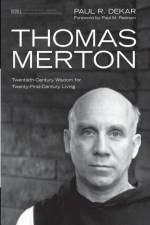
Description:Thomas Merton was arguably the twentieth century''s most widely published and widely read spiritual writer. This book explores Merton''s prophetic writings and experience as they offer guidance for spiritual seekers in their search to experience God, to simplify their lives, to live more humanly, and to shape Christian community in the face of alienation, consumerism, noise, and technology. The book includes parts of three previously unpublished conference contributions by Merton on technology.Endorsements:""Paul Dekar presents us in this book with a manifesto for the future of the Christian community, which he sees being renewed by intentional, contemplative, essentially lay communities that know how to connect classic monastic wisdom with the challenges of our addicted-conflicted culture. He tells us with real passion that we don''t need to fight old battles, but instead need to focus on God''s future. The chapter on Merton and technology is alone worth the price of the book. Warmly recommended, especially to Christians discouraged with the institutional church.""-Donald GraystonPast PresidentInternational Thomas Merton Society""Paul Dekar''s book is a thoughtful and comprehensive summary of Merton''s concerns about our world--ranging from ecological consciousness, war, non violence, and technology to new monasticism and a dialogue with other faiths. It is a timely book offering real guidance. Thomas Merton''s diagnosis of the ills of our time is speaking powerfully still: ''achievement neurosis,'' overspending, overwork, noise, violence, addiction to technology, and an individualism that has lost sight of the common good. The way forward? Creating ''communities of love'' in which God''s presence and the depth of our humanity--which we consistently ignore--are experienced, and where the balance between the inner and the outer life can be restored.""-Sr. MiriamCommunity of the Transfiguration About the Contributor(s):Paul R. Dekar is Professor Emeritus of Evangelism and Mission, Memphis Theological Seminary, member of a new monastic community in Australia, and a prolific author, including Community of the Transfiguration: Journey of a New Monastic Community (Eugene: Cascade, 2008). After thirty-four years of full-time teaching, he continues to teach, write, and work with communities of hope in Dundas, Ontario, Canada.
Description:In this wide-ranging collection of essays Ronald E. Osborn explores the politically subversive and nonviolent anarchist dimensions of Christian discipleship in response to dilemmas of power, suffering, and war. Essays engage texts and thinkers from Homer''s Iliad, the Hebrew Bible, and the New Testament to portraits of Dietrich Bonhoeffer, Noam Chomsky, and Elie Wiesel. This book also analyzes the Allied bombing of civilians in World War II, the peculiar contribution of the Seventh-day Adventist apocalyptic imagination to Christian social ethics, and the role of deceptive language in the Vietnam War. From these and other diverse angles, Osborn builds the case for a more prophetic witness in the face of the violence of the ""principalities and powers"" in the modern world. This book will serve as an indispensible primer in the political theology of the Adventist tradition, as well as a significant contribution to radical Christian thought in biblical, historical, and literary perspectives.Endorsements:""In reading Osborn you cannot help but think, ''He has to be kidding. He has to be putting us on to suggest there is a connection between anarchy and that form of Christianity called Adventist.'' But he is not kidding. Rather he has written a book of lively essays to remind us that a commitment to peace is a challenge to any order based on violence. It was the Adventists, in their early formations, who reminded us that a commitment to peace cannot avoid challenging orders based on violence; that peace requires a different kind of order altogether. This is a call to the church to be that community based on the order of Christ''s peace.""--Stanley Hauerwasauthor of Christianity, Democracy, and the Radical Ordinary""This book is a bracing read for anyone trying to make sense of Christian witness in a violent world. Osborn ranges both widely and deeply, connecting insights from theology, history, literature, and political science in startling and inventive ways. He shows how violence creates its own momentum, and offers a wide range of resources for countering that momentum. Anyone interested in living creatively in a destructive world will benefit from this book. It is the kind of book that has the power to transform lives.""--William T. Cavanaughauthor of The Myth of Religious Violence""The Christianity of the American Empire has not only come to accept the normalization of violence; it often celebrates it! How desperately American Christians need the keen insights regarding the demonic dynamics of power and violence that Ronald Osborn reflects in these essays!""--Greg Boydauthor of The Myth of a Christian NationAbout the Contributor(s):Ronald E. Osborn is a Bannermen Fellow with the Program in Politics and International Relations, University of Southern California
Description:This delightfully multifaceted volume, comprised of thoughtful essays by an esteemed array of cultural critics, probes the intersection of Christian faith and culture to honor the memory of A. J. ""Chip"" Conyers, a remarkably ecumenical Christian scholar and cultural ""warrior"" whose premature death in 2004 cut short a remarkable career in teaching and writing. As those who knew him can attest, Conyers lived his life at the intersection of Christian theology and cultural concern with a singular blend of astuteness, gracefulness, and Christian conviction.This festschrift, as esteemed theologian and Conyers''s mentor J├╝rgen Moltmann indicates in the foreword, is intended to mirror Conyers''s own commitment to incisive cultural criticism and theological faithfulness in the mold of the ""great tradition."" This is no small achievement even for so venerable a cast of scholars as the contributors to this volume, as Conyers crossed interdisciplinary boundaries--in a day of escalating hyper-specialization--with the greatest of ease. He was comfortable discussing contemporary church life or the christological controversy of the patristic era, Heideggerian hermeneutics or human dignity and the imago Dei, faith and the Enlightenment or the fatherhood of God, Catholic ""substance"" or Protestant reform.Yet Conyers always did this through the lens of historic Christian orthodoxy. Though he was a most incisive student of culture, in a most refreshing way he steered clear of being co-opted by the currents of culture. Neither retreating into pious devotionalism nor opting for the theologically unreflective activism that has become so chic in our post-consensus climate, he embodied a theological perspective that blends responsible cultural engagement with eschatological hope.The reader is sure to encounter the same blend in this festschrift, and to come away both challenged and edified toward fulfilling the message and hope of Conyers'' life and work: to faithfully thrive in Babylon.Endorsements:""Chip Conyers was a remarkable Christian scholar, one who combined an intense desire for God with an unbounded love of learning. Like a meteor against the night, he illuminated the world around him and showed the church a more faithful way to follow Christ. The essays presented here give a sense of Conyers'' breadth and wisdom and his courage to engage the culture for Christ''s sake. This is a worthy tribute to one of the most generous, insightful, and humane theologians I have known.""""--Timothy George Dean, Beeson Divinity School General Editor of the Reformation Commentary on ScriptureAbout the Contributor(s):David B. Capes is Dean of the Graduate School and Director of the School of Theology at Houston Baptist University. He has authored a number of books including Old Testament Yahweh Texts in Paul''s Christology (1992) and Rediscovering Paul (2007).J. Daryl Charles is Director and Senior Fellow of the Bryan Institute for Critical Thought & Practice at Bryan College. Among the number of books he has authored are Retrieving the Natural Law: A Return to Moral First Things (2008) and The Unformed Conscience of Evangelicalism: Recovering the Church''s Moral Vision (2002).
Description:This collection of essays was originally presented at the St. Margaret''s Consultation on Doctrine, Liturgy, and Preaching held at St. Margaret''s Anglican Church in Winnipeg, Canada in 2008. They consider human sexuality and marriage from a distinctly theological rather than polemical standpoint, aiming to avoid frequently polarized debates. The interesting commonality indicated in the articles is that sex and marriage are not about self-fulfillment, but are outwardly directed, aimed toward the other person, toward growth, maturity, and deepened spirituality, for the benefit of the church, for productive good, and for children. The first section explores theological and ethical issues surrounding human sexuality and aims toward understanding the nature of relationships in these contexts. The second section explores the spiritual nature of marriage and the history of thinking on marriage and family within Christian theology. For those interested in pursuing truly theological engagement with marriage and sexuality, this collection is required reading.Endorsements:"The authors in this admirable collection assume the traditional teaching of the Church on marriage, but this is not the end of the matter but rather the beginning: they take advocates of revision seriously, and contribute to a more serious theological conversation than we have often heard . . . It is not insignificant that this contribution emerged from a collaboration of a lively parish and academy pro ecclesia."--George SumnerPrincipal and Helliwell Professor of World MissionWycliffe College"In the weariness that surrounds the seemingly intractable debate on sexual ethics in the Church, it is expected that some might groan at the appearance of yet another book on the subject. Such a groan would be warranted if the essays contained in Human Sexuality and the Nuptial Mystery simply recapitulated the arguments that have brought us to an impasse. But here the thoughtful Christian will find new and evocative avenues of discussion . . . [T]he reader of these essays will be drawn into a deeper understanding of the mystery of human sexuality--and perhaps a new perspective on what divides the Church."--Rev. Stephen AndrewsBishop of AlgomaAbout the Contributor(s):Roy R. Jeal is Professor of Religion at Booth College and Scholar in Residence at St. Margaret''s Anglican Church, Winnipeg.
Description:""That the God of Israel makes doers of us through the Torah is, in my view, the most beautiful thing we can thank him for: Every lethargy, every melancholy, indifference and moroseness is ended . . . Wherever the Torah claims us as doers, it confronts the nihilism that exclaims: There''s nothing I can do. The Torah opposes anti-revolutionary laziness"" (F.-W. Marquardt). This anthology contains a selection of essays by Friedrich-Wilhelm Marquardt (1928-2002), former professor of systematic theology at the Free University of Berlin, Germany. As a student of Karl Barth in the fifties, Marquardt became one of the most influential pioneers in renewing the relationship between Christians and Jews in Germany after the Shoah, as well as a Barth scholar proposing a new perspective on Barth''s theology and political radicalism. Accordingly the essays contained in this volume deal with the two main areas of interest in Marquardt''s theological journey: Part 1 presents essays dealing with new perspectives in the relationship between Christians and Jews after the Shoah, promoting for example the significance of ""the Jewish No"" to the Messiahship of Jesus for Christian theology, and the relevance of Talmudic studies for Christians. Part 2 presents examples of Marquardt''s approach to Barth''s theology, emphasizing the relevance of connecting the theological and the political spheres in general, and the socialist horizon in particular in Barth''s theological framework. This perspective is supported by an abundance of historical evidence and by deciphering Barth''s unpublished ""Socialist Speeches"" from the Safenwil period.Endorsements:""Why is the work of Friedrich-Wilhelm Marquardt so little translated and little known in the English-speaking world? Is this lack due to his radical re-thinking of the Jewish foundations of Christianity after the Shoah? Is it a result of his iconoclastic interpretation of Karl Barth as a political theologian who shatters the constraints of neo-orthodox categories? Or, is it due to his following consequentially the implications of what it means to be a Confessing Church in the political and economic events of our times? This book begins to correct a theological slight. Theological Audacities indeed!""--Craig L. NessanAcademic Dean and Professor of Contextual TheologyWartburg Theological SeminaryAbout the Contributor(s):Friedrich-Wilhelm Marquardt (1928-2002) was Professor of Systematic Theology at the Free University of Berlin.Andreas Pangritz, editor, is Professor of Systematic (Protestant) Theology and Director of the Ecumenical Institute at the University of Bonn. He is author of Karl Barth in the Theology of Dietrich Bonhoeffer (2000).Paul S. Chung, editor, is Associate Professor of Mission and World Christianity at Luther Seminary, St. Paul, Minnesota. He is the author of Karl Barth: God''s Word in Action (2008).
Description:""Of very few people can it be legitimately said that their work fundamentally reconfigured the landscape of two theological disciplines. But if there is anyone in recent memory who would be worthy of such an accolade, it is John Howard Yoder. The two disciplines are, of course, theological ethics and biblical studies--though Yoder would cringe at their separation, and his work was both explicitly and implicitly a prolonged exercise in maintaining their indissoluble union. For him, to hear the word rightly was to do the word publicly. . . . [Yoder] guides us toward a truly ecclesial yet missional reading of Scripture, with a profoundly Anabaptist yet ecumenical and catholic spirit, in historically astute and literarily sensitive ways that are nonetheless ""straightforward"" and pastoral. Or, as he would himself say, he guides us toward a reading of Scripture that proceeds from and focuses on Jesus: Vicit Agnus Noster, Eum Sequamur; ''Our Lamb has conquered; let us follow him.''""--from the foreword by Michael J. GormanEndorsements:""Yoder''s biblical exposition, perhaps more than his work in either ethics or history, inspired a whole generation to re-engage ''Word and World.'' I, like so many others, am grateful and indebted. This volume gives us unique insights into Yoder''s integral approach to reading scripture, which remains instructive, compelling and fruitful.""--Ched Myers, Bartimaeus Cooperative Ministries and author of Binding the Strong Man: A Political Reading of Mark''s Story of Jesus""For anyone interested in theological interpretation of Scripture, this book is a welcome event. This updated version of To Hear the Word brings together a compelling collection of John Howard Yoder''s many writings on biblical interpretation and theology. Those engaged in current discussions about how to interpret and embody Scripture in the church will find that on many of the most pressing issues in the current debates, Yoder has already engaged the issues in provocative and challenging ways. It only sharpens our sorrow that his voice has been lost.""--Stephen E. Fowlauthor of Theological Interpretation of Scripture (Cascade 2009)About the Contributor(s):John Howard Yoder (1927-1997) earned his PhD from the University of Basel and taught theology at the Associated Mennonite Biblical Seminaries and the University of Notre Dame. For nineteen years he served the Mennonite Fellowship in church relations and education. His published books include The Politics of Jesus, The Priestly Kingdom, To Hear the Word, When War Is Unjust, What Would You Do?, and He Came Preaching Peace.
Abonner på vårt nyhetsbrev og få rabatter og inspirasjon til din neste leseopplevelse.
Ved å abonnere godtar du vår personvernerklæring.