











Gjør som tusenvis av andre bokelskere
Abonner på vårt nyhetsbrev og få rabatter og inspirasjon til din neste leseopplevelse.
Ved å abonnere godtar du vår personvernerklæring.Du kan når som helst melde deg av våre nyhetsbrev.

About the Contributor(s):Isaac K. Mbabazi (PhD, University of Manchester) is Professeur Associé of the New Testament. Former Dean of the School of Theology at Shalom University, Congo, he is presently Rector of Great Lakes School of Theology and Leadership, Burundi, and is adjunct Professor at International Leadership University-Burundi. He is the author of several articles, including ""Christians as Members of a ''Royal Family'' in Matthew''s Gospel,"" AJET (2011).
Description:The mission of the church to the Jews is a unique one. The biblical, theological and practical issues differ from those with other groups because Israel was, and is, the people to whom God gave his promises. However, the unbelief of many Jewish people and the persecution of Jewish people in the name of Jesus makes mission to the Jews uniquely difficult, requiring considerable sensitivity. But it is also full of hope, for there is promise of both a remnant and a fullness coming to faith in Jesus the Messiah. The lectures in this book were part of a series organized by Christian Witness to Israel in Australia to explore this unique challenge and to encourage an intelligent, heartfelt, and persevering interest in mission to the Jewish people. The studies focus on Biblical, theological, historical, and current issues. They were named the Edersheim Lectures after Alfred Edersheim, the well-known nineteenth-century Jewish Christian scholar and author who served in Romania as a missionary and in the United Kingdom as a pastor. Following in his example, The Gospel and Israel engages in an in-depth examination of themes relating to the Jewish people and the Christian faith.
About the Contributor(s):Richard A. Horsley is Distinguished Professor of Liberal Arts and the Study of Religion at the University of Massachusetts. Among his many books are The Prophet Jesus and the Renewal of Israel (2012) and After Apocalypticism and Wisdom (with Patrick Tiller; Cascade Books, 2012).
About the Contributor(s):Hermen Kroesbergen is Lecturer in Systematic Theology at Justo Mwale Theological University College on behalf of KerkinActie, and postdoctoral fellow at the University of Pretoria. He is the author of De relatie tussen systematische theologie en gewone geloofstaal (2012).
About the Contributor(s):David P. Gushee is Distinguished University Professor of Christian Ethics and Director of the Center for Theology and Public Life at Mercer University, and the author/editor of fifteen books in Christian ethics. He is widely considered one of the leading moral thinkers in evangelical Christianity.
About the Contributor(s):Brian Arthur Brown is the designer of A Diagram of Sources of the Pentateuch, featured in the sequel to this book, Forensic Scriptures. A minister of the United Church of Canada, he lives in Niagara Falls with his wife, Jenny.
About the Contributor(s):Rosario ""Roz"" Picardo is lead pastor of Embrace Church in Lexington, Kentucky.
Description:In the Fray collects David Gushee''s most significant essays over twenty years as a Christian intellectual. Most of the essays were written in situations of ethical conflict on the highly contested ground of Christian public ethics. Topics addressed include torture, climate change, marriage and divorce, the treatment of gays and lesbians in the church, war, genocide, nuclear weapons, race, global poverty, faith and politics, Israel/Palestine, and even whether Christian ethics is a real academic discipline. Quite visible in the collection is Gushee''s deep research interest in the Nazi era in Germany and how the churches fared in resisting Nazi intimidations and seductions and, finally, the Holocaust. All essays reflect the desire for a church that has learned the lessons of that period--a church with resistance to racism, militarism, nationalism, and other social-ideological toxins, and with the discernment and courage to resist these in favor of a courageous allegiance to the lordship of Christ at the time of testing. Considerable attention is directed to contesting some of the public ethics found in the author''s own US evangelical Christian community. Concluding reflections on Gushee''s ethical vision are offered in an illuminating essay by senior Christian ethicist Glen Harold Stassen.
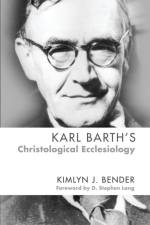
About the Contributor(s):Kimlyn J. Bender is Associate Professor of Theology at George W. Truett Theological Seminary, Baylor University. He is the coeditor of Theology as Conversation: The Significance of Dialogue in Historical and Contemporary Theology (Eerdmans).
About the Contributor(s):Jason Byassee is senior pastor at Boone United Methodist Church in North Carolina and a Fellow in Theology and Leadership at Duke Divinity School.L. Roger Owens is associate professor of leadership and ministry at Pittsburgh Theological Seminary.
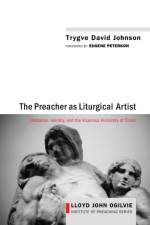
Description:Trygve Johnson invites us to consider a new metaphor of identity of The Preacher as Liturgical Artist. This identity draws on a theology of communion and the doctrine of the vicarious humanity of Christ to relocate the preacher''s identity in the creative and ongoing ministry of Jesus Christ. Johnson argues the metaphorical association of the preacher and artist understood within the artistic ministry of Jesus Christ frees the full range of human capacities, including the imagination to bear upon the arts of Christian proclamation. The Preacher as Liturgical Artist connects preachers to the person and work of Jesus Christ, whose own double ministry took the raw materials of the human condition and offered them back to the Father in a redemptive and imaginative fashion through the Holy Spirit. It is in the large creative ministry of Jesus Christ that preachers find their creativity freed to proclaim the gospel bodily within the context of the liturgical work of God''s people.
About the Contributor(s):P. Coffey was Professor of Logic and Metaphysics at Maynooth College Ireland. His works include Epistemology or the Theory of Knowledge.
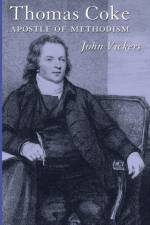
Description:Ever since John Wesley departed from Anglican usage by "consecrating" him as Superintendent of American Methodism, Thomas Coke has been a center of controversy. Though remembered primarily as the "Father of Methodist missions," he was a key figure in the development of Methodism on both sides of the Atlantic in the years before and after Wesley''s death. To write his biography is to write much of the history of the Church he served. This makes it all the more surprising that no serious study of Thomas Coke has appeared in England for over a century, and that the only substantial twentieth-century biography is that of Bishop Candler published in America more than forty years ago. In the words of Cyril Davey on the occasion of the bicentenary of Coke''s birth, "No man in Methodism had a greater significance for his own age, for Methodism, and for the Missionary movement. No man, deserving to be remembered, has been more completely forgotten." The present book is, in fact, the first documented study of the man ever published. Based to a considerable degree on unpublished primary material, it aims to present Coke as a human being in relation to, and often in conflict with, his contemporaries. At the same time it examines critically the accusations of self-seeking ambition and inconsistency repeatedly brought against him. And it reviews his various roles as Wesley''s right-hand man, as Asbury''s uneasily yoked colleague, as a pioneer of missions at home as well as abroad, as preacher and author, and as devoted husband.About the Contributor(s):John Vickers was Head of the Department of Religious and Social Studies in the West Sussex Institute of Higher Education until retiring in 1981. He has written and edited numerous works, including the online version of the ''Dictionary of Methodism in Britain and Ireland''.
About the Contributor(s):Robert Cording teaches English and creative writing at College of the Holy Cross where he is the Barrett Professor of Creative Writing. He has published six collections of poems: Life-List, which won the Ohio State University Press/Journal award (1987); What Binds Us to This World (1991); Heavy Grace (1996); Against Consolation (2002); Common Life (2006); and his newest, Walking With Ruskin (2010).
Description:How indigenous was the Evangelical Free Church movement in Tsarist Russia? Was it simply a foreign import? To what extent did it threaten the political stability of the nation and encroach upon the existing Russian and German churches? On the Edge examines the efforts of the regimes to suppress the movement and how the movement not only survived but also expanded. To what extent did the movement bring upon itself unnecessary opposition because of aggressiveness and tactics? Albert Wardin describes the contributions the movement made to the religious life of Russia and examines its numerical success.
Description:Even on a bumper sticker, grace is irresistible.Grace Sticks: The Bumper Sticker Gospel for Restless Souls is light-hearted spiritual memoir and theological travel guidance for restless souls looking for more direction, more truth, and more life. Robb-Dover invites readers to reflect on how the bumper stickers they affix to their cars or entertain at traffic lights are themselves spiritual aspirations of sorts pointing to One who is the Way, the Truth and the Life. In their meanderings, with bumper stickers as pit stops, readers will laugh, cry, be provoked, and be inspired to look for God in the most seemingly frivolous and unlikely of places. They''ll discover in the process there''s as much grace to be found in the journeying itself as in the destination.
About the Contributor(s):Andrew K. Gabriel is Assistant Professor of Theology at Horizon College and Seminary, an affiliated college of the University of Saskatchewan. He is the author of The Lord Is the Spirit: The Holy Spirit and the Divine Attributes (2011) and coauthor of Johannine Writings and Apocalyptic: An Annotated Bibliography (2013).
About the Contributor(s):Stanley E. Porter is President and Dean, and Professor of New Testament, at McMaster Divinity College, Hamilton, Ontario, Canada. He has written widely on the topics of biblical studies and linguistics.
About the Contributor(s):Arch B. Taylor Jr. is an ordained Presbyterian minister who served for over thirty years in Japan and taught Bible at Shikoku Gakuin University.
About the Contributor(s): Kerry Walters is William Bittinger Professor of Philosophy and Professor of Peace and Justice Studies at Gettysburg College. He is the author of thirty books in philosophy, peace studies, theology, and history. He has also edited After War, Is Faith Possible? (Cascade, 2008) and with Robin Jarrell, Blessed Peacemakers (Cascade, 2013).
About the Contributor(s):Christian E. Early is Professor of Philosophy and Theology at Eastern Mennonite University in Harrisonburg, Virginia. He is coeditor with Ted Grimsrud of A Pacifist Way of Knowing (Cascade Books, 2010).Annmarie L. Early is Professor of Counseling at Eastern Mennonite University in Harrisonburg, Virginia.
About the Contributor(s):John D. Barbour is Professor of Religion and Boldt Distinguished Teaching Chair in the Humanities at St. Olaf College. He is the author of scholarly essays and four books, including Versions of Deconversion: Autobiography and the Loss of Faith (1994) and The Value of Solitude: The Ethics and Spirituality of Aloneness in Autobiography (2004).
About the Contributor(s):Antoine Fritz (MTh, PhD) has been Office Manager of the Paris branch of Jews for Jesus and is currently International Trainer at Training Leaders International, Minneapolis, Minnesota.
Description:The interpretation of any written discourse is problematic, which is the concern of this book. The relevant hermeneutical questions are: Do authors communicate their intention so that understanding of their intent is possible? Can a person other than an author speak through an author''s text? Can individual meaning, which is personal, ever be regarded as equivalent to that of the author? Any assertion of God speaking in and through the biblical text must first deal with these hermeneutical questions. Questions of the existence and speaking of God are matters of belief. However, questions asking can a God who exists speak so that I understand His intention, and can my meaning be relative to His, these are matters of hermeneutics. The answer in contemporary philosophical approaches to texts has been to declare a resounding no, creating confusion for someone seeking to deal with God''s intention for their lives in understanding biblical text. This must be addressed and not treated dismissively. When this is done a resounding yes is disclosed as valid hermeneutically, opening new horizons not only in dealing with biblical text but with any author''s text. This is not Christianized hermeneutics but an answer for the Christian hermeneut.
About the Contributor(s):Jesse James DeConto is a writer and musician. He has degrees in philosophy from Cedarville College, journalism from UNC-Chapel Hill, and Christian studies from Duke Divinity School. He spent eleven years with newspapers in Ohio, New Hampshire, and North Carolina. He is a contributing editor at Prism magazine, writes regularly in The Christian Century, and performs with his indie pop band The Pinkerton Raid. He lives in Durham with his wife and two daughters.
About the Contributor(s):Blayne A. Banting (DMin, PhD) is Lead Pastor of Caronport Community Church in Caronport, Saskatchewan. He is author of Take Up and Preach: A Primer for Interpreting Preaching Texts (2010).
Description:A growing number of Christians feel drawn to relational theology. The God of the Bible seems thoroughly relational, and we are increasingly aware of our own interrelatedness with others. Contributors to this volume tease out some implications of relational theology in light of a host of issues, doctrines, and agendas. The result is a must-read collection of essays with proposals sure to be the center of conversations for decades to come!About the Contributor(s):Brint Montgomery is Professor of Philosophy at Southern Nazarene University in Bethany, Oklahoma.Thomas Jay Oord is Professor of Theology and Philosophy at Northwest Nazarene University, Nampa, Idaho.Karen Strand Winslow is Professor of Biblical Studies and Director of the Free Methodist Center at the Graduate School of Theology at Azusa Pacific University, Azusa, California.
Description:Born Again and Beyond identifies and interacts with various theological blind spots in Evangelicalism--such as its naive rationality, its faulty understanding of the nature of both Scripture and the gospel, and its emphasis on salvation as an event rather than a process. At the same time, Born Again and Beyond recognizes the real goodness that evangelicalism has brought to the world. Whether it be caring for the outcast and underprivileged, or insisting that one can have a personal relationship with God in Christ, Evangelicalism has certainly played a key role in the advancement of the Kingdom of God in modern times. Perhaps the most destructive element of Evangelicalism has been the equating of it with the gospel itself. Like other expressions of authentic Christian faith, Evangelicalism must not regard itself as the principal locus of the gospel. Having been an Evangelical for decades, John E. Harvey comes to this discussion not as a misinformed outsider, but as one who has sympathy with the Evangelical cause.
Description:The Bible''s Prophets: An Introduction for Christians and Jews introduces the reader to the world of Joshua, Judges, 1 and 2 Samuel, 1 and 2 Kings, and the literary prophets: Isaiah, Jeremiah, and Ezekiel, plus the twelve ""minor"" prophets: Hosea, Joel, Amos, Obadiah, Jonah, Micah, Nahum, Habakkuk, Zephaniah, Haggai, Zechariah, and Malachi. These books form the second section of the Hebrew Bible--the Prophets/Neviim. Features: Introduction to the Bible; Introduction to the Prophets; and Do the Prophets predict the coming of the Messiah?Each chapter covers one particular biblical book. Chapter divisions: 1, 2Introduction with chapter-by-chapter analyses or section-by-section analyses / geo-political and historical background / significant events / personalities / concepts and divisions.3. The biblical book and the Christian Scriptures. 4. The biblical book in rabbinic literature. How did the rabbis utilize quotations from the Prophets to teach their values? Extensive quotations.5. Text study. An excellent source for Christian, Jewish, or interfaith study of the Bible''s Prophets.
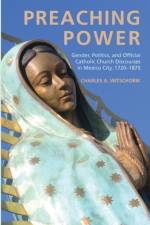
About the Contributor(s):Charles A. Witschorik is an Instructor of History at San Francisco University High School. He lives in the San Francisco Bay Area.
Abonner på vårt nyhetsbrev og få rabatter og inspirasjon til din neste leseopplevelse.
Ved å abonnere godtar du vår personvernerklæring.