












Gjør som tusenvis av andre bokelskere
Abonner på vårt nyhetsbrev og få rabatter og inspirasjon til din neste leseopplevelse.
Ved å abonnere godtar du vår personvernerklæring.Du kan når som helst melde deg av våre nyhetsbrev.

Description:A Study showing that the religion and culture of Israel are not of Babylonian origin.
Description:This groundbreaking study explores the ways young Americans today understand right and wrong, how they think out their morality, and how they live it out. It describes contrasting ethical styles in the biblical, utilitarian, and personalist traditions of our culture; first, as they structured the conflict between mainstream and counterculture during the 1960s, and second, as they have shaped the transformation of these values in new religious movements since the early 1970s.Coupling descriptive ethics with interpretive sociology, this study pursues biography and moral dialogue with sixties youth who participated in a charismatic Christian sect, a Zen Buddhist meditation center, and a human potential organization (est). It shows the significance of these movements for the adherents'' changing ideas of their own identity; their relationships, sex roles, courtship, and marriage; and their politics and vision of society. It analyzes the cultural logic and the social location of their ideas, which break down, recombine, and find renewal in the course of conversion.
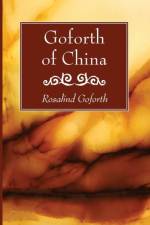
Description:Born on a farm in Canada, Jonathan Goforth''s ambition as a young boy was to study and become a politician. Little did he know then what the future held in store. At the age of eighteen he was converted to Christianity and immediately became interested in missionary work. After attending Knox College in Canada, he set out for China with his wife, Rosalind.Many hardships and trials followed. Their first child died in the spring of the following year. Others were later claimed by malaria and menengitis. In 1900 the Goforths, along with others, had to flee before the Boxer uprising. Their escape was a miracle in itself.Goforth of China is the amazing story of a man with unusual vision and determination.
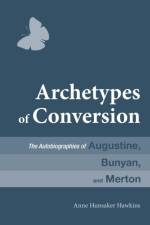
About the Contributor(s):Anne Hunsaker Hawkins is Professor Emerita, Penn State College of Medicine, where she served as Professor of Humanities and Director of the Drs. Kienle Center for Humanistic Medicine. She is the author of several books, including Reconstructing Illness: Studies in Pathography and A Small, Good Thing: Stories about Children with HIV and Those Who Care for Them. Her numerous published articles concern a wide range of topics, including studies of the relevance of humanistic medicine to Dante''s Divine Comedy, Homer''s Iliad, Sophocles'' Philoctetes, Donne''s Devotions, and Chrétien de Troyes'' Yvain. Hawkins lives in Philadelphia.
Endorsements:"Liturgical Presbyterians? No, this is not an oxymoron. D. G. Hart has written a lively polemic against the well-intentioned dumbing-down of worship by advocates of church growth. This book is going to make some people very mad, and it will make others very glad. Those who have thrown away the theological substance of the great Reformed tradition of Christian worship ought to be mad. Hart shames them. And yet, for those whose privilege it is to praise and serve God in a church that enjoys the Reformed way of worship in all its depth, glory, and joy, this book is a great summons to faithfulness in our time."--WILLIAM H. WILLIMON, Duke Divinity School"Beginning to realize just how much they have been shaped by non-Reformed influences, conservative Presbyterian and Reformed churches are now being forced to decide between a generic ''low-church'' Protestantism, a ''high church'' tradition, or, oddly enough, a more traditional Reformed and Presbyterian approach. D. G. Hart believes that Reformed theology provides resources not only for understanding that we are saved, but also for how we worship and mature in the Christian faith. There''s a lot of wisdom here, and whether one agrees or disagrees with Hart, his well-considered arguments cannot be responsibly ignored by adherents of Reformed Christianity." --MICHAEL HORTON, Editor in Chief, Modern Reformation"Unabashedly writing to inform, rouse, and serve his fellow Presbyterians, D. G. Hart has nonetheless produced a book that is properly and profoundly ecumenical. Christians from all communions who take seriously the identity and nature of the church will learn from Hart''s analysis of the complex arrangement under God of cult and culture, form and content, church and state, praise and proclamation, cross and crown. Hart reminds us that the chronicles of the people of God always offer encouragement to strengthen feeble arms, weak knees, and lazy minds."--KEN MYERS, host and producer of the Mars Hill Audio Journal"Hart''s book combines world-class scholarship with keen social and ecclesiastical awareness and should be read and reread by those who want to transmit the piety and ethos of the Reformed tradition to the next generation."--TERRY L. JOHNSON, Independent Presbyterian Church, Savannah, Georgia
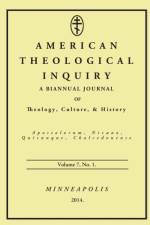
Description:American Theological Inquiry (ATI) reaches thousands of Christian scholars, clergy, and other interested parties, primarily in the U.S. and U.K. The journal was formed in 2007 by Gannon Murphy (PhD Theology, Univ. Wales, Lampeter; Presbyterian/Reformed) and Stephen Patrick (PhD Philosophy, Univ. Illinois; Eastern Orthodox) to open up space for Christian scholars who affirm the Ecumenical Creeds to contribute research throughout the broader Christian scholarly community in America and the West.The purpose of ATI is to provide an inter-tradition forum for scholars who affirm the historic Ecumenical Creeds of Christendom to constructively communicate contemporary theologies, developments, ideas, commentaries, and insights pertaining to theology, culture, and history toward reforming and elevating Western Christianity. ATI seeks a critical function as much or more so as a quasi-ecumenical one. The purpose is not to erase or weaken the distinctives of the various ecclesial traditions, but to widen the dialogue and increase inter-tradition understanding while mutually affirming Christ''s power to transform culture and the importance of strengthening Western Christianity with special reference to Her historic, creedal roots."Theologians, would-be theologians, and the theologically attentive will want to check out American Theological Inquiry."~ Richard John Neuhaus (1936-2009), First Things
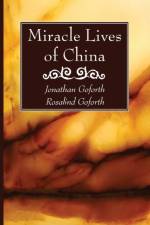
Description:These are soul-stirring stories recording God''s miraculous power in the conversion of men as seen in mission work during the forty years these missionary warriors labored in China.The vivid pen-sketches titled ""The Blind Chief,"" ""The Idol Maker,"" and ""The Gambler''s End"" take the reader into the heart of Chinese village life. The triumphant accounts of God''s grace in the lives of ""A Chinese Shakespeare"" and ""A Faithful Pastor,"" and the record of how the students were reached makes for vigorous and enheartening reading. The closing chapter contains a brief sketch of the famous Christian General, Marshall Feng Yu-hsiang.This companion volume to By My Spirit is rich with incidents from the lives of these two saints of God. We see, in reading such a volume as this, that we are still serving a miracle-working God.
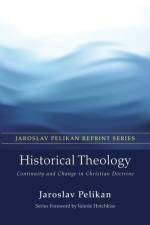
Description:Change is a universal phenomenon that commands the attention of the historian. For Christian theology, change raises special difficulties. How are we to reconcile the notion of the revelation of an unchanging God, who is abiding truth, with the notion of the pervading mutability of all human affairs? This problem, which is as old as religion, is intensified by the Christian belief in the fullness and finality of the revelation made through Jesus Christ.Professor Pelikan begins his study of historical theology with this basic problem and traces the origins of the difficulties that inevitably follow upon the admission of the possibility of change. His investigations lead him to critically examine the dogmatic solution of Vincent of Lerins, the later dialectical interpretation of Abelard, the approach of Thomas Aquinas, and finally, the nineteenth century''s Adolf von Harnack to propose a working definition of Christian doctrine and of the task of the historical theologian.Pelikan''s work is a perceptive and penetrating study of the interaction of history and theology. Theology must be historical because man is historical. To neglect history, or worse still, to renounce it, is to deny man and theology their common future. Historical Theology is a worthy introduction to a task that must continually seek to weld past, present, and future into a living whole.
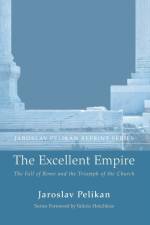
Description:This remarkable account by an award-winning historian details the responses to the fall of Rome by the church fathers, who set the pattern for interpreting this momentous event for all succeeding centuries.""To speak about the decline and fall of the Roman empire as ''the social triumph of the ancient church'' is to look at the events associated with that ''memorable revolution'' . . . through the eyes of the victors,"" writes the author. ""The thoroughness of the victors has often seen to it that there remains no other way for us to view those events. Not only are we--for this period as for so many others throughout most of human history--denied access to the mind of the common people as they watched this history in the making, such that we are forced to depend on the documents provided by various of the elites of the fourth and fifth centuries; but among the documents of those elites, only some have been permitted to survive.""Jerome, Christian humanist and translator of the Bible into Latin, represents an apocalyptic view of the crisis. Eusebius, court theologian and founder of church history, saw the fall of Rome as the sign of a new order, the ""Christian Empire."" And Augustine, fountainhead of much of Western thought during the millennium that followed, used it as the basis for his City of God.The unifying theme in this historical panorama is the final revisionist view of the fall by its greatest historian, Edward Gibbon. All of these interpretations of the fall of Rome continue to live today and deeply influence our understanding of Western culture.
Endorsements:""This is the ultimate bedside book. Replete with sinuous, compact discussions of first and last things--sin, faith, grace, and John Henry Newman--it reflects Jaroslav Pelikan''s lifelong commitment to what he calls ''the great new fact of Christianity'' . . . This book works like a tuning fork for the mind. With it, the harmony of Pelikan''s thought and life has itself become part of the great Christian tradition.""--Christian Science Monitor""This is a rewarding and exciting book from beginning to end. It shows the reflection of a master of his work, where the work continually reveals the author''s enjoyment, both exemplifying and satisfying Horatio''s utile dulci. Packed with knowledge and insight, it informs, stimulates, and delights. It also corrects, or at least reproves, some vulgar errors . . . A valuable book.""--Roland M. Frye""I found Pelikan''s thinking fascinating, elegant, informative, scholarly, and deeply personal and attractive . . . There is always some insight to gain. [Pelikan''s book] provides a course in nearly the whole of Christian faith and history--in terms of just one person''s journey.""--Robert B. Coote, Pacific Theological Review""Jaroslav Pelikan ranged so widely in his exploration of historic Christian traditions, and his work probed so deeply, that it is a real boon to see Wipf and Stock bringing some of his books back into print. They were excellent reading when they first appeared; they remain excellent reading today.""--Mark A. Noll, McAnaney Professor of History, University of Notre Dame
Endorsements:"Waetjen offers us an illuminating reading of Mark''s Gospel that was forged out of his own experience in the Third World. Working from a fresh translation that lays bare the Markan style, Waetjen traces the stark conflict between the new ordering of power announced by Jesus and the tenacious domination of the ruling elite in Israel''s agrarian society. This innovative application of the sociology of millennialism to the phenomenon of Mark''s narrative world is loaded with insights that will be of interest to readers at every level."--David Rhoads, Lutheran School of Theology, Chicago
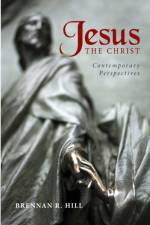
About the Contributor(s):Brennan R. Hill is Professor of Theology at Xavier University in Cincinnati. He is also the author of Christian Faith and the Environment and Jesus: Center of Christianity.
About the Contributor(s):Gregory S. Clapper is Professor of Religion and Philosophy at the University of Indianapolis and is Affiliate Professor of United Methodist Studies at Christian Theological Seminary. He has authored many articles and four books.
Description:Rex Gloriae is an account of the way in which the New Testament representation of Christ in royal categories lived on during the pre-Constantinian period; how it became enriched by its confrontation with Hellenistic culture; and how this development, in the course of the doctrinal disputes of the fourth century, gave rise to the conception of Christ as King that dominated the theology of the Byzantine period and the Middle Ages in the West.
Description:What was the faith behind the proclamations of Jesus, the message of Paul, and the Johannine witness--and how can it be recovered today? This penetrating and provocative book seeks to probe the various formulations of religious faith in the New Testament with a view to recovering the real essence and genius of Christianity today.Dr. Wilder sees three principal strains--often harmonious but sometimes disparate--in New Testament faith: the proclamations of Jesus, the message of Paul, and the witness of John the Evangelist. First, he studies what has happened to our faith since its original message emerged from the concrete historical act and the resultant community of experience. In the time since, flesh and spirit, as well as humanity and divinity, have come to be regarded as mutually exclusive, making it necessary for scientific humanism to develop a language of its own--for religion has lost communication with it.Jesus'' message, however, was a total claim and a total hope, a prophetic forecast of human destiny. Paul, though he spoke a different language and used different symbols, laid the groundwork for an epochal revolution of the race. John, for his part, emphasized eternal life here and now and previsioned a Christian freedom. Dr. Wilder ends with a stirring plea for a postliberal viewpoint that will recover the insights of the past without its mythology and terminology.
Description:We live in a world that calls for the separation of church and state, and the separation of religion and the arts is of a piece with this divided culture. However, this long-standing breach between Christianity and the arts narrows in view of the notable development of mutual interest and conversation between theology and literature.Dr. Wilder discusses this historic cleavage and then sets forth, first from the side of imaginative literature and then from the side of the church, the evidence for an emerging bridge of this gulf. The most significant arts of our time have dealt with metaphysical and moral themes as well as existential concerns by drawing on the great religious mythical patterns of the past. Yet the church, in many respects, has become conscious of its aesthetic shortcomings and is increasingly aware of the modern arts. Dr. Wilder discusses the basic dilemma of Christianity''s relationship to the aesthetic order of experience, emphasizing that religious art and symbols should not be viewed as merely decoration, but rather as bearers of meaning and truth and therefore as critically important to the religious tradition. Dr. Wilder examines particular examples of the treatment of religious subject matter in modern works by Jeffers and Faulkner. He reflects on Jeffers'' adequate and inadequate views of the central Christian theme of vicarious atonement, and takes Faulkner''s The Sound and the Fury as opportunity for consideration of the attenuation of Christian culture.The book aims to inform readers interested in modern literature and the arts of relevant developments in church circles that may both surprise and gratify, even as it introduces churchmen and theologians to features of modern writing that very much concern them.
Description:An illuminating New Testament study depicts the power and beauty of language that speaks with the words of God and man.Words call man to battle or summon him to prayer. More and more, today man is analyzing his language and asking: What is the purpose of language? What do the words we speak mean? What is their religious significance? Dr. Wilder''s extraordinary work attempts to answer these questions and, in particular, to study the qualities of the language that ushered in a new religion, the early Christian faith.
About the Contributor(s):Peter J. Morden is Vice Principal of Spurgeon''s College, London, a Fellow of the Centre for Baptist History and Heritage, Regent''s Park College, Oxford, and a Fellow of the Royal Historical Society.
Description:Who was William Stringfellow? Like most prophets, he was brilliant. But he was also, like most prophets, difficult, irascible, suspicious, contentious--and full of courage. He was a lawyer, a social activist, and a dedicated communicant of the Episcopal Church. He graduated from Harvard Law School in the 1950s but put aside the promise of a lucrative career and went to work in East Harlem, one of New York City''s poorest neighborhoods. At the height of the Vietnam War, he took the Reverend Daniel Berrigan into his home and was indicted for harboring a fugitive. In the 1970s, while the Episcopal Church was struggling with such issues as the ordination of women and the funding of programs for minorities, he accused the ecclesiastical hierarchy of arrogance, duplicity, and lack of leadership.Everything William Stringfellow said and did was grounded in his profound belief in the Incarnation and the Eschaton. He knew Jesus Christ to be the Word of God, who is in all things and who challenges the powers and principalities of this world, calling people and institutions to repentance and newness of life.In Prophet of Justice, Prophet of Life editor Robert Boak Slocum has gathered a diverse group of clergy, legal scholars, and seminary faculty to produce this stimulating and provocative series of essays on the life and work of William Stringfellow.
Description:Scratch the surface of Western culture and you will find signs of its Christian foundation. In laying these foundations, argues Ben F. Meyer, no ancient texts contributed more than the Gospel of Matthew, thanks to its primacy in the liturgy. The hallmark of his Gospel is its discourses: the Sermon on the Mount, the Missionary Discourse, the Parable Discourse, the Ecclesial Discourse, and the Eschatological Discourse--five speeches that changed the world.
Endorsements:"A calm, well-balanced, carefully prepared book. . . . Excellent for adult Bible discussion groups, for occasional sermons, for suggesting ways of inclusive language. This book teaches and directs without antagonizing."--The Bible Today"A persuasive book, useful for personal reflection and group discussion, and ideal for gift-giving."--Daughters of Sarah"This is no dry erudite volume. It rubs salve in personal wounds inflicted by centuries of biblical misreading."--Sojourners"The book reflects careful research; it is written in a style that will appeal to those interested in the implications of biblical research but without the time or inclination to follow the involved discussions of biblical scholarship."--National Catholic Reporter
Endorsements:"One of the greatest contributions of Capps''s book is the way in which he weaves together a vast range of theories, interpretations, and explanations of psychopathology, without ever losing sight of the humanity of the person living with mental illness. Far too many books seek to find one, single explanation of the baffling and complex phenomenon of mental illness. Fragile Connections will expand our understanding and empower pastors and others concerned about mental illness with an eloquent exploration of one of the greatest mysteries of the human predicament." --Lewis Rambo, San Francisco Theological Union and Graduate Theological Union"Donald Capps skillfully guides his readers into the strange world of severe mental illness, a neighborhood disturbingly close to home. He first offers the lay of the land by scrutinizing particular psychiatric classifications. He then carefully treks through gripping narrative accounts of those battling schizophrenia, clinical depression, bipolar disorder, and Alzheimer''s disease. Finally, with interpretive precision honed through a lifetime of attending to persons in pain, Capps risks his own stunning insights into the anguish and mystery of these lives. An exquisite and sobering journey." --Robert C. Dykstra, Princeton Theological Seminary"Fragile Connections is a most welcome resource for those of us involved in theological education. Capps''s creative use of five memoirs allows persons who suffer from various mental illnesses and the family members who care for them to speak in their own voices about living with these afflictions." --Carol J. Cook, Louisville Presbyterian Theological Seminary"Doing good with stealth as usual Donald Capps has designed this biblically, historically grounded book for seminary students and ministers, who will find no other like it. The book holds out the key to understanding the experiences of those who are mentally ill and those who love them. Capps argues that the study of individuals'' personal memoirs--rather than medically modeled case studies--reveals the deep and profoundly personal nature of each person''s unique experience of mental illness. What is more, written as it is in Capps''s inimitable style, this book fills a void in seminary curricula as it addresses a problem in methodology." --Antoinette Goodwin, pastoral psychotherapist, Princeton, New Jersey
About the Contributor(s):Donald Capps is William Harte Felmeth Professor of Pastoral Theology (Emeritus) and adjunct professor at Princeton Theological Seminary. He is the author of At Home in the World: A Study in Psychoanalysis, Religion, and Art (Cascade Books, 2013) and Striking Out: The Religious Journey of Teenage Boys (Cascade Books, 2011).
About the Contributor(s):Robert W.Henderson, an ordained Presbyterian minister, was born in Evanston, Illinois. He received his degrees from Princeton University, McCormick Theological Seminary, and Harvard University. Throughout World War II he saw active duty with the United States Field Artillery. For seven years Dr. Henderson served as pastor of the First Church (Congregational), East Derry, New Hampshire. Since 1958 he has been Assistant Professor of Religion at the University of Tulsa.
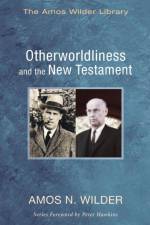
Description:"The one great and telling charge made against Christian religion in the modern period," writes Amos Wilder, "is that it is otherworldly, escapist and irrelevant to the problems of life."There is a good deal of truth in this charge, Dr. Wilder feels--whether we look at Catholicism or Protestantism, orthodoxy or liberalism. Christianity, in one way or another, has given the impression of being mainly concerned with the next world or with private religious experiences, to the neglect of the needs of men in everyday life.Here is an answer to the charge. Our common human experience, Dr. Wilder shows, cannot be cut off from its transcendent aspects, but neither can it be cut off from the pressing needs of life here and now.Dr. Wilder goes into biblical history for his answer. Jesus spoke directly to the social dilemmas of his people. The power of the Gospel in the Roman Empire had much to do with the answer it supplied to the social and cultural cravings of that age. Recent trends in New Testament study exhibit the attacks made then, as now, on false spirituality and theological obscurantism. This is a stirring and impressively documented call to application of the Gospel, to the practical and secular problems of men.Otherworldliness and the New Testament is alive with flashing insights into a crucial modern theological problem. But it does much more in apprising both the serious thinker and the casual reader of the tangled strands of a complex situation in religious interpretation, as it relates to the arts, to social justice, to religious education, and to many diverse fields.
Endorsements:"This book adds a significant dimension to the current emphasis on Total Quality Management by emphasizing both the need and the means for bringing about cultural change that will ensure positive bottom line results."--George Morrisey, author of Creating Your Future: Personal Strategic Planning for Professionals"Joe Batten has done it again. His nine steps for a Total Quality Culture are right on target."--Christopher Hegarty, author of How to Manage Your Boss and How to Jumpstart Your Brain"Joe Batten is my mentor. I experienced the great contents opf Building a Total Quality Culture every day. It is an excellent book! I guarantee it."--Arthur Bauer, President, American Media Incorporated
About the Contributor(s):Robert H. Gundry (PhD, Manchester) is a scholar-in-residence and professor emeritus of New Testament and Greek at Westmont College in Santa Barbara, California. Among his books are Mark: A Commentary on His Apology for the Cross; Matthew: A Commentary on His Handbook for a Mixed Church Under Persecution; Soma in Biblical Theology; and Jesus the Word according to John the Sectarian.
Abonner på vårt nyhetsbrev og få rabatter og inspirasjon til din neste leseopplevelse.
Ved å abonnere godtar du vår personvernerklæring.