











Gjør som tusenvis av andre bokelskere
Abonner på vårt nyhetsbrev og få rabatter og inspirasjon til din neste leseopplevelse.
Ved å abonnere godtar du vår personvernerklæring.Du kan når som helst melde deg av våre nyhetsbrev.

With the whole Christian world looking on, we Catholics have entered a sometimes acrimonious debate with ourselves as to what should be expected of those who are in the special ministry of the Church, i.e., the priesthood--What manner of life should our priests live and what work should they do? Also under review is the role of the bishop, said traditionally to possess the fullness of the priesthood. We are asking whether the authority structure on all levels should be more collegial or democratic and what such a change would mean in light of the traditional theology of the episcopate. Ecumenically we are pondering our relationships to other churches in which there is no episcopate in apostolic succession. --from the Preface
Each year three to four million women are severely assaulted by their husbands, ex-husbands or boyfriends. Battery is the single major cause of injury to women. And Christians are not exempt. Women are being choked, spat upon, hit, pushed, bitten, dragged by the hair and kicked -- by Christian husbands. Unfortunately, the church has all too often ignored this uncomfortable subject. Citing their finding from extensive research and summarizing eight years of interviews with victims, abusers, and pastors, James and Phyllis Alsdurf provide a comprehensive treatment of this troubling topic. They show the psychological, spiritual and personal impact of wife abuse and call the church to reexamine its role in addressing the issue.
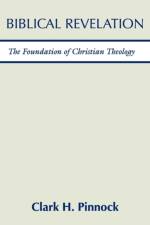
In Biblical Revelation. an outstanding young theologian contrasts the scriptural concepts of inspiration and revelation with today's inadequate religious philosophies. Using a straightforward, hard biting style, the author refutes those philosophies in their own terms.
A compilation of essays on the role of women in the institutional and ordained leadership of Western religion. The authors discuss religious women as charismatic leaders, holy women, martyrs, dissenters, renewers and reformers, as well as theological images of the feminine - in God, the Christ-Church relationship, and the self. The studies are historical and descriptive both, from the early church to the present day.
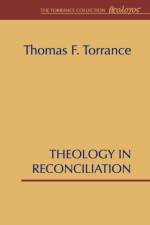
Dealing with the issue of church unity and the ecumenical movement, Professor Torrance reminds Christians in a collection of essays that any theology which is faithful to the gospel must be a theology of reconciliation.
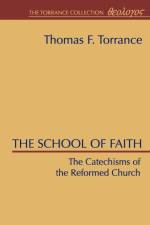
With this book, Thomas Torrance purposes to gather together in a single volume all Catechisms officially authorized and employed by the Church of Scotland since the Reformation, so that they may be conveniently studied together.
About the Contributor(s):Bruce Chilton is the Bernard Iddings Bell Professor of Religion at Bard College. He also serves as Chaplain and Executive Director of Bard''s Institute of Advanced Theology. He is the author of several books on early Christianity, including The Temple of Jesus.
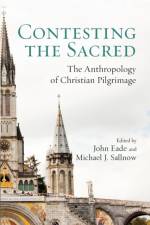
Description:Whether a pilgrimage centers around a place, a visionary individual, or a text, it brings widely diverse individuals and their beliefs, doctrines, and expectations into contact with each other. This important collection assesses the qualities and power of pilgrimage shrines as sites for accommodating various, often competing, meanings and practices, both among pilgrims and between shrine custodians and devotees.Contributors discuss the highly organized shrine at Lourdes and also the shrine at San Giovanni Rotondo in Sangiovannesi, Italy, where conflicting interests among townspeople and pilgrims have crystallized around the life and the remains, respectively, of a holy man. Other contributors consider the competing images of Jerusalem among pilgrims of various Christian faiths-Greek Orthodox, Roman Catholic, and Christian Zionist-and explore the unique attributes of shrines in Sri Lanka and Peru.A major advance in understanding the complexity of pilgrimage, Contesting the Sacred provides valuable insight into the process of exchange between human beings and the divine that gives pilgrimage its central rationale. John Eade''s new introduction places the book''s theoretical frame in the context of recent thinking and writing on pilgrimage and considers the impact of globalization and tourism on pilgrimage cults and sites.Endorsements:""A classic in the anthropological study of pilgrimage.""--Jill Dubisch, author of In a Different Place""This stimulating volume . . offers an innovative anthropological framework for this central religious institution .... A short review cannot do justice to the ethnographic richness of this volume .... [It] stands as an important contribution to the growing body of anthropological literature on Christianity and Catholicism.""--Ellen Badone, from a review in the journal ManAbout the Contributor(s):John Eade is Professor of anthropology and sociology at the University of Surrey Roehampton, London.Michael J. Sallnow was a senior lecturer in social anthropology at the London School of Economics.
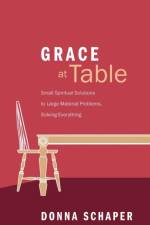
About the Contributor(s):The Rev. Dr. Donna Schaper is Senior Minister of Judson Memorial Church in New York City and the author of thirty books, mostly about keeping Sabbath while gardening and being an activist. Best known for being dismembered by a garden club, she spends her days loving parish ministry in New York City. She also grows a great tomato and gathers sticks to build evening fires at her country shack in Fishkill, New York.
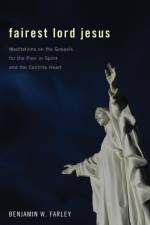
Description:The Gospels portray Jesus as one who often sought solitude, whether for himself or in quietude before his Father. To do so he had to withdraw from both his disciples and others. Such moments enabled him to renew his inner strength, to find God''s consolation for himself, as well as to imbue him with insight and courage for the inimitable journey that God had selected him to travel. We too need those same personal moments with God, those quiet occasions for withdrawal and reflection. If you have ever hungered for such, Fairest Lord Jesus, filled with simple, direct, and uncomplicated meditations, will speak to you. Within its pages, you will journey with Jesus across the Gospels to his Cross, hear his voice of solace and commission, while resting with him in village after village as he pauses to mend the hearts of the contrite and the lonely and heal the broken, dispirited, and ill; and, finally, on that Morning of mornings, stand with him in that Sacred Garden of the soul, where he fills all hearts with the joy of his presence and his eternal love.In addition, enriching the collection are numerous vignettes, drawn from Farley''s years of teaching philosophy and religion courses, along with poignant stories of the passage of time.About the Contributor(s):Benjamin W. Farley is Younts Professor Emeritus of Bible, Religion, and Philosophy at Erskine College in Due West, South Carolina. He is the author of In Praise of Virtue, The Providence of God, Jesus as Man, Myth, and Metaphor, and translator of John Calvin''s sermons and other significant works.
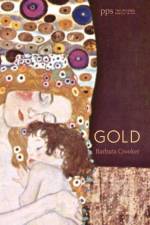
Description:Barbara Crooker''s new book Gold focuses on one of the most profound life-altering experiences possible: losing one''s mother. This collection is an elegy, not just to the speaker''s mother, but to a lost Eden that cannot be reclaimed. Beginning with a series of lyrics set in autumn, the poems become more narrative, recounting the long illness of Crooker''s mother, her death, and the profound journey along the shores of grief. Throughout, Crooker is aware of the complexity and strength of the mother/daughter relationship and the chasm that this loss opens. The book includes other themes: poems about aging and the body, the loss of friends, the difficulties and joys in a long-term marriage, and always, the subtle ways faith influences the way Crooker experiences life. Her work has great scope, spanning the globe from rural Pennsylvania to Ireland, and reaching not just within herself but also outside of herself, to ekphrastic poems on the paintings of Gorky, Manet, Matisse, and others. This is the book of a mature writer, one who demonstrates an awareness of our own impermanence, our brokenness, and one who knows that if our parents go before us, we will have to learn to live with loss. In this book, we see the redemptive power of poetry itself to heal and to console.
About the Contributor(s):Charles D. Barrett is Peter B. Hendrix Professor emeritus of Religion at Wofford College and author of Understanding the Christian Faith (1980), God Under Our Skin: A Search for the Theological Jesus (2006), and Funny Things Can Happen on Your Way through the Bible 1: Scriptural Oddities and Odd Thoughts about Them (Wipf and Stock, 2010).
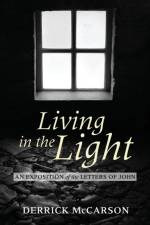
About the Contributor(s):Derrick McCarson (MA, Southern Evangelical Seminary) is the pastor of Liberty Baptist Church in Candler, North Carolina. His sermons can be found online at www.lbccandler.com. Derrick is the author Origins: An In-Depth Study of Genesis 1-11.
"Worship the Lord."Too many churches assume that those in their pews and those who pass through their doors know what worship is and why the Lord commands it. The purpose of this booklet, then, is to educate and acquaint members of Reformed churches but most of all those who inquire within their walls, with a basic knowledge of what Reformed churches mean when they say, "Worship the Lord." In knowing what to expect, the worshippers'' response of praise and thanksgiving will be more active, joyful, and meaningful.
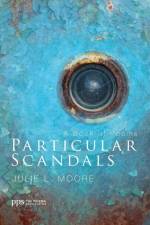
Description:Broad in scope--theological, ecological, and personal--and acutely particular in details--witnessed and lived--the affecting poems in Particular Scandals explore how one endures suffering, avoiding the clichés of both bitterness and transcendence. Thus, while Moore''s poetry depicts the debilitating ruin illness wreaks, it also embraces the beauty and mystery in creation, in faith, even in tribulation itself. At the book''s core is pure paradox and insightful integration, wedding Christmas--Christ''s incarnation and eventual, willing sacrifice--to pain and grief. Thus, on the heels of Moore''s multiple surgeries and amid her husband''s serious heart problem--both while in their forties--come "flashes of hallelujah" and songs knit with Amens "un- / broken, like a world without end." Empathetic and observant, Moore''s evocative poems also turn their attention to friends'' and other family members'' appalling losses: a stillborn infant, suicidal adolescents, molested, and trafficked children. All in all, the book portrays how Moore survives like the Sycamore tree in one of her poems, "scabbed and scarred from moments like this," offering her "empty self / like a cup to the Lord of the storm."
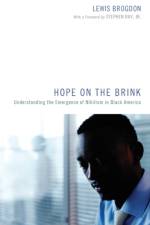
About the Contributor(s):Lewis Brogdon is Assistant Professor of New Testament and Black Church Studies and Director of the Black Church Studies Program at Louisville Seminary. Brogdon has served churches in Virginia, West Virginia, Kentucky, and Ohio. He has coauthored an article with Amos Yong on "The Decline of African American Theology? A Critical Response to Thabiti Anyabwile" in the Journal of Reformed Theology, and recently published an essay on "African American Pentecostalism" in A Handbook of Pentecostal Christianity.
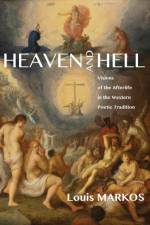
About the Contributor(s):Louis Markos (www.Loumarkos.com), Professor in English and Scholar in Residence at Houston Baptist University, holds the Robert H. Ray Chair in Humanities. He is the author of From Achilles to Christ: Why Christians Should Read the Pagan Classics.
Description:Jesus and Menachem places Jesus (Jeshua) in the historical context of the Roman occupation of Judea Second Temple period The fictional character of Menachem is introduced to deepen and clarify the relationship between Jesus, the Pharisees, the Sadducees, the Zealots, and Rome. In a1949 review in Commentary magazine, this book is compared favorably to The Nazarene by Sholem Asch. Menachem fights the Romans at the side of the Zealot Ben-Necher, killing them as he murmurs "thou shalt not kill." He loves Jesus, but does not believe in him as Jesus would have him believe. He is not a Pharisee, and yet cannot be against the Pharisees. When Pontius Pilate offers the Jews a choice between Barabbas the "robber" and Jesus the "negator of God," he refuses to choose, for Barabbas is not a robber but a Zealot, and Jesus not a negator of God but perhaps a Messiah. Van Praag has painted Palestine with a simplicity, containing nothing unnecessary or barbarous, with a palpable mellowness which can be touched, inhaled, heard on every page.Endorsements:"This is an engaging, psycho-spiritual story of the life of Yeshua (Jesus). It is set in the realistic and sensitive narrative of everyday life in Palestine during late Second Temple Judaism. The dramatic quality of this work depicts the heightened spiritual awareness of a thoroughly Jewish Jesus, in keeping with the witness of the New Testament, while underplaying the hysteria of rampant apocalypticism in many of the forms of Judaism at that time, evident, for example, in the Dead Sea Scrolls. The storyline unfolds believably and draws the reader into page-turning identification with the main characters. . . .Van Praag''s characterization of the main figures in the story is vivid, and one quickly gets the impression of being exposed to truth and reality, rather than just a staged drama."--J. Harold Ellens, author of Honest Faith for Our Time: Truth-Telling about the Bible, the Creed, and the ChurchAbout the Contributor(s):Siegfried Emanuel van Praag was a prolific Dutch Jewish writer of over sixty books. The rise of Nazism considerably impacted his life and provoked a consequent preoccupation with Jewish culture and identity--specifically Dutch Jewish culture and the newly formed country of Israel. Lewis C. Kaplan was a Chicago-born historian, writer, and published translator with a gift for languages (including Spanish, Portuguese, Dutch, and Yiddish) and an interest in Jewish history and biblical Israel.
About the Contributor(s):Nancy Nason-Clark, PhD, is the Chair of the Department of Sociology at the University of New Brunswick in Canada and Director of the RAVE Project. She is the author of The Battered Wife: How Christians Confront Family Violence.Barbara Fisher-Townsend, PhD, works as a Contract Academic in the Department of Sociology at the University of New Brunswick and teaches family violence related courses in the Department of Sociology and for the Muriel McQueen Fergusson Centre for Family Violence Research certificate program in family violence.Victoria Fahlberg, PhD, lived in Brazil where she founded ACODE, a social service/mental health clinic in a large favela (City of God) in Rio de Janeiro. She returned to the US in 1997 and has been working with immigrants and refugees since 2001.
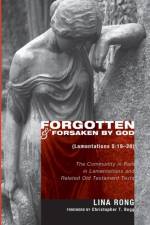
About the Contributor(s):Lina Rong is Professor of Old Testament at Hebei Catholic Major Seminary in Shijiazhuang City, People''s Republic of China. She is also Visiting Professor at the Institute of Formation and Religious Studies in Manila, Philippines.
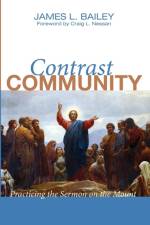
About the Contributor(s):James L. Bailey is the John S. and William A. Wagner Professor Emeritus of Biblical Theology at Wartburg Theological Seminary in Dubuque, Iowa. He has published several Bible studies for the church and is the coauthor of Literary Forms in the New Testament (1992).
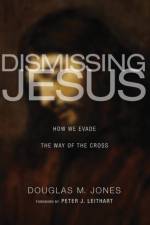
Description:What is the way of the cross? Why does it create resistance? How do we answer objections to it? The revival of interest in Christ''s kingdom and radical discipleship has produced a wave of discussions, but sometimes those discussions are scattered. This book aims to pull together in one place the core claims of the way of the cross. It aims to examine the deeply cherished assumptions that hinder us from hearing Jesus''s call.When we do that, we''ll see that the gospel of Christ is not primarily about getting into heaven or about living a comfortable, individually pious, middle-class life. It is about being free from the ancient, pervasive, and delightful oppression of Mammon in order to create a very different community, the church, an alternative city-kingdom here and now on earth by means of living and celebrating the way of the cross--the reign of joyful weakness, renunciation, self-denial, sharing, foolishness, community, and love overcoming evil. Endorsements:"This provocative book asks hard questions of contemporary expressions of Christianity, especially [its] deep embeddedness in contemporary societal and cultural values, practices, and structures. Engaging a wide range of biblical texts, this book wrestles with and sketches some alternative ecclesial practices that are variously challenging, disruptive, scary, inviting, and freeing."--Warren Carter, Professor of New Testament, Brite Divinity School"Dismiss this book! Reading it will make a holy mess of your life. But if you want to enter into the pain of the world and see the Jesus revolution ignite, [then] pick up this fuel. Jones explains Jesus'' gospel of renunciation, enemy-love, weakness, deliverance, and sharing in practical terms. His book gives us the tools to form a revolutionary community of people who practice the way of Jesus."--Tim Otto, Teaching and Preaching Pastor, The Church of the Sojourners"Dismissing Jesus identifies and invites us to remove the blinders that seduce us from the way of our crucified and risen Lord. Ultimately, Jones calls the church to be more fully herself. . . . His book is unsettling; frequently, it is unsettling in just the way Jesus is. Doug''s barbs sink deep, and, persuaded or not, every reader will profit from a slow, receptive engagement with this book."--Peter J. Leithart, from the forewordAbout the Contributor(s):Douglas Jones is an ordained minister in the Communion of Reformed Evangelical Churches (CREC) and a former senior fellow of humanities of New St. Andrews College, Moscow, Idaho. He helps oversee CREC Myanmar.
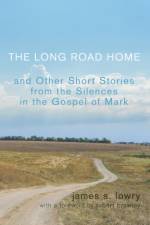
About the Contributor(s):James S. Lowry is a retired pastor in the Presbyterian Church (USA). His last installed pastorate was the Idlewild Presbyterian Church in Memphis, Tennessee. He lives with his wife, Martha Nichols, on a small farm near Great Falls, South Carolina. His previous books include Low-Back, Ladder-Back, Cane-Bottom Chair: Biblical Meditations (1999), and Prayers for the Lord''s Day: Hope for the Exiles (2002).
About the Contributor(s):David F. White is the C. Ellis Nelson professor of Christian education at Austin Presbyterian Theological Seminary in Austin, Texas. He is author of Practicing Discernment with Youth, and coauthor of Awakening Youth Discipleship: Christian Resistance in a Consumer Culture. He was the editor of the Pilgrim book series Youth Ministry Alternatives. David is an ordained United Methodist minister who served for over twenty years as minister with youth at congregations in Mississippi, Kentucky, Alaska, and California.
Not Weary of Well Doing is a collection of essays penned by people interested in educating primarily European church leaders, theological educators, and missionaries as well as other Christian leaders from around the world. All of the authors are related to the ministries of Tyndale Theological Seminary, the Netherlands. This book is in honor of missionary scholar and colleague, Dr. Cecil W. Stalnaker, for his lifetime of Christian service in Europe. Each of the articles is related to the work of missions or local church ministry. Most of the authors have many decades of experience primarily as missionary professors throughout Europe as well as pastoral ministry experience in Europe and North America. Local church leaders and cross-cultural workers especially will find this a worthwhile addition to their personal and school libraries.
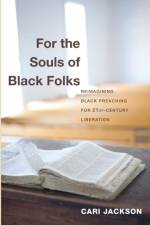
Description:For the Souls of Black Folks examines the impact of black religious culture in shaping the ethical values and sociopolitical condition of U.S. blacks. The book reviews the nexus of theological traditions and historical factors that have formed black churches as environments where preachers serve as the moral compass for black churchgoers. For the Souls of Black Folks builds upon the work of sociologist W. E. B. Du Bois, who highlighted the presence of a double consciousness in the collective psyche of blacks stemming from racial oppression. The book explores the ways in which that double consciousness, often reflected in black preaching, socializes black Christians to subjugate their own moral authority to that of black preachers. The central argument is that this socialization to submit to preachers greatly underserves black churchgoers in developing and exercising their own power and authority as social agents, and thus significantly impedes the full sociopolitical liberation of all blacks. The book offers important new preaching strategies that more effectively facilitate the empowerment of blacks as critical agents of social transformation and healing in the twenty-first century.
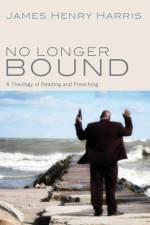
Description:No Longer Bound is about the intersection of reading comprehension and interpretation that leads to the development of a powerful and transformative sermon. Reading facilitates the interpretive process, which is the essence of any sermon. The sermon is an interpretation of an interpretation and as such presents itself as a new gospel message. The ability to write and preach a sermon is an exercise in freedom. The book is grounded in a narrative theological form that begins with the author''s experience and filters that experience through the lens of hermeneutic philosophy and theology. Reading and preaching constitute the thread that runs throughout the book. The book suggests that the sermon is the philosophic theology of Black practical religion inasmuch as the Black church is central to religion and culture. This is a fresh and new understanding of homiletics, philosophical theology, and interpretation theory that is intended to produce better preachers and more powerful and life-changing sermons by all who endeavor to preach.Endorsements:"James Henry Harris is the only preacher and professor I know who can so easily blend together in one book the plaintive messages of American slave songs of the nineteenth century, the rigorous inquiry of European philosophy of the twentieth century, and the challenges confronting black preachers in the twenty-first century. . . . All preachers would do well to read this challenging and insightful book and apply its lessons to their pulpit ministry!"--Marvin A. McMickle, President and Professor of Church Leadership, Colgate Rochester Crozer Divinity School"So much more than a great book on the art of the sermon--and it is that!--James Henry Harris has given us a fully realized theology of dialogue and liberation. In astonishingly deft and astute ways, he juxtaposes his own autobiography with commentaries on philosophical theology, literature, postmodern society, and life in diverse African American communities. A fine, critical work of narrative art in its own right, No Longer Bound guides us--issue by issue, question by question--into the passion of ''preaching as an act of love.''"--Larry D. Bouchard, Professor of Religious Studies, University of Virginia"Here is a compelling, multi-leveled account of preaching in the Black church, integrating biography, Scripture study, homiletics, philosophy, and theology. Harris tells the story of his dual African American legacies: of slavery and racism on one side, and redemptive preaching on the other. He gleans a theology of preaching from his years as a professor of homiletics, as a pulpit preacher, and as an activist for civil rights and religious freedom. . . . It is an intellectually spicy and soulful account of how preaching the word can liberate the spirit."--Peter W. Ochs, Professor of Modern Judaic Studies, University of Virginia"This is a deeply personal book. James Henry Harris weaves threads from his rich life of ministry and learning, all lived out against the backdrop of a racially charged land, into a beautiful tapestry of faithful and courageous preaching. Harris manages to bring a host of strong thinkers helpfully into the conversation--Cone and Ricoeur, Derrida and Dubois, and many others--without ever losing the clear and confident sound of his own voice."--Thomas G. Long, Professor of Preaching, Candler School of Theology, Emory UniversityAbout the Contributor(s):James Henry Harris is Professor and Chair of Preaching and Pastoral Theology at Virginia Union University and Senior Minister at the Second Baptist Church, both in Richmond, Virginia. He is the author of The Word Made Plain (2004) and Preaching Liberation (1996). He is a recipient of the Henry Luce III Fellowship in Theology and a past president of the Academy of Homiletics.
What if the story of Jesus was meant not just to be told but retold, molded, and shaped into something new, something present by the Evangelist to face each new crisis? The Evangelists were not recording a historical report, but writing to effect a change in their community. Mark was faced with the imminent destruction of his tiny community-a community leaderless without Paul and Peter and who witnessed the destruction of the Temple; now, another messianic figure was claiming the worship rightly due to Jesus. The author of the Gospel of Mark takes his stylus in hand and begins to rewrite the story of Jesus-to unwrite the present, rewrite the past, to change the future. Joel L. Watts moves the Gospel of Mark to just after the destruction of the Temple, sets it within Roman educational models, and begins to read the ancient work afresh. Watts builds upon the historical criticisms of the past, but brings out a new way of reading the ancient stories of Jesus, and attempts to establish the literary sources of the Evangelist.
Abonner på vårt nyhetsbrev og få rabatter og inspirasjon til din neste leseopplevelse.
Ved å abonnere godtar du vår personvernerklæring.