








Gjør som tusenvis av andre bokelskere
Abonner på vårt nyhetsbrev og få rabatter og inspirasjon til din neste leseopplevelse.
Ved å abonnere godtar du vår personvernerklæring.Du kan når som helst melde deg av våre nyhetsbrev.

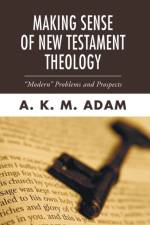
Critics have tried to revitalize the discipline of New Testament theology. The results of their labors are often disappointing. A. K. M. Adam suggests the problems many sense in New Testament theology arise from a mismatch of method and goals. That mismatch stems from a preoccupation with modernity as resident in the hallowed halls of regnant historical criticism. We need a hermeneutics of theology, a hermeneutics of hermeneutics. Adam here helps us understand what to keep of the historical-critical perspective when the realization hits that we have been sold a bill of goods that no longer makes good on its promises. In that sense, Adam's book is far more friendly to the historical-critical method as such than unfriendly (editor's preface).
For nearly fifty years, Paul Meyer has been internationally hailed as a master exegete and biblical theologian of unparalleled penetration and power. Much of my own education in biblical scholarship has been at the feet of him and of his students. Clifton Black, Otto A. Piper Professor of Biblical Theology and chairman of the Department of Biblical Studies, Princeton Seminary
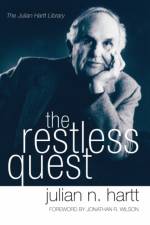
'The Restless Quest' is a collection of essays by Julian N. Hartt. These essays came out of Dr. Hartt's teaching and ministerial experiences; most are the results of years of observation and reflection. Throughout them he applies a persistent and coherent position to a variety of theological topics. Dr. Hartt shows us that not all traditional Christian beliefs have been liquidated by secularist presumption or liberal construction. Because of his very lucid writing, it is not necessary to learn first what Barth, Tillich, Bultmann, or their disciples have said. He further illustrates that there are ways of doing theology in the context of American life and the American church that do not perpetuate the myth that all theological styles necessarily derive from Germany or Denmark. Julian N. Hartt writes: God's forgiveness is truly wonderful; he has everlastingly in view the renewal of a human resolution to walk ever in more Godly ways. Practice in this will not bring in the kingdom of God, no matter how inspired and unsparing the practice is. It will help, it will surely help, self and others to learn what that kingdom is all about. For as Christ is our pioneer and our warrant, that kingdom is the prize and joy of all desiring.
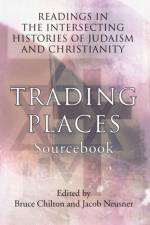
An accompaniment to "Trading Places", this sourcebook contains critical passages from primary sources within each tradition, along with insightful commentaries by Professors Chilton and Neusner. Designed for classroom use.
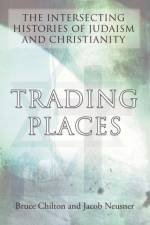
Numerous scholars have argued that the histories of early Christianity and Rabbinic Judaism run parallel. In this book, the authors suggest precisely the opposite. By demonstrating that these two great traditions intersected and ultimately traded places during the first four centuries of the Common Era. The authors argue that Judaism and Christianity exchanged positions on other communal and institutional levels as well. Designed for classroom use.
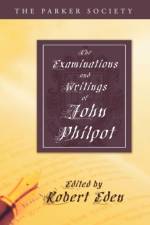
The Parker Society was the London-based Anglican society that printed in fifty-four volumes the works of the leading English Reformers of the sixteenth century. It was formed in 1840 and disbanded in 1855 when its work was completed. Named after Matthew Parker -- the first Elizabethan Archbishop of Canterbury, who was known as a great collector of books -- the stimulus for the foundation of the society was provided by the Tractarian movement, led by John Henry Newman and Edward B. Pusey. Some members of this movement spoke disparagingly of the English Reformation, and so some members of the Church of England felt the need to make available in an attractive form the works of the leaders of that Reformation.
The Parker Society was the London-based Anglican society that printed in fifty-four volumes the works of the leading English Reformers of the sixteenth century. It was formed in 1840 and disbanded in 1855 when its work was completed. Named after Matthew Parker -- the first Elizabethan Archbishop of Canterbury, who was known as a great collector of books -- the stimulus for the foundation of the society was provided by the Tractarian movement, led by John Henry Newman and Edward B. Pusey. Some members of this movement spoke disparagingly of the English Reformation, and so some members of the Church of England felt the need to make available in an attractive form the works of the leaders of that Reformation.
"In recent years faculties and administrators alike have become more concerned about ways to improve the quality of classroom teaching. 'Scholars Who Teach' is one of the best books on the subject published this decade. The seven contributors were selected on the basis of their excellence as teachers, and the purpose of the volume is to give them a chance to wirte about their craft and to encourage the reader to think through his or her own approach to the art of teaching. The book deserves to be widely read both by those who want to improve their art and by those who want others to teach well." Charles C. Cole, Jr. Executive Director, The Ohio Program in the Humanities "We may all take some comfort and considerable instruction from 'Scholars Who Teach'. Robert Gurland writes the most brilliant and comprehensive essay on education I have read in several years. His treatise, and this book, are not to be missed." Frank R. Cunningham, 'Change' magazine
Books in the series present specialised research into all aspects of New Testament textual and historical culture, taking a range of approaches. This is widely recognised as the most authoritative and prestigious forum for serious scholarly publication in the area, and series books are highly regarded by biblical scholars the world over. General Editors: Edward Adams, King's College London
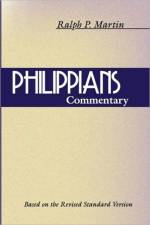
Drawing from existing scholarship, Dr. Martin explores the essence of the book of Philippians, giving special attention to two main themes in Paul's letter: the meaning of the great christological passage in chapter 2 and the nature of the sectarian teaching that Paul warns against in chapter 3.
About the Contributor(s):Peter Taylor Forsyth (1848-1921) preached and pastored for twenty five years before becoming principal of Hackney College in London where he taught systematic theology and preaching. Forsyth converted from theological liberalism to classical Christianity in the mid-1880s. The theological transition was, in his own words, from a lover of love to an object of grace. A theologian of the cross, Forsyth is well known for his publications The Work of Christ, Cruciality of the Cross, and The Person and Place of Jesus Christ.
Through dozens of original documents ¡Presente! offers readers the story of Latino/Hispanic Catholicism from 1534 to the present. From the first mission encounters in the sixteenth century, to Cesar Chavez and the UFW, to the beginnings of mujerista theology in the 1980s, this collection offers a unique and indispensable look at the community that has become the largest ethnic component in the American Catholic Church today.""¡Presente! is a landmark and an indispensable text in our understanding of the Latino Catholic experience in the United States. Given the scarcity of publications on religion in Chicano and Latino Studies, ¡Presente! fills a major gap.""--Mario T. Garcia""Present-day Hispanic/Latino theology is but an outgrowth of the faithful religious practices of our peoples and their understandings of our God. This book presents ample documentation of all of this and the connections that exist between Hispanics/Latinas today and our foremothers and forefathers and as such it is an invaluable source for all of those who take our communities seriously.""--Ada Maria Isasi-Diaz""A much-needed and timely resource for any who are interested in the identities and history of Latino Catholics, or in the future of the Catholic Church in the United States. This collection of documents could serve well as a basic source book for a course on United States Catholic Latinos, or as a basic reader for any whose ministry involves the growing Latino community in the United States.""--Justo L. Gonzalez""With the publication of ¡Presente! the real depth and scope of the Hispanic/Latino presence in the United States is finally given the attention it rightly demands . . . Matovina and Poyo's skillfully edited documentary history demonstrates that the older, deeper and now more vigorous dynamic of United States Catholicism is Spanish-speaking and Latin American.""--Allan Figueroa Deck, SJTimothy M. Matovina is Assistant Professor of Theology at Loyola Marymount University in Los Angeles. The book review editor for the Journal of Hispainc/Latino Theology, he is author of numerous articles and five books, including Tejano Religion and Ethnicity: San Antonio, 1821-1860 and The Alamo Remembered: Tejano Accounts and Perspectives.Gerald E. Poyo is Professor of Latin American and U.S. Latino History at St. Mary's University, San Antonio, Texas. He is author of Tejano Journey.
This book is called a festschrift--meaning a book of essays written to honor those who have served the academic community well over a long period of time. Drs Wonsuk and Julie Ma, the honorees in this book, served as faculty members, Journal pioneers and editors and academic dean (Wonsuk) at the Asia Pacific Theological Seminary (www.apts.edu) for twenty-four years, 1983-2006. In 2006, Wonsuk accepted an invitation to become the Executive Director of the Oxford Centre for Mission Studies in the United Kingdom and Julie accepted an invitation to become a research mentor at the same institution. The theme selected for this book: A Theology of the Spirit in Doctrine and Demonstration reflects the heart of the kind of people the Mas have been and continue to be in academics, practical ministry and, most importantly, in their personal lives. The list of scholars below, representing a broad array of nationalities and academic disciplines, have followed the same theme in contributing articles within areas of their particular interest and expertise:- Allan Anderson--Contextualization and Pentecostal-Charismatic Educationin a Global Village- J. Kwabena Asamoah-Gyadu--The Blessing of Abraham: Pentecostalism and Ecumenism in African Perspectives- R.G. dela Cruz--Peter, Women and the Spirit in the Bezan Test of Acts- Rose Engcoy--Historical Sketch of Wonsuk and Julie Ma- Harold D. Hunter--Pentecostal Reflections on Apostolicity- Dave Johnson--Baptism in the Holy Spirit vs Spirit Possession in the Lowland Philippines: Some Considerations for Discipleship- Veli-Matti Karkkainen--Theological Education in a Pluralistic Word: Theological Reflections- Kirsteen Kim--Mission in the Spirit: From Edinburgh to Canberra and Athens- Robert Menzies--Missional Spirituality: A Pentecostal Contribution to Spiritual Formation- Ekaputra Tupamahu--Pentecostal Feeling in Conversation with William James and Rudolf Otto: A Preliminary Exploration- Amos Yong--Pentecost and Virtual Spiritual Formation: Renewing Theological Education in Global Context
This volume of correspondence contains exchanges written between Lloyd Cline Sears (1895-1986) and Pattie Hathaway Armstrong (1899-1977), two influential leaders in early educational efforts of the Churches of Christ. Spanning the years 1915 to 1921, the letters document their writers' romance, but they are more than simply love letters. They also express an educational philosophy and an understanding of Christian purpose as inspired by the Stone-Campbell Movement and held in tension with the intellectual and social ferment of the times. Posts from family members J. N. and Ida Woodson (Harding) Armstrong as well as from Pattie Cobb Harding, wife of James A. Harding, augment those of the principle authors. Their correspondence allows rare access to privately expressed thoughts of men and women attempting to live as Christian educators at the outset of an uncertain and rapidly changing twentieth century. The letters also offer lessons for contemporary American Christians in these even more volatile times.""This book is a marvelous glimpse into perceptions on Christian liberal arts education in the correspondence of a young couple whose past and future weigh heavily in churches of Christ higher education. Their granddaughter, Elizabeth Parsons the editor, has indefatigably searched to establish the backgrounds for these letters and supply information on all the persons mentioned. The outcome is remarkable.""--Thomas H. Olbricht, Distinguished Professor emeritus of Religion, Pepperdine University, Malibu, CA""There are few occasions when a book comes along that completely catches you by surprise. Such is the case with The Greatest Work in the World, edited by Elizabeth C. Parsons. . . . What prompted a religious tradition like the contemporary churches of Christ, known for its sectarianism, its sectionalism, and its bias against the labors of the intellect, to engage in a frenzy of educational effort in the first decades of the 20th century? These efforts left remnants of genuine but short-lived schools across the midwest and southwest. These schools valued holiness and liberal education and were known for their counter-cultural embrace of the kingdom of God as lived out in hard scrabble outposts such as Cordell, Oklahoma. What they stood for will surprise you.""--Robert M. Randolph, Chaplain to the Institute, Massachusetts Institute of Technology, Cambridge, MA""The letters Elizabeth Parsons has collected and edited reveal much about the relatively unknown worldview of the churches of Christ in the early twentieth century on matters of gender, education, and theology. The Sears's correspondence provides a unique and valuable window into what mattered to a group of people wrestling with the heritage of their faith as they confronted the challenges of the rapidly changing world around them.""--Loretta Hunnicutt, Professor of History, Pepperdine University, Malibu, CA""This volume provides rare insight into the inseparability of religious beliefs and the formation of educational institutions among theologically conservative white southerners a century ago. These fascinating letters, ably edited by Elizabeth Parsons, reveal hidden dimensions of the early churches of Christ--a kingdom-centered mission ethic, countercultural pacifism, support for marital partnership, and commitment to liberal arts education. I recommend this fine book with great enthusiasm.""--Dana L. Robert, Truman Collins Professor of World Christianity and History of Mission, Boston University, Boston, MAElizabeth C. Parsons is Lecturer in Religion, Culture, and Development at Boston University School of Theology. A direct descendant of the letter writers, she is also author of What Price for Privatization? Cultural Encounter with Development Policy on the Zambian Copperbelt (2010).
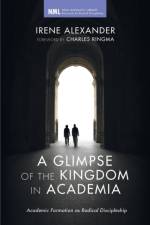
Description:University is a major way that our society prepares professionals and leaders in education, health, government, business, arts, church--all components of our communal lives. Although the beginnings of the first universities were Christian, academia has become more and more adrift from these foundations. We have lost not only the union, the interwovenness of theological and academic understandings, but also the relational and communal process of learning which teaches students to be other-centered in their practice.A Glimpse of the Kingdom in Academia tells the story of the social sciences department of a small Christian university that took seriously the mandate to prepare their students to be salt and light in a secular society. Here are stories of the transformation in students'' lives, as well as description of classroom practices, and the epistemological theory behind those practices. The book explores academic knowing, Christian worldview, relational epistemology, inner knowing, and wisdom--all ways of knowing that a Christian university should teach. The process of transformation, the context of community, and the bigger picture of life''s journey and changing images of God are identified as important aspects of kingdom life in academia. The institutional setting is also critiqued with the recognition that power practices need to align with the kingdom of the Christ who emptied himself.Endorsements:"This book is an invitation to another way of seeing, but it is also dense in alternative epistemological sources. . . . This book should be read by all those involved with student learning and administration. It can also be read by any teacher or administrator, school or institution hoping to make learning more open and transformational in any discipline or context."--Nicola Hoggard Creegan, Lecturer in Theology, Laidlaw College"[This] is not simply a how-to book. It is a book that will move you into a more profound way of reading and entering the gospel story. It is a book marked by a theology of the Kingdom or reign of God and a holistic vision of God''s redemptive and healing purposes for our world. It is a book also shaped by the newer liberation and feminist theologies. Moreover, it is a book marked by profound spirituality. . . . It is my hope that this book will be a precursor of what is to come, that it will point the way for others to take the shape of their life in Christ into the public sphere."--From the Foreword by Charles Ringma, Emeritus Professor, Regent CollegeAbout the Contributor(s):Irene Alexander is a psychologist and spiritual director. She lectures at Christian Heritage College and the Australian Catholic University in Brisbane, Australia, and in spiritual direction formation. She is the author of several books, including Dancing with God: Transformation through Relationship (2007) and Practicing the Presence of Jesus (2011).
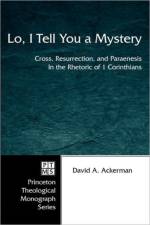
The divine mystery, as interpreted by Paul, offers transformation. The believer who identifies with the death and resurrection of Christ by putting to death the old way of life (Rom 6:5-11; Gal 2:20) enters into a new sphere of influence characterized by intimate fellowship with Christ. One who is in this sphere is free from the snare of Adam and the world and is no longer bound by the power of sin and death. The divine mystery also offers a new source of power by the indwelling Holy Spirit. The Spirit brings gifts to those in Christ that enable them to function as community. The highest and most significant of these is love which brings diversity together into unity. The indicative is that the Spirit graces believers with love. The imperative is that they should follow after the example of Paul, and hence Christ, in loving others. The divine Spirit is described as holy and makes holiness possible for those in Christ. The indicative is that fellowship with Christ is possible because of redemption. The imperative is that Christ demands loyalty which cannot be shared with any other, particularly with prostitutes who represent the ways of the world or idols that open doors for demons. --from the Conclusion
The Third General Assembly of the Ecumenical Association of Third World Theologians, meeting in Nairobi in 1992, took a fresh look at the changing context of the Third World. Theologians in Nairobi firmly declared that third-world theology should be decisively shaped by the spirituality of the marginalized - indigenous people, women, minjung, dalits, and other minorities. Their creative and life-affirming spirituality is at the very center of their lives and struggles. Spirituality of the Third World explores the meaning of spirituality, its biblical roots, its relation to human existence, how it patterns a vision and enriches faith, and how it celebrates life. This spirituality is formed of faith, struggle, and hope - the cry for life from the poor of all continents. Part I describes the changing context of the Third World, with a special focus on North-South relationships. Part II elaborates different forms of Third World spiritualities with origins in South and North America, Africa, and Asia. Part III roots these spiritualities biblically and explores how they enrich theological understanding and sustain Christian life.
Charles Avila's important retrieval of patristic texts reminds us that the 'option for the poor' is not a new theological fad, but an ancient Christian legacy. Joe Holland, Center of Concern, Washington, D.C. Charles Avila has provided an important recovery of the patristic teachings on wealth and poverty and has shown that a Christian theology of stewardship must be rooted in an ethic of economic justice. Rosemary Radford Ruether, Carpenter Professor of Feminist Theology, Pacific School of Religion This book is a rich anthology of a stream of Christianity which offers a striking vision of what the Redemption ought to imply normatively for a Christian-inspired organization of economic and social life. Prophetic reminders of basic truths about wealth and poverty are never out of date. Denis Goulet, Professor Emeritus, University of Notre Dame At long last, here is a book from a Christian and Asian voice of the Third World who rediscovers and re-echoes afresh for our times the prophetic, undiluted, and revolutionary patristic thought on property - a well-kept secret until now - a voice that speaks with a 'bite' to the rich and powerful on behalf of the millions of landless, propertyless victims of injustice. Scholarly yet lucid, disturbing but challenging, truly 'good news' to the poor, this book is the fruit of lived experience with the peasants in the Philippines by a self-exiled oppositionist to the Marcos regime. Vitaliano R. Gorospe, S.J., Department of Theology, Ateneo de Manila University, Manila, Philippines This book will do a great amount of good for people who are searching into this question of property all across the world. It should be read in every sociology as well as every economics class. Msgr. John J. Egan, Archdiocese of Chicago Like pacifism, the early church's teaching about poverty has been too long neglected or submerged. I found this exposition of the Church fathers very useful. James R. Jennings, Campaign for Human Development, United States Catholic Conference
The Parker Society was the London-based Anglican society that printed in fifty-four volumes the works of the leading English Reformers of the sixteenth century. It was formed in 1840 and disbanded in 1855 when its work was completed. Named after Matthew Parker -- the first Elizabethan Archbishop of Canterbury, who was known as a great collector of books -- the stimulus for the foundation of the society was provided by the Tractarian movement, led by John Henry Newman and Edward B. Pusey. Some members of this movement spoke disparagingly of the English Reformation, and so some members of the Church of England felt the need to make available in an attractive form the works of the leaders of that Reformation.
This bridge-building work, about the roles of pastor and preacher and how they can be effectively integrated, quickly became a classic when it was first published and has never been duplicated. The author argues that while they sometimes seem to conflict, these ministry functions share a common process and a common goal and can be synchronized around the image of restoration. Preserving both psychological awareness and theological integrity, the preacher is invited into the pulpit with an enhanced sense of the power and influence of preaching in people's living and growing. Challenging some of the most cherished assumptions of homiletics, Dr. Nichols invites preachers to restored confidence in the importance of preaching in the formation of Christian community, spiritual growth for hurting people, and the renewal of worship as a 'communitas' experience of the divine human encounter. 'The Restoring Word' grows out of the author's lifetime of experience as a preacher, psychotherapist, and teacher. It is a deeply involving story about how the person of the preacher becomes a tool for the enactment of grace in the always mysterious process of proclaiming the Word. Therapeutically accurate, pastorally sensitive, and theologically challenging, 'The Restoring Word' walks its readers through a long neglected garden slowly and lovingly coming to life.
In Is the Bible Sexist?, Dr. Donald Bloesch breaks through the ideological polarization on the issues of male and female relations, while offering alternative that is grounded solidly in the heritage of biblical faith.
Walter Altmann's direct engagement of Martin Luther's historical situation with our own offers a much needed reassessment of Luther's significance today. Altmann 's work provides fresh readings of Luther's central theological commitments and his forays into economics, politics, education, violence and war. It poses important challenges to all those who would hail - or decry - Luther and his legacy.
A collection of authors from a variety of vocations suggest ways in which the church and its laity can be better equipped for integrating faith in the workplace.
Abonner på vårt nyhetsbrev og få rabatter og inspirasjon til din neste leseopplevelse.
Ved å abonnere godtar du vår personvernerklæring.