














Gjør som tusenvis av andre bokelskere
Abonner på vårt nyhetsbrev og få rabatter og inspirasjon til din neste leseopplevelse.
Ved å abonnere godtar du vår personvernerklæring.Du kan når som helst melde deg av våre nyhetsbrev.

A Way of Seeing invites the reader to open up his or her own way of looking at life, thereby gaining new perspectives and spiritual refreshment. It is a stimulating collection of sixty short essays by a talented woman--one who shared her perceptions of Christian family life in the successful book, What Is a Family?In this book, Edith Schaeffer views the world around her--the experiences of everyday life--pondering their meaning and the lessons to be learned. A Way of Seeing is a kaleidoscope of personal responses to current events, history, God's way, nature's wonders, and humankind's shortcomings. In these miniscule glimpses of daily life, the author considers such basic human concepts as trust, faith, security, death, fear, and love.At all times, ""the rich threads from God's Word"" are woven into Schaeffer's observations. Here readers will find a challenge to examine their own thoughts and become a ""doer"" by putting Christ's teachings into daily living.These essays were first written for the magazine Christianity Today. Enthusiastic response from readers prompted Edith Schaeffer to offer her ""mental and spiritual food'' in book form. Although short enough to be read during relaxing breaks in the busy daily routine, in each essay readers will gain ""a feeling of refreshment and a new train of thought"" from an author of broad experience and Christian insight.
Bob Imperato teaches religious studies at Saint Leo University, where he is coordinator of the Religious Studies Department. Bob studied psychology at Columbia University (MA, 1969), where he began searching for God. While in New York, he was inspired by Swami Satchidananda to practice yoga. Meditation led Bob back to his childhood religion, Catholicism, and inspired him to spend a decade in a Trappist Cistercian monastery at the Abbey of Gethsemani. He desired to communicate about God, and he chose to complete both an MA and PhD in Theology at Fordham University in order to dedicate himself to teaching religion on the college level. He has taught in New Jersey, Kansas, California, and Florida, and frequently lectures in parish and diocesan programs. He has published a number of articles on spirituality and hopes to continue writing and teaching.
A.T. Robertson (1863-1943) is well known for his thorough scholarship in New Testament studies. He served forty-six years (1888-1934) as Professor of New Testament Interpretation at the Southern Baptist Seminary in Louisville, KY.
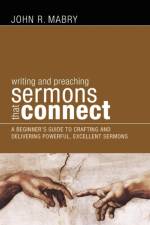
Description:The task of preparing and delivering a weekly homily can paralyze even the bravest seminarian. Sermons that Connect can help. A simple, nuts-and-bolts guide, it provides new preachers with a simple and effective model for powerful and compelling sermons. It then shows preachers how to flesh out sermons in a simple step-by-step process that is insightful and painless. As a beginner's guide, it provides in one sitting everything someone will need to create meaningful sermons for years to come. For those who have been preaching for a while, it will be equally instructive, helping preachers polish their sermons into even more effective works of art, providing invaluable suggestions for recognizing and articulating the essential elements of good sermons. About the Contributor(s):John R. Mabry, PhD, is Pastor at Grace North Church (Congregational) in Berkeley, California. He teaches homiletics, theology, and spiritual direction at the Chaplaincy Institute for Arts and Interfaith Ministry (Berkeley) and serves as Assistant Director of the Master's Degree in Spiritual Guidance at the Institute of Transpersonal Psychology in Palo Alto, California. He is the author of numerous books on spirituality and spiritual guidance, including Noticing the Divine: An Introduction to Interfaith Spiritual Guidance (2007).
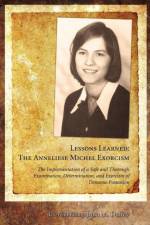
In 1976, a twenty-three year old German girl, named Anneliese Michel, died following months of exorcism sessions. Despite the fact that she had been medically diagnosed with epilepsy and manic depressive psychosis, two priests conducted numerous exorcism sessions and ignored her mental, medical, and physical condition. Doctors would later state that her cause of death was starvation and dehydration. Unfortunately, Ms. Michel's tragic death due to misdiagnosed demonic possession and negligently applied exorcism was neither the first nor the last of such negligence to occur. Complete familiarity with the spiritual elements of demonical possession and attack is the sole focus of most demonologists, exorcists, and clerical members of Christianity. Few clerics have a sufficient understanding of psychiatric conditions that may mimic the symptoms of demonic possession. The result has been catastrophic for many innocent people over the centuries. The overlooking or ignoring of a person's medical and psychiatric condition is the primary culprit behind misdiagnosed possession and botched exorcisms resulting in death or serious bodily injury.Father John Duffey, a New American Catholic priest, exposes the truth behind the young girl's death and renders a standardized approach to properly investigating suspected demoniacal possession, determining the existence of possession, and in the safe execution of exorcism/deliverance acceptable to virtually all denominations of the Christian faith. This book brings psychology, medicine, faith, legality, and safety together for the first time in order to enhance evaluation accuracy, demonic expulsion, wellbeing for the afflicted, and safety for all involved parties.
Common wisdom holds that Latin America is a uniformly Roman Catholic continent and Protestant churches only entered as a result of British or U.S. expansionism following the Spanish-American independence movements. Closer inspection, however, reveals a far different and more exciting reality. As The Mexican Reformation reveals, the Catholic Church in the colonial era was far from monolithic, exhibiting a diversity of expressions and perspectives that interacted with and were sometimes at odds with one another. In the mid-nineteenth century, one such group sought to reform the Catholic Church in line with some of the policies set forth by the government of Benito Juarez. This movement, eventually known as the Iglesia de Jesus, would lay the foundation for the emergence of Protestant churches in Mexico. Its roots in the worldview of the baroque and in the challenges of the Catholic Enlightenment provide an insight into the evolution of a distinctly Mexican Protestantism within its social and political contexts as well as a window into the processes underlying the development of religious expressions in Latin America.
Description:SINCE 2002, THE SYMPOSIUM NEW WINE, NEW WINESKINS HAS OFFERED AN OPPORTUNITY for young Catholic moral theologians to engage in shared work and conversation. Here, the fruits of these labors are gathered into one collection, which represents the wide scope of the future of Catholic sexual ethics. This volume offers the ¿rst collection of a new generation's approaches to Catholic sexual ethics. The collection displays young scholars with diverse views, yet whose work moves beyond the impasses that have beset the ¿eld. The volume offers original and engaging essays on a variety of topics, from the hook-up culture and dating violence, to cohabitation and homosexuality, to contraception and natural family planning, to the promises and pitfalls of ""the theology of the body."" The authors display a fresh engagement with these issues in conversation with the Christian tradition and with contemporary culture. David Cloutier provides an introduction that locates this work within the past decades of Catholic scholarship, and articulates new categories for future work. The essays also offer practical insights and models that will interest pastors and lay ministers, as well as scholars.Endorsements:""In this excellent collection of essays on sexuality and marriage, we see emerging theological voices effectively move beyond the impasse of a previous generation. These authors both acknowledge the deep in¿uence of contemporary culture on Christian understandings of sex and marriage, and critically respond with a surprisingly sophisticated set of theological resources. Alternatively fascinating and disconcerting, this collection has a real chance to seriously engage a 'hooked up' and 'porni¿ed' undergraduate culture. An excellent resource for teaching.""--JOHN BERKMAN, Associate Professor of Moral Theology, Regis College, University of Toronto""Leaving and Coming Home is a breath of fresh air in Catholic moral thinking about sexuality. The authors take the warring personalisms of decades past and present and nest them in the setting of 'home.' The resulting essays, suitable for use in both undergraduate and graduate moral theology courses, offer refreshing takes on hard questions.""--WILLIAM L. PORTIER, Mary Ann Spearin Chair of Catholic Theology, University of Dayton""By countering the trivialization, as well as overly glori¿ed accounts, of sex and marriage, the authors of Leaving and Coming Home convincingly argue that any Christian understanding of sexuality and marriage must be incorporated into a theology of discipleship and connected to the practices of the Christian life. Challenging and engaging, each of the essays offers a liberating alternative to contemporary notions of sex and marriage by demonstrating that the fundamental purpose of both is to deepen our ability to love God and neighbor.""--PAUL J. WADELL, Professor of Religious Studies, St. Norbert College, De Pere, Wisconsin""Leaving and Coming Home offers wide-ranging treatments and fresh perspectives on issues in sexual ethics, both new and old. The blend of voices from different points on the theological spectrum is harmonized in a shared attention to practices--understood not just as sociological descriptions of human behaviors, but as productive of virtue and vice within persons and communities. An excellent addition to college or introductory graduate courses on marriage or sexual ethics.""--JOHN S. GRABOWSKI, Associate Professor of Moral Theology/Ethics, The School of Theology and Religious Studies, The Catholic University of AmericaAbout the Contributor(s):David Cloutier is Associate Professor of Theology at Mount St. Mary's University in Emmitsburg, MD. He is the author of Love, Reason, and God's Story: An Introduction to Catholic Sexual Ethics (2008), as well as a number of articles and book chapters on sexual ethics and moral theology.
The Gospel of Matthew recounts several interactions between Jesus and ""marginal"" women. The urban, relatively wealthy community to which Matthew writes faces issues relating to a number of internal problems including whether or how it will keep Jesus's inclusive vision to honor rural Israelite and non-Israelite outcast women in its midst.Will the Matthean community be faithful to the social vision of Jesus's unconventional kin group? Or will it give way to the crystallized gender social stratification so characteristic of Greco-Roman society as a whole? Employing social-scientific models and careful use of comparative data, Love examines structural marginality, social role marginality, ideological marginality, and cultural marginality relative to these interactions with Jesus. He also employs models of gender analysis, social stratification, healing, rites of passage, patronage, and prostitution.
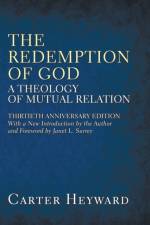
Attempts to demonstrate the radical relationality and interdependence of all human beings and God. Analyzing the inadequacies in traditional Christian treatments of moral evil and moral good, the author attempts to construct new theological foundations for soteriology and Christology.
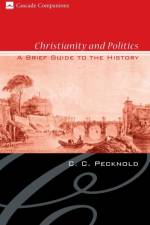
It is not simply for rhetorical flourish that politicians so regularly invoke God's blessings on the country. It is because the relatively new form of power we call the nation-state arose out of a Western political imagination steeped in Christianity. In this brief guide to the history of Christianity and politics, Pecknold shows how early Christianity reshaped the Western political imagination with its new theological claims about eschatological time, participation, and communion with God and neighbor. The ancient view of the Church as the "mystical body of Christ" is singled out in particular as the author traces shifts in its use and meaning throughout the early, medieval, and modern periods-shifts in how we understand the nature of the person, community and the moral conscience that would give birth to a new relationship between Christianity and politics. While we have many accounts of this narrative from either political or ecclesiastical history, we have few that avoid the artificial separation of the two. This book fills that gap and presents a readable, concise, and thought-provoking introduction to what is at stake in the contentious relationship between Christianity and politics.
Secularization and the Working Class brings together contributions from thirteen Central European historians who have taken a long-term interest in the issue of the secularization of modern society and social issues affecting the working class. By using contemporary historical methods they have researched the theoretical aspects of secularization theories as well as individual cases which illustrate Czech developments within the framework of the Austrian monarchy. These cases touch upon working conditions, working-class organizations and political parties, cultural life and means of communication. Among other things they present the conflicts that led to rifts within society. This representative collection of texts is will appeal to historians of modern history interested in the fascinating issues of European development, all those who are interested in the living conditions of the working class in the 19th and 20th centuries. ""This book represents a treasure for all those who are interested in the secularization debate, as well as in the fate of religion in Europe under the Communist dictatorship. It explores the terrain of nineteenth- and twentieth-century Central Europe, demonstrating the historical, social, cultural, and spiritual dimensions of the alienation of the working class from the churches and tracks the process of its identification with Marxism long before the Communist takeover.""-Ivana NobleCharles University, Prague""The Czech Republic has one of the world's highest percentages of people with no religion. These well-researched and often thought-provoking essays lay bare the deep historical roots of Czech secularity. They also re-open the important, but long dormant, debate about the connections between secularization and social class, and especially the working class.""-Hugh McLeodUniversity of Birmingham, UKLukas Fasora, History Department, Faculty of Arts, Masaryk University, specializes in the social history of the Czech lands in the 19th and 20th centuries, particularly the themes of civic society within the framework of municipal authorities.Jiri Hanus, History Department, Faculty of Arts, Masaryk University, Centre for the Study of Democracy and Culture, specializes in the religious history of the 19th and 20th centuries.Jiri Malir, History Department, Faculty of Arts, Masaryk University, fields of interest include political history, particularly the history of political parties and the history of society and Czech-German relations in the 19th century.
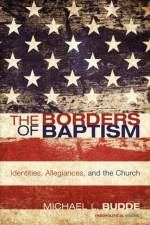
Synopsis:It's a simple claim, really - that for Christians, "being a Christian" should be their primary allegiance and identity. For those who proclaim Jesus as Lord, this identity should supersede all others, and this loyalty should trump all lesser ones. It may be a simple claim, but it is a controversial one for many people, Christians and non-Christians alike. The Borders of Baptism uses the idea of solidarity among Christians as a lens through which to view politics, economics, and culture. It offers Christians a fresh perspective capable of moving beyond sterile and dead-end debates typical of debates on issues ranging from immigration and race to war, peace, and globalization. The Borders of Baptism invites Christians of all traditions to reflect on the theological and political implications of first "being a Christian" in a world of rival loyalties. It invites readers to see what it might mean to be members of a community broader than the largest nation-state; more pluralistic than any culture in the world; more deeply rooted in the lives of the poor and marginalized than any revolutionary movement; and more capable of exemplifying the notion of ;e pluribus unum' than any empire past, present, or future.Endorsements:"Contemporary Catholic and Protestant ethics are rather divided on the significance of the renewed focus on Christian identity in theology. Whatever side one is on, Michael Budde's The Borders of Baptism is essential reading. Budde's vision of ecclesial solidarity is stunning, moving the discussion beyond platitudes and slogans to both argue for and display the practices necessary for Christians who wish to take seriously their baptismal commitment."-John BerkmanLupina Centre for Spirituality, Healthcare and Ethics"What would it look like if Christians took their baptisms and baptismal vows seriously, not just in so-called 'spiritual' matters, but in every aspect of life? With his usual wit and clarity Michael Budde shows us some of the ways that baptism intersects with issues of immigration, race, national identity, class, and globalization. A must read for those who take ecclesial solidarity and discipleship as their defining loyalty."-Barry HarveyBaylor UniversityAuthor Biography:Michael L. Budde is Professor of Political Science and Catholic Studies at DePaul University, where he is also Senior Research Scholar in the Center for World Catholicism and Intercultural Theology. He is the author of numerous books on ecclesiology and society, including Christianity Incorporated.
To celebrate the fiftieth anniversary of the College Theology Society, these original essays explore how theology has changed over the previous fifty years, theological concerns on the horizon today, and approaches to teaching theology appropriate for the twenty-first century.Contributors:Elizabeth A. JohnsonJoseph A. KomonchakNorbert RigaliJ. Matthew AshleyElizabeth T. GroppeMichael Horace BarnesSteven R. HarmonColleen M. MallonAnne M. CliffordSally KenelRandall Jay WoodardSandra Yocum MizeMary Ann HinsdaleMiguel H. DiazJames A. DonahueSuzanne C. TotonIsmael Muvingi
In Piety and Power an African scholar provides a unique perspective on historical patterns of religious interaction in West Africa and their meaning for world Christianity and Islam today. Sanneh's topics range from Muhammad's significance for Christians, to an examination of a nineteenth-century ""ecumenical"" opening between the two faiths in Freetown, to an overview of the relation between religion and politics that directly challenges many Western assumptions about Africa and Islam.Other treatments of Christian-Muslim encounter in Africa are often framed in terms of European colonial and missionary history. In contrast Piety and Power places the inter-faith issues firmly in an African social setting. Sanneh explores the impact of Islam, Christianity, and European mission and colonialism in terms of African adaptations and expressions. An autobiographical essay on Sanneh's own education in an African Qu'ran school gives readers a rare and revealing look at the power and influence of Islamic institutions in their African adaptations.""This excellent book provides the best account of the dynamics of Muslim-Christian relations in West African society available to us. The book is a major contribution to the ongoing debate on the causes of the increasing pace of religious intolerance in contemporary West Africa. No one understands the uneasy relations between the Ummah and the Church in Africa better than Lamin Sanneh.""--Professor Jacob K. Olupona, University of California, Davis""A wise and profoundly original analysis which boldly argues the critical significance of the experiences of the author and other Muslims and Christians.""--Professor Richard Gray, University of London ""[Draws] out striking and unexpected parallels between developments in Christianity and Islam.""--John Renard, Saint Louis University""'The tunnel should guide what passes through it and bring it to the full scope of the light of day' (65). Sanneh's metaphor could well serve the reader's gain from his scholarship--scholarship made the more telling by the rich infusion of personal experience in a crucial territory of what obtains between faiths. An exciting publication.""--Bishop Kenneth Cragg, author, Muhammad and the ChristianLamin Sanneh was educated in his native Gambia as well as Britain and the United States. He taught at Harvard University before taking up his present position as the D. Willis James Professor of Missions and World Christianity at Yale University. He is also Chair of Yale's Council on African Studies. Sanneh's books include West African Christianity; Translating the Message: The Missionary Impact on Culture; and Encountering the West: Christianity and the Global Cultural Process.
""The contributors represent varying outlooks in New Testament study so that the book offers a continuation of the current debate rather than a set of agreed conclusions. The editors of this symposium deserve our thanks for bringing together this series of useful essays which no student of the social teaching in the New Testament and of Luke's writings in particular ought to miss."" --I. Howard Marshall, Professor of New Testament Exegesis, University of Aberdeen""Various phases of Luke's challenge (to the powers of his day) are discussed in some detail by the contributors to this symposium; and, in consequence, much light is thrown on Luke's purpose in writing. I am happy to commend this new volume of studies to the serious attention of students and teachers of the New Testament and early Christian history.""--F. F. Bruce, Rylands Professor of Biblical Criticism and Exegesis, University of Manchester""These lively, provocative, and well-informed essays center around the thesis of Dr. Richard J. Cassidy in his Jesus, Politics, and Society, in which he challenges the notion that Luke-Acts was written as a political apologetic. The result is a stimulating debate, as though one were participating in a discussion, at once learned and relevant, on the exegetical issue of Lukan redaction, and of course, on the moral question of Jesus' attitude toward civil authority.""-Howard Clark Kee, William Goodwin Aurelio Professor of Biblical Studies, Boston University""Here we have ten studies which sharply probe aspects of the political Luke and/or Luke's political Jesus, including a study by Cassidy himself as well as studies which take him to task on various counts. All told, Political Issues in Luke-Acts is an extremely valuable showcase of the most current research in Luke-Acts and its societal concerns.""--Edward C. Hobbs, Professor of Religion, Wellesley College, Visiting Professor of New Testament, Harvard UniversityRichard J. Cassidy serves as Professor of Sacred Scripture at Sacred Heart Major Seminary in Detroit, Michigan. His most recent books are Paul in Chains: Roman Imprisonment and the Letters of Paul and Four Times Peter: Portrayals of Peter in the Four Gospels and at Philippi. He is currently completing a commentary on St. Paul's Letter to the Philippians.Prior to his death, Philip J. Scharper served as an editor of Commonweal, was the American editor of Sheed and Ward, and was the founding editor of Orbis Books. He received seven honorary degrees and numerous awards for his contribution to religious publishing. With his wife, Sally, he authored more than thirty nationally televised religious documentaries, which have received twenty international and national awards, including several Emmys.
Dr. Rudolf Kittel taught at the University of Leipzig, Germany, and edited the Biblia Hebraica, perhaps the best-known Hebrew Old Testament of the twentieth century.
This book offers a moving tribute to one of the twentieth century's most seminal philosophers and theologians, Paul Tillich. In fact, it is widely accepted as the standard biography for Tillich. A soberly objective portrait, it was supported by Tillich himself, who hoped that the full telling of his story would set in context its unconventional aspects (as told in books by Hannah Tillich and Rollo May). Wilhelm and Marion Pauck have recreated the many-sided "Paulus" in all his greatness and humanness. Tracing the development of Tillich's thought alongside the unfolding of his life in Germany and the United States, the authors have provided an excellent model of biographical research.
This book has been prepared for use as a textbook for Methodist Local Preachers on Trial, but there are few readers at any stage of development or attainment who would not find its pages informative and helpful. A valuable introduction deals with various aspects of the New Testament, and the teaching of Jesus according to the Synoptic Gospels is the subject of a separate chapter. Thereafter, the author offers comments on selected New Testament passages. These comments--terse, pithy, shrewd, and factual--will be of the greatest help both to preachers and to all who desire to understand their Bible.Arthur Wainwright was a Methodist pastor in England when he wrote this book. He subsequently taught for many years at the Candler School of Theology (Emory University, Atlanta, GA) where he is now Professor Emeritus of New Testament. His writings include The Trinity in the New Testament and Mysterious Apocalypse, and he prepared the Clarendon edition of John Locke's Paraphrase and Notes on the Epistles of St. Paul.
Following his seminal analysis of Luke, Jesus, Politics and Society: A Study of Luke's Gospel, Richard J. Cassidy explicates the startling social and political contents of the Acts of the Apostles. Treating themes of fundamental importance to the life of the church today, Society and Politics in the Acts of the Apostles will be required reading for any serious student of the New Testament.""Of special interest is the discussion of Paul's relation to the Roman Empire . . . There was an element in [Paul's] preaching and activity that did present a threat to Roman society.""--F. F. Bruce, Emeritus Professor of Biblical Criticism and Exegesis, University of Manchester""Father Cassidy offers a masterly analysis of Acts in beautifully intelligible language. It culminates in the refusal to accept either of two popular characterizations of the book.""--David Daube, Emeritus Professor of Law, University of California, Berkeley ""This work completes with distinction the previous work of Cassidy on Luke . . . [It] should receive the attention of both interpreters of Acts and historians of Christianity's origins."" --Jacques Dupont, OSB, Monastere Saint-Andre, Ottignies, Belgium""Its comprehensive survey of the data and its judicious assessment of scholarly opinion make this a timely contribution to one of the burning issues of Lukan research.""--John H. Elliott, Professor of Theology and Religious Studies, University of San Francisco""This well-written book exemplifies interdisciplinary scholarship and represents a provocative challenge for those who seek to understand the message and the implications of Christianity today.""--Mary Ann Getty, RSM., Assistant Professor of New Testament, Catholic University of America""Adds a new dimension to the purpose of Acts by suggesting that Luke wanted to show Christians how to live in the Roman Empire and specifically to give them examples of how to cope with being tried before political officials.""--I. Howard Marshall, Professor of New Testament Exegesis, University of Aberdeen""'A challenging work in which Cassidy presents the Church in Acts as 'a community committed to an uncompromising testimony to Christ.'""--Joseph Patbrapankal, Professor of New Testament, Dharmaram Vidya Kshetram, Bangalore, IndiaRichard J. Cassidy serves as Professor of Sacred Scripture at Sacred Heart Major Seminary in Detroit, Michigan. His most recent books are Paul in Chains: Roman Imprisonment and the Letters of Paul and Four Times Peter: Portrayals of Peter in the Four Gospels and at Philippi. He is currently completing a commentary on St. Paul's Letter to the Philippians.
Ministry Makeover examines the decline within the church, especially the United Methodist Church (UMC), and some causes for this decline. It calls for a reforming of United Methodist structure and polity by drawing more attention to the value of the bi-vocational model of ministry and a re-visitation of the Wesleyan/United Brethren view and historical perspective. This book establishes a solid theological foundation upon which to build this shift and it goes a step beyond typical ecclesiology (the study of the church) to identify Trinitarian theology as the basis for the practice of the church. In turn, this text reveals bi-vocational ministry and support of new congregations as not only a viable option, but also arguably the model towards which the church is heading. These insights will transform the church and lead to more effective church ministry with respect to resources, structure, and reach in a post-Christendom world context. Picardo uses Embrace Church (Lexington, KY) as a case study, and incorporates his experiences into this text in order to show how these implications have played out in a true bi-vocational, church-plant context.
Historically, the Reformed and Charismatic streams have seemed to be almost mutually exclusive. In recent years, this exclusivity has been being challenged by a new generation of Reformed thinkers. This work aims at considering the contribution of John Wimber, the late leader of the Vineyard Churches, to contemporary theological reflection within the Reformed tradition. Taking into account John Wimber's unique theology of the ""radical middle,"" which is somewhere between Pentecostal and Evangelical, this book asks whether Wimber may be a possible alternative source for the contemporary Reformed Churches as they approach ministry and mission in the twenty-first century.Written from a confessional Presbyterian context in Northern Ireland, Word and Power places Wimber in his theological context and asks whether Wimber's view of power evangelism, discipleship formation, and ministry training might be a model that Reformed Churches--and Presbyterians in particular--could adopt for their ecclesiology today.
The Trinitarian Dance presents a model of leadership development based on the Holy Trinity. Part one analyzes the present state of the cultural and ecclesiastical situation in Canada, identifying specific trends and aspects relating to the need for development of effective leadership in the church. This section sets the stage for Part two, where a theology of trinitarian leadership is developed based on the dynamic of perichoresis, with the motif of a dance used to present a paradigm of transformational leadership. Part three offers church-based strategies for leadership development, concluding with a creative application of the doxological formula that captures the thrust of the entire book and leads it to a finale that includes a benediction of hope for the church through this leadership model.
Readings in Catholic School Social Teaching: Selected Documents of the Universal Church, 1891-2011 is a curated collection of readings that form a short summary of the universal Catholic social teaching ranging between Pope Leo XIII's 1891 Rerum Novarum and Pope Benedicts XVI's 2011 pontificate. Organized in seven chapters according to general topics related to social justice, each section includes excerpts from notable Catholic documents, particularly papal encyclicals and documents of the Second Vatican Council. This material not only invites readers to delve deeper into the vast and growing treasury of such writings, it also inspires by encouraging thoughtful discussion for better understanding the contemporary value of the documents and serves as a tool for both prayerful reflection and academic inquiry.
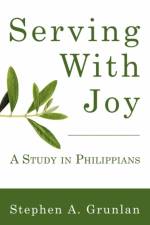
You may have found yourself reflected from the pages of Paul's letter to the Phillipians - the subject of 'Serving with Joy'. Why? Because in many respects the Christians in first-century Philippi were very similar to evangelical Christians today. They were orthodox in belief. They were faithful to the gospel. They seemed to harbor no gross sins. But they nevertheless had need of encouragement and instruction. In 'Serving with Joy', Stephen A. Grunlan concentrates on the practical aspects of Paul's short letter: being like-minded, the cost of commitment, dealing with struggles, overcoming attitudes. I have attempted to avoid heavy theological issues and details that are of limited scholarly interest, he says. Rather, I have attempted to look at Paul's practical counsel and draw application for us today. 'Serving with Joy' is also ideal for personal study. Thought questions at the end of each chapter help summarize the book's content and stimulate reflection.
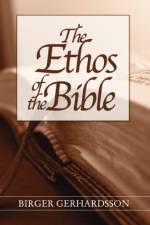
This book contributes substantially to the formation of a vital sense of ethos and ethics in harmony with the biblical tradition. Birger Gerhardsson points out those essential characteristics which make up the Bible's basic unity in the midst of its diversity and, in the final chapter, provides a summary of the Bible's ethos. This summary is preceded by an historical description of the ethos of postexilic Judaism and early Christianity - from about five hundred years before Christ to the mid-second century being the period covered. Distinctive to this book is its demonstration of the role which the fundamental command of love for God (Deut. 6:4-5) played in the ethical thinking of early Christianity, not only through the profound idea at its root, but also through its wording.
Abonner på vårt nyhetsbrev og få rabatter og inspirasjon til din neste leseopplevelse.
Ved å abonnere godtar du vår personvernerklæring.