












Gjør som tusenvis av andre bokelskere
Abonner på vårt nyhetsbrev og få rabatter og inspirasjon til din neste leseopplevelse.
Ved å abonnere godtar du vår personvernerklæring.Du kan når som helst melde deg av våre nyhetsbrev.

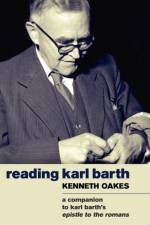
Karl Barth's 1922 The Epistle to the Romans is one of the most famous, notorious, and influential works in twentieth-century theology and biblical studies. It is also a famously and notoriously difficult and enigmatic work, especially as its historical context becomes more and more foreign. In this book, Kenneth Oakes provides historical background to the writing of The Epistle to the Romans, an introduction and analysis of its main themes and terms, a running commentary on the text itself, and suggestions for further readings from Barth on some of the issues it raises. The volume not only offers orientation and assistance for those reading The Epistle to the Romans for the first time, it also deals with contemporary problems in current Barth scholarship regarding liberalism, dialectics, and analogy.
In this devilishly entertaining book, Tripp York takes it upon himself to find the Prince of Darkness. Provoked by a wager made in one of his religion classes, York explores whether in proving the existence of Satan, we might in turn prove the existence of God. Admitting the idea is not half-bad (and thus, conversely, only half-good), York enlists the aid of numerous ministers, theologians, spiritual warriors, pagans, shamanists, fortune tellers, and Satanists in his fiendish quest to determine the whereabouts of God's first fallen creature. Part memoir and part theological treatise, The Devil Wears Nada is a compelling and humorous account of the strange, bizarre, and (oftentimes) offensive things we think about God, the Devil, and everything in between.
This lively commentary encompasses four major books focusing on women in the Hebrew Bible and Apocrypha. Each section in the volume addresses the biblical text in detail, and draws connections from the world of ancient audiences to that of present-day readers. Wolfe's research is motivated by the usual inquiries of biblical scholarship, as well as the questions raised by the many church Bible study groups she has taught. Clergy and laity, students and scholars will benefit from these contemporarily relevant reflections on Ruth, Esther, Song of Songs and Judith.Ruth: The foreign widow who sneaks onto the nighttime threshing floor to find survival for herself and her devastated mother-in-law. Esther: The Jewish orphan-turned-queen who turns Persian banqueting on its head in an effort to defend her people. Song of Songs: The proud and alluring lover who claims her sexuality as her own and joyfully shares it with her beloved. Judith: The pious and beautiful widow who lets the enemy commander's appetite become his downfall in order to save her besieged city.This volume is an opportunity to engage these women's suspense-filled stories, which have sustained faith communities since ancient times.
Battles over creation or evolution have been perpetuated for years by vocal Christians and scientists alike. But conflict has never been the only choice. Laying Down Arms to Heal the Creation-Evolution Divide presents a comprehensive, uplifting alternative that brings together an orthodox, biblical view of a sovereign Creator-God and the meaningful discoveries of modern evolutionary biology. Gary Fugle offers unique insights into this debate from his dual perspective as both an award-winning biology professor and a committed leader in conservative evangelical churches. In focusing on the stumbling blocks that surround creation and evolution debates, Fugle sensitively addresses the concerns of skeptical Christians and demonstrates how believers may celebrate evolution as a remarkable aspect of God''s glory. He describes how the mainstream scientific community, as well as numerous Christians, may alter current approaches to eliminate conflicts. He explains conservative readings of early Genesis that respect both the inerrant words of Scripture and the evolutionary revelations in God''s natural creation. This book is for individuals who sense that biblical Christian faith and evolution are compatible without compromising core convictions. If given good reasons to do so, are we willing to lay down our arms to affirm an encompassing vision for the future?""We who love Jesus and his word, and love his world and the study of it, need to do some serious thinking about how our faith relates to scientific practices and theories, and we need the voices of skillful people who think well. Gary Fugle has offered a worthy contribution to the discussion: it is cheerful, thoughtful, and helpful.""--C. John Collins, author of Did Adam and Eve Really Exist""In Laying Down Arms, Gary Fugle combines a tenacious commitment to the truth of Scripture with an expert''s grasp of evolutionary science. He guides his readers through thoughtful reflections on faith and science that are biblically based, scientifically informed, engaging, and deeply relevant. This book is both wise and timely.""--Gregory S. Cootsona, author of C.S. Lewis and the Crisis of a Christian""In a patient, respectful, and loving manner, Fugle shows why none of the precepts that lie at the heart of a Christ-centered life, and the theology on which it is based, are changed or challenged if God chose to create through the evolutionary mechanism. . . . He presents his position with a unique knack for making biological concepts accessible to a general audience, and a profound understanding of the biblical and theological issues involved. His love for biology is contagious, his winsome affection for the church, an inspiration.""--from the foreword by Darrell R. Falk""Fugle knows what he''s talking about from both sides of the street: religion and science. He writes with an engaging, gentle, yet admonishing style, asking those who urge conflict between evolutionary biology and Christian faith to reassess their confrontational views. Instead, he urges all involved to adopt an attitude of mutual respect--and evangelical Christians, in particular, to welcome evolutionary biology as further witness to their biblical faith. I recommend Laying Down Arms to Heal the Creation-Evolution Divide to everyone, scientist and lay person alike, yearning for a hopeful, new approach to reconciling faith and science.""--Robert J. Russell, author of Time in EternityGary Fugle received his PhD from the University of California at Santa Barbara and has taught biology in the California community college system for over thirty years, most of which he spent at Butte College in northern California. He has been deeply involved in different evangelical churches simultaneously, and he especially enjoys leading worship in his local congregation of the Presbyterian Church in America.
That the synoptic writers believed that Jesus cast out demons and that such a role figured prominently in the Synoptics'' portrait of him can scarcely be denied. And yet, only scant scholarly attention has been focused on Jesus'' role as exorcist. Even less consideration has been given to the significance of Jesus as exorcist for understanding the historical Jesus.Now, in a provocative and insightful study, Graham Twelftree helps New Testament scholars move beyond such myopia. Twelftree examines exorcists and exorcism in first-century Palestine, assesses the New Testament accounts of demons and their demise, and explores the implications and significance of the fact that Jesus was indeed an exorcist. The volume appeared originally in the noted German series Wissenschaftliche Unteruchmungen zum Neuen Testament.Graham H. Twelftree is Professor of New Testament at Regent University in Virginia Beach, Virginia.
Synopsis:Doing Justice: Knowing God represents a fundamentally new departure in ethical theory. Drawing on the work of Alasdair MacIntyre, John Milbank, and Franklin Gamwell, it argues that that modern and postmodern moral theory is fundamentally inadequate, and that the current crisis of values can be resolved only on the basis of a substantive vision of the Good. But it goes beyond these thinkers to argue that such a vision must be grounded metaphysically in a revitalized doctrine of Being. The result is a radically historicized natural-law ethics. This ethics argues that not only human individuals but human societies and indeed the universe as a whole grow and develop toward God. The fundamental moral law is to act in such a way as to promote this development. The book draws out the implications of this insight for our understanding of the virtues as well as for social justice. Endorsement:"Anthony Mansueto in this new book continues to raise fundamental questions about the meaning of collective and individual life of humankind. Facing the multiple crises indicating the end of a system, it helps to find solutions for the collective life of human beings on the planet. He does it with remarkable philosophical knowledge."--François HoutartProfessor EmeritusCatholic University of LouvainAuthor Biography:Anthony Mansueto is President and Senior Scholar at Seeking Wisdom.
How the Old Testament is used in the New Testament is currently a matter of fierce debate. Scholars argue about whether the early Christians, as readers and writers or hearers, would have known the Hebrew Bible by heart and the extent to which they would have acknowledged it as Scripture.Many modern translations of the Bible no longer include cross-references that indicate the sources of Old Testament quotations (or allusions) in New Testament writings. Students may therefore find it difficult to appreciate how much Old Testament material is included in the New Testament and to estimate the relative weighting of Old Testament themes in different New Testament writings.New Testament Writers and the Old Testament introduces the issues involved in understanding the controversy about the relationship of the Old and New Testaments. The wealth of information this book contains, together with cross-references linking the two testaments, make it an invaluable resource for both the Bible student and the general reader.John M. Court was formerly Senior Lecturer in Theology and Religious Studies and Head of Department at the University of Kent at Canterbury. He is the author of many books, which include The New Testament World, Reading the New Testament, and The Book of Revelation and the Johannine Apocalyptic Tradition.
Description:A great deal of attention has been given over the past several years to the question: What is secularism? In On Diaspora, Daniel Barber provides an intervention into this debate by arguing that a theory of secularism cannot be divorced from theories of religion, Christianity, and even being. Accordingly, Barber''s argument ranges across matters proper to philosophy, religious studies, cultural studies, theology, and anthropology. It is able to do so in a coherent manner as a result of its overarching concern with the concept of diaspora. It is the concept of diaspora, Barber argues, that allows us to think in genuinely novel ways about the relationship between particularity and universality, and as a consequence about Christianity, religion, and secularism.Endorsements:"Writing with extraordinary philosophical imagination, Barber provides an account of Christianity that will challenge Christian and non-Christian alike. Barber will soon be recognized as an intellectual force whose work cannot be ignored."-Stanley HauerwasDuke University"What a mysterious meditation unfolds here, oscillating subtly ''between namelessness and excessive signification.'' May its illumining construction of diaspora as a composition of differences in their ''intermattering'' refresh current conversations about religion, Christianity, and the secular; about immanence and negative theology; about the co-constitution of beings beyond preexisting identities and the construction of value."-Catherine KellerDrew University"What are we to do, asks Daniel Barber, with Christianity? With our unavoidable inheritance of its tradition? Barber''s thoughtful, albeit astonishing, answer is that we must formulate, finally, a concept of Christianity, gather it out of its disseminated state, from the originary diaspora Christianity has yet to achieve. Whether Christianity, ''actually existing Christianity,'' retains the potential for such a challenge appears nowhere more in doubt-and nowhere more necessary-than in this unflinching meditation."-Gil AnidjarColumbia University"This bold Spinozist-Deleuzian (and original) argument for diaspora as that which expresses the profound link between Christianity and differentiality (discontinuity) is simultaneously an extraordinarily nuanced and lucid critique of Pauline thought, of the secular, and of the continuity between Judaism and Christianity. It marks the emergence of a major new voice in the philosophy of religion."-Eleanor KaufmanUniversity of California, Los AngelesAbout the Contributor(s):Daniel Colucciello Barber teaches in the Department of Philosophy and Religious Studies at Marymount Manhattan College, in New York City.
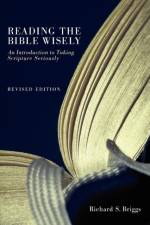
What does it mean to take the Bible seriously? This introductory book explores how Scripture itself gives us the resources to read it wisely. First, it looks at the basic questions of reading in context--historical, literary, and theological--and understanding the significance of the two-testament structure of the Christian Bible. Then it looks at how the Bible can itself contribute to shaping a wise doctrine of Scripture. Finally, it considers some of the many hermeneutical perspectives that contribute to reading the Bible wisely. New to this revised edition are chapters addressing the significance of the Old Testament, the performative function of Scripture, and how reading Scripture actually helps form the reader. The aim throughout is to explore key questions critical to the task of reading the Bible generously, constructively, and in a comprehensible way, without oversimplifying core theological issues.
Recognizing that one-third of the world's Christians practice their faith outside Europe and North America, the fourteen essays in Mother Tongue Theologies explore how international fiction depicts Christianity's dramatic movement South and East of Jerusalem as well as North and West. Structured by geographical region, this collection captures the many ways in which people around the globe receive Christianity. It also celebrates postcolonial literature's diversity. And it highlights non-Western authors' biblical literacy, addressing how and why locally rooted Christians invoke Scripture in their pursuit of personal as well as social transformation. Featured authors include Fyodor Dostoevsky, Constantine Cavafy, Scott Cairns, Chinua Achebe, Madam Afua Kuma, Earl Lovelace, V. S. Reid, Ernesto Cardenal, Helena Parente Cunha, Arundhati Roy, Mary Martha Sherwood, Marguerite Butler, R. M. Ballantyne, Rudyard Kipling, Nora Okja Keller, Amy Tan, Albert Wendt, and Louise Erdrich.Individual essayists rightly come to different conclusions about Christianity's global character. Some connect missionary work with colonialism as well as cultural imperialism, for example, and yet others accentuate how indigenous cultures amalgamate with Christianity's foreignness to produce mesmerizing, multiple identities. Differences notwithstanding, Mother Tongue Theologies delves into the moral and spiritual issues that arise out of the cut and thrust of native responses to Western Christian presence and pressure. Ultimately, this anthology suggests the reward of listening for and to such responses, particularly in literary art, will be a wider and deeper discernment of the merits and demerits of post-Western Christianity, especially for Christians living in the so-called post-Christian West.
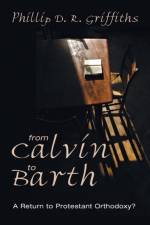
The Enlightenment caused a paradigm shift in the worldview of most people living in the Western world. Those Christian doctrines associated with the Protestant Reformation were believed to be no longer tenable. The great German theologian Karl Barth appeared to provide a remedy for this, with a theology that harkened back to Protestant Reformation. From Calvin to Barth examines just how successful Barth was in returning to the old ways; to ascertain whether he did espouse the thinking of men like John Calvin or whether he simply provided a theological system that was just another face of post-Enlightenment liberal thinking.Phillip D. R. Griffiths is currently the Head of Religious Studies at a large comprehensive school in West Wales, where he lives with his wife and two children. He holds four degrees, two with first class honors.
The emergence of Pentecostalism in Ghana has attracted a massive following and generated institutions that have significantly impacted Christian discourse and national life. The movement has produced prominent leaders who have developed exemplary Christian education programs and generated volumes of Christian literature unprecedented in Ghanaian Christianity. Nevertheless, public opinion often upbraids church leaders for unethical conduct. Despite the concern for high moral standards set by Pentecostal church polity and ministerial ethical codes, reports of Pentecostal ministerial misconduct appear regularly in the media. Although congregation members and perceptive public observers appreciate the constructive moral impact of Pentecostal ministers, instances of promiscuity, power abuse, financial misappropriation, and superstition reveal a gap between ethical ideals and practice. As this research reveals, factors behind unethical ministerial conduct include inadequate training, poor accountability, and a general low level of ethical reflection. Good Pastors, Bad Pastors suggests that a multidimensional approach of responsible reportage, emphatic moral education, appropriate but sympathetic response to moral failure, and peer-review accountability could help uphold a higher standard of ministerial ethics.
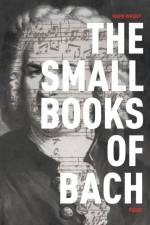
The Small Books of Bach is an offering of forty poems, each a spiritual query, playful celebration, or serious riff on the music and life of J. S. Bach. Divided into four books, the poems range from lyrical investigations into Bach's life to surprising, irreverent meditations on performances of the composer's work. While Bach lovers will enjoy the references to his music and its reception, these energetic poems can draw all readers into the composer's surprising life and spiritually challenging music, a body of work with the potential to make readers "want to dance or get right with a much better God / than they came with, or the one they had planned to take home."
These articles from a 1996 symposium on "Isaiah 53 and Christian Origins" zero in on the relation of Jesus to the images of the "Suffering Servant" introduced in Isaiah, asking whether Jesus consciously identified with that ancient image.
ContentsLetter from the EditorsCCDA Theology CommitteePart I: CCDA National Conference Theme: ""Flourishing""Prosperity and Flourishing: A Biblical WitnessJames K. BrucknerFlourishingDennis EdwardsThe Prosperity Gospels' Transformation of the Popular Religious ImaginationKate BowlerOgbu Kalu, African Pentecostalism and Shalom 24Valerie LandfairCities of God: Reclaiming Culture through the Flourishing of the CityAllie WongFinding Our Way HomeSamantha DomingoPart II: CCDA Ministr y in North CarolinaNorth Carolina's Cry for Racial JusticeReynolds ChapmanLiturgical GardeningChas EdensPart III: Book ReviewsForgive UsMargot StarbuckToo Heavy a YokeNilwona E. NowlinFaith Rooted OrganizingAnthony Grimes
Contrary to what many church people (particularly church "professionals") say, God does not dwell in church, and church doesn't have the franchise on good news. Instead, author Peter Keese proposes the optimistic view that good news is much larger and more all-encompassing than any church can contain or convey, and that good news is everywhere to be found and experienced. In this imaginary dialogue between a traditionalist and his protagonist for a god-in-the-world perspective, Keese's sermons illustrate his conviction that God is out there, inviting us to join in and enjoy the riches of God's life and work. Indeed, as Keese writes, "Jesus has left the building--with all its strictures--and beckons us to come along where life in all its chaotic glory is to be experienced--and enjoyed!"
The purpose of this book is to provide a theologically sound yet easy-to-use resource, based on the image of God, that can help congregations engage relationally in their neighborhoods. Rather than using the neighborhood as a resource to help make congregations successful, The Neighborhood Church contends that God places congregations in neighborhoods to help make neighborhoods successful in accordance with God's vision.This book is intended as a resource for pastors and other church leaders who pour significant amounts of energy into their congregations but feel frustrated with the results. The problem isn't with church leaders' energy or commitment. On the contrary, it's a lack of awareness as to how that energy and commitment can be channeled within God's call, mission, and movement. This book is a crucial resource for congregations having difficulty navigating the treacherous waters of what it means to be successful according to God's vision.""Rob's experience in the parish and his commitment to solid theology both show in this book. Grounded in a relational God who can not stop working to relate to the world that God both made and loves, Rob takes the church through a straightforward and easy-to-follow road map to building relationships in the community. Teams will find this book accessible and the short chapters followed by questions for reflection and discussion will make this one they can use to get started doing what the church should have been doing all along.""--Dave Daubert, Day 8 Strategies, Elgin, ILDr. Robert Moss is senior pastor at Lutheran Church of the Master in Lakewood, CO. He has recently served as the Evangelical Lutheran Church in America's Interim Director for Evangelical Mission with the Rocky Mountain Synod, as well as the Team Lead for the Rocky Mountain Synod's Expanding Vision Ministry.
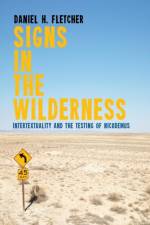
Signs in the Wilderness portrays Nicodemus as a traveler on a faith journeythrough the wilderness who is tested by Jesus's signs. Signs test Nicodemus's faith in the same way they tested that of the wilderness generations of ancient Israel in the book of Numbers. The first generation saw the miraculous signs of God, yet refused to believe, and so forfeited its right to enter the promised land. The second generation, in contrast, saw the signs, believed, and boldly entered the promised land. So it was in John's Gospel as well, in which many people see Jesus' miraculous signs but refuse to believe, thus forfeiting eternal life. Others believe and inherit eternal life. Nicodemus is a test case in that his own wilderness experience is one of divine testing in the face of Jesus' signs. Will he have a heart of flesh, believe, and enter eternal life, or a hard heart of stone, refuse to believe, and die in the wilderness? Similarly, Jesus' signs test the readers of John's gospel, resulting in either belief or unbelief.
The Tradition of the Elders, based on Matt 15:1-20 and Mark 7:1-23, explores how the oral law upheld and promoted the anti-Christian forces of Pharisaism and Sadduceism. As such, they appear repeatedly in the New Testament documents, often as ""the law"" and ""the works of the law."" For example, consider:- ""When Gentiles who have not the law do by nature what the law requires, they are a law to themselves, even though they do not have the law"" (Rom 2:14).- ""We ourselves, who are Jews by birth and not Gentile sinners, yet who know that a man is not justified by works of the law but through faith in Christ Jesus, even we have believed in Christ Jesus, in order to be justified by faith in Christ, and not by works of the law, because by works of the law shall no one be justified"" (Gal 2:15-16).- ""Tell me, you who desire to be under law, do you not hear the law?"" (Gal 4:21).But which law do these legal references concern--the Torah, the oral law, or the Decalogue? This important distinction between the oral law and the Ten Commandments is what The Tradition of the Elders sets out to make clear. All New Testament exegetes, including teachers and students, can benefit from an increased understanding of the enmity of the oral law against the Gospel.
Bring the otherworldly mystery of spiritual reality down to earth.Understand how Satan can gain entry into the personal lives of Christians.Learn how to find peace in church conflict without having to flee, fake it, or fight back.Put an end to toxic memories from a painful past.Experience meaningful life in the Spirit.
This is a guide for spiritual mountain climbers. In the Scriptures, connecting with Abba often leads to a mountain. Modern spiritual writers have long recognized this scriptural metaphor and explored the nature of this journey of ascent. Drawing on the text of the Bible, works of literature, and the writings of mystics both old and new, Climbing the Spiritual Mountain speaks of the desires and intentions, discipline, and effort involved in developing our intimacy with Christ.In Jesus' dealings with people in the Gospels, he draws them up the spiritual mountain through dialogue and questions. Like Socrates of old, his teaching method probes our thinking, knowledge, and motives. In the process, he stimulates our longing and desire to reach the summit.There are challenges, hurdles, and difficult choices to make as we climb the spiritual mountain. But the reward--approaching the beautiful One who is our Abba--far outshines any sacrifice we may make on the climb.
Did Jesus really rise from the dead? And does it really matter?In The Resurrection of History, David Bruce explores what historians, theologians, and New Testament scholars have said about the resurrection of Jesus from a historical point of view. Bruce argues that scholars don't have to dismiss the scriptural witness that ""he is risen"" as metaphor or wishful thinking.Bruce examines the development of the art of history writing and explores the theological possibilities now open to scholars in the twenty-first century. Using contemporary examples, Bruce helps his readers come to grips with the interrelationship of history and theology and think like theologically-informed historians. Respectful of varying points of view, Bruce defends the traditional, orthodox view of the resurrection and challenges his readers to consider the implications for Christian faith and witness if, in fact, the resurrection of Jesus was historical.
Designed for readers who have no familiarity with the Old Testament or Hebrew Bible, this introduction provides a complete overview of its development and its continuing interpretation. Each chapter follows the same four-part format: "Content" summarizes the biblical book being treated; "Growth" explains the process behind the book's composition according to the most up-to-date scholarship; "Context" describes the historical, literary, and social settings that were at work in the book's production; and "Interpretation" explores the various ways in which the book has been and continues to be understood in scholarly and religious communities. The Old Testament: Its Background, Growth, and Content is an ideal classroom resource because, even though it presents the biblical books in their canonical order, it can be read in any sequence to meet ¿the needs and aims of a given course.
Fifty years after his death, C. S. Lewis fascinates his readers still. Well established as a key figure in children's literature he is increasingly recognized as a significant Christian thinker. The authors in this volume are from a wide range of Christian traditions--testimony to the reach and significance of Lewis's legacy. The essays return to Lewis's devotional and theological works, assessing their place in his own thought and in the theology of the twentieth century. Lewis emerges as an insightful and creative theologian whose ideas continue to surprise in their sophistication and fecundity. Indeed, it is suggested that he represents a way of doing theology--"mere theology"--which suggests ways in which Christian thought may reengage the complex cultural debates of the contemporary world.
The Solitary Explorer responsibly and critically explores Thomas Merton's lifelong spiritual development as reflected in his religious and secular writings and delineates the meaning of his life and work for contemporary readers. It provides an interpretive chronology of Merton's writings and unravels the intertwining threads of self-realization and widening intellectual interests evidenced in the material he produced between his early autobiography and the controversial work of his later years. Elena Malits shows Merton as writer, as monk, as social critic, as seeker of wisdom in the East, as man of prayer, and as one continually on a journey into the unknown. Merton always held that the quest for God is a continuing one: The Solitary Explorer traces the progress of this quest in Merton's life and literary works to reveal a multifaceted spiritual guide who offers an approach to the divine at once reassuringly traditional and refreshingly contemporary.""A sensitive and intelligent interpretation of Thomas Merton's ongoing conversion experience, and a welcome assessment of Merton's contribution to our time.""--Brother Patrick Hart, Abbey of Gethsemani, editor of Thomas Merton, Monk""The Solitary Explorer is a very clear exposition of Merton's thought and is free of breathless adulation. This is not hagiography; it is a critical work in the best sense of the term. Includes as good a balanced judgment of Merton as I have seen.""--Lawrence Cunningham, Department of Religion, Florida State University""Refreshing . . . Elena Malits is a fine scholar who passes on to the reader the excitement of discovery, as well as the fruits of intelligent scholarship. Hers is no 'journey without maps.' The Solitary Explorer is a well-planned expedition. Readers who share in the sense of discovery will find there is much to get excited about.''--Michael Mott, authorized biographer of Thomas MertonElena Marits, CSC, a widely acknowledged authority on Thomas Merton, chairs the Religious Studies Department of Saint Mary's College, Notre Dame, IN.
Leslie D. Weatherhead has formerly been a minister of the English Wesleyan Church in Madras, an honorary chaplain to His Majesty's Forces, and author of The Mystery of Pain.
The Advent of Justice was first published in 1993 to celebrate the 30th anniversary of the CJL Foundation and Citizens for Public Justice (CPJ). Responding to God's call for love, justice, and stewardship, the CJL Foundation and CPJ have been at the forefront of research and advocacy in areas such as poverty and unemployment, economics, and social justice, aboriginal rights, refugees, energy policy and the environment.The republication of The Advent of Justice celebrates more than 50 years of faithful witness for justice by CJL and CPJ.In this book of reflections, four friends come together to lead us more deeply into Advent as a time of profound hope for the coming of God's good kingdom of shalom while also a time of lament and anguish in the face of injustice. Sylvia Keesmaat is a biblical scholar at the Toronto School of Theology and organic farmer. She is also the co-author (with Brian Walsh) of Colossians Remixed: Subverting the Empire (IVP).Brian Walsh is a Christian Reformed campus minister at the University of Toronto. He is the author of Subversive Christianity 2nd ed. (Wipf and Stock) and Kicking at the Darkness: Bruce Cockburn and the Christian Imagination (Brazos).Richard Middleton is Professor of Biblical Worldview and Exegesis at Northeastern Seminary, at Roberts Wesleyan College. He is the author of A New Heaven and a New Earth: Reclaiming Biblical Eschatology (Baker Academic) and The Liberating Image: The Imago Dei in Genesis 1 (Brazos).Mark Vander Vennen is the executive director of the Shalem Mental Health Network. He is the co-author (with Bob Goudzwaard and David Van Heemst) of Hope in Troubled Times: A New Vision for Confronting Global Crises (Baker). Willem Hart is a Toronto graphic designer and artist.
The Salvation Army is today one of the world's best-known and best-regarded religious and charitable movements. In this deeply researched study, Norman Murdoch offers some surprising new insights into the denomination's origins and its growth into an international organization. Murdoch follows the lives and work of the Army's founders, William and Catherine Booth, from their beginnings as Wesleyan evangelists in the 1850s to their inauguration of a Utopian social plan in 1890. In particular, Murdoch identifies quick accommodation to failure as a persistent theme in the Army's early history. When the Booth's East End mission faltered in the mid-1870s, Booth took his preaching to the provincial towns. The failure of that ministry led him in 1878 to reorganize his efforts along then-popular military lines, and the Salvation Army was born. With women as its ""shock troops,"" this Christian imperium would spread beyond Britain's boundaries to become as international in scope as Victoria's empire.Challenging various notions popularized in the denomination's official histories, this book will be of special interest to historians of nineteenth-century social reform, scholars of evangelical Protestantism, and readers interested in the relationship between class and religion in the Anglo-American world.
Robert Boak Slocum is rector of the Church of the Holy Communion in Lake Geneva, WI, and a lecturer in theology at Marquette University in Milwaukee.Travis T. DuPriest is vice president of the DeKoven Foundation for Church Work and executive director of the DeKoven Center. He also serves as chaplain to the Community of Saint Mary (Western Province) and confessor and spiritual director for the order of Julian of Norwich.
Abonner på vårt nyhetsbrev og få rabatter og inspirasjon til din neste leseopplevelse.
Ved å abonnere godtar du vår personvernerklæring.