












Gjør som tusenvis av andre bokelskere
Abonner på vårt nyhetsbrev og få rabatter og inspirasjon til din neste leseopplevelse.
Ved å abonnere godtar du vår personvernerklæring.Du kan når som helst melde deg av våre nyhetsbrev.

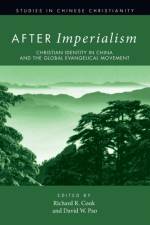
This collection of essays is committed to the belief that evangelicalism continues to have the historical assets and intellectual (hermeneutical and theological) tools able to contribute to the global church. Evangelicalism possesses assets with explanatory power to address significant theological and cultural issues arising out of the churches in the Global South. Evangelical approaches to contextualization and biblical studies can produce valuable fruit. Therefore in May 2008 over a dozen evangelical scholars (Chinese and Western) from the United States, Hong Kong and Taiwan, came together to address issues of Christian and evangelical identity. The ""Inter-Cultural Theological Conversation"" was titled ""Beyond Our Past: Bible, Cultural Identity, and the Global Evangelical Movement."" This collection of papers from the conference demonstrates the value of the careful balancing of judicious appropriation of the social sciences and thorough biblical inquiry. Questions of evangelical identity in China and around the world are addressed from the disciplines of history, biblical studies, and systematic theology/contextualization.""An important volume for both church circles and academic scholars, After Imperialism touches off the issue of evangelicalism that connects the world, yet also creates conflicts between peoples in the history of Christianity. It represents the valuable fruits of a unique meeting of historians, theologians, and Bible scholars on the two sides of the Pacific Ocean. Their dialogue contains reflections, challenges, and deliberation of the Protestant missions in China in the past and also in the future. It makes a major contribution to the new horizon of study in this field while examining old ones in scholarly light."" -Peter Chen-main WangNational Central UniversityTaiwan""This book initiates a new, fertile conversation between biblical reading and understandings of modern Chinese history, informed by social science and post-colonial theory."" -Richard MadsenDistinguished Professor and ChairDepartment of SociologyUniversity of California, San DiegoRichard R. Cook is Associate Professor of Mission History and Global Christianity at Trinity Evangelical Divinity School in Deerfield, Illinois.David W. Pao is Professor of New Testament and Chair of the New Testament Department at Trinity Evangelical Divinity School in Deerfield, Illinois.
This compendium of primary resources reflects the important but often overshadowed contribution of African American believers to the dynamic growth of the modern Pentecostal movement--the fastest-growing segment of global Christianity. The doctrinal statements, sermons, songs, testimonies, news articles, as well as scholarly treatises included here allow black leaders, scholars, and laypeople to speak in their own voices and use their own language to tell us their stories and articulate the issues that have been important to them throughout the one-hundred-year history of this movement. Among the constant themes that continue to emerge is their appreciation of an empowering encounter with the Holy Spirit as the resource for engaging the dehumanizing racial reality of contemporary America.
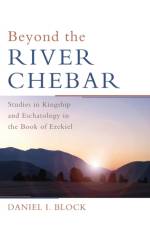
To many readers the book of Ezekiel is a hopeless riddle. However, if we take the time to study it, we will discover that despite the strangeness of the man and his utterances this is the most clearly organized of the major prophetic books. If we persist, we will also discover that from a rhetorical perspective, this priestly prophet knew his audience; he recognized in Judah's rebellion against YHWH the underlying cause of the divine fury that resulted in the exile of his people and the fall of Jerusalem to the Babylonians in 586 BCE. But he also recognized that YHWH's judgment could not be the last word. Because his covenant was eternal and irrevocable he looked forward to a day of spiritual renewal and national restoration. This is the second of two volumes of Block's essays on the book of Ezekiel. The essays in this volume explore the theme of Kingship in Ezekiel--both his assessment of Judah's historical kings and his hope for a restored Davidic King/Prince--and the mysterious visions concerning Gog's attack on restored Israel (Ezek 38-39) and concerning the new temple (40-48). Block brings to bear decades of study of the book to open up fresh insights on the ancient text.
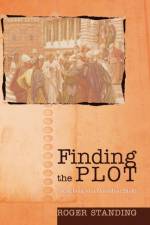
Endorsements:"Preaching at its best is 'truth on fire.' The real quality of this book is that it has been created from the author's own experience of the local pastorate and is concerned with practical insights and realities. I warmly recommend it."--David Coffey, Moderator of the Free Churches and General Secretary of the Baptist Union"For some, the phrase 'finding the plot' suggests a stroll through a graveyard, which is much like their view of preaching. But Roger Standing uses the phrase to describe narrative preaching, an approach that helps preachers accomplish their essential task: to raise the dead."--Marshall Shelley, Vice President, Christianity Today International and editor of Leadership"This book, from a seasoned practitioner and an able thinker, will provide the signposts required by many either for transforming their preaching style in mid-career, or for setting off on the right foot."--Nigel G. Wright, Principal of Spurgeon's College, London"Roger Standing breezily shares his enthusiasm for narrative preaching. He combines theory about narrative and its cultural relevance with practical advice and preaching examples. A helpful stimulus to any preacher to branch out into narrative preaching."--Michael Quicke, Charles Köller Professor of Preaching and CommunicationsAuthor Biography:Roger Standing is the Deputy Principal of Spurgeon's College in London, England, where he teaches Mission, Evangelism and Pioneer Ministry. His other publications include Preaching for the Unchurched in an Entertainment Culture and Re-Emerging Church: strategies for reaching a returning generation.
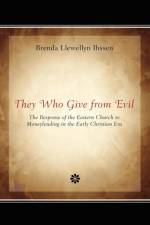
They Who Give from Evil: The Response of the Eastern Church to Moneylending in the Early Christian Era considers St. Basil the Great and St. Gregory of Nyssa's fourth-century sermons against usury. Both brothers were concerned with the economic and theological implications of destructive and corrosive practices of lending at high rates of interest and implications for both on the community and the individual soul of lender and debtor. Analysis of their sermons is placed within the context of early Greek Christian responses to lending and borrowing, which were informed by Jewish, Greek, and Roman attitudes toward debt.
In 1988, many of the world's leading theologians gathered at Maryknoll to honor Gustavo Gutierrez, the ""father of liberation theology."" The occasion marked the twentieth anniversary of the Medellin conference, Gutierrez's sixtieth birthday, and publication of a new edition of his enduring classic, A Theology of Liberation. The resulting volume, The Future of Liberation Theology, included over fifty papers presented at that historic gathering.Expanding the View takes key essays from that landmark volume and makes them available for the first time in paperback. From the wealth of material, essays were selected to provide the most comprehensive overview of critical thinking on liberation theology--both its past developments and the challenges it faces in the future.Among the issues addressed: the ways liberation theology has grown and developed in its treatment of popular religion, Marxism, and women's issues, and the contribution of liberation theology to interreligious dialogue, Catholic social teaching, and the struggle for human rights. Critical questions are raised about the future possibilities of liberation theology. Above all, many of the contributors assess the significance of this theology from the Third World for Christians living in the affluent First World.Ideal for classroom use, and essential reading for everyone interested in this vital movement, this volume includes Gutierrez's own ""Expanding the View,"" which introduces the fifteenth anniversary edition of A Theology of Liberation. Contributors include: Elisabeth Schussler Fiorenza, Aloysius Pieris, Arthur McGovern, Francois Houtart, Harvey Cox, Edward Schillebeeckx, Rosemary Ruether, Penny Lernoux, Leonardo Boff, Johann Baptist Metz, Gregory Baum, Jose Miguez Bonino, Pablo Richard, Robert McAfee Brown, and Maria Clara Bingemer.Marc H. Ellis is University Professor and Director of Jewish Studies at Baylor University. Professor Ellis has lectured around the world and is the author of more than twenty books, including Toward a Jewish Theology of Liberation and Encountering the Jewish Future.Otto Maduro, Venezuelan philosopher and sociologist of religion, is Professor of World & Latin American Christianity at Drew University, has written articles as well as books on issues of religion, knowledge, and liberation struggles; and held the posts of President of the American Academy of Religion (2011-2012) and National Director of the Hispanic Summer Program in religion and theology (2006-2012). He is the co-editor with Marc Ellis of The Future of Liberation Theology, and he is author of Religion and Social Conflicts.
The chapters in this volume were originally presented as papers at the 2009 colloquium of the Calvin Studies Society, held to mark the five-hundredth anniversary of John Calvin's birth. They offer a fresh evaluation of Calvin's ideas and achievements, and describe how others--from his contemporaries to the present--have responded to or built upon the Calvinist heritage. This book dispels popular misperceptions about Calvin and Calvinism, allowing readers to make a more accurate assessment of Calvin's importance as a theologian and historical figure. Contributions address areas in which Calvin's legacy has been most controversial or misunderstood, such as his attitude toward women, his advocacy of church discipline, and his understanding of predestination. These essays also give a nuanced picture of the impact of Calvinism by taking account of both the positive and negative reactions to it from the early modern period to the present.Part 1: Calvin: The Man and His WorkPart 2: Appeal of and Responses to CalvinismPart 3: The Impact of Calvin's Ideas
What modern church doesn't call itself a "community"? Yet for how many is it real? How many churches form disciples intimately connected enough to call themselves Christ's "body"? How many form disciples who know the relational arts that create a robust unity? How many form disciples practiced in the ways of sacrificial love?
Public discussion about the relationship between religion and public life in Canada can be heated at times, and scholars have recently focused on the historical study of the many expressions of this relationship. The experience of Canada's smaller Protestant Christian groups, however, has remained largely unexplored. This is particularly true of Canada's Baptists. This volume, the first produced by the Canadian Baptist Historical Society, explores the connections between Baptist faith and Baptist activity in the public domain, and expands the focus of the existing scholarship to include a wide range of Canadian Baptist beliefs, attitudes, perspectives, and actions related to the relationship between Baptist faith and practice and public life.
In the first book to explore Pope John Paul II's view on interreligious dialogue, leading scholars from Buddhism, Islam, and Judaism respond to his writings and speeches on their respective traditions, and the relationship between those faiths and Catholicism.Contributors:-Pope John Paul II-The XIV Dalai Lama-Robert Aitken-Masao Abe-Jose Ignacio Cabezon-David M. Gordis-Mahmoud Ayoub-Ibrahim M. Abu-Rabi-Michael L. Fitzgerald-Wayne Teasdale
This book is a methodologically oriented case study. It focuses on the relationship between a text's explicit statement and the inexplicit conceptual presuppositions beneath its surface, which are operative in it and govern it. The methodological focus has programmatic implications for the theory of exegesis and, hence, for the understanding not only of all biblical texts but of all oral and written language. It highlights the need for a readjustment of the exegetical method, especially in biblical exegesis.The format of a case study, rather than of an abstract methodological discussion, is important for demonstrating the control by the text of the hypothetical reconstruction of its inexplicit concept.While meant to be exemplary for the applied approach, the selection of Leviticus 1:1-9 yields specific results about this text, which in significant ways differ from and exceed currently available studies. These results affect, among others, the difference between ritual text and ritual act and between a text's individuality and typicality, a reconsideration of redaction, structure, intention or function, and of genre and setting, and an explanation of the semantic system which is the conceptual matrix for the text's prescriptions. And they contribute, positively as well as critically, to studies in fields such as anthropology and semiotics, especially sociology and psychology of religion, structuralism, ontology and of course, to studies in ancient Israel's cultic laws and theology.
Synopsis:Our theology does not exist in a vacuum but must relate to the world we inhabit and must influence our moral and ethical actions. This is especially true when discussing theology of "the land" in the context of a violent territorial conflict. The Holy Land has seen so much bloodshed that the earth itself is crying out to God.The chapters presented in this book form a unique collection of voices speaking from different perspectives on the issue of the theology of the land. These voices include Messianic Jewish and Palestinian Christian theologians and scholars who live in the Holy Land, as well as others from around the world. The various chapters reflect a wide spectrum of opinion and reveal how much disagreement still exists among followers of Christ. However, the dialogue generated by having these opposing voices side by side, speaking to each other rather than past each other, is encouraging. This book is both challenging and inspirational, and contributes in an innovative way to this important discussion.Endorsements:"This book plunges the reader into the complexities and intransigencies of this most urgent and most difficult of all of our public problems . . . the Holy Land. The discussion provides a rich, representative spectrum of opinion and puts acute hermeneutical differences fully on exhibit. The book inches toward the legitimacy of ''the other,'' and one author dares to conclude that it is not history or land that finally matters, but ''it is in the face of the other that we find the image of God.'' This collection adds more voices to the ongoing struggle. Like other voices in the cacophony, these voices fall short of the reconciliation that the cry of the land requires."--Walter BrueggemannColumbia Theological Seminary"The Land Cries Out is a valuable anthology of theological perspectives of both Palestinian and Israeli followers of Jesus on the issue of ''the Land.'' The representative national (and international) voices serve as a helpful resource to acquaint one with the theological complexity of the Body of Christ in Israel/Palestine. The anthology illustrates how both regional politics and theological influences affect each community''s reading of Scripture and offers some constructive attempts to escape the theological impasse between both communities."--Akiva CohenHaifa Theological InstituteAuthor Biography:Salim J. Munayer is a Palestinian Israeli theologian and lecturer at the Bethlehem Bible College, as well as the cofounder and director of Musalaha, a ministry that seeks to facilitate reconciliation between Israelis and Palestinians. Lisa Loden is a leader in the Israeli Messianic Jewish community. She heads up and is a lecturer in the Department of Leadership Development Studies at the Nazareth Evangelical Theological Seminary.
These psalms grow out of a decades-long fascination with the biblical psalms, particularly the Davidic psalms, which portray the tempestuous, sometimes awful intimacy of the Divine-human relationship. In the lightning-shot Psalm-space where Divine meets human, time shatters, splits, leaps like a river, and so does the soul of the speaker, now hunting God, now hunted, now languishing in despair, now reclining in quiet triumph against the pillars of Heavens. These contemporary psalms attempt to create a corollary to that biblical psalm space, a space narrowed to a single room in which God and the speaker have no choice but to face and struggle toward one another through the whirlwind of pain and love.
Proclamation of the crucified Messiah is always close at hand when one attempts even the most cursory articulation of the Christian faith. Viewed simultaneously as scandal and eschatological turning-point the cross of Christ is the cornerstone of Christian faith and praxis. This is not to say that the crucifixion of Jesus has at all times and all places been subjected to a single interpretation by Christian believers. Already in the dawning years of the Christian movement Jesus' disciples understood his death in numerous ways, utilizing a variety of images. This study takes as its primary points of departure the prominence of the cross-event for Christians and the variety of it interpretations. Here we seek a partial answer to the question how earliest Christianity understood the death of Jesus. Originally, this study took the form of a 1985 University of Aberdeen dissertation.JOEL B. GREEN is Professor of New Testament Interpretation and Associate Dean for the Center for Advanced Theological Studies at Fuller Theological Seminary. His publications include Jesus of Nazareth: Lord and Christ and The Gospel according to Mark: Introduction and Commentary for the Asbury Bible Commentary. He has also authored numerous other books and articles both scholarly and popular.
What is the task of theology in a complex religious and secular world? What are theologians called to contribute to society, the churches, and the academy? Can theology be both fully faithful to Christian tradition and Scripture, and fully open to the challenges of the twenty-first century? In this book, an international team of contributors, including some of the best-known names in the field, respond to these questions in programmatic essays that set the direction for future debates about the vocation of theology. David Ford, in whose honor the collection is produced, has been for many years a key figure in articulating and shaping the role of contemporary theology. The contributors are his colleagues, collaborators, and former students, and their essays engage in dialogue with his work. The main unifying feature of this exciting collection is not Ford's work per se, however, but a shared engagement with the pressing question of theology's vocation today.
- What does it mean to be human?- How does a right understanding of personhood affect decisions on critical life situations?- What implications does a biblical perspective on personhood have for the pastoral ministry of healing and hope?In answering these questions, Ray S. Anderson focused on the person as determined by and sustained by the creative power of God. He explored the the implications of a biblical understanding of personhood for such critical issues as human sexuality, family relationships, abortion, and death. He broke new ground in relating pastoral care and counseling to contemporary issues which challenge Christians and their understanding of the meaning of human life.
Jacques Ellul, a former member of a Law Faculty at the University of Bordeaux, was recognized as a brilliant and penetrating commentator on the relationship between theology and sociology. In the Meaning of the City he presents what he finds in the Bible--a sophisticated, coherent theology of the city fully applicable to today's urbanized society. Ellul believes that the city symbolizes the supreme work of man--and, as such, represents man's ultimate rejection of God. Therefore it is the city, where lies man's rebellious heart, that must be reformed. The author stresses the fact that the Bible does not find man's fulfillment in a return to an idyllic Eden, but points rather to a life of communion with the Savior in the city transfigured. The Meaning of the City, says John Wilkinson in his introductory essay to the book, is the ""theological counterpoint"" to Ellul's Technological Society, a work that analyzed the phenomenon of the autonomous and totally manipulative post-industrial world. Ellul takes issue with those who idealistically plan new urban environments for man, as though man alone can negate the inherent diabolism of the city. For Ellul, the history of the city from the times of Cain and Nimrod through to Babylon and Jerusalem reveals a tendency to destroy the human being for the sake of human works. Nevertheless, continuing the theme of the tension between two realities that characterizes all his works, Ellul sees God as electing the city as itself an instrument of grace for the believer. William Stringfellow describes The Meaning of the City as a book of ""startling significance,"" which ""should rank beside Reinhold Niebuhr's Moral Man and Immoral Society as a work of truly momentous potential."" Douglass D. McFerran adds that it is ""a book worth serious consideration by anyone interested in the relationship between religious commitment and secular involvement."" And John Wilkinson sums it up: ""There are very few convincingly religious analyses of the sociological phenomena of the present day. . . . Ellul's biblically based sociology is today furnishing the matter for a large and growing group of social protestants, particularly in the United States.""
A Marginal Scribe collects eight studies written over a period of two decades, all of which use social-scientific criticism to interpret the Gospel of Matthew. It prefaces them, first, with a new chapter on the struggle between historians and social scientists since the Enlightenment and its parallel in New Testament studies, which culminated in the emergence of social-scientific criticism; and, second, with a new chapter on recent social-scientific interpretation of the Gospel of Matthew. The eight, more specialized studies cover a variety of themes and use a variety of models but concentrate and are held together by those that illumine social ranking and marginality. The book closes with a chapter that ties together these studies.
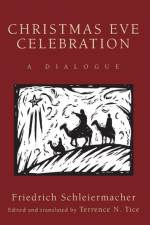
Description:This book is about the meanings of Christmas. It makes for a fine Christmas present--written in popular, poetic style--and is a literary classic. This little dialogue shared by women, men and children on Christmas Eve is the jewel in the crown of Schleiermacher''s theological writings. It features celebrations among close friends in a traditionally decorated home--stories told by four women, doctrinal interpretations offered by four men. All these events are shared in dialogue, accompanied by singing, activities, and expressions of two young children, and exchange of homemade gifts. Beautifully written and full of evocative images, it is in effect a drama, lending itself to being read aloud. For the first time the two original German editions (1806 and 1826) can be handily compared, though without interrupting smooth reading of the final edition from start to finish. It will serve as a brief piece for reflection by students from high school through graduate school.Endorsements:""In this updated translation, we see Schleiermacher''s relational sensibility in vivid color, the characters breathing with joy and life as they each contribute to what amounts to a discourse on Christian love. Tice''s expertise as a translator makes the reading smooth and accessible, and his introduction and critical notes provide helpful references and commentary for readers looking for further depth. This edition is surely to become the standard, placing us in debt to Tice once again.""--Thomas E. Reynolds Emmanuel College, University of Toronto""Schleiermacher''s Christmas Eve is perhaps the best text to use in introducing the great theologian''s thought to students at every level. In it, most of the major themes distinctive to him are presented in an accessible and engaging way. Terrence Tice''s able translation is quite readable, the introduction and notes extremely helpful. To have this gem in print and readably available is itself a cause for celebration.""--Ted VialIliff School of Theology""Schleiermacher''s Christmas Eve Celebration is a lovely contribution to the literature of Christmas and of Christian joy. Terrence N. Tice''s modern rendering of the text makes it available again to contemporary readers, with excellent critical commentary and an insightful introduction that sets the work in the context of Schleiermacher''s life and thought. Tice''s wonderful addition to Schleiermacher''s works in English promises to capture a wide readership for this theologically rich and deeply moving Christmas meditation.""--Christine HelmerNorthwestern UniversityAbout the Contributor(s):Friedrich Schleiermacher (1768-1834) is widely reputed to be the father of modern theology. This means that the results of his intensive historical-critical examinations of Christian Scripture and tradition either have positively influenced or have had to be contended with by a very wide range of thinkersSchleiermacher served as a pastor during his entire adult life. He was cofounder of the University of Berlin, established its famous theology department, and taught both theology and philosophy there.Terrence N. Tice, the translator, is a world-renowned interpreter of Schleiermacher''s life and works. He is Professor Emeritus of Philosophy at the University of Michigan and now teaches at Iliff School of Theology in Denver, Colorado. He has already translated numerous works by Schleiermacher. His newly revised editions of several other major works by Schleiermacher are to appear shortly, including a first-time presentation of all three editions (1799, 1806, 1921) of On Religion (Cascade Books).
In Risking the Terror, Christine M. Smith challenges readers to open up their lives to the radical power of resurrection. Relating perspectives' from those who are oppressed, the author explores disciplines that enable Christians, and preachers in particular, to resist crucifixions and proclaim resurrection life.
If it is reasonable to believe in God, the ways in which God is thought of and spoken of deserve careful attention. This book looks carefully at the philosophical implications for thinking and speaking about God, the problems that have arisen and still arise, and the various solutions that have been proposed.In Part One Brian Davies examines the question of the reality of God. Do we have reason to believe in God? Arguments are discussed based on the beginning of the universe, its continued existence, the order it exhibits, experience of God, and the basis of morality. Finally, the Ontological Argument, based on the concept of God, is examined.Part Two looks at questions raised by what is said about God. Is talk about God meaningless? If not, in what sense can we talk about God? What does it mean to say that God is eternal and changeless? What does it mean to say that God is omnipotent, omniscient, omnipresent and good? Does the existence of evil invalidate belief in God?Part Three considers more precisely Christian belief in God. Is there a rational basis for Christianity? How does this relate to faith? Can we make sense of the doctrines of the Incarnation and the Trinity? Is prayer reasonable?Throughout the book arguments from all sides are treated readably but rigorously. There is generous provision of searching questions for discussion and further reading.
Synopsis:How have those engaged in the mission of God been challenged to reinterpret Scripture through their experience? In what ways were the missionaries in the Bible challenged to reevaluate Scripture in their own time? Redford attempts to give shape to the nature of missional hermeneutics by examining Scripture, present-day cultural values, historical struggles, and the experience of those who are engaged in the mission of God. In order for missionaries to overcome the scientific polarization in Western hermeneutics, they must be able to perceive and learn from the overarching missional and spiritual hermeneutics found throughout Scripture so that they can balance missional, spiritual, historical-critical, and even unforeseen hermeneutical paths, providing increased confidence in biblical interpretation.Endorsements:"Since 1950, remarkable progress has been made in developing mission theology. Redford aids and abets this development by introducing missiological hermeneutics that will help Christians around the world engage the word of God with greater understanding and faithfulness."--Wilbert R. Shenk, Fuller Graduate School of Intercultural Studies"The Bible is a book about mission, but far too often biblical scholars have not studied it from that perspective. And missionaries have frequently based their actions on only a few favorite texts, ignoring important aspects of the biblical message. This groundbreaking work, which seeks to bridge the gap between biblical interpretation and missiology, will enrich and challenge all who are engaged in mission today."--Paul E Pierson, Fuller Theological SeminaryAuthor Biography:Shawn B. Redford (PhD, Fuller Theological Seminary, Pasadena, CA) is a specialist in biblical theology of mission and missiological hermeneutics. He has taught in these fields at Fuller. He currently teaches at Africa International University, Nairobi Evangelical Graduate School of Theology (AIU-NEGST), and also in remote areas while serving in Kenya with CMF International.
Canonized as the ""plain man's philosopher"" and the ""defender of common sense,"" G. E. Moore is one of the most influential philosophers of the twentieth century. But Moore's role as Bloombury's prophet has remained a mystery. How could the ""plain man's philosopher"" influence those legendary members of the Bloomsbury group--Lytton Strachey and John Maynard Keynes, for example--who could never be characterized as plain men?With this book, well-known contemporary philosopher Tom Regan solves the mystery. Relying on Moore's published and unpublished work, Regan traces the development of Moore's moral philsophy up to and through his seminal work, Principa Ethica (1903). Regan offers a radical reinterpretation of Principa. Contrary to the standard interpretation, that work's central theme is the liberation of the individual, not dreary conformity to the rules of conventional morality. The Bloomsberries lived Moore's philosophy--the same philosophy subsequent generations have misunderstood.At once literary and scholarly, Bloomsbury's Prophet challenges received opinions not only about Principa and Moore but about Bloomsbury itself.
""No one who cares about a theology that does justice to what the Bible tells us about the cosmic ministry of the Holy Spirit can afford to ignore this important work. Amos Yong's book itself displays the 'robust sense of discernment' that he asks all of us to exercise in our engagement with non-Christian religions.""--RICHARD J. MOUW, Fuller Theological Seminary""Finally, a Spirit-based theology of religions that takes the Spirit seriously! Drawing on his Pentecostal roots, Yong offers guidelines for discerning the voice of the Spirit in other traditions-a voice that may call us to unexpected christological conclusions. This is truly a pioneering work that opens new theological paths but modestly recognizes that there is still much to explore.""--PAUL F. KNITTER, Xavier University""Few areas in theology are as complex, controversial, and urgent as theology of religions. Amos Yong has advanced the discussion significantly with his creative and sophisticated proposal for a pneumatological theology of religions. While undoubtedly controversial, Yong's proposal frames the issues in fresh ways and suggests new options for an evangelical theology of religions.""--Harold Netland, Trinity Evangelical Divinity School""With scholarly rigor and intellectual acumen, Yong's theology takes seriously and appreciatively the diversity of the work of the universal Spirit in the cultures and religious communities of the world. His position is fully evangelical but is richly informed by his Pentecostal roots and context. He sets this Pentecostal-evangelical theology of religions in the center of the ongoing discussion, not only among evangelicals, but also in the whole church.""--John B. Cobb Jr., Claremont School of Theology and Claremont Graduate Schools""An insightful theological reflection on the place of world religions within the broader framework of Christian theology. Yong provides a theological basis for everyday interaction with members of other religions and an understanding of other religious traditions in the providence of God. This is an excellent book that ought to be widely read and discussed.""--Irving Hexham, University of CalgaryAmos Yong is Professor of Theology and Mission and Director of the Center for Missiological Research at Fuller Theological Seminary in Pasadena, CA.
""Kenneth Overberg has written a gem of a book that is greatly needed both in introductory courses in theology and in parish renewal programs. In attempting to explore the complex relationship between human experience and organized religion, Overberg begins with an appreciation of the transcendent depths of human experience, with the realization that there is 'more there than meets the eye,' and moves skillfully on to the ways in which modern people can reflect and articulate their experience of depth. He then draws upon both Jewish and Christian roots, expressed through the experience of Moses and Jesus, to demonstrate how our experience can be clarified, challenged, and enlarged through encounter with these traditions without the tired apologetics. In addition, as he develops the communal nature of such traditional religions he does not shy away from their attendant problems and constant need for reform. Overberg writes with disarming clarity. He has taken the jargon of the theological vernacular and has put it into words we can both understand and use. Indeed, this is essential if we are ever to renew the churches from the roots up. Highly recommended for parish renewal programs, introductory courses in theology, and for private explorations.--Good News 17.1 (January 1990)""Roots and Branches is clear, concise, challenging toward reflection, with enough theological references to make it stimulating to the parish audience without being overbearing. In particular, what caught my attention was the chapter on 'Corrupting Trends.'""--Jane Myers, Director of Faith Formation""Father Overberg presents contemporary theology incisively and yet with a simplicity that can be understood by the average reader. His approach begins where people live, in the experience of love, loss, sorrow and joy: in the highs and lows of everyday events. He demonstrates that it is in such human experience that one can meet the 'Beyond within,' the mysterious God for whom so many of us search. This book will prove useful in adult religious education, in the many growing renewal movements, and in the RCIA.""--Brennan Hill, author of Jesus the Christ and Exploring Catholic Theology: God, Jesus, Church, and SacramentKenneth R. Overberg, SJ, received his PhD in social ethics from the University of Southern California and is professor of theology at Xavier University in Cincinnati. Among his books and articles are seven national award-winners, including Conscience in Conflict (now in its third edition). His most recent books are Into the Abyss of Suffering and AIDS: Compassion and Justice in Global Crisis.
I would go into the deeps a hundred times to cheer a downcast spirit; it is good for me to have been afflicted that I might know how to speak a word in season to one that is weary.--Charles SpurgeonMillions read the words of the great nineteenth-century preacher Charles Spurgeon without knowing that his ministry succeeded during seasons of overwhelming emotional pain. Bright Days, Dark Nights offers a first look for many at the deep depression this great man of God encountered. Spurgeon confronted emotional problems with an acceptance based on physical, emotional, and spiritual causes and cures. Drawing from Spurgeon's enormous collection of sermons and conversations, author and therapist Elizabeth Skoglund provides insight into subjects such as confidence, depression, and anxiety. Readers will find strength and comfort for themselves and others from this unique blending of biblical principles and psychological wholeness.""In a day when many still feel that good Christians area not supposed to have emotional problems, Spurgeon is both relevant and current . . . Elizabeth accurately analyzes and represents Mr. Spurgeon's thought patterns on this important subject.""--from the foreword""Elizabeth Skoglund deftly relates the teachings of Charles Spurgeon to such human experiences as loneliness, anxiety, depression, and change. Her conclusions are wise and practical. This is a book to keep for rereading.""--John Timmerman, Professor of English, Calvin College""If such a humble and mighty servant of God as Spurgeon suffered these agonies, may others not profit from the study of his experiences, so wonderfully spread before us by Elizabeth Skoglund?""--Bob L. Ross, Director, Pilgrim Publications, Pasadena, TXElizabeth Ruth Skoglund is the author of more than twenty-five books. She has a private counseling practice in Burbank, CA.
There is no such thing as a naked spirituality. Our spirituality is always shaped by the clothes of our experience. The quest of Spirituality with Clothes On is to acknowledge that we do wear clothes; and, by examining them, we begin to understand ourselves and accept others who are wearing different outfits. We are what we wear: we cannot separate ourselves from our gender, personality, developmental stage, family, historical background, culture, or the difficult experiences of our lives. We need to acknowledge all these things, reflect on them--and sometimes even embrace them--in order to truly become ourselves.
Synopsis:Approaching us in sovereign freedom, God comes alive to us, we come alive to God, and all creation comes alive as a sign pointing to God. In the gospel of Jesus Christ, God gives and discloses himself in this immediate way as our ultimate context and host, within the provisional medium of creation. This life-giving gospel is met by blindness, however, among those who live today in a collapsing Western culture. This is because their imaginative world is shaped by habitual assumptions and practices that lie--largely unacknowledged--deep within that culture, and that preclude openness to the gospel. Moreover, Western Christians themselves widely share these assumptions, betraying the gospel into cultural captivity.God calls for the conversion of Western culture to the living gospel. Crucially this must include, as Lesslie Newbigin recognized, a repentance from modern Western assumptions about knowledge.Part One explores seeking, knowing, and serving God, as providing a true paradigm for understanding all human enquiry, knowledge, and action. Part Two examines ten resulting "hot spots" where conversion from prevailing cultural assumptions is vital for authentic mission to Western culture.Endorsements:"David Kettle has given us an extraordinarily penetrating book. The fruit of some three decades of intense reading and thinking, his agenda is nothing less than how the Church can be part of the conversion of Western culture today. Most pointedly, he shows that the Gospel radically changes not only how we might actively engage culture but our understanding of what that culture is in the first place. The style is lucid and accessible, but Kettle is never afraid to press the tough questions and cut deep into some of our most cherished assumptions. I can't imagine anyone not being made to think at the profoundest levels by this study. I commend it most warmly."--Jeremy BegbieThomas A. Langford Research Professor in TheologyDuke Divinity School "What a gift David Kettle has given us in this masterful account of Western culture in light of the Gospel! His probing analysis reveals how often our economic, political, and personal ideologies have deformed the Christian faith in ways that even believers may not have realized. The good news here is that Kettle moves beyond diagnosis to action, showing how the church might yet serve the culture as 'public host' thereby practicing God's own liberating hospitality of truth and grace."--Elizabeth NewmanProfessor of Theology and EthicsBaptist Theological Seminary at Richmond "This is a pioneering piece of work in missiologucal reflection, unique of its kind. Kettle aims not so much at bringing the Gospel to Western culture as bringing Western culture back to the Gospel. Mustering massive learning with penetrating insights, he takes us to different realms of Western cultural life to show how the West has deviated from the Gospel. The critique strikes home as the church is domesticated by idols and ideologies of the age. In the missiological quest for the redemption of culture, Kettle has set a great exmple."--Carver T. YuPresidentChina Graduate School of TheologyAuthor Biography:David Kettle (1948-2011) was Co-ordinator of The Gospel and Our Culture Network in Great Britain. He is the author of Beyond Tragic Spirituality: Victimhood and Christian Hope (2005).
Abonner på vårt nyhetsbrev og få rabatter og inspirasjon til din neste leseopplevelse.
Ved å abonnere godtar du vår personvernerklæring.