












Gjør som tusenvis av andre bokelskere
Abonner på vårt nyhetsbrev og få rabatter og inspirasjon til din neste leseopplevelse.
Ved å abonnere godtar du vår personvernerklæring.Du kan når som helst melde deg av våre nyhetsbrev.

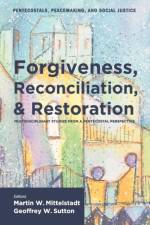
Although history is replete with tales of revenge, Christian forgiveness provides an alternate response. In this volume, Pentecostal scholars from various disciplines offer their vision for forgiveness, reconciliation, and restoration. The essayists offer long-overdue Pentecostal perspectives through analysis of contemporary theological issues, personal testimony, and prophetic possibilities for restoration of individual relationships and communities. Though Pentecostals remain committed to Spirit-empowered witness as recorded in Luke-Acts, these scholars embrace a larger Lukan vision of Spirit-initiated inclusivity marked by reconciliation. The consistent refrain calls for forgiveness as an expression of God's love that does not demand justice but rather seeks to promote peace by bringing healing and reconciliation in relationships between people united by one Spirit.
This book is a beautiful and dramatic collection of Celtic praise, compiled by Church of Scotland minister and Gaelic scholar Alistair Maclean, which was first published in 1937. It comprises over one hundred prayers, poems, sayings, and praises from the Christian tradition of the author's native Hebrides.
What does the Bible say about forgiveness? It is a major subject in Scripture, but it has been strangely overlooked by biblical scholars. Forgiveness is the amazing way that alienation can be healed and guilt assuaged, and there is an extensive literature on the subject, written largely by psychologists, pastoral counselors, and philosophers, but until now anyone searching those many books for a thorough treatment of the Bible's message would have been frustrated. Now in a clear and concise form, Donald E. Gowan has offered a survey of all that the Bible says about this crucial subject-from Genesis to Revelation.
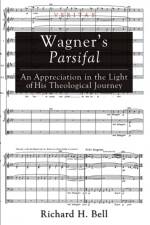
Parsifal, Wagner's final opera, is considered by many to be one of the greatest religious musical works ever composed; but it is also one of the most difficult to understand and many have questioned whether it can be considered a "Christian" work at all. Added to this is the furious debate that has surrounded the composer as an anti-Semite, racist, and inspiration for Hitler. Richard Bell addresses such issues and argues that despite any personal failings Wagner makes a fundamental theological contribution through his many writings and ultimately in Parsifal which, he argues, preaches Christ crucified in a way that can never be captured by words alone. He argues that Wagner offers a vision of the divine and a "theology of Good Friday" that can both function as profound therapy and address current theological controversies.
In this book, Ray S. Anderson, a pastor theologian, and Dennis B. Guernsey, a family sociologist, explore the connections that produce the marvelous, complicated and often contorted human family. The central thesis of the book is that God has placed human persons in a created order for which the covenant love of God provides the fundamental paradigm for parenting, sexuality, and marriage, and the formation of family life. From the perspective of the church as the new family of God, the human family is liberated from its own failures and fears, and each person is affirmed as having a place in God's kingdom. Through Jesus Christ, to whom we are connected by grace, we are all brothers and sisters. We are family.
To many readers the book of Ezekiel is a hopeless riddle. We still find many features of the man and his message difficult and sometimes even shocking, if not offensive. The bizarre opening vision catches us off guard and tempts us to stop reading. However, if we persist, and if we meditate long and hard on individual utterances and sign actions, we will discover that despite the strangeness of the man and his utterances, this is the most clearly organized of the major prophetic books. Individual prophecies are clearly marked by headings and often by conclusions. If we persist, we will also discover that from a rhetorical perspective, this priestly prophet knew his audience; he recognized in Judah's rebellion against YHWH the underlying cause of the divine fury that resulted in the exile of his people and the fall of Jerusalem to the Babylonians in 586 BCE. But he also recognized that YHWH's judgment could not be the last word. Because his covenant was eternal and irrevocable he looked forward to a day of spiritual renewal and national restoration.This is the first of two volumes of essays on Ezekiel and his book. The seven general essays and two studies of particular texts in this collection explore the times, the message, and the methods of the prophetic priest.
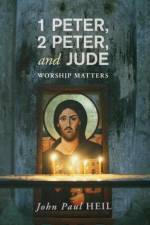
About the Contributor(s):John Paul Heil is Professor of New Testament at the Catholic University of America in Washington, DC. He is the author of The Letter of James: Worship To Live By (2012).
Clarence B. Jones, close King advisor and draft speechwriter, has done much to reinforce a conservative hijacking of King's image with the publication of his controversial books What Would Martin Say? (2008) and Behind the Dream (2011). King emerges from Jones's books not as a prophetic radical who attacked systemic racial injustice, economic exploitation, and wars of aggression, but as a fiercely conservative figure who would oppose affirmative action and illegal immigration. The Domestication of Martin Luther King Jr. offers a critique of Jones's work and the larger effort on the part of right-wing conservatives to make King a useful symbol, or the sacred aura, in a protracted campaign to promote their own agenda for America. This work establishes the need to rethink King's legacy of ideas and activism and its importance for our society and culture.
Questions related to the issue of gender remain insufficiently acknowledged and explored in contemporary theological literature. These issues form the basis of significant unresolved tensions among evangelicals, as evidenced in debates over the nature of the Trinity, Bible translation, church practice, choice of language, mission leadership, decision-making in homes, and parenting, to name but a few examples. The essays in this volume are not meant to provide a monolithic evangelical theology of gender, but rather to provide evangelical perspectives surrounding the topic of gender. To further this aim, each of the main essays is followed by a formal response with an attempt at a concise and lucid perspective on the essay and pointers to further areas for investigation. Some contributors are complementarian while others are egalitarian, although who is what is left to the discerning reader. Regardless of one's position on the issue, all will benefit from the contributors' commitment to the further exploration of gender issues from the perspective of a broadly conceive evangelicalism.
At a time when women were expected to stick to their household duties, according to Peter Matheson, Argula von Grumbach burst through every barrier. Matheson offers here a biography of the Reformation's first woman writer. Argula von Grumbach's first pamphlet in 1523 was reprinted all over Germany. Thousands of copies of her eight pamphlets appeared. Through her writing, von Grumbach defied her Bavarian princes (and her husband), denounced censorship, argued for an educated church and society, and developed her own understanding of faith and Scripture. She even intervened in the Imperial Diets at Nuremberg and Augsburg.Drawing for the first time on her correspondence, the author shows how von Grumbach paid dearly for her outspokenness but remained undaunted. Though some saw her as a she-devil and others as a harbinger of a new age, Matheson shows von Grumbach as a woman engaged in the life of the villages where she lived, as one motivated by the dreams she had for her children.In a time of sweeping change and risking everything for the light and truth she was given, Argula von Grumbach showed what the vision and determination of one person could achieve.
Few questions exert such a great fascination on human conscience as those related to the meaning of life, history, and death. The belief in the resurrection of the dead constitutes an answer to a real challenge: What is the meaning of life and history in the midst of a world in which evil, injustice, and ultimately death exist? Resurrection is an instrument serving a broader, more encompassing reality: the Kingdom of God. Such a utopian Kingdom gathers the final response to the problem of theodicy and to the enigma of history. This book seeks to understand the idea of resurrection not only as a theological but also as a philosophical category (as expression of the collective aspirations of humanity), combining historical, theological, and philosophical analyses in dialogue with some of the principal streams of contemporary Western thought.""Carlos Blanco's synthetic gifts as a teacher-scholar are in full display in this monograph: an elegant distillation of a lecture course that straddles Biblical scholarship and philosophy of religion to expound on the foundational tenet of early Christian theology with ease, intelligence, and aplomb."" --Luis Giron-Negron, Harvard University""Carlos Blanco asks difficult questions about life, death, and evil, questions he pursues with great facility and care across centuries and disciplinary boundaries. It is a great pleasure, reading this book, to think alongside him and ask indeed, Why Resurrection?""--Charles M. Stang, Assistant Professor of Early Christian Thought Harvard Divinity School Carlos Blanco is a visiting fellow at the Committee on the Study of Religion at Harvard University. He is the author of Mentes maravillosas que cambiaron la historia (2007).
To experience the gospel message as first-century people heard it is to move into an oral world, one with very little reliance on manuscripts. The essays in this book explore this oral world and the Gospel of Mark within it. They demonstrate the oral style of Mark's gospel, which suggests that it was composed orally, transmitted orally in its entirety by literate and nonliterate storytellers, and survived to become part of the canon only because it was widely known orally. Women's storytelling also thrived during the first centuries of Christianity. With the transition to manuscript authority beginning in the middle of the second century, women's voices were often minimized, trivialized, or completely omitted in written versions. Further, when the Gospel of Mark was one of four written Gospels these voices were quickly ignored. An ancient audience hearing Mark performed, however, enjoyed a vibrant experience of the gospel message and its urgent call to follow.
Embracing Solitude focuses on the interior turn of monasticism and scans the Christian tradition for women who have made this turn in various epochs and circumstances. New Monasticism is a movement assuming diverse forms in response to the turn to classical spiritual sources for guidance about living spiritual commitment with integrity and authenticity today. Genuine spiritual seeking requires the cultivation of an inner disposition to return to the room of the heart. The lessons explored in this book from women spiritual entrepreneurs across the centuries will benefit contemporay New Monastics--both women and men. The accounts will inspire, challenge, and guide those who follow in the footsteps of the renowned spiritual innovators profiled here.
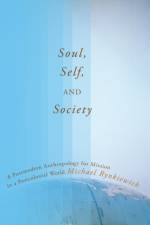
Globalization and urbanization are twin forces that are powerfully shaping economics, politics, and religion in the world today. Traditional anthropological theories are inadequate to recognize and analyze trends such as global migration, diasporas, and transnationalism. New departures in anthropology and the social sciences seeking to address these and other phenomena can help us critique and reshape the theology and practice of Christian mission.Today most societies are no longer monocultural. In such multicultural contexts any given individual may be competent in several cultures, several languages, several social networks. What does it mean to be in mission with people on the move--people who present themselves in one social identity, language, and culture within a particular setting, and then in another setting, even on the very same day, present themselves in another social identity, language, and culture? In the face of widespread, rapid movement of peoples and their increasingly fluid and multifaceted identities, will the missionary settle down somewhere or be itinerant along with the people? How are perplexing new questions in particular contexts to be addressed, such as: In what ways is the Nigerian who is founding an AIC congregation near Houston a missionary too? How will Brazilians and Koreans be trained for cross-cultural ministry?The world is changing faster than missionaries can be retrained for service. And yet ethnographic tools are still crucial to missionary practice. This important work seeks to draw on recent developments in anthropology to bring valuable perspective and tools to bear on equipping missionaries for work amidst the rapid shifting and complex shaping of peoples by the forces of today's globalized world.
For centuries, Baptists have regarded the Eucharist, or Lord's Supper, as "merely symbolic" rather than as sacramental. Historically speaking, Baptists have also participated in the practice of the Supper less frequently than other Christian groups, all the while lodging complaints about a lack of ecclesial unity. In response to these trends, this book argues for a sacramental understanding of the Eucharist and focuses on the way in which the Eucharist conveys grace by drawing the church together as the body of Christ. It focuses especially on the theology of James Wm. McClendon Jr., who was Baptist but nonetheless illustrated that through the Eucharist God "re-members" the church as the body of Christ. Together with Lutheran theologian Robert Jenson and Catholic theologian Cardinal Henri de Lubac, McClendon's work has had an enormous impact on contemporary free church discussions about the Supper and ecclesial unity. In a final chapter, therefore, the study examines a number of contemporary Baptists dubbed the "new Baptist sacramentalists." These men and women are influenced by McClendon, Jenson, and de Lubac, and they offer a fresh approach to the ongoing puzzle of the church's disunity through the Eucharist.
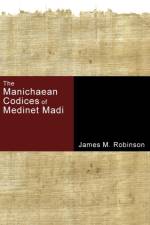
The seven Manichaean papyrus codices of the fourth or fifth century were discovered in illicit excavation in 1929 in the Egyptian desert. They were acquired in about equal halves by A. Chester Beatty for his library and by Carl Schmidt for the papyrus collection of the Staatliche Museen of Berlin. Having had access to the inventories, correspondence, and files in Berlin, Robinson provides translations of the German and French documents to increase access to information previously unavailable to the scholarly community. He narrates the slow and problem-ridden path of the acquisition, conservation, and editing of these important works, including their movements between dealers, collectors, scholars, and the military in Egypt, London, Dublin, Berlin, Schondorf, Gottingen, Warsaw, Leningrad, Los Angeles, Claremont, and Copenhagen.
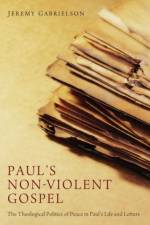
Rather than viewing the Apostle Paul's many references to peace and non-retaliation as generalized ethical principles drawn from Paul's background, Jeremy Gabrielson argues that peace and non-retaliation should be understood in relation to Paul's biography of being a violent persecutor of Jesus' followers. After his "Damascus road" experience, Paul zealously announced the gospel, but abandoned his violent ways. His apostolic vocation included calling and equipping assemblies of people whose common life was ordered by a politics characterized by peaceableness. This political dimension of Paul's gospel, in continuity with the earliest evidence we possess regarding Jesus and his disciples, stands in stark contrast to the politics of both the contemporary Roman imperial power as well as those who would seek to replace Rome by violent means.
R. S. Thomas (1913-2000) was a major poet of the twentieth century. He was respected by luminaries of the literary establishment, recognized with numerous awards, and nominated for the Nobel Prize in 1996. Thomas was also a priest of the Anglican Communion who wrestled ceaselessly with problems of faith and doubt in his poetry. John G. McEllhenney makes R. S. Thomas' poems, ministry, and irascible character come brilliantly alive in his new book, A Masterwork of Doubting-Belief: R. S. Thomas and His Poetry. McEllhenney, who developed a personal relationship with Thomas during the last decade of the poet's life, draws on his conversations and correspondence with Thomas, as well as his experiences as a clergyman and lover of poetry, and offers readers a unique experience that is part biography, part appreciation, and part religious meditation.A Masterwork of Doubting-Belief is an important new contribution to our understanding of R. S. Thomas and an inspiring source of insights for all who struggle with their faith!
The response of Pentecostal and Charismatic churches to those suffering in their midst has generally been to seek the intervention of the Holy Spirit to bring about healing and transformation, or perhaps, education. But what happens when the suffering continues, it appears to be innocent and meaningless, and God seems to be absent? This study, drawing on Kevin Vanhoozer's "dramatic" approach to theology, argues that the way God calls us to "perform" as we seek to communicate with him amidst such situations is to lament, and to do so with the aid of the Holy Spirit. Rather than offering such an approach purely in opposition to the more "triumphalistic" responses common in Pentecostal/Charismatic theology and practice, this book seeks to show how a performance of lament is conducive to such theology and practice while acting as a much-needed corrective to certain aspects of it. What is provided here is therefore relevant reading for both scholars and pastors alike, particularly of Pentecostal/Charismatic church tradition, who grapple with the realities of suffering and the questions such realities produce.
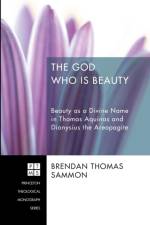
When in the sixth century Dionysius the Areopagite declared beauty to be a name for God, he gave birth to something that had long been gestating in the womb of philosophical and theological thought. In doing so, Dionysius makes one of his most pivotal contributions to Christian theological discourse. It is a contribution that is enthusiastically received by the schoolmen of the Middle Ages, and it comes to permeate the thought of scholasticism in a multitude of ways. But perhaps nowhere is the Dionysian influence more pronounced than in the thought of Thomas Aquinas.This book examines both the historical development of beauty's appropriation as a name for God in Dionysius and Thomas, and the various contours of what it means. The argument that emerges from this study is that given the impact that the divine name theological tradition has within the development of Christian theological discourse, beauty as a divine name indicates the way in which beauty is most fundamentally conceived in the Christian theological tradition as a theological theme. As a phenomenon of inquiry, beauty proves itself to be enigmatic and elusive to even the sharpest intellects in the Greek philosophical tradition. When it is absorbed within the Christian theological synthesis, however, its enigmatic content proves to be a powerful resource for theological reasoning.
Many philosophers since Hegel have been disturbed by the thought that philosophy inevitably favors sameness over otherness or identity over difference. Originally published at a time when the issue was not so widely discussed in the English-speaking world, William Desmond here offers a constructive and positive approach to the problem of difference and otherness. He systematically explores the question of dialectic and otherness by analyzing how human desire inevitably seeks immanent wholeness in a manner that opens it to irreducible otherness. He faces the difficulties bequeathed to Continental thought by Hegelian dialectic and its tendency to subordinate difference to identity, whether appropriately or not. Unlike many recent critics of Hegel, he argues that we must preserve what is genuine in dialectic. Granting the positive power of dialectic, Desmond offers his first articulation of a further philosophical possibility--what he terms the Metaxological--a discourse of the ""between,"" a discourse doing justice to desire's search for wholeness without any truncating of its radical openness to otherness. In a wide-ranging yet unified discussion, Desmond tackles such issues as the nature of the self, the ambiguous restlessness and inherent power of being revealed by human desire, desire's relation to transcendence, its openness to otherness in agapeic good will and in relation to the sublime as an aesthetic infinitude. Finally, Desmond brings this metaxological understanding to bear on the metaphysical question of the ultimate origin. This book is a remarkable introduction to Desmond's metaxological philosophy, prefiguring many of the ideas with which his later thought is associated. This second edition contains a substantial new preface and an afterword to each chapter in which Desmond reflects on the material from the standpoint of his current thinking.
""The totalitarian state clearly intends to eliminate all those forms of organic community that rival the absolute loyalty of the individual to the state. This god is a jealous god. . . . Mrowczy¿ski-Van Allen's diagnosis is therefore no less relevant after the fall of the Berlin Wall. And his proposed cure is no less salutary. He appeals to the work of Grossman and other voices from the East to oppose the idolatry of the deified self with the icon, which opens up a distance in which giving and forgiving can occur. Eastern voices are so helpful because they refuse to quarantine theological questions; the borders between theology, politics, and literature are fluid and porous, because they are all a part of an integrated life. The holism of totalitarianism must be opposed by another kind of holism that replaces the idol with the icon. At the same time, the aspiration of secularism to separate politics from theology, and power from love, must be opposed by a politics based on an opening of human persons to God and to each other, the kind of self-donation found in Grossman, and for Christians, on the Cross.""--From the Foreword by William T. Cavanaugh
This is a superb collection of articles on the central issue of Pentecostalism--speaking in tongues as the initial evidence for the baptism in the Holy Spirit. The articles, written by both Pentecostals and non-Pentecostals, are historically informative, scholarly, irenic in spirit, ecumenical in treatment, and wide-ranging in interest. Here is an opportunity for both Pentecostals and non-Pentecostals to become better informed about Pentecostalism. While offering a solid defense of traditional Pentecostalism, the book also offers candid assessments that take a different view. This book should become a must for those who want to understand both historic and present-day Pentecostalism. --Gordon D. Fee, Professor Emeritus of New Testament, Regent College The most complete and scholarly analytical treatment of glossolalia as 'initial evidence' of the baptism in the Holy Spirit that has yet appeared. Both the historical and theological sections support and challenge the distinctive Pentecostal teaching on the subject of tongues. --Vinson Synan, Former Chairman, North American Renewal Service Committee . . . a remarkably diverse collection of essays that thoughtfully probe the distinctive which has come to characterize the Pentecostal Movement, namely: speaking in an unknown tongue. . . . Irenic in tone, the volume is a must for scholars, pastors, and lay persons of all theological perspectives who desire to enter into dialogue in this area of debate. --D. William Faupel, Professor of the History of Christianity, Wesley Theological Seminary Initial Evidence, edited by Gary McGee, is a substantive contribution to the study of American Pentecostalism. The historical overviews in it are of tremendous value, particularly for newcomers to Pentecostalism, who may lack a historical grounding in the movement. Exegetical essays, such as that by Donald Johns, will challenge readers who are comfortable with current hermeneutical models to rethink the biblical text, and it offers great promise for more contributions to Pentecostal exegesis. --Howard M. Ervin, Professor Emeritus of Old Testament, Graduate School of Theology, Oral Roberts University
Synopsis:The Concept of Canonical Intertextuality and the Book of Daniel is an attempt to bring clarity to the concepts of intertextuality and canon criticism in the field of biblical studies. This volume combines an examination of the theories of intertextuality (Julia Kristeva), canon criticism (Brevard Childs and James Sanders), inner-biblical exegesis (Michael Fishbane), intratextuality (George Lindbeck), and kanonische intertextuelle Lektüre (Georg Steins) with an inductive study of the Masoretic Text of Daniel, of its concrete relationship with other texts in the Hebrew Bible, and finally of quotations in the Greek text of the New Testament. The Masoretic Text of Daniel serves as an excellent testing ground through its multilingual character (Hebrew and Aramaic), through its differing placement in various biblical canons, and through its clear quotation in a limited number of New Testament texts. The end result of this study is a theory of canonical intertextuality unique in its definition in relation to the theories investigated, as well as in its application to an entire biblical book and to other texts in the Old and New Testaments.Endorsements:"In this publication Scheetz develops the concept of 'canonical intertextuality.' He uses the book of Daniel as a test case to show how intertextuality was used to combine thematically related texts progressively by linking a next chapter to the previous to eventually form the present canonical book. This publication is recommended as an innovative study on canon formation."--Pieter M. VenterUniversity of Pretoria, South Africa"What Jordan Scheetz offers in this book is not only a fresh and insightful contribution to studies on Daniel, but also another step forward in the emerging field of intertextuality in the biblical canon. Clear in its presentation, compelling in its argument, careful in its exegesis, it is a model for current scholarly writing."--Ray Lubeck, Multnomah UniversityAuthor Biography:Jordan M. Scheetz is Assistant Professor of Old Testament Languages and Literature at Tyndale Theological Seminary in the Netherlands.
""Religion and ecology"" has arrived. What was once a niche interest for a few academics concerned with environmental issues and a few environmentalists interested in religion has become an established academic field with classic texts, graduate programs, regular meetings at academic conferences, and growing interest from other academics and the mass media. Theologians, ethicists, sociologists, and other scholars are engaged in a broad dialogue about the ways religious studies can help understand and address environmental problems, including the sorts of methodological, terminological, and substantive debates that characterize any academic discourse.This book recognizes the field that has taken shape, reflects on the ways it is changing, and anticipates its development in the future. The essays offer analyses and reflections from emerging scholars of religion and ecology, each addressing her or his own specialty in light of two questions: (1) What have we inherited from the work that has come before us? and (2) What inquiries, concerns, and conversation partners should be central to the next generation of scholarship?The aim of this volume is not to lay out a single and clear path forward for the field. Rather, the authors critically reflect on the field from within, outline some of the major issues we face in the academy, and offer perspectives that will nurture continued dialogue.
The Vitality of Liberation Theology argues for the ongoing necessity of a liberating theology in a world of endemic poverty and economic globalization. Although some have declared liberation theology's demise, or even its death, Nessan articulates the imperative and logic of it for a new generation. Latin American liberation theology burst forth as the most original and compelling theological movement from the developing world in the modern period. The story of the emergence and proliferation of liberation theology, as well as the opposition to this movement both within and without Latin America, is one of the most significant and lasting developments in Christianity since the last third of the twentieth century. Together with other forms of liberating theology from contexts of oppression in diverse parts of the world (anti-apartheid theology in South Africa and Namibia, Minjung theology in Korea, Dalit theology in India, or Palestinian liberation theology), Latin American liberation theology takes a prophetic stand against the hegemony of the status quo and joins league with other subaltern peoples in the cause of freedom from all forms of subjugation and oppression. The dawn of Latin American liberation theology inaugurated a new era in the global theological landscape.
Scholars from the United States, Latin America, and Oceania reflect in this volume on the importance of contextual theology for our twenty-first century. Contextual theology offers fresh voices from every culture, and not just from the West. It calls for new ways of doing theology that embrace cultural values, but at the same time challenges them to the core. And it opens up new and fresh topics out of which and about which people can theologize. If the church is to be faithful to its mission, it needs to provide a feast at which all can be nourished.
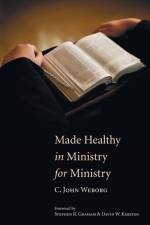
Clarity of vocational practice is key to clergy health. The center of clergy practice is the ministry of Word and Sacrament. What takes place at the pulpit, font or pool, and table is the divine intent and extent of ministry. While this may sound in-house and parochial in the extreme, it is both priestly and prophetic.John Weborg's argument in this book is that the clergy can be made healthy in ministry for ministry by maintaining vocational clarity. The priestly and prophetic acts of Word and Sacrament address the clergy before they address the congregation. Hence what is offered here is a spirituality through practices-the clergy are hearers before preachers, baptized before baptizers, communicants before celebrants.Neither a how-to book nor a work of pastoral theology, Made Healthy in Ministry for Ministry is aimed toward helping clergy appropriate the gifts and graces of the practices they are called and authorized to carry out.
Abonner på vårt nyhetsbrev og få rabatter og inspirasjon til din neste leseopplevelse.
Ved å abonnere godtar du vår personvernerklæring.