












Gjør som tusenvis av andre bokelskere
Abonner på vårt nyhetsbrev og få rabatter og inspirasjon til din neste leseopplevelse.
Ved å abonnere godtar du vår personvernerklæring.Du kan når som helst melde deg av våre nyhetsbrev.

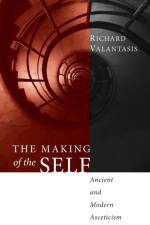
Description:A leading scholar of ascetical studies, Richard Valantasis explores a variety of ascetical traditions ranging from the Greco-Roman philosophy of Musonius Rufus, the asceticism found in the Nag Hammadi Library and in certain Gnostic texts, the Gospel of Thomas, and other early Christian texts. This collection gathers historical and theoretical essays that develop a theory of asceticism that informs the analysis of historical texts and opens the way for postmodern ascetical studies. Wide-ranging in historical scope and in developing theory, these essays address asceticism for scholar and student alike. The theory will be of particular interest to those interested in cultural theory and analysis, while the historical essays provide the researcher with easy access to a significant corpus of academic writing on asceticism.Endorsements:""In the context of belligerently hedonistic North American society, a society reduced to waging war to support our lifestyle, Richard Valantasis''s The Making of the Self has never been more relevant. Valantasis proposes that past and present can best be compared, not through ideas, but through analysis of practices and what they produce. This book asks, What did historical people seek to achieve through the ascetic disciplines they practiced? What do we seek? Could some of the ascetic repertoire of historical people be of practical use toward our goals? Valantasis describes a theory and practice of asceticism for secular twenty-first-century society. Both informative and inspirational, The Making of the Self should be required reading for everyone who seeks to make intentional choices that shape the self.""--Margaret R. Miles, Professor Emerita of Historical Theology, Graduate Theological Union, Berkeley, and author of A Complex Delight: The Secularization of the Breast, 1350-1750""A tour-de-force through the theory and practice of asceticism in late antiquity. Valatansis''s insightful focus on the transformative power of ascetic performance permits one to see asceticism through the ascetic''s eyes. His work compels us to reflect anew on the nature and role of asceticism in antiquity, and, in the process, to consider its meaning and relevance today.""--James E. Goehring, Professor of Religion, University of Mary Washington and author of Ascetics, Society, and The Desert""The Making of the Self: Ancient and Modern Asceticism opens up traditional Christian and Roman sources to a new kind of close reading, showing us what difference it makes to recast asceticism in a theoretically rich and provocative way. In undertaking this task, Richard Valantasis invites his readers to rethink the historical texture of ancient Mediterranean asceticism as well as the ongoing legacies of asceticism''s hardwiring of human society in any time and place where people resist the current order of things and dream of a new and better reality.""--Elizabeth A. Castelli, Professor of Religion, Barnard College at Columbia University and author of Martyrdom and Memory: Early Christian Culture Making""This wide-ranging collection of essays is a remarkably coherent and compelling presentation of Valantasis''s mature theorizing about a complex and fascinating phenomenon. Through his writings and through our conversations and collaborations over the years, Valantasis had already taught me much about asceticism. But this book I read as the capstone of his musings, playfulness, and hard work. It is Valantasis at his best--articulate, creative, witty, feisty, provocative, brilliant. All students of religion and culture will be enlightened and delighted and challenged by this book.""--Vincent L. Wimbush, Professor of Religion, Claremont Graduate University and editor of Ascetic Behavior in Greco-Roman Antiquity: A SourcebookAbout the Contributor(s):Richard Valantasis is Professor of Ascetical Theology and Director of the Anglican Studies Program at the Candler School of Theology, Emory University, Atlanta, Geor
Journal for the Evangelical Study of the Old Testament (JESOT) is a peer-reviewed journal devoted to the academic and evangelical study of the Old Testament. The journal seeks to fill a need in academia by providing a venue for high-level scholarship on the Old Testament from an evangelical standpoint. The journal is not affiliated with any particular academic institution, and with an international editorial board, open access format, and multi-language submissions, JESOT cultivates and promotes Old Testament scholarship in the evangelical global community. The journal differs from many evangelical journals in that it seeks to publish current academic research in the areas of ancient Near Eastern backgrounds, Dead Sea Scrolls, Rabbinics, Linguistics, Septuagint, Research Methodology, Literary Analysis, Exegesis, Text Criticism, and Theology as they pertain only to the Old Testament. JESOT also includes up-to-date book reviews on various academic studies of the Old Testament.
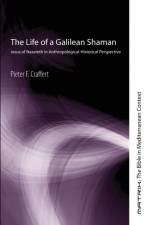
Description:Historical Jesus research remains trapped in the positivistic historiographical framework from which it emerged more than a hundred and fifty years ago. This is confirmed by the nested assumptions shared by the majority of researchers. These include the idea that a historical figure could not have been like the Gospel portrayals and consequently the Gospels have developed in a linear and layered fashion from the authentic kernels to the elaborated literary constructions as they are known today. The aim of historical Jesus research, therefore, is to identify the authentic material from which the historical figure as a social type underneath the overlay is constructed. Anthropological historiography offers an alternative framework for dealing with Jesus of Nazareth as a social personage fully embedded in a first-century Mediterranean worldview and the Gospels as cultural artifacts related to this figure. The shamanic complex can account for the cultural processes and dynamics related to his social personage. This cross-cultural model represents a religious pattern that refers to a family of features for describing those religious entrepreneurs who, based on regular Altered State of Consciousness experiences, perform a specific set of social functions in their communities. This model accounts for the wide spectrum of the data ascribed to Jesus of Nazareth while it offers a coherent framework for constructing the historical Jesus as a social personage embedded in his worldview. As a Galilean shamanic figure Jesus typically performed healings and exorcisms, he controlled the spirits while he also acted as prophet, teacher and mediator of divine knowledge.Endorsements:"In this book, Craffert uses the metaphor of traveling to describe the task he has undertaken. Given the existence of the two prevailing pathways leading into contemporary ''historical Jesus'' study, Craffert leaves the century-and-a-half old Schweitzer Street (Schweitzerstrasse) and Wrede Road (Wredebahn) to do some ''bundubashing'' (South African: to travel off road through remote and rough terrain) to get to the social personage of Jesus the Galilean. His critique of prevailing historical Jesus study is insightful and incisive, while his description of Jesus as first-century Galilean shaman is masterful and accomplished. His rationale for and realization of a work of anthropological history is quite on the mark, enabling a reader to have an encounter with a first-century, Galilean shamanic Jesus that shouldproduce an appropriate culture shock in those unused to the radically different cultural and social landscape of Mediterranean antiquity."--Bruce J. Malina, author of The New Testament World"Just when it seems that all has been said about the historical Jesus, Pieter Craffert offers a genuine paradigm shift in method and insights growing out of an ''anthropological-historical'' perspective. His interpretation of the public figure of Jesus using the social-type of a shaman opens up a new world view and encourages the inclusion of texts, events, and activities usually dismissed from discussions of the historical Jesus. His originality is matched by his meticulous research and the clarity he brings to a complex problem. This is a must-read for anyone interested in the historical Jesus, but especially for those who enjoy a genuinely new approach to an old problem."--William R. Herzog II, author of Jesus, Justice, and the Reign of God"[This book] has the rare quality that it helps us to think ''otherwise'' about the Historical Jesus. We understand persons with the help of some category or model that suggests to us what they were like. The problem with categories used about Jesus is that they are either too distant historically to provide meaning to modern readers, or to modern to help us grasp the disturbing ''otherness'' about Jesus. Craffert''s use of ''shaman'' as a social model for Jesus makes sense of the otherness of Jesus in o
A gifted theologian sheds light on the meaning and value of intentional faith communities in the margins of parish life.
Robert S. Hartman died an untimely death in 1973. Since then, many of his friends, colleagues, and former students have worked diligently on his formal theory of value and have made important advances in developing both the theory itself and practical applications of it. Those familiar with his work are convinced that he made extraordinary advances in theoretical and applied axiology. Bob Hartman saw the Form of the Good. He laid the foundations for a science of values, still being developed. This book is written by members of the Robert S. Hartman Institute to acquaint others better with his achievements and to forge ahead where he left many problems unresolved. Robert Schirokauer escaped from Nazi Germany in 1933 on a false passport that read ""Robert Hartman."" He kept the name but later added the ""S."" He became a prominent and highly innovative philosopher who dedicated his life to resolving problems about human values, as expressed in his own words: ""I thought to myself, if evil can be organized so efficiently [by the Nazis] why cannot good? Is there any reason for efficiency to be monopolized by the forces for evil in the world? Why have good people in history never seemed to have had as much power as bad people? I decided I would try to find out why and devote my life to doing something about it.""Rem Edwards is President Emeritus of the Robert S. Hartman Institute and is Lindsay Young Professor of Philosophy Emeritus at the University of Tennessee, Knoxville. He received his PhD from Emory University.
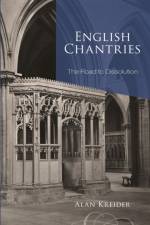
Description:The chantries of medieval England were founded in the belief that intercessory masses shortened the period spent by souls in purgatory. They played a greater role in the daily life of sixteenth-century Englishmen than did monasteries, yet up to now the dissolution of the chantries has not been a popular subject of study. Alan Kreider rectifies this, establishing the importance of the chantries in the story of late medieval and Reformation England. He discusses their social and religious significance. He explains the role of purgatory in the founding of chantries and in the theological debates, popular preaching and political struggles unleashed by the Reformation that led to their confiscation. He explores the forces that led the governments of Henry VIII and Edward VI to jettison traditional practices, and he underlines the pain of state-fostered religious change.Endorsements:""Kreider''s book is among the most remarkable additions of recent years to our knowledge of the late medieval church and the Reformation in England."" A.G. Dickens, University of London. ""Kreider''s English Chantries is an excellent piece of work, bringing together a multitude of scattered fragments of evidence to present a coherent account of one of the central aspects of English religious life on the eve of the Reformation. Moreover, in his discussion of contemporary attitudes towards purgatory, Dr. Kreider has made a most valuable contribution to our understanding of the ambiguities and inconsistencies of human motivation that make the Reformation such a continually interesting phenomenon. D.M. Loades, University of Durham, in Heythrop Journal.""This is a book whose interest far surpasses what its subject might lead one to expect . . . A combination of the rigour expressed in tables and calculations with the attractions of a coolly elegant style brings the story of the chantries to an appropriately elegiac close."" G.R. Elton, Cambridge University, in the Times Literary Supplement.""The definitive study."" Diarmaid MacCullough, Oxford University.John Ben Snow Prize of the North American Conference on British Studies, honorable mention (1979)About the Contributor(s):Alan Kreider is Professor of Church History and Mission (retired), Anabaptist Mennonite Biblical Seminary, Elkhart, IN
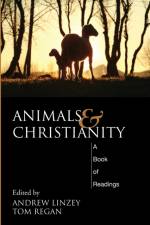
What does the Christian tradition say about the condition and rights of animals? This helpful and timely anthology of selections from the Bible and from the great Christian thinkers of all times is an essential primer for those who care about animals. The book is organized around four themes--Attitudes to Creation; the Problem of Pain; the Question of Animal Redemption; and Reverence, Responsibilities, and Rights--and concludes with a section on practical issues--Animal Experimentation, Fur-Trapping, Hunting for Sport, Intensive Farming, and Killing for Food.This book includes selections from the following:the Bible, St. Thomas Aquinas, St. Augustine, Karl Barth, St. Bonaventure, John Calvin, René Descartes, Austin Farrer, John Hick, St. Irenaeus, St. John of the Cross, C. S. Lewis, St. Thomas More, E. F. Schumacher, Albert Scheweitzer, Paul Tillich, Leo Tolstoy, Alec Vidler, John Wesley, and others
Description:In 1980, Varieties of Civil Religion was the latest statement in the field of civil religion pioneered by Robert Bellah. Over thirty years later, scholarly interest in the field continues to grow. By examining the force of religion in politics and society, this book offers a comparative treatment that deepens the understanding of American civil religion and provides a lens for exploring civil religion in other societies, particularly those of Italy, Mexico, and Japan.Bellah and Hammond trace the historical development of the peculiarly American brand of civil religion as they unravel its sometimes baffling intricacies. Themes include the conviction that America is a chosen country and American power in the world is identical with divine will. The book also examines the vigorous counterbalance that has opposed unjust wars or demanded racial and social justice. Altogether, the health of a civil religion may be a prime indication of the overall health of any society.The authors state that when civil religious symbols are co-opted by ultraconservatives, and the philosophy of liberalism seems less adequate as a guide for public or private lives, a revival of public philosophy is urgently needed. Varieties of Civil Religion supports such a revival by making the religious aspect of our central tradition understandable in a nonreactionary way. It also reaffirms that American civil religion, with its deeper tradition of openness, tolerance, and ethical commitment, can make an essential contribution to a ""global order of civility and justice.""
Description:Throughout the history of the church, monastic movements have emerged to explore new ways of life in the abandoned places of society. School(s) for Conversion is a communal attempt to discern the marks of a new monasticism in the inner-cities and forgotten landscapes of the Empire that is called America.Endorsements:This book invites us into a way of life that is simultaneously ancient and wonderfully new. By combining first-person accounts of the marks of Christ-formed communities with rich historical and biblical reflection, the various writers provide truthful and hope-filled descriptions of contemporary Christian community. Taking seriously the resources of the monastic tradition and the importance of preserving a relationship withthe wider church, the authors offer mature, wise, and gracious insight into the practices of faithful living. I heartily recommend this book to anyone yearning for evidence and promise of renewal in the church!Christine D. PohlProfessor of Social Ethics, Asbury Theological Seminaryauthor of Making Room: Recovering Hospitality as a Christian Tradition (Eerdmans, 1999)Whatever future God has for the church, I am convinced the essays in this remarkable book will help us discern that future. Monasticism has always been one of the main means God has used to renew the church. Through some strange miracle God now seems to be calling Protestants to consider what it might mean for them to live in communities that might look very much like monastic communities. Such a call might tempt many toward some kind of romanticism, but one of the remarkable things about these essays is their stark realism. Such a realism is unavoidable not only because of the challenges facing those who are about the formation of communities faithful to God but also because they have lived with one another enough to know this is not going to be easy. So these essays are full of good sense and they help us see the potential of this extraordinary movement. Moreover, each essayist never forgets to remind us that when it's all said and done, it's about God who makes it possible for us to live patiently and nonviolently in a world of impatience and violence.Stanley Hauerwas, Gilbert T. Rowe Professor of Theological Ethics, Duke Divinity School""I believe the new monasticism represents a source of vital renewal from the margins and forgotten places of empire. It is my sincere hope that the new monasticism will grow so strong and healthy and widespread that every follower of Jesus in every church has the opportunity - if not to actually live in a new monastic community - to at least have enough proximity and relationship to be influenced by it. This book can help that dream and prayer come true.""Brian McLaren, pastor (crcc.org), author (anewkindofchristian.com)""In this vision of transformation, the prophets of a new monasticism have a single commitment. They want to realize together--in prayer, thought, and action--their total dependence on God by simply following Jesus. A book prompted by our civilization's signs of death may not seem hopeful, but this one is. The new monasticism has seen the truth that in deepening darkness there is nothing so hopeful as embracing the cross.""Jim Douglass, author of THE NONVIOLENT COMING OF GOD and co-founder of Mary's House Catholic Worker in Birmingham, Alabama.God is stirring something new...a new monasticism. This book will take you on an intriguing journey with a few followers of Jesus who are discovering some new ways to give expression to the monastic vocation in our troubled world. Must reading for those who want to take their faith seriously in community with others.Tom Sine, author of Mustard Seed vs. McWorld (www.msa.org)About the Contributor(s):The Rutba House is a Christian community of hospitality, peacemaking, and discipleship in the Walltown neighborhood of Durham, NC.
Virtues are values underlying human practices. We are at the dawn of a new era, an era of global ethics requiring some core virtues. These core virtues are hospitality, co-living, respect, tolerance, and communality. Book 1 treats the virtue of hospitality that is a right and a duty of all, and which is still to be discovered and practiced unconditionally. Book 2 deals with the virtues of co-living, respect, and tolerance, which are important virtues if the peoples of the earth are to live together in peace in our common home, the planet Earth. Finally, Book 3 deals with the virtue of communality; this is a very important virtue because a large part of humanity experiences hunger and thirst, which is something scandalous in this day and age, and which demonstrates a lack of humanity, because we possess the technical means and political framework to resolve this situation. If these core virtues become a reality, they will transform human practices into something beneficial both to human beings and to the planet Earth, our common home.
Despite astute critiques and available resources for alternative modes of thinking and practicing, individualism continues to be a dominating and constraining ideology in the field of pastoral psychotherapy and counseling. Philip Rieff was one of the first to highlight the negative implications of individualism in psychotherapeutic theories and practices. As heirs and often enthusiasts of the Freudian tradition of which Rieff and others are critical, pastoral theologians have felt the sting of his charge, and yet the empirical research that McClure presents shows that pastoral-counseling practitioners resist change. Their attempts to overcome an individualistic perspective have been limited and ineffective because individualism is embedded in the field's dominant theological and theoretical resources, practices, and organizational arrangements. Only a radical reappraisal of these will make possible pastoral counseling practices in a post-individualistic mode. McClure proposes several critical transformations: broadening and deepening the operative theologies used to guide the healing practice, expanding the role of the pastoral counselor, reimagining the operative anthropology, reclaiming sin and judgment, nuancing the particular against the individual, rethinking the ideal outcome of the practices, and reimagining the organizational structures that support the practices. Only this level of revisioning will enable this ministry of the church to move beyond its individualistic limitations and offer healing in more complex, effective, and socially adequate ways.
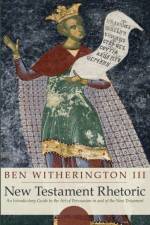
Witherington provides a much-needed introduction to the ancient art of persuasion and its use within the various New Testament documents. More than just an exploration of the use of the ancient rhetorical tools and devices, this guide introduces the reader to all that went into convincing an audience about some subject. Witherington makes the case that rhetorical criticism is a more fruitful approach to the NT epistles than the oft-employed approaches of literary and discourse criticism. Familiarity with the art of rhetoric also helps the reader explore non-epistolary genres. In addition to the general introduction to rhetorical criticism, the book guides readers through the many and varied uses of rhetoric in most NT documents-not only telling readers about rhetoric in the NT, but showing them the way it was employed.""This brief guide book is intended to provide the reader with an entrance into understanding the rhetorical analysis of various parts of the NT, the value such studies bring for understanding what is being proclaimed and defended in the NT, and how Christ is presented in ways that would be considered persuasive in antiquity."" - from the introduction
As a historical inquiry and synthesis, this intellectual history is the first study to apply the ideal-type or model-building methodology of Otto Hintze (1861-1940) to Western historical thought or to what R. G. Collingwood called ""The Idea of History,"" for it contains succinct and useful models for seeing and teaching classical, Christian, and modern professional historiography.Religion and the Rise of History is also the first work to suggest that, in addition to his well-known paradoxical, simul, and/or ""at-the-same-time"" way of thinking and viewing life, Martin Luther also held to a way that was deeply incarnational, dynamic, and/or ""in-with-and-under."" This dual vision and ""a Lutheran ethos"" strongly influenced Leibniz, Hamann, and Herder, and was therefore a matter of considerable significance for the rise of a distinctly modern form of historical consciousness (commonly called ""historicism"") in Protestant Germany.Smith's essay suggests a new time period for the formative age of modern German thought, culture, and education: ""The Cultural Revolution in Germany."" This age began in the early 1760s and culminated in 1810 with the founding of the University of Berlin, the first fully ""modern"" and ""modernizing"" university. This university first became the recognized center for the study of history, however, through the work of Leopold von Ranke (1795-1886). Here the story shows how a young Ranke derived his individualizing way of thinking and viewing life mainly from Luther, how his life-work is the best example in Western literature of the rise of history from a calling to a profession, and how the three-way discussion between Troeltsch, Meinecke, and Hintze concerning the nature of modern historical thought was of central importance for the reorientation of Western social-historical thought in the twentieth century.
In this creative and original book, Paul S. Chung interprets Karl Barth as a theologian of divine action. Chung appreciates Barth's dogmatic theology as both contextual and irregular, and he retrieves the neglected sides of Barth's thought with respect to political radicalism, Israel, natural theology, and religious pluralism.
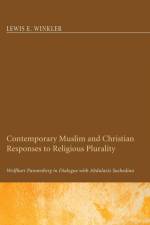
In our rapidly changing and progressively globalized world, Christians and Muslims are faced with the prospect of directly encountering and responding to people of other faiths and cultures. This has pushed us all to address the vital question of how best to live with, work beside, and love one other as fellow citizens of our planet. Using resources from Christian theologian Wolfhart Pannenberg, Muslim ethicist Abdulaziz Sachedina, and several others, Winkler argues that we must continually dialogue with one another--not only about the beliefs and practices held in common between us, but also about the ways in which we are distinctively different. Only then can we take the opportunity more comprehensively to understand, appreciate, and cooperate with each other to build just, moral, and cohesive communities of hope in our often uncertain and unsettling times.""This book represents the way forward in interreligious dialogue. Its significance can be captured in two quotations. Winkler sums up Pannenberg's estimation of its importance as follows: '. . . interreligious dialogue is not merely missional, it is theologically essential for a truer and more comprehensive understanding of God's character and plans.' Muslim scholar Omid Safi indicates how dialogue engages significant interests: 'I don't want to ""tolerate"" my fellow human beings but rather to engage them at the deepest level of what makes us human, through both our phenomenal commonality and our dazzling cultural differences.'""--Nancey MurphyProfessor of Christian PhilosophyFuller Theological Seminary""One of the greatest challenges of our day is how committed Muslims and Christians can live together harmoniously with increased contact through migration and burgeoning Muslim birth rates while conflicts are exacerbated by sensationalist media coverage of terrorism and wars. Though recognizing the problems, Lewis Winkler has discerned enough harmony in the views of a significant thinker from each community to suggest a potential bridge for cordial interaction for the rest of us over the troubled political and religious waters that engulf the globe we share.""--J. Dudley WoodberryDean Emeritus and Senior Professor of Islamic StudiesFuller Theological SeminaryLewis E. Winkler is a Lecturer in Theology, Church History, and Ethics at East Asia School of Theology in Singapore.
About the Contributor(s):Ulrich L. Lehner is Associate Professor of Historical Theology and Religious History at Marquette University. He is the author or editor of over a dozen books on early modern religion, including Enlightened Monks (2011), and the main organizer of The Oxford Handbook of Early Modern Theology (forthcoming).
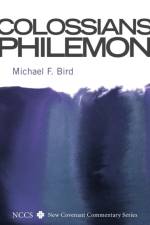
Description:Michael Bird''s commentary on Colossians and Philemon in the New Covenant Commentary Series pays close attention to the socio-historical context, the flow and dynamics of the text, their argumentative strategy, theological message, and the meaning of Colossians and Philemon for the contemporary church today. Bird situates Colossians in the context of Paul''s Ephesian ministry and describes how Paul attempts to persuade a congregation in the Lycus Valley to remain firm in the gospel and to grasp the cosmic majesty of Jesus Christ over and against the views of certain Jewish mystics who have thrown the Colossians into confusion. He shows how, in the letter to Philemon, Paul intercedes for a slave estranged from his master through a carefully crafted feat of pastoral persuasion from a missionary friend of Philemon. The commentary combines exegetical insight, rhetorical analysis, theological exposition, and practical application all in one short volume. Bird shows Paul at work as a theologian, pastor, and missionary in his letters to the Colossians and Philemon. Endorsements:""Every generation needs to grapple anew with the Bible, and every pastor needs a series that pushes the text into the community. This commentary series accomplishes these tasks. May God bless these commentaries to yield communities that live out God''s gracious covenant with us.""--Scot McKnightKarl A. Olsson Professor in Religious StudiesNorth Park University""Michael Bird''s treatment of Colossians and Philemon is incisive, informative, and independent. He guides readers with a light touch, accurately setting out competing positions, but judiciously weighing the merits of each of these alternatives. The commentary is built on a foundation of mature, balanced, and sane exegesis--and from this firm foundation Bird draws weighty theological implications. This is a masterpiece of succinct writing and an auspicious start to the New Covenant Commentary Series.""--Paul FosterSchool of DivinityUniversity of EdinburghAbout the Contributor(s):Michael Bird is New Testament Tutor at the Highland Theological College in Scotland. He is the author of Jesus and the Origins of the Gentile Mission, The Saving Righteousness of God, A Bird''s Eye-View of Paul, and with James Crossley, How Did Christianity Begin? He is also coeditor of the New Covenant Commentary Series.
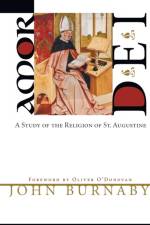
Description:Amor Dei: A Study of the Religion of St. Augustine was first published as the Hulsean Lectures for 1938 when John Burnaby was a classics Fellow of Trinity College, Cambridge. Endorsements:""In the wake of Pope Benedict''s encyclical Deus Caritas Est, which proclaimed the unity of eros and agape, it is most timely to have this fine new edition of Burnaby''s great book, which is at once a refutation of Nygren''s thesis concerning the separation of the two loves and a still unrivalled exposition of the heart of Augustine''s theology.""--John Milbank, University of Nottingham""John Burnaby limited the aims of his 1938 Hulsean Lectures to a patient exposition of Augustine''s religion of divine love. The resulting book, Amor Dei, has earned its place among the handful or so of truly great studies of Augustine in modern times. No doubt the enduring power of Burnaby''s study has had much to do with his ability to think with Augustine and not just about him and to bring to Augustine an ethical sensibility that is appropriately skeptical of one-sided goodness. For times still too enamored with ruthless simplifications of love, Amor Dei is a gift."" --James Wetzel, Villanova University, author of Augustine and the Limits of Virtue (Cambridge, 1992)""John Burnaby''s Amor Dei has long been and will long remain one of the few truly classic works on Augustine. Burnaby weaved together the very best of British Classical and Patristic scholarship in the first half of the twentieth century to offer an incisive and near comprehensive account of Augustine''s teaching on the love of God. Much has been written subsequently, but all these later works are mere moons around Burnaby''s planet.""--Lewis Ayres, Candler School of Theology, Emory University""Burnaby''s Amor Dei is one of the most influential classics in Augustinian literature. Peter Brown, for example, has often acknowledged his debt to this seminal work. In it Burnaby engaged with the fierce debate in twentieth-century scholarship about agape and eros. In doing so he confronted the challenges of Augustine''s theology of the Fall, original sin and predestination, and transcended them by demonstrating how the love of God, and the response of love his grace inspires in us, lies at the very heart of Augustine''s thought. Burnaby also provides a systematic account of Augustine''s theology which I am certain Augustine himself would have recognised and approved, and which has not yet found an equal in modern scholarship."" --Carol Harrison, Durham University, author of Rethinking Augustine''s Early Works: An Argument for Continuity (Oxford 2006)""John Burnaby''s masterful establishment of love of God as the center of Augustine''s psychology and theology inspired a generation of scholars to the energetic examination and refinement that has characterized the last seventy years of Augustine scholarship. A classic work in its original publication, its republication will refresh readers'' awareness of Augustine''s passionate advocacy for love of God as the key to happiness.""--Margaret R. Miles, author of Augustine on the Body""This is a book of singular fascination and distinction. The conception of the love of God is the golden thread that links together the devious and varied phases of St Augustine''s spiritual pilgrimage, and its lustre remains untarnished in Mr Burnaby''s exposition. . . . He knows Augustine from within, and with the fruit of intuitive sympathy with his personality and prolonged study of his writings, is enabled with an almost unerring sureness of judgment to disentangle . . . what is essential in Augustine''s spiritual outlook from those accidental extravagances which have proved such a damnosa heredites in the subsequent history of Christianity.""--W. G. DeBurgh in the Hibbert Journal"". . . [A] profound and intricate study not only of St Augustine''s but of the Christian doctrine of love. . . . It is a fine book and worthy of its high theme
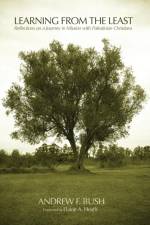
With the majority of the world's Christians now living in the non-Western world, Christian mission has become a global movement. The mission of Western Christianity now faces the challenge of laying aside the preeminence and privilege it has long enjoyed in global Christian mission, and embracing a new role of servanthood in weakness alongside its sisters and brothers from Asia, South America, and Africa. Such a transformation in historic patterns in mission requires not just new strategies and techniques, but a renewal of its spirituality. How can the spirituality of Western mission be renewed? By learning from those non-Western Christians whose lives on the margins reveal anew the One who emptied himself of the prerogatives of glory on the cross to serve humanity out of utter weakness. Learning from the Least invites you to a journey among Palestinian Christians to meet radical peacemakers who are making courageous decisions to reconcile with those who are customarily reckoned as enemies. Their radical servanthood out of weakness is a prophetic challenge to Western Christians, a call to lay aside the prerogatives of power and wealth, to question triumphal theologies, and to discover again the vulnerability of the way of the cross.
Negating Negation critically examines key concepts in the corpus of Pseudo-Dionysius the Areopagite: divine names and perceptible symbols, removal and negation, hierarchy and hierurgy, ineffability and incomprehensibility. In each case it argues that the Dionysian corpus does not negate all things of an absolutely ineffable God; rather it negates few things of a God that is effable in important ways. Dionysian divine names are not inadequate metaphors or impotent attributes but transcendent divine causes. Divine names are not therefore flatly negated of God but removed as ordinary properties to be revealed as divine causes. The hierurgical rituals and hierarchical ranks of the church are also not negated or bypassed but serve as the necessary means of return to God. This Dionysian God is therefore not absolutely unknowable and ineffable but extraordinarily knowable and sayable as scripturally revealed and hierarchically conveyed. Negating Negation concludes that since the Dionysian corpus does not abandon all things to apophasis, it cannot be called to testify on behalf of (post)modern projects in religious pluralism and anti-ontotheology. Quite the contrary, the Dionysian corpus gives reason for suspicion of such projects, especially when they relativize or metaphorize religious belief and practice in the name of absolute ineffability.
How will the world end? Doomsday ideas in Western history have been both persistent and adaptable, peaking at various times, including in modern America. Public opinion polls indicate that a substantial number of Americans look for the return of Christ or some catastrophic event. The views expressed in these polls have been reinforced by the market process. Whether through purchasing paperbacks or watching television programs, millions of Americans have expressed an interest in end-time events. Americans have a tremendous appetite for prophecy, more than nearly any other people in the modern world. Why do Americans love doomsday?In Apocalyptic Fever, Richard Kyle attempts to answer this question, showing how dispensational premillennialism has been the driving force behind doomsday ideas. Yet while several chapters are devoted to this topic, this book covers much more. It surveys end-time views in modern America from a wide range of perspectives--dispensationalism, Catholicism, science, fringe religions, the occult, fiction, the year 2000, Islam, politics, the Mayan calendar, and more.
The interdependence of boundary questions and the experience of cognitive dissonance reveal that knowledge in all fields of inquiry is always incomplete and tentative. The issues are particularly acute for Christian theological reflection. Ingram illustrates the importance of boundary questions and cognitive dissonance as a means of creatively transforming contemporary Christian theological reflection through dialogue with the natural sciences and the world's religions, particularly Buddhism, filtered through the lenses of Whiteheadian process philosophy.
How do some communities around the world that suffer outrageous violence and trauma manage, with few outside resources, not only to survive, but to thrive? September 11, the devastation of hurricane Katrina, school shootings, and other events of community violence and trauma have taught us, as a nation and a church, about the fundamental importance of building a caring community that fosters resilience and hope. Building the Resilient Community takes a refreshing turn of perspective by giving priority not only to the formally educated voices of the West but to those among the most marginalized and invisible in the world: refugees. Based on ethnographic research in Kakuma Refugee Camp and remote villages of southern Sudan, Holton presents a communal case study of a group of devoutly Christian refugees known as the Lost Boys of Sudan and asks the question, Might they have something to teach us about being a resilient community? As Holton investigates their deeply embedded cultural and religious beliefs that nurture a profound sense of responsibility toward others, we find a communal relationship that reflects a unique sense of care and obligation. This deep frame for communal care breaks through as the root of a remarkable faith narrative that serves to help mitigate symptoms of trauma and to undergird resilience, and may do the same for us.
Recent studies have increasingly downplayed, and in a few cases even wholly denied, the influence of Martin Luther's theology of Law and Gospel on early English evangelicals such as William Tyndale. The impact of a late medieval Augustinian renaissance, Erasmian Humanism, the Reformed tradition, and Lollardy have all but eclipsed the more central role once attributed to Luther. Whiting reexamines these claims with a thorough reevaluation of Luther's theology of Law and Gospel in its historical context spanning twenty-five years, something entirely lacking in all previous studies. Based on extensive research in the primary sources, with acute attention to the larger historical narrative and in dialogue with secondary scholarship, Whiting argues that scholars have often oversimplified Luther's theology of Law and Gospel and have thus wrongly diminished his very significant, even principal, influence upon first-generation evangelicals William Tyndale, John Frith, and Robert Barnes during the English Reformation of the 1520s and 30s.
Living Devotions explores how a particular community has creatively negotiated its religious bonds of connection in the context of immigration. These matters cannot be studied in the abstract. Religious practice is not something separate from the economic, cultural, and psychological dimensions of life, but rather something integral, which shapes and is being shaped by all of these other realities. The author examines these dynamics through an ethnographic case study of the living devotions of a group of Italian Catholic immigrants to San Pedro, California. The narrative describes how the group's historical experiences of immigration and fishing find expression in their particular forms of prayer, art, artifacts, and food. The healing and transformative power of these shared religious practices is explored.As contemporary theologians, pastors, and congregations seek to welcome and care for immigrants and other strangers in a shifting social landscape, we need ways to engage in care-full and attentive relationships. The ethnographic method employed here suggests a way to lift up the voices of ordinary people, allowing them to tell their own stories, while piecing together emerging bits of theological wisdom and compelling care practices. While the particular insights of any community are situated and specific, theological reflection in one context can animate a broader discussion of transformative pastoral theology and practice.
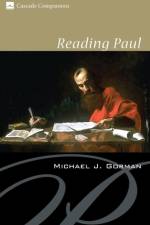
In this new introduction to the Apostle Paul and his gospel, written especially for lay readers, for beginning students, and for those unsure about what to make of Paul, Michael J. Gorman takes the apostle seriously, as someone who speaks for God and to us. After an overview not only of Paul's radical transformation from persecutor to proclaimer but also of his letter-writing in the context of Paul's new mission, Reading Paul explores the central themes of the apostle's gospel: Gorman places special emphasis on the theopolitical character of Paul's gospel and on the themes of cross and resurrection, multiculturalism in the church, and peacemaking and nonviolence as the way of Christ according to Paul. Gorman also offers a distinctive interpretation of justification by faith as participation in Christ--an interpretation that challenges standard approaches to these Pauline themes. Reading Paul demonstrates that the apostle of faith, hope, and love speaks not only to our deepest spiritual needs but also to the challenging times in which we live.
Children's spiritual development is currently a hot topic in Christian circles, as well as in other fields and disciplines such as educational psychology, medicine, developmental psychology, education, and sociology. The key question for Christian scholars and educators is ""How do Christian beliefs and practices uniquely interrelate with children's spirituality?"" In 2003 and again in 2006, a national conference entitled ""Children's Spirituality Conference: Christian Perspectives"" examined children's spirituality from a distinctly Christian standpoint. This book is a collection of the best materials from the 2006 conference.The first half of the book addresses definitional, historical, and theological concerns related to spiritual development in children. The second half explores best practices for fostering spiritual growth among our children--in our homes, families, churches, Christian schools, and among special populations of children--from a wide spectrum of Christian scholars and practitioners. The volume closes with John Westerhoff's moving keynote address and Catherine Stonehouse and Scottie May's eloquent, culminating plenary address. Nurturing Children's Spirituality provides a rich cross section of the current research and writing by Christian scholars on children's spirituality.Contributors: Holly Catterton Allen, Michael J. Anthony, Stacy Berg, Chris J. Boyatzis, MaLesa Breeding, Marilyn Brownlee, Linda V. Callahan, Jane Carr, Mara Lief Crabtree, Karen Crozier, James Riley Estep Jr., Jeffrey E. Feinberg, Stephanie Goins, Judy Harris Helm, Dana Kennamer Hood, Sungwon Kim, Kevin Lawson, Scottie May, Marcia McQuitty, Heidi Schultz Oschwald, Donald Ratcliff, Pam Scranton, Timothy A. Sisemore, Catherine Stonehouse, La Verne Tolbert, T. Wyatt Watkins, John H. Westerhoff III
In refreshing challenge to the common presumption that knowing involves amassing information, this book offers an eight-step approach that begins with love and pledge and ends with communion and shalom. Everyday adventures of knowing turn on a moment of insight that transforms and connects knower and known. No matter the field--science or art, business or theology, counseling or athletics--this little manual offers a how-to for knowing ventures. It offers concrete guidance to individuals or teams, students or professionals, along with plenty of exercises to spark the process of discovery, design, artistry, or mission.
Abonner på vårt nyhetsbrev og få rabatter og inspirasjon til din neste leseopplevelse.
Ved å abonnere godtar du vår personvernerklæring.