










Gjør som tusenvis av andre bokelskere
Abonner på vårt nyhetsbrev og få rabatter og inspirasjon til din neste leseopplevelse.
Ved å abonnere godtar du vår personvernerklæring.Du kan når som helst melde deg av våre nyhetsbrev.

About the Contributor(s):Philip LeMasters is Dean of the School of Social Sciences and Religion at McMurry University and the Corporate Secretary of the Board of Trustees of St. Vladimir''s Orthodox Theological Seminary. A priest of the Antiochian Orthodox Christian Archdiocese of North America, he is the author of Toward a Eucharistic Vision of Church, Family, Marriage, and Sex (2004) and The Goodness of God''s Creation: How to Live as an Orthodox Christian (2008).
""This book contains a careful, thorough, and where necessary skeptical as regards doubtful evidence (especially in the case of Plato and the Old Academy) of the beginnings in European thought of the negative or apophatic way of thinking and its relations to more positive or kataphatic ways of thinking about God. One of its greatest strengths, perhaps the greatest, is that the author makes clear that none of the persons concerned, Hellenic, Jewish or Christian, was engaged in the pursuit of a philosophical abstraction, or the heaping of rhetorical superlatives on God. They were rather concerned to present the origin of the universe as an intimately present living reality which infinitely transcends our thought and speech. This, combined with careful attention to the varieties of negative theology and its relations with positive, and the particular difficulties experienced by the members of the various traditions involved, makes the book the best introduction to the negative theology available.""-A. H. Armstrong, Emeritus Professor of Greek, University of Liverpool, England. Emeritus Professor of Classics, Dalhousie University, Halifax, Nova Scotia, Canada. Senior Fellow of the British Academy.Irish academic Deirdre Carabine has lived and taught in Uganda for more than twenty years. She has recently been founder Vice-Chancellor at the Virtual University of Uganda (VUU), the first fully online university in Sub-Saharan Africa. Prior to that she set up International Health Sciences University in Kampala. She has taught at Queen''s Belfast, University College Dublin, and Uganda Martyrs University. Currently, she is Director of Programmes at VUU. She attended the Queen''s University of Belfast where she graduated with a PhD in philosophy, and University College Dublin where, as one of the first Newman Scholars, she gained a second PhD in Classics. She is also author of John Scottus Eriugena in the Great Medieval Thinkers Series (2000).
Dr. Lewis proposes that the evil inherent in the conditions of Revelation 20:1-10 precludes its identity with the glorious kingdom of Christ which is to come. Through comparative studies in the Old Testament, the Gospels, and the Epistles, he demonstrates that the millennial scene best fits into this present age, spanning the time between the first and second comings. Labeling his view ""historical millennialism,"" the author offers a fresh form of the older, orthodox positions of amillennialism. Lewis''s view, however, remains distinctive in that he does not spiritualize away the basic features belonging to the thousand years of Revelation 20.Though written in 1980, this volume continues to fill a present lack among evangelicals for materials to judge fairly the amillennial perspective long held by orthodox churches and great theologians of the past, including Augustine. While interpreters of Revelation 20 agree that the millennium will mix good and evil, saint and sinners, Lewis stands among just a few who seriously explore the implications of this fact.This new edition also includes an interview with the author that covers his broader dialogue with dispensationalism.""Arthur Lewis provocatively challenges the interpretation that Revelation 20:1-10 (the dark side of the millennium) refers to the future; he advocates with convincing biblical support that it refers to the present reign of the kingdom of God, thus redefining the millennium perspective.""--Clarence Bass, author of Backgrounds to DispensationalismArthur H. Lewis (1923-2004), minister and Baptist missionary in Portugal, was professor of Old Testament at Bethel University in St. Paul. Having graduated from Gordon Divinity School and Harvard Graduate School, he received a PhD from Brandeis University. He was also a member of the New International Bible translation team.
Description:Congregations today face both old and often new, unprecedented challenges--spiritual, moral, technological, and economic--for which there are no easy solutions. Facing such challenges calls for pastors able to lead with authority in ways at the same time faithful to the gospel and appropriate to the congregation''s setting and the issues at hand. Yet many pastors are unsure of their authority, often experiencing conflict as they attempt to lead. Others have abused their authority and brought mistrust and suspicion to ordained ministry, making it difficult for other clergy to lead. In this book, a new and revised edition of his earlier, highly regarded work on pastoral authority and leadership, Jackson Carroll brings together theological and sociological perspectives to provide an interpretation of pastoral authority as reflective leadership, a style of leadership that involves vision and discernment, and that is appropriate for the many roles in which pastors engage--preaching, worship leadership, teaching, counseling, and shaping the congregation''s corporate life. In this new edition Carroll draws on what he has learned from many conversations with pastors and lay leaders since the book''s initial publication as well as insights from others. He also introduces helpful new case material from practicing pastors and incorporates the perspectives of several recent leadership theorists and practitioners to deepen and enhance the discussion of pastoral authority as reflective leadership.Endorsements:"When a book is described as a ''classic,'' it means it stands the test of time. Its message is as important today as when the author first put pen to paper. Jackson Carroll''s As One With Authority is a classic. This book remains essential reading for every church leader who wants to understand the unique kind of leadership needed in congregations. This is one of those rare books that should never sit neglected on a shelf. It is meant to be read, marked, learned, and inwardly digested--and shared with a new generation of pastors."-Michael JinkinsPresidentLouisville Presbyterian Theological Seminary"Based on solid theological and sociological research, and several decades of astute observation, Jackson Carroll has updated his classic work on As One With Authority, and just in time to benefit those clergy who are questioning their authority. Jackson clarifies the narrative of pastoral authority as reflective leadership and takes us back to those biblical roots as old as Paul, Jesus, Isaiah, and Moses. This is a penetrating exposition of the biblical vision of the way pastoral ministry should be done, and is the first book every beginning student of ministry should read. I recommend it most highly."-Robert E. CooleyPresident EmeritusGordon-Conwell Theological Seminary"Pastors need the expertise that allows them to read the social situation and interpret their traditions, but also an ear for the calling and vision that lends their work ''sacred weight.'' Building on the insight sociology has to offer and his own keen theological sensibilities, Carroll speaks here ''as one with authority.''"-Nancy T. AmmermanProfessor of Sociology of ReligionBoston UniversityAbout the Contributor(s):Jackson W. Carroll is the Ruth W. and A. Morris Williams Jr. Professor Emeritus of Religion and Society at Duke University Divinity School, where he also was project director of Pulpit & Pew: Research on Pastoral Leadership. An ordained United Methodist minister, he has most recently authored God''s Potters: Pastoral Leadership and the Shaping of Congregations (2006). He has also written extensively on pastoral ministry and congregations, including Mainline to the Future: Congregations for the 21st Century (2000).
Description:The most outstanding theological thinker of the twentieth century is proving to be the most pivotal theological figure of the twenty-first century as well. It is no wonder some have referred to Karl Barth as a ""Father"" of the Church. Karl Barth, widely acknowledged as the most influential theologian of the modern era, continues to provoke and inspire Christian theological reflection in a distinct and enduring way. His work has occasioned appreciation, critique, and rejection, but however one responds to Barth, one must reckon with him in pursuing the theological task.This volume draws together scholars whose essays exhibit work ""after Barth"" in engaging the doctrine of the Trinity and its related themes. Barth''s thought, as evidenced amongst his most expert commentators, allows for a variety of interpretations, the details of which are being hammered out on the pages of academic journals and volumes such as this one. It is this variety of responses to and interpretations of Barth''s theology that gives such vibrancy to the essays in this volume by seasoned Barth scholars and voices new to the conversation. Contributors include: Ivor J. Davidson, Bruce L. McCormack, John C. McDowell, Paul D. Molnar, Murray A. Rae, and a Foreword by John B. Webster. Endorsements:""This exciting new volume is a distinctive and important addition to Barth studies. The essays are noteworthy for their interpretative rigor and constructive ambition; they supply a vivid sense of what it means to think with, after, and beyond Barth in the present day. Highly recommended.""--Paul Dafydd JonesAssistant Professor of Western Religious ThoughtUniversity of Virginia""What might it mean to construct a ''post-Barthian'' doctrine of the Trinity? Despite significant points of divergence, this international panel of theologians agrees: Future trajectories of Trinitarian theology ignore Karl Barth only to their detriment. Consequently, this rich collection of constructive essays on the Trinity in conversation with Barth deserves wide distribution and careful reading by scholars and students, by Barth''s friends and foes alike!""--David GuretzkiDean of the Seminary and Associate Professor of TheologyBriercrest College and Seminary, Caronport, Saskatchewan""If anyone still doubts that Barth''s theology served to re-ignite interest in the doctrine of the Trinity not seen since the patristic era, he or she needs to read this book. One will discover that serious consideration of the doctrine of the Trinity can still hardly afford to go around Barth but can only go through him. Yet Trinitarian Theology after Barth makes clear that far from everything being nailed down, Barth''s theology is truly theologia viatorum, theology on the way.""--Richard BurnettProfessor of Systematic TheologyErskine Theological SeminaryAbout the Contributor(s):Myk Habets is Lecturer in Systematic Theology, and Director of the R. J. Thompson Centre for Theological Studies at Carey Baptist College and Graduate School, Auckland, New Zealand. His publications include Theosis in the Theology of Thomas Torrance (2009) and The Anointed Son (Pickwick, 2010).Phillip Tolliday teaches Anglican Studies and Systematic Theology at St. Barnabas'' College, School of Theology. He has been co-editor of Dialogue Australasia, and is currently the series co-editor for volumes on the interface between philosophy and theology.
Description:--What is Anglicanism and how is it distinctive?--Where did it come from and where is it ?--Which beliefs, values, and practices stand at the heart of this important, global Communion?--How can its rich heritage help it move into the future?This book is an essential guide to the Anglican tradition for anyone who has ever wondered what Anglicanism-the largest Protestant denomination in the world-is all about. Now fully updated and significantly revised, this second edition of Our Anglican Heritage gives voice to the strong and vibrant evangelical roots of Anglican Christianity. Events at the start of the twenty-first century have threatened to tear the Communion apart. The authors of this book, both Episcopal clergy, each responded to the crisis in different ways. One, a bishop, chose to stay in the Episcopal Church. The other chose to lead his congregation out of the Episcopal Church and into another Anglican Province. This book is a reflection of the strong faith and heritage they still share, and a recommitment to the biblical principles that still undergird and enliven Anglicanism.Endorsements:"I very much hope that all of you will read this excellent little book, Our Anglican Heritage. It is clear, it is forthright, it is well written, it is pungent, it is faithful, it is courageous."--Rev. John R.W. Stott Rector Emeritus, All Souls Anglican Church, "In a way one could say that Christ Church, Plano was built on the first edition of Our Anglican Heritage. Ever since I read it twenty-five years ago, it has been the staple that we recommend and give to all of our new members. In its new edition, the authors have done it again. They have given the church a clear and compelling account of what Anglicanism is, where it came from, and how it can be a trusted, magnificent, and reliable way of living out the Christian Faith."--The Rev. David H. Roseberry Rector, Christ Church in Plano, Texas"The publication of a new edition of Bishop Howe''s Our Anglican Heritage is an event to be celebrated! Anglicanism can only be understood through its history, and here is a readable, fair, and concise account of that history. Clergy and laity alike should rejoice that this resource is available to them in a revised and updated form. Full marks to Bishop Howe and Dr. Pascoe for this excellent and much needed piece of work!"--The Very Rev. Philip Turner III Vice President of The Anglican Communion Institute former Dean of Berkley Divinity School at YaleAbout the Contributor(s):The Right Reverend John Howe is the Episcopal Bishop of Central Florida. With his wife Karen he co-authored Which Way?: A Guide for Young Christians, along with numerous articles. He is the author of the first edition of Our Anglican Heritage (1976).The Reverend Dr. Sam Pascoe is an Anglican priest serving as resident clergy at Jacksonville Anglican Fellowship. He was an Episcopal priest for over twenty years, serving churches in Virginia and Florida. He left the American Episcopal Church in 2006 and is now a member of the Anglican Church in North America. He is the author of Buried Alive, a study of the Anglican Articles of Religion.
Description:Does God use violence to redeem us? What is the relationship between divine love and violence in regard to the saving significance of the cross of Christ? In Love, Violence, and the Cross, Gregory Love dialogues with two responses to this question, while presenting a third alternative in which Jesus''s death is simultaneously a crime and an element of God''s saving actions. Through familiar stories in history, literature, and film, Love presents five constructive models that cumulatively affirm God''s saving act in the person and work of Christ while letting go the myth of redemptive violence. They affirm redemption, but one with a different shape: Instead of exacting the absolute punishment, God redeems by ""making good"" God''s promise to humanity to secure human life. Love argues that God is nonviolent, while retaining the core idea presented in the New Testament witnesses: that reconciliation occurs in the work of Christ, and that the cross plays a role in that divine work.Endorsements:""All categories of systematic theology converge in the cross. This book''s greatest strength is that it thoroughly explicates the systematic implications of traditional and contemporary atonement models. In response, Love provides a unique approach to the atonement, advancing the burgeoning theological discussion of this topic. Instead of a monolithic model, Love proposes that different human situations can be met through multiple atonement models centering on the single theme of a nonviolent, yet redemptive, view of the cross.""--Marit Trelstadeditor of Cross Examinations: Readings on the Meaning of the Cross Today""Love, Violence, and the Cross reflects Love''s exceptional talents as a teacher. He clearly and fairly explains to his readers what ""penal substitutionary atonement"" is, why it is being critiqued, and what Christianity must not lose in the process of this critique. Drawing from movies, novels, and current events as well as from both age-old and the most contemporary theological literature, Love insists that Jesus Christ effects redemption, offering models for how to keep the cross at center without perpetuating violence.""--Cynthia L. Rigbyauthor of Promotion of Social RighteousnessAbout the Contributor(s):Gregory Anderson Love is Associate Professor of Systematic Theology at San Francisco Theological Seminary and The Graduate Theological Union; he is an ordained Presbyterian pastor.
Description:This book is not a formidable series of learned papers on abstruse theology, but a plain and coherent outline of the Christian faith, written by members of the Community of the Resurrection and intended for the ordinary educated layperson. There are no Hebrew or Greek words; scholarship will be found mainly in the notes.The central theme is the faith of the Resurrection. This is prepared for by essays on the relevance of the Old Testament, the Incarnation and the Cross. A chapter on the Resurrection of our Lord closes Part I.Part II contains a series of more reflective essays, looking back on what is involved in the claim for the Resurrection: arguments for the existence of God, the Christian doctrine of God, Creation and the Fall, the nature and work of the Holy Spirit.Part III considers the consequences of the Resurrection: the Church Worship in the Body, Baptism and Christian Unity, Prayer in the Body, and the Christian answer to pain and evil.Part IV deals with the consequences for the Church and the World: the secular challenge to the Church, the witness of the Church in an expanding World, Vocation, and the End of All Things.About the Contributor(s):The Community of the Resurrection is based at Mirfield in West Yorkshire. They live a corporate life within the monastic tradition, the heart of which is worship, issuing in many forms of engagement with contemporary church and society.
Description:Walk Together Children: Black and Womanist Theologies, Church, and Theological Education draws on the long religious, cultural, and singing history of blacks in the U.S.A. Through the slavery and emancipation days until now, black song has both nurtured and enhanced African American life as a collective whole. Communality has always included a variety of existential experiences. What has kept this enduring people in a corporate process is their walking together through good times and bad, relying on what W. E. B. DuBois called their ""dogged strength"" to keep ""from being torn asunder."" Somehow and someway they intuited from historical memory or received from transcendental revelation that keeping on long enough on the road would yield ultimate fruit for the journey.Endorsements:""This volume flips the script in all the right ways. Hopkins and Thomas collect essays that collectively invert the ways that black and womanist theologies are usually constructed. Men speak to issues that womanists first articulated. Women write about the future of black men. Professors, clergy, and lay people engage academic theology together, and the conversations are cross-generational . . . [T]his volume strongly refutes any accusations that black theology is merely academic.""--Monica A. ColemanClaremont School of Theology""This work represents an important gathering of the best thinkers from the Black Church, the Academy, and the Black community who come together to address the vital issue of Black flourishing in the twenty-first century. Their specific focus on the role that theological education, as it happens in the academy and the Church, plays in this project makes this timely and essential reading for all scholars, practitioners, and activists. This book will become a classic and be widely used in seminary classrooms and sanctuaries.--Stephen G. Ray Jr.Garrett-Evangelical Theological Seminary""Walk Together Children represents an historic moment of coming together in black religious life and thought of those who live, preach, teach, and think a phenomenology of the sacred self. This critical contribution to the field not only reflects upon, but is in itself a theology of ingenuity . . . Through unexpected reversals of authorship and themes, the contributors push the bounds of theology in all its forms with provocative insights and challenges for the religious imaginations of both church and academy.""--Andrea C. WhiteEmory University Candler School of Theology""Walk Together Children is a Sankofa Moment reminding pilgrims on the journey that the unity and resilience of enslaved Africans in the Americas is a testimony to the human capacity for hope and struggle to participate in the Reigndom of God. This book is a welcomed resource for conversations about the rebuilding of family and community, whether these conversations take place in the Church, the wider community, or the academy.""--Marjorie LewisUnited Theological College of the West Indies""Walk Together Children moves with such syncopation and collaborative grace, creating ''new moves with new angles'' in black and womanist theological discourse. This compilation of courageous and thought-provoking essays, spoken by three generations of scholars, preachers, and the pew, is a gripping and compelling read! It invigorates renewed energy and offers timeless possibilities in church and academy relations."" --Renee K. Harrisonauthor of Enslaved Women and the Art of Resistance in Antebellum America""Walk Together Children represents the very best of contemporary African American black and womanist theology in dialogue. It is committed and passionate text that illustrates the continued vibrancy and praxis of these complimentary disciplines as we step bravely into this new century. In bringing together a remarkable cast of players from the academy, the church, and the pew, this hugely impressive text will be a must read for many years to come. I wholeheart
Description:A helpfully concise commentary on Paul''s letter to the early Christians in Rome, which the Apostle wrote just a few years before the outbreak of Nero''s persecution. Keener examines each paragraph for its function in the letter as a whole, helping the reader follow Paul''s argument. Where relevant, he draws on his vast work in ancient Jewish and Greco-Roman sources in order to help modern readers understand the message of Romans according to the way the first audience would have heard it. Throughout, Keener focuses on major points that are especially critical for the contemporary study of Paul''s most influential and complex New Testament letter.Endorsements:"By grounding his exposition of Romans in the world of the first century, yet keeping his eye on the needs and concerns of the contemporary world, Keener offers here a rare commodity: a lucid commentary that is simultaneously conversant with the latest biblical scholarship and pastorally sensitive."--John T. FitzgeraldUniversity of Miami, USA and North-West University, South Africa"Craig Keener has written a marvelous commentary that will prove to be a valuable tool for ministers, students, and scholars alike. By insightfully introducing and contextualizing, as well providing excurses that guide the reader from ancient to modern times, Keener has done with excellence what a commentary should do."--Manfred LangMartin Luther University, Halle-WittenbergAbout the Contributor(s):Craig Keener (PhD, Duke University; professor of New Testament, Asbury Theological Seminary) is author of fourteen books, including a number of commentaries.
Description:John Wesley has arguably influenced more American Christians than any other Protestant interpreter. One reason for this wide influence is that Wesley often spoke about the "heart" and its "affections"--that realm of life where all humans experience their deepest satisfactions, as well as some of their deepest conundrums. However, one of the problems of interpreting and appropriating Wesley is that we have been blinded to Wesley''s actual views about "heart religion" by contemporary stereotypes about "affections" or "emotions." Because of this, it is rare that either Wesley''s friends or his critics appreciate his sophisticated understanding of affective reality.To make clear what Wesley meant when he emphasized the renewal of the heart, Gregory S. Clapper summarizes some recent paradigm-changing accounts of the nature of "emotion" produced by contemporary philosophers and theologians, and then applies them to Wesley''s conception of the heart and its affections. These accounts of emotion throw new light on Wesley''s vision of Christianity as a renewal of the heart and make it possible to reclaim the language of the heart, not as a pandering or manipulative rhetoric, but as the framework for a comprehensive theological vision of Christian life and thought. The book closes with several practical applications that make clear the power of Wesley''s vision to transform lives today.Endorsements:For years Gregory Clapper has given himself mind, heart, and soul to understanding and unpacking Wesley''s vision of heart religion. We have here the fruit of that work in all its beauty and density. In addition he rounds it off with a fine exploration of the significance of Wesley''s heart religion for preaching, counseling, and evangelism. This is a fine achievement that deserves to be read throughout the length and breadth of the Church.-William J. AbrahamPerkins School of Theology, Southern Methodist UniversityAfter years of careful study Gregory Clapper has produced a very readable and engaging account of the human heart in terms of the religious affections. Not only does he maintain that the heart is the locus of God''s action, clearing up some contemporary misunderstandings, but he also demonstrates quite convincingly that the religious affections for Wesley constituted the very substance of true religion, the nature of real Christianity itself.-Kenneth J. CollinsAsbury Theological SeminaryAmong Wesleyan Christians recently there is talk about not being doctrinal, expressing especially a fear of confessionalism. This misconstrual of the tradition represents the equation of confessional truth with creedal litmus tests. Clapper knows better! His important work reflects the Wesleyan teaching that what we believe with our head and with our heart go together. Faith is both a matter of mental affirmation of historic Christian truth as well as a deep abiding trust in that truth as salvific reality. To those who might assert that the mission of God''s Church can go forward with an Evangel that separates this conjunctive theology, Clapper says loud and clear, "I show you a more excellent way."-W. Stephen GunterDuke Divinity SchoolBy bringing together Wesley''s concern for the renewal of the heart and recent emotion theory, Clapper offers a bold vision for the church. He gives an account of how thinking, feeling, and acting belong together in who we are before God, then he calls the church to consider its role in shaping believers in all these dimensions. This book is a valuable resource for all who take John Wesley as a guide for their ministry. -Sarah Heaner LancasterMethodist Theological School in OhioAt last-a thoughtful and accessible account of Wesley''s theology that addresses the central challenge of the church in our day as in his: the re-ordering of our loves. Clapper provides a much-needed voice of challenge to those who would dismiss the affectional ground of Christian faith or take it captive for n
Description:Subversive Spirituality links the practice and study of Christian spirituality with Christian mission. It develops a twofold thesis: grace, spiritual disciplines, and mission practices are inseparably linked in the mission of Jesus, of the early church, and of several historical renewal movements, as well as in a contemporary field research sample; and amidst the collapse of space and time evidenced by our culture''s increasingly hurried pace of life, more time and space are needed for regular solitary and communal spiritual practices in church, mission, and leadership structures if Christian mission is to transform people and culture in our time. This requires a subversion of the collapsed spatial and temporal codes that have infected our Christian institutions.Jensen employs methods and approaches from a variety of academic disciplines to explore both spirituality in terms of space and time and mission in terms of deed and word. Specifically, Jensen examines the spirituality and mission of Jesus, the early church, the apostolic fathers, Origen, the Devotio Moderna, the early Jesuits, David Brainerd, and several women in 19th century Protestant missions. He considers the spirituality and mission that have arisen within the postmodern generations born after 1960. Based on the theological, historical, cultural, and field analyses of this study, a model for spirituality and mission is proposed. The model addresses the contemporary collapse of space and time and appears to have widespread applicability to diverse cultures and eras. Jensen''s model is applied to the pluralistic and postmodern milieu of North America with recommendations for spirituality and mission in church, mission, and educational structures. A derivative model for teaching and practicing spirituality and mission in the academy, which also has application for non-formal leadership development structures, is also proposed.Endorsements:""Far too many Christians live in little compartments: prayer over here, mission over there, Bible study somewhere else, even Jesus himself somewhere else again, and all squashed up because of the apparent relentlessness of today''s fast-track lifestyle. What happens if we open up the little compartments to one another, and allow the bigger picture that emerges to challenge not only the way we think and live as Christians but the very framework of lifestyle which today''s culture imposes on us? This wide-ranging and groundbreaking book provides an answer which will open eyes, minds, and hearts to an integrated vision of Christian discipleship, spirituality, and mission. Jensen''s work is rooted in history but open to God''s future, grounded in prayer and devotion while grappling with hard-edged practical questions. This is a book all of us in Christian leadership need to learn from if we are to be equipped for God''s mission in tomorrow''s world.""--N. T. Wright, Bishop of Durham, Church of England""This is the book that I''ve been waiting for in my own teaching. In our technological, postmodern, post-Christendom age we need to hear the call to reengage both a generous spiritual journey and a courageous missional life. Each aspect of formation must rely on the other-and both are the product of the Spirit''s clear work in Jesus'' followers. My students either think that the church will be renewed by an inward journey or by outward activism. And each group thinks that their way is Jesus'' way. Paul Jensen''s lucid, scholarly, and empowering book calls us back to a transforming spirituality which nourishes and empowers God''s people for the Kingdom mission into which Jesus sent all his followers with grace, love, and power.""--Stephen A. Hayner, President of Columbia Theological Seminary and former President, InterVarsity Christian Fellowship""This is an important book. Jensen is dealing with issues that others are not and doing so in ways that challenge the church and lure us into new openness to intimacy with God. He co
Description:"To pursue the matter of "revelation in context," I will address an exceedingly difficult text in the Old Testament, Joshua 11. The reason for taking up this text is to deal with the often asked and troublesome question: What shall we do with all the violence and bloody war that is done in the Old Testament in the name of Yahweh? The question reflects a sense that these texts of violence are at least an embarrassment, are morally repulsive, and are theologically problematic in the Bible, not because they are violent, but because this is violence either in the name of or at the hand of Yahweh." -from chapter 2Endorsements:"Like Jacob wrestling with the man all night, Walter Brueggemann struggles with texts of divine violence and wrings from them a blessing. He draws together materialist and literary approaches to discover God''s violence subtly and indirectly employed on behalf of the dominated against dominators. The book is a brilliant primer in persuasive, open-ended theological interpretation. It will help pastors, students, and anyone who would like to join the hot debate about violence and the God of the Bible."--Kathleen M. O''Connor, William Marcellus McPheeters Professor of Old Testament, Columbia Theological Seminary"''What shall we do with all the violence . . . done in the Old Testament in the name of Yahweh?'' Walter Brueggemann addresses this pressing question with theological candor, exegetical rigor, and literary eloquence. For all those vexed by texts of violence in the Bible, this splendid little book is a ''must-read.''"--Louis Stulman, Chair, Department of Religious Studies and Philosophy, Professor of Religion, The University of FindlayAbout the Contributor(s):Walter Brueggemann is Professor Emeritus of Old Testament at Columbia Theological Seminary. He is past President of the Society of Biblical Literature and the author of numerous books, including Praying the Psalms, A Pathway of Interpretation, and Ichabod toward Home.
Description:Because of Luke''s unique literary achievement in the Gospel of Luke and Acts, these two works raise a variety of interesting and important issues for the exegete. In this important collection of essays, Tannehill demonstrates why he has been in the forefront of Luke-Acts research for more than three decades. His nuanced approach to the intersection of literary, theological, and social features in the texts marks these as required reading for any interpreter of the gospels.ContentsPart I: Theology, Poetry, Rhetoric1 The Mission of Jesus according to Luke 4:16-302 The Magnificat as Poem3 What Kind of King? What Kind of Kingdom?4 The Lukan Discourse on Invitations5 The Story of Zacchaeus as Rhetoric6 Repentance in the Context of Lukan SoteriologyPart II: Luke and the Jews7 Israel in Luke-Acts: A Tragic Story8 The Story of Israel within the Lukan Narrative9 Rejection by Jews and Turning to Gentiles: The Pattern of Paul''s Mission in ActsPart III: Acts as Narrative10 The Functions of Peter''s Mission Speeches in the Narrative of Acts11 The Composition of Acts 3-5: Narrative Development and Echo Effect12 Paul outside the Christian Ghetto: Intercultural Conflict and Cooperation in Acts13 The Narrator''s Strategy in the Scenes of Paul''s DefensePart IV: Hermeneutical Experiments14 Should We Love Simon the Pharisee? Reflections on the Pharisees in Luke15 Freedom and Responsibility in Scripture Interpretation16 "Cornelius" and "Tabitha" Encounter Luke''s JesusAbout the Contributor(s):Robert C. Tannehill is Professor Emeritus of New Testament at Methodist Theological School in Ohio. He is also the author of ''The Sword of His Mouth,'' ''Dying and Rising with Christ,'' and ''The Narrative Unity of Luke-Acts.''
This wide-ranging study of the doctrine of the incarnation results from the author''s own intellectual quest. He offers a genuine Christology, as distinct from the non-Christologies of some recent writers. His starting-point, like theirs, is that Jesus was a real human personality--a man, in fact: an assumption with which few will quarrel, though it is not easily reconciled with the teaching of the Council of Chalcedon.Anthony Hanson sees the man Jesus as the revelation of the divinity in the humanity through human obedience and suffering. He finds that the New Testament writers, with the probable exception of John, while believing in Jesus'' personal pre-existence saw him as a fully human personality. They recognized God in Christ, as we do today, not by direct apprehension, but because he is indeed full of the hesed and ''emeth (grace and truth) which the Old Testament reveals as God''s essential character.Professor Hanson''s discussion is marked, as one would expect, by disciplined exegesis and familiarity with the other solutions that have been propounded. In his final chapter he reviews the traditional Chalcedonian doctrine and its modern defenders, and assesses the views of modern theologians--Barth, Rahner, Pannenberg, Pittenger, Baillie, Robinson among them--who have written on the subject. He claims for his account of the incarnation that it is at least as firmly rooted in Scripture as that of Chalcedon, and has a much stronger foundation in the Old Testament.Anthony Tyrrell Hanson was Professor of Theology at the University of Hull, and former senior editor of the Journal for the Study of the New Testament.
""I wanted to tell a story about adolescents who knew what they were doing and why."" Elaine Sommers Rich gives this as a reason for having written this book.Along with Esther Miller, a Voluntary Service unit member, Rich takes us onto the receiving ward of a state mental hospital in the summer of 1948 following her freshman year in college. The charge attendant on Esther''s ward has a ""treat ''em rough"" attitude toward the mentally ill, an attitude which immediately poses serious problems for Esther. Her emotional life is further complicated when she becomes infatuated with tall, blond Philip Landis ""from the East."" One of Esther''s dreams comes true when she gets to set up an art project for patients as part of a therapy program initiated by the VS unit.Christian idealists will like this story of a young girl''s love affair with life.Elaine Sommers Rich gave three summers of her youth in projects for college students sponsored by Mennonite Central Committee. Having taught at Goshen College, Goshen, IN, and Bethel College, North Newton, KS, she is well acquainted with the young people about whom she writes. Rich''s earlier books are Breaking Bread Together (1958) and Hannah Elizabeth (1964). She now lives in Bluffton, OH.
The Second Advent of our Lord is a subject that multitudes of his disciples wholly neglect, or to which they refer with uncertainty. Dr. Morgan''s treatment of the subject is intended to direct attention to the theme, in order to stir up interest and lead to study.Since the Day Star appeared, two millenniums have well nigh run their course, and the Church in her weariness has often said, ""The Lord delayeth his Coming,"" but in many hearts the Day Star is already shining, and this in itself is a witness to sunrise.G. Campbell Morgan (1863-1945) was a leading Bible expositor in England and the United States. Despite a lack of substantial formal training, Morgan was a prolific writer and teacher. Ordained into the Congregational ministry, he was the pastor of Westminster Chapel, London (1904-17 and 1933-45). Morgan also conducted two very successful teaching tours in the United States, including work with D. L. Moody''s ministry.
Structural exegesis is a major recent development in biblical studies and is related to simultaneous currents in other fields of academic study. Here, at last, is an introduction to structuralism and structuralist methods that does not presuppose advance knowledge of linguistics or anthropology. Traditional exegetical methods follow a historical paradigm; structuralism follows a linguistic paradigm. Thus, these two approaches involve significantly different attitudes toward the biblical text. Through clear analytic explanations illustrated by application to specific texts, Daniel Patte shows how structuralism and traditional scholarship must go hand in hand so that together they can carry the exegetical task to its end--opening the possibility for fresh insights based on clear understandings.Daniel Patte is Associate Professor of Religious Studies at Vanderbilt University.
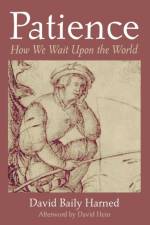
In this book, David Baily Harned makes a persuasive case for the significance of patience as an essential ingredient of the moral life. In a bold and invigorating manner, the author addresses contemporary existence--the lives of individuals, families, communities, and nations--and demonstrates how the Christian vision informs our efforts to live in a chaotic and violent world as faithful, hopeful, loving children of God. This essay in theological ethics is rooted in classic texts: the Old and New Testaments, as well as the writings of Augustine, Gregory I, Thomas Aquinas, Thomas a Kempis, John Calvin, Soren Kierkegaard, and W. H. Vanstone. In graceful prose and careful analysis, David Harned both inspires and instructs. This new edition also includes an afterword by one of his former students who explores the value of this study by applying its insights to the life and leadership of George Washington.""Virtue is more than a philosophical contemplation; it''s also the substance of a lived and lively faith, the stuff of life. Imagine this book, then, as a lab manual--a book to be used in the midst of activity, philosophy with genuine utility. Harned brings Patience into intimate conversation with our private concerns, like self-worth and vocation. But he makes Patience also a stimulating partner in conversation with our public life and worries.""--Sam Portaro, Anglican Theological Review ""A beautifully written book, both welcome and unusual. This is less a book to be summarized than to be read and contemplated. It may inspire fresh thought about the sort of people we should strive to be. It is a book that a young man could probably not have written, inviting and encouraging us, as it does, to accept--indeed, to accept with gratitude--''the slowness of the good.''""--Gilbert Meilaender, First ThingsDavid Baily Harned (PhD, Yale) is a retired professor of religious studies who taught at Williams, Smith, and Allegheny colleges, as well as at the University of Virginia, Louisiana State University, and the University of Edinburgh. In addition, he served as department chairman at Virginia, president of Allegheny, and dean of arts and sciences at LSU. He is the author of eight books, published not only in the United States but also in Scotland, Spain, and India.
The prayer ""Go forth Christian Soul, on your journey from this world"" has supported generations of Christians in the moments of their dying. In this original biography of the prayer known as the Proficiscere the author traces the history of this well-known text from its origins in eighth-century France to the present day. During 1,200 years of biography we meet an extraordinary range of people whose lives have affected or interacted with the life of the prayer. These include Thomas Cranmer, William Caxton, Cardinal Newman, General Gordon of Khartoum, Edward Elgar, and Cardinal Basil Hume. Versions of this famous prayer have found their way into contemporary funeral liturgies. The author draws on liturgical scholarship history and not least his own experiences as a minister to the dying. At the end of this biography you will never look on your own dying, or that of others around you, as you have before. You will be better prepared, at your death, to hear the words ""Go forth Christian Soul.""""This is a fascinating and timely book: fascinating because it traces the life and meaning of what has come to be a much loved prayer, and timely because although the prayer was originally composed in the Middle Ages for use with the dying, it has been in recent centuries more frequently recited at funerals. People need to be helped to ''die well,'' as Lampard argues, and I hope his book will open up new avenues for good pastoral practice that is backed up by the kind of rich learning on offer here.""--Kenneth Stevenson, Anglican Bishop of Portsmouth, England""A whole book devoted to the history of just one ancient prayer for the dying may sound as if it is aimed only at specialist scholars, but John Lampard has succeeded in writing in such a way as to make it accessible and interesting to the ordinary reader, who will learn much here about changing attitudes towards death in the course of Christian history.""--Paul Bradshaw, Professor of Liturgy, University of Notre Dame, South BendJohn Lampard is a Methodist minister in London and a former Local Preacher''s Secretary in the Methodist Church. He is the author of several short books, as well as many articles and book reviews.
As one of the leading historical theologians of the twentieth century, Wilhelm Pauck studied with Adolph Harnack and Ernst Troeltsch at the University of Berlin in the 1920s, and his own thinking was shaped by their work. In this book he clarifies their ideas and their personal relationship to one another, analyzing their particular contributions to the historiography and sociology of religion. Biographical sketches of the two men, set against the background of their time, are enlivened by vivid and amusing anecdotes about their careers and views on life.Harnack and Troeltsch were among the earliest--and remain among the greatest--""interpreters of institutional history and the ideas that govern and maintain them."" Both were in agreement with Harnack''s dictum, ""We study history in order to intervene in the course of history."" In its clear presentation of these two major figures, this book is an attack on the stronghold of ignorance about the Christian heritage that has, Pauck contends, impoverished and isolated churches in the United States.Wilhelm Pauck (1901-81) studied with Harnack and Troeltsch at the University of Berlin and became the first foreign student at the University of Chicago in 1925. He joined the faculty in 1926 and was made full professor of Church History in 1931. After twenty-seven years at the University of Chicago, he taught at Union Theological Seminary in New York. After retirement in 1967, he taught at Vanderbilt University for five years, and at Stanford University. His books include From Luther to Tillich: The Reformers and Their Heirs and Paul Tillich: His Life and Thought, the latter of which was co-authored with his wife, Marion Pauck.
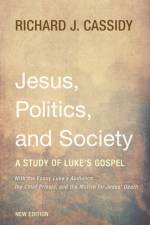
Was Jesus dangerous to the Roman Empire? Reading the Gospel of Luke in the light of Roman-ruled Palestine, Richard J. Cassidy demonstrates that Jesus was a powerful threat to both the political and social structures of his time.Richard J. Cassidy serves as Professor of Sacred Scripture at Sacred Heart Major Seminary in Detroit, Michigan. His most recent books are Paul in Chains: Roman Imprisonment and the Letters of Paul and Four Times Peter: Portrayals of Peter in the Four Gospels and at Philippi. He is currently completing a commentary on St. Paul''s Letter to the Philippians.
An Alternative Vision: An Interpretation of Liberation Theology offers a complete overview of the liberation theology movement that is ideally suited for a thorough study of the major questions and important theologians that have contributed to the debate. It outlines and brings together into a single unified account liberation theology''s alternate vision for providing the possibility of meaningful historical existence for humans in the world today.The author translates the Christian vision of liberation theologians from Latin America into more general theological and cultural categories familiar to the English-speaking world, then shows how that vision makes a unified interpretation of Christian doctrine. First, liberation theology must be seen as a response to massive human suffering witnessed throughout the world today. This human agony is largely caused by human beings and the social and political structures we create, and liberation theology addresses this dilemma using the tradition of Christian wisdom and direct imperatives that have universal, transcultural significance.The second goal is achieved by showing the connection between liberation principles and the major doctrines of Christian belief, including God, Jesus Christ, faith, grace, the church, sacraments, ministry, and spirituality.Roger Haight, SJ, is a professor of systematic and historical theology at Regis College of the Toronto School of Theology. He received a doctorate in theology from the University of Chicago in 1973. Before going to Toronto, he taught at Loyola School of Theology in Manila and the Jesuit School of Theology in Chicago and served as a visiting professor in India and Latin America. His other books include The Experience and Language of Grace (1979) and The Dynamics of Theology (1990).
For centuries, Christians have wrestled with how to witness faithfully to the peaceable kingdom of God, while also living as citizens within an earthly nation-state. Differing theological traditions have offered wide-ranging contributions to the field of political theology, yet the Wesleyan tradition has too often remained largely silent. In this volume, Coates turns to two key figures within his own Wesleyan tradition--John Wesley and B. T. Roberts--in order to construct a distinctively Wesleyan political theology. He argues that embedded within Wesley''s theology were the seeds of a radically people-centered, egalitarian politic, despite the fact that Wesley himself never fully realized these implications himself. Ultimately, however, the populism of B. T. Roberts and his work to organize the Farmer''s Alliance of the late-nineteenth century would come to represent one concrete, historical manifestation of Wesley''s theology in the public sphere.Here is a book not merely for academics interested in the Wesleyan tradition or political theology, but also for all followers of Christ who desire to see the church model the ethic of Christ before the worldly powers in the midst of this saeculum.""In this book, Greg Coates examines John Wesley''s understandings of the image of God and its consequences for political action, and the way in which one American Methodist, B. T. Roberts, followed them to a more consistent and helpful political praxis than Wesley himself did. He argues persuasively that Roberts, assuming Wesleyan commitments to the poor, holistic salvation, and a biblical eschatology, offers a framework for political and social engagement that promises freedom from the current false ideological alternatives we often face. It is a discussion that remains faithful to the scriptural story read and lived, in the light of tradition, experience, and reason. I commend it to all seeking to navigate through the electoral wildernesses around us.""--David W. Kendall, Bishop, Free Methodist Church, Indianapolis, IN""Coates undertakes informed, yet critical, engagement with the central founding figures of his Free Methodist tradition, in seeking theological grounding and orientation for political engagement today. Thereby he not only establishes himself as an emerging voice in his field but models contextualized theological reflection for contemporary Christian life.""--Randy L. Maddox, William Kellon Quick Professor of Wesleyan and Methodist Studies, Duke Divinity School, Durham, NC""Coates is an important new voice in Wesleyan Studies. His critical inquiry and appreciation for nuance allow him to breathe new life into well-worn Wesleyan ground as well as to offer welcome insights by including Wesley''s American Holiness heirs in his search for a Wesleyan political theology. Alongside of this solid scholarship, Coates wants to give readers a way to put his ideas into practice. This book is a go-to resource for students of Wesley and for all Methodists who want to discern what their denominational heritage teaches about how they can engage faithfully in politics.""--Mark R. Teasdale, E. Stanley Jones Associate Professor of Evangelism, Doctor of Ministry Program Director, Garrett-Evangelical Theological Seminary, Evanston, ILGregory R. Coates, an ordained elder in the Free Methodist Church, is a graduate of Asbury Theological Seminary (MDiv) and Duke Divinity School (ThM). He is currently a PhD student at Garrett-Evangelical Seminary in Evanston, IL. He is married to Courtney C. Coates, a far better writer than himself.
While there is a unity to truth from God''s perspective, there are nevertheless many different ways of knowing, studying, and defining that truth. Thus, ""the task of integration is the task of relating theology and other disciplines in such a way that one articulates and defends a comprehensive, unified Christian worldview.""Christian Perspectives on Being Human is a vital step in that essential process of integration.In this unique anthology, colleagues from various departments at Biola University undertake an important multidisciplinary approach to integration. J. P. Moreland and David Ciocchi represent philosophy in this discussion; Robert Saucy, theology; Sherwood Lingenfelter, anthropology; Nancy Duvall and Keith Edwards, psychology; Walt Russell and Scott Rae, New Testament and medical ethics; and Klaus Issler, Christian education.J. P. Moreland is Distinguished Professor of Philosophy at Talbot School of Theology, Biola University, and Director of the Center for Christian Worldview and Spiritual Formation. David M. Ciocchi is Associate Professor of Philosophy at Biola University. His PhD is from Fuller Theological Seminary.
Identifying and evaluating the characteristics of the Reformed tradition in worship, this book surveys the history of worship in the Reformed tradition from the sixteenth century to the present time. ""Worship"" in this book indicates a focus on the regular Lord's Day worship, services of preaching and Holy Communion, with some reference to weekday worship. The changing balance of function in public worship, whether evangelistic, educational, or expressive is explored, as well as the ""felt"" self concerns of the local congregation and the shared heritage with the church catholic.The author believes that worship is but one aspect of the life of religious service and must be seen in relation to the total ministry of a religious community. He attempts to interpret the Reformed tradition as expressing the prophetic, personalist religion of revelation. Non-theological factors-political, sociological, cultural-are also viewed as essential ingredients in the equation.The structure of the book is chronological, beginning with the formation of the Reformation liturgies and tracing these patterns through the phases of Puritanism,evangelicalism, rationalism, and romanticism. Roman Catholicism, Lutheranism, and Anabaptism are compared and explored, but the central theme is the worship of the Reformed churches of the Continent, and the major denominations of the English-speaking world seen ecumenically.The author shows that through the changing forms of its corporate praise, the Reformed tradition has been distinctively Biblical and personal. The worship of these churches has been an expression of a highly verbal, emotionally disciplined, intellectually critical mentality. ""The Reformed,"" he claims, ""have always laid chief weight on what is now most crucial, the actualization of fully responsible personal existence before God."" This understanding of the history of Reformed worship points up the factors and dimensions to be considered today.
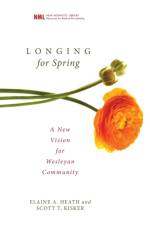
Description:Delving into the widespread, contemporary longing for a more serious and communal experience of Christianity, this book provides important theoretical underpinnings and casts a vision for a new monasticism within the Wesleyan tradition. Elaine Heath and Scott Kisker call for the planting of neo-monastic churches which embody the Wesleyan vision of holiness in postmodern contexts. This book also points toward some vital shifts that are necessary in theological education in order to equip pastors to lead such communities. Longing for Spring helps Wesleyans of all stripes understand the theory and praxis necessary for planting neo-monastic communities as a new model of the church that is particularly important in the postmodern context. The authors write in an engaging, conversational style that is conversant with postmodern culture, yet thoroughly informed by critical research. Heath and Kisker boldly challenge the imagination of the church, both within and beyond Wesleyan traditions, to consider the possibility of revitalizing the church through the new monasticism.Endorsements:""Welcome to the world of New Methodism, exciting evidence of the work of the Holy Spirit in the church today. New Methodism comes to us with contributions from the New Monasticism, John Wesley, Jonathan Wilson-Hargrove, and an emerging generation who are leading us to a fresh appreciation of what God intends the church to be. This is a wonderful book that quickly gives the theological rationale for a reformed church and then gives practical advice on how to grow to be a new church. This is exciting!""--Will WillimonBishop, The North Alabama Conference of the United Methodist Church""Longing for Spring connects United Methodism with a historical and theological approach that is very accessible, not to mention inspirational. I read it on an airplane and people around me wondered what I was reading because the authors'' writing is so delightful at times that I was laughing out loud! I can''t wait to make my first appointment of a clergy to a monastic community.""--Sally DyckResident Bishop of Minnesota, The United Methodist Church""Elaine and Scott are the best of guides for hungry Methodists. Their description of Wesleyan renewal is inviting. Their prescription for transformation is possible. I will be using this book in my class, our neighborhood and our congregation. What a blessing!""--Amy Laura HallDuke UniversityAbout the Contributor(s):Elaine A. Heath is the McCreless Assistant Professor of Evangelism at Perkins School of Theology, Southern Methodist University. She is the author of Out of the Night (2008).Scott Kisker is the James Cecil Logan Associate Professor of Evangelism and Wesley Studies at Wesley Theological Seminary, and is the author of Foundation for Revival (2007).
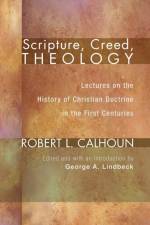
Description:In this long-awaited edition of the late Robert Lowry Calhoun''s lectures on the history of Christian doctrine, a powerful case is made for the scriptural basis of the ancient ecumenical creeds. The way Calhoun reads the patristic authors helps us see that the Trinitarian ""three-yet-one"" and Christological ""two-yet-one"" creedal formulations provide patterns for sorting out the highly diverse biblical ways of speaking of God and of the Messiah (Jesus) so that they are not contradictory. The implied lesson (all the more effective for many of Calhoun''s students, just because he let them draw this conclusion by themselves) is that the creeds are not to be understood as deductions from scripture (which they are not in any straightforward way) but as templates for interpreting scripture. It is  Trinitarian and Christological patterns of reading--which are implicitly operative for vast multitudes even in churches that profess to be creedless--that make it possible to treat the entire bible, Old and New Testaments together, as a unified and coherently authoritative whole.Endorsements:""Calhoun''s Lectures on the History of Christian Doctrine have a mythic status, so thank God we finally have them in reality. No one had a command of theology across the centuries more determinatively than Robert Calhoun. Those reading these lectures cannot but receive the tradition from one of its most generous minds. We are in George Lindbeck''s debt for the labor of love in editing these lectures.""--Stanley Hauerwas,Duke UniversityAbout the Contributor(s):Robert L. Calhoun (1896-1983) was Sterling Professor of Historical Theology at Yale Divinity School. He taught at Yale from 1923 until his retirement in 1965. Among his well-known colleagues and students were Roland Bainton, Hans Frei, Jaroslav Pelikan, Robert Wilken, Stanley Hauerwas, James Gustafson, and George Lindbeck.George A. Lindbeck is Pitkin Professor Emeritus of Historical Theology, Yale University. He is author of several books, including The Church in a Postliberal Age (2003) and The Nature of Doctrine (1984).
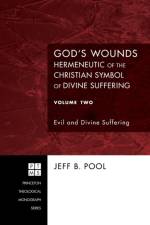
Description:This book constitutes the second volume of a three-volume study of Christian testimonies to divine suffering: God''s Wounds: Hermeneutic of the Christian Symbol of Divine Suffering, vol. 2, Evil and Divine Suffering. The larger study focuses its inquiry into the testimonies to divine suffering themselves, seeking to allow the voices that attest to divine suffering to speak freely, then to discover and elucidate the internal logic or rationality of this family of testimonies, rather than defending these attestations against the dominant claims of classical Christian theism that have historically sought to eliminate such language altogether from Christian discourse about the nature and life of God. This second volume of studies proceeds on the basis of the presuppositions of this symbol, those implicit attestations that provide the conditions of possibility for divine suffering-that which constitutes divine vulnerability with respect to creation-as identified and examined in the first volume of this project: an understanding of God through the primary metaphor of love (""God is love""); and an understanding of the human as created in the image of God, with a life (though finite) analogous to the divine life-the imago Dei as love. The second volume then investigates the first two divine wounds or modes of divine suffering to which the larger family of testimonies to divine suffering normally attest: (1) divine grief, suffering because of betrayal by the beloved human or human sin; and (2) divine self-sacrifice, suffering for the beloved human in its bondage to sin or misery, to establish the possibility of redemption and reconciliation. Each divine wound, thus, constitutes a response to a creaturely occasion. The suffering in each divine wound also occurs in two stages: a passive stage and an active stage. In divine grief, God suffers because of human sin, betrayal of the divine lover by the beloved human: divine sorrow as the passive stage of divine grief; and divine anguish as the active stage of divine grief. In divine self-sacrifice, God suffers in response to the misery or bondage of the beloved human''s infidelity: divine travail (focused on the divine incarnation in Jesus of Nazareth) as the active stage of divine self-sacrifice; and divine agony (focused on divine suffering in the crucifixion of Jesus of Nazareth) as the passive stage of divine self-sacrifice.Endorsements:""Pool''s book provides a probing study of the meaning of suffering and evil in the light of the Christian revelation. This second volume of a trilogy offers a depth of analysis of a perennial subject that contemporary theologians will value.""--Chester GillisGeorgetown University""Jeff Pool''s God''s Wounds provides one of the most carefully written discussions of the relationship between evil and divine suffering. This deeply theological book offers a sustained treatment of a theme that many Christians invoke but few can discuss with any clarity: the meaning of divine suffering and its role in liberation from all forms of oppression. It ought to be read by anyone concerned with the contemporary meaning of the drama of sin and redemption.""--Stephen J. PopeBoston College""The second volume of Jeff Pool''s trilogy interprets the core of our Christian heritage as a story and message of divine suffering in loving response to the miseries of creaturely cupiditas. Consistent in his method and in his critical approach, while painstakingly careful in dealing with both the Bible and the flood of relevant studies, the author offers his readers a coherent and challenging construal of the biblical view of the universe and its destiny.""--Petr Macek, Charles University in PragueAbout the Contributor(s):Jeff B. Pool is Associate Professor of Religion, College Chaplain, and Director of the Campus Christian Center, Berea College, Berea, Kentucky.
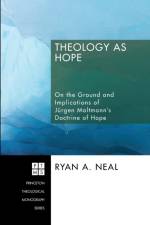
Description:Hope is the leitmotiv of J├╝rgen Moltmann''s theology. Not merely one aspect of his project, hope is the whole of it, the supreme doctrine interpenetrating all others. Indeed, hope is his method. The present study is both historical and developmental while also being analytical and interrogative. This chronological exploration seeks to show the nature, composition, and development of Moltmann''s doctrine of hope, as the distinctive doctrine of his theology, implicating all others. Part I establishes Moltmann''s doctrine of hope as grounded in God''s faithfulness in the cross and resurrection. Part II investigates major doctrines in his project in light of this ground. This design seeks to take advantage of the chronological approach while also integrating the best elements of a topical approach.Endorsements:""One of the most significant theological texts of the second-half of the twentieth century, Theology of Hope remains amongst the most enduring in J├╝rgen Moltmann''s output. In this clear and incisive study, Ryan Neal shows how the theme of hope shapes Moltmann''s subsequent work across the field of Christian doctrine. A perceptive study, this will make a valuable contribution to our understanding of Moltmann''s theology.""--David FergussonProfessor of DivinityUniversity of Edinburgh""In the 1960s the so-called theologies of hope rolled in to become one of the most noteworthy and influential waves of the late twentieth-century European theology, taking seriously a claim made four decades earlier by Karl Barth, that all theology is eschatology. Contrary to much of the commentary on his work, the oeuvre of the German theologian J├╝rgen Moltmann continued to be shaped by many of the concerns about hope and theological insights he developed during this earlier period, and Neal''s valuable book convincingly demonstrates that this is the case. This is an important, critical, and excellently researched study of a perennial theological issue in the fruitful reflections of one of the most important modern theologians.""--John C. McDowellMorpeth Professor of TheologyUniversity of Newcastle, AustraliaAbout the Contributor(s):Ryan A. Neal is Assistant Professor of Religion at Anderson University, South Carolina.
Abonner på vårt nyhetsbrev og få rabatter og inspirasjon til din neste leseopplevelse.
Ved å abonnere godtar du vår personvernerklæring.