














Gjør som tusenvis av andre bokelskere
Abonner på vårt nyhetsbrev og få rabatter og inspirasjon til din neste leseopplevelse.
Ved å abonnere godtar du vår personvernerklæring.Du kan når som helst melde deg av våre nyhetsbrev.

God is alive and personal, but he is also spirit. So having a relationship with God is different than having a relationship with any other person. This study will help you discover how you can grow and nurture your relationship with the living God. You'll learn how to study the Bible as you examine and discuss topics such as Encountering God, Knowing God, Being Sure We Know God, Learning about God, Conversing with God, Worshiping God, Following God.Each chapter has three main sections: Group Study (materials for a sixty- to ninety-minute small-group Bible study); Study Resources (notes and comments for use in both group and personal study); Personal Study (a series of reflection questions for use by group members on their own during the week).Extra help is available at the end of the book in the sections The Art of Leadership (tips on how to lead a small group) and Small Group Leader's Guide (notes on each session).The goal of PILGRIMAGE GUIDES is to understand what it means for us to meet and know Jesus. Through an examination of the spiritual disciplines of Bible study, prayer, and worship, we experience what it means to be a spiritual pilgrim--walking in a new way with God. And we look at how this new way changes the way we view others and live our lives in Christ.PILGRIMAGE GUIDES:Learning to Love GodLearning to Love OurselvesLearning to Love OthersRichard Peace, PhD, holds the Robert Boyd Munger Chair as Professor of Evangelism and Spiritual Formation at Fuller Theological Seminary. He is the author of numerous books, including Noticing God.
At the heart of Jesus' call to us is the call to love others. But this can be so difficult. For one thing, others are not always very lovable; for another, loving others sometimes gets in the way of our own self-interests. But if we want to follow Jesus, love needs to be our lifestyle, and the way we treat others really does matter. It's not all sacrifice and pain, though. To be in loving relationship with others is to be truly alive--and it's the source of our greatest joy. This study will help you love others the way Jesus desires. You'll learn how to study the Bible as you examine and discuss topics such as Loving Others, Loving Our Families, Fellowship with Others, Getting Along with Others, Opposition from Others, Sharing Our Faith with Others, Serving Others.Each chapter has three main sections: Group Study (materials for a sixty- to ninety-minute small-group Bible study); Study Resources (notes and comments for use in both group and personal study); Personal Study (a series of reflection questions for use by group members on their own during the week).Extra help is available at the end of the book in the sections The Art of Leadership (tips on how to lead a small group) and Small Group Leader's Guide (notes on each session).The goal of PILGRIMAGE GUIDES is to understand what it means for us to meet and know Jesus. Through an examination of the spiritual disciplines of Bible study, prayer, and worship, we experience what it means to be a spiritual pilgrim--walking in a new way with God. And we look at how this new way changes the way we view others and live our lives in Christ.PILGRIMAGE GUIDES:Learning to Love GodLearning to Love OurselvesLearning to Love OthersRichard Peace, PhD, holds the Robert Boyd Munger Chair as Professor of Evangelism and Spiritual Formation at Fuller Theological Seminary. He is the author of numerous books, including Noticing God.
Improper self-love leads to a lifestyle that is selfish and self-destructive. But failing to love yourself adequately is also self-destructive. Without proper self-esteem, people fail to use their God-given gifts and have difficulty loving others. Jesus calls us to walk the narrow road between selfishness and selflessness. This study will help you do so. You will learn how to study the Bible as you examine and discuss topics such as Loving Ourselves, Valuing Ourselves, Understanding Ourselves, Behaving Ourselves, Forgiveness for Ourselves, Growing Ourselves, Being Ourselves.Each chapter has three main sections: Group Study (materials for a sixty- to ninety-minute small-group Bible study); Study Resources (notes and comments for use in both group and personal study); Personal Study (a series of reflection questions for use by group members on their own during the week).Extra help is available at the end of the book in the sections The Art of Leadership (tips on how to lead a small group) and Small Group Leader's Guide (notes on each session).The goal of PILGRIMAGE GUIDES is to understand what it means for us to meet and know Jesus. Through an examination of the spiritual disciplines of Bible study, prayer, and worship, we experience what it means to be a spiritual pilgrim--walking in a new way with God. And we look at how this new way changes the way we view others and live our lives in Christ.PILGRIMAGE GUIDES:Learning to Love GodLearning to Love OurselvesLearning to Love OthersRichard Peace, PhD, holds the Robert Boyd Munger Chair as Professor of Evangelism and Spiritual Formation at Fuller Theological Seminary. He is the author of numerous books, including Noticing God.
The years between the Civil War and 1930 constitute the most critical period in the history of Disciples of Christ, yet little attempt has been made to understand that era's most prominent leaders, one of whom was J. H. Garrison. For more than sixty years, he edited and contributed to The Christian-Evangelist, the journal that became the weekly periodical of the Disciples. An editor with vast influence, he played a significant and sometimes decisive role in the life of his communion. This book is more than the story of one man; it is a critical study of the turbulent and transitional era in Disciple history spanned by his editorial career.The value of this book is enhanced by the extensive use that is made of J. H. Garrison's letters and diaries. This rich collection of source material has only recently been made available for historical research.
This book is intended as a devotional guide for the Advent season. Through the mediums of meditations, poetry, and prayer, it offers a spiritual resource for readers seeking to explore the many dimensions of this beloved season, and to deepen their appreciation of its mystery and wonder. Each day the reader is provided with either a prose meditation, based in Scripture, or a selection of poems, composed around the traditional themes of Advent/Christmas. The overall effect is that of a journey--a journey which moves, devotionally, through the days and weeks of December, toward Bethlehem, the stable, and the manger. Images, incidents, impressions, and items from the daily news are woven together to form a rich and rewarding tapestry, a pathway leading onward, an open door into the quiet places of the soul. Christmas Eve and Day are given special treatment, followed by a final section covering New Year''s Day and the twelve days of Christmas. The book also provides a source of creative imagery and language for clergy, and other worship leaders, as they face the challenges of speaking traditional truths in a new and inviting way. Yet another use would be as a small group study guide for Advent.
This book and the essays contained within are dedicated to Dr. Chuck Sackett in recognition of his thirty-two years of teaching at Lincoln Christian University. He currently serves as Professor at Large but has held a variety of roles and titles during his thirty-two years there. These essays are written by current colleagues and former students who have had the privilege of studying hermeneutics, homiletics, and ministry with Dr. Sackett. Each essay covers a topic of scholarly or contemporary interest in the fields of hermeneutics or homiletics. Hermeneutics and homiletics remain topics of discussion in the academy and the church. These essays continue that discussion. The essays overlap the two fields. Some essays focus heavily on hermeneutical issues with an eye towards proclamation, while others start with homiletics and hermeneutical issues are echoed in the background. The essays found in this book offer unique perspectives and approaches to interpretation and preaching. Though homiletics and hermeneutics are the fields of the study, the church remains the arena where the fruit of each discipline is observed most clearly, as Dr. Sackett instructed his students throughout his years of teaching.Eddy Sanders (DMin, Talbot School of Theology) is Professor of Biblical Studies and Ministry at Saint Louis Christian College. He has written several articles on preaching and ministry for the Christian Standard and is a contributor to Deuteronomy, The Prophets, and the Life of the Church (2013).Frank Dicken (PhD, University of Edinburgh) is Assistant Professor of New Testament at Lincoln Christian University. He is the author of Herod as a Composite Character in Luke-Acts (2014), and is a contributor to The Encyclopedia of the Bible and Its Reception and Lexham Bible Dictionary.
In this book, Nicholas Haydock explores the biblical presentation of the Levitical priesthood, drawing out themes that run throughout Scripture and reveal God''s intention for the priesthood. It is successfully argued that this intention cannot be divorced from God''s desire to reveal himself to the nations. This hypothesis is shown to be true in examining the various functions and metaphors ascribed to the Levites.Whereas in much of Old Testament criticism, the Levitical priesthood has been painted in a light contrary to the biblical depiction, The Theology of the Levitical Priesthood takes the canonical presentation of the Levites at face value. It is the author''s conviction that in attending to the biblical presentation of the Levites, the Church will be aided and better equipped to apply herself to Scripture and to participate within God''s mission, in the present day. ""[This book] successfully argues that the theology of the Levitical priesthood is not only a coherent whole, but it expresses a missional purpose that aided the priesthood and the people of Israel in their witness to the nations at large and in their worship of the One true God . . . This will provide for many a whole new avenue of viewing the fact that Israel and her leaders were to be a ''light to the nations.''""--Walter C. Kaiser, Jr., President Emeritus, Gordon-Conwell Theological Seminary, South Hamilton, MA""This helpful study brings together two important themes in the Old Testament that are often neglected by commentators and preachers: priesthood and mission. Haydock examines the role the priest was expected to play in Israelite society. His lifestyle, Haydock argues, should adorn Christian leaders, indeed all the people of God, and in this way draw the nations to the knowledge of God. This makes the priesthood central to the Biblical understanding of mission. [Theology is] a useful, original contribution to Biblical theology.""--Gordon Wenham, Tutor in Old Testament, Trinity College, Bristol, EnglandNicholas Haydock is currently a PhD student in Old Testament Theology and has been serving in Europe with the International Fellowship of Evangelical Students.
Reprint. First published by Columbia University, 1915.
Description:Irenaeus of Lyons (c. 130-202) was the greatest theologian of the early post-apostolic church. In his writings we have access to the Christian teaching of a spiritual grandson of the apostle John, for Irenaeus'' instructor in the faith was himself taught by the apostle. Irenaeus stresses the importance of apostolic teaching and faithfully handing on the apostolic tradition. His presentation of the Christian faith deserves careful attention, since he knew exactly what he was talking about. There is no better avenue to the apostolic tradition in the early church than his writings.Irenaeus'' massive Against Heresies offers a winsome and compelling presentation of the Christian faith, but few have read this magnum opus since the first two of its five books focus on exposing and answering Gnostic heresies, and the only complete English version is difficult to read.This volume eliminates both these obstacles. James Payton has condensed Against Heresies by cutting out most of the interaction with the Gnostics, allowing Irenaeus'' rich presentation on the Christian faith to shine through. Furthermore, the author has refurbished the English prose to make it accessible to contemporary readers.With this distillation readers now have access to Irenaeus'' rich presentation of the Christian faith, saturated in a thorough knowledge of Scripture and steadfastly rooted in the apostolic tradition of the early church. Anyone who wants to know what the early Christian church had received and passed on from the apostles can do no better than to begin with this book.Endorsements:""James Payton begins his book with a cymbal clash: ''Irenaeus was the greatest theologian to arise in the Church since the times of the Apostles.'' He is absolutely right. In recent decades he has been caricatured, by some, in the cause of rehabilitating the Gnostics, but his status as a Christian theologian is monumental and his insight is mystically profound. He remains one of the greatest Fathers of the Church catholic; and it is wonderful to see this artistic and skilful abridgement of his signature work made widely available for a new era.""--John A. McGuckinColumbia University""In the course of the past several decades, Dr. Payton has emphasized the huge importance of St. Irenaeus of Lyons for the history of theology. For years Payton has studied the most important of Irenaeus'' books, Against Heresies, helping to shape an understanding of the ancient theologian as a contemporary.... Besides being very approachable for a common reader the book is academically inviting. Irenaeus is portrayed as an author who can be recommended to students and laymen, as well as a broad academic audience. Payton''s work on the exploration of patristic theology cannot be overrated and represents a great contribution to the academic theological community.""--Boris GunjevicMatthias Flacius Illyricus, Zagreb, CroatiaAbout the Contributor(s):James R. Payton Jr. is Professor of History at Redeemer University College, in Ancaster, Ontario. He is the author of Light from the Christian East: An Introduction to the Orthodox Tradition (2007) and Getting the Reformation Wrong: Correcting Some Misunderstandings (2010).
Description:This study puts the thought of Evagrius Ponticus, a fourth-century theologian, into dialogue with modern cognitive science in regard to the topic of evil, specifically moral evil. Evagrius, in his writings about prayer and the ascetic life, addressed the struggle with personal moral evil in terms of the eight ""thoughts"" or ""demons."" These ""thoughts"" were transmitted by John Cassian to the Western church, and later recast by Gregory the Great as the Seven Deadly Sins. Though present understandings of evil appear to differ greatly from those of Evagrius, his wisdom concerning the battle against evil may prove to be of great help even today. Using the work of Pierre Hadot to recover Evagrius''s context, and the work of Paul Ricoeur to discuss how we construct descriptions and myths of evil, Evagrius is brought into dialogue with the cognitive sciences. Using current research, especially the work of Eugene d''Aquili and Andrew Newberg, this study reveals the contemporary relevance of Evagrius'' approach to combating evil. In addition, the interdisciplinary study of patristics and cognitive science opens the pathway to a better understanding between Christian tradition and the modern sciences. Endorsements:""Recent years have seen a resurgence in studies of Evagrius of Pontus bringing his work into a new relevance to today''s world. This book by Dr. Tsakiridis examines the work of Evagrius and focuses on a perspective not well-covered in the literature-Evagrius'' importance to science especially the cognitive sciences. The book is insightful and represents an important new contribution to studies of Evagrius'' work and to the science and religion discussion as a whole. --Gayle E. WoloschakThe Feinberg School, Northwestern University""Few writers in the field of religion and science have the competence to interpret so many and varied texts in patristic mystical and moral theology, contemporary neuro - science, and the turn to spirituality in contemporary theology . . . He shows how both cognitive science and mystical theology can mutually enrich and inform each other in ways unimagined by today''s popular neo-atheists and agnostics.""--Robert A. CatheyMcCormick Theological Seminary""In a thoroughly limpid style, George Tsakiridis sets before us an exceptionally interesting project: (1) he centers on sin, evil, and prayer in a way that is central to the religious life; (2) he engages the cutting edge domain of cognitive sciences; and (3) he invites us to take seriously both a much neglected fourth century religious thinker and the most contemporary work of scientists who focus on the mind and its activities.""--Philip HefnerLutheran School of Theology at Chicago, Emeritus""George Tsakiridis artfully compares and clarifies the concepts used by ancient and modern thinkers to describe meditation, ways to deal with good and evil, and mysticism, and adds neuroscientific studies of such experiences. Though the times were vastly different, enlightening human commonalities emerge.""--Carol Rausch AlbrightLutheran School of Theology at ChicagoAbout the Contributor(s):George Tsakiridis is currently a Lecturer in Religious Studies at Saint Xavier University, Chicago.
1929. The substance of this volume grew out of lectures delivered by the author on Origen (considered one of the greatest of all Christian theologians) at the University of Upsala. Contents: The Character of Origen's Writings, His Thought and Method; The Doctrine of God; Cosmology; Christology; The Doctrine of Redemption; and Final Things. See other titles by this author available from Kessinger Publishing.
Description:""''Deification'' refers to the transformation of believers into the likeness of God. Of course, Christian monotheism goes against any literal ''god making'' of believers. Rather, the NT speaks of a transformation of mind, a metamorphosis of character, a redefinition of selfhood, and an imitation of God. Most of these passages are tantalizingly brief, and none spells out the concept in detail. ""Deification was an important idea in the early church, though it took a long time for one term to emerge as the standard label for the process. That term was qe/wsij, theosis, coined by the great fourth-century theologian, Gregory of Nazianzus. Theologians now use theosis to designate all instances where any idea of taking on God''s character or being ""divinized"" (made divine) occurs, even when the term qe/wsij is not used. And of course, different Christian authors understood deification differently."" ""While some articles in this collection discuss pre-Christian antecedents of theosis, Greek and Jewish, most focus on particular Christian understandings. The article by Gregory Glazov examines OT covenant theology, with an emphasis on divine adoption, and on bearing the fruit of knowledge or attaining the stature of a tree of righteousness in Proverbs, Isaiah, and Sirach. The article by Stephen Finlan on 2 Pet 1:4 (''You may become participants of the divine nature'') examines the epistle''s apparent borrowings from Middle Platonic spirituality, Stoic ethics, and Jewish apocalyptic expectation. The epistle stresses ''knowledge of Christ,'' which means cultivation of godly character and growing up into Christ."" --from the IntroductionEndorsements:""If one were to seek a single volume constituting an up-to-date and learned coverage of the subject, this is the book.""--J. Robert Wright, General Theological Seminary, as reviwed in Religious Studies Review""An extraordinary collaboration of scholars examining the neglected theme of deification in the classic Christian tradition from its biblical roots through Irenaeus, Augustine, and Maximus, to contemporary reconstructions of Torrance and Soloviev."" --Thomas C. Oden, General Editor, Ancient Christian Commentary on Scripture.""Salvation as divinization is being recognized by historians and retrieved by contemporary theologians. Here is a wonderfully comprehensive and academically careful presentation of theosis from the Bible until Vladimir Soloviev. It is a superb contribution to fresh Christian thinking.""--Ellen T. CharryMargaret W. Harmon Associate Professor of Systematic and Historical Theology, Princeton Theological Seminary, and editor of Theology TodayAbout the Contributor(s):Stephen Finlan is an Adjunct Professor at Drew University and Seton Hall University. He is the author of Options on Atonement in Christian Thought; Problems with Atonement: The Origins of, and Controversy about, the Atonement Doctrine; and The Background and Content of Paul''s Cultic Atonement Metaphors.Vladimir Kharlamov is an Assistant Professor of Spiritual Theology at Sioux Falls Seminary.
Description:This work is based upon a series of lectures which were given at ''Scholae Cancellariae'', Lincoln, during Passion Week, 1949, on the invitation of the Warden, the Reverend Canon C. K. Sansbury. It is a laudable custom of the College during Passion Week each year to invite an outside lecturer to lecture upon some subject connected with the Passion of our Lord.The doctrine of Redemption among the early Fathers has never received the attention by scholars which it deserves. The reasons for this neglect are many and various. Scholars primarily concerned with the doctrine of the Atonement normally tend to hurry over the early centuries and to begin a serious discussion with the teaching of St. Anselm and of Peter Abelard, at whose hands the doctrine first begins to take a definite shape. Others select from the patristic material the passages and allusions which fit best into their own preferred doctrinal mould, without paying adequate attention to complementary patterns of thought which possess equal significance. Others again, because of the number and complexity of the issues involved, tend to leave the subject on one side, on the ground that the thinking of the Fathers is not sufficiently clear-cut and precise for anyone except the expert.This little book is offered to the ordinary reader interested in theology in the hope that it may convince him that the early Christian centuries did think honestly and interestingly about the central experience of their religion; to the theological student as a guide to a dark place; and to the expert as a reminder of a serious gap in theological bibliography and as a challenge to go into the land and possess it.from the Preface by H. E. W. Turner
Description:In Augustine the Theologian Eugene Teselle surveys the whole of Augustine''s theological achievement, viewing it not according to the rubrics of later systematic theology, as it is so often viewed, to the detriment of both Augustine and ""theology"", but as an inquiry progressing according to the problems with which Augustine was concerned and the historical challenges he faced.Teselle sketches the broad outlines of Augustine''s thought in six major periods, periods characterized by the basic orientations in the often perplexing variety of Augustine''s writings. This comprehensive method brilliantly delineates Augustine the theologian at work. It provides the framework of his problems, showing what is taken for granted, what options are at hand, what resources Augustine has for affecting a resolution. It is a sourcebook of the nature of the theological enterprise, one which may aid the present generation to think problems through once again with a measure of the breadth and originality Augustine exemplified. It is the inward history of a brilliant mind, a mind many complexities of which are still veiled by chronological unknowns, but which always gains by careful estimations like TeSelle''s. It is above all a reliable guide to the major themes in the constantly developing thought of this major Christian thinker, a co-dweller with us in an age of philosophical and theological uncertainties.
Harold Lindsell (1913-98) was an evangelical author and scholar. He taught at Columbia Bible College, Northern Baptist Theological Seminary, and Fuller Theological Seminary. He served as President of the Evangelical Theological Society in 1971, as well as editor of Christianity Today from 1968 to 1978. He authored more than twenty books, including The Battle for the Bible (1976).
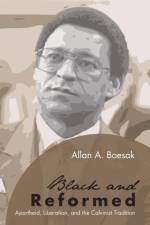
These essays represent a forceful, relentless engagement with the political, social, economic, and theological pillars upon which South African apartheid rested. In the renewed struggles against global apartheid, Boesak''s writings, in their theological grounding and with their social and political challenge, come across as alive, relevant, and powerful as they were in the struggle against South African apartheid, offering valuable insights and lessons for ongoing justice struggles today.""These are groundbreaking essays. Allan Boesak not only courageously exposes the racism which has for so long disguised itself in Calvinist garb; he also respectfully points the way to a revitalizing reformed Christianity. Black and Reformed is a must-read for all who care about the continuing reformation of the church.""--Richard J. Mouw, Former President, Fuller Seminary, Pasadena, CA""When Allan Boesak returned Calvinism to its biblical and liberating roots, he launched a revolution that led to the dismantling and demise of South Africa''s racist apartheid theology.""--Curtiss Paul DeYoung, Executive Director, Community Renewal Society, Chicago, IL""Black and Reformed is the only treatise that lucidly reasons that one can be Calvinistic while embracing liberation theology.""--J. Alfred Smith Sr., Professor Emeritus, American Baptist Seminary of the West, Berkeley, CAAllan A. Boesak received his PhD in Theology from the Protestant Theological University (Netherlands) in 1976, the same year of the Soweto Uprisings which marks his entry into public life in South Africa. As President of the World Alliance of Reformed Churches he called for the formation of the United Democratic Front to advance the anti-apartheid movement in 1983. He has written seventeen books and has received numerous awards, including the Martin Luther King Jr. Peace Award. He now holds the Desmond Tutu Chair for Peace, Global Justice and Reconciliation Studies at Christian Theological Seminary in Indianapolis.
The attic is a wondrous place. It is a place to fix things: Dad''s workshop is there, and Henry''s special corner, which hides his secret supply of building blocks. When his soldier father comes back changed, Henry''s fantastic block towers are threatened by Dad''s sudden outbursts.But in the attic inspirations come, and repairs of all kinds are made...Time, Love and Licorice is a story of pain and hope. This Healing Coloring Storybook is illustrated with drawings of Henry''s optimistic, creative and imaginative world -- a safe space in which children and families can face and try to heal from the disruptions caused by Post-Traumatic Stress Disorder (PTSD). Time, Love and Licorice is also a tool for professionals who are intent on helping those suffering from PTSD. The artwork creates a transpersonal space, a dream space. There are no images of angry fathers or frightened children to impose emotions upon the reader. The story is visually expressed through the familiar rooms and objects in the child''s life. One may observe, with a series of copies used over a course of time, that the child''s chosen method changes as creative self-Dr David H. Rosen is a physician, psychiatrist, and Jungian analyst. The vast array of his interests include finding meaning in suffering; spirituality as it relates to healing; dreams; all kinds of creativity, especially visual art and haiku; ""egocide"" as a meaningful alternative to killing oneself; and practicing what he preaches.Rosen is the author of ten books, including The Tao of Elvis; The Tao of Jung: The Way of Integrity; The Healing Spirit of Haiku with co-author Joel Weishaus; Clouds and More Clouds; Transforming Depression: Healing the Soul through Creativity (now in its third edition) written after interviewing survivors of jumps off the Golden Gate Bridge, and treating many suicidally depressed patients; Medicine as Human Experience with co-author Dr David Reiser, a classic in the field. Rosen''s books have been translated into many languages.The initial holder of the McMillan Professorship in Analytical Psychology at Texas A&M University, Rosen is Affiliate Professor in Psychiatry at the Oregon Health & Science University.Diane Katz has seen the value of emotional transformation through artistic expression. She uses a high-energy, emotion-releasing technique to draw with creamy blocks of beeswax crayons. The result is a cross between printing, drawing and monument rubbing, in which hidden images magically reveal themselves on the surface of the paper. This technique was used to create the cover of Time, Love and Licorice, as well as Diane''s illustrations for Beneath the Willow Tree, Garden Snippets and Apples Dipped in Honey: A Jewish ABC. Other healing books that include Diane''s artwork are: Purple: A Parable (for children & adults); The Tao of Elvis by Dr Rosen; On All My Holy Mountain: A Modern Fraktur (for families); and The Story-Letters from Appletta Tooth Fairy.Through Rosenberry Books, Diane''s work has been seen at the Metropolitan Museum of Art, the Smithsonian, the Chicago Institute of Art, Washington National Cathedral, etc. and recognized by Design Observer of the Winterhouse Institute.Diane lives with her husband in the woods of North Carolina among the fox squirrels, rabbits, deer, and green anole lizards. Interested in the curative properties of herbs, she is delighted to discover that candy made from real licorice root can be used to help heal adrenal exhaustion and stress.
A Dangerous Mind is a celebration of the ideas and influence of Delbert L. Wiens. It contains tributes to him, essays inspired by him, and some of his unpublished works. This effort has been brought together by his students, colleagues, and friends at the fiftieth anniversary of the publication of his ""New Wineskins for Old Wine,"" which hoped to guide the Mennonite Brethren as they faced the challenges of modernity--it has proven useful for other denominations facing similar transitions. This year also marks the sixtieth anniversary of Delbert''s foundation of the Mennonite mission in Vietnam. In addition to celebrating his ideas and influence through our writing, we have also endeavored to capture the spirit of his work through art illustrating each section of this volume.""A Dangerous Mind is a fascinating collection of essays. Wiens'' prophetic witness endures, an affront to modernist complicity in the contemporary church. The book rehabilitates Mennonite Brethren particularity--a story of discipleship, community, and peacemaking for Christ and his kingdom. Wiens'' new wine comes from old vines rooted in the radical reformation of Simons.""--Kevin S. Reimer, PhD, School of Education, University of California, Irvine""Delbert Wiens''s ''New Wineskins for Old Wine'' made a deep impression on Mennonite Brethren in Canada. It was the sixties and a ''Yale heretic'' became a prominent Mennonite voice, challenging MB''s bland adherence to generic evangelicalism, and pushing for a vital religious identity. Wiens took his arguments further during his 1967 Canadian lecture tour with The Old Wine, Will It Sour? Now, with this excellent Festschrift, we get a full portrait of the life and thought of this playful but serious iconoclast."" --Paul Tiessen, Professor Emeritus, English/Film Studies, Wilfrid Laurier UniversityDelbert L. Wiens was Professor of Humanities at Fresno Pacific University for almost thirty years. He published ""New Wineskins for Old Wine"" in 1965.
Worship at the Next Level explores why and how we worship as individuals and communities. Its diverse voices offer an interdisciplinary approach for worship leaders, pastors, musicians, and those involved in contemporary worship planning in churches, colleges, and youth groups. A key emphasis on understanding theology, culture, and leadership helps provide a well-rounded approach for anyone with a passion for worship.""Intelligent, provocative, and sagacious. This eclectic collection will dislodge your ideas about worship and provide keen insight for celebrating the work of Christ in the local church."" --Kevin J. Navarro, author of The Complete Worship Leader""Fresh, timely, practical, insightful and challenging articles . . . deep enough to satisfy scholars, yet practical enough to serve pastors and church leaders, making this book a valuable resource you will use over and over again.""--Robb Redman, pastor of Forest Hills Presbyterian Church, San Antonio, and author of The Great Worship Awakening
Church leaders and those who endeavor to plant new churches in Europe today face tremendous challenges, not least because the church itself is considered by many to be outdated, irrelevant, or even an abusive sect. Drawing on a wealth of experience, Developing New and Existing Churches in Europe helps to answer the question of how churches can become more relevant to the societies in which they exist. From biblical and missiological reflections to case studies and practical examples, the book gives insights into many of the key issues that church planters and those concerned with ""missionary"" renewal of existing churches are grappling with. Special attention is paid to the sociocultural and religious characteristics of Europe, which is marked by secularization, new forms of spirituality, and a unique Christian heritage, asking, what are typical barriers and bridges for the communication of the gospel?The contributors represent a wide variety of backgrounds and contexts across Europe and this is reflected in the breadth of topics covered. The chapters were presented during the Mission in Europe Symposium in Belgium (July 2014), and the highlights of the discussions afterwards are also included. The result is a valuable resource for church leaders, mission practitioners, and theologians alike.""Evert Van de Poll and Joanne Appleton's Church Planting in Europe is a timely book on a neglected subject. We find reflections on the biblical foundations, the European context, the church planters, and some case studies. It is recommended reading for theoreticians and practitioners.""--Hannes Wiher, Assistant Professor of Missiology at the Faculte libre de theologie evangelique de Vaux-sur-Seine (Paris), and at the Faculte Jean Calvin at Aix-en-Provence (France).""A helpful introduction to contemporary thinking and practice among European evangelicals involved in church planting, combining biblical reflection, cultural analysis, and missional resources, illustrated with case studies from different nations.""--Stuart Murray, author of Church Planting: Laying Foundations""This publication gives new insights into the complexity of churches in Europe coping with societies who are based on a pluralistic attitude toward religion. It is a good choice to combine the different perspectives of theology and mission strategies with examples of cultural contextualization and the struggle of practical implementations in different local situations. This book stimulates further discussions on the level of mission organizations, but also in the practice of the personal dialogue.""--Pieter Boersema, Professor of Religious Studies and Missiology, Evangelische Theologische Faculteit, Leuven, BelgiumEvert Van de Poll lives in France, where he is pastor with the French Baptist Federation and involved in church development. He is professor of religious science and missiology at the Evangelical Theological Faculty in Leuven, and a mission consultant teaching in various countries.Joanne Appleton is a writer and researcher interested in mission and church planting in Europe, and coeditor of Vista.
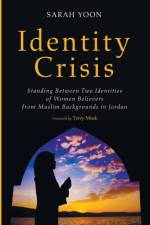
This book provides a general overview of the identity crises BMB (believer from Muslim background) women in Jordan go through and reasons for it. Traditionally, persecution from family, community, or the secret police is thought to leave these women with newfound faith. However, even before persecution exposes their new faith, many initial believers give up seeking the new truth and return to their previous phase due to a serious identity crisis. This phenomenon is found to occur particularly often among female BMBs because of their unique circumstances in the religious and sociocultural contexts of Jordan. Through an examination of BMB women's narratives, this book explores how Muslim women form their identities and what they experience in the process of conversion.
Endorsements:This is an important contribution to the virtually non-existent history of Orthodox theology of the ""post-Patristic"" age. Mr. Ware is right in stating in his introduction that ""four centuries of Turkish rule have left -- for good or evil -- a permanent mark upon the Greek Orthodox world"" and that ""without taking into account the way Greeks thought and felt under Turkish domination, and the way their theology developed between 1453 and 1821, it is all but impossible to understand the present condition of Greek Orthodoxy.""The book begins with an extremely valuable and well-documented chapter on the general state of Orthodoxy under Islam, with a special emphasis on the relations between the Greeks and the Latins. A modern ""ecumenicist"" will discover here many puzzling facts that could help him overcome some of the current oversimplifications.Chapter 2 gives us an exhaustive biography of Argenti and in chapter 3 through 4 the main theological problems debated by Argenti -- Baptism, Eucharist, purgatory, and papacy--are presented in a clear and penetrating way. Finally, a list of Argenti's writings and a bibliography crown this scholarly book.As said above, the importance of the book goes beyond the personal case of Argenti: it helps us understand the tragedy of Eastern Orthodoxy at the time when the West was reaching the climax of its religious and cultural development. ""Squeezed"" between Latin and Protestant influences, deprived of academic centers, Orthodox theology often surrendered to pressure. Mr. Ware's point is that in the case of Argenti it avoided such a surrender and preserved its tradition from deviations and errors.-- Alexander Schmemann, St. Vladimir Seminary Quarterly 9.2 (1965)About the Contributor(s):Kallistos Ware is an English bishop within the Eastern Orthodox Church under the Ecumenical Patriarchate of Constantinople and one of the best-known contemporary Eastern Orthodox theologians. From 1982 he has held the Titular Bishopric of Diokleia.
This book encourages an openness to accept and experience the truth, whatever its source. As philosopher Francis Schaeffer famously asked, ""How can we be sure that what we think we know of the world outside ourselves really corresponds to what is there?""Where do we look for an understanding of ourselves, our world, and the meaning of our existence? Is there such a thing as an objective and unchanging truth that applies to all people everywhere, throughout time? Can we discover it in philosophy, in the natural or social sciences, or in religion? This book sets out to explore the answers to these questions, and considers how finding the answers can enrich our lives and daily experience.Following the Truth Wherever It Leads investigates areas where the authenticated discoveries of natural science and the clear statements of the Bible agree with and support one another and asks whether there really are ""irreconcilable differences"" between them. It ends by attempting to portray a worldview whose promise may add fresh meaning and purpose to our lives.""I personally found this helpful to understand some of the tensions between differing worldviews and even between thoughtful Christian differences in interpretation. It is a good introduction/overview to many of the spokesmen to mainstream scientific thinking from both Christian young earth as well as old earth, and secular worldviews; with a perspective of desiring to be honest about our worldview biases in understanding and reconciling both revealed truth and natural truths.""--Dan Deffinbaugh, Timberdoodle Company, Shelton, WAKenneth Reddington was Professor of English and Psychology at Kanto Gakuen University and a lecturer in Biblical Psychology at a bible school in Japan. He is also the author of Japanese Education as Character Development (1988) and a behavioral psychology study of adolescent self-esteem.
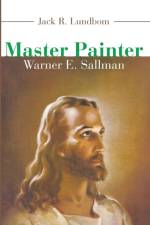
Millions of people recognize the religious painting know as Head of Christ, of which an estimated five hundred million prints have been sold. Very few, however, know the artist, Warner E. Sallmann. Sallman's lack of notoriety in professional art circles can be explained by the fact that he made little or no attempt to put himself forward as a Chicago or even a Swedish American artist. He had no exhibitions of his works, and his public life consisted largely of appearances before church and community groups to do chalk drawings. More important was his attitude regarding personal fame. Sallman let the Christ he painted be in the foreground, while the artist remained in the background. ""The time has come,"" argues Jack Lundbom, ""for a broader public to know the man who stands behind the painting and the other artwork bearing the Sallman signature.""Master Painter is a fascinating story of a gifted man with humble beginnings who overcame disappointment, ill health, and personal limitations in order to live out a vision: that his art serve not only for the enjoyment of humankind, but the practical end of instructing persons in the ways of God. Readers who know the art can now know the artist. It is a story eminently worth telling and one a broad public will be interested to know.""This book is long overdue and most welcome. Warner Sallman's images of Christ have brought inspiration to millions of people around the world throughout most of the twentieth century, yet only now do we finally have an authoritative treatment of his life and work. Lundbom has compiled a thorough review of Sallman's body of work, set in both personal and professional context. His descriptions of the images are rich in detail, and he includes brief stories of the purposes of the artist at work. . . . But perhaps most important, Lundbom shows us the painter as a humble and committed man of faith who lived, in his son Jim's words, a 'portrait of a godly life through the artistry of living.' Sallman was above all a servant of his Lord, placing at his service the gift he had been given. . . . Master Painter is the story of a man for whom all the lines of his life and his work led to Christ, and we are indebted to Jack Lundbom for recording that legacy.""--Glen R. Palmberg, President, The Evangelical Covenant ChurchJack R. Lundbom is currently Distinguished Visiting Scholar at Garrett-Evangelical Theological Seminary, Evanston, Illinois, and is an ordained Evangelical Covenant Church Minister.
Alan Sell explores the lives and ideas of four unjustly neglected Anglican philosophers: W. G. De Burgh (1866-1943); W. R. Matthews (1881-1973); 0. C. Quick (1885-1944); H. A. Hodges (1905-1976). This study fills an important gap in the history of twentieth-century philosophical and theological thought. Sell argues that these writers covered a wide range of philosophical topics in an illuminating way, and that a comparison of their respective standpoints and methods is instructive from the point of view of the viability or otherwise of Christian philosophizing. He discusses the challenges these four philosophical Anglicans issued to certain important trends in the philosophy and theology of their day, and argues that some of them are of continuing relevance.""Alan Sell has earned our warmest thanks for showing us the rich resources of Christian philosophy in these recent thinkers who were too early to be beholden to our current apologetic fashions. Anglicans should be proud of them.""--Terence Penelhum, University of Calgary, Canada""We should be grateful to Alan Sell for this thorough and detailed discussion of four largely unread twentieth-century philosophical theologians. This book, which is at once erudite and entertaining, reads like the account of a seminar in which the author is a sympathetic outsider who wants to understand what makes people think the way they do about God and the world--and then to see whether this can still inform the task of Christian theology and apologetics today.--Mark D. Chapman, Ripon College Cuddesdon and University of Oxford, UKAlan P. F. Sell, of the University of Wales Trinity Saint David and the University of Chester, is a philosopher-theologian and ecumenist with strong interests in the history of Christian thought in general, and of the Reformed and Dissenting traditions in particular. A minister of The United Reformed Church, he has held rural and urban pastorates, has served from Geneva as Theological Secretary of the World Alliance (now Communion) of Reformed Churches, and has held academic posts in England, Canada, and Wales. He has earned the rarely-awarded senior doctorates, DD and DLitt, is a Fellow of the Society of Antiquaries of London and of the Royal Historical Society, and holds honorary doctorates from the USA, Hungary, Canada, and Romania. He is the author of more than thirty books, and the editor of others.
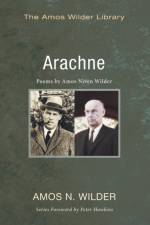
Amos N. Wilder (1895-1993), New Testament scholar, poet, literary critic, and clergyman, received all earned degrees from Yale. His teaching career included posts at Andover Newton Theological School, Chicago Theological Seminary, the University of Chicago, and Harvard Divinity School. Special honors included the Golden Rose of the New England Poetry Club (1943) and the Bross Prize (1952). Wilder also received the Croix de guerre for service in World War I. He was the brother of playwright and novelist Thornton Wilder.
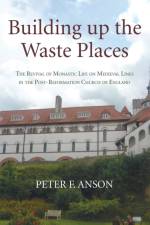
The title of this book gives a general idea of its subject matter--a sideline of the nineteenth-century Gothic Revival in art and literature. This took the form among High Church Anglicans, not only of restoring parish churches and cathedrals, but also founding brotherhoods on supposedly medieval lines. ""Olde Worlde"" externals, such as flowing black robes, shaven heads, sandals and rosary beads, helped to make young men forget that they were living in the midst of an industrial revolution. To a large extent, the whole business of building up monastic waste places was a form of escapism. As the reader will discover, the result was often as unreal as the twilight world pictured by Alfred Tennyson in his series of connected poems entitled Idylls of the King, which appeared at intervals between 1842 and 1885. The earlier ""monkeries,"" with their dim religious light and Gothic gloom described in these pages, were contemporary with Anthony Trollope's Barsetshire series of novels. Anson has dealt already with the revival of the religious life for men and women within the Anglican Communion in The Benedictines of Caldey (1940), The Call of the Cloister (1955), and Abbot Extraordinary (1958). In his latest book, he concentrates on Father Ignatius of Jesus, Abbot Aelred Carlyle, and Father Hopkins, each of whom tried to restore Benedictine monastic life in the post-Reformation Church of England. Much new material has been discovered in recent years that debunks more than one lovely legend. The octogenarian author has not been afraid to disclose many facts which some readers may feel ought to have been kept hidden, for they are not exactly edifying. The entire book might be summed up in Lord Byron's words: ""'Tis strange--but true; for truth is always stranger than fiction.""Peter F. Anson (1889-1975) was a member of the Benedictine brotherhood on Caldey Island from 1910 to 1924, and one of the twenty monks who followed Abbot Aelred Carlyle over to Rome in 1913. Reverting to lay life at the age of thirty-five, he soon began to make a name for himself as an author-artist. The first of his thirty-six published books appeared in 1927. He was the co-founder of the Apostleship of the Sea in 1921, and later on became a founding member of the Royal Society of Marine Artists. In 1969, he retired to his former island-home as an eventide-borne, where halfway through his eighty-fourth year he is still busy with drawing, painting, and writing; having been given the rare status of a Reformed Cistercian choir-oblate.
Abonner på vårt nyhetsbrev og få rabatter og inspirasjon til din neste leseopplevelse.
Ved å abonnere godtar du vår personvernerklæring.