










Gjør som tusenvis av andre bokelskere
Abonner på vårt nyhetsbrev og få rabatter og inspirasjon til din neste leseopplevelse.
Ved å abonnere godtar du vår personvernerklæring.Du kan når som helst melde deg av våre nyhetsbrev.

Sehnsucht: The C. S. Lewis Journal, established by the Arizona C. S. Lewis Society in 2007, is the only peer-reviewed journal devoted to the study of C. S. Lewis and his writings published anywhere in the world. It exists to promote literary, theological, historical, biographical, philosophical, bibliographical and cultural interest (broadly defined) in Lewis and his writings. The journal includes articles, review essays, book reviews, film reviews and play reviews, bibliographical material, poetry, interviews, editorials, and announcements of Lewis-related conferences, events and publications. Its readership is aimed at academic scholars from a wide variety of disciplines, as well as learned non-scholars and Lewis enthusiasts. At this time, Sehnsucht is published once a year.Grayson Carter is Associate Professor of Church History at Fuller Theological Seminary, where he has taught since 2002. Since its inception, Carter has served as General Editor of Sehnsucht: The C. S. Lewis Journal, the only peer-reviewed journal devoted to the study of C.S. Lewis and his writings published anywhere in the world.
What was family life like in the early church? How did early Christians treat their parents? Would early Christian families have been admired or scorned by their neighbors? Did the relationships between early Christian children and their parents mirror those in the families around them? What characteristics were typical of the first few generations of followers of Jesus?Marshalling the evidence from both New Testament and nonbiblical texts, Peter Balla offers fresh insight into the first Christian families.""This book solidifies Peter Balla''s reputation as an emerging leader among a new generation of Eastern European biblical scholars. Adding to previous works on New Testament theology and canon, Professor Balla clarifies the New Testament understanding of family, its social setting, and its hermeneutical implications. He also contributes to our understanding of the tensions that pulse through the New Testament. At the same time he points to profound unity. Balla''s diligent research and clear reasoning result in wise insights that no one pondering this topic will wish to miss.""--Robert W. Yarbrough, Associate Professor of New Testament, Trinity Evangelical Divinity School""In the midst of growing interest in children in early Christianity, this book carves out a special place with its focus on children''s duties towards parents. It is a competent analysis not only of texts but also of inscriptions, papyri, and other private documents from the social context. A close and prolonged look at controversial New Testament texts leads to the conclusion that the duty to parents was never abrogated in the teaching of Jesus or his successive disciples. A worthwhile contribution to an expanding field.""--Carolyn Ostek, Professor of New Testament, Brite Divinity School.Peter Balla is Professor of New Testament at Karoli Gaspar University of the Reformed Church in Hungary (Budapest). Educated at the Reformed Theological Academy in Budapest, and Edinburgh University (PhD, 1994), Professor Balla was also a Humboldt scholar at the University of Heidelberg and was awarded his Habilitation degree from the Evangelical Lutheran Theological University in Budapest. In addition to numerous essays, he is the author of Challenges to New Testament Theology. He is married with four children.
This is a valuable source book for the idea of rest as it occurs in a wide spectrum of ancient Jewish and Christian literature. The author provides a new way of understanding Matt 11:28-30 that challenges most recent scholarship and acts as a guide for application in the church.Jon C. Laansma is Associate Professor of Ancient Languages and New Testament, Wheaton College and Graduate School.
""William Myers has produced an outstanding study of the call to ministry among African American clergy. This is the broadest and deepest study of African American call stories and narratives ever written. Moving beyond the ethnographic descriptions, Myers has placed the call narratives and stories in theoretical perspective, relating them to the traditions of hermeneutics and theological reflection. Highly recommended for all students of African American religious traditions.""--Lawrence H. Mamiya, Vassar College""The churches need this examination of a distinctive phenomenon of the African American religious experience to which Myers applies impressive cross-disciplinary research skills and insight. A fine contribution to black religious studies!"" --Gayraud S. Wilmore, Editor, Journal of the Interdenominational Theological Center""This is a pioneering work. It attends to a central dimension of African American Christianity, the call, a topic largely neglected by theologians and religious studies scholars. Bringing multiple perspectives to bear, Myers argues that the call is not only a kind of religious hermeneutic but also a form of ritual and of narrative. Myers has a finely tuned ear for the nuances and richness of specific African American voices.""--Ron Grimes, Wilfrid Laurier UniversityWilliam H. Myers is Professor of New Testament and Black Church Studies at Ashland Theological Seminary, Ashland, Ohio, and is the president and CEO of the McCreary Center for African American Religious Studies. Born in Stonewall, Mississippi, Myers received a PhD in religious studies in 1991 from the University of Pittsburgh. In addition to numerous articles in religious journals, he has also authored the book The Irresistible Urge to Preach: A Collection of African American ""Call"" Stories, which serves as a companion volume to this book.
This is a groundbreaking study in the African American religious experience. Never before has there been a published collection of oral African American ""call"" stories that treats them as a genre worthy of scholarly analysis.This volume of eighty-six stories was collected in tape-recorded interviews over a six year period from 1985 to 1991. Significantly, this unique, in-depth study represents at least eight different Christian denominations. Many of the men and women who share their ""call"" story in this volume are nationally and internationally known.William H. Myers is Professor of New Testament and Black Church Studies at Ashland Theological Seminary, Ashland, Ohio, and is the president and CEO of the McCreary Center for African American Religious Studies. Born in Stonewall, Mississippi, Myers received a PhD degree in religious studies in 1991 from the University of Pittsburgh.
Thorsteinsson''s study of Romans poses a thoroughly argued challenge to Pauline scholarship. His argument has the potential of invalidating the reading of Romans 2 hat has contributed to a perception of Paul as utterly negative towards his fellow Jews and first-century Judaism.Among matters of scholarly dispute is the function and identity of Paul''s interlocutor(s) in chapter 2 of Romans. Scholars agree universally that the individual addressed in 2:17-29 is a Jew, but with respect to the identity of the interlocutor of 2:1-5, there is no consensus. The majority of scholars hold that the interlocutor is a Jew throughout the chapter. A weighty minority argues that the individual addressed in 2:1-5 is a Gentile and that there is a shift of interlocutor in 2:17.In his investigation into the pros and cons of these positions, Thorsteinsson endeavors to challenge both majority and minority. Basic to his approach is to allow the larger context and framework of the letter to be of help in assessing the function and identity of Paul''s partner(s) in dialogue. Thus the epistolary structure and setting of Romans, the relationship between Paul and his audience, the identity of the audience, and the dialogical style of the letter are used to ascertain the function and identity of Paul''s interlocutor(s) in Romans 2. By engaging an imaginary interlocutor, Paul utilizes a well-established epistolary technique in Greco-Roman antiquity.Thorsteinsson concludes that Paul wrote Romans to a particular group of people in a specific, contemporaneous situation. The letter''s message arose out of Paul''s missionary obligation to proclaim God''s ""good news"" to Gentiles in Rome. The minority view that Paul''s interlocutor in 2:1-5 is a Gentile is combined with the majority opinion that there is but one interlocutor throughout the chapter. In sum, ""the common opinion that Romans 2 contains Paul''s piercing critique of his fellow Jew should be rejected. The individual censured in the chapter is not a Jew . . . "" but a Gentile who claims to be a Jew.""Thorsteinsson has produced a thoroughly readable monograph that not only attempts to answer an age-old problem but along the way gives reasoned exegesis to many of the difficult questions in Romans. This monograph should be essential reading for anyone interacting with the argument and audience of Paul''s letter to the Romans.""--Bryan D. Lee, University of Sheffield, in Review of Biblical Literature (May 2005)Runar M. Thorsteinsson is Professor of New Testament Studies at the Faculty of Theology and Religious Studies at the University of Iceland. He is the author of Roman Christianity and Roman Stoicism: A Comparative Study of Ancient Morality (2010).
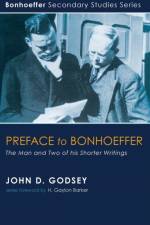
Godsey''s seminal study is the first dissertation to be written on Dietrich Bonhoeffer''s theology. It first appeared in 1960 when Bonhoeffer''s name was relatively new in English-language circles. This work, which surveyed the entire Bonhoeffer corpus available at the time, quickly became a standard text that laid the groundwork for Bonhoeffer studies thereafter. Godsey explores Bonhoeffer''s life and the key themes of his Christocentric theology, providing an introduction to mid-century Protestant theology, and showing how Bonhoeffer''s theology can serve as a resource for those who seek to engage theology with the world. In the intervening years since its publication, Bonhoeffer scholarship has progressed, but much of what we think about Bonhoeffer''s theology can be found in the pages of this work. Bonhoeffer''s life and work bear witness to the fact that the church cannot live on ""cheap grace,"" but only on the present Christ.""The reissue of Godsey''s ground-breaking Theology of Dietrich Bonhoeffer, a doctoral dissertation directed by none other than Karl Barth, illuminates how Bonhoeffer''s forceful Christocentrism was a foundation and unifying principle of his thought throughout his life and well into his prison letters.""Geffrey Kelly, Professor Emeritus of Systematic Theology, La Salle University John Drew Godsey (1922-2010) was a renowned scholar of German theologian Dietrich Bonhoeffer. After earning his doctorate in theology from the University of Basel, Switzerland, where he studied under Karl Barth, Godsey enjoyed a rewarding teaching career at Drew University and Wesley Theological Seminary. He was a founding member of the International Bonhoeffer Society, served as president of the American Theological Society, and was active in the American Academy of Religion and the Karl Barth Society of North America.
This volume presents two of Bonhoeffer's writings that are vital to understanding his life and thought. The first, "Thy Kingdom Come," is a passionate lecture delivered in 1932 -- a year before he left Germany in protest of Nazism. "The First Table of the Ten Commandments," written twelve years later from a Nazi prison, is a mature and insightful study of the first three commandments.
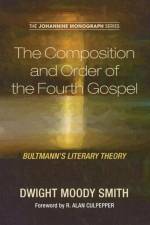
In The Composition and Order of the Fourth Gospel D. Moody Smith engages the masterful commentary on John by Rudolf Bultmann, evaluating critically his views of John''s sources, order, redaction, and meaning. A book every bit as helpful for understanding Bultmann''s work as the work itself, this book is now made accessible in paperback form fifty years after its original publication. Introduced admirably with a new foreword by the author''s former doctoral student, R. Alan Culpepper, the printing of this monograph makes for essential reading in Johannine studies and New Testament studies overall.""D. Moody Smith''s Composition and Order of the Fourth Gospel is an important milestone in American New Testament scholarship. Smith lays out in a clear and well-organized way the complex theory of Rudolf Bultmann about the fashioning of the Fourth Gospel, while also offering a respectful critique of the theory. Bultmann''s hypothesis in turn has stimulated a continuing scholarly dialogue about the process by which the distinctive literary and conceptual features of the Gospel were produced. Smith''s book remains a valuable resource for anyone concerned about that process.""--Harold W. Attridge, Sterling Professor of Divinity, Yale University Divinity School ""D. Moody Smith''s monograph on Bultmann''s literary theory is a landmark publication. It won him international recognition as one of the leading Johannine experts in the world. . . . Culpepper''s masterful introduction highlights the reasons why we need Smith''s research to again help us focus our search for the genius of the Fourth Evangelist.""--James H. Charlesworth, George L. Collord Professor of New Testament Language and Literature, Princeton Theological Seminary ""As Bultmann''s commentary on John may be considered the most provocative and influential New Testament monograph of the twentieth century, Smith''s engagement of it poses its most important analysis. Here, with an outstanding forward by Alan Culpepper, this pivotal monograph is now available to a new generation of readers in a timely and accessible paperback form. Delighted!"" --Paul N. Anderson, Professor of Biblical and Quaker Studies, George Fox UniversityD. Moody Smith served at Duke University Divinity School as the George Washington Ivey Professor of New Testament since 1965 (now Emeritus) and as President of the Society of Biblical Literature in 1999. He is author of six books on the New Testament and many published essays.
A properly ecumenical theology, T. F. Torrance believed, points the church to Christ as the only source and reality of its own unity. Its only hope for unity must be discovered in him and unveiled to the church, rather than pieced together and manufactured through ecumenical slogans and well-meaning intentions. Acting on this belief, Torrance initiated an international dialogue of Reformed and Orthodox Churches, which culminated when the World Alliance of Reformed Churches and the Orthodox Church issued a groundbreaking joint statement of agreement concerning the Trinity in 1991, a move beyond the filioque controversy that has divided East and West for a millennium. The current volume on T. F. Torrance and Eastern Orthodoxy continues the theological and ecclesial work of the reintegration of Western and Eastern traditions on a classical patristic foundation.""This book celebrates and extends T. F. Torrance''s significant and formative engagement with Patristic and Orthodox thought. It is a groundbreaking and exemplary achievement."" --Khaled Anatolios, University of Notre Dame""This volume is essential reading for scholars of Torrance''s thought and will be of major interest to students of Orthodox theology and ecumenism."" --Alan Torrance, University of St. Andrews""The appearance of this book marks . . . a new chapter in contemporary theological and ecumenical conversation. . . . A new path is being charted for ecclesial theology in the service of Christ and his Gospel."" --George Hunsinger, Princeton Theological Seminary""A fitting tribute to a remarkable man."" --Andrew Louth, University of Durham""In our paradoxical situation of globalization that has led to increased fragmentation, and at a time when the fervent ecumenical hope for Christian unity has long since passed, the appearance of this book is both timely and urgent."" --Aristotle Papanikolaou, Fordham University""Truly a ''landmark volume.'' The editors, Dr. Todd Speidell and Fr. Matthew Baker of righteous memory, have put us all in their debt."" --John A. McGuckin. Columbia University""This is a rich and revelatory volume. . . . Scholars and students from East and West alike will find this an immensely stimulating read.""--Marcus Plested, Marquette UniversityFr. Matthew Baker (Ph.D., Fordham University) was a Greek Orthodox priest at Holy Trinity Parish in Norwich, CT, a committee member of The Fr. Georges Florovsky Orthodox Christian Theological Society, and Associate Editor of Participatio: The Journal of the Thomas F. Torrance Theological Fellowship. Todd Speidell (PhD, Fuller Theological Seminary) is Editor of Participatio: The Journal of the Thomas F. Torrance Theological Fellowship, General Editor of The Ray S. Anderson Collection (Wipf & Stock), and Adjunct Professor of Theology at Montreat College.
ADULTERYRecognizing the Signs Stopping It Before It Starts Recovering from the DamageOne-half of the young and middle-aged couples in this country will at some time struggle with the painful and destructive results of an affair. Can these marriages be saved? Can the number of shaken marriages be reduced?Psychologist and counselor Henry Virkler has some answers. In this vital book he describes the devastating effects of adultery, how couples can take preventive steps to reduce the likelihood of it happening in their own marriages, and what to do if it does happen. He writes for professional counselors, for pastors, and for those laypersons who find themselves wanting to understand the situation better.While the author is a committed Christian psychologist and counselor, he warns that faith doesn't automatically safeguard couples from sexual temptation. He shows- how to avoid "innocent" situations that can easily lead to an affair;- what you can do to strengthen your marriage and reduce the possibility that you or your partner will be tempted in an affair;- how to tell if your mate is having an affair, and what to do if your worst fears prove true;- how adultery does not need to lead to divorce if approached in the right way.Dr. Henry Virkler is Professor of Counseling at Palm Beach Atlantic University in West Palm Beach, Florida. He was involved in marriage and family counseling for fifteen years. Dr. Virkler and his wife have two sons, two wonderful daughters-in-law, and four granddaughters.
Biblical Storytelling At Its Best!Helen Bruch Pearson examines the biblical witness of:TamarRahabRuthBathshebaMary, the mother of JesusJoin Pearson as she fills in the gaps and helps history become her-story.""Helen Pearson has engaged stories of Jesus' female ancestors with great care, pondering biblical texts, biblical scholarship, and traditions of midrash. She shares her discoveries in the form of lively narratives. The result is a Bible study that is much needed and will be valued by people who yearn to discover the Bible's most hidden treasures.""--Mary Elizabeth Mullino Moore, Professor of Religion and Education, Director, Women in Theology and Ministry, Candler School of Theology, Emory University""Insightful and provocative, these studies of Jesus' foremothers take the reader into the lives of five remarkable women. Pearson helps us see how these women who had little social power nevertheless made decisive contributions to the life of the Israelite people at critical junctures, even as they found ways to secure lives of dignity and justice for themselves. Mother Roots helps us understand why these unconventional and controversial women are lifted up for special notice in Matthew's genealogy of Jesus.""--Carol A. Newsom, Professor of Old Testament, Candler School of Theology, Emory UniversityHelen Bruch Pearson is a retreat, workshop, and seminar leader; guest teacher and preacher; designer and leader of worship and liturgical events. Emerita Professor of Theology, Candler School of Theology of Emory University, Atlanta, GA, Pearson is an ordained minister in the United Church of Christ. Along with many articles and curriculum studies, she is also the author of the popular Bible study Do What You Have the POWER to Do: Studies of Six New Testament Women.
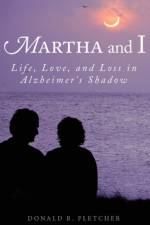
You are drawn into the struggle from author Don Fletcher's side, as he tries to understand and cope with what is happening to Martha. At the same time, in alternate chapters before the onset of the disease, you live with Martha an Don through adventures and challenges in the North Chilean desert while they start their family of six children; and with Martha's remarkable career as a church musician, teacher, and choral director in Mexico, Texas, Alabama, and finally back home in New Jersey. The effect of the parallel stories, ""before and after,"" is powerful and the ending poignantly serene.Don Fletcher's writing combines the sensitivity of a poet and a religious thinker, reflecting his PhD in English from Princeton University and education as a Presbyterian minister. Having grown up in Korea in a missionary family, he served the church in Chile and the Caribbean, and back in the U.S. he taught English and biblical studies at high school and college levels. Ordained 70 years ago, he still preaches and leads spiritual studies in New Jersey. His other books include Doors of Bronze: a Narrative Poem on the Passion and Triumph of Jesus; Turnings: Lyric Poems Along a Road; I, Lukas, Wrote the Book; View from the Playroom Floor; and The Gift: Looking to Jesus As He Was.
The publication of these essays in one volume--essays published separately and in diverse contexts over a period of thirty years--is something of an event. Professor Hooker is one the foremost New Testament scholars currently writing, and Paul is one of her major interests. This collection includes some of her best writing on Pauline ideas and their contemporary significance. The essays focus in particular on Paul's understanding of human redemption. The author shows that in contrast to Adam, who was created in the image of God, but who lost God's glory, Christ is the true image of God and the embodiment of his glory. Christ has achieved ""what the Law could not do"" (Rom 8:3), and though the Law expressed the purpose of God and reflected his glory, its power was incomplete. Several essays, in exploring this relationship between old and new, center on the significance for Pauline theology of the notion of ""interchange in Christ,"" and Professor Hooker puts forward the view that Paul's idea of participation in Christ (conveyed in such phrases as ""in Christ"" and ""with Christ"") is the key to understanding his Christology.
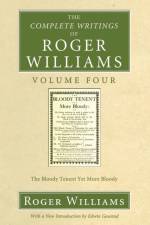
Ten years after the U. S. Civil War, a group of men in Rhode Island made a conserted effort to rescue the widely scattered writings of Roger Williams. Few sets were printed though, and under the guidance of Perry Miller, The Complete Writings of Roger Williams were brought back in 1963, but still in short numbers. The present collection now makes these volumes available to readers in their original orthography.The theme of religious liberty is dominant in these volumes, running through Williams's correspondence with John Cotton and on through his famous pair of works on The Bloudy Tenent of Persecution. All of the extant shorter writings and letters of Roger Williams are included in this set, along with two significant works resulting from his engagement with Native Americans: his seminal Key into the Language of America and Christenings Make Not Christians.""Roger Williams was one of those rare individuals who took the accepted ideas of his time and followed them to conclusions that challenged his contemporaries and still challenge us. To have his complete writings once again available is a great service to all who would understand American religion and political institutions at the deepest level.""Edmund S. MorganSterling Professor of History Emeritus Yale University""It has been America's great good fortune that Roger Williams's career stood at the beginning of its history. Just as some experience in the youth of a person is ever afterward a determinant of his personality, so the American character has inevitably been molded by the fact that in the first years of colonization there arose this prophet of religious liberty. Later generations could not forget him or deny him. The image of him in conflict with the founders of New England could not be obliterated; all later righteous men would be tormented by it until they learned to accept his basic thesis, that freedom is a condition of the spirit.""Perry Miller (1963)Roger Williams (1603-1683) grew up in Puritan circles in London, sailed to Massachusetts in 1630, and, having been banished for his controversial views on the separation of church and state, founded Rhode Island on the basis of his new principles of religious liberty.
Power. Politicians crave it. Money buys it. And some people will do anything to get it.In a world where New Agers rely on crystals and channeling to tap into spiritual power, the Christian is reminded that Jesus used supernatural power to heal the sick, cast out demons, and raise the dead. Two thousand years later, the world still desperately needs a Savior who works in power. However, many modern Christians are embarrassed and reluctant to preach a gospel accompanied by supernatural power. Our Western worldview conditions us to fit God into a neat, predictable mold.But Kraft is convinced that the power of the gospel will not be confined to our categories. Step by step, he offers a biblical understanding of signs and wonders and shows how Christians can become God's instruments to heal the sick, to work miracles, and to oppose the counterfeit powers of this age.There is something that makes ['Christianity with Power'] quite possibly great, maybe even a major publishing event to be noted some day when the history of the modern church is written. . . . Kraft helps us as no one else has in understanding our Western worldview in relation to the way the Holy Spirit is working today."" --from the ForewordWhy do we seem to experience so little of God's power in our lives? Do we think and act in ways that block out the love of God for us? If you wonder about such questions, Charles Kraft's 'Christianity with Power' will guide you to answers that will touch your heart and change your life."" --Bert Ghezzi, author of Becoming More Like JesusChuck Kraft takes us down the path of his own experience and helps us identify the cultural impediments that prevent us from experiencing the fullness of the faith. But more than that, he wisely guides us to principles of faith that will help us to rediscover the power of Christ in our practice of the faith."" --Robert Webber, Northern SeminaryCharles H. Kraft is Sun-Hee Kwak Professor of Anthropology and Intercultural Communication at Fuller Theological Seminary. He is also President of Deep Healing Ministries, Inc.
Calum M. Carmichael here challenges commonly accepted views respecting the derivation of the biblical laws recorded in Deuteronomy and the Decalogue, presenting compelling evidence that literary traditions, rather than social imperatives, dictated the form taken by the laws. Carmichael confronts and discusses such problematic and important issues as the sequence in which apparently unrelated laws appear. Why, he then asks, are some laws general in scope, while others are extremely specific? Acknowledging the literary sophistication of the biblical compilers, Carmichael accounts for their attribution of the Deuteronomic laws to Moses, and of the Decalogue to Yahweh. He asserts that, in order to preserve the prophetic impact of their material, the compilers closely studied existing biblical narrative, and selected laws which maintained the appropriate historical context. Using this perspective, Carmichael is able to detect strong logical continuity in both the structure and the content of the Decalogue and the Deuteronomic laws. An original and distinguished contribution to the study of biblical law, Law and Narrative in the Bible will interest legal historians and Biblical scholars alike.Calum M. Carmichael is Professor of Comparative Literature and Biblical Studies at Cornell.
Two and a half years after the devastation of Hurricanes Katrina and Rita, New Orleans and south Louisiana continue to struggle in an unsettled gumbo of environmental, social, and rebuilding chaos. Citizens await the fruition of four successive recovery and reconstruction planning processes and the realization of essential infrastructure repairs. Repopulation in Orleans Parish has slowed considerably; the parish remains at best two-thirds of its former size; thousands of former residents who wish to return face barriers of many kinds. Heroic efforts at rebuilding have occurred through the efforts of individual neighborhood associations and voluntary associations who have attempted to address serious losses in affordable housing and health care services. Walking to New Orleans traces how a dominant but paradoxical model of the relation between the human and natural worlds in Western culture has informed many environmental and engineering dilemmas and has contributed to the history of social inequities and injustice that anteceded the disasters of the hurricanes and subsequent flooding. It proposes a model for collaborative recovery that links principles of ethics and engineering, in which citizens become active, ongoing participants in the process of the reconstruction and redesign of their unique locus of habitation. Equally important, it gives voice to the citizens and associations who are desperately working to rebuild their homes and lives both in urban New Orleans and in the villages of coastal Louisiana.In Walking to New Orleans Robert and Deanne Ross have written an important book about the tragic conditions in New Orleans. Or, we really should say, the New Orleans tragedy--for the symbolic importance of what happened and what did not happen there will doubtless stand on its own for years to come as a symbol of what can only be described as a national loss of the sense of community. For not only did New Orleans lose itself, but all of the rest of us lost New Orleans. We lost it by reading and not thinking, by watching and not seeing, by knowing and not acting. By not really caring enough about our fellow citizens, friends, and neighbors. This is quite a beautiful book in its conception, expression, and deep valuing of human beings and their communities. And it raises important questions about who we are and what we have become as Americans in the twenty-first century. --Chris WyeFounder and Former DirectorCenter for Improving Government PerformanceThe National Academy of Public AdministrationWalking to New Orleans is an astonishingly informed and informative account of one of the major human, natural and political disasters in recent memory. Having personally suffered the furor of Katrina, part-time New Orleans residents and longtime students of Louisiana history and Cajun culture Robert and Deanne Ross have written a book that is must reading for anyone concerned about the implications of the interplay between our natural environment and political process for questions of social justice. Weaving together historical, theological, scientific, political and economic analysis, they create a compelling narrative about pressing issues whose significance extends far beyond this particular event. Not content with criticizing the mistakes of the past, the Rosses develop a richly suggestive notion of ""Participatory Design,"" which can serve as a model for future development. Issuing an ethical challenge that we ignore at our own peril, this book is social criticism at its best-Professor Mark C. TaylorChair, Department of Religion, and Co-Director of the Institute of Religion, Culture and Public Life, Columbia University, and Cluett Professor of Humanities, Williams College. Robert R. N. Ross currently teaches courses in the areas of philosophy and the study of religion at the University of Massachusetts, Boston, and at Starr King School for the Ministry/Graduate Theological Union in Berkeley, California; he also
This book is the first full-length literary study of the book of Judges in its finished form as a narrative work with its own distinctive structure and themes. Two basic questions control the analysis throughout. How is the text structured? What does it mean as a complex whole? The narrative world of the text is explored through analysis of plot structure, formal structure, character presentation, tone, point of view, and so on. Webb's principal findings are (1) that the basic issue addressed by the book is the continued presence of Canaanites in the land despite the oath sworn to the fathers and (2) that the story of Samson, whose career recapitulates that of Israel in the Judges period, is the thematic climax of the book. The so-called deuteronomic material is found to be closely integrated, both structurally and thematically, into the rest of the book. This book, researched in Sheffield, is an outstanding example of the new literary criticism of the Bible.
This book has grown out of Bible studies carried on jointly by a Dominican priest and a Jewish rabbi. New Testament and rabbinic texts have been studied by various combined groups of Jews and Christians, and the reactions of the groups noted by the authors. From their experience a textbook has emerged for others to use, ideally in similar joint groups.The main topics covered are 'the great commandment,' the synagogue and its function, the parable, the Sabbath, divorce, and forgiveness. These topics differ not only in subject matter, but also in the type of comparison offered--legal, historical, literary, theological, and even contracting themes.Reading the texts will produce questions for dialogue - some suggested questions for discussion are also included, also with a useful glossary and a bibliography.
In the following pages I have tried to give an account of the most recent discovery in theological literature, the Gospel attributed to St. Peter, in such a form as to familiarise the mind of the non-technical reader with some of the results which are being arrived at by Biblical scholars, and which ought to be as encouraging to our faith as they are stimulating to the understanding. The Gospel of Peter, even in the imperfect form in which it has come down to us, is the breaking of a new seal, the opening of a fresh door, to those who are engaged in the problems presented by Biblical and Patristic criticism. We may expect anything, in the world of Christian letters, after such an astonishing discovery; if we do not realise our expectations, it will certainly be because, either at home or abroad, in labours philological or archaeological, we are wicked and slothful servants. --from the PrefaceJ. Rendell Harris (1852-1941) was educated at Clare College, Cambridge University. He taught at Johns Hopkins University, Haverford College, and Leiden University. He was renowned for his acquistion and interpretation of ancient manuscripts.
First-class insight into the life and mission of the Christian church in the first four centuries, based on solid scholarship and a clear sense of mission.--Samuel Escobar, Palmer Theological SeminaryWritten in a lively and clear manner, this small volume makes many connections between different aspects of early Christian history and practice. I have learned from reading it and recommend it to both scholars and beginners.--Paul Bradshaw, University of Notre DameKreider traces the changing nature of the process of conversion across some four centuries. I know of no better treatment of religious initiation undergone by the most seriously committed Christians of this period.--Ramsay MacMullen, Yale University I recommend this book highly to anyone interested not only in the history and theology of Christian initiation, but in the relationship of Christianity and culture throughout the ages. - Maxwell E. Johnson, University of Notre Dame, in ''Worship'' Alan Kreider is Associate Professor of Church History and Mission at Associated Mennonite Biblical Seminary, Elkhart, Indiana.
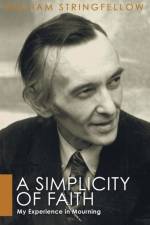
In 1980, lawyer/theologian William Stringfellow experienced the loss of his close friend and companion, poet Anthony Towne. Totally unexpected, Towne's death brought Stringfellow face-to-face with his most personal encounter with grief. These pages eloquently record his year of mourning, thus becoming both a tribute to Towne and a way of celebrating life--past and future. Five of Towne's poems appear here, brilliantly capturing the mood and tone of Stringfellow's text.Through the course of Stringfellow's dialogue with grief, he teaches us that bereavement can be a special source of inner peace. We discover that to know life in its fullest is to know and face death.'A Simplicity of Faith' is a spiritual odyssey of rare intensity. It is a convincing argument that biography, reflected upon, becomes theology. Though in many aspects focused on death, it is a powerful statement of what it means to be totally alive.In this stirring chronicle of death within community, grief becomes the somber flippancy of the clown and the account of mourning Promethean entertainment. Through it all we learn of the Word."" --Will D. Campbell, author of 'Up to Our Steeples in Politics'It is, I believe, the best book that he has ever written . . . he penetrates so deeply into his personal experience of mourning that he is able to make universal judgments. I'm reminded . . . of the writings of Solzhenitsyn. . . . He obviously knows how to write what he thinks--and to write it in such a way that anyone can understand both his experience and his theology."" --Rt. Rev. John B. Coburn, DD, the Episcopal Diocese of MassachusettsWilliam Stringfellow was a practicing attorney and a prominent Episcopalian layman who frequently contributed to legal and theological journals. After his graduation from Harvard Law School, he practiced some years in the East Harlem neighborhood in New York City. He was a visiting lecturer at several law schools and lectured at theological seminaries across the country. Stringfellow authored more than a dozen books, including 'A Private and Public Faith,' 'My People is the Enemy,' 'Count It All Joy,' and 'Instead of Death.'
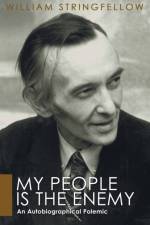
It was to Harlem that I came from the Harvard Law School. I came to Harlem to live, to work there as a lawyer, to take some part in the politics of the neighborhood, to be a layman in the Church there. It is now seven years later. In what I now relate about Harlem, I do not wish to indulge in horror stories, though that would be easy enough to do."" In this extraordinary and passionate book, William Stringfellow relates his deep concern with the ugly reality of being black and being poor. As a white Anglo-Saxon, Mr. Stringfellow does not try to speak for African Americans and Puerto Ricans in the Harlem ghetto, but, as a lawyer, he graphically underlines the failure of the American legal system to provide equal justice for the poor. And, as a Christian who lived for seven years on what the New York Times called the worst block in New York City, he challenges the reluctance of the churches to be involved in the racial crisis beyond the point of pontification.""Few white men have shared such experiences; certainly none has expressed them so eloquently, or ominously. . . . The most disturbing document since James Baldwin's 'The Fire Next Time'. . . . It is neither shouting nor scare journalism. It is a map of hell that might explode tragically at any moment."" --William Hogan, San Francisco ChronicleA worthwhile contribution to the American conscience at a time when it has at last decided to admit its shame. . . . Recommended to the policy makers who are charged with the practical expiation of this guilt."" --Michael Harrington, the New York TimesStringfellow has written a layman's sermon that cries out against both the churches and the people, in the manner of biblical days."" --Associated PressWilliam Stringfellow was a practicing attorney and a prominent Episcopalian layman who frequently contributed to legal and theological journals. After his graduation from Harvard Law School, he practiced some years in the East Harlem neighborhood in New York City. He was a visiting lecturer at several law schools and lectured at theological seminaries across the country. Stringfellow authored more than a dozen books, including 'A Private and Public Faith', 'An Ethic for Christians and Other Aliens in a Strange Land', 'Conscience and Obedience', 'Count it All Joy', and 'Instead of Death'.
This work significantly advances the critical discussion of New Testament Christology. Hengel examines the titles Son and God. He points toward an inner consistency and dynamic in the development of the doctrine of Christ in primitive Christianity as the movement proceeded from the Gospels' account of the death of Jesus to the high Christology present in the Pauline writings.Historical scholarship and theological -- one might even say dogmatic -- questions must not stand in unresolved contradiction. On the contrary, the historian misunderstands the nature of New Testament Christology if he does not grasp its theological concern and its inner consistency, while a dogmatic approach that does not take seriously the historical course of Christianity is in danger of becoming no more than abstract speculation. It is therefore vitally important to unite historical research and the theological search for truth.
American Theological Inquiry (ATI) reaches thousands of Christian scholars, clergy, and other interested parties, primarily in the U.S. and U.K. The journal was formed in 2007 by Gannon Murphy (PhD Theology, Univ. Wales, Lampeter; Presbyterian/Reformed) and Stephen Patrick (PhD Philosophy, Univ. Illinois; Eastern Orthodox) to open up space for Christian scholars who affirm the Ecumenical Creeds to contribute research throughout the broader Christian scholarly community in America and the West.The purpose of ATI is to provide an inter-tradition forum for scholars who affirm the historic Ecumenical Creeds of Christendom to constructively communicate contemporary theologies, developments, ideas, commentaries, and insights pertaining to theology, culture, and history toward reforming and elevating Western Christianity. ATI seeks a critical function as much or more so as a quasi-ecumenical one. The purpose is not to erase or weaken the distinctives of the various ecclesial traditions, but to widen the dialogue and increase inter-tradition understanding while mutually affirming Christ''s power to transform culture and the importance of strengthening Western Christianity with special reference to Her historic, creedal roots.""Theologians, would-be theologians, and the theologically attentive will want to check out American Theological Inquiry.""~ Richard John Neuhaus (1936-2009), First ThingsGannon Murphy holds a PhD in Theology from the University of Wales, Lampeter, and an MA in Theological Studies from Bethel Theological Seminary. He is the author of Voices of Reason in Christian History: The Great Apologists, Their Lives and Legacies.
Abonner på vårt nyhetsbrev og få rabatter og inspirasjon til din neste leseopplevelse.
Ved å abonnere godtar du vår personvernerklæring.