














Gjør som tusenvis av andre bokelskere
Abonner på vårt nyhetsbrev og få rabatter og inspirasjon til din neste leseopplevelse.
Ved å abonnere godtar du vår personvernerklæring.Du kan når som helst melde deg av våre nyhetsbrev.

There are pivotal moments in history when the trajectory of marriages, families, businesses, movements, and nations could go one way or another, producing very different outcomes. This is such a moment for the church in America. The need of our generation is the same as every other: a disciplined army of credible men who know, practice, and invest seven things in the next generation. This book is designed to help men get started in this most important adventure of their lives.
Since the rise of modern industrial society, work has come to pervade and rule the lives of men and women. Although there have been many popular books and church documents on on the Christian understanding of work, this is the first scholarly effort to articulate a developed Protestant theology of work. In Work in the Spirit, Miroslav Volf interprets work from a new perspective - in terms of the doctrine of the Holy Spirit. He exhaustively explores the nature of work in both capitalist and socialist societies and considers a variety of work, including industrial, agricultural, medical, political, and artistic work. Examining the importance of alienation in work in industrial and information societies (particularly in the relation of workers to management and technology), he analyzes various forms of such alienation, and elucidates the character of humane work. On the basis of the pneumatological theology of work that he develops, Volf rejects the traditional Protestant understanding of work as vocation, and takes the concept of charisma as the cornerstone for his theological reflection on work. He denies that one is called to do a particular work irrespective of one's inclinations, and asserts, instead, that it is our privilege to do the kind of work for which God's spirit has gifted us. All human work done in accordance with the will of God, Volf argues, is cooperation with God in the preservation and transformation of the world.
One of the most profound problems that theologians are called on to address is the presence of evil and suffering in the world, and how this can be reconciled with the assertion of an omnipotent and morally perfect God. This book begins by showing how the problem of evil has been inextricably bound up with the problematic deity created by the philosophical theism of the Enlightenment and perpetuated ever since, demonstrating how contemporary theodicists have failed to perceive the historical and cultural determinants which affect their theorizing. Dr. Surin argues that thinking on the problem of evil consists of two fundamental perspectives. He labels these the theoretical and the practical approaches and examines the work of a number of theologians who typify each. Alvin Plantinga, Richard Swinburne, the process theologians, and John Hick exemplify the theoretical approach; Dorothee Soelle, Jurgen Moltmann, and P. T. Forsyth the practical. He uses the views of Dostoevsky's character Ivan Karamazov and the protagonists in Elie Wiesel's writing as a paradigm for evaluating the two approaches, and concludes that only the practical approach has the merit of both rooting itself in the realities of human suffering, and grounding itself in the fundamental rule of what he calls an adequate grammar of salvation, namely that God justifies himself by justifying sinners on the cross. Finally, Dr. Surin explores this grammar of the notion of an incarnate salvation with particular reference to the need for a messianic and practical solidarity with those who are afflicted. This thought-provoking book will serve both as an introduction to those new to the ideas of theodicy, and as a stimulating essay for those dissatisfied with conventional studies of theology and the problem of evil.
Society today shows signs of disintegration. Institutions such as the monarchy, parliament, and the Church itself have come under intense scrutiny and deeply disturbing weaknesses have been exposed. We are bombarded with news of wars and injustice and the advance of science poses new moral dilemmas that leave us confused and looking for help. In the midst of such perplexity, Tom Smail invites us to 'survey the wondrous cross' - not, he says, to find instant answers to particular questions, but so that we can find our bearings and our confidence in the way God deals with confusion and destructiveness in the world. We can also discover there clues about how we might respond to the difficult situations we have to face. The book examines many different perspectives on the cross: from the New Testament themes of reconciliation, sacrifice, justice, and freedom to the more contemporary approaches of sharing of suffering and victory over sin. Throughout, Tom Smail seeks to instruct and explain the biblical teaching, unlocking its meaning and motivating us to a fresh devotional and practical response to what God has done for us in the death of Jesus. 'Windows on the Cross' contains questions at the end of each chapter and is ideal for reflective reading by individuals and groups. It will be widely welcomed.
This study traces the critique of Enlightenment modernism that began with Ralph Waldo Emerson and culminated in the thought of Charles Sanders Peirce and the mature Josiah Royce. Varieties of Transcendental Experience argues that these thinkers provide a constructive alternative to deconstructionist postmodernism that is compatible with the Christian faith.Donald L. Gelpi, SJ, has been teaching historical and systematic theology at the Jesuit School of Theology at Berkeley since 1973. The author of many books and articles, his most recent titles include The Firstborn of Many: A Christology for Converting Christians, The Turn to Experience in Contemporary Theology, and Committed Worship: A Sacramental Theology for Converting Christians.
Revolutionary France of 1789 was the world's first post-Christian society. Leftism is an ersatz religion, and France became the world's first Leftist nation. Leftism is faux Christianity. America is today becoming a post-Christian society under a similar imitation of Christianity. One of the truisms of such a society is that one can now hide behind the pretense of ""openness."" Shame, which would have previously kept certain things hidden, is now the only thing of which we are ashamed. One can be completely open about all matters sexual, for frankness about everything is now valued. Yet, such cultures only develop new ways of being hidden. One hides in plain sight in modern America. One goes on television, the Internet, and to publishing houses to ""tell all,"" using the facade of ""boldness"" and ""frankness,"" to remain hidden. ""Openness"" is a cover, and it is a cover for emptiness. We no longer know who, where, or what we are. We have lost ourselves.
The Bible can and should be an environment in which we live and move and have our being, an environment in which we are shaped by God in different and interrelated ways. As with aspects of our physical environment, we may have never noticed many elements of this spiritual environment before or may have only the vaguest sense of their influence. While we may be more familiar with certain elements, we may not realize the full extent of their influence or be too preoccupied to see how they relate to form the larger whole of how we are shaped. This book looks one-by-one at several ways in which the Bible's environment influences us as people and, in particular, shapes our beliefs, attitudes, and practices as teachers in the classroom. It is concerned with helping readers to be, at one and the same time, faithful to our common calling as educators and faithful to the Scriptures as Christians.
Anabaptists and Mennonites have often been the subject of media scrutiny: sometimes admired, at other times maligned. Luther called them schwarmar, a German word meaning ""fanatics"" that alludes to a swarm of bees. In contrast, American independent film producer John Sayles drew inspiration from Mennonite conscientious objectors for his 1987 award-winning film, Matewan. Voltaire's Candide features a virtuous Anabaptist. Oscar Wilde's play The Importance of Being Earnest contains an Anabaptist reference. An Anabaptist chaplain is central to Joseph Heller's antiwar classic, Catch-22. President Lincoln and General Stonewall Jackson both had something to say about Mennonites. Garrison Keillor tells Mennonite jokes. These are just a few of the dozens of fascinating media references, dating from the early 1500s through the present, which are chronicled and analyzed here.Mennonites, although often considered media-shy, have in fact used media to great advantage in shaping their faith and identity. Beginning with the Martyrs Mirror, this book examines the writings of Mennonite authors John Howard Yoder, Donald Kraybill, Rudy Wiebe, Rhoda Janzen, and Malcolm Gladwell. Citing books, film, art, theater, and Ngram, the online culturomic tool developed by Harvard University and Google, the author demonstrates that Mennonites ""punch above their weight class"" in the media, and especially in print.
The Incarnate Word contains a selection of the key writings on the doctrines of Christology produced by the theologians of Mercersburg Seminary during the middle of the nineteenth century. Despite the seminary's small stature and marginal position within American religious life, these texts represent some of the most profound wrestlings with the doctrine of the person of Christ that appeared in antebellum America, engaging the latest in German theological scholarship as well as the riches of the Christian tradition. As such, they command more than mere historical interest, providing rich conversation partners for contemporary debates in Reformed Christology, and anticipating the insights of such key twentieth-century theologians as T. F. Torrance. The present critical edition carefully preserves the original texts, while providing extensive introductions, annotations, and bibliography to orient the modern reader and facilitate further scholarship.The Mercersburg Theology Study Series is an attempt to make available for the first time, in attractive, readable, and scholarly modern editions, the key writings of the nineteenth-century movement known as the Mercersburg Theology. An ambitious multi-year project, this aims to make an important contribution to the scholarly community and to the broader reading public, who can at last be properly introduced to this unique blend of American and European, Reformed and catholic theology.
An American ethicist and a South African theologian reflect on their work with wood and how it has helped them find creativity and meaning in experiences of both loss and transformation. Through their friendship, correspondence, and work together they have developed a rich narrative about the way this craftwork has shaped their relationships with family, friends, and their natural environment. Their conversation invites both craftspeople and religious seekers to join them on a spiritual journey toward fresh insight and inspiration.
A Conscious Endeavor is a synopsis of the social teachings and the concept of justice in the Old and New Testament. It looks through the lens of the Old Testament books of Torah law and the New Testament teachings of Jesus, applying them to contemporary situations and raising questions regarding housing costs and other basic costs of living. Ultimately, this book invokes the personal conversion of inner change so that readers can apply what they learn to their own work situations and their payment of a just wage.
The Bible is not a Western book, and the world of the New Testament is not our world. The New Testament world was preindustrial, Mediterranean, and populated mostly by nonliterate peasants who depended on hearing these writings read aloud. Only a few of the literate elite were part of the Jesus movement, and they knew nothing of either modernity or the Western culture we inhabit today. This means that for all North Americans, reading the New Testament is always an exercise in cross-cultural communication.Travelers, diplomats, and exchange students take great pains to bridge the cultural gaps that cloud mutual understanding. But North American readers habitually suspend cross-cultural awareness when encountering the Bible. The result is that we unwittingly project our own cultural understandings onto the pages of the New Testament.Rohrbaugh argues that to whatever degree we can bridge cultural gaps between ourselves and New Testament writers, we learn to value their intentions rather than the meanings we create from their words. Rohrbaugh's insightful interpretations of Gospel passages go a long way toward helping to span distances between the New Testament world and the present.
Archaeologist Art West makes the discovery of a lifetime in Jerusalem finding the tombstone of Lazarus, which indicates that Jesus raised him from the dead. But before he can make public his amazing discovery, the stone is stolen, sold to the British Library, and West is implicated in an antiquities fraud that will lead to a trial. West's Jewish and Muslim friends in Jerusalem rally to support West's innocence and to help find the thief who stole the stone, but then West is shot and in critical condition in a Jerusalem hospital. Can the truth be discovered in time, and West's life be saved? And what was on that Aramaic scroll that was found in Lazarus's coffin? In this fast-paced thriller, Ben Witherington, himself a NT scholar with a degree in English literature, together with his wife, Ann, introduces us to the life of an archaeologist and NT scholar and his trials and tribulations when a big find comes to light. Set in the always volatile city of Jerusalem, the Witheringtons reveal the fascinating hidden dimensions of multi-religious life in that Holy Place, and show how even today Christians, Jews, and Muslims can work together so the truth may come to light, and all may experience "the Lazarus Effect"--new life from the dead.
By taking seriously Tillich's claim to be a confessional Church theologian rather than a metaphysician with religious interests, this carefully ordered study gains a fresh perspective on the structure of argument upon which his theological enterprise rests. Scriptural material is shown to control his judgments in much the same way that literature controls those of the literary critic--a particularly illuminating comparison in view of his argument that the verbal icon provided by the biblical picture of Jesus as the Christ bears analogia imaginis to the historical Jesus and hence provides the sole access to the original Christian revelation.Tillich's movement from symbols as data to theological judgments as conclusions is seen to be warranted, not by his ontology, but by his presentation of the phenomenology of revelatory events. Though historical study of Jesus and of the Bible is in principle irrelevant to this use of scripture, his confusions in this area are examined, and the structural flaws in his accounts of the biblical picture of Jesus are shown to yield a Christian theology in which Christology is oddly dispensable. Finally, his discussion of God is used as a test case for the analysis of the general structure of his argument, and the various sorts of conclusions that he feels Scripture authorizes him to draw are cogently appraised.
Liberation and political theologies have emerged powerfully in recent years, interrupting the way in which First World Christians both experience and understand their faith. Through an analysis of the cultural and ecclesial contexts of these theological movements, as well as a critical examination of four of their principal exponents--Gustavo Gutierrez, Johann Baptist Metz, Jose Miguez Bonino, and Jurgen Moltmann--the author demonstrates that political and liberation theologies represent a new model of theology, one that proffers a vision of Christian witness as a praxis of solidarity with suffering persons.If I had just one book to recommend as a general introduction for adoption as a textbook on courses on political or liberation theology, it would be Professor Chopp's The Praxis of Suffering. The clarity and depth of her analyses are unsurpassed. Not only does she raise the central theological issues posed by contemporary political and liberation theologies, but she also throws new light on them, thereby creatively contributing to contemporary theology.-- Francis Schuessler Fiorenza, Harvard Divinity SchoolJuxtaposing Latin American liberation theology and European political theology, Rebecca Chopp has produced an uncommonly clear and passionate book. The result is a fresh contribution to the theology which, if it is to be faithful to the methods of liberation and political theologies, has to be done in our own peculiar social and economic context. There will be many readers who learn for the first time from this book how crucial liberation theology is for the future of our own churches.-- M. Douglas Meeks, Vanderbilt UniversityMore than any other North American work I know this book wrests from us the realization that Euroamerican theology is inescapably confronted with a paradigm shift from Newtonian to Einsteinian physics. It skillfully interprets what is going on at this time in European political theologies and Latin American liberation theologies.-- Frederick Herzog, Duke UniversityRebecca Chopp is President and Professor of Philosophy & Religion at Colgate University. Prior to that, she was dean and Titus Street Professor of Theology and Culture at Yale University Divinity School, Emory University's provost and vice president for academic affairs, and Charles Howard Candler Professor of Theology. She also served as dean of faculty and academic affairs at Candler School of Theology from 1993 to 1997. Chopp has authored numerous articles and five books on women's issues and theology. She is a past president of the American Academy of Religion and was theology editor for 'Religious Studies Review', as well as editor-at-large of 'The Christian Century'. Her PhD is from the University of Chicago Divinity School.
In this survey of ministry in the church, Paul Bernier offers a comprehensive, engaging perspective on the development of Christian ministry. He shows how this development came about in response to specific social or cultural needs, and discourages placing blame for practices promulgated in good faith and for the common good.Bernier takes a broad look at both lay and ordained ministry, writing that ministry is ""the service God requires of all the baptized."" He focuses quite sharply, nevertheless, on the role of the ordained minister, past, present, and future, and looks closely at what future developments in the church might bring, based on lessons of the past.This book well illustrates the fluidity and form of Christian ministry, and its place both in and outside the institutional Church. It is an excellent resource for adult education, as well as for pastoral ministers seeking to broaden their understanding of their roles. Ministry in the Church is filled with information and inspiration; it opens exciting new vistas for Christian living today.Fr. Paul Bernier, S.S.S., a member of the Congregation of the Blessed Sacrament, taught theology and was Academic Dean of Maryhill School of Theology in the Philippines. He served eight years as Executive Secretary of the Philippines Bishop's Commission on the Clergy. Former editor of Emmanuel magazine, he is a member of the Board of Trustees of Catholic Theological Union in Chicago.
For almost thirty years, twenty million people tuned in weekly to Charles E. Fuller and the "Old Fashioned Revival Hour." Sunday after Sunday, they listened over radio as the crowd, gathered in Long Beach Auditorium, wafted the strains of "Jesus Saves" around the world. In this firsthand account Daniel P. Fuller chronicles the life and work of his father, a man whose name is almost synonymous with gospel broadcasting and who founded the theological seminary that bears his name. The strong evangelistic urge that dominated Charles E. Fuller's ministry permeates every page of Give the Winds a Mighty Voice.
To many people the law stands in opposition to the gospel. While it may be possible to read Paul's epistles this way, the book of Deuteronomy will not allow this reading. Like the book of Romans in the New Testament, Deuteronomy provides the most systematic and sustained presentation of theology in the Old Testament. And like the Gospel of John, it represents mature theological reflection on God's great acts of salvation, in this case associated with the exodus of Israel from Egypt. The gospel according to Moses begins and ends with the gracious work of God for undeserving subjects. In a book that consists largely of Moses' farewell sermons to his congregation, Israel's first pastor seeks to inspire his congregation to a life of faith and godliness in response to God's great mercy. Unfortunately, for many Christians, Deuteronomy is a dead book, because we have lost sight of the gospel. The essays in this collection arise from a larger project driven by a passion to recover for Christians the life-giving message of the Old Testament in general and the gospel according to Moses in particular. The "meditations" in this volume cover a wide range of topics, from explorations into the origins of Deuteronomy to considerations of the ethical and homiletical relevance of the book for Christians today.
Mark for the Nations is a translation by the author of his Swedish commentary on the Gospel of Mark. It is meant both for students of theology and for pastors, as well as for lay people. Hartman reads Mark's Gospel through the eyes of an early Gentile-Christian reader. For this reason he quotes much material from the Hellenistic world in translation. To some extent this material appears here for the first time in a gospel commentary. The analysis makes use of literary criticism and text linguistics, but avoids the technical terminology. To stimulate a modern reader's understanding of the evangelist's message to his first-century audience Hartman has endeavored to translate traditional terms into slightly more common language.
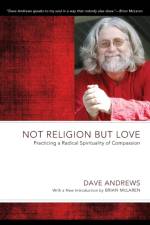
In his acclaimed book Christi-Anarchy, Dave Andrews explored the ugly ruins of Christian history, and outlined the radical vision of Jesus for personal and community renewal.In 'Not Religion but Love' he shows how that vision can become a reality. With poignant, real-life stories drawn form his Brisbane backyard, Dave Andrews gives us a practical guide to working out Jesus' agenda for love and justice in our own lives and neighborhoods.Complete with group exercises and an ample collection of extra resources for study, Not Religion but Love is a book to read at your own risk: it might change your life.
This landmark work constitutes a complete historical, sociological, and political view of religion as a cultural expression in Latin America. Parker shows how, beginning with the arrival of the conquistadors, religion has played a transcendent role in shaping the national cultures of the region, particularly its popular cultures, and continues to do so. Parker argues that while capitalistic modernization and urbanization do lead to secularization, this process is not linear or progressive. Secularization in Latin America does not destroy its religious fabric but rather transforms it, accentuating its pluralistic character.Christianity, and particularly Roman Catholicism, has influenced Latin American identity and culture most profoundly. But it has by no means been the sole influence, nor has Christianity itself remained unchanged in the process. As a product of history and capitalistic modernization, the trait of religion that emerges most clearly is that of cultural and religious pluralism.""Because of its sophisticated theoretical grounding, wide coverage of empirical data and nuance, this book ought to become a minor classic in sociology of religion.""--John A. Coleman, SJ, The Jesuit School of Theology""Superb. . . . Parker provides enormous amounts of statistical data and then masterfully analyzes their significance. . . . As an introduction to the past and present religious culture of Latin America I know of nothing more comprehensive or sophisticated.""--Curt Espin, University of San Diego""The most important work thus far from the most important sociologist of religion in the Southern Cone of Latin America. A must-read for anybody seriously interested in religion in Latin America, its history, its transformation, its current situation and future possibilities.""--Otto Maduro, Drew UniversityCristian Parker, one of the foremost sociologists of religion in Latin America, holds a doctorate from the Institute Latinoamericano de Doctrina y Estudios Sociales at the Catholic University of Louvain, Belgium. He is Professor of Sociology at the Universidad Academia de Humanismo Cristiano in Santiago, Chile. Parker is the author of many books, including Cristianismo y culturas latinoamericanas and Religion y clases subalternas urbanas en una sociedad dependiente.
Christology defines the very heart of the Christian faith. Traditionally the study of the person and work of Christ has been understood largely as an exercise in biblical exegesis or historical and doctrinal analysis. Rarely, if ever, has Christology focused on the changing cultural paradigms that have deeply influenced the development of human knowledge and self understanding. This unique volume by Colin Greene reverses that trend and, in line with developments in modern cultural theory, explores the interlaces between successive cultural contexts and the story of Jesus to which the Scriptures bear witness.Starting with an examination of the three main Christological trajectories that have dominated the history of Christology--cosmological Christology, political Christology, and anthropological Christology--Greene proceeds to concentrate on the subtle and complex linkages between Christology and the sociopolitical paradigms that have bolstered the epistemological assumptions of modernity. Greene's wide-ranging study closes with a creative exploration into how Christology might once again provide us with a Christ-centered vision of reality.""Colin Greene's magisterial work is far more than a conventional survey of what theologians have done with Christology, though it takes that in on the way. It is a challenge to several of the major assumptions that underlie the work not only of theologians but also of cultural critics, politicians, and opinion-formers in today's world. It is, in other words, doing for today something of what the Gospel writers did for their day--telling the story of Jesus in such a way as to blow open existing worldviews and propose fresh, startling perspectives in their place.""--N. T. Wright, Former Bishop of Durham""Greene draws on a wide variety of theological, historical, and conceptual resources to explore a constructive approach to Christology and successive cultures. He rightly avoids exclusive alternatives between cosmological, anthropological, and political trajectories and underlines their complementary character as indicating continuities with biblical and historical formulations relevant to our own day. This book repays careful study.""--Anthony C. Thiselton, University of NottinghamColin Greene is Programme Director for Theology, Imagination and Culture at Sarum College, Salisbury, England and Director of Metavista Associates. He was educated at Cambridge University, Queen's University, and Nottingham University, and was formerly Professor of Theological and Cultural Studies at the Seattle School of Theology and Psychology. In addition to numerous essays on Theology, Culture, and Scripture, Dr. Greene was an editor and co-founder of the acclaimed, nine-volume Scripture and Hermeneutics seminar series, and co-author of Metavista: Bible, Church and Mission in an Age of Imagination.
Luther and Bach on the Magnificat: For Advent and Christmas brings together the gifts of Lutheranism's original and most prominent theologian with Lutheranism's most prominent composer/musician as Martin Luther and Johann Sebastian Bach expound in word and music on the Virgin Mary's song of praise in the Gospel of Luke: the Magnificat.Written in 1521, Martin Luther's Commentary on the Magnificat is a spiritual classic with a timeless message: soli deo gloria--to God alone be the glory. This central theme of Luther's Commentary makes it as significant today as it was nearly five hundred years ago.Johann Sebastian Bach wrote his musical masterpiece, Magnificat, during his first year as Kantor of the Church of St. Thomas in Leipzig. Bach conducted the first performance of this cantata on Christmas Day in 1723, and it remains one of his most famous compositions.Bringing together Luther and Bach to interpret the timeless message of the Magnificat results in a unique and inspirational word and music Advent and Christmas study experience that can be enjoyed year after year by individuals and congregations alike.
I was born in 1920 in a little country village in the former Belgian Congo. I was eight years old at the time the day the first white man visited our isolated village. He was a Catholic missionary. It was through him and many other priests, catechists, and teachers that I came to know deeply Jesus Christ, who has shown me the path of true liberation.My people live in a situation of extreme underdevelopment, wretchedness, and exploitation. My experience as a Christian and a pastor has taught me that our pastoral and evangelizing work should offer persons a total development, rooted in the Good News of Jesus Christ. One is not possible without the other. This is what I have tried to explain in Paths of Liberation. Of course, too, the path Jesus assigns us for the liberation of society from the evils that afflict it is not the shortest of paths. It is not enough to make surface changes, and the path leads through the heart of the human person, which Jesus wishes to change. And the human heart is not to be changed in a day. But this longer path is also the most effective and the most realistic, for only thus do we attack the evil in its roots. Have we not found that at the core of all problems is always sin? It is precisely from this sin in the human heart that Jesus liberates us by guiding us on the path of continual conversion and uncalculating love.
By employing analyses of the literary structure of ancient pseudepigraphical letters and of the logical structure of ethical argument, this study discovers in the Pastoral Epistles a consistent theological ethic that has cosmological and cultic grounding.First, an investigation of Greco-Roman religious pseudepigraphical letters identifies those literary patterns that determine the form of argumentation in the Pastoral Epistles. Second, an investigation of the structure of ethical argument produces categories for organizing and analyzing the apparently disorganized arguments in these letters. Finally, this study concludes that the author of the Pastoral Epistles builds a coherent theological ethic by falsifying Pauline history and by grounding his ethical warrants in church officers.Dr. Lewis R. Donelson is Ruth A. Campbell Professor of New Testament at Austin Presbyterian Theological Seminary. His primary teaching interests include New Testament, Greek, Greco-Roman culture, and early Christian history.
Abonner på vårt nyhetsbrev og få rabatter og inspirasjon til din neste leseopplevelse.
Ved å abonnere godtar du vår personvernerklæring.