














Gjør som tusenvis av andre bokelskere
Abonner på vårt nyhetsbrev og få rabatter og inspirasjon til din neste leseopplevelse.
Ved å abonnere godtar du vår personvernerklæring.Du kan når som helst melde deg av våre nyhetsbrev.

In 1976 a young German girl named Anneliese Michel underwent a series of exorcisms. The rites were administered by two priests of the Catholic Church to free Anneliese of the six demons they believed possessed her. Seemingly as a result of the exorcisms the girl died. Worldwide publicity followed when the girl's parents and the two exorcists were brought to trial and convicted of negligent homicide. Here a noted anthropologist offers her own interpretation of the exorcisms of Anneliese Michel. Drawing on interviews with the two exorcists, the girl's parents and friends, transcripts of the trial, and tape recordings made during the exorcisms - as well as studies of religious experience in various cultures - Felicitas Goodman has written a fascinating, compelling book, one that finally tells what happened in this strange case as it delves into the age-old mystery of demonic possession.
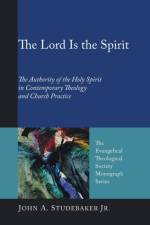
Although the doctrine and work of the Holy Spirit is no longer being ignored in theology (as was often the case in centuries past), the authority of the Spirit remains essentially undefined. The need for such a definition, however, is urgent. Some dangerous trends in the contemporary understanding of the Spirit have developed (trends that can only be exposed through careful exegesis of Scripture and theological clarification). Indeed, some contemporary models often leave us with a nonauthoritative ""Spirit"" predisposed toward universalism, experientialism, or panentheism.This work will attempt to show that the nature of the Holy Spirit's authority can be clearly defined through biblical and systematic theology. When we investigate the Spirit's place within the pattern of divine authority, as specified in Scripture, we discover that the Holy Spirit indeed possesses a unique authority as divine Person, Christ's Executor, Teacher, and Governor of the Church. Such a work will be helpful for both the theologian and the pastor. First, definitions of the Spirit's authority will be developed through historical, exegetical, and theological analysis. Then these definitions will be applied to specific church practices, including hermeneutics, church structure and guidance, and Christian spirituality. A response will also be given to those ""practical theologies"" that are subtly diminishing the Spirit's authority in relation to the contemporary church.
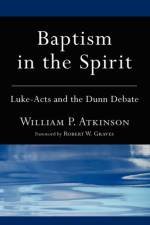
This book is about that treasured doctrine of Pentecostalism: baptism in the Holy Spirit, understood as a work subsequent to conversion to Christ. Since James Dunn's publication of Baptism in the Holy Spirit, there has been heated response from Pentecostals in defense of the doctrine. Key players are Roger Stronstad, Howard Ervin, David Petts, James Shelton, Robert Menzies, and ex-Pentecostal Max Turner. This book reviews Pentecostal criticisms of Dunn with respect to Luke-Acts, concluding that Pentecostals are right: for Luke, receiving the Spirit was not the inception of new covenant life. It was a powerful enabling for prophecy and miracles; for the church's outward mission and its internal life. After placing Luke-Acts in a wider canonical context, the book closes with some practical lessons from Luke-Acts for today's Pentecostal churches.
James Atwood contends that the thirty thousand gun deaths America suffers every year cannot be understood apart from our national myth that God has appointed America as ""the trustee of the civilization of the world"" and even ""Christ's light to the nations."" Because these purposes are noble, and we are supposedly a good and trustworthy people, violence is sometimes ""required"" and gives license to individuals to carry open or concealed weapons, which ""save lives"" and can even be ""redemptive."" Atwood, an avid hunter, cautions that an absolute trust in guns and violence morphs easily into idolatry. Having spent thirty-six years as a Presbyterian pastor fighting against the easy access to firearms, one of which took the life of a friend, he uses his unique experience and his biblical and theological understanding to graphically portray the impact guns have on our society. He documents how Americans have been deceived into believing that the tools of violence, whether they take the form of advanced military technology or a handgun in the bedside stand, will provide security. He closes with a wake-up call to the faith community, which he says is America's best hope to unmask the extremism of the Gun Empire.
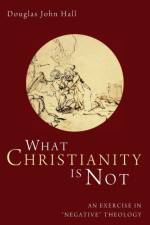
What really is Christianity? If all the religious packaging in which it is wrapped were removed, what would remain? These were Bonhoeffer's questions, and they must be ours today--even more urgently! For in many quarters Christianity is being so narrowly identified with some of its parts, cultural associations, and past ambitions that like all militant religion, it represents a threat to the planetary future.We may no longer speak clearly of the essence of Christianity, as von Harnack and other nineteenth-century thinkers did; but perhaps we may still have a sufficiently shared sense of the kerygmatic core of this faith to be able, in the face of these misrepresentations of it, to say what Christianity is not.
This anthology addresses the topic of "fundamentalism and gender" from inter- and trans-disciplinary perspectives. By referring to three major themes--"Literalism, Religion, and Science," "Nation, State, and Community," and "Body, Life, and Biopolitics"--the book focuses on the analytical diversification of the term "fundamentalism" and on intersections between religion, gender, sexuality, race, and nation. International scholars in cultural history and theory, religious studies, Christian theologies, Islamic studies, history, social sciences, anthropology, comparative literature, and women and gender studies examine the historical and current specifics of religious as well as of secular forms of fundamentalism. They also take a critical look at the Western discourse about religious fundamentalism and the ambivalent role feminism plays in this context, considering questions such as, Why do all religious fundamentalisms claim normalizing definitions of sexuality, gender roles, and intergender relations? In what way do gender and sexual politics play a role in secular criticism of religious fundamentalism? And how are forms of secular fundamentalism characterized by gender constructs and sexual politics?
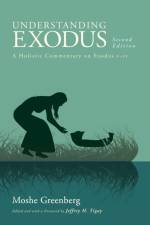
In 1969 Professor Greenberg published his Understanding Exodus, covering Exodus 1-11. In this second edition, introduced and edited by Jeffrey H. Tigay, the author's corrections and revisions are incorporated, along with a new foreword. In addition, a new appendix, "Questions for Uncovering the Message of a Biblical Text," is included, which provides the reader with a succinct articulation of Greenberg's approach to exegesis.
""Modern theology needs the rediscovery of the category of consolation. This book is rich of consolations because it takes the cry of lament seriously.""--Jurgen Moltmann""A timely, accessible, and valuable book. The recovery of the biblical traditions of loss and hurt is intrinsically worth doing, more worth doing in an increasingly disestablished society.""--Walter Brueggemann, Columbia Theological Seminary, Emeritus""This cross-disciplinary collaboration is . . . poignant and compelling testimony to the personal and communal power of lament and its importance to the practice of ministry. This book is the one that I have been waiting for.""--Christie Cozad Neuger, Brite Divinity School""Few books in the literature of lament have drawn together so much material from the biblical, theological, and pastoral spheres as Rachel's Cry.""--Patrick D. Miller, Princeton Theological Seminary""Honesty with God is the doorway to authentic hope and faith. . . . This is one of the most liberating books I have read in a long time.""--James Newton Poling, Garrett-Evangelical Theological Seminary""This is the first book to bring scattered discussions together into one coherent whole . . . with deep Christian insight and conviction, with vivid examples, and with learning which is as gracefully communicated as it is broad and deep in its substance. I will be keeping it near at hand, so as to return to it often.""--Nicholas Wolterstorff, Yale University""Rachel's Cry is not only a timely book, it is an urgently needed resource for people who long for a way to live with irrational suffering. Unless we recover the prayer of lament, we are in danger of being trapped in powerlessness, cynicism, and despair.""--Herbert Anderson, Catholic Theological Union, Emeritus""I found it difficult to put this book down. Rachel's Cry convincingly argues that an authentic and empowering spirituality requires the language of lament and protest alongside praise and thanksgiving.""--Nancy J. Ramsay, Louisville Presbyterian Theological SeminaryKathleen M. Billman is dean of academic affairs and professor of pastoral theology and counseling at Lutheran School of Theology in Chicago.Daniel L. Migliore is Charles Hodge Professor of Systematic Theology at Princeton Theological Seminary.
Description:Catherine Cornille, Boston CollegeDavid Tracy, University of Chicago Divinity SchoolWerner Jeanrond, University of GlasgowMarianne Moyaert, University of LeuvenJohn Maraldo, University of North FloridaReza Shah-Kazemi, Institute of Ismaili StudiesMalcolm David Eckel, Boston UniversityJoseph S. O'Leary, Sophia UniversityJohn P. Keenan, Middlebury CollegeHendrik Vroom, VU University AmsterdamLaurie Patton, Emory UniversityEndorsements:""The implications of understanding between the religions are as unclear as it is clear that such understanding is badly needed. What is intriguing about this volume is not only that it enters this still widely uncharted territory but that many of its contributions explore which light the continental tradition of hermeneutic philosophy might shed on this field.""--Perry Schmidt-LeukelUniversity of Muenster, Germany""This is a book packed with expertise and insight. In light of the complexities of interreligious dialogue, the authors use the creativity of hermeneutical understanding to walk a necessary tight-rope: discovering those meanings that cut across religious traditions while respecting the particularity and non-negotiable otherness that exists in every religious tradition. The savvy editors have crafted a substantive volume that gives hope for true dialogue in our world of almost bewildering religious diversity.""--Anthony J. GodziebaVillanova UniversityAbout the Contributor(s):Catherine Cornille is Associate Professor of Comparative Theology at Boston College. She is the author of The Im-Possibility of Interreligious Dialogue (2008) and editor of Many Mansions? Multiple Religious Belonging and Christian Identity (2002) and Song Divine: Christian Commentaries on the Bhagavad Gita (2006). She is managing editor of the series Christian Commentaries on Non-Christian Sacred Texts.Christopher Conway is a doctoral candidate in Comparative Theology at Boston College, working in the area of the Hindu-Christian dialogue.
""Admirably captures both the experiential and conceptual dimensions of the work of the hospital chaplain. As such, this book serves equally well as an introduction to pastoral care for medical personnel, patients, and clergy, and as an important addition to the professional literature of the pastoral care field.""--Journal of the American Medical Association""A good handbook for any chaplain; certainly for anyone interested in this ministry.""--Best Sellers""A timely, intelligent and highly readable book . . . . It will surely become a classic in the field.""--The Christian Century""An excellent resource in a field where there has, to this time, not been too much published.""--Christian Bookseller""Chaplaincy as proposed and practiced by Holst et al. is prophetic and contributes to rediscovering the interrelationship between faith, attitude and healing.""--Journal of Pastoral Care""Highly recommended not only to chaplains, but also to administrators, C.P.E. supervisors, and other health care professionals, as well as to the larger public which is also affected by the future of health care.""--Sisters TodayThe contributors include twelve staff chaplains of the Division of Pastoral Care, Lutheran General Hospital, Park Ridge, Illinois, in addition to a church historian, an ethicist, a research psychologist, and an expert on substance abuse.
Description:"I desire mercy, not sacrifice." Echoing Hosea, Jesus defends his embrace of the "unclean" in the Gospel of Matthew, seeming to privilege the prophetic call to justice over the Levitical pursuit of purity. And yet, as missional faith communities are well aware, the tensions and conflicts between holiness and mercy are not so easily resolved. At every turn, it seems that the psychological pull of purity and holiness tempts the church into practices of social exclusion and a Gnostic flight from "the world" into a "too spiritual" spirituality. Moreover, the psychology of purity often lures the church into what psychologists call "The Macbeth Effect," the psychological trap that tempts us into believing that ritual acts of cleansing can replace moral and missional engagement. Finally, time after time, wherever we see churches regulating their common life with the idiom of dirt, disgust, and defilement, we find a predictable wake of dysfunction: ruined self-images, social stigma, and communal conflict. In an unprecedented fusion of psychological science and theological scholarship, Richard Beck describes the pernicious (and largely unnoticed) effects of the psychology of purity upon the life and mission of the church.Endorsements:"Theologians write endlessly about how Christian faith should affect our morality, our philosophy, and our spirituality. Richard Beck is the only one I know who asks what it has to do with what turns our stomachs. He writes bluntly and stunningly about the engagement of grace with our visceral dynamics of disgust and avoidance. Our complex, precognitive repulsions toward groups, behaviors, and persons stem from deep patterns in our nature. But, unredeemed, those patterns also block us from the gospel path. Beck combines biblical interpretation, theological wisdom, and dramatic psychological insights to give an earthy and exciting take on the Christian life."--S. Mark Heim Samuel Abbot Professor of Christian TheologyAndover Newton Theological School"In his thoughtful, engaging, and even sometimes humorous style, Richard Beck tells the church that it is time to get dirty. With one leg hip-deep in theology and the other in psychological science, Beck persuasively argues that the church's obsession with purity is a costly pursuit, one fraught with serious psychological and sociological consequences. You may not always agree, but you will be challenged in new ways to think about the church's mission."--Peter C. HillEditor, Journal of Psychology and Christianity"Richard Beck has my vote as the liveliest voice in the contemporary integration of psychology and theology. In Unclean, he weaves together his sophisticated grasp of psychological research and theological reflection in a manner that is both prophetic and inviting. This is one of those rare books that can be helpful to those who love the church and also to those who have been hurt by churches. Beck writes with an integrative and formative rhythm that kept stimulating my mind and pulling at my heart. These ancient Biblical concepts of mercy, holiness, and hospitality have been implanted anew with deeper meaning for me."--Steven J. SandageProfessor of Marriage and Family StudiesBethel University"I am thankful that this insightful and important work has come to print. Richard Beck has woven together important themes from various critical conversations--psychology, theology, biblical studies, and missional ecclesiology--with exceptional artistry. He has ventured across the purity boundaries of academic disciplines for the sake of a large picture of the hospitality of God. His readers will be well rewarded for welcoming this ambitious and immensely practical book."-- Mark LoveDirector, Resource Center for Missional LeadershipRochester College "Richard Beck's insightful book is a must-read for those who want to embody Christ's love in the world. Moving beyond mere sentimentality, this book exposes why we are so prone
Synopsis: Christian Coalition experienced a meteoric rise in American politics in the 1990s only to see its profile and impact vanish into embarrassing irrelevancy at the end of the decade, leaving many to ask, "Whatever happened to the Christian Coalition?"Joel Vaughan offers a behind-the-scenes look at the Christian Coalition, once the pre-eminent, conservative grassroots political organization in America. Working closely with founder Pat Robertson, President Don Hodel, and wunderkind Executive Director Ralph Reed, the author reveals in a captivating manner the factors that caused the rapid growth of this astonishingly successful organization, and the internal strife that led to its tragic and rapid decline.Containing useful insights for leaders about organizational dynamics and grassroots movements of any kind, The Rise and Fall of the Christian Coalition shows how people of faith can become more effective at making their voice heard in local, state, and national elections, as well as many obstacles and ambitions to avoid.Gilbert and Sullivan wrote a song about a young man who went to work for the British Admiralty and "polished up the handles so carefully" that he became ruler of Queen Victoria''s Navy. Joel Vaughan rose from volunteer to Deputy Field Director and, ultimately, to the dual positions of Assistant to the President and Director of Administration. He brings an insider''s intimate knowledge of the explosive growth and the ultimate crisis in leadership of Christian Coalition.Full of behind-the-scenes anecdotes and revelations, this book is a "must read" for every person interested in American politics who wants a better idea of the pro-family movement and its foremost organization, as well as those interested in the Do''s and Don''ts of running a nonprofit organization.
Colin and Edna McDougall have made a valuable contribution to the understanding of why and how faithful men and women took the Lord's admonition to make disciples seriously. This is a fascinating account of the planting of the Church in Dahomey (now Benin) in West Africa and the costs involved both to the missionaries and to the church they established. It is informative, moving, realistic, challenging and well written. I recommend it to all who are interested in God's desire that no one should perish. Clyde Cook, President, Biola University. Few lifestyles are so completely different from today's Christian as those who first took the Gospel to the unreached peoples of Africa. With the heart of a devoted son and disciple of Christ, Colin McDougall has documented the lives of those who gave all to reach the peoples of Benin-the pioneer missionaries of Sudan Interior Mission. Ed Underwood, Senior Pastor, Church of the Open Door. I read with great interest the life story of two of God's choice servants, Stewart and Edna McDougall-their heartaches, trials and victories-as they served the Lord in Dahomey/Benin. The thrilling results of their ministry is evidence to all that their labor was not in vain. For anyone interested in the growth of the Church in Africa, it is a must read. Robert L. Foster, former International Director of Africa Evangelical Fellowship. This reader-friendly record belongs in the library of every home and church that takes seriously the Great Commission of Jesus Christ. The story of SIM church planting in Dahomey spells out the historic roots of an epic movement that has made an astonishing difference in an African nation. It is animated by colorful anecdotes that transport the mind into living episodes. Frail humans grappled to unlock an obscure language and culture. Isolated from the familiar, some with developing families and in a context of poverty of the basic resources, they trusted God. . . . My spirit is enriched. Yours will be, too. Howard Dowdell, Founder: Canadian Centre for World Mission.
Born in 1934 in Dresden, Germany, Theo Lehmann lived through both the Nazi era and the Communist-ruled German Democratic Republic (GDR). Ordained in the Lutheran Church of Saxony, he was called to an urban parish in Chemnitz. There he introduced a youth worship service marked by contemporary music, uncompromising preaching of the gospel message, and calls to discipleship in Christ that attracted thousands. Lehmann then embarked on an itinerant ministry of youth evangelism with Jorg Swoboda, a Baptist musician and youth leader. He gained the undying enmity of the Communist regime, was under constant surveillance by the dreaded secret police, and was rejected by many of his own ministerial colleagues. Theo Lehmann was also the best-known scholar of jazz and blues music in the GDR. Indeed these musical forms expressed so well his own longing for freedom. His reputation as an evangelist spread far beyond the narrow confines of East Germany, and he was named to the Lausanne Committee for World Evangelization. His dreams were fulfilled by the fall of the Berlin Wall, and he was then free to proclaim the Word of God throughout the reunited Germany. The author of over twenty books and composer of numerous songs widely sung in churches and evangelical gatherings, Lehmann is today his country''s foremost evangelist. His life is an extraordinary witness to the power of God and one person''s faithfulness to the gospel message.This book brings to light the gripping account of Lehmann''s unbowed witness to Christian faith amid the totalitarian oppression of Nazi Germany. Moreover, it offers a compelling case study of how revitalization can occur even, and especially, amid such adverse conditions, for which there are numerous applications in our present day. --J. Steven O''Malley, John T. Seamands Professor of Methodist Holiness History, Asbury Theological Seminary, Wilmore, KYIt seems to me that Theo''s interest in jazz is itself a testimony to the freedom the Spirit brings--the improvisation by which God counters the dark passages of life under tyranny. I hope Theo''s story will profoundly challenge those of us in North America to realize again that the gospel is not only about our personal salvation, but that Jesus is Lord over all the powers--political, economic, cultural--which so easily seduce us. --Leighton Ford, President Leighton Ford Ministries, Lifetime Honorary Chair, Lausanne Committee for World EvangelizationOn my first visit to the German Democratic Republic nearly forty years ago, I heard of a daring young pastor named Theo Lehmann, whose use of blues and jazz in the service of proclaiming the gospel of Jesus Christ was provoking Communist officials and appealing to great numbers of German young people within the Marxist system. This sparklingly told narrative should command wide attention and careful reading--lest we forget.--Robert Kolb, Missions Professor of Systematic Theology, Director of the Institute for Mission Studies, Concordia Seminary, Saint LouisEdwin P. Arnold taught German in public schools from 1958 to 1968 and at Clemson University from 1968 to 2000. He led twelve study-abroad groups into both Germanys between 1980 and 2000. Richard V. Pierard is Professor of History Emeritus at Indiana State University and formerly Stephen Phillips Professor of History at Gordon College, Boston.
Can a livable society also be sustainable? How can we move beyond anthropocentrism without surrendering humanity''s unique contribution to the globe? What of the contradictions conservative economics seems to reveal in so-called liberal approaches to economics and ecology? Does Christianity have anything to say about living in a world of limits?In ''Sustainability'', John Cobb argues that reflections on ecological issues inevitably raise religious questions as well. Admittedly, traditional Christian teaching to subdue the earth had contributed to the mindset responsible for the crisis we are facing today. But Christianity can contribute to the discussion of how to keep the planet from ecological disaster. For one thing, Christianity can keep ecological issues closely tied to those of social justice -- a necessity for a sustainable society. Christianity can also make clear the need for individual change of heart (conversion) that is a prerequisite to real social and economic change.As the Earth Summit testified, our world stands in need of new visions, to nurture new ways of integrating its human, mineral, animal, vegetable, and energy components. ''Sustainability'' is John Cobb at his best . . . timely, incisive, and vigorous.Good news! John Cobb''s book shows that, yes, our society can be both sustainable and livable -- news for Christians to read and heed.-- Carol J. Adamsauthor of ''The Sexual Politics of Meat'' and editor of ''Ecofeminism and the Sacred''John Cobb has become a major spokesperson in the American Protestant community for the integration of ecology, economics, and Christian theology. For him, the shaping of this critical discourse is a matter of the greatest human urgency, if we are to find the vision and will to save a dying planet. In ''Sustainability'' we have Cobb''s careful and lucid translation of this complex discussion into language readily accessible to the lay person.-- Rosemary Radford ReutherProfessor Emerita, Pacific School of ReligionJohn B. Cobb Jr., formerly professor of theology at Claremont School of Theology, is a major interpreter of process thought. His books include ''Christ in a Pluralistic Age'', ''God and the World'', and ''A Christian Natural Theology''.
This important book, by a theologian regarded as the most eminent of this century, explains the Apostle's Creed as a foundation of the Christian religion.Karl Barth (1886-1968), the Swiss Reformed professor and pastor, was once described by Pope Pius XII as the most important theologian since Thomas Aquinas. As principal author of 'The Barmen Declaration', he was the intellectual leader of the German Confessing Church - the Protestant group that resisted the Third Reich. Barth's teaching career spanned nearly five decades. Removed from his post at Bonn by the Nazis in late 1934, Barth moved to Basel where he taught until 1962. Among Barth's many books, sermons, and essays are the 'Epistle to the Romans', 'Humanity of God', 'Evangelical Theology', and 'Church Dogmatics'.
This devotional book is intended as a spiritual resource for nurturing your soul. What is truly personal is also truly universal. Where you touch the Holy, it reaches to touch you, and your life will be transformed. If enough of us begin with our own spiritual disciplines, a whole community may be transformed, or a neighborhood or city or nation. --from the PrefaceIn the first daily devotional guide for Unitarian Universalists since the nineteenth-century Day Unto Day (American Unitarian Association), John Morgan has discerningly compiled a unique collection of 365 devotions on prayer, forgiveness, suffering, compassion, social justice, Unitarian Universalist heritage, and many other topics. Mirroring the pluralism in our congregations, the contributions to this book come from many roots--Christian, Buddhist, mystic, Jewish, pagan, humanist, and agnostic."In Awakening the Soul, John Morgan reflects on a year''s worth of texts and stories and concepts that range broadly from the parables of Jesus through the writings of George de Benneville--teacher, physician, and lay minister--to the life of James Reeb, Unitarian martyr for civil rights. These reflections represent a lifetime of conscious struggle and conscious wonder and invite us to reflect on our own lives, our struggle, our wonder. My soul was awakened."--Reverend Frank Rivas, First Universalist Church, MinneapolisJohn Crossley Morgan graduated from Albright College, and earned an MA in philosophy from Oberlin College, an MDiv from Andover Newton Theological School in Boston, and a DMin from the Lutheran Theological Seminary in Philadelphia. Before entering the ministry, he directed both inner-city and rural programs for older adults and also was a working journalist. He has served congregations in Maine, Ohio, and Pennsylvania as well as a national denomination and two of its districts. He is "retired," but writes a regular newspaper column while also working with community groups. He has published eight books, the most popular being the first daily devotional book for Unitarian Universalists since 1898. He is contributing editor of The Universalist Herald, the oldest, continuously published magazine for religious liberals. He is married and has a son and two daughters, and two grandchildren.
What is the reality of being African, woman, and Christian? In this collection of original essays, African women theologians write about the life and dreams, the sorrows and joys of African women in a continent where religion shapes the whole of life. The first two parts of the book describe the role of women in terms of culture, rites of passage, and daily life. Attitudes toward birthing and naming, marriage and widowhood, polygamy, prostitution, and death are all explored. The third part focuses on the church, reviewing biblical attitudes toward women, and showing how African women can and should contribute to the life of the Christian church.Contributors:Musimbi R. A. KanyoroMercy Amba OduyoyeRosemary N. EdetAnne Nasimiyu-WasikeDaisy N. NwachukuRabiatu AmmahJudith Mbula BahemukaLloyda FanusieBernadette Mbuy BeyaTeresa M. HingaAnne Nachisale MusopoleR. Modupe OwanikinTeresa Okure""The themes in 'The Will to Arise' constitute the base of contemporary African women's theological scholarship. . . . At their most creative, these theologians affirm cultural traditions and criticize their failings, in order to lead the reader to new visions that can renew religious life in our various contexts.--from the Foreword by Katie G. Cannon
With I''m Not from Here, popular writer Will Willimon returns to fiction with a story of spiritual discovery set in a Southern town. Will takes us on a Don Quixote-like journey during which young Felix Goforth Luckie learns a great deal about the world, about other people, and about a God who shows up in the oddest places, in the strangest times, and among the unlikeliest people. On a quest to discover himself, Felix is discovered by the grace of God.In homage to Dostoevsky, Cervantes, and the Bible, Willimon creates a world that is thoroughly believable, realistic, and ordinary, yet at the same time fantastic, strange, and funny. In Galilee, Georgia, young Felix finds that things are not as they first appear, people are wonderfully mysterious, and God is unavoidable. At times odd, frequently very funny, both satirical and poignant, I''m Not from Here is a rollicking tale, a light-hearted parable with serious intent.Willimon''s first novel, Incorporation, was widely acclaimed for its satire, honesty, and theological depth. While this his second novel differs considerably, I''m Not from Here is equally surprising and entertaining, showing Willimon''s gifts as a masterful storyteller. Even as the parables of Jesus reveal things to us that could not be seen except through fiction, so this novel is not only engaging but also revealing.""Willimon''s fiction is brilliant. I''m Not from Here is a pitch-perfect rendering of a flawed community lurching toward an understanding of what it means to be fully alive in an ugly world. Willimon renders the tiniest details of the fictitious town of Galilee, Georgia, with spot-on Garrison Keilloresque accuracy: the six-person choir; a Schopenhauer-quoting parson; fornication against an accounts receivable filing cabinet; and a gallon jar of preserved rabbits. I''m not sure if I laughed harder at the characters'' foibles or my own flawed theology that I recognized through this stunningly rendered parable.""--Best-selling author Allegra Jordan, The End of InnocenceWill Willimon is a widely read author whose previous novel, Incorporation, was widely acclaimed. He is Professor of the Practice of Christian Ministry at Duke Divinity School, Durham, North Carolina, and is a retired United Methodist bishop.
Four unlikely teenagers are summoned by a mysterious stranger to save another world being destroyed by evil. Elli Adams and her friends Beatriz, Jamie, and Alex must overcome their own personal challenges of blindness, self-confidence, and Down syndrome as they struggle to fulfill their mysterious calling as Bairnmoor's last prophetic hope. Join them as they adventure through singing forests and stardust valleys full of mystical, glorious, and ferocious creatures, all of which test their resolve in the face of overwhelming adversity. Eckblad's novel wrestles with the age-old questions of Good and Evil and the nature of the heroic life, even as it provides a fresh perspective on how we can have faith in the Good against every indication that Evil is prevailing — and how each of us can be immensely more than we seem to be. "With Elli and her friends we enter a convincingly imagined 'other world' of unforgettable creatures, piercing beauty, and exciting dangers. And in joining their heroic quest through this strange world, we discover, too, bracing portrayals of universal themes: choice and courage, freedom and destiny, good and evil. Stories of other worlds, it is said, may both delight and instruct; as with all good fantasies, Blackfire sends us back to our own world, refreshed and renewed." --David J. Gouwens Brite Divinity School "This is a terrific story. The plot is riveting, and its unlikely heroes are people you care about. Woven throughout is a meditation on the nature of the conflict between good and evil, the meaning of faith, and the importance of the choices we all must make. To read it is to grow." --David Johnson Austin Presbyterian Theological Seminary "Blackfire invites readers into a world of the familiar and fantastic. In this tale, we journey with those who could be our neighbors next door as they confront the daunting task of saving the world from ruin. Along the way, we gain insight into the ongoing human struggle to counter forces that lead to destruction and embrace those that lead to blessing. In tones reminiscent of C. S. Lewis, Eckblad composes a tale that will appeal to young readers open to discovering essential truths about the world, and themselves." --Karl Kuhn Lakeland College
""When Thomas Paine exclaimed: ''These are the times that try men''s souls,''"" Rosenstock-Huessy noted, Paine ""did not mean men''s bodies or men''s minds. And we know it."" In this book devoted to knowledge of that mysterious entity, ""soul,"" which neither philosophers nor psychologists will have anything to do with, Rosenstock-Huessy gives soul essential, practical meaning. Without recourse to anything mystical or transcendental or merely poetic, he assures us of the reality of the individual soul for healthy human beings, and connects it to his larger work on an entirely new grammar that elevates to primacy the imperative and vocative forms of speech. Rosenstock-Huessy makes us aware, as few other writers can do, of the limitations inherent in the structure of the natural and social sciences, how much is blindly left out for the sake of adhering strictly to materialist and quantitative methods. In any lifetime there are profound transformations of one''s soul, which a correct analysis of grammar, true to human experience, helps us recognize and appreciate. As he states here, ""The grammar of the soul is not an ineffectual luxury. . . . The disclosure of the miraculous world of the soul by a grammar based on the primal forms will create an applied study of the soul that should assume its place next to the modern era''s technical natural science.""""Rosenstock-Huessy was a prophet who, like many great prophets, failed in his own time, but whose time may now be coming."" --Harold J. Berman""I was influenced enough by Rosenstock-Huessy to write a now forgotten book on his theme Respondeo etsi mutabor, ''I respond although I will be changed.'' The motto would be on my coat-of-arms if I had one."" --Martin E. Marty""Rosenstock-Huessy continually astonishes one by his dazzling and unique insights."" --W. H. AudenEugen Rosenstock-Huessy (1888-1973) was a historian and social philosopher who, along with his friend Franz Rosenzweig, and Ferdinand Ebner and Martin Buber, was a major exponent of speech-thinking (sprachdenken). The central insight of speech-thinking is that speech or language is not merely, or even primarily, a descriptive act, but a responsive and creative act, which forms the basis of our social existence. The greater part of Rosenstock-Huessy''s work was devoted to demonstrating how speech, as distinguished from mere chatter, through its unpredictable fecundity, expands our powers and unites humankind through time and space. Born in Berlin, Germany, into a non-observant Jewish family, he converted to Christianity in his late teens. In 1914 he married Margit Huessy. Rosenstock-Huessy served as an officer in the German army during World War I, and much of his later thinking was shaped by reflection on the catastrophe of the war. His distinguished academic career teaching medieval law in Germany was disrupted by the rise of Nazism. Immediately upon Adolf Hitler''s ascent to power in 1933, Rosenstock-Huessy emigrated to the United States, initially teaching at Harvard University and then at Dartmouth College, where he taught from 1935 to 1957. A prolific author, two of his major works in English are Out of Revolution: Autobiography of Western Man (originally published in 1938), and the Christian Future: Or the Modern Mind Outrun (originally published in 1946), both of which are sold by Wipf and Stock in re-print editions.
""I have known Professor Newton Malony for more than forty years. l have great respect for the way his mind works and the wise positions he takes. He is at once stimulating and creative, historically thorough and futuristically insightful. I highly recommend any encounter with substantive material from his mind and pen.""--Neil Clark Warren, Founder and Chairman, eHarmony.com; former dean, School of Psychology, Fuller Theological Seminary""Newton Malony is an internationally recognized pioneer in the application of religious principles to clinical practice and research. He is capable, like few others, of bridging professional differences and arriving at reasonable conclusions.""--Allen E. Bergin, Professor of Psychology, retired; coauthor, Spiritual Strategy for Counseling and Psychotherapy""For Newton Malony, psychology exists in the service of religion. With the histories of the Christian church and psychology as his backdrop, Malony holds fast to his religious values throughout this book, making a case for the relevance of Christianity to a broad range of issues in clinical psychology.""--Gordon Nagayama-Hall, Professor of Psychology, University of Oregon; author, Multicultural Psychology""Newton Malony was a major force in reinventing the psychology of religion during the second half of the twentieth century. This book highlights his contribution to clinical psychology in Christian context. Malony''s ideas go a long distance and this book is a wonderful collection and culmination of them.""--Raymond F. Paloutzian, editor, International Journal for the Psychology of Religion; coeditor, Handbook of the Psychology of Religion and Spirituality""This excellent collection of Malony''s contributions to the integration of Christian faith and clinical psychology provides a rich and indispensable resource for scholars and students interested in psychology and the religious quest. Writing over many years about complex matters of emotional health and spiritual life, he has given us a gift that is accessible, enjoyable and deeply relevant.""--Winston E. Gooden, dean, School of Psychology, Fuller Theological Seminary""What a treat it is to recommend this really solid collection that represents more than four decades of creative engagement with key issues in applied and professional psychology, effective ministry in the context of the local church, and some really fascinating musings by a senior spokesperson in the field.""--Richard Butman, Professor of Psychology, Wheaton College; coeditor, Modern Psychotherapies: A Christian Appraisal
Nicholas Lash, born in 1934, is Norris-Hulse Professor Emeritus of Divinity at the University of Cambridge, where he occupied that chair from 1978 until his retirement in 1999. He is the author of some fourteen books and four hundred essays and papers. He was, for eighteen years, a member of the central directorate of the international Roman Catholic journal, 'Concilium', and is a founding member and past presidentof the Catholic Theological Association of Great Britain. A volume of his sermons is due to be published in London in 2005, by Darton Longman and Todd, who will also publish a volume of his essays in 2006. He is married, with one son, and continues to live in Cambridge.
David Bebbington--one of the most influential historians working today--is widely acknowledged as a world authority on religious history. He is also recognized for having devised the Bebbington Quadrilateral as the standard definition of evangelicalism, one of the most important global religious movements of the twenty-first century. In this lively study, Eileen Bebbington--who first met her husband as an undergraduate at the University of Cambridge over forty years ago--paints a vivid portrait of the life and thought of this leading scholar. Many who know Professor Bebbington's most celebrated books, such as Evangelicalism in Modern Britain, Patterns in History, The Mind of Gladstone, and Victorian Religious Revivals, will be delighted to learn that his first such effort was actually A History of the Ancient World with Which Is Incorporated Classical Mythology, a duly footnoted, four-volume work written at the age of nine! A Patterned Life is much more than an account of the intellectual development of a preeminent historian; it is a study of a life lived as a disciple of Jesus Christ--a human and often humorous account of eccentricities, an honest acknowledgment of trials, and an inspiring witness to one person's efforts to integrate a deep, earnest Christian faith with the best of modern thought.
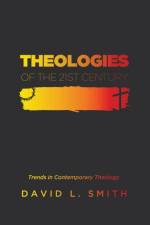
What theologies are popular and formative of Christian thinking in the present day? How should they be assessed by those Christians who want to be ""in the world"" without being ""of the world""? Theologies of the 21st Century begins with an overview of the historical roots from which current theological thinking has developed, and then moves on to a detailed evaluation of the chief doctrinal and practical emphases, taking an evangelical biblical perspective that seeks to be at once both critical and irenic.""Broad enough to supply needed context, deep enough to grant true insight, David Smith's work is a much needed introduction to the wide range of theologies clamoring for attention in this fast-changing world.""--Mark Boughan, Emmanuel Bible College, Kitchener, ON, Canada""This book is a most valuable resource. It is almost impossible to keep pace with the rise of new theologies. Human society is continually in transition giving rise to divergent concepts of God and human relationships. Not all theological change is good. Smith helpfully traces sixteen contemporary theologies through influential thinkers, providing irenic evaluations and resources for further study.""--August H. Konkel, McMaster Divinity College, Hamilton, ON, CanadaDavid L. Smith (MDiv, PhD, Southern Baptist Seminary) has served in Christian ministry for half a century as a pastor, a professor of theology, and a seminary administrator. He is also the author of A Handbook of Contemporary Theology (1992).
Analysis of the literary scheme of the letters to Timothy suggests that graphe, as it is employed in each letter, may legitimately be understood to include some of the apostolic writings that now appear in the New Testament. In affirming the Pauline authorship of the Pastoral Epistles, Swinson argues that a form of the Gospel of Luke stands as the source of the second referent of graphe in 1 Tim 5:18. Second, Swinson contends that pasa graphe in 2 Tim 3:16 includes the apostolic writings extant in Paul's day, specifically Luke's Gospel and some of Paul's own writings. These parallel lines of analysis demonstrate that Paul ascribes to his own writings and to those of his coworkers an authoritative standing equal to that of the sacred writings (ta hiera grammata) found in the Old Testament. While many questions surrounding biblical authority and the biblical canon remain, Paul's use of graphe in 1 and 2 Timothy nevertheless advances a high view of both Old Testament and New Testament Scripture.""This study takes a fresh, critical, and comprehensive look at evidence and arguments often either overlooked or facilely dismissed. The happy result is a better factual foundation for consideration of vital historical questions regarding Christian origins and the role that Scripture played from the church's inception. Especially welcome are [Swinson's] careful exegesis, philological rigor, and charitable candor in interaction with other contemporary scholarship.""--Robert W. Yarbrough, Covenant Theological Seminary, St. Louis, MO""Much academic writing focuses on small details and minor nuances. Unfortunately, the significance of these studies often remains small and minor as well. In the case of Swinson's work, my hope is that many will come to discover the richness of his discoveries--while narrowly focused, they are narrow in the same way a laser is: his work is keen, insightful, precise.""--Ted Rivera, Liberty University Online, Lynchburg, VAL. Timothy Swinson is an Assistant Professor and Instructional Mentor in the School of Religion at Liberty University.
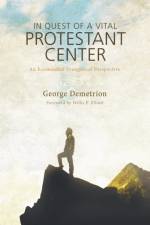
In Quest of a Vital Protestant Center probes the relationship between Scripture and culture in twentieth-century US theology and biblical studies. It points to the necessity of turning to what Karl Barth has referred to as "the strange new world within the Bible" for any revitalization of mainline Protestantism in the tradition of the Protestant Reformers in critical dialogue with serious evangelical theology. The study includes a historical overview underlying what Demetrion refers to as the "fundamentalist/modernist great divide," which continues to resonate powerfully in contemporary US Protestant thought and culture. Demetrion offers an in-depth exploration of four representative twentieth-century Protestant theologians and biblical scholars, spanning from the conservative evangelical theology of J. I. Packer to the postliberal dialectical theology of Walter Brueggemann. The book includes a chapter on the neo-orthodox legacy as a mediating resource in bringing evangelical and postliberal theology into dialogue with the core issues of theology, biblical hermeneutics, and religious culture. Demetrion concludes with a critically empathetic review of the postliberal dialectical theology of Douglas J. Hall and the evangelical narrative theology of Richard Lints. In linking evangelical, postliberal, and neo-orthodox theology to a common search for a vital Protestant center, this book will facilitate fruitful dialogue among divergent schools of Protestant thought and culture.
Abonner på vårt nyhetsbrev og få rabatter og inspirasjon til din neste leseopplevelse.
Ved å abonnere godtar du vår personvernerklæring.