




Gjør som tusenvis av andre bokelskere
Abonner på vårt nyhetsbrev og få rabatter og inspirasjon til din neste leseopplevelse.
Ved å abonnere godtar du vår personvernerklæring.Du kan når som helst melde deg av våre nyhetsbrev.

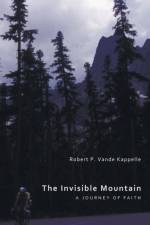
In 1989 Dr. Robert Vande Kappelle cycled solo cross-country. The 3,400-mile trip was the seed project for the Washington County (Pennsylvania) chapter of Habitat for Humanity. For forty-two days he went ""Homeless for Habitat,"" placing himself and his personal needs in the hands of strangers he met along the way. At the beginning he cycled across some of the most mountainous--and spectacular--terrain in America. After he crossed the Rockies, a nagging headwind arose, which only intensified with time. That, coupled with a deteriorating bicycle--along one of the most desolate stretches of the journey--produced spiritual testing of epic proportions.He was tempted to compromise the integrity of the trek, then to quit the trek, and finally to curse his circumstances. He sensed he was climbing an invisible mountain, whose top could not be reached. After venting his anger and frustration, he discerned that tailwinds and flat terrain rarely evoke wisdom. Insight flows freely, however, from the watershed atop life's invisible mountains.The Invisible Mountain narrates the account of that trek. The story examines the trek as adventure, spiritual odyssey, and as metaphor for the journey of life.In the words of Millard Fuller, co-founder of Habitat for Humanity International and The Fuller Center for Housing: ""Ride with [Bob Vande Kappelle] as you read. You will enjoy the trip and you will gain all sorts of insights . . . and perhaps most importantly, you will learn about yourself and grow spiritually as you experience vicariously the wonderful adventure of this 'journey of faith.'""
Description:A foundational law promoting worship of the God of the Exodus (the Decalogue's First Commandment) has little meaning without a government policy permitting such worship. Robert Kimball Shinkoskey discusses policies in the Bible which enact freedom of religion for prophets and other dissidents who work to restore worship of the God of their ancestors. In the process, he challenges the theological idea of the cessation of prophecy. New revelation from God is necessary to rescue ancient Israel from backsliding and restore her to a place of security and tranquility in a Mediterranean world gone mad with imperial war-making. Endorsements:""Robert Kimball Shinkoskey has shown in this remarkable book that at its core, the Bible is a bold, liberative, usually misunderstood challenge--at the very antipodes of sectarian narrowness. Israel is 'chosen' only to spread the message that all of humanity is chosen to risk the experience of life as an adventure where no moral tradition and no religion monopolizes the truth.""--Daniel C. MaguireMarquette University""Not satisfied with the religious tradition he inherited, Shinkoskey declares that God never intended prophecy to end. He surveys prophets from the first man through Moses and Jesus and suggests the likelihood of prophecy beyond the Bible."" --James H. Gailey Columbia Theological SeminaryAbout the Contributor(s):Robert Kimball Shinkoskey is a career employee in the Utah Department of Health. He is a citizen editorial writer, now making his first foray into the realm of theology and ancient history.
Are you intrigued by the idea of faith? Are you searching for answers to questions about God as you try to make sense of the circumstances of your life? Have you ever wondered what it means to experience religious conversion? In Out of the Fog, Into the Sun, Jo Kinnard shares her personal story of life transformation. She talks freely about what it means to be brought into faith through Christ as an older adult, after being born and raised Hindu. As someone who has a background in religion and philosophy, and holds a doctorate in one of the main schools of Indian Philosophy underlying Hinduism, Dr. Kinnard is able to articulate questions that seekers have about God and faith. Her story makes a powerful confession of the Gospel in a world marked by religious pluralism, atheism, and agnosticism. It is written for individuals and for discussion groups--exploring what it means to be a Christian today from both an ""outsider"" and an ""insider"" perspective--and underlining that in Christ, there are no walls.
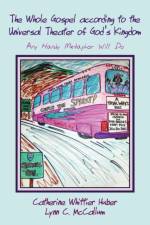
Description:When our Father of Faith is tempted to sacrifice his sense of humor on the Altar of God's Demands, God intervenes in a surprising way that really makes Abe laugh. This is the same God whose hungry servant, Elijah, is fed by ravens way out on the ragged edge and towards whom Moses manages a sidewise glance while on the lookout for greener pastures.Then along comes another tough act to follow--the Wild Man of Judea appearing in the Galilee Theater and baptizing Jesus of Nazareth in the Jordan River of God's Transforming Power and Hope. Then, in the very next scene, Jésus ben Dios, the Number One Draft Choice in all of Baseball, hops a trial-ways bus to intensive-training camp where he comes face to face with the temptations and adversities of the real world. Fortunately, Jésus has his Spring Training Manual handy for quick reference.Jesus then launches his teaching and healing career in many forms: as a dance instructor, farmer, chef--and even as a flamboyant pyromaniac-arsonist who comes ""not to bring peace to the world"" but to set it on fire. For who can forget Marshal Jesus out along the Border of Sin and Forgiveness encountering the Ten Men-yon? Or the homefolks' chant, ""Dr. Jesus, he's our man! If we can't use him, nobody can!""? Because when Anglo-Catholic Father Jesus meets an average parishioner at the Holy Water Basin and asks her to bless him with it, their engaging conversation prompts students of the bible and pillars of the church to take a second look in order to watch ordinary altar candles suddenly take on more beauty and meaning than they have ever imagined before.So, for those who have eyes to see: Look!Endorsements:""This welcomed book features emancipated imagination, passionate attentiveness to the biblical text, and good-humored playfulness about words, images, and metaphors. The outcome is a down-home contemporaneity about the Bible now situated in ordinary time with ordinary folk. The Bible can never be the same again when,-""Born again"" turns out to be """"turned inside-out and upside-down;-The Sadducees say to Jesus, ""Bah, Humbug!""-Jesus says to the Pilate, ""You say I am the Presiding Bishop.""Read, mark, note well . . . and laugh!""--Walter BrueggemannColumbia Theological SeminaryAbout the Contributor(s):Catherine Whittier Huber received her Masters of Theological Studies from Drew Theological School in 1976. Catherine is a lifelong Episcopalian and an active layperson in her church and diocese.The Rev. Lynn C. McCallum received his Masters of Divinity from Virginia Theological School and was ordained to the priesthood in 1968. Lynn served for over thirty years as a parish priest in the Episcopal Church in Northern Virginia, Washington D.C., Michigan, and Ohio.
My First Introduction to the New Testament is for young readers of middle school age who may cherish the presentation Bibles given to them when they were younger but wonder just how to engage with biblical literature. Church school teachers may want to use it for a yearlong class because most chapters can be covered in one session. College students and even graduate students will find this book an easy way to refresh and review.
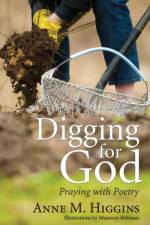
Designed for daily use as well as for retreats, Digging for God is an invitation to linger in the gardens of the Bible and the gardens of the heart. Using the passages concerning five biblical gardens, and then her own experiences distilled into poetry, Higgins provides meditative ideas and questions as springboards to prayer. For all who have labored and loved their backyard gardens, Higgins' poems will nudge memories. For all who are, as May Sarton said, "hopeful gardeners of the spirit," this volume offers fertile ground for prayer and reflection.
This memoir invites readers to explore stages of their own spiritual journey. Bianchi graphically describes his path from an Italian immigrant family on the West Coast, through twenty years as a Jesuit, to being a professor of religious studies at Emory University. As he develops a more this-worldly inner life, Bianchi struggles with church teachings about Christ, sexuality, and authority. He candidly reveals how failed marriages gave him a humbler grasp of meeting the transcendent in everyday problems. He embraces a contemplative spirituality that links Buddhist and Taoist practices with western mysticism. With a foot in Christianity, he shows how to walk a way of inter-spirituality as a meaningful road for the contemporary seeker. For Bianchi this involves becoming a metaphorical Christian as he moves away from religious certitudes of early life to find spirit in nature and humanity. Bianchi, a well-known writer on spiritual aging, challenges Baby Boomers to craft a contemplative life that works for them today. With his wife and two cats, he discovers a home for body and spirit along the banks of the Oconee River in Athens, Georgia.
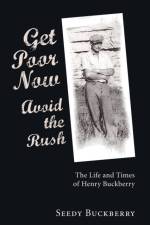
It's hard to say, exactly, what's meant by the ""modern world,"" but Henry Buckberry never really hooked into it. Born before the First World War and the oldest boy in a family of thirteen kids, he left the open, rolling, potholed prairie of North Dakota in 1921 for the dark, dense, dangerous woods of northern Wisconsin, where he learned to fish, trap, hunt, lumberjack, and farm. Although he lived into the twenty-first century (the second volume of these stories, A Windfall Homestead, will inch us closer to the information super-highway), it could be said that Henry played hooky from the twentieth. With a few allowances for a little new technology, like the Model T, Henry's life represents the end phase of a rural folk culture that has its roots in the Neolithic. Through Henry's stories it's possible to see a long way into the past and then to turn the telescope around in order to put the present under an improvised microscope.Henry didn't have an easy life, but he had a vivid life, a life amazingly free of boredom, aimlessness, or distraction, and his stories convey that vividness from beginning to end. Henry's son Charles Darwin Buckberry--also known as C.D. or Seedy Buckberry--interviewed Henry and arranged the stories in some sort of more or less working order. (Seedy insists he put those stories down with complete fidelity, although he refuses to take a lie-detector test or submit to a Minnesota Multi-Phasic Personality Inventory analysis.)Henry's life, as conveyed here, is also a way to measure the intellectual bulimia (or is it the intellectual anorexia?) of present-day empire consumerism. Here is life before Wal-Mart. Here is life that lives in nature with intense and even fierce physicality. Here is life that sings.
Large and successful organizations seem to emulate the trajectory of a skipping stone. First they slow, and then they sink. Why does this happen over and over again? Most organizations come to believe that their problems stem from doing the wrong things. They are unfortunately looking in the wrong place. The problem with the demise of large and successful organizations is not related to what they are doing. The problem is rather in what they have actually become. And they simply fail to see it. It is only in understanding "who we are" that the sinking trajectory of large and successful organizations can be reversed. Mind-Head Soul-Head addresses this insidious situation and provides a "human prescription" as the cure.
Too often, individuals who have been called to practice their gifts and talents in the field of business and professional life sense that to serve God they ought to be doing something more directly involved with the church. Many successful business leaders, upon coming to faith in Christ or upon renewing their interest in God's Word, struggle with whether or not they should enter vocational ministry. Certainly, God calls some from among the professions into such vocations, but many simply haven't realized the full potential of where God has placed them. God's people who are assigned to duties in corporate boardrooms or offices, on sales forces, in entrepreneurial ventures, and as members of research and development teams are among his most effective servants. Believers who are active in the marketplace are surely among God's most treasured ministers and have the potential to have a wider impact and larger influence than most who serve in full-time vocational ministries. Likewise, these professionals have a capacity for great harm to the church and the cause of Christ if while they make claims of Christian belief, their actions prove inconsistent with what God's Word teaches--if their walk doesn't match their talk. Be encouraged! God wants to use you where you are. He wants to sanctify all of what you have learned and experienced. You have great potential in the kingdom!
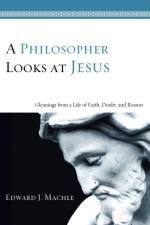
This book is the response to a lifetime of questions raised by fellow philosophers, by students, and by the author's own wrestlings. Since the author claims that Jesus's importance goes beyond his being just a moral teacher, Edward Machle discusses the difference between the foundations of philosophy and of theology, and how the disciplines of philosophy and theology use language differently.Then Machle goes on to present his somewhat unorthodox evaluations of the four gospels and their relevance--rejecting, for instance, claims of a ""Q"" document, and dating Matthew later than Luke. Since any account of Jesus must assume that before Jesus appears in the records, he had a distinctive development, two admittedly fictional narratives follow, preparing for distinctive emphases in the author's later discussions of frequently met problems about Jesus's birth, miracles, aims, and death. Machle lays unusual emphasis on the centrality of the title ""Son of Man"" for Jesus. Extensive discussions of the resurrection narratives and questions about them follow, leading to a unique treatment of John's Prologue. The last three chapters deal with Jesus's relation to modern belief and life.
Description:""The Common Market is going to be the kingdom of the Antichrist!""""Jesus will return within 40 years of the creation of the state of Israel in 1948!""""The Battle of Armageddon will come when the Soviet Union invades Israel over oil!""Those newspaper mileposts passed and the Soviet Union fell. The faithful Christian has his faith shaken every time prophetic teaching based on the New York Times fails. Critics have a field day with each wrong interpretation. Then a new theory that fits the daily news better than the last one pops up. Each time, the sensational new speculation fails. Could it be that prophecy writers are listening to CNN more than to God? When a careful Christian reads a scholarly work, it can be about as interesting as reading the telephone book. Scholars do great research, but their books generally are written to other scholars, not to the rest of us. Isn't there a better choice? You're holding it. A Primer on the Book of Daniel is designed for you. It's written in your language, not the almost-foreign jargon of the scholar. At the same time, it's drawn from the work of scholars who have studied the Bible carefully for years. Their work has been assembled and translated so you can understand what the Bible says when it's allowed to interpret itself. Using plain language, Daniel gets to explain himself. About the Contributor(s):Ted Noel is director of adult Bible studies at Sabbath Grace Fellowship in Apopka, Florida. He is the author of I Want to Be Left Behind (2002).
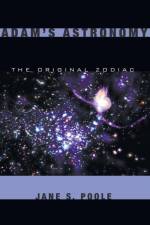
Long before Moses wrote Genesis, the world's first astronomers invented star signs to illustrate a prophecy: a God-man would come to repair the breach between us and the Creator. Those starry figures were pirated, however, and used to advance a false religion which spread all over the world. Faithful men from Noah to the magi of the Christ child stood against that error, yet the true star signs all but vanished for millennia.Adam's Astronomy lays out the original signs, introduces the linguist who recovered them, and explains how she did it. The last chapter describes many deep sky objects whose traits--revealed by modern telescopes--illustrate the ancient message of the constellations in which they are found.
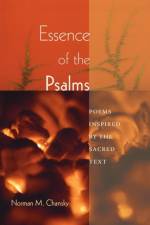
Essence of the Psalms preserves the spirit of the biblical text while recasting it in a modern idiom. The poetic styles in this work are based on those found in the sacred text. Retained are the messages of petition, praise, thanksgiving, musings, anxiety, awe, confrontation and remorse, smoldering embers of anguish, and, especially, blessings. They are filtered, moreover, through a lens ground with both the bleakness and brightness of human history. The messages point to faith in and hope for a better world by taking the Virtuous Path of God, a Path Ringed with Garlands of Goodness. There is much mystery in the biblical text. Because the rules and rhythms of the human condition are ever changing, each time one revisits the text some mystery is unraveled, new meanings are unlocked, and enlightenment unfolds. A better understanding of the storms and calms of life springs forth. Extracting the marrow of the sacred text, Essence of the Psalms is a living testimony of its vitality and relevance.
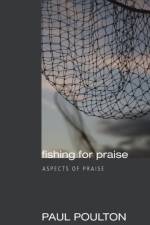
Praise is a hidden doorway in the world that enables us to see things outside of the universe. But it's a doorway that is easily missed; people walk past it, thinking nothing of it, not realizing the value of it. But God has placed it there for us to walk through and see where he lives.This look at praise takes some surprising turns and gives us insight into heaven, hell, the world we live in, and our own souls.People praise all sorts of things. I find myself praising my wife--or praising children, footballers, or chefs. I even praise my dog. When we praise God, it is a natural extension of what we normally do every day. And praise isn't one way, because God praises us, too. When we are patient, praise will come our way from the most unexpected source, and it will come just when our enemies have turned up to see it. God intervenes on our behalf when we leave the task of being praised to him. Contrary to popular belief, praise comes to those who wait. We don't have to fish for it.
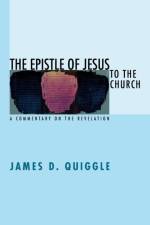
The Epistle of Jesus to the Church is a commentary on the book of Revelation that assumes Jesus was the author and John the reporter of the words and events described. Here one will not find an explanation of an anti-Roman message written by John in hidden codes and apocalyptic motifs to fool Roman authorities. John the apostle and prophet was the faithful scribe, who did not create the message but faithfully and accurately described all that he saw and heard. This commentary follows the principle that the Scriptures explain themselves, because the Revelation is a word from Jesus to his church--a word that is grounded in the Scriptures. The Epistle of Jesus to the Church has been written with teachers, students, and pastors in mind. The interpretation of the book of Revelation is thorough; difficult passages are addressed, and plausible answers are provided to the questions posed by in-depth study of the biblical book. This is a commentary for personal study or classroom instruction, one that may be confidently used to preach and teach the Revelation of Jesus to the church.
In Part One, we analyze the meaning of the Hebrew and Greek words translated ""faith."" Next, we explore how all of our faculties interact so you learn how to process a promise into a powerful word of faith. In Part Two, you discover how these principles are modeled by such Old Testament luminaries as Abraham, Enoch, Noah, Daniel's friends, and renowned Gentiles (Caleb, Rahab, and Job).In Part Three, we tackle such vital issues as the nature of ""saving faith,"" the ""how-to"" of effective trusting, and how your understanding of God's faithfulness influences your ability to trust Him.Whether you are a pastor, bible teacher, or small group leader seeking to transform the lives of those you serve, you will find a wealth of life-changing insights.
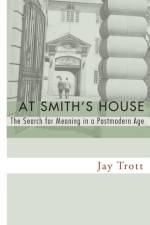
Are meaning and purpose still possible in life? The age of philosophy and its pursuit of the good of happiness came to an end with nihilism. The philosophers equated the good with intellect, which led to divided descriptions of this value. Philosophy is divided by divided loves--Plato's love of pure intellect and Aristotle's love of nature and constructs of value--which is why it led to nihilism in the end. But it is possible to go beyond the ravages of nihilism by setting aside these divided loves for the sake of love itself, the power that makes itself known through the desirability of life. At Smith's House examines the possibilities of ""love itself"" in twelve informal, entertaining conversations between two old friends. It begins by dissecting the divided concepts of value produced by philosophy and its infatuation with intellect. Then it describes the difference between ""love itself"" and the divided loves seen in philosophy as well as in institutional doctrine. Finally it discusses the restoration of unity to the church and goodness to culture through the formulation Deus caritas est, which provides a means of going beyond nihilism and the demise of philosophy.
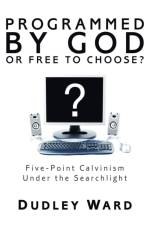
Are we in fact more than just inert clay in the divine Potter's hands? This book seeks to prove conclusively from Scripture that mankind's freedom to seek God was not retracted at the fall, and that all humanity's sins were borne on the cross by the Lord Jesus Christ. The five points of Calvinism under scrutiny, often known by their acronym, TULIP, are a resume of doctrines formulated at the Council of Dort in 1619. This council maintained that the fall of Adam resulted in the inability of man to seek, or even to desire to seek, God. The Council of Dort declared that only those who have received prior regenerating grace are in fact capable of seeking Him. As you read this book, you will see that God has sovereignly decided to preserve genuine human freedom of choice, and that this brings Him glory and delight. You will also see that predestination is not about who is destined to become a Christian, but about whom a Christian is destined to become.
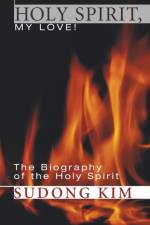
This book is a biography rather than a doctrine of the Holy Spirit. Focusing on the Holy Spirit as a person, the author portrays the Spirit as the one who has done and is doing every work of the creation and re-creation. The Holy Spirit is the most important and basic substance, binding together the three persons of the divine Trinity into one. The name of the Holy Spirit as well as of God the Father is "Jesus," and it is strongly recommended to baptize "in the name of Jesus Christ" instead of "in the name of the Father, of the Son, and of the Spirit." The Holy Spirit would like to be acknowledged as true God and true Lord by all his servants all over the world.
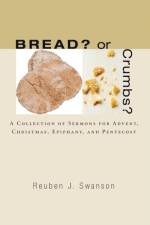
This anthology of sermons is compiled from a sixty-year practice of preaching. Reuben Swanson's "prophetic poetic prose, as it has been called, has developed through the faithful discipline of preparing written sermons. Readers will travel through the Christian year surprised and blessed by sermons from Advent, Christmas, Epiphany, and Pentecost.
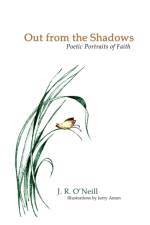
J. R. O'Neill draws on his experience growing up in an alcoholic family and on his more recent journey through the dark valley of depression to create poetic portraits for psychospiritual growth and maturity. These sanctified memories--together with many other spirit-captivating encounters with God in biblical stories, nature, and community--make this a good read for anyone interested in feeding the soul, and especially for those lost in or emerging from the shadows of depression or addiction.
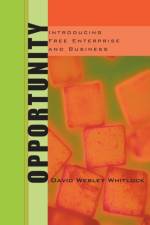
Description:Christian Durant, a student at Leland University, worked his way through college at a local retailer, Stearns and Company. Though he studied history at Leland, he completed a minor in business and upon graduation moved into the management training program at Stearns and Company. Years later, serving as a store manager, Christian marries Leigh Whitfield and is approached by an old friend, Scott Pierce, with an opportunity to join him in a start-up manufacturing business. Christian and Leigh join their friends--Scott and his wife, Carol--as they learn more than they thought imaginable about starting and managing a business. Then tragedy strikes. Scott is killed in a mysterious accident, the business suffers setbacks, and friendships are stressed to the point of breaking. Christian faces a crisis, professionally and personally, and seeks answers that lead him ultimately to a newfound faith and peace. Christian and Leigh weigh the possibilities of selling their interest in the business and starting over. Meanwhile, the investigation into the death of Scott Pierce uncovers surprises that no one expected . . . Opportunity is a textbook introducing free enterprise and business principles in story form, complete with the suspense and intrigue of a novel. This ""novel text"" integrates a survey of business disciplines with a biblical worldview. In enlightening ways the book explores the integration of faith and ethics. As the story engages readers, it also teaches principles of free enterprise and business. Endorsements:""Nothing short of brilliant. David Whitlock has creatively put together a fascinating introductory textbook for college and university business students. In this well written work students will be introduced to all aspects of the business world . . . This exciting pedagogical tool enables students to grasp the big picture, while wrestling with matters of faith, ethical issues, and accountability challenges. . . . I heartily commend it and trust it will find the wide audience it deserves."" --David Dockery, President, Union University;Chairman of the Board of Directors, Council for Christian Colleges and Universities ""I recommend Opportunity to anyone involved in the study of business. I am also interested in making this book available to all of our entry and mid-level managers."" --Mr. Kelly Baker, Executive Vice President of Sales, Teters Floral Products, Inc.""David Whitlock has applied a unique approach to writing an introductory business text with a faith-based message. Students receive the advantage of two books for the price of one--a textbook and a novel. This is truly a novel approach to learning business and free enterprise in America."" --Robert MastersVice President for Academic Affairs, Kansas Board of Regents ""Dr. David Whitlock is passionate about the life that God has given him through the Lord Jesus Christ. That passion is very evident in his book, Opportunity: Introducing Free Enterprise and Business. This introduction to business textbook communicates basic business principles. . . . The most striking dimension of the book is the author's unapologetic presentation from a biblical Christian worldview. . . . It is my privilege and honor to recommend this book to those who desire to present business from a faith-based perspective."" --Gordon DutileProvost, Southwest Baptist University ""I like the approach. Opportunity departs from the same old dull-as-dishwater encyclopedic presentation style. The writing is generally lively and moves the reader along to the next subject."" --Shawn Ritenour Associate Professor of Economics, Grove City College""Easy read. . . . Dr. Whitlock captures the interest of the reader with a story that bridges the gap between theory and application. Opportunity is a story that is easy to understand, remember and apply. It is about time someone applied what we all know about how to help other people learn and remember--tell th
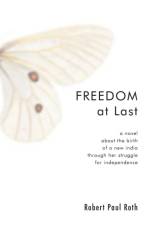
The time is the late 1940s. The place is India on the eve of independence. A history professor and his wife -- Ivar and Maren Lagerstrom -- arrive at a mission college in the southeastern town of Chinnapur. We follow Ivar and Maren as they learn to negotiate Indian society and as they endure trials of weather and disease. But graver crises are coming.Chinnapur is quickly becoming a haven for refugees. When the communist town chairman foments a riot of Koya tribesmen against the influx, a slaughter begins and throws the town into chaos.Robert Paul Roth has created a human-interest tale in which characters under duress become vehicles for significant social and political comment. Offering more than political commentary or local color, however, Freedom at Last reveals the irony of small-town life in uncertain times. Brimming with compelling characters, this novel brings readers close to ambiguities in both missionary activity and political empire.
The time is Earth Year 2333 AD--a year at the beginning of a horrible new reality for civilization. The location is the city of Chicago, one of the last cities in the United States that remains. But it, too, has suffered great devastation. Death and destruction have been directed on it by the other cities that were caught up in what turned out to be a self-destructive competition to gain preeminence. Most of the people are gone, and the believers that remain in Chicago are thrust into survival mode. Marduk, a vicious leader of the forces loyal to the Leader, sees the remnant as a threat and makes his personal goal to wipe them out. Victor Steinhouse and his friends are all that stand in his way. But who will win this contest of wills? And what will it cost? And will the believers glorify God as they deal with such opposition? Yet the bigger question remains: Is faith all you really need when faith is all you have?
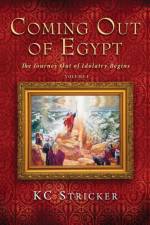
Coming Out of Egypt is an exodus out of idolatry--the idolatry of ancient Egypt and the idolatry that permeates the church today. Its goal is to make the exodus come alive for the reader--not to just read about the exodus but to experience the exodus, not to just read about the Passover but to experience the Passover, to catapult the reader back through time like a time traveler entering a time portal. The goal of Coming Out of Egypt is to experience redemption, not just to read about redemption, to experience redemption from Pharaoh at the Reed Sea, and witness Yeshua's resurrection.
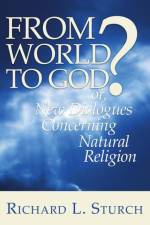
This book consists of a series of dialogues on the relationship between belief in God and the world of nature. One participant is a Christian who believes one can base belief in God on reason and science, one is a Christian who thinks looking for such a base is unnecessary and even undesirable, and the third is an atheist. As the argument goes back and forth, it touches on such topics as the origin of the universe, various alleged pieces of evidence for design, and the existence of laws of nature. The dialogues do not aim to "settle anything but rather to take readers far enough into an issue to understand some of its complexities and, hopefully, to set them thinking.
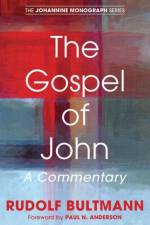
"As the first volume in the Johannine Monograph Series, The Gospel of John: A Commentary by Rudolf Bultmann well deserves this place of pride. Indeed, this provocative commentary is arguably the most important New Testament monograph in the twentieth century, perhaps second only to The Quest of the Historical Jesus by Albert Schweitzer. In contrasting Bultmann''s and Schweitzer''s paradigms, however, we find that Bultmann''s is far more technically argued and original, commanding hegemony among other early-Christianity paradigms. Ernst Haenchen has described Bultmann''s commentary as a giant oak tree in whose shade nothing could grow, and indeed, this reference accurately describes its dominance among Continental Protestant scholarship over the course of several decades.""Rudolf Bultmann was unquestionably the most outstanding New Testament scholar of the twentieth century, and his commentary on John was probably his most outstanding achievement. Although no one now shares his conviction that the Gospel was built largely upon a gnostic source, his penetrating intelligence is in evidence on every page of this great commentary, which may never be surpassed.""--John Ashton, Emeritus Fellow, Wolfson College, Oxford University, UK""Although Bultmann''s literary hypothesis now fails to convince many scholars, his view that a form of Jewish gnosticism, evidenced in some of the texts from Qumran, provides an illuminating context for the interpretation of the creative theological response of the evangelist. Above all other aspects, Bultmann''s theological interpretation remains impressive and relevant, and justifies the judgment of Irenaeus and others, that this Gospel provides a compelling response to challenges to the meaning of the gospel.""--John Painter, Professor of Theology, Charles Sturt University, AustraliaRudolf Bultmann was for many years Professor of New Testament at the University of Marburg, Germany. He previously held this position at the Universities of Breslau and Giessen. He was a graduate of the Universities of Tubingen, Berlin, and Marburg."
Description:The question of the nature of humanity is one of the most complex of all philosophical and theological inquiries. Where might one look to find a decent answer to this question? Should we turn to an investigation of genetics and DNA for such answers? Should we look to the history of humanity''s adaption and evolution? Should we look to humanity''s cultural achievements and the form of its social life?In this intriguing and provocative collection of essays, philosopher Robert Spaemann reacts against what he calls "scientistic" anthropology and ventures to take up afresh the quaestio de homine, "the question of man." Spaemann contends that when it comes to the nagging question of what we truly are as human beings, understanding our chemical make-up or evolutionary past simply cannot give us the full picture. Instead, without doing away with the findings of modern evolutionary science, Spaemann offers successive treatments of human nature, human evolution, and human dignity, which paint a full and compelling picture of the meaning of human life. Crucial to any anthropology, he demonstrates, is our future as well as our past. And our relationship to God as well as to our next-door neighbor. All of these themes coalesce in a vital contribution to the question of what it means to be human.Endorsements:"Robert Spaemann is one of the brightest minds in contemporary philosophy, and the four fresh approaches to the old question ''What is Man?'' presented in this collection of essays prove the point. The quartet provides the ideal companion to Spaemann''s seminal work on ''Persons'' and a timely challenge to the host of reductionist anthropologies that swamp the intellectual scene today.DeGraaff and Mumford are to be thanked for making this collection available to English speaking readers in a translation that is accurate and elegant at the same time."--Bernd WannenwetschUniversity Lecturer in Ethics at the University of Oxford and Fellow of Harris Manchester CollegeAbout the Contributor(s):Robert Spaemann taught at the universities of Stuttgart, Heidelberg and Munich until 1992. Previous translations of his work include Basic Moral Concepts (1989), Happiness and Benevolence (1999) and Persons (2006).Guido de Graaff is a doctoral student in Christian Ethics at Harris Manchester College, Oxford.James Mumford is a doctoral student in Christian Ethics at Magdalen College, Oxford.
Abonner på vårt nyhetsbrev og få rabatter og inspirasjon til din neste leseopplevelse.
Ved å abonnere godtar du vår personvernerklæring.