











Gjør som tusenvis av andre bokelskere
Abonner på vårt nyhetsbrev og få rabatter og inspirasjon til din neste leseopplevelse.
Ved å abonnere godtar du vår personvernerklæring.Du kan når som helst melde deg av våre nyhetsbrev.

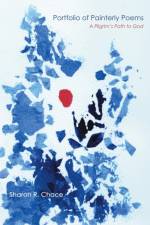
Portfolio of Painterly Poems: A Pilgrim's Path to God is a collection of poems in a variety of forms that are informed by an artist's eye. Beauty is a lens. Color is sacramental. These poems will appeal to reflective people who feel certain that there are many paths to God, including aesthetic hikes with vistas of beauty and insight. These poems are celebratory without being saccharine and religious without being didactic. While this book is not a self-help manual, it contains hints of hope and healing, glimpses of the good and sightings of spiritual strength.
Two issues in particular engaged me [when studying in seminary and graduate school]. Did God, the sovereign covenant Lord, actually communicate with men in human language? And did this Lord actually enable men to infallibly record in writing what he had made known to them? . . . The result was that I increasingly realized that unless I had confidence that the Scriptures were authentic, authoritative, and wholly reliable I would not have the certainty and conviction needed for preaching and teaching truths that I and all other sinful persons required for the assurance of the forgiveness of sin, salvation and God-honoring service. This book is, in a real sense, my answer to the questions I wrestled with initially. It is a testimony to the assurance and peace I had as I taught in Christian educational institutions. --from the Preface
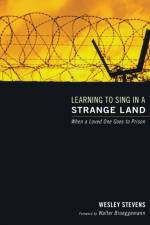
Prison is a strange land, a land of deep heartache and sadness. Over two million people are serving prison time in America. Millions more are carrying the mark of prison as those who were formerly incarcerated, including large numbers of men and women who have been released on parole. In the midst of such human misery, when ""loosened tongues"" are freed to sing of God's redemptive love, grief is diminished and the prison loses its power.
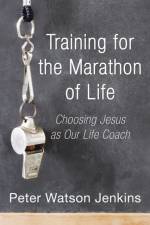
DO YOU NEED A LIFE COACH?U.S. President Thomas Jefferson did--he called Jesus' teaching:The most sublime Code of Morals ever offered to Man.""This dynamic book echoes Jefferson's sentiment, and coaches its readers by examining fifty core sayings of Jesus, authenticated by the scholars of the Jesus Seminar. This selection reveals the forceful theme of his original teaching. Each saying is carefully considered and then arranged in a unique order to clarify his positive challenge. In every age, followers have followed Jesus' coaching, working for the Good Society which, he asserted, is created by God's loving will. His grassroots approach to personal and social reform is compared with the failed social and political philosophies of our day. The author, Peter Watson Jenkins, has thoughtfully picked the fruits of modern scholarship, making them available for all to ponder, enjoy, and adopt, as Jesus' authentic coaching. He explains how his life as a student changed when, after reading Jesus' authentic message for himself, he chose Jesus as the coach"" for his lifelong marathon.Training for the Marathon of Life is not just a Bible study; it's a call to action--an invitation for us all to play our part in creating the Good Society. This engaging book is designed both for people who have never committed themselves to the church view of Jesus, and also for those who have gladly done so. It will encourage debate by young and old, and inspire great, action-packed sermons, too!
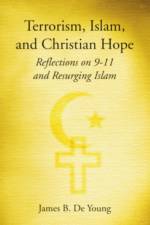
About the Contributor(s):James B. DeYoung, Th.D., is Professor of New Testament at Western Seminary. He completed a Bachelor of Arts in History at East Texas Baptist College, a Master of Theology degree at Talbot Theological Seminary, and went on to receive a Doctorate of Theology from Dallas Theological Seminary. He has authored several articles published in the 'Journal of the Evangelical Theological Society', 'The Best in Theology', and 'Bibliotheca Sacra', and is co-author of 'Beyond the Obvious: Discover the Deeper Meaning of Scripture'.
About the Contributor(s):Floyd Hale, M.Div., is a United Methodist minister, member of the Illinois Great Rivers Conference, and a graduate of Emory University.
About the Contributor(s):With a Bachelor of Science degree (Louisiana State University) in civil engineering and a Master of Divinity degree (Fuller Theological Seminary), author Bill Goheen has spent more than three decades helping entrepreneurs achieve their dreams and fulfill their visions both at home and abroad. Goheen has assisted, particularly during times of transition, by assuming various roles such as Chief Operations Officer, Director of Corporate Quality and Division President in the companies he's served. He and his wife Karen reside in Goshen, Indiana.
Success in today's business environment may seem difficult or elusive for those who desire to conduct themselves with integrity. To be genuinely successful, you need more than just talent; you need wisdom that can help conquer any situation or problem that comes your way. But wisdom that brings us real success is not worldly wisdom; we need godly wisdom to succeed in all aspects of our lives. Unlike success, godly wisdom is not elusive; it is readily accessible through prayer and God's written Word. In the Bible, a treasure trove of godly wisdom is found in the book of Proverbs. Solomon Was a Businessman examines the wisdom of those proverbs from a business perspective and presents devotionals that enlighten and encourage. Written by business professionals and based on real-life experiences, this book can be read over and over to reveal new treasures of godly wisdom as your life experiences and spiritual needs change.
As the church continues to advance through the generations, The Great Commission is falling into great disarray. Discipleship has almost become obsolete. Leadership is dwindling, and most churches are trying to repair this lack of leadership in the wrong way. This book is a call for us to return to the basics of what Jesus was commanding His disciples to do through The Great Commission. It does not just explain the importance of the commission, it maps out a detailed strategy for how to make this call work in the local church. It is important to realize that few churches are doing anything to train up their leaders. This book offers an attempt to be faithful to Jesus's Great Commission. What is most important about this three-year program is that it will develop the men of the church; this will provide a large group of men from which to draw your leadership. Christ Will Build His Church gets back to the basics, takes the principles clearly outlined in Scripture, and argues that they are still valid today. The church is in great need. This book has the potential to draw us back to historic Christianity and to a discipleship that really works.
In Balanced Living: Don't Let Your Strength Become Your Weakness, Robert Knight develops the theme of balance as central to good mental health, to moral and spiritual health, to emotional well-being, and to social functioning. This theme emerges from his more than thirty years of experience as a Christian minister, as a counselor, as a teacher and clinical supervisor of counselors, as well as from experience as a management and human-relations consultant. According to Knight, when we are failing or falling, it isn't always because of some inadequacy or limitation; it is rather because we have taken a strength (or it has taken us) too far--a strength that has become a weakness. The signature chapter, ""Balanced Living,"" addresses such common tensions as success and failure. It asks: How seriously do you take yourself? What time is it in your life? Following chapters cover balanced families, balance and personality type (using the Myers-Briggs Type Indicator), and balanced religion (achieving healthy moral and spiritual balance). Based on common questions, the chapter on ""Counseling and Psychotherapy"" guides consumers of professional counseling services. Topics include the various types of mental health service providers and theoretical approaches to counseling. The final chapter discusses human developmental models (in particular that of Erik Erikson), addresses certain values implicit in the counseling process, and treats certain theological assumptions from a Hebrew-Christian perspective. Mental health professionals, pastors, and others involved in helping people (as well as students preparing for such vocations) will find this book informative and challenging, perhaps even confirming. The book also engages laypersons--consumers of professional counseling and related mental, emotional, moral, spiritual, and relational health services. Of particular value are the case studies, examples, and illustrations presented in Balanced Living: Don't Let Your Strength Become Your Weakness.
Christian faith is continually challenged by the tension between certainty and mystery. A historic faith can seem threatened by the uncomfortable x that God continues to work in a rapidly changing culture. The Bartender is a fable about the messiness and unpredictability of lives being opened up to God through relationships characterized by deep listening and looking for the ongoing work of God in the world. The parallel and sometimes intersecting paths of two men on different spiritual journeys reveal how God seems to be present in the most scandalous of human dramas. When both men take risks that threaten their own religious sensibilities, they find new ways of living out the implications of their faith.
Every organization wants to achieve the kind of success that leads to greater success, and every leader wants to guide a successful venture. Leaders with drive want to be surrounded by people who have an overarching desire to expand all boundaries and utilize their talents for the good of the goal. Effective team members see problems as challenges, boundaries as movable, and the synergism of the team as a way to reach their goals. It's important to note, however, that a group of people working together toward a common goal will not necessarily make a team. They might merely be ""a group of people working toward a common goal."" I am completely committed to the team concept in the workplace. Obviously, much more can be accomplished by a finely tuned team of people than can be accomplished by one person; but more than that, people thrive when they are in an environment that values a team approach to the tasks at hand. Establishing and cultivating the concept of team in and among those you oversee will spark a fresh fire of productivity that will be as noticeable as it is enjoyable.
In All the Evidence You Will Ever Need scientist Paul Baba expounds on numerous areas of evidence that support the concept of a Creator of the universe, the Bible as a document given to mankind by the Creator, and the process that the Bible teaches as the way to eternal life in Heaven.The purpose of the book is to reach non-believers and seekers with a rationale for the gospel. The book will also be useful in college classes, youth groups, study groups, and Sunday School classes. It will be especially important to parents of students who encounter teachers and professors who seek to undermine faith in a Creator. There are key chapters on the problems with evolution, the case for the Bible as God's word, fulfilled prophecy, the basics of Christianity, transformed lives, and a number of other areas of evidence to support faith.
The primary focus of this book is to determine if the Greek word for ""worship"" (proskuneo), used in John 4: 23-24, includes the concept of ""bowing the knees"" or ""kneeling."" In the New Testament, proskuneo is translated as ""worship"" sixty times. All of the ""worship"" events in the New Testament that included a form of bowing the knees or kneeling has been documented. This task was undertaken using five reliable sources of information or testimony: (1) the testimony of God, or Scripture (1Corinthians 2:1), (2) the testimony of Lexicons or Greek dictionaries, (3) the testimony of Bible translators, (4) the testimony of history, and (5) the testimony of Bible scholars. The book was written with all categories of readers in mind: worship leaders, clergy, college professors, Seminary students, Bible scholars, teachers, graduate school students, Pastors, lay people, seekers, and is suitable as a textbook in all Bible classes that include the subject of ""worship"".
In 1517 an Augustinian monk by the name of Martin Luther nailed ninety-five statements to the door at Castle Church in Wittenberg, Germany. This was not a means of open debate but a desire to discuss scholarly objections to church practices of the time. Five centuries later, many of the same errors and heresies have crept back into the evangelical church. A modern ninety-five theses, couched in new terms for a new generation, require scholarly debate once again. Through modern-day apostles and prophets, and through the elitists within the evangelical church, the doctrine of buying God's grace and favor has been propagated through appeals for seed offerings and ""atonement-day"" donations in order to garner God's blessings. Pragmatic approaches to preaching the gospel through such movements as the seeker-driven models have moved the focus of the message of Christ and the worship of God from being God-centered to human-centered. Sound historical doctrines, such as the Trinity, have been relegated to the sidelines in favor of unity and ecumenicalism with Oneness preachers. In the words of Martin Luther, ""Out of love for the truth and the desire to bring it to light,"" the following propositions need to be discussed in their entirety by church leaders, pastors, and laypeople alike.
This book describes a method of therapy based upon the Christian spirituality and psychotherapy perspective developed by Dr. Richard York. This clinical theology perspective is a phenomenological approach that integrates spiritual, theological, and psychological concepts and was developed in large part through York's own experience of being relieved of depression and anxiety through interweaving of psychotherapy, prayer and meditation, spiritual direction, and the relationship with his Indwelling Spirit. Because human beings are the products of relationships, York critiques approaches to psychology premised upon the subject/object epistemology of empirical science that study human behavior. He suggests instead that a relational-ontology research method offers an approach superior to that of standard psychotherapy and uses experience in relationship as the fundamental concept in this clinical theology. Because people are prone to hurt themselves and others, York also argues that standard approaches to psychology need to develop a psychology of sin and evil, including some form of a Higher Power, as essential parts of the spiritual aspect of psychotherapy. York critiques Christian theologians for developing theology that seldom uses empirical data and that is irrelevant to the process of helping people heal and grow. He criticizes those pastoral ministers who moralize with people instead of listening to them as well as those who preach more about sin and suffering than God's presence and saving grace through the forgiveness of sins. While he acknowledges that most of his perspective is not new, York does offer a unique contribution to the field of psychotherapy through the concept of the Indwelling Spirit. He describes how the Indwelling Spirit works in psychotherapy and the various techniques to access it. He further argues that his experience as a gay psychologist is an essential aspect of his method because in being healed through his experience with his Indwelling Spirit he was able to define this experience for use in psychotherapy, an insight used by very few straight therapists. York challenges the notion of how a gay man who worships God regularly, found healing through a relationship with Christ in the Holy Spirit of God, and developed the concept of the Indwelling Spirit for psychotherapy, could be considered ""objectively disordered and intrinsically evil"" by the Roman Catholic Magisterium. Furthermore, York describes a new principle of moral theology for sexual relationships based on love rather than procreation and suggests seven research hypotheses to study the phenomenon of the Indwelling Spirit and the love that is exhibited in both same-sex and opposite-sex relationships.
The time is post-World War II; the place is the United States and sporadically several ""at-risk"" foreign countries. The story is about a young scientist, Richard, who believes that the origins of violence and warfare can be found in the early life experiences of individuals. To test this belief, Richard insists he must have firsthand research experience, which means traveling to foreign countries to observe local populations under stress and to study their children. In the process, he meets many intriguing people and inadvertently gets entangled in a potentially dangerous espionage operation. William Charlesworth has created a story embodying two problems: on epistemological, the other biobehavioral. The first is the problem of acquiring the truth of something firsthand as a valid substitute for learning though potentially unreliable intermediaries such as the popular media. The second problem is the question of whether the origins of violence lie in normal resource competition between individuals rather than in some form of innate human pathology. While conducting research to deal with these problems, Charlesworth's scientist encounters individuals whose survival behavior challenges the value of posing both problems.
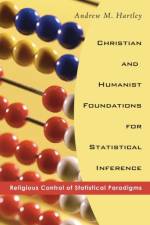
The Philosophy of the Law Idea (PLI) analyzes the manner in which religious beliefs control scientific theorizing. Religious beliefs control philosophical overviews of reality. Overviews of reality, also called ontologies, try to discover and disclose the essential nature of reality. They are concerned with what kinds of things exist and with the connections between the various types of properties and laws in human experience. Among such overviews are the biblically consistent overview provided by the PLI and certain humanist ""mathematicist"" and ""subjectivist"" overviews. The science of statistical inference seeks to evaluate the credibility of scientific hypotheses given empirical data. This essay reviews various popular paradigms, or systems of theories, concerning the ways that credibility may be evaluated, and identifies some ways that these religiously controlled overviews of reality have, in turn, controlled statistical paradigms. In particular, one paradigm harmonizes with the PLI's overview; another, with the subjectivist overview; and two others, with the mathematicist overview.
Though None Go With Me is a series of observations and challenges as seen through the eyes of a Maine pastor on his first trip to India. Barry Blackstone taught for forty days at a Bible college in Kerala State in India. Here he shares his insights on the cross-cultural adventure that has forever changed the way he sees missions and the support of native works in other lands. This book includes flashbacks to youthful days. (Rural India takes the pastor back to his own boyhood in northern Maine.) In India Blackstone faced challenges with language and food, and even a broken tooth. Here each story Blackstone offers is a devotional that brings to light deeper spiritual meaning and insights--more than the actual experience itself. This book also tells of the impact the pastor's trip on people of his own church in Ellsworth, Maine, and of what they did to forge a link between a small church on the coast of Maine and a small church in the hills of southern India!
It is 1970, the year of Marc Chagall's famous art exhibit in Paris. Clayton Rogers Clarke, a Virginian, has chosen the city as his place of residence while pursuing research during his first sabbatical. His philosophical interests, however, suffer sudden distraction from an unanticipated competitor: Monique Gibert, a writer for a French daily, for whom her husband (Jacques-Maria) is the senior journalist. Flirtatious quips and nods soon lead to a passionate affair. While dividing his time between Monique and his studies, he meets a fellow PhD, also on sabbatical. Professor Carl Sullivan's field is the Classics, and it is his conviction that humankind has scarcely progressed beyond Homer. Clayton is determined to prove him wrong. Scores of delightful characters in Clarke's pension add intrigue and verve to the story. Wander with Clayton and Monique as they make their way into each other's hearts, while traversing the city's cafes and parks that Paris alone affords lovers. And ponder with the young philosopher the age-old question of the human condition. Students of the Classics, of the Humanities and French literature, as well as philosophy, will find the author's synopses of Rousseau and Pascal, and of Homer's gods and heroes, of immense help, along with his translations of Goethe, Rilke, and Baudelaire's poems.
About the Contributor(s):Edmond Tang directs the Centre for East Asian Christian Studies at the University of Birmingham.Jean-Paul Wiest holds a doctorate in Chinese history form the University of Washington and is author of Maryknoll in China, 1918-1952.
Description:An inside view of how the scriptures of world religions illuminate the lives and experience of their devotees.Endorsements:""An excellent introduction to how members of major religious traditions experience scripture. The essays are informative, stimulating and engaging, introducing the reader to the variety of ways in which scriptures shape human life.""--Leo D. Lefebure, Fordham University ""A splendid collection of provocative and insightful essays on the significance of scripture, comparatively viewed as spoken and written sacred text for the followers of six major religious traditions.""--John Borelli, Interreligious Relations, National Conference of Catholic Bishops ""At a time when the deluge of hollow words coursing along the information superhighway threatens to drown us in distracting trivia, it is literally a Godsend to encounter a volume emphasizing the spiritual power of oral and written Scripture in world religions. What the six commentators on different faith traditions brilliantly document is the transformative capacity of sacred words and sounds attentively listened to or read.""--Joseph Prabhu, California State University ""This volume of essays sketches the role of authoritative scriptures in a number of religious traditions and insightfully shows how they become embodied in the lives of their practitioners.""--John P. Keenan, Middlebury CollegeAbout the Contributor(s):Harold Coward is professor of history and director of the Centre for Studies in Religion and Society at the University of Victoria. His previous books include Sacred Word and Sacred Text, Hindu-Christian Dialogue, and Life After Death in World Religions.
Description:During the summer and fall of 1971, the U.S. government supported the Pakistani military dictatorship while it massacred the people of East Bengal. But a group of Americans challenged this policy, tied up East Coast ports to Pakistani shipping, and had a major influence on changing U.S. policy.Blockade is the story of the ""non-violent fleet"" of canoes and kayaks that attempted to turn around the U.S. govenment.Endorsements:""Blockade is an inspiring account of what happens when Spirit-sensitive people are more attuned to obedience than to success. The protest against America''s provision of arms to the Pakistani government''s war against Bangladesh is a model of nonviolent action against injustice. This book at once shames and encourages, convicts and educates. It proves again that responsible action, no matter how seemingly insignificant, does have a ripple effect with individuals, organizations, and nations. It encouraged my faith that sacrificial leadership will inspire others to overcome oppression. Blockade calls us to base our foreign and domestic affairs upon a foundation of moral and spiritual principle, rather than upon political and financial expediency.Richard Taylor''s account of the blockade and manual for compassionate action is a significant contribution.""Mark O. Hatfield, U.S. Senator, Oregon""Blockade illustrates Gandhi''s teaching that ''in a gentle way you can shake the world.'' By depicting the courage and resolve of a small group of Bengalis and Americans struggling to change U.S. foreign policy, Taylor demonstrates the awesome strength and vitality of nonviolence in action.""Cesar E. Chavez, President, United Farm Workers
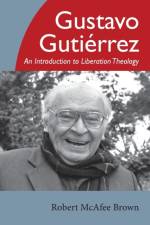
Description:Here is a definitive introduction to liberation theology through the life and work of its most significant proponent, Gustavo Gutierrez. Robert McAfee Brown draws extensively on Gutierrez''s own writings (some never published in English) and on personal conversations with him. Brown clearly and compellingly presents the basics of liberation theology and the differences between North American and Latin American theologies.The form of Gustavo Gutierrez is that of a drama. Brown''s initial ""program notes"" introduce and situate the ""author,"" the ""actors,"" the ""critics."" He sets the stage with a history of church and state in Latin America and introduces its definitive figures, themes, and milestones. A collective biography of Gutierrez''s spiritual predecessors is followed by a biography of Gutierrez himself, which takes critical account of his works. Then we are ready, dramatically and theologically, to move to the first act: that of commitment to the poor. The second act, in two scenes, explores first liberation theology''s method of critical reflection on praxis and also its content: nothing less than the Word of God.Brown delves next into the controversies and criticisms Gutierrez faces, especially the challenges from authorities in Rome. Finally, in act three, readers discover that in this particular drama, they too are ""on stage"" and must take part by reflecting on what this drama really means for them.Endorsements:""Robert McAfee Brown has done an extraordinary job. . . . I have been connected with Latin America for more than four decades and have been at least peripherally associated with these theological developments, yet I have learned a great deal from reading this book. For those who are not well acquainted with Gustavo Gutierrez and liberation theology, this is an excellent introduction. For those who are better informed, it can serve as a guide for further exploration and reflection on its challenge.''''--Richard Shaull""Brown''s Gustavo Gutierrez enables readers to appreciate the context and content of the Peruvian thinker''s contribution and to grasp why we have entered a new age of martyrs. This highly readable and carefully researched volume provides an excellent starting point for further study of a wide range of liberationist approaches to Christian theology.""--Anne E. Patrick""This is the most lucid and appreciative interpretation in the English-speaking world of Gutierrez and his work. The fact that the interpreter is a renowned Protestant theologian is a powerful sign that a South-North ecumenical convergence is in the making ... .''''--Jorge Lara-Braud""The Gutierrez whom we meet in this book is a man whose deep Christian faith and commitment to revolutionary struggle, whose example and prophetic teaching, should lift the vision and insight of the whole Church.''''--John C. BennettAbout the Contributor(s):Robert McAfee Brown was Professor Emeritus of Theology and Ethics at the Pacific School of Theology, Berkeley. He is the author of numerous books, including Unexpected News: Reading the Bible with Third World Eyes, and Spirituality of Liberation.
Endorsements:The Sentences of Pseudo-Phocylides, a Hellenistic Jewish didactic poem of some 230 lines probably written in Alexandria during the first century CE, is increasingly recognized as a valuable source for understanding various facts of Second Temple Judaism and early Christianity. Read one way, it appears to be a miscellany of wisdom sayings and moral exhortations that express widely held values among both Jews and pagans during the Greco-Roman period and, as such, reflects little organizational structure. Wilson contest this way of construing the work. Where others have seen chaos, he sees order. Thus, instead of seeing the work as a loosely organized ""gnomic anthology,"" he argues that ""the poem has been designed in a fairly sophisticated and systematic manner according to certain literary and argumentative strategies familiar from contemporaneous gnomic, parenetic, and philosophical sources"" (p. 178).Carl R. Holladay, Candler School of Theology, Emory University, AtlantaAbout the Contributor(s):Dr. Walter T. Wilson is Professor of New Testament at the Candler School of Theology at Emory University.
Description:I am not like Hudson Taylor, David Livingstone, or William Carey. The stories of these people are inspiring, but they also make me question, ""Am I really good enough to be a missionary? Because I don''t consider myself super-spiritual like these missionary heroes seem to be."" Ordinary Missionary introduces world missions through the story of an ordinary family facing ordinary questions about their own insecurities and inadequacies. Step into the shoes of three authors who combine their thoughts to put a face, a feeling, and a person to contemporary missions. Join Jay, husband and father, as he prepares to minister among the Builsa people in Ghana, West Africa. Observe Pam, wife and mother, as she addresses the personal concerns of the family. Follow Emily, oldest daughter, in the struggles and joys of being a missionary kid.This story is not a triumphant tale of missionary heroes. The real heroes show up in unlikely places when they are least expected. Our steps are ordinary, but the journey is beyond extraordinary. These real stories will inspire you to trust your own life in the hands of our extraordinary God.Endorsements:""Stories and relationship--what a marvelous way to learn! As you enjoy the Moon family stories, not only will they become dear friends, but you will also gain insight into vital lessons in practical missiology. This is a captivating introduction to missions, built on the stories of an ordinary family on mission with God. It will open the eyes of the missionary novice and warm the heart of the cross-cultural veteran.""--Steve Strauss, Department Chair and Professor of World Missions and Intercultural Studies, Dallas Theological Seminary""Ordinary Missionary is an inspiring account full of wisdom and practical insights from a family living and ministering in a different culture . . . Each chapter gives the reader insight into the experiences of the Moon family living in Ghana. Drawn out of these experiences are principles for living and working in a different culture. I would highly recommend it to anyone going into a cross-cultural situation.""--Ruby Mikulencak, Former Director, SIM Ghana""Ordinary Missionary has completely changed the way I think about missions. I''m so thankful to the Moons for their vulnerability and transparency in sharing how God used them in the midst of their uncertainties. They use stories as a way to share biblical truth, which makes it not only easy to read, but easy to see God at work in their circumstances. As an ''ordinary'' guy myself, I appreciate their relational approach to mission work, and recommend this book to any who want to learn how to better serve in a mission context.""--Benjamin Lee, Executive Director, Sioux Falls Seminary Foundation About the Contributor(s):W. Jay Moon, PhD, Professor of Intercultural Studies and Director of the Wesley House of Study at Sioux Falls Seminary.Pamela A Moon earned a BS in Clothing and Textiles at Virginia.Emily G. Moon earned a Bachelor of Journalism degree (emphasis in Strategic Communications), Summa Cum Laude-Honors Certificate at University of Missouri.
Dr. Joseph E. Campbell (b. 1903), author, world evangelist, professor, held the first earned doctoral degree in The Pentecostal Holiness Church. An active evangelist, revivalist, and pastor, he held a longtime interest in missions. He founded the Laymen''s Missionary Foundation. He traveled to Hong Kong where he established a school, college, and church. His books include What to Believe and Why, Can a Man Live above Sin?, and A Whole Gospel for the Whole Man.
Abonner på vårt nyhetsbrev og få rabatter og inspirasjon til din neste leseopplevelse.
Ved å abonnere godtar du vår personvernerklæring.