












Gjør som tusenvis av andre bokelskere
Abonner på vårt nyhetsbrev og få rabatter og inspirasjon til din neste leseopplevelse.
Ved å abonnere godtar du vår personvernerklæring.Du kan når som helst melde deg av våre nyhetsbrev.

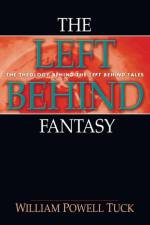
The popular Left Behind series by Tim LaHaye and Jerry Jenkins has sold more than 62 million copies since the first volume appeared in 1995. Jerry Falwell pronounced it the most important series of books in the history of modern Christianity. Many readers have assumed it gives the true facts about the way the world will end and what will happen to all the people in it. But according to real biblical scholarship, this series is seriously flawed. Based on a misreading of many scriptures, including Daniel and the Book of Revelation, it has fed a kind of hysteria in the Christian populace that has led many people to reorder their existence in expectation of an impending doom and the sudden, unexpected return of Jesus. In this book, William Powell Tuck carefully and authoritatively refutes the premises and faulty theology of the Left Behind books, critiquing them in the light of genuine biblical scholarship and common sense.
In this witty and ironic novel, Melissa and Dave claim to love each other, but clash as to how the relationship should proceed. Their predicament is complicated by Beth, who brazenly asserts her own amorous intentions. Add a provocative element of mystery, and the result is a subtly subversive comedy about contemporary romance.
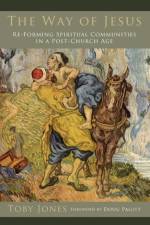
Countless books have been written about the impending death of the institutional church, but this one both celebrates the resurrection that will follow and lights the way toward a new kind of spiritual community. The Way of Jesus identifies seven principles upon which authentic and vibrant Christian communities can be built in today's diverse and ever shrinking world. Toby Jones traveled across the country, from San Francisco's Glide Memorial Church to New York's Church of the Holy Apostles, and from Chicago's Wicker Park Grace to Minneapolis's Solomon's Porch. He sojourned with seven communities in all and conducted in-depth interviews with their leaders and participants to reveal what distinguishes resurrection communities from those in precipitous decline. In The Way of Jesus, Jones draws both from the scriptures and from such fresh thinkers as Brian McLaren, Dallas Willard, Doug Pagitt, and Shane Claiborne, offering genuine hope and practical direction to the millions of spiritually homeless. But just as importantly, The Way of Jesus offers a clear path to struggling, shrinking congregations who desire to re-form themselves in a way that is both more faithful to the Gospel and compelling to post-modern generations, who have long since abandoned the institutional church.
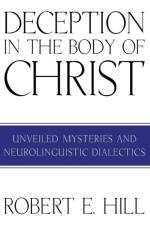
The purpose of this book is to present a comprehensive review of deception, its essential component of neurolinguistic dialectics, and how it is used by Satan to corrupt the human mind from devotion to Jesus Christ. These theological subjects are explored in an interdisciplinary fashion in an attempt to reveal historical knowledge of religious and secular developments of the ages needed to understand spiritual failure, deception, sin, apostasy, the role of the human mind as the venue or battlefield of deception, and how faith in God becomes weak and susceptible to doubt. Always at issue here is "why humanity replicates behavior that regresses to the same results of apostasy and utter spiritual failure induced by deception?" This interdisciplinary approach eludes the prototypical, one-dimensional approach to understanding deception and sin and presents the reader with a "how to" methodology that will hopefully defeat deception and sin. It also shows how deception results from heretical doctrine advanced by false prophets and preachers. Moreover, this book will help readers hone their skills necessary to examine issues of contemporary life with critical thinking in the context of religious and human history that facilitates their becoming better human beings.
This poetry becomes an agent of transformation in offering a new direction for our lives. It provokes a little holy agitation by tossing poems like pebbles into placid pools of water to cause some waves. Such poetry gives us prophetic alerts to pay attention to things that matter, like peace not war, like economic and immigrant justice, like an earthy passion for life more than death. This book of poems describes a link between poets and peacemakers:Maybe peacemakers are like insurgent poets,Irrelevant, dissident, disregarding the status quo,Imagining a vision of a world that gets alongThis poetry--too dangerous for right wing religion--will offer a resource for church activists and for taking the next step of courage. It will be a companion for marching to a different drummer and hearing the still voice of God amplified through ordinary occasions.
The Emerald Mandala is a spiritual shelter, a sanctuary of sorts. It is a harmony of words and rhymes to take you to far away inner places. Inside you will find fables, prayer, dilemma, and intentional absurdities. Angelic advocates wait to take you on wings widespread and destined for the heavens. Love is discussed, insights appraised, mind and spirit explored. The Emerald Mandala is a journey from which you will return changed, maybe ever so slightly, but changed nevertheless. It will likely provoke you. It may touch your heart. It might leave you mystified or confused, but it will certainly leave you in better thought. Within these emerald walls, we will explore ourselves together, we will challenge our beliefs to see if they endure, and we will pray and hope for similar providence. I ascribe my poems to no particular religion or doctrine. I seek God by any means left to me. There are as many paths back as there are rays of the sun. Join me now and let us ignore our differences, embrace our alikeness, and seek together that we may end up as One. Let the Emerald Mandala transport us beyond the worldly bonds that seek to contain and diminish us. Let it be our mutual conveyance to set our direction, side by side, to the road Home.
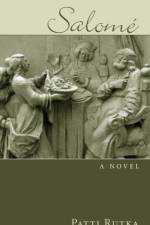
What if reality TV met one of our oldest stories of blood revenge, lust, envy, and coming-of-age? Though the story of Salome has been told down through the ages, this new rendition from a woman's perspective portrays mother-daughter forgiveness based on the story of the sensuous young woman who danced for Herod then demanded John the Baptist's head on a platter at her mother's instigation. Lush language and a riveting storyline combine to create this small jewel from debut novelist Patti Rutka.
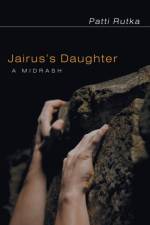
Jairus's Daughter is a literary-historic novel that sets up a rhythm between two women separated by twenty centuries. Their lives nonetheless mirror each other in subtle ways and finally intersect in modern Israel. Aviel, a scribe in first-century Israel, has a gift and a secret that, millennia later, will affect the choices of Anna Washington, a modern rock climbing woman searching for her heart's direction. Colorful characters and striking detail combine in this tale of passion and integrity from midrashic novelist Patti Rutka.
Told in the first person by the author of the Gospel of Mark, The Cloak and the Parchments relates the story of how the earliest gospel came to be written against the backdrop of emergent Christianity's doctrinal tensions. But it is also the story of one man's struggle of faith, especially with the remarkable notion--at least for a first-century Jew steeped in monotheistic tradition--of the divinity of Jesus Christ. The year is 64 CE, and Paul has summoned Mark and Timothy from Ephesus to his prison cell in Rome. On their journey, the travelers discuss many of Paul's teachings, including that Jesus is truly the Son of God. After reaching Italy they meet up with Peter, whose own account of Jesus's ministry quickly poses a challenge to Paul's views. But there will be no opportunity to hear Peter and Paul debate their differences, for they arrive in Rome at the outbreak of the Great Fire. Amid the turmoil of the resulting Christian persecution, Paul urges Mark to escape and write Peter's account of Jesus's ministry consistently with Paul's own teaching. Mark finds himself conflicted by his promises to both men, and by the disparity between Peter's eyewitness testimony and Paul's claim to direct revelation. In the end, he finds the answer he seeks hidden in the depths of his own soul--as ultimately, we all must.The Cloak and the Parchments brings these New Testament characters to life in all of their humanity, and presents a cogent argument for the necessity of mystical experience in religious belief.
Listen closely. Hear the Spirit Song. In good turn, all will come along. Join me in this adventure, as we play in rhythm and rhyme. Explore the hidden places, all in real-time. Let us laugh and cry together, let us be alertly surprised. Come with me, dear brother, let us jointly seek the Prize. These poems come from a special place, one I can little describe. They are meant as gifts, but for a minor fee. I am honored to be the scribe of such wonderful things. I have recorded them here so you may see, all that is given, all that is free. Join me if time allots you so. A gift cannot be without a beneficiary. Pearls must be claimed, to shine. Take a chance, my friend. Let us join the Golden Dance in time.
An elderly peasant woman lives with her coffin in the kitchen. An American teacher is ""adopted"" by a village family. An eccentric grandfather teaches Chinese to his American student by jumping around the room and other perilous pantomimes. China is a vast and populous nation which demands our understanding. But while newspaper headlines commonly focus on politics and economics, Saving Grandmother's Face, written by Christian university teachers in China, recounts their experiences in the classroom and in the countryside, celebrating a child's birth and mourning a child's death, grading papers and discussing Chinese literature. Through these stories you will see a side of China often left out-the human side.
""Jesus Does Stand-Up,"" and Other Satires is a collection of fifty short parables and parodies that highlight the weaknesses of the contemporary Western church and the increasingly secular culture in which its members live out their faith. The satires target an entire herd of sacred cows, making fun of areas of discipleship or Christian living such as prayer, evangelism, worship, mission activity, and social justice issues. Several entries skewer the church's tendency to trivialize our faith or the holiness of God, or our obsession with our culture's emphasis on efficiency and individual fulfillment.The entries range from parodies of familiar hymns, including one that looks at Jesus as our friend on Facebook, to an exploration of the dilemma facing Donald Trump as he decides which member of the Trinity to fire. Others describe a group of cheerleaders rehearsing for Jesus' second coming, explain why Jesus couldn't be hired for a church's child-care job, and record Lazarus' difficulty in convincing his HMO that he was raised from the dead.The result allows Christians to laugh, or sometimes squirm, at these commentaries on the pressures of the consumerist, individualistic, and even narcissistic culture in which Western believers find themselves. Neither Christian conservatives nor progressives are spared. The intent of the entries, however, is never mean spirited. Collectively, these satires offer a corrective or warning, prodding the church and Christians to be the distinctive, counter-cultural presence and witness that God calls us to be.
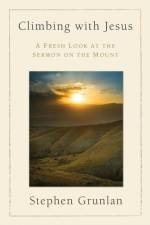
How does Jesus expect his followers to live in this world? The Sermon on the Mount is the manifesto of his Kingdom. Not a future kingdom, but his present kingdom. Satan is the ruler of this world. The Bible tells us he is the prince of this world, the prince of the power of the air, and a king. This world is enemy territory. As Jesus told Pilate, his kingdom is not of this world. Jesus' followers represent his kingdom and are to live out its values. The Sermon on the Mount lays out the values of Christ's kingdom. It is in living out these values that we can subvert the kingdom of this world. We are revolutionaries inside the enemy's kingdom. But our revolution is not one of violence and force. It is a revolution of love and peace based on obedience to our Lord and living out his values.
This little book tackles the big questions about worship music. In considering the theology of biblical and Reformed worship and the purpose of music in worship, Pastor Janssen develops objective guidelines which lead to an evaluation tool for selecting the best music for worship. This book helpfully moves beyond personal preference, leading to greater light than heat in the continuing discussion of worship practice. Written from a pastoral perspective, this book is theological, readable, and practical.
In the late summer months of 2000, on a cool dark night in the foothills of Boulder, Colorado, a seventeen year old boy was murdered by a young man he once considered his best friend. The calamity nearly crippled the boy's parents, especially the father who struggled mightily with grief, anger, and guilt. With the help of a very special elderly sage, the father of the boy struggled to survive the tragedy and recover from the heartbreaking ordeal.The story begins with the funeral of Michael's son, reveals the pain of a grief-stricken father on the verge of self-destruction, and ends with his redemption and return to a meaningful life. Michael is referred by a close friend to an elderly gentleman named Solomon. Solomon is a wise, irreverent, white-haired seer living in the small coastal village of Carlsbad, California where he teaches his own very special brand of spiritual therapy for lost souls. His office is a coffee shop and the beach where he and Michael meet and together try to find a way to recover Michael's lost life after his son's death. The relationship that develops between Michael and Solomon reaches a depth rarely found between two men.
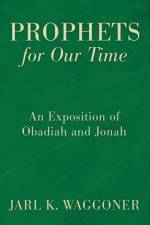
The books of Obadiah and Jonah can be read in just ten minutes. Yet these two books, written nearly three thousand years ago by two very different Hebrew prophets, address attitudes and actions that we struggle with even today. The valuable lessons the ancient writers have for people of the twenty-first century truly make them prophets for our time.Prophets for Our Time strikes a balance between scholarly study and practical exposition to bring these two prophetic books alive for modern readers. The result is a practical, readable book that clearly explains the meaning of the biblical text. Maps, charts, and suggestions for personal application and further study enhance the value of the book, making it a very useful tool for personal and group study.
Answering the Call is the story of nineteen Catholic permanent deacons from the Diocese of Savannah (Georgia) whose lives underwent profound transformations as they embarked upon a journey of self-discovery which revealed to them both the awesome power of God and the holiness of everyday life. When these deacons, who come from vastly different spiritual, professional, and educational backgrounds, responded to God's call, they soon became aware of the profound impact their decision would make on their lives as husbands, fathers, and, most of all, servants of God. Any person who experiences a crisis of faith or wants to deepen his or her relationship with God, will find the theological, pastoral, and spiritual aspects of these essays informative as they will inspire further reflection and discernment. Each of the essays can be read as a guide to ministry that provides personal and experiential advice about how to minister in a God-centered and healing manner. A person considering a religious vocation, or any man discerning God's call as a permanent deacon, or is a candidate or a deacon now, will appreciate the honesty with which each deacon describes the expected and unexpected stages of his journey.
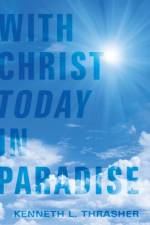
Focusing on the "ontological indwelling of God" as the basis and ground of the soul, the author expounds its capacity for spiritual experience, which he describes metaphorically as "being with Christ in paradise." Aspects of mystical experience are briefly discussed, an extended description of the author's own experience is presented, and practical suggestions are offered to the reader for his or her own spiritual enrichment.
The poet's quest is one of wide magnitude. He or she must explore the untapped regions of mind and spirit and then proceed to paint a picture in words of that strange and mysterious landscape. The book before you is such a picture, depicting a new yet ancient province of the soul. By middle age, it starts to become obvious to most of us that we operate with a split mind; the lesser mind that focuses on the acquisition and defense of things and the higher mind that impels us to a more unified reality. With age and experience, the acquisition of wealth, status, and sophistication start to pale in comparison to the more etheric goals of peace, freedom, and union with our Creator. As we start to notice a shorter road ahead than behind, we seek a more meaningful existence. We intensify our search for union with our earthly brothers and our heavenly Father. In effect, we require a reality based on our need to be free, whole, and eternal. By now, we are far too skeptical to accept wishful thinking as our truth, yet still yearn for an intellectual and spiritual certainty that we can believe in simply because the case for it is far too compelling to ignore. After several decades of just such a search I discovered a path that, at long last, gave me confidence in the truth of a divine Mind and Spirit. That path led me to a place that my soul knew and honored as divine. From that connection and in that place, this book was born.
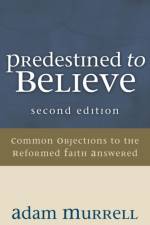
If the Bible teaches that the Lord is sovereign over all and that mankind is naturally hostile towards God, then it stands to reason that we would never choose the Lord apart from the Holy Spirit working within us to change our hearts. Proceeding from this logical starting point of God's sovereignty and man's depravity, it necessarily follows that God must save His people from their sins, those that are otherwise helpless and in a desperate state. No theological system like Reformed theology allows one to remain consistent when carrying out one's beliefs to the ultimate conclusions as the doctrines of God's sovereignty and grace do. Murrell examines common arguments against Calvinism and demonstrates how they are oftentimes the result of misunderstandings, faulty reasoning, or poor scriptural exegesis. God's sovereignty is not so much a barrier to Calvinism as it is a powerful support for it.
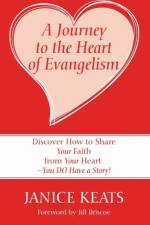
Have you ever been challenged and stymied when asked where you stand in your faith? Do you ever wonder who is responsible to reach those who have not yet heard the Gospel message? Do you wonder what your role is as a messenger of God's love? Are you filled with questions or have doubts and fears about relationship evangelism? Do you believe that God can release your fears to be a spokesperson for the sake of the Gospel? This book will enable and equip you to embark on the simple journey of reaching people for Him! You will learn how to prepare your very own faith story by actually writing it out and putting it into practice. It includes thought-provoking questions to prepare your heart as you journey with Jesus. Included are charts to determine where you are in the faith and to help maintain the progress of evangelizing.Whether you need to actively develop soul-winning skills or simply get back to the basics and refresh your desire to share your faith, this book will equip you to keep your faith story alive and prepare you to be used for His glory.Get ready for blessings and excitement as you put your faith into action!
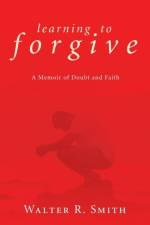
How do you forgive a person who has hurt your deeply? Why forgive someone who does not deserve to be forgiven? Forgiveness is not easy, and often we discover that the person who needs to be forgiven the most is ourselves. As we forgive others and ourselves, we find that we are the ones who have benefited--forgiveness brings a peace to our lives that no one can take away from us.Learning to Forgive: A Memoir of Doubt and Faith is the author's personal journey of forgiveness from a spiritual and psychological point of view. The book shows the reader how they can use their relationship with God, the resources of the Christian faith, and their psychological understanding of themselves to learn how to forgive. As readers see that pastors are not immune to the challenges of everyday life, nor are they spared from abusive backgrounds, they will be encouraged to embark on their own journeys of forgiveness or receive strength and hope for a journey already started.
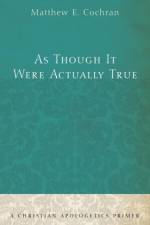
How true can Christianity really be? In a culture where religion and ""real life"" often occur in completely different times and places, the question troubles many Christians. How can we give the reason for the hope that we have amid the many voices telling us that Christianity might be helpful or interesting, but not really ""true"" for anyone except Christians? Why should we ourselves bother with a religion so insubstantial that it is only legitimate within our own minds? People with real sins require a real savior, not merely inspiring stories and advice on how to live. As Though It Were Actually True provides Christians with an introduction to the age-old practice of apologetics--the rational defense of Christianity as objective truth. It explores some of the most important issues on which the Church finds itself in conflict with today's culture through a combination of critical reasoning, evidence, and the law written on our hearts. By providing a philosophical foundation that is reasonable, a historical foundation that is factual, and a theological foundation that is biblical, this book will help equip Christians to contend for their faith against the shallow and deceptive philosophies that seek to undermine it.
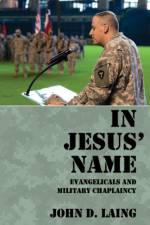
Can military chaplains pray "in Jesus' name?" Are they allowed to share their faith openly? Are evangelical Christians persecuted in the military? Does the general prohibition against proselytizing in the military violate soldiers' Constitutional rights? Are liberalism and/or universalism implicitly endorsed by the military and political leadership as the preferred religion of the United States government? In this timely and important book, John Laing draws upon his knowledge as a professor of theology and philosophy and his experience as an Army chaplain in order to address these questions and more, with a view to answering the larger theological question of whether evangelicals can successfully serve as military chaplains while remaining true to their conservative biblical beliefs and evangelistic commitments. While the book is primarily written for those involved or interested in military chaplaincy, it has a broader appeal, as the issues discussed are relevant to all areas of chaplaincy: healthcare, institutional, public service, campus, and marketplace.
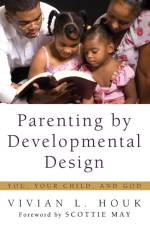
In this book, Vivian Houk acknowledges that parenting is really hard work. There is no getting around that. It just is! While many books have been written about all major areas of development, she brings light to what may be the least understood and most confusing area of parenting today: the spiritual lives of their children. Parenting by Developmental Design was written for interested and engaged parents who need affirmation and want to know more about the pathway of spiritual formation for their children. For those who don't know how to begin, it offers hope and encouragement. "God has given us some amazing and powerful tools," writes Houk, "which are useful and effective in providing direction for those of us who suffer from the fear of failure or incompetence. We have the gift of imagination; the use of symbol, ritual, and celebration; and the tools for calming fears and healing wounds. And above all, the gift of the Holy Spirit. You are not alone or incapable." Anyone who values the stories of both the adult and child who walk with God will find this book enjoyable, engaging, and challenging.
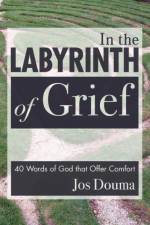
In the Labyrinth of Grief40 Words of God that Offer ComfortBrief meditations for those in sorrowWhen death enters our life, a process begins that we refer to as grieving. This is a confusing process that is accompanied by different emotions such as sadness, unbelief, relief, anger, resignation, depression, despair, and even new joy in life.The image of the labyrinth helps us to accept that grieving is a complex process in which we learn to accept the empty place and seek to come to grips with all our emotions. The forty short meditations in this book were written with the goal that we might allow ourselves to be comforted from God's Word and that-in all our confusing emotions-we may know ourselves to be secure in the God who gives us hope.
From clones, family, abortion, terrorism, and the concept of the collective to economics, nuclear power, cap and trade, renewable energy, and the politics of climate change, Everest and Bedogne do something much needed and remarkably absent in today's media. They strip away the layers of liberal and conservative ideology to look at the most talked about topics of our time from the standpoint of what the politicians have forgotten--common sense. Brought to light by logic, history, and science, the book filters the issues that in today's world every citizen, student, and educator needs to understand through what we know to be sound--that which we have gained through our day-to-day trials--our all-too-often repressed ability to see things in a practical and matter-of-fact way.
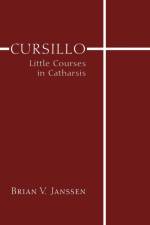
Description:Since its inception in Roman Catholic Spain in the 1940s, the Cursillo movement has been a steadily-growing phenomenon and has spread into many Protestant churches worldwide under various names. The weekend initiation is often a deeply-felt experience that boasts of many conversions and recommitments. Yet in this comprehensive analysis of Cursillo the author finds theological concerns, questions about the propriety of the methods, and complications such as disaffection from the local church, transfer of loyalty to the Cursillo community, and a significant drop-out rate, raising implications for similar, spiritual movements. Interviews with former Cursillo participants confirmed many of these conclusions but also raised a challenge to the church: many Cursillo participants do not perceive vital faith in their local church. The author suggests that the Cursillo attempts to imitate the work of the church in an extraordinary form and that this might initiate some of the unhelpful results. The church would be better served by seeking to revitalize its ordinary ministries of Word and sacrament, prayer, community, and Sabbath observance.Endorsements: ""Dr. Janssen provides a thought-provoking critique of the Cursillo method, explaining the history, psychological techniques, and theological inconsistencies. A valuable tool for distinguishing the psychological from the spiritual, this book is a must-read for all Christian pastors, teachers, parents, and supporters of any Cursillo-related events (including TEC and YATEC)."" Dr. Natalie Sandbulte, Psychologist and Assistant Professor of Psychology Dordt College ""This significant and useful book strips the veil from the Spanish Roman Catholic-originated Cursillo Movement and its many mainline Protestant imitators. Writing from extensive personal involvement in the movement and a deep familiarity with social-science research on psychological manipulation, Dr. Janssen demonstrates that Protestant revivalists have no monopoly on manipulative techniques. Along the way he challenges us to think theologically about the issues raised by the Cursillo methodology."" William B. Evans, Ph.D.Younts Professor of Bible and ReligionErskine College ""With a passion for the purity of the Gospel and the glory of God, Dr. Janssen fairly and thoroughly dissects another man-made technique that attempts to manipulate decisions and then declare it to be the work of the Holy Spirit. Not since The Invitation System by Iain Murray, have I been so challenged to make sure I'm being completely Scriptural and not using the wisdom of men's words lest the cross of Christ should be made of no effect (I Corinthians 1:17).""Pastor David LearyGrape Creek Baptist Church About the Contributor(s):Brian V. Janssen has been pastor of the First Presbyterian (PCA) Church of Hospers, Iowa since 1986. A graduate of Wheaton College and Trinity Evangelical Divinity School, Brian received the Doctor of Ministry degree in 2007 at Covenant Theological Seminary in St. Louis. The focus of his dissertation was on the long-term effects of the Dutch Reformed Cursillo in Northwest Iowa. He has been married to Susanne for over twenty-five years, and together they have three children: David, Kristin, and Jonathan.
Abonner på vårt nyhetsbrev og få rabatter og inspirasjon til din neste leseopplevelse.
Ved å abonnere godtar du vår personvernerklæring.