













Gjør som tusenvis av andre bokelskere
Abonner på vårt nyhetsbrev og få rabatter og inspirasjon til din neste leseopplevelse.
Ved å abonnere godtar du vår personvernerklæring.Du kan når som helst melde deg av våre nyhetsbrev.

Travel through the back roads and country lanes of the British Isles with a pastor and his wife celebrating their thirtieth wedding anniversary. Journey to London and witness the special blessing experienced by Barry and Coleen Blackstone as they take their very first 'alone' vacation since starting into the pastorate. Visit the famous sites of England's fabled capital, including a night on the town with the human animals of the musical "The Lion King." Your stops will include Hampton Court, Salisbury Cathedral, the city of Bath, the chimes of Chester, Strafford-upon-Avon, Edinburgh Castle, the ancient walls of York, the colleges of Cambridge, and many more famous British sites. Ride with the honeymooners on a narrowboat ride through the canals of Wales; eat the best meal of your life at the George in Scotland; ride through the rain in the midlands of England, and tour the Britannia, once the queen of England's private ocean liner. Walk the streets of London town and ride its famous underground after a shopping spree at Harrods, the world's most famous department store. Window shop in Stamford, listen to Scottish bagpipe music under the Firth of Forth railroad bridge, buy jewelry in Jedburgh, sweaters in Scotland, and walk under the shadow of the stones at Stonehenge. Learn what it means to rekindle an old love, the simple joy of being two people alone on an island in the North Sea for ten days, and the spiritual lessons one can learn on a journey to Scotland!
As the world hurtles towards urbanization at an ever-increasing pace, there arises the need for further theological reflection on the city. Globalization, international immigration, and densification in cities are having a transformative impact on the urban landscape. Urban mission is at the forefront of many denominations, church planting networks, ministries, and mission organizations yearning for citywide transformation. How are we to think biblically and theologically about the city? View from the Urban Loft will take readers through the development of cities throughout history, act as a guide to navigating the current forces shaping urban environments, and seek to uncover a theology of the city that gives Christians a rationale and a biblical understanding of the meaning and purposes of the city and then how to live in it for the glory of God.
Description:We yearn to be accepted and loved for who we really are. Unfortunately, we sabotage our efforts to develop successful relationships when we feel threatened. We play manipulative games with each other, protecting ourselves without realizing it. These subtle games are crippling our relationships.Let's Stop Playing Games addresses this issue with some serious fun, helping us:o expose our unhealthy games and why we play them;o enjoy humorous yet sad stories that show how these games work (or don't work) for us; o explore some game changers--practical, loving solutions to replace our games. In the end, we hope to be lovingly transformed in our relationships with our friends and family and even with God. We will be connected to each other, forming the authentic community we yearn for. What a great place to live! Endorsements:""I'm so grateful for Joe's honesty about the games we all play and the hope that, despite our hang-ups, there's a way to be real with one another.""-Jonathan Wilson-Hartgroveauthor of The Wisdom of Stability""Joe gives a personal glimpse of his journey that becomes a parable of our own. Knowing truth doesn't automatically keep us from thinking and communicating in ways that hide rather than reveal or that attempt to control rather than to grow. Gracefully dismantling guarded protections from too much light in the room, he shows us the way back. This book is a good window cleaning for the soul and a resource for rebuilding relationships. If you want authentic relationships that make for a full and rich life, this is a keepsake.""-Donald MannPastor, Teacher, and Marriage & Family Therapist""Does your heart long for community and communion? God made us this way but many things can hinder us along the way. In the pages of this book you can find out what some of these hindrances are and how they impact your relationships. Practical and insightful, this approach bridges the gap between spiritual and relational understanding. Drawing from biblical precepts as well as interpersonal insights, Lineberry's approach offers ideas and guidance that the reader can put to use immediately. With a heart for God and for relationships, he leads the reader toward relational healing and spiritual growth.""-Joseph VergaPsychologist and Executive Director of Associates in Christian Counseling""Readers everywhere are destined to relate to the common 'games' we play (even if subconsciously) and are likely to be disarmed and delighted by the author's conversational style, self-disclosure, and witty sense of humor . . . My husband and I have been looking for new, relevant material that we can share with a small group; our current search has now ended.""-Janet Smith-HillSVP of Human Resources, Novant HealthAbout the Contributor(s):Joe Lineberry is a business consultant who works alongside his wife, Beth, in ministry to those with broken relationships. They have organized Possibilities (www.exploringpossibilities.net), an umbrella organization for people of faith to tell their stories, exploring the possibilities of faith in their lives. Joe and Beth have led several interactive workshops and have coauthored the book ""Give Me Your Son"" and Other Reflections from our Journey.
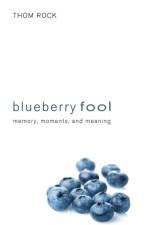
Is it possible to find the revelatory, to find faith in a tiny blue berry? This is but one of the questions explored in this collection of engaging essays aimed at the intrinsically human intersection of memory and belief. Threaded throughout with an ever-changing cast of meadowland characters, not the least of which is a rambling barren of wild blueberries, these writings offer an intimate chronicle of one man's quest to understand what it means to believe. Again and again the author's words bring the reader from a particular geographical place to a location at once familiar and foreign, universal and unique: the landscape of memory. Whether grappling with the implications of adoption, or grieving over a lost family recipe; recalling a surprise encounter with an equally surprised red fox, or reconsidering the meaning of migration, Blueberry Fool is about the sheer fragility and strength of belief, the idiosyncratic light of memory, and the simple year-round pleasures of a wild meadow.
If you sit in a pew, Sunday by Sunday, you will hear parts of Matthew's Gospel read. But you might never have read it yourself from start to finish. And if you are not a churchgoer, you might not think to read any of it. Yet it has been, and continues to be, an important part of our heritage. This book considers a group of people who meet, week by week, to try to untangle what Matthew is about. A complete text of the Gospel is included in this book and many questions are raised, the kind that you and I might ask. Some conclusions are reached; many issues remain. But no one goes away unchanged.
Out of a deep concern for our nation and its drift away from its Christian roots, Glover Shipp presents powerful proofs that it was founded on faith in God. He begins with the earliest colonial document, the Mayflower Charter, and traces the God theme throughout our history. In doing so, he draws on historical documents, monuments, songs, poems, and statements by well-known figures in our society. Unlike some other books of this kind, In God We Trust . . . or Do We? presents inaugural speeches by many of our presidents, private correspondence by leading figures in our nation, the constitutions of our fifty states, Supreme Court decisions that influence church-state relations, and references to God on our national monuments, in our national hymns, and in our poetry. Above all, Shipp points out the inconsistency between interpretations of The Establishment Clause and what really goes on in government.You will find In God We Trust . . . or Do We? a valuable resource for considering and defending the spiritual principles upon which our nation was founded.
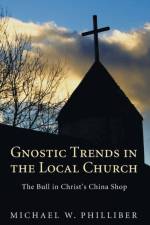
Gnostic Trends in the Local Church lays out the basic tenets of ancient and modern Gnosticism. Though there are various authors who have written about Gnosticism over the past two decades, many of them deal with New Age teaching, or in a more limited manner, to answer the momentary surge of The Da Vinci Code and the Gospel of Judas. Instead of going in those directions, Gnostic Trends in the Local Church focuses on the more likely place one will meet Gnosticism: in their own home congregation.Michael W. Philliber shows what the trends look like within a congregation and offers ways to remedy them, while abstaining from alarmism. This is an important book for pastors and other congregational leaders for providing them with tools (modern, ancient, and biblical) that will help them guide their people more firmly into the historic Christian faith.
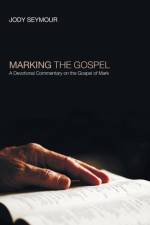
Join Jody Seymour as he leads us on a journey through the Gospel of Mark. A Senior Minister in the United Methodist Church for many years, Jody has drawn from his learning and his lively imagination to introduce-or reintroduce-you to the hero of this Gospel. This devotional commentary will, when read alongside the Gospel itself, give you the opportunity to immerse yourself in the story of Jesus' life and come closer to the heartbeat of God. Let the words of this first and oldest Gospel make a mark on you, as you discover in a fresh way its power to transform. Includes a guide for personal reflection or group discussion.
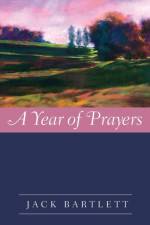
The 365 poems in this collection, one for every day of the year, are a journey through prayer. The objective of the poems is to serve as an accompaniment to prayer, silently, in the form of a verse. The initial inspiration of these writings was from the Psalms, but there is referenced material throughout the Scriptures, as well as events that occurred in history and in the author's daily life. With only a few exceptions, the prayer/poems are not date specific, denomination specific, or even specific to the author only, but to everyone. The poems speak of subjects such as faith, death, nature, freedom, love, beauty, and history. Each poem is intended to be able to stand on its own, independent of the others. These poems are unique in that they are prayers first, poems second, and could be considered daily devotions, spiritual meditations, or as a resource for pastors of all Christian denominations. They are written so that they could also be ""crossover"" poetry, and could be attractive to secular tastes as well. The monumental task of writing this many poems brought the author's attention to prayer itself, and to the nature of artistic expression, which cannot be forced, but must come of its own. The succeeding ""visitations"" of the ideas or inspirations gave reason to believe that, not surprisingly, the author had help from the very ONE being written to, and about.
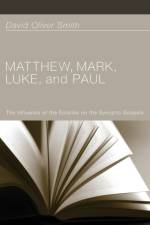
Matthew, Mark, Luke, and Paul takes you on a journey through the Synoptic Gospels and the Epistles providing a new solution to a literary puzzle that has vexed biblical scholars for over two-hundred years--The Synoptic Problem. When the Synoptic evangelists, Matthew, Mark, and Luke sat down to write their gospels did they have copies of some of the epistles? This book examines the Synoptic Gospels, Hebrews, and Paul's Epistles finding many intriguing similarities, suggesting that the Synoptic evangelists used extensive parts of the epistles to weave into their stories of the ministry of Jesus of Nazareth. David Oliver Smith then compares these epistle-based passages to the theoretical lost gospel Q and finds that a large portion of what many New Testament scholars consider to be contained in Q may have its inspiration in the Epistles.
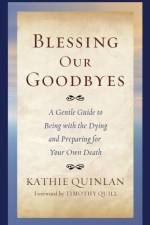
Description:When it is our time, is there any one of us who would not hope for a gentle ending to our lives and a peaceful death? Yet for many, this longing remains elusive. Fears and apprehensions cloud our understanding of what is involved in the ""getting there."" Many of us choose not to think about death or even consider preparing for this second of our universal human experiences. This death-unease can lead to our avoiding being with a dying family member or friend, sadly missing the precious chance to say goodbye. It may also prevent us from taking on the challenging but vastly rewarding role of caregiver. It is important to know you do not have to be alone.These lessons, learned from the dying themselves, will show you how the final journey--lived fully--can be the most extraordinary of your life. And yes, your goodbyes can be blessed in ways you could never have imagined.About the Contributor(s):Kathie Quinlan is a registered hospice nurse and retired director of Isaiah House-a two-bed home for the dying in Rochester, New York. She speaks frequently on issues related to death, dying, and living.
In Giving Voice to the Silent Pulpit, author Barry Blood explores the many differences that exist between Popular Christianity, (the doctrine as taught from the pulpit) and Academic Christianity, (the doctrine as taught in our colleges and seminaries). He contends these are startling differences that may shock the average Christian layperson.The author reveals how these differences have created an intellectual gap between the church and our present day worldview of reality, a gap which has contributed to the decline in Christian membership rolls worldwide. He contends that exposing these known doctrinal differences will create a more intellectually honest Christianity, and-he believes-will build a church that can be a more engaging choice for the educated populace of the twenty-first century.
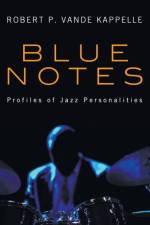
Description:Music, like romance, is the language of the soul. Music allows us to express ourselves, and in so doing makes us feel alive. Jazz music, the only art form created by Americans, reminds us that the genius of America is improvisation; a good beat, a contagious rhythm, an emotional ballad, creative improvisation, jazz has it all. Jazz is the story of extraordinary human beings, black and white, male and female, children of privilege and children of despair, who were able to do what most of us only dream of doing: create art on the spot. Their stories are told in Blue Notes.Blue Notes contains profiles of 365 jazz personalities, one for each day of the year. Each vignette tells a story, some heartwarming, others tragic, but all memorable. The daily entries also provide valuable information on jazz styles, jazz history, instruments and instrumentalists, and such related topics as jazz and religion, women in jazz, drug and alcohol abuse, and racism. These topics can be referenced through an extensive set of indexes. The book's appendix includes helpful background information, a concise overview of jazz music, and even a quiz on jazz biography.While Blue Notes is written for jazz fans in general, experts will value its comprehensive nature. So whether you are curious about jazz or simply love and appreciate music, Blue Notes will provide daily moments of discovery and help you recognize what the rest of the world already has, a music so compelling that it can be said to define the human being in the twentieth century.Endorsements:""My affair with [jazz] has lasted fifty-three years. And in that time I have seen her power firsthand: the power to make men forget their differences and come together; the power to make one's heart swell until it feels like it's going to jump out of your chest; the power to make you laugh, cry, jump, dance, think, and love. It's a power that doesn't recognize color, class, religion, or geographic boundaries--it's universal.""--Quincy Jones: arranger, composer, bandleader, trumpeter, pianist, record producer (from the foreword to Jazz: The First Century, edited by John Edward Hasse; New York: William Morrow, 2000.About the Contributor(s):Robert P. Vande Kappelle is Professor of Religious Studies at historic Washington and Jefferson College in Washington, Pennsylvania. He is the author of three books: Love Never Fails, The Invisible Mountain, and Into Thin Places, which comprise his ""Adventures in Spirituality"" trilogy.
Description:Sometimes we want to walk outside of ourselves. We want to stretch our imaginations by strolling in someone else's shoes for a few minutes. Of Man and Animals is a book for looking through other people's eyes. In these twenty fictional short stories, the reader is invited to laugh, cry, ponder, fear, love, and hate with a series of different characters.These stories emphasize the interconnected essence of our lives and how each particular moment carries an array of interesting experiences. They will bring the reader into the small, yet impacting, minor moments in other people's lives, and leave you with questions to ponder such as: What is the world around us really like? How do we act as we experience the world around us? How do we rationalize and connect our experiences and thoughts? And why do we act without even realizing our own motivations and desires on some occasions?This book is a book for pondering while at the same time enjoying a few moments apart from the daily lives we lead.About the Contributor(s):Thomas R. Hauff is an Assistant Professor of Bible and Theology at Multnomah University in Portland, Oregon. He is also the author of When God Says, ""No""- Reshaping Prayer and Learning to Listen (Wipf and Stock, 2011).
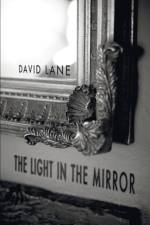
Description:The Light in the Mirror focuses on Richard Hawkins, raised by his Uncle Mac, following the death of his family. A car accident plunges Richard into a coma, and into a dream world where he is reborn in to the family he never knew; he grows up in the turbulent 60s and 70s. Awakening in the hospital, he tells his uncle and girlfriend, Melissa, how real his life in the coma seemed. The experience gives him a new understanding of how the 60s and 70s changed our society. He deals successfully with the debilitating effects of the coma, drawing on his faith in God. Weakness on one side of his body requires him to walk with a cane. An unexpected effect is a temporary psychic ability. Regaining his health, Richard enters the business world of Dallas, and then events propel him into politics in his hometown. In a mayoral race, he opposes a former hippie of the 60s and 70s. Melissa confronts a dangerous stalker, and throughout the story, Richard seeks God's purpose for his life. About the Contributor(s):David I. Lane makes his home in Eugene, Oregon, where his parents and older brother reside. This is his first novel.
The three cycles of sermons included here provide a spiritual geography, an announcement of the gospel set in New York State. The sermons were given life in the vibrant life of Asbury First United Methodist Church, Rochester, New York, over several years beginning in 2000. The collection is meant to exemplify a thematic form of preaching that addresses and creates a collective consciousness in the life a community. One series is set on "A Village Green." Another invites those along the Finger Lakes to travel "Once More to the Lake." The third traverses the major cities of the state, and their capacity to become "An Empire of the Spirit." The sermons here try to unfold an interpretation of Scripture by engaging local settings to produce a geography of the Spirit.
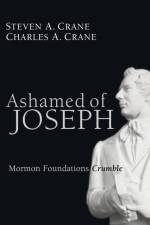
Description:Mormon Prophet and Tenth President, Joseph Fielding Smith, once said:Mormonism, as it is called, must stand or fall on the story of Joseph Smith. He was either a prophet of God, divinely called, properly appointed and commissioned, or he was one of the biggest frauds this world has ever seen. There is no middle ground. If Joseph Smith was a deceiver, who willfully attempted to mislead the people, then he should be exposed; his claims should be refuted, and his doctrines shown to be false . . . The doctrines of false teachers will not stand the test when tried by the accepted standards of measurement, the Scriptures.--Doctrines of Salvation, 1:188.Brigham Young, Prophet and Second President offered this challenge:Well, now examine the character of the Savior, and examine the character of those who have written the Old and New Testament; and then compare them with the character of Joseph Smith, the founder of this work . . . and you will find that his character stands as fair as that of any man's mentioned in the Bible. We can find no person who presents a better character to the world . . . than Joseph Smith.--Journal of Discourses, Vol. 14, p. 203.Combining their research in Mormonism to author this work, Charles A. Crane and his son, Steven A. Crane, would like to accept the challenge and show why many, even among the LDS faith, are Ashamed of Joseph.About the Contributor(s):Charles A. Crane (DMin, Luther-Rice Seminary) has written numerous books and articles on this subject, including, Christianity & Mormonism. He served as President of Boise Bible College for nearly two decades.Steven A. Crane (DMin, Gordon-Conwell Theological Seminary) has written numerous articles and books including Is Mormonism Now Christian? and Marveling with Mark. He serves as the Senior Minister at Eagle Christian Church.
Grief is universal, permeating all avenues of life on planet earth; no one can escape it. Pain and sorrow come in all different shapes and sizes. An Ordinary Story of Extraordinary Hope accepts that life is hard. It explores the full scope of grief issues to proclaim that grace and hope are stronger than the hardness of life; grace and hope are saturated with redemptive power.The book illustrates how those times of heartache result in growth that shapes our character and perspective. It teaches that it's our response to grief that determines whether growth will be positive or negative.An Ordinary Story of Extraordinary Hope provides true-life narrative tied to Scripture to describe God's presence in the midst of painful circumstances. It demonstrates that over time God uses both positive and negative experiences to accomplish his purposes in our lives. Its testimony to perseverance is an encouragement to others on their faith journey.
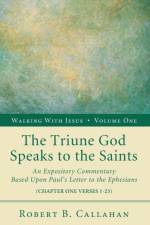
The latter half of Chapter 4 of Paul's letter to the Ephesians is the watershed of this magnificent document that is often referred to as the ""holy of holies."" Paul was never hesitant to declare God's truth as he proclaimed it to those professing faith in the Lord Jesus Christ. Therefore, after praising The Triune God for the love, wisdom, and blessings bestowed upon us during the first three and one-half chapters Paul does an about face and enjoins the believers with these strong words saying, ""This I . . . testify in the Lord, that ye henceforth walk not as other Gentiles walk in the vanity (futility) of their mind."" He is telling the hearers that once they are Christ's they are to walk to a different drummer, the Master Himself.Paul completes the watershed transition by reminding professing Christians, ""But ye have not so learned Christ."" It is with these simple, single syllable words that he opens new horizons for the members of Christ's body and paves the way for enunciating the duties and responsibilities they are to learn and to do when Following Christ. This learning and practicing is not easy, but it us joyful, rewarding, and worthwhile.That is why Paul, before embarking on Christ's learning pathway, tells the followers in the way to, ""put off . . . the old man; be renewed in the spirit of your mind; And . . . put on the new man, which after God is created in righteousness and true holiness."" May we heed God's truth as revealed to Paul by the Holy Spirit. These blessings are comforting, strengthening, and manifold when committing ourselves to Walking With Jesus.
The Apostle Paul realized that he was an infant in the faith after his encounter with the Lord Jesus on the road to Damascus. He experienced what was required to become a member of Christ's body and to walk as a mature Christian. Therefore, he wanted to share these truths with the Ephesians and with us.What does he do? First, he presents doctrine regarding the Holy Spirit, the Lord Jesus Christ, and God the Father. Then, he focuses on the apostles, prophets, evangelists, pastors, and teachers. Why? He knew we needed to acquire knowledge of God's Word and develop a personal relationship with the Triune God.He concludes this portion of Scripture with comforting words and stern warnings. The former assures us of attaining spiritual maturity, whereas the latter warns against the predators espousing false doctrine, trickery, cunning craftiness, and deceit, which are only overcome by an intimate knowledge of the Son of God.
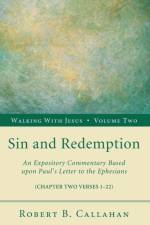
Description:Paul proclaimed he was in prison because he was Christ's prisoner. Why? Because he proclaimed the Gospel of the Lord Jesus Christ uncompromisingly without fear of retribution. He served the living Christ and succumbed neither to the wiles of Satan nor to the demands of the secular world. He gives all the glory to God and in so doing proclaims: the grace of God; knowledge in the mystery of Christ, as it is now revealed unto his holy apostles and prophets by the Spirit; that the Gentiles should be fellow heirs, . . . and partakers of his promise in Christ by the gospel. He became Christ's minister by God's grace and His effective power working in him. God does this to enlighten and to strengthen each individual professing faith in Christ and endeavoring to walk with Jesus along life's pathway while enjoying blessings and gifts, as well enduring trials, tests, and temptations. Paul was the ultimate pastor and teacher in expounding Christ's teachings. He was a God server, not a man server. May those who preach and teach follow in Paul's footsteps by proclaiming God's entire Word faithfully.Endorsements:""Bob Callahan is a man who loves the Scriptures and loves the God to which they attest. His lessons on Ephesians are deep and rich. Bob has as his conversation partners the great minds and spirits of the church, and he is at once very readable and very faithful.""-Todd B. JonesPastor, First Presbyterian ChurchNashville, Tennessee""One would be hard-pressed to find a more thorough investigation of the treasures of Ephesians than what Mr. Callahan has written. The author has taken meticulous care to draw from the epistle as many of the theological riches as he could glean--and the reader could digest.""-Norman H. McCrummen IIISenior Pastor, Spring Hill Presbyterian ChurchMobile, AlabamaAbout the Contributor(s):Robert B. Callahan Sr. founded Callahan & Associates, Inc., in 1976, a telecommunications consulting firm. He is the author of The Triune God Speaks to the Saints, Volume 1 in an eight volume expository commentary on the Apostle Paul's epistle to the Ephesians.
The genius of Paul is evident in chapter 2 of his Letter to the Ephesians. However, more importantly, two truths are revealed through a closer examination of his presentation. First is the realization that Paul listens, contemplates, and abides by the words of his Savior, and ours, in presenting the truths revealed to him. This was the result of Paul relinquishing the mantle of self-centeredness and replacing it with the crown of Christ-centeredness. This became his guiding light through the tests, trials, and tribulations of walking with Jesus.Second, there is the recognition of Paul's love for, and commitment to, professing Christians, whether they be babes in the faith, adolescents, or maturing adults. He realized they had been, or would be, confronted by the desires of the flesh and of the mind during their life's journey. He wanted them to know the living Christ.This chapter is pivotal to understanding God's mercy and grace, as well as our need for His spiritual blessings. When we accept the Lord Jesus' invitation to follow Him in His commands and teachings, we will know the joy of a right relationship with the glorious Father, reconciliation through Christ, praying through the Holy Spirit, and God's Foundation built on the apostles and prophets.
The Triune God speaks to the saints and in so doing proclaims God's will and the spiritual blessings available from Him, His Son, and the Holy Spirit. It starts with doctrine, God's call, Christ's teachings, trusting Him, and knowing the Word. The Word is essential, it needs to be the whole Word of God revealing His being, nature, teachings, and commands. It culminates in stressing the importance of prayer, in giving thanks, receiving wisdom in the knowledge of Him, being enlightened, knowing the hope of His calling, and believing in His mighty power as we walk through life with Jesus encountering its trials, tests, and tribulations as well as experiencing its joys, blessings, and gifts with a grateful heart.
Though One Go With Me is the sequel to Pastor Blackstone's first book, Though None Go With Me, which retraces the steps of a Maine pastor back to the fabled land of India. This time the 'one' is the pastor's daughter, Marnie. Travel along as Blackstone introduces his daughter to her first taste of hot, spicy foods, an auto-cart ride, playing with elephants, and traditional Malayalam dress. Once again journey through the State of Kerala on a Sunday Safari into the tea mountains of India, take a sunset stroll along the sands of Kovalam Beach, and enjoy the uniqueness of wearing a pepper necklace around your neck and eating with your fingers. Witness and wonder as Marnie drinks coconut milk straight from the shell, goes on a shopping spree for a beautiful sari, enjoys the smell of a jasmine and rose myla, and experiences the G-Mart (India's version of Wal-Mart). The purpose of this second trip to Edyappara was to be graduation speaker at Kerala Baptist Bible College, where the pastor had taught for 40-days on his first trip, and to deliver a half a million rupees to a small congregation in Venmony so they could start building a church sanctuary and parsonage. Relive the adventures of a father and daughter as they trek through a tropical paradise filled with hospitable people, amazing animals, and breath-taking scenery in their own version of 'The Amazing Race'!
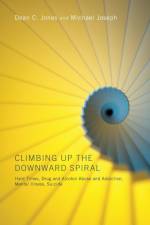
Climbing Up the Downward Spiral takes a holistic approach in looking at practical, neurological, and spiritual issues, as it walks readers through the shadows of some of the most difficult problems of our time: financial loss; drug and alcohol abuse and addiction; mental illness; and suicide.The authors also share from their considerable personal experience with these problems. Bringing together some twenty years of work with people in programs of downtown, late-night ministry in different cities as well as personal experiences with illegal drugs, bipolar disorder, and a serious suicide attempt, Jones and Joseph walk readers through the shadows of our lives, offering encouragement, methods of coping, and above all, hope.
The needs for and the benefits of holistic health care--care that extends to the physical, mental, emotional, and spiritual aspects of individuals--have been well known for 2,500 years or so. But still, to quote the late Rodney Dangerfield, some caregivers "don't get no respect." Fred Reklau is out to change that with this book, offered as an exploration of the synergies possible among those who care for persons. In the 1980s he wrote the theses that formed the core of this book. Since then they have helped many, in groups and singly, to see their work in a new light. Chaplains, pastors, parish nurses, lay caregivers, hospice workers--all will rejoice to read this heartfelt plea to elevate them to equal status with the vital care-giving services performed by physicians, psychologists, psychiatrists, and other members of the medical professions.
Description:Theology can become quite futile if it does not emerge from the day-to-day lives of the people. Theology, on its part, has to be answerable to the church and society and fulfill its noble mission of contributing towards the transformation of the present order of the church and society. This book ultimately has this aim. By identifying the ideological underpinnings that emerge from the perceptions of women, this book indicates possible future directions in the area of theology.The uniqueness of this book lies in its contextual focus and the day-to-day lived experiences of women with their bodies. It is the first of its kind in making a scientific study on the socio-cultural perceptions of women with regard to their bodies in the context of India. The special contribution of this book is in bringing to the fore the elements of agency which women exercise in their everyday lives in spite of their oppressive situations.The unconventional women of this book become possible role models for women who are voiceless, helpless, and victimized to grow in assertion and affirmation of their bodies and identities. This book will facilitate women to deconstruct the age-old oppressive perceptions and construct their identity as women in relation to their bodies and to take hold of their bodies amidst dehumanization. The book will also facilitate a critical look at the present understanding of body in Christian theology and provide future directions for the reformulation of the Theology of Body and Sexuality.About the Contributor(s):Metti Amirtham, SCC, (PhD, University of Madras) is a professor and a field-based theologian, actively involved in theologizing feminist concerns at various major theological colleges in India. She also works at the grass root level especially among the movements and NGOs that work for women's empowerment.
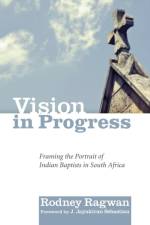
The work of American Baptist missionaries among the Telugu people in India in the nineteenth century came to fruition in 1897, when Telugus established their own indigenous missionary organization, the Telugu Home Missionary Society. Six years later, in 1903, the society took the highly ambitious step of sending one of its own, John Rangiah, to South Africa as a missionary to work among Telugus who'd gone to that country as indentured laborers.Vision in Progress tells the story of Indian Baptists' work in South Africa, work mitigated by the negatives influences of colonialism and racism, manifested by the openly racist South African doctrine of apartheid. It examines the values, missions philosophy, and struggles of John Rangiah and of others--men and women--who have shaped the history of Indian Baptists in South Africa up to this day. In telling this story, the author provides a thorough history of the organization Indian Baptists formed--the Baptist Association of South Africa--and its friction-filled efforts to work alongside other Baptist groups. Informational and inspirational, Vision in Progress serves ultimately as a testimony of people of great faith who were up against tremendous odds.
Abonner på vårt nyhetsbrev og få rabatter og inspirasjon til din neste leseopplevelse.
Ved å abonnere godtar du vår personvernerklæring.