








Gjør som tusenvis av andre bokelskere
Abonner på vårt nyhetsbrev og få rabatter og inspirasjon til din neste leseopplevelse.
Ved å abonnere godtar du vår personvernerklæring.Du kan når som helst melde deg av våre nyhetsbrev.

Description:What is dialogue? What are the goals of dialogue between faiths? Are they attainable? Are they compatible with Christian faith? This important book addresses the issue of dialogue from a different, even unique, perspective: as the relationships, in social and historical context, between faiths.David Lochhead first differentiates between several ideological stances (often categorized as simply "exclusivity" or "inclusivity") that have defined Christian attitudes toward other faiths. He considers the sociological as well as theological dimensions of these stances, concluding that a theology of interfaith dialogue "must ultimately be grounded in a theology of the world."Lochhead brings fresh insights to a reading of Barth on the theological significance of religion. He argues that, while generally considered otherwise, Barth''s view is not inherently hostile to interfaith dialogue. Rather, Barth poses questions of the utmost importance to reconciling dialogue with Christian faithfulness. Based on this, Lochhead proposes a stance of "faithful agnosticism"--the refusal to make a priori valuations of other faiths--as the attitude most conducive to constructive interfaith relationships. Exploring the notion of dialogue as a means to truth Lochhead then discusses Plato and Buber from the dialogical perspective and addresses the question of whether a doctrine of revelation must be universalized in order to permit interfaith dialogue. After examining several views of the ultimate goals of dialogue (as understanding, as negotiation, as integration, or as activity) Lochhead concludes by explicating the import of the dialogical imperative for Christian theology and mission. A clear, concise treatment of the nature and goals of interfaith dialogue, The Dialogical Imperative affirms the dialogical approach from within the Reformed Protestant tradition.Endorsements:"The Dialogical Imperative is an uncommonly wise and helpful book. Challenging some of the most widely held tenets of conventional theological wisdom, it shows why faithfulness to Jesus Christ itself requires that ''openness to the world'' which makes interreligious dialogue a Christian imperative."--Schubert M. Ogden, University Distinguished Professor of Theology, Southern Methodist University"David Lochhead''s splendid new book meets a deeply felt need among all those who acknowledge Karl Barth as among their theological mentors. We need a theology of religion in a Barthian mode! Along with other fruitful insights, Dr. Lochhead gives us just that, and impels us into new understanding of the relation of truth and dialogue. Monologue is death, for it cuts us off from humanity. Dialogue is life, and has its own justification and imperative."--Kenneth Cracknell, Cambridge University"Lochhead''s book suggests that the theological discussion of dialogue is still young . . . His insistence that dialogue is not an option, but an imperative for the church, that it does not require the modification of existing theology but rather its implementation, and that it is not a sharing of existing understanding between communities but a shared venture in new understanding, are all fresh stimulants that will move the dialogue about dialogue forward."--John B. Cobb, Jr., School of Theology at ClaremontAbout the Contributor(s):David Lochhead (1936-1999) was Emeritus Professor of Systematic Theology at Vancouver School of Theology, British Columbia, and a minister of the United Church of Canada.
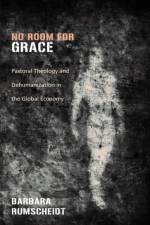
Description:No Room for Grace addresses a world dominated by free market capitalism, a world where persons become "human resources," the raw materials for competitive production and profitable investment. Barbara Rumscheidt considers how Christians are to do pastoral theology in such a world and explores the potential for Christian faith responses that can resist the dehumanizing dynamics of the global economy.Endorsements:"The present experience of dehumanization generated by the global free market economy challenges the very heart of faith, of theology, and of the mission of the church. No Room for Grace is an excellent book that poses dehumanization as a theological subject with pastoral implications. Barbara Rumscheidt''s uniting of theology and economics evokes new insights into the incarnation of grace in our times. A valuable resource."--Elsa Tamez, Seminario Biblico Latinoamericano, Costa Rica"For countless victims of free market capitalism the evil of globalization seems inevitable. Rumscheidt, however, powerfully challenges the reality of economic, political, and cultural triage by listening carefully to the voices of those who are excluded (especially in the Third World) and recovers the width of Christian faith. She invites both dehumanized and dehumanizing persons to critical awareness and mutual care, thus creating room for grace. A timely work that will help guide us into the third millennium."--Willa Boesak, University of the Western Cape, South Africa"This book reverberates the great prophetic tradition of the Bible. In our faith commitment, global economic justice and universal human dignity cannot be separated. In this unity pastoral words must be publicly spoken. Rumscheidt, protesting the dehumanizing dynamic of the global economy, deepens and expands the ecumenical vision. I recommend this concise and refreshing book with enthusiasm."--Kosuke Koyama, Union Theological Seminary, New York
Description:Within these pages, we find forty-nine meditations on the Holy Spirit that are born of reflection on a wide variety of Scripture passages from both the Old and New Testament--from Genesis to Revelation. The author''s vast pastoral experience permeates his words as he reminds us that the Spirit dwells within each of us. His meaningful and insightful exploration of Scripture gently invites us to meditate on the Word, to realize how the working of the Spirit is intricately woven into the fabric of our everyday lives, and to pray with the Spirit who is ever present to us.Although readers may find this book to be a worthy companion particularly during the seven weeks between Easter and Pentecost, these meditations, insights, and prayers can be used with great benefit at any time--as the Spirit moves. The fruit of the Spirit is offered for all who wish to deepen their spiritual life.About the Contributor(s):Sheldon Stephenson has served as an ordained minister of the United Methodist Church for over fifty years in a number of capacities, including pastor and district superintendent in the United States and missionary in Mexico. He is a graduate of the New York State College of Forestry and Boston University School of Theology
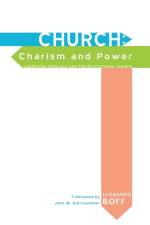
Description:Why the furor over this book? Why was Church: Charism and Power the subject of a Vatican inquiry? The reason, ironically enough, has little to do with its alleged use of Marxist thought, but rather with its critical understanding of the church in the light of the gospel. Church: Charism and Power is a provocative, devastating critique of the ways in which power, sacred power, is controlled and exercised in the Roman Catholic Church. It is a militant book, a radical book, but it is by no means defective in orthodoxy. In fact, with all its criticism it offers a brilliant defense of the historical claims of Roman Catholicism.Its central thesis argues that since the fourth century the church has fallen victim to a kind of power that has nothing to do with the gospel and everything to do with the dynamics of power with all of its inevitable abuses. This historical reality, enshrined in the monarchical model of the church, was undermined at the Second Vatican Council and replaced by that of the church as people of God. This ''laical'' model is closely allied in Boff''s exposition with the notion of the church as sacrament of the Holy Spirit: the church as "sign and instrument of the now living and risen Christ, that is the Holy Spirit." A pneumatic ecclesiology such as this would lead the church back to its primitive dynamics of community, cooperation, and charism. It would create a church in which everyone shared equally and where flexible and appropriate ministries conformed to needs as they arose. Is such a church possible? Is it not simply the utopian dream of idealists and sectarians down through the ages? No, says Father Boff, given the incredible growth throughout Latin America of comunidades eclesiales de base, base communities, where the people express and achieve their desire for participation and where the hierarchy divests itself of its titles and ecclesiastical baggage, creating a common desire for community and equality. This model of the church has acquired an unexpected historical possibility: the new church is in the process of being born. This church, the church being born from the faith of the poor, has rediscovered for itself--and for the church universal--the living presence of the dangerous memory of Jesus Christ.About the Contributor(s):Leonardo Boff was born in Brazil in 1938 and received a doctorate from the University of Munich in Germany in 1970. For the following twenty years, he worked as Professor of Theology at the Franciscan School for Philosophy and Theology in Petropolis, Brazil. During the 1970s, he and Gustavo Gutiérrez helped to define liberation theology. Since 1993 he has been a professor at the State University of Rio de Janeiro, where he is now Emeritus Professor of Ethics, Philosophy of Religion, and Ecology. He is also a member of the international Earth Charter Commission. Boff is the author of more than seventy books, including Saint Joseph: The Father of Jesus in a Fatherless Society. In 2001 he was awarded the Right Livelihood Award (which is considered to be the "alternative" Nobel Prize) by the Swedish Parliament.
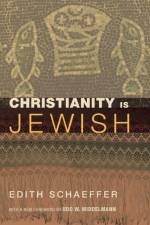
Description:Edith Schaeffer lovingly encourages Christians to embrace the Jewishness of their faith. When the early church repudiated its Jewish roots, the New Testament became disconnected from its Hebraic foundations in the Old Testament. Edith Schaeffer presents a most convincing case for an unbreakable continuity in the flow of history from Genesis to Revelation. Her book reveals the thread of redemption in its Jewish context and Christianity as a grafted vine rooted in Judaism. The reader will hardly be able to miss the conclusion that the Christian gospel built on the foundation of the prophets and of the apostles is entirely Jewish. We live in a time when Christians and Jews are confused about their true identity and mutual calling to each other. This book deserves a re-edition at a time of unrelenting persistence of anti-Semitism, when much of the world turns their backs on Israel and the Jews. The global community of nations risks abandoning its Judeo-Christian heritage. This book''s simple message may be what is needed to open the eyes of the Church to what Christianity owes to the Jews: gratitude, love, and the knowledge of their Jewish Messiah as the true Passover Lamb.About the Contributor(s):Edith Schaeffer is the author of more than 15 books, including L''Abri (1969), Hidden Art (1971), Everybody Can Know (1973), A Way of Seeing (1977), Affliction (1978), The Tapestry, a biography of her family (1981), and Forever Music (1986). She lives today with members of her family in Gryon, Switzerland.
Endorsements:"Webb offers a carefully and creatively wrought phenomenology of sound, showing its relation to the proclamation of God''s Word. His keen insights on the primordial nature of sound, speech, and hearing will force theologians to examine, once again, what it means to be a ''hearer of the Word.'' Webb masterfully displays the intrinsic relationship between dynamic listening and speech--how intent hearing and confident proclamation are intimately conjoined. He has the rare gift of combining acute theological insight with a mellifluous, readable style. The nature of God''s own Word here becomes clearer: vibrant and tensile, life-giving in tone and texture. Whether examining Jesus as the voice of the Father, the role of voice in innertrinitarian relations, or the relationship between voice and gender, Webb offers the kind of thought-provoking and highly creative reflections rarely found elsewhere. He has a creative and incisive theological mind."--Thomas Guarino, Seton Hall University"Being appreciative of Webb''s earlier work on hyperbolic language in theology and preaching, I welcomed The Divine Voice. How risky to toss a spoken word into a room of silent readers and expect it to be heard! I was reprimanded, instructed, and moved by the sound of this book. Were I still in the seminary classroom, The Divine Voice would be required reading before one word was said about how to preach."--Fred B. Craddock, The Craddock Center"The Divine Voice is a book of academic theology worthy of the Psalmist who sang ''Day after day the word goes forth, night after night the story is told. Soundless the speech, voiceless the talk, yet the story is echoed throughout the world'' (Ps 19:2-3). Stephen Webb is an ''acoustemological'' theologian, for whom speech can be prayerful as silence, and silence as instructive as proclamation. When the sounds heard by faith reach Webb''s ever-insightful and creative mind, only synthesia could result, and the result is a gift for us all."--Peter Ochs, University of VirginiaAbout the Contributor(s):Stephen H. Webb is Professor of Religion and Philosophy at Wabash College, Crawfordsville, Indiana. He is the author of nine other books, including Dylan Redeemed (2006) and The Dome of Eden (2010).
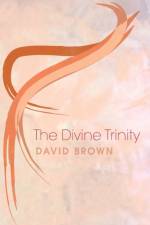
Description:This book, the first serious analysis of the doctrine of the Trinity for many years, presents a defense against the conservative treatment of the Trinity as an impenetrable "mystery," and against the radical position that the doctrine is incoherent and therefore unacceptable. Brown favors "the founding of a new discipline of philosophical theology (or the widening of the horizons of the philosophy of religion) to apply more widely the type of penetration of theology by philosophy" that he exemplifies in his treatment of the Trinity.He argues for belief in an interventionist God (theism rather than deism), and contends that biblical criticism and historical research do not imply the abandonment of Christian belief, since "the historical original" should not be equated with "theological truth." Although historical difficulties must prevent any literal acceptance of the Gospel accounts in toto, "the true Christ" can be disentangled from "the historical Jesus" by philosophical method.Wide-ranging in scope, rigorous and candid in argument, Brown''s work will prove of interest to educated Christian laypersons and others beyond the boundaries of professional theology and philosophy of religion.Perhaps most provocative is Brown''s assertion that the Resurrection must be accepted as a literally true visionary experience, and that anyone who accepts it must be prepared to take seriously other visionary experiences, for example, visions of the Virgin Mary, even if he rejects them in the end. "It is certainly an astonishing truth that God should be so interested in a being of such vastly inferior powers as man," says the author. "But that clearly must be the implication of the doctrine of the Trinity . . ." To have reached this conclusion by means of philosophical argument is to have taken a major step toward the "complete penetration of theology by philosophy" that Brown calls for.About the Contributor(s):David William Brown FBA is an Anglican priest and theologian who currently serves as Professor of Theology, Aesthetics and Culture in the Institute for Theology, Imagination and the Arts and as Wardlaw Professor at St Mary''s College, University of St Andrews.
About the Contributor(s):David William Brown FBA is an Anglican priest and theologian who currently serves as Professor of Theology, Aesthetics and Culture in the Institute for Theology, Imagination and the Arts and as Wardlaw Professor at St Mary''s College, University of St Andrews.
In Treaty of the Great King, Kline gives a detailed analysis and strong evidence for supporting the interpretation of Deuteronomy as being a legal document between Israel and YHWH that was patterned after ancient Near Eastern treaties, with Moses as its primary compiler. These studies were foundational in Kline''s career as a covenant theologian. Meredith G. Kline (1922-2007) was Professor of Old Testament at Westminster Seminary California. He previously taught at Gordon-Conwell Theological Seminary and at Westminster Theological Seminary (Philadelphia), from which he received his BD and ThM degrees. He earned is PhD degree in Assyriology and Egyptology under Cyrus Gordon at Dropsie College. He was also an ordained minister in the Orthodox Presbyterian Church. The collection of essays in Creator, Redeemer, Consummator, a festschrift written in honor of Dr. Kline, attests to the indelible influence his work has exerted on contemporary biblical and theological scholarship.
Description:Take My Hand is an invitation to experience a year of preaching through the eyes of a first-year pastor. Andrew Taylor-Troutman reflects on his experience of ministry as a dynamic exchange between his theological education and the people in the pews. Each chapter consists of Taylor-Troutman''s reflections about a particular aspect of living as a faith community and concludes with a sermon exploring similar themes and ideas. As this book journeys through the Christian liturgical year, Taylor-Troutman considers a wide range of contemporary church issues, including the role of children in worship and the communal practice of Sabbath. He discusses topics as diverse as the Rapture, the death penalty, and church league softball. Along the way, readers will laugh at Sunday morning bloopers, study biblical texts from new perspectives, wrestle with theological questions, and discover parallels between their own experience of faith and the life of this small, rural congregation. More than just a retrospective summary of events, Take My Hand poignantly illustrates how a pastor''s work on Sunday morning grows out of his or her engagement with the hopes and fears of daily life, and the inspiring faith of men, women, and children in a church.Endorsements:"A wonderful blending of communal observations and deep spiritual insight. Rev. Taylor-Troutman sees the connection between the faith and community, and in the sharing of his experience invites us to see and learn from that connection. An excellent resource for any new pastor starting a faith journey with a congregation, or a seasoned pastor reflecting anew."--Brian K. BlountPresident and Professor of New TestamentUnion Presbyterian Seminary"If you want to know what first-year pastoral ministry is, read this book . . . Taylor Troutman evokes the possibility of community, of deep and abiding faith in God, of family ties and committed relationships . . . His strength is the courage to ask questions, to live with ambiguity, to keep the faith, and to listen deeply to those who know him as their pastor."--Susan KendallDirector of the Doctor of Ministry ProgramPittsburgh Theological Seminary"Take My Hand is a great telling of a first-year pastor living in his first congregation . . . [The] writing is very gracious and mirrors what happens right there at the ''ground of the fabric'' where our theologies are built, our prayers are shared, our world views reshaped, and our love of God and one another deeply nourished."--Cláudio CarvalhaesAssociate Professor of Worship and PreachingLouisville Presbyterian Theological Seminary"Georgia O''Keefe said that ''no one really looks at a flower,'' and then she invited us to see the beauty of those blossoms that we ordinarily take for granted. A true artist arrests us in our busyness and calls us to notice the mysterious in the mundane. Andrew Taylor-Troutman displays this gift in Take My Hand. As he leads us through his first year as a pastor, Taylor-Troutman gives us a glimpse of the depth."--Carol Howard MerrittPastor, Western Presbyterian ChurchWashington DC"Andrew Taylor-Troutman has written a delightful pastoral memoir, full of human insights and theological truths. It is in the best sense an encouraging book to any and all who aspire to the title ''Pastor.'' I recommend it highly."--Richard LischerDuke Divinity SchoolAbout the Contributor(s):Andrew Taylor-Troutman is an ordained minister in the Presbyterian Church (USA) and the solo pastor of New Dublin Presbyterian Church in the mountains of southwestern Virginia. The author received his bachelor of arts from Lenoir-Rhyne University and holds graduate degrees from Union Presbyterian Seminary and the University of Virginia.
Endorsements:"This book is a careful, historical demonstration of the way in which hermeneutics was secularized yet continues to borrow on the capital of Christian theology. By exposing the problems inherent in secular hermeneutics and correcting the histories of philosophical hermeneutics on record, Zimmerman points a way forward beyond secular hermeneutics. This is a bold project that should be read not only by theologians but, more especially, by those philosophers working in the wake of Heidegger, Gadamer, Derrida, and Levinas. This book is an excellent addition to any course in philosophical hermeneutics."-- James K. A. Smith, author of The Fall of Interpretation"In Recovering Theological Hermeneutics, Zimmerman offers a compelling argument for the claim that hermeneutics must be theological if it is to be truly hermeneutical. Through a fair and careful reading of premodern and postmodern hermeneutical theorists, he shows their true kinship. Building appreciatively (though not uncritically) upon insights of Gadamer, Levinas, and Derrida, Zimmerman draws from Bonhoeffer and Balthasar to construct an incarnational hermeneutic. Zimmerman provides us with a deeply Christian view of human understanding--one that results in nether hermeneutical triumphalism nor hermeneutical despair but affirms understanding as relational, historical, and ultimately based on God''s revelation."--Bruce Ellis Benson, author of Graven Ideologies: Nietzsche, Derrida, and Marion on Modern Idolatry"Recovering Theological Hermeneutics is an important contribution to hermeneutics. Zimmerman provides not only a detailed and convincing historical analysis but also an outline of theological hermeneutics that is ethical, incarnational, and thus, in the best sense of the word, truly evangelical. Far from naively idealizing a premodern point of view, Zimmerman convincingly works through modern and postmodern thought. In so doing, he shows the often-overlooked potential of the premodern Christian tradition without ignoring its difficulties and shortcomings--a challenge to both modern and postmodern theology and, indeed, philosophy."--Holder Zaborowsky, Albert-Ludwig University of FreiburgAbout the Contributor(s):Jens Zimmermann holds a Canada Research Chair at Trinity Western University. He is coauthor of The Passionate Intellect (2006), and coeditor of Being Human, Becoming Human: Dietrich Bonhoeffer and Social Thought (2010).
Description:Thoughtful Christians are legitimately perplexed by a number of issues relating to the church''s belief and practice. They are perplexed partly because they recognize that the issues themselves are thorny, and partly because they are not sure how to test the mutually inconsistent theories and explanations affirmed by diverse voices speaking with equal assurance. Most Christians find relatively little occasion or encouragement to address their perplexities with intellectual candor and integrity. If they dare to acknowledge their theological perplexities at all, they are too often told that these perplexities are unimportant, or that they can be answered very simply, or that they should be left to the experts. Guide for the Christian Perplexed, written by members of the faculty of Wycliffe College, Toronto, aims to explore a diversity of issues and questions to do withoour knowledge of Jesus othe meaning of sufferingothe function of doctrineothe understanding of Scriptureothe place of other religionsothe challenge of atheismothe pleasures and complications of sexualityothe nature of worship othe way to evangelizeounderstanding who our neighbor is locally and globallyodiversities of spirituality Here you will find thoughtful reflections and answers to the questions around these issues. A study guide is included for individual and group use.Endorsements:"It''s risky to offer oneself as guide as one isn''t sure the reader will end up where you had in mind. These writers know that, for that is their profession. They also know this: that for answers to have meaning they must be found, and inquiry into the mystery of God involves more than writers as guide.This is a marvelous grouping of paths for the pilgrim on which they point out turns, junctions and dead ends."--Brian C StillerGlobal Ambassador, World Evangelical AlliancePresident Emeritus, Tyndale University College and SeminaryAbout the Contributor(s):Thomas Power is Theological Librarian and Adjunct Professor of Church History at Trinity and Wycliffe Colleges at the University of Toronto.
Description:Although preachers often question their effectiveness, no task of the church is more important than proclamation. Only the gospel liberates sinners from guilt, despair, and death and grants them freedom, hope, and new life. Few have grasped this truth better than Martin Luther. This volume features contributions by contemporary theologians whose work is shaped by Luther''s conviction that God''s justification of the ungodly comes through preaching: Gerhard Forde, Oswald Bayer, and their students and friends. Taken from the pages of Lutheran Quarterly, these essays in historical and theological perspective bring the doctrine of justification to bear on contemporary preaching. For Luther, the whole creation has its life out of God''s "pure, fatherly, divine goodness and mercy, without any merit or worthiness of ours at all!" Luther''s insight to center creation around God''s justifying work accents the cosmic scope of the doctrine. Justification is at the core of God''s creative and saving activity with respect to all that has been, is, and will be. God''s justification of the ungodly is the heart of all Christian theology and mission, and inescapably shapes the character of both. Preaching Christ as the justifier of sinners, in contrast to the accusing directives of the law, does nothing other than establish God''s deity over and for the world, and brings an end to sinners'' own self-deifying quests, re-creating them as fully human, fully free. Theologians and preachers gain their compass, purpose, and courage from this truth.Endorsements:"Justification Is for Preaching is refreshingly radical . . . because it goes to the root of God''s own design for preaching, the bestowal of a promise that creates faith in Christ Jesus. Preaching is not about transformation of character or political advocacy but God''s own declaration of righteousness for the ungodly. In essays from both sides of the Atlantic, theologians in the tradition of Luther carry out his approach to the renewal of the church, that is, . . . the preaching of Christ crucified. Seminarians as well as seasoned preachers will be invigorated and challenged by . . . this fine book."--John T. PlessAssistant Professor of Pastoral Ministry & Missions / Director of Field EducationConcordia Theological Seminary, Fort Wayne, Indiana"Good preaching is dependent on good theology. Central to effective proclamation of the Christian faith is the proper understanding of God''s fashioning of the relationship between himself and his human creatures. Thompson has assembled fourteen essays by eight leading Lutheran theologians from the US and Germany who give preachers a host of insights into how to deliver Scripture''s central message of the restoration of sinners to a right relationship with God."--Robert KolbProfessor of Systematic Theology EmeritusConcordia Seminary, Saint Louis, MissouriAbout the Contributor(s):Virgil Thompson currently teaches the New Testament at Gonzaga University. Previously he served as pastor to congregations of the Lutheran Church for over thirty years. For the past twenty-five years he has served as Managing Editor of Lutheran Quarterly.
Description:Around the turn of the twentieth century, revivalist Protestantism in America splintered into multiple pieces. Few persons of that era knew as many of the central figures of the splinter groups as Aaron Merritt Hills. Originally a Congregationalist who studied under Finney at Oberlin, Hills was a dyed-in-the-wool postmillennial revivalist until his death in 1935. While a Congregationalist, he befriended Reuben A. Torrey and made an enemy of Washington Gladden. In 1895 he joined the Holiness Movement after his experience of Spirit baptism. For the next forty years he founded colleges, held holiness revivals in both America and Britain, and wrote voluminously.While Hills himself is a lesser-known figure in the story of American Christianity, because of the many embroilments of his life, his story offers a unique window into the relationship between the Holiness Movement, Fundamentalism, Pentecostalism, American liberalism, and the Social Gospel Movement.Endorsements:"A lack of prominence in history books may not mean a corresponding lack of significant impact on that history. Jon Branstetter illustrates this with his well-researched story of A. M. Hills. This lesser-known revivalist offers an unusual window for getting a clearer view of the American Holiness Movement, Fundamentalism, Pentecostalism, liberalism, and the Social Gospel Movement in the early twentieth century. This reconsideration of Hill throws fresh light on Finney, Torrey, Harvard, Yale, Keswick, postmillennialism, religious higher education, revivalism, and more--a virtual parade of the major players in a fractured period of American religious history."--Barry L. CallenEditor, Wesleyan Theological Journal and Anderson University PressProfessor Emeritus, Anderson University, Anderson, Indiana"It has been some time since A. M. Hills''s contribution to the Wesleyan-Holiness theological tradition has been brought forward for public review. Dr. Branstetter has filled this need with thorough research and reading ease. For the professional and layman alike, this work provides a welcome reminder of the impact Dr. Hills had on late nineteenth- and early twentieth-century theological development."--Loren P. GreshamPresident, Southern Nazarene University, Bethany, OklahomaAbout the Contributor(s):C. J. Branstetter is Research Director of the Public Theology Institute of Daybreak: Asia in Beijing, China.
Description:Among the world''s religions, Christianity and Judaism are the most symmetrical. But in our day of religious tolerance, a tendency to overlook the vital differences between the two religions in the name of good will can undermine constructive Jewish-Christian dialogue.In this book, Bruce D. Chilton describes early Christian thought and Jacob Neusner describes early Judaic thought on fundamental issues such as creation and human nature, Christ and Torah, sin and atonement, and eschatology. At the end of each chapter, each assesses the other''s perspective, and a final chapter explains why the authors believe theological confrontation--not just comparison--defines the task of interfaith dialogue today.About the Contributor(s):Bruce D. Chilton is Bernard Iddings Bell Professor of Religion, Chaplain of the College, and Executive Director of the Institute of Advanced Theology at Bard College, Annandale-on-Hudson, New York.Jacob Neusner is Distinguished Service Professor of the History and Theology of Judaism and Senior Fellow of the Institute of Advanced Theology at Bard College. Their earlier joint publications include Trading Places: The Intersecting Histories of Judaism and Christianity and Comparing Spiritualities: Formative Christianity and Judaism on Finding Life and Meeting Death.
About the Contributor(s):G. Campbell Morgan (1863-1945) was a leading Bible expositor in England and the United States. Despite a lack of substantial formal training, Morgan was a prolific writer and teacher. Ordained into the Congregational ministry, he was the pastor of Westminster Chapel, London (1904-17 and 1933-45). Morgan also conducted two very successful teaching tours in the United States, including work with D.L. Moody''s ministry.
About the Contributor(s):G. Campbell Morgan (1863-1945) was a leading Bible expositor in England and the United States. Despite a lack of substantial formal training, Morgan was a prolific writer and teacher. Ordained into the Congregational ministry, he was the pastor of Westminster Chapel, London (1904-17 and 1933-45). Morgan also conducted two very successful teaching tours in the United States, including work with D.L. Moody''s ministry.
About the Contributor(s):G. Campbell Morgan (1863-1945) was a leading Bible expositor in England and the United States. Despite a lack of substantial formal training, Morgan was a prolific writer and teacher. Ordained into the Congregational ministry, he was the pastor of Westminster Chapel, London (1904-17 and 1933-45). Morgan also conducted two very successful teaching tours in the United States, including work with D.L. Moody''s ministry.
About the Contributor(s):G. Campbell Morgan (1863-1945) was a leading Bible expositor in England and the United States. Despite a lack of substantial formal training, Morgan was a prolific writer and teacher. Ordained into the Congregational ministry, he was the pastor of Westminster Chapel, London (1904-17 and 1933-45). Morgan also conducted two very successful teaching tours in the United States, including work with D.L. Moody''s ministry.
About the Contributor(s):G. Campbell Morgan (1863-1945) was a leading Bible expositor in England and the United States. Despite a lack of substantial formal training, Morgan was a prolific writer and teacher. Ordained into the Congregational ministry, he was the pastor of Westminster Chapel, London (1904-17 and 1933-45). Morgan also conducted two very successful teaching tours in the United States, including work with D.L. Moody''s ministry.
About the Contributor(s):G. Campbell Morgan (1863-1945) was a leading Bible expositor in England and the United States. Despite a lack of substantial formal training, Morgan was a prolific writer and teacher. Ordained into the Congregational ministry, he was the pastor of Westminster Chapel, London (1904-17 and 1933-45). Morgan also conducted two very successful teaching tours in the United States, including work with D.L. Moody''s ministry.
About the Contributor(s):G. Campbell Morgan (1863-1945) was a leading Bible expositor in England and the United States. Despite a lack of substantial formal training, Morgan was a prolific writer and teacher. Ordained into the Congregational ministry, he was the pastor of Westminster Chapel, London (1904-17 and 1933-45). Morgan also conducted two very successful teaching tours in the United States, including work with D.L. Moody''s ministry.
About the Contributor(s):G. Campbell Morgan (1863-1945) was a leading Bible expositor in England and the United States. Despite a lack of substantial formal training, Morgan was a prolific writer and teacher. Ordained into the Congregational ministry, he was the pastor of Westminster Chapel, London (1904-17 and 1933-45). Morgan also conducted two very successful teaching tours in the United States, including work with D.L. Moody''s ministry.
About the Contributor(s):G. Campbell Morgan (1863-1945) was a leading Bible expositor in England and the United States. Despite a lack of substantial formal training, Morgan was a prolific writer and teacher. Ordained into the Congregational ministry, he was the pastor of Westminster Chapel, London (1904-17 and 1933-45). Morgan also conducted two very successful teaching tours in the United States, including work with D.L. Moody''s ministry.
About the Contributor(s):G. Campbell Morgan (1863-1945) was a leading Bible expositor in England and the United States. Despite a lack of substantial formal training, Morgan was a prolific writer and teacher. Ordained into the Congregational ministry, he was the pastor of Westminster Chapel, London (1904-17 and 1933-45). Morgan also conducted two very successful teaching tours in the United States, including work with D.L. Moody''s ministry.
About the Contributor(s):G. Campbell Morgan (1863-1945) was a leading Bible expositor in England and the United States. Despite a lack of substantial formal training, Morgan was a prolific writer and teacher. Ordained into the Congregational ministry, he was the pastor of Westminster Chapel, London (1904-17 and 1933-45). Morgan also conducted two very successful teaching tours in the United States, including work with D. L. Moody''s ministry.
Description:In this careful reconstruction of the prophet Jeremiah''s life and work, Professor Holladay attempts to sort out Jeremiah''s utterances chronologically and to hear them as closely as possible within the context of the events of their time.Jeremiah is a model for us to understand the prophets of the Old Testament. But more than that, he alone of the prophets saw his relationship with God as a problem to be grappled with rather than an obligation to be taken for granted. His willingness to question and to doubt was unique and, Holladay suggests, may put him more in step with our time than his own. For while many of us are willing to undertake a life of faith lived under God''s guidance, few of us do not at some point question God''s ways.About the Contributor(s):William L. Holladay is Lowry Professor of Old Testament Emeritus at Andover Newton Theological School. His the author of Isaiah: Scroll of a Prophetic Heritage, and the two-volume Jeremiah commentary in the Hermeneia series.
Description:The Integration of Faith and Learning: A Worldview Approach''provides students with the philosophical context and practical tools necessary for making the connections between Christian knowledge and the knowledge they will acquire during their undergraduate and graduate years in higher education. This book focuses on helping students understand how worldviews influence the interpretation of data and even what is judged to be knowledge itself. The worldviews of philosophical naturalism, postmodernism, and Christianity are compared and analyzed. Throughout the book, emphasis is placed on helping students develop the practical skills needed to evaluate knowledge claims and to integrate all knowledge into a unified whole through the touchstone of Christian truth.Endorsements:Harris'' book on the integration of faith and learning provides an insightful and systematic way for the university student to filter ideas through the grid of a robust Christian worldview and life. In a time when conceptual illiteracy and moral confusion abound, Harris provides a straightforward account of how to integrate one''s academic learning with faith. By applying the principles laid down in this book, a new Christian intelligentsia will emerge that is unabashedly Christian in their faith and learning.--Paul Gould, Christian Leadership Ministries'' Academic Initiative This is a much needed exhortation to all Christians who want to make an impact on today''s society--or need the tools to keep the faith in spite of today''s society. This is a well thought out journey into many fields and philosophies--its breadth is as encompassing as its depth. . . . This is a must read for students, teachers, and all lovers of wisdom! --Brett Peterson, President, Coastland UniversityWorldview survey books abound, but what sets this one apart and makes it essential is its treatment of how knowledge functions and is propagated ""in the real world."" It is insufficient to merely categorize thinkers or their views. Students need to reckon with how certain claims are advanced and accepted regardless of their merits. Harris'' book teaches a savvy form of skepticism that still exudes a love of truth and values the life of the mind. Highly recommended for home schoolers, youth workers, campus ministers, college students, professors, and anyone concerned with training Christian students in how to engage the world of ideas.--Patrick Rist, Christian Leadership Ministries'' Academic InitiativeAbout the Contributor(s):Robert A. Harris has taught courses in writing, literature, and critical thinking at the college and university level for more than 25 years. He holds the Ph.D. from the University of California at Riverside.
It is both a pleasure and a privilege to introduce this volume of essays in honour of John and Bea Carter. I have known the Carters for about 30 years and have appreciated their gracious and forthright approach to both ministry and theChristian life. Friends and colleagues have contributed to this volume, with the underlying theme of Christian Education specifically in an intercultural environment. . . . The authors of these articles come from different streams within Pentecostalism, and from differing ethnic backgrounds. This is a fitting testimonyto the influence that John and Bea have had in their ministry. . . . John''s influence in the development of the Asia Pacific Theological Association, and in later years, in the World Association of Pentecostal Theological Educators, has been both visionary and significant in encouraging high academic standards in Pentecostal Education around the world. Bea''s constant support, encouragement and hospitality has facilitated thisministry.A. Kay Fountain, Ph.DAPTS Academic Dean(From the Introduction)
All of Christendom has heard of the imitation of Christ. Few within Christendom have heard much of the imitation of Paul. Perhaps there is nothing extraordinary about such a state of affairs. After all, Christ fills a far more significant role in Christianity than the Apostle Paul does. And yet, when one looks at the matter purely statistically, it is striking to find that the thought of the imitation of Paul comes to literal expression in the New Testament five times, while the thought of the imitation of Christ is found literally expressed only twice. -From the Introduction
Abonner på vårt nyhetsbrev og få rabatter og inspirasjon til din neste leseopplevelse.
Ved å abonnere godtar du vår personvernerklæring.