














Gjør som tusenvis av andre bokelskere
Abonner på vårt nyhetsbrev og få rabatter og inspirasjon til din neste leseopplevelse.
Ved å abonnere godtar du vår personvernerklæring.Du kan når som helst melde deg av våre nyhetsbrev.

This work has been selected by scholars as being culturally important, and is part of the knowledge base of civilization as we know it.This work is in the "public domain in the United States of America, and possibly other nations. Within the United States, you may freely copy and distribute this work, as no entity (individual or corporate) has a copyright on the body of the work.Scholars believe, and we concur, that this work is important enough to be preserved, reproduced, and made generally available to the public. We appreciate your support of the preservation process, and thank you for being an important part of keeping this knowledge alive and relevant.
Revelation presents a view of reality different from the usual: the world according to God. It reveals that, since the death and resurrection of Christ, God is creating all things new. The relevance of the book for today is that it challenges Christians about where their ultimate allegiance lies. Revelation shows that it is in worship--where earth meets heaven--that Christians still participate in God's judging and saving activity in the world. This commentary uses language that is simple and clear, avoiding technical terms. It gives an explanation of the text that is sound and reliable, easy to understand without being superficial.
Through an insightful, literary treatment of various utopian visions, Peter Hawkins examines the human urge for widespread happiness, while pondering our consistent failure to produce it. Hawkins draws from biblical notions of paradise, Plato's Republic, More's Utopia, Bellamy, Orwell, Le Corbusier, B. F. Skinner, and Walker Percy, locating in each the usefulness and accountability of the Utopian impulse.
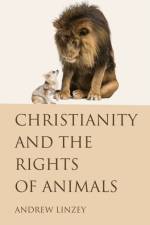
Christian concern about how we treat animals has increased strikingly in recent years. More and more Christians are deciding that our attitudes toward animals must change. Here is a book that presents, for the first time, a comprehensive and well-argued theological case for the rights of animals, and offers a challenging critique of our existing insensitivity toward animal life. Everyone who cares about the rights of animals, particularly clergy and ministers who are constantly being asked for answers on the issue, will welcome this new and important book.
Motherhood provides a crucial place for exploring human life and its meaning. Within motherhood lies a deep tension between the pain, crisis, and association with death in motherhood and the joy, transformation, and life in motherhood. Few metaphors in Scripture (or in life) stand so firmly between life and death, love and loss, and joy and deep pain. After all, motherhood''s meaning in part comes again and again at these crucial crossroads. Thus, motherhood has powerful implications for our biblical and theological understanding. Bringing together Jewish and ecumenical Christian scholars from North America, Oceania, and South America, this edited volume provides biblical and theological perspectives on understanding motherhood. The authors reflect upon a selection of biblical texts, systematic theologians, and Christian spiritual traditions to dialogue with the experience of maternity in its diverse manifestations. The purpose of the book is to provide essays that--through these biblical and theological lenses--engage the question of motherhood today, from the experience of pregnancy and birth, to raising children, to losing children and coping with grief. In this way, this volume helps to ""make sense"" of the complexity of motherhood.""Making Sense of Motherhood embraces complex concepts that are central for the Bible and theology. These women scholars are uniquely qualified by who they are and by their social location to make sense of motherhood in its biblical, theological, and practical dimensions in a way that is both academic and personal. They demonstrate that motherhood provides rich resources for biblical studies, and the disciplines of theology.""--Cynthia Long Westfall, Assistant Professor of New Testament, McMaster Divinity College Beth M. Stovell is Assistant Professor of Old Testament at Ambrose Seminary of Ambrose University in Calgary, Alberta. She has authored Mapping Metaphorical Discourse in the Fourth Gospel: John''s Eternal King (Brill, 2012) and co-edited with Stanley E. Porter Biblical Hermeneutics: Five Views (IVP, 2012). She is writing a commentary on the Minor Prophets for the Story of God Bible Commentary series (Zondervan) and co-writing with Stanley E. Porter a book on interpreting biblical language (IVP).
The triune God of grace, James B. Torrance tirelessly insisted, is the true agent to transform worship, mission, and society. Unfortunately, the church often lapses into moralism and legalism, or exhortations and condemnations, rather than witnessing to the sole-sufficient grace of God in Christ. When we neglect the Trinity, a de facto unitarianism throws the church back onto its own existence and resources. In Christ, however, the church participates through the Spirit in union with Christ''s communion with the Father. By so doing, it also participates in Christ''s mission to the world. The essays of this volume articulate and extend Torrance''s evangelical theology, which draws attention away from ourselves and toward the triune God who is for us and for the world.""James B. Torrance was the professor with the pastor''s heart. As his student at New College, Edinburgh, I particularly valued his emphasis on unconditional grace. ''The indicatives are prior to the imperatives,'' he would often say. In other words, what God has already done for us in Christ must be proclaimed as gospel first before we talk about what our response should be. His focus was on teaching more than publishing, but this book will help continue his evangelical emphasis on worship, community, and the triune God of grace.""--Thomas Noble, Nazarene Theological Seminary, Kansas City, and Nazarene Theological College, Manchester""James B. Torrance was one of the finest teachers of theology of his generation. His clarity of thought, extroverted love for the Lord Jesus, and gentle pastoral spirit all combined to leave a profound mark on those who sat in his classrooms. The urgency of his denunciation of apartheid in South Africa based on the reconciling work of God in Christ marked him as a prophetic voice among his peers. This timely collection of essays is a fine statement of the respect that he holds and his enduring legacy that continues among us.""--Andrew Purves, Pittsburgh Theological SeminaryTodd Speidell (PhD, Fuller Theological Seminary) is Instructor of Theology at Montreat College, Editor of Participatio: The Journal of the Thomas F. Torrance Theological Fellowship, and General Editor of The Ray S. Anderson Collection (Wipf & Stock).
When United Airlines Flight 232 crashed in Sioux City, Iowa, in 1989, 112 people died, and 184 people survived. In this book Gregory S. Clapper, both a college professor and a chaplain in the National Guard, reflects on his ministry in the aftermath of this tragic event. Processing his chaplain experiences through the lens of his theological training, he reflects on six different resources from the Christian tradition that he saw transform people's lives during and after this tragedy.
Paul Ramsey's provocative criticism sets the United Methodist bishops' peace pastoral in the context of a much broader discussion of the church's role in society. He reminds us, as he has done before, that good intentions also require clear thinking about where one stands in a tradition. Stanley Hauerwas' epilogue, written from a quite different pacifist perspective, accents the scope of Ramsey's issues. Speak Up for Just War or Pacifism should be of interest to everyone who cares about how churches think about public issues. --Robin W. Lovin, The University of Chicago Paul Ramsey offers a can-exploding critique of the particulars of the Methodist document and, in so doing, elaborates many of the broad insights into just war theory that have characterized his work over the years. His contrast of 'In Defense of Creation' with the Catholic Bishops' pastoral 'The Challenge of Peace' is especially helpful. The book is excellent both as a guide to current debates and as a general introduction to Christian ethical reflection on war and peace. It ought to be welcomed by pacifists and exponents of just war alike. --Timothy P. Jackson, Yale University
This study examines, within a chronological framework, the major themes and personalities which influenced the outbreak of a number of Evangelical clerical and lay secessions from the Church of England and Ireland during the first half of the nineteenth century. Though the number of secessions was relatively small-between a hundred and two hundred of the ''Gospel clergy'' abandoned the Church during this period-their influence was considerable, especially in highlighting in embarrassing fashion the tensions between the evangelical conversionist imperative and the principles of a national religious establishment. Moreover, through much of this period there remained, just beneath the surface, the potential threat of a large Evangelical disruption similar to that which occurred in Scotland in 1843. Consequently, these secessions provoked great consternation within the Church and within Evangelicalism itself, they contributed to the outbreak of millennia! Speculation following the ''constitutional revolution'' of 1828-32, they led to the formation of several new denominations, and they sparked off a major Church-State crisis over the legal right of a clergyman to secede and begin a new ministry within Protestant Dissent.Grayson Carter''s enormously interesting and important book is the most significant study of English evangelical religion since Boyd Hilton''s Age of Atonement (1988). Carter provides the clearest available exploration of the complex relationships of early nineteenth century evangelical Christians within and to the Church of England. He achieves this goal through a series of deeply researched and richly detailed studies of individual evangelical clergy and lay followers who seceded from either the Church of England or the Church of Ireland into the ranks of Nonconformity. These figures were a distinct minority, but the activities and ideas of each sent ripples-and, occasionally, genuinely lasting shock waves-through the wider evangelical community of faith and the Anglican establishment.Frank Turner, in Victorian Studies, vol. 46, No. 1 (Autumn, 2003)Grayson Carter is Associate Professor of Church History at Fuller Theological Seminary, where he has taught since 2002. Since its inception, Carter has served as General Editor of Sehnsucht: The C. S. Lewis Journal, the only peer-reviewed journal devoted to the study of C.S. Lewis and his writings published anywhere in the world.
Description:Metaphors We Teach By helps teachers reflect on how the metaphors they use to think about education shape what happens in their classrooms and in their schools. Teaching and learning will differ in classrooms whose teachers think of students as plants to be nurtured from those who consider them as clay to be molded. Students will be assessed differently if teachers think of assessment as a blessing and as justice instead of as measurement. This volume examines dozens of such metaphors related to teaching and teachers, learning and learners, curriculum, assessment, gender, and matters of spirituality and faith. The book challenges teachers to embrace metaphors that fit their worldview and will improve teaching and learning in their classrooms.Endorsements:""As a maven of metaphors myself, I am delighted with Metaphors We Teach By, which examines how metaphor informs and enhances the teaching life. Moving beyond the traditional ''sage on the stage and the guide by the side'' formulation, the contributors to this volume concoct a rich stew of personal accounts, scholarly expertise, and metaphors ranging from oysters to gardens, superheroes to invisible thread.""--Susan VanZanten, Seattle Pacific University""Metaphors powerfully communicate how we view our roles, our work, and its ultimate purposes. This valuable book carefully examines the process through which we select these symbols in order to understand their influence and set the course of practice for the next generation of learners.""--Jillian N. Lederhouse, Wheaton College""Metaphors make our thoughts more lucid, connected, and multifaceted, structure our perceptions and understandings about life, and help us see things in new light. Thinking metaphorically about education and learning also enhances creativity. Badley and Van Brummelen have provided a rich resource, which will no doubt improve both teaching and learning for educators and students alike.""--James Drexler, Covenant College""Kudos to Badley and Van Brummelen for this practical collection of meditations on metaphor in the classroom . . . If metaphors operate at a fundamental level of cognition, then the challenge is to intentionally choose which metaphors I employ as an educator, since they will both direct my behavior and lead to new perspectives.""--Deborah C. Bowen, Redeemer University College""Metaphors have long been recognized as playing a key role in the ways we approach teaching and learning. The authors contributing to this book offer a thought-provoking, faith-sensitive, and a refreshingly personal guide to this important area of reflection.""--David I. Smith, Calvin College""Too often as teachers we worry about the words we are using and forget to pay attention to what we are actually saying to our pupils through our practice. In this innovative book Ken Badley and Harro Van Brummelen have brought together essays which help us to distinguish these. By focusing on the metaphors that shape our work, they have provided a resource that will have a significant impact on our classrooms.--Trevor Cooling, Canterbury Christ Church University, UKAbout the Contributor(s):Ken Badley is Professor of Education and teaches in the doctoral program in education at George Fox University in Newberg, Oregon. He is the author of several social studies and religious studies textbooks. Harro Van Brummelen is Executive Director of Christian Studies International and Professor Emeritus and former Dean of the School of Education at Trinity Western University in Langley, British Columbia
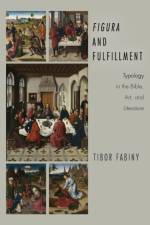
An enlarged edition of The Lion and The Lamb: Figuralism and Fulfillment in the Bible, Art, and LiteratureBeginning with Northrop Frye''s discussion of biblical typology--the understanding of the Old Testament as a source of anticipation of the New Testament--Tibor Fabiny develops his hermeneutical discussion using the insights of reader-response criticism in a wholly original way. His approach to biblical typology is both comprehensive and interdisciplinary, using material from literature and the visual arts in the Christian tradition. He moves from a discussion of the Bible to examples of typology in medieval art and literature and finally to the drama of Shakespeare and T. S. Elliot in Murder in the Cathedral.Tibor Fabiny is Professor of English Literature and the Director of the Center for Hermeneutical Research at Karoli Gaspar University of the Reformed Church in Hungary. He is author of The Veil of God, and editor of Shakespeare and the Emblem; Literary Theory and Biblical Hermeneutics; ""What, Then, Is Time?""; and (with Pierre Buhler) Interpretation of Texts Sacred and Secular.
Printed in Partnership with The Center and Library for the Bible and Social Justice Can an economic system receive a response informed by biblical and theological ethics? This collection of five essays, first published in 1991, provides a solid yes to the way ""prophetic criticism,"" rooted in the Hebrew tradition of social justice, can assess the state of today's market economy. In strong contrast to the conservative and Religious Right orientations of the 1980s, the writers of this book ""crack the hegemony of neoconservatives in theology."" They also provide strong arguments for what H. Richard Niebuhr called a transformational ethic. Norman Gottwald discusses the rise of the Hebrew prophets and their call for economic justice. William Tabb evaluates contemporary political economies in light of the prophetic tradition. Beverly Harrison develops a prophetic approach to current socio-economic troubles of the middle class. Gregory Baum reviews Catholic perspectives on international economic arrangements and trends. And finally, Dorothee Soelle describes the economic and political implications of the Hebrew concepts of the Sabbath and the Year of the Jubilee.
With an eye toward reuniting the church and the academy, this book focuses on the role that scholarship can play in making good preachers into really great preachers. This is the bridge between scholarly and popular writing that informs the sermon and makes it more powerful and meaningful for the people who regularly listen to sermons. Preachers are challenged to raise the level of their commitment to scholarship as well as overcome any pre-existing prejudices with scholarship. The preacher as scholar is the perfect way for the pulpit to respond to the challenges of a secular, post-modern world that often wonders if smart people can even believe in God.
Acts of terror are everywhere! Not one day goes by without hearing about the latest suicide bomb in Baghdad, knife stabbing in Germany, or shooting spree in France or in the United States. A Christian extremist preacher claims that homosexuals deserve to die because he considers their lifestyle to be sinful; groups like ISIS perpetrate genocide against religious minorities and call for global jihad against infidels; Buddhist monks in Myanmar persecute the Rohingya for fear that the Muslim minority destroy their country and religion. All these actions seem to be somehow religiously motivated, where the actors claim to act in accordance with their beliefs. In the midst of this spiral of violence seen across traditions and geographical locations, there is a pressing need to understand why people act as such in the name of their faith. The Global Impact of Religious Violence examines why individuals and groups sometimes commit irremediable atrocities, and offers some solutions on how to counter religiously inspired violence.
It is generally accepted that since the end of Vatican II there has been a crisis in the Catholic priesthood. This is reflected in two areas in particular--defections from the priesthood and a serious decline in vocations, primarily in the developed countries of the West. John Paul II has addressed this situation many times during his pontificate, especially in Pastores dabo vobis where he offers a clear theological vision and a program of formation to overcome the current crisis of priestly identity. In his new book McGovern offers a deep analysis of the Pope's theology of priesthood, drawing not only from Pastores dabo vobis, but also from his Holy Thursday Letters and other important writings on this topic. In this study the author deals with core aspects of priestly identity under three main headings--theological, spiritual, and pastoral--in the context of service to the lay faithful and the evangelization required of the Church in the new millennium.
Daniel J. Finucane's original work assesses the long history of the understanding and use of the concept of sensus fidelium, and develops criteria from its history and the teachings of Vatican II to critique the postconciliar use of the concept. This a comprehensive work in both its scope of history and its treatment of contemporary theologies of the concept, as well as suggesting a significant role for hermeneutical issues.The variety of views on the sensus fidelium challenges the traditional understanding of the concept. In this study criteria are offered here for reassessing the sensus fidelium in the light of Vatican II's teaching and the concept's history. Major theological perspectives on this topic since Vatican II are surveyed and explicated.Among the theologians and philosophers discussed are Newman, Congar, Rahner, John Coulson, Jean Guitton, Guenter Biemer, Samuel D. Femiano, John C. Ford, Beinert, Schmaus, Granfield, and others.
This dissertation investigates the political and commercial relations among Israel/Judea, Aram-Damascus, and Tyre/Sidon in the ninth and eighth centuries BCE. The work focuses primarily on Assyrian historical inscriptions from the period, while non-Assyrian sources, including biblical material, is treated where it supplements the Assyrian sources.""The republication of Jeffrey Kah-Jin Kuan's Neo-Assyrian Historical Inscriptions and Syria-Palestine is a most welcome event in the fields of biblical and ancient Near Eastern studies. Employing a careful philological and illuminating contextual analysis of the relevant inscriptions, Kuan demonstrates how the Assyrian monarchy, often employing local figures, developed an effective administrative structure to rule the nations and peoples conquered during the course of its imperial subjugation of Western Asia. A must-read for scholars and students in the field.""--Marvin A. Sweeney, Claremont School of Theology and Academy for Jewish Religion California""Jeffrey Kah-Jin Kuan's Neo-Assyrian Historical Inscriptions and Syria-Palestine was immensely useful when it first appeared in 1995 and it has retained its utility and significance despite the fact that it has long been out of print and hard to find. This reprinted edition is a most welcome development, then, and scholars will find themselves once again in Kuan's debt for his careful presentation of the evidence pertaining to Israelite/Judean relations from the reign of Shalmaneser III through Shalmaneser V.""--Brent A. Strawn, Professor of Old Testament, Emory UniversityJeffrey Kah-Jin Kuan is President and Professor of Hebrew Bible at Claremont School of Theology, Claremont, California. He holds the PhD from Emory University, MTS from Southern Methodist University, and BTh from Trinity Theological College, Singapore. He is an Old Testament editor of The New Interpreter's Dictionary of the Bible (2006-9) and the coeditor of Ways of Being, Ways of Reading: Asian American Biblical Interpretation (2006).
Description:""For Thais, face is a fact,"" writes Flanders. However, ""whether in theology, evangelism, or issues involving sin, salvation, or atonement, Thai Christians and missionaries alike seem either uninterested in or possibly incapable of addressing issues related to face. This glaring incongruity between the value of face for Thais and the lack of intentional engagement within the Thai Christian community is deeply troubling.""Surely, such a lack of careful attention to face is a dangerous posture. Uncritical views of face, furtively attaching to the theology of the Thai church, are potentially detrimental for its life and mission. Such seems to be an unavoidable situation without proper attention to face. Additionally, to ignore face is to run the risk of missing valuable cultural resources, implicit in the Thai experience of face, for the critical task of authentic Thai theological reflection.""This lack of engagement with face raises critical issues with which we must wrestle. How is it that such a central sociocultural issue has not been a more significant part of the Thai Christian vocabulary or experience? How pervasive are these negative attitudes regarding face? What lies behind them? Might this lack of self-conscious engagement with face have any relationship to the persistent Thai perception of Christianity as a foreign, Western religion? How should Christians understand this notion of face and how it relates to the ways we understand and proclaim the gospel?""Endorsements:""Chris Flanders is a missiological theologian! In About Face, he challenges us to think about atonement as Theosis: God participated in our shame that we might be glorified, enabling us to participate in His divine nature. The Western anguish over guilt, legal acquittal for sin, and personal cleansing of sins, Flanders asserts, is foreign to the Thai culture and psyche. About Face provides a contextualized atonement for Asian (particularly Thai) contexts.""--Gailyn Van RheenenFacilitator of Church PlantingMission Alive""Missionaries have tended to have a negative view of 'face' as something that hinders other people from accepting the gospel. Flanders argues, correctly I think, that every society is concerned about 'face' but prioritize issues differently. This is a fresh perspective and a necessary read for those who teach and practice missiology.""--Michael A. RynkiewichProfessor of Anthropology (Retired)Asbury Seminary""Reader, beware. Flanders exposes a strategic area that literally stares expat missionaries and Thai Christians in the face yet both carefully avoid. If you are seeking to understand how concepts of salvation integrate with social constructs in Thai society there is no more thorough study. About Face will challenge readers and Christian practitioners east and west to think missiologically and be changed.""--Paul H. De NeuiAssociate Professor of Intercultural Studies and MissiologyNorth Park Theological Seminary""In this research--integrating history, theology, and social science--Flanders leads his readers to a deeper understanding of 'Thai face' and then examines its relevance for gospel witness and a theology of atonement . . . This book is a critical theological work for both western and non-western mission leaders and scholars, and absolutely essential for any missionary who seeks to work in a Buddhist/Confucian context.""--Sherwood LingenfelterProfessor of Anthropology Fuller Theological Seminary About the Contributor(s):Christopher Flanders is Associate Professor of Missions at Abilene Christian University in Abilene, Texas. He also directs the Halbert Institute for Missions at ACU.
Children are the focus of marriage in African cultures. Marriage is considered full and functional only if the couple has children--in many cultures preferably a boy. Becoming a parent also contributes to one's full adulthood in the sense that childlessness blocks ascent towards full personal dignity as an adult person in the community. As a result, childlessness is often a major disaster for both of the spouses. It has social, economical, and personal consequences, quite often including divorce.This book explores in depth how childlessness is perceived, dealt with, and coped with in two Christian communities in Machame on the slopes of Mt. Kilimanjaro. Childlessness is approached through narratives of the spouses concerned and the members of their communities. Their stories reveal pain and courage, brokenness and strength, faithfulness and betrayal. Christianity presents itself in an ambiguous light, on one hand, pressuring spouses to keep up facades supporting oppressive structures. On the other hand, Christian faith provides childless couples with personal hope in the afterlife that the African traditional culture offers only to those with children.This study proves that childlessness is not only a personal but also a communal problem. Childlessness and the fear of having no children contribute to family structures and sexual behavior. In this way, they have a considerable impact on the spread of HIV/AIDS in Africa. However, this study reveals that the attitudes and practices towards marriage and children need not be petrified, but rather that traditions can, and do, change.
In many oral cultures local proverbs are highly regarded for their wisdom and prized for their aesthetic expression. In this study Jay Moon provides an in-depth look at the use of local proverbs among the Builsa culture of Ghana, West Africa. In particular, the author's research shows how local proverbs can facilitate contextualized expressions of Christianity that are both biblically authentic and culturally relevant. The process of initiating and sustaining this form of expression is explicated with the help of an engaging narrative, providing valuable insights for those striving for genuine and meaningful expression of Christ in culture.This study will be especially beneficial to the missionary community, particularly for the purposes of appreciating oral literature in primary oral cultures, finding proper roles in the contextualization process, identifying cultural values via the window of local proverbs, training missionaries in cultural understanding, and tailoring discipleship training to incorporate significant aspects of orality
Tucked away in the complicated prose that fills many of Soren Kierkegaard's books are numerous insightful declarations. They arrest the reader with their depth of understanding. They often are expressed in a lilting and lyrical manner. Encountering them makes working through the intricate prose eminently worthwhile.The Wisdom of Kierkegaard contains two hundred fifty such passages, chosen partly because of their ability to be understood apart from their context and partly because of their ability to provoke an ""Ah! That's true"" response. Many of them contain a ""twist"" that imparts an incisive jab. Some are on themes for which Kierkegaard is well known, but many are on a variety of other significant themes. The passages are organized in alphabetical sections, which are introduced by a brief essay.
The greatest challenge that faces the evangelical movement is the biblical admonition to preserve the unity of the Spirit (Ephesians 4:3). The first part of Preserving Evangelical Unity: Welcoming Diversity in Non-Essentials will (1) help you to understand why the movement is fraught with divisions over doctrinal differences; (2) guide you through the necessary steps to overcome disunity; (3) attempt to maintain a balance between truth and unity. The second part of the book is formatted in the same style of a "multiple views" book. Here various evangelical scholars from around the globe discuss selected theological issues that have previously led to disunity within the movement, such as predestination and free will, the mode of baptism, and the miraculous gifts of the Spirit.
In the conflicted world that is today's Episcopal Church, the diocese of Pittsburgh stands both as a symbol of dissent and schism to the liberal majority within the American Church and as a beacon of light and hope to conservative Anglicans across the United States. Set in the unlikely surroundings of America's Rust Belt, Pittsburgh's Episcopalians have over the past half century undergone a dramatic reordering of priorities to embrace a novel--though hardly unprecedented--vision of Anglican confessionalism. Called out of Darkness into Marvelous Light traces the development of an Anglican presence in western Pennsylvania from the missionary activity of the late eighteenth century through the triumphs of post-Civil War Anglo-Catholicism and the first stirrings of the Social Gospel, to the unprecedented religious revival of the 1950s. Championed by such men as Bishop Austin Pardue and Samuel Moor Shoemaker, the founder of the Pittsburgh Experiment, a prayer-centered spirituality developed in the Pittsburgh diocese and brought a generation of active evangelicals to the region during the 1960s and 1970s. The founding of Trinity Episcopal School for Ministry in the mid-1970s consolidated the evangelical presence in the diocese and provoked a commitment to spiritual renewal that sat uneasily with many in the wider Episcopal Church. Grounded in local research, this study seeks to explore the process by which Pittsburgh acquired its present evangelical identity and to reveal the increasingly intricate web of relationships that it now enjoys beyond America's borders.
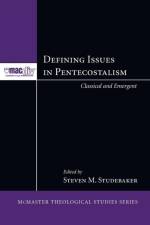
This book brings together the papers presented at the McMaster Divinity College 2007 Pentecostal Forum: "Defining Issues in Pentecostalism: Classical and Emergent." It highlights the defining topics, past and present, of Pentecostal theology. The chapters are grouped under Pentecostal theology and biblical studies, with selections on classical and contemporary issues in each category. This book provides an introduction to the classical doctrines of Pentecostalism and key contemporary developments in Pentecostal theology in one volume. Professors desiring to introduce students to Pentecostalism will find here a concise and accessible introduction to the defining historical and contemporary issues.
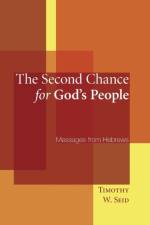
Description:For centuries the New Testament book of Hebrews has been interpreted as though it had been written for Jewish Christians in danger of lapsing back into legalism and religious ceremony. This view is now being challenged by current scholarship. Rather than attacking the Old Testament and Judaism, the author of Hebrews praises the person and work of Jesus through a series of comparisons on which he bases exhortations and warnings to the present people of God. Hebrews urges God's people to learn from past mistakes and failures, and to take up the challenge in difficult times to live faithfully in the new relationship to God through Jesus, God's Son.In The Second Chance for God's People: Messages from Hebrews, Quaker pastor and professor Timothy W. Seid encourages today's church to respond to the challenge of Hebrews: first individually by progressing in spiritual and moral maturity, and second collectively by being God's faithful people in the world. In the light of ancient Greek language and rhetoric after having extensively researched Hebrews, Seid interprets the text of Hebrews section by section in an accessible and nontechnical way while also illustrating and applying the meaning of the text for the contemporary church.Endorsements:Honoring the attention the author of Hebrews gives to hearing and responding to the word of God speaking through prophets, a Son, and still through the Spirit, Timothy Seid offers an exposition of this early Christian sermon in perhaps the most appropriate form -- a series of sermons inviting contemporary hearers to attend to what the Spirit is saying. Combining the fruits of his doctoral work on the rhetorical comparisons in Hebrews and years of preaching experience, Seid offers a a collection that will inspire pastors in their own proclamation and disciples in their appropriation of this rich and challenging text.David A. deSilva, author of Perseverance in Gratitude: A Socio-Rhetorical Commentary on the Epistle ""To the Hebrews"" (2000) and An Introduction to the New Testament: Contexts, Methods and Ministry Formation (2004).""In The Second Chance for God's People, Tim Seid . . . has worked his way through the book of Hebrews and the book of Hebrews has worked its way through him . . . He offers the fruit of critical analysis and commentary in terms . . . easily understood together with illustrations from popular culture and everyday life as well as practical applications."" Cynthia Long Westfall, author of Discourse Analysis of the Letter to the Hebrews""[This Hebrews] commentary combines explanation of the book's details with a winsome style and generous use of rich illustrations. The modern church is in great need of Hebrews' relevant messages, and Seid's readable commentary should make those messages both accessible and . . . applicable.""George H. Guthrie, Union University, Jackson, Tennessee""Timothy Seid has combined the scholar's insights with the pastor's concern . . . The result is a . . . valuable resource for lay readers and church study groups. By . . . clarifying his exegetical insights with illustrations from movies, literature, and his own experience, he shows that Hebrews is a word that is 'living and active.'""James W. Thompson, author of The Beginnings of Christian Philosophy: The Epistle to the Hebrews About the Contributor(s):Tim Seid is Associate Dean and Assistant Professor of New Testament Studies at Earlham School of Religion in Richmond, Indiana. He is also a pastoral minister at Salem Friends Meeting in Liberty, Indiana.
Abonner på vårt nyhetsbrev og få rabatter og inspirasjon til din neste leseopplevelse.
Ved å abonnere godtar du vår personvernerklæring.