









Gjør som tusenvis av andre bokelskere
Abonner på vårt nyhetsbrev og få rabatter og inspirasjon til din neste leseopplevelse.
Ved å abonnere godtar du vår personvernerklæring.Du kan når som helst melde deg av våre nyhetsbrev.

An African Tree of Life demonstrates how mission involves not only a ""bringing-to"" a people, but a ""discovering-of"" those deep symbols in human culture and God's creation that, in the light of the gospel, draw humanity to Christ. This book, in a scholarly yet intriguing way, explores the stories and rituals of the Gbaya people of the Cameroon and the Central African Republic. These deep symbols are typically centered not in the esoteric or exotic but in the familiar and everyday. Christensen focuses on the especial importance of the peace-bringing tree of life--the sore tree--central to the lives and worship of the Gbaya.""Gbaya Christians,"" says Christensen, ""offer to North American Christians fresh and hope-filled images, rich metaphors, new and yet familiar to us."" Thus, An African Tree of Life is an important book not only for theologians, missiologists, and Africanists but for all those concerned with issues of contextualization and seeking life-giving symbols in the quest to communicate the gospel message.""Shows how a single root metaphor--the sore tree--branches forth into elegant philosophies of salvation. By tracing the ramifications of this creative image into daily affairs, Christensen leads readers into an understanding of a life that is fully Christian and fully African. His meditations pose important questions for theologians and historians of religion about the role that cultural diversity plays in Christian revelation and that cultural contact with Christianity plays in revitalizing religious traditions.""--Lawrence E. Sullivan, University of Chicago""A valuable work of ethnography . . . [which] engages in a detailed and anthropologically informed way with the complexities of Gbaya religious belief and conveys a clear picture of Gbaya Christians' interpretation of the Christian message using symbols drawn from their own culture."" --Philip Burnham, University College, London""How do the local cultural riches bring us newly into connection with the universal? . . . [An African Tree of Life] works out a methodology and provides brilliant and moving examples which could enrich the whole church and not just the Gbaya church."" --Gordon W. Lathrop, Lutheran Theological Seminary""Particularly [valuable] to people who may be preparing themselves for service in a cross-cultural or multicultural milieu."" --Paul Nostbakken, Division for World Mission, Evangelical Lutheran Church in Canada""Important not only for those interested in current African theology, but also for anyone who wants to see how the very best of contextual theologies are being developed today."" --Robert J. Schreiter, author, Constructing Local TheologiesThomas G. Christensen has a teaching ministry in West Africa. He is Director of the Ecole de Theologie, Meiganga, Cameroon.
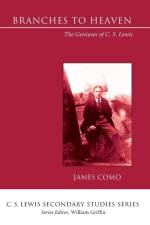
Of Edmund Spenser, C. S. Lewis wrote, "his work is one, like a growing thing, a tree with branches to heaven and roots to hell. And in between these two extremes comes all the multiplicity of human life." This book seeks to demonstrate the aptness of that quotation when applied to Lewis himself. From his deepest emotional and psychological landscape, to his prevailing temperament, and then to his training, Lewis marshaled his magnificent rhetorical skills on behalf of his vocation: to make Christianity a reasonable and inviting alternative to doubters. In this--and through the many genres of which he was a master--he never wavered. These are the branches--"the available means of persuasion," as Aristotle put it. Sources, influences, experience and his very self: these are the roots. A close look at these, with a combination of argument, critical analysis, and some fresh connections, finally yield an unexpected portrait. C. S. Lewis and his work are indeed one, with deeper roots and loftier branches than the current reputation of the master and his avuncular persona suggest.
The inerrancy of God's Word has been attacked throughout church history. Today's assaults are unique since neo-evangelicals now surrender to post-modernistic ideas of history and historical-critical ideologies that assault this vital doctrine. They seek to redefine the orthodox meaning of inerrancy. Since the signing of the Chicago Statements, troubling signs have once again appeared in recent years among many who either did not fight the battles for the inerrancy of Scripture as did the International Council on Biblical Inerrancy, or who do not remember the troubling times that caused their development. The nature and definition of "inerrancy" are now being changed to include ideas of fallibility. History is forgotten. The need arises for sounding the alarm for Vital Issues in Inerrancy. Evangelical schools and churches that broke away earlier to defend inerrancy surrender now to academic prestige and scholarly fads instead of faithfulness to God's inerrant Word. The contributors pray that the Lord will raise up a new generation with the spiritual fervency of the International Council on Biblical Inerrancy to uphold the inerrancy of God's Word: Isaiah 40:8--"The grass withers, the flower fades, But the word of our God stands forever."
This book calls Christians to resist meanness, divisiveness, and dogmatism in the public square by enacting love, attending to moral ambiguity, and practicing theological humility - in other words, to transform politics by refusing to play politics.Ellen Ott Marshall is Associate Professor of Christian Ethics and Conflict Transformation at Candler School of Theology, Emory University.
The ramifications of the crucifixion of Jesus by Jews are still felt deeply today. Discussion of Judaism and Christianity, Israelis and Palestinians, and the Jewish heritage of Jesus evoke high-level emotional responses from Christians and non-Christians. Discussion becomes heated argument as factions divide and take sides.Centuries-old feelings of fear, anger, hostility, resentment, repression, and blame fan the flames of unrest and disagreement.Jesus the Jew speaks to these issues. Markus Barth addresses Jews and Christians, in fact, everyone who is looking for a new or deepened understanding of Israel and of the church, especially in respect to servicing truth, justice, freedom, and peace.Barth considers two major areas of conflict--What Does It Mean That Jesus Is a Jew? and Israel and the Palestinians. He explores biblical testimony, the uniqueness of Jesus, and Christian responsibility. He deals with the protests and arguments of Arab scholars, biblical scholars, and modern journalists.Jesus and the Jew offers an insightful look at tradition, history, and the Scriptures to provide a perspective through which Christians, Jews, Arabs, and Moslems may learn to accept each other.""For Christians there is no loyalty to Jesus, the great brother of all humans, without a critical solidarity with all the Jewish brothers who are living today, particularly with the Israelis who are fighting for survival. There is, however, also for the Israelis no other way to survival--and for Christians no other way to support them--than by reflecting anew about faith and loyalty and about a structuring of the relationship to the Palestinians.I offer information that stems from the Bible, other books, daily news, and also personal encounters. The intention is to discuss priorities, fight against ignorance and prejudices, and keep up the hope for peace. The combination of biblical observations with a call to repentance and engagement have been received with various reactions from approval to passionate protest. I invite you to ponder both of the major questions addressed in these pages.""--Markus Barth""Barth has expressed very well a legitimate biblical and Christian point of view, and many people will be helped and instructed by reading Jesus the Jew.""--W. F. Stinespring, Professor Emeritus of Old Testament Semitics, Duke UniversityMarkus Barth (1915-1994) studied Protestant theology in Bern Basel, Berlin, and Edinburgh, and received his ThD from the University of Goettingen in 1947. He served as pastor in Bubendorf, Switzerland, from 1940-1953. Thereafter, he taught New Testament at theological schools in Dubuque, Chicago, Pittsburgh, and Basel. His books include The Broken Wall, Conversation with the Bible, and Jesus the Jew.
Overview The early church leaders were prolific in their writing and historical documentation. While some of this work has been canonized, much has been forgotten. The Text and Studies: Contributions to Biblical and Patristic Literature collection resurrects these documents in a renewed and focused study, attempting to glean the wisdom and insight of the ancients. These volumes dig deep into apocryphal literature with critical analyses, close readings, and examinations of the original manuscripts.
Written while he was in exile, 'The Bazaar of Heracleides' was Nestorius' attempt to give an account of his thought in the face of condemnation. The book is written in dialogue form in order to advance Nestorius' basic Christological ideas. The Incarnation is the union of God and human, the nature (ousia) of each being complete and remaining distinct from the other. Nestorius asserts that the two natures are united in one prosopon, so there is one Son, the Lord Jesus Christ. The prosopon of the man Jesus and that of God are the same and they are both present in the one prosopon of Jesus Christ. Jesus is born of the Virgin Mary, but God the Word is not born, and does not grow, suffer, or die. Hence, Mary is not Theotokos, God-bearer. This assertion, according to Nestorius, does not mean that there are two Sons, or two Christs.
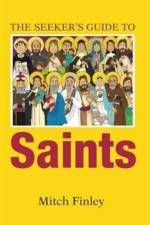
Who were the saints and what is it about them that causes people all over the world to remember them? What were their stories, motivations, passions--and shortcomings? This informative, delightful, inspiring book reveals the truth behind the misconceptions and the mystique in a survey of saints throughout the history of the Church. The stories included here emphasize that, although the saints were often flawed and quirky individuals, what made them saintly above all else was their dedication to faith. They had a ""passionate, extraordinary, pull-out-all-the-stops devotion,"" writes award-winning Catholic author Mitch Finley, and a desire for truth that is not unlike our own.""[The Seeker's Guide to Saints] is a book that Christians of all denominations can not only enjoy reading but can profit from spiritually.""--Fr. Joseph F. Girzone, author of The Joshua Series""There is nothing so helpful to a seeker as the companionship of fellow seekers. That is what Mitch Finley provides in this helpful and informative guide to the saints.""--Robert Ellsberg, author of All Saints: Daily Reflections on Saints, Prophets, and Witnesses for Our Time""Highly recommended for those who find the subject of saints intriguing or puzzling.""--Marlene Halpin, OP, educator and author of 189 Ways to Contact God and The Ball of Red StringMitch Finley is the author of more than 30 books on themes of interest to Catholic readers, including It's Not the Same Without You: Coming Home to the Catholic Church, The Rosary Handbook, and Key Moments in Church History. He earned a BA in Religious Studies from Santa Clara University and an MA in Theology from Marquette University. To learn more visit www.mitchandkathyfinley.com.
In many ways, this careful analysis is an overture to Old Testament theology, covering the major themes of the Hebrew Bible. This welcome cross-disciplinary study deftly shows the extent to which current theological understandings of the Old Testament often resonate with process categories. At the same time, Gnuse shows how the latter open up even wider vistas in our efforts to probe the heart of the biblical message. --Terence E. Fretheim, Luther Seminary Robert Gnuse writes with a fine knowledge of the Hebrew Scriptures and of process theology. He observes that many process themes have already been noted by scholars of the Hebrew Scriptures, and he is especially persuasive in showing how a process perspective can disclose the power of these scriptures to today's readers. --William A. Beardslee, Emory University emeritus, and Director of the Process and Faith Programs, Center for Process Studies This book carries thought about the relation of contemporary theology and the Old Testament to a new level. Gnuse sees that as we enter a new epoch of thought, we have new opportunities to integrate contemporary thinking with our understanding of ancient Hebrew history, with such biblical doctrines as God, creation, covenant, and prophecy, and also with the history of transmission of the texts. He sees process theology as articulating the contemporary mind and offering the chance to integrate that with cutting-edge Old Testament scholarship. What has previously been proposed in bits and pieces is here spelled out with systematic thoroughness. --John B. Cobb, Jr., Claremont School of Theology
The Arab Awakening and other nonviolent insurrections have often failed to produce lasting democratic change. A believer in empowerment, Lakey proposes a stage-by-stage developmental framework to get better, more transformational results. Still incorporating the nonviolent coercive force that has brought down dictators, Lakey uses historical best practices from movements to show how people can grow a revolution that roots itself even while it confronts. The five stages begin with consciousness change, lifting an intersectional vision that inspires and provides the basis for a critical mass to join the movement as it pushes through each developmental stage. Lakey shows how to reconcile pre-figurative alternative institutions with confrontive direct action teams, making the most of inherent synergistic potentials. With actual stories from confrontation with violent authorities he describes what works best for unifying and building the movement to the point where it can carry out the mass noncooperation that opens a power vacuum. Earlier democratic organizing structures--growing as the strategy unfolds--can then fill the vacuum. This stage prevents a relapse into the old oppression and defends the new society against counterrevolutionary forces. Although focused on how each society can realize its own revolution, this book acknowledges the context of global power and proposes a vision for transformed world institutions that are on the side of peace and justice. The principles in the book have particular application in the climate crisis humanity now faces, which is why the book describes a living revolution.
Front-ranking theologians speak out on the crisis of biblical authority and interpretation in the church, focusing in particular on the adequacy of the historical-critical method of hermeneutics. The essays in this volume address from various perspectives the notorious gap between the historical­ critical approach to the study of the Bible and the church''s liturgical and dogmatic transmission of biblical faith. The authors, following the central theme suggested by Brevard S. Childs''s ""canonical method"" of biblical interpretation, argue that the historical-critical method does not suffice of itself apart from faith and the church.""These vigorously written and boldly argued essays are not to be missed by anyone who cares about the vitality and authenticity of the church''s life. Many will disagree with them--perhaps vehemently--but those who do should be prepared to think as seriously and as deeply as these theologians have about the role of the Bible in the church.""-LEANDER E. KECK, Yale Divinity School""A compelling account of the dilemma caused by historical criticism of the Bible in the life of the contemporary church. An impressive array of scholarly authorities--Catholic, Protestant, and Orthodox--have come together to argue that while historical criticism is indispensable to the under­ standing of Scripture, it endangers Christian faith when it is used by educational and bureaucratic elites in mainline churches to accommodate Christ to the ideological demands of secular America.""-WALTER SUNDBERG, Luther SeminaryCarl Edward Braaten is an ordained minister of the Evangelical Lutheran Church in America. He served as a parish pastor of the Lutheran Church of the Messiah in Minneapolis from 1958-1961. From 1961-1991 Braaten served as a professor of systematic theology at the Lutheran School of Theology at Chicago. In 1992 he, together with Robert W. Jenson, founded the Center for Catholic and Evangelical Theology in Northfield, Minnesota. For fifteen years he served as the executive director of the Center, an ecumenical organization whose mission is to cultivate faithfulness to the gospel of Jesus Christ throughout the churches, and also as the editor-in-chief of Pro Ecclesia, a journal of theology published by the Center. Braaten has authored and edited over fifty theological books, including Principles of Lutheran Theology (Fortress, 1983), The Future of God: The Revolutionary Dynamics of Hope (Harper & Row, 1969), Mother Church: Ecclesiology and Ecumenism (Fortress, 1998), Because of Christ: Memoirs of a Lutheran Theologian (Eerdmans, 2010), and Who Is Jesus? Disputed Questions and Answers (Eerdmans, 2011), as well as hundreds of articles and editorials in various academic journals.Braaten was born on January 3, 1929 in St. Paul, Minnesota. He grew up on the island of Madagascar where his parents served as missionaries of the Norwegian Lutheran Church in America. He graduated from Augustana Academy, a Lutheran high school in Canton, South Dakota. He received degrees from St. Olaf College (BA), Luther Seminary (MDiv), and Harvard University Divinity School (ThD). In 1951 he was a Fulbright scholar at the University of Paris (Sorbonne), in 1957 a doctoral student at the University of Heidelberg where he wrote his dissertation, and in 1967 a Guggenheim Fellow at Oxford University. In 1974 he spent a sabbatical making a worldwide lecture tour of various colleges and seminaries in Japan, China, India, Kenya, Tanzania, Madagascar, Peru, Chile, Argentina, Brazil, and Mexico. This tour resulted in a book on the universal mission of the church entitled, The Flaming Center (Fortress, 1977).ROBERT W. JENSON is professor of religion at St. Olaf College in Northfield, Minnesota, and associate director of the Center for Catholic and Evangelical Theology. He is coeditor of the book Either/Or and author of Essays in Theology of Culture.
The period of history covered by this volume is full both of interest and importance. It embraces about seventy years, and treats of that grave period in the history of the Greeks when Sparta overran and subdued Athens, and destroyed its rule and power everywhere. This was followed by the rise and success for a time of Thebes. It was the transition period from the glories of the Athenian Empire to the degradation of the Macedonian Conquest. The stirring events of the time are remarkably well related, and the characters of great men who took a part in the momentous struggle are well portrayed. Spartan rule was a tyrannical and corrupt rule. It was under this rule that Socrates was condemned to death, and we have placed before us a vivid picture of the causes that led to that eminent man''s condemnation. The characters of the other important actors in the history of that time are equally well brought out, and the reader rises from the perusal of the work ready to carry his research further into more voluminous pages, with an increased zest in consequence of having had the whole train of events passed in a clear and rapid review before him. The Greeks carried their wars over that part of Western Asia where the Russians are now attacking the Turks, and Russians are now attacking the Turks, and the changes in modern nomenclature of the maps are so great that nothing but the conformation of the country remains the same. There are five maps and an excellent Index.
The book has more than historical interest for Anglicans. It has a distinct contribution to make to the doctrine of the church and the theology of minstry. -- James E. Griffiss Professor of Systematic Theology at Nashota House A classic theological study worthy of serious reading and thought. Ramsey's careful--often moving and beautiful--exposition of his 'underlying conviction' includes deep probing of the Bible, a survey of the unfolding understanding of Christ and the church, a profound insight into the being of the church as a dying and rising again with Christ, an appreciation of Eastern Orthodox thought, a testimonial to the positive intentions--even the necessity--of the Reformers, a theologically-grounded advocacy of renewed liturgical worship, and a passion for the reunion of all Christians. --Andrew F. Wissemann Bishop of Western Massachusetts from the Preface to the American Edition
Bengel's work on the New Testament is a valuable resource for modern students of the Scriptures. In 1734, he published a carefully prepared Greek text of the New Testament with an "Apparatus criticus," which formed the point of departure for modern New Testament textual criticism. His famous canon was: "The more difficult reading is to be preferred." This critical work was followed by an exegetical one, Gnomon Novi Testamenti (Tubingen, 1742). As a brief and suggestive commentary on the New Testament, the Gnomon is still of considerable use today. Bengel's chief principle of interpretation, briefly stated, is to read nothing into the Scriptures, but to draw everything from them, and suffer nothing to remain hidden that is really in them. His Gnomon exerted considerable influence on exegesis in Germany, and John Wesley translated most of its notes and incorporated them into his Annotatory Notes upon the New Testament (London, 1755).
Bengel's work on the New Testament is a valuable resource for modern students of the Scriptures. In 1734, he published a carefully prepared Greek text of the New Testament with an "Apparatus criticus," which formed the point of departure for modern New Testament textual criticism. His famous canon was: "The more difficult reading is to be preferred." This critical work was followed by an exegetical one, Gnomon Novi Testamenti (Tubingen, 1742). As a brief and suggestive commentary on the New Testament, the Gnomon is still of considerable use today. Bengel's chief principle of interpretation, briefly stated, is to read nothing into the Scriptures, but to draw everything from them, and suffer nothing to remain hidden that is really in them. His Gnomon exerted considerable influence on exegesis in Germany, and John Wesley translated most of its notes and incorporated them into his Annotatory Notes upon the New Testament (London, 1755).
Bengel's work on the New Testament is a valuable resource for modern students of the Scriptures. In 1734, he published a carefully prepared Greek text of the New Testament with an "Apparatus criticus," which formed the point of departure for modern New Testament textual criticism. His famous canon was: "The more difficult reading is to be preferred." This critical work was followed by an exegetical one, Gnomon Novi Testamenti (Tubingen, 1742). As a brief and suggestive commentary on the New Testament, the Gnomon is still of considerable use today. Bengel's chief principle of interpretation, briefly stated, is to read nothing into the Scriptures, but to draw everything from them, and suffer nothing to remain hidden that is really in them. His Gnomon exerted considerable influence on exegesis in Germany, and John Wesley translated most of its notes and incorporated them into his Annotatory Notes upon the New Testament (London, 1755).
Bengel's work on the New Testament is a valuable resource for modern students of the Scriptures. In 1734, he published a carefully prepared Greek text of the New Testament with an "Apparatus criticus," which formed the point of departure for modern New Testament textual criticism. His famous canon was: "The more difficult reading is to be preferred." This critical work was followed by an exegetical one, Gnomon Novi Testamenti (Tubingen, 1742). As a brief and suggestive commentary on the New Testament, the Gnomon is still of considerable use today. Bengel's chief principle of interpretation, briefly stated, is to read nothing into the Scriptures, but to draw everything from them, and suffer nothing to remain hidden that is really in them. His Gnomon exerted considerable influence on exegesis in Germany, and John Wesley translated most of its notes and incorporated them into his Annotatory Notes upon the New Testament (London, 1755).
Bengel's work on the New Testament is a valuable resource for modern students of the Scriptures. In 1734, he published a carefully prepared Greek text of the New Testament with an "Apparatus criticus," which formed the point of departure for modern New Testament textual criticism. His famous canon was: "The more difficult reading is to be preferred." This critical work was followed by an exegetical one, Gnomon Novi Testamenti (Tubingen, 1742). As a brief and suggestive commentary on the New Testament, the Gnomon is still of considerable use today. Bengel's chief principle of interpretation, briefly stated, is to read nothing into the Scriptures, but to draw everything from them, and suffer nothing to remain hidden that is really in them. His Gnomon exerted considerable influence on exegesis in Germany, and John Wesley translated most of its notes and incorporated them into his Annotatory Notes upon the New Testament (London, 1755).
""Faith means making a virtue out of not thinking. . . . And those who preach faith, and enable and elevate it are intellectual slaveholders, keeping mankind in a bondage to fantasy and nonsense that has spawned and justified so much lunacy and destruction."" -- Bill MaherMany seem unaware that contemporary critiques of Christianity are relevant mostly to its modern offshoots (whose followers have to some extent earned Bill Maher''s unflattering caricatures). To its detriment, Christianity is increasingly identified in people''s minds with these more recent expressions. As a result, a growing number of people are turning away from Christianity and, indeed, religious faith altogether.Drawing from an eclectic group of theologians, clergy members, monastics, and lay scholars, this edited volume re-introduces Christianity to a modern audience. It presents a more authentic, experiential side of Christianity to the religious skeptic; a side that eschews blind faith, legalism, and judgment; a side that is rarely given a hearing in the ongoing debate with today''s skeptics. Re-Introducing Christianity is also directed at modern Christians, and refutes their most frequently expressed criticisms of what the contributors boldly, but humbly, call the Apostolic Faith.Amir Azarvan is a political science professor at Georgia Gwinnett College in Lawrenceville, Georgia, and is the editor of Contemporary Faith Magazine (www.contemporaryfaith.com).
As is apparent from the title of this book, I am not writing about all the miracles in the Gospel of Matthew but only about the mighty acts which Jesus is said to perform (and which his followers perform in his name). I do not take up the miracles which happen to him (the virgin birth, the resurrection, the epiphanies of the baptism and transfiguration, and the like).--From the IntroductionBirger Gerhardsson (1926-2013) was a Swedish biblical scholar and professor emeritus in the Faculty of Theology at Lund University, Sweden. He also authored Memory and Manuscript and The Reliability of the Gospel Tradition.
Despite major advances in women's history, literary history, and the history of the book, the intellectual life of women in colonial America has been a largely neglected area of scholarship. Kevin J. Hayes draws upon an impressive array of primary materials to describe in detail the kinds of books these women read and the reasons why they read them.
To many observers, folklore and book culture may appear to be opposites. Folklore, after all, involves orally circulated stories and traditions while book culture is concerned with the transmission of written texts. However, as Kevin J. Hayes points out, there are many instances where the two intersect, and exploring those intersections is the purpose of this fascinating and provocative study. Hayes shows that the acquisition of knowledge and the ownership of books have not displaced folklore but instead have given rise to new beliefs and superstitions. Some books have generated new proverbs; others have fostered their own legends. Occasionally the book has served as an important motif in folklore, and in one folk genre--the flyleaf rhyme--the book itself has become the place where folklore occurs, thus indicating a lively interaction between folk, print, and manuscript culture. The author begins by examining the tradition of the Volksbucher--cheaply printed books, often concerned with the occult, whose powers are said to transcend the written text. Hayes looks in depth at one particular Volksbuch--The Sixth and Seventh Books of Moses--and proceeds, in subsequent chapters, to discuss a variety of folktales and legends, placing them within the context of book culture and the history of education. He closes with an examination of flyleaf rhymes, the little verses that book owners have inscribed in their books, and considers what they reveal about the identity of the inscribers as well as about attitudes toward book lending, book borrowing, and the circulation of knowledge. Solidly researched and venturing into areas long neglected by scholars. Folklore and Book Culture is a work that will engage not only folklorists but historians and literary scholars as well.
The triune God of grace, James B. Torrance tirelessly insisted, is the true agent to transform worship, mission, and society. Unfortunately, the church often lapses into moralism and legalism, or exhortations and condemnations, rather than witnessing to the sole-sufficient grace of God in Christ. When we neglect the Trinity, a de facto unitarianism throws the church back onto its own existence and resources. In Christ, however, the church participates through the Spirit in union with Christ''s communion with the Father. By so doing, it also participates in Christ''s mission to the world. The essays of this volume articulate and extend Torrance''s evangelical theology, which draws attention away from ourselves and toward the triune God who is for us and for the world.""James B. Torrance was the professor with the pastor''s heart. As his student at New College, Edinburgh, I particularly valued his emphasis on unconditional grace. ''The indicatives are prior to the imperatives,'' he would often say. In other words, what God has already done for us in Christ must be proclaimed as gospel first before we talk about what our response should be. His focus was on teaching more than publishing, but this book will help continue his evangelical emphasis on worship, community, and the triune God of grace.""--Thomas Noble, Nazarene Theological Seminary, Kansas City, and Nazarene Theological College, Manchester""James B. Torrance was one of the finest teachers of theology of his generation. His clarity of thought, extroverted love for the Lord Jesus, and gentle pastoral spirit all combined to leave a profound mark on those who sat in his classrooms. The urgency of his denunciation of apartheid in South Africa based on the reconciling work of God in Christ marked him as a prophetic voice among his peers. This timely collection of essays is a fine statement of the respect that he holds and his enduring legacy that continues among us.""--Andrew Purves, Pittsburgh Theological SeminaryTodd Speidell (PhD, Fuller Theological Seminary) is Instructor of Theology at Montreat College, Editor of Participatio: The Journal of the Thomas F. Torrance Theological Fellowship, and General Editor of The Ray S. Anderson Collection (Wipf & Stock).
This is the second of three essays in fundamental theology--along with Questioning Back (1985) and Conventional and Absolute Truth (2015)--which attempt to reassess the status of Christian doctrinal language within the contemporary ""regime of truth."" Reflecting on the reality of religious pluralism as the governing horizon of theology today, it proposes that the very notion of religious truth needs to be rethought. In a dialogue with Derrida it argues that the effects of dissemination and differance have indeed unsettled any project of pinning down truth in a definitive, substantial way, while at the same time it defends the objectivity of concretely situated truth-judgments as more than merely an effect of the play of language. The Buddhist conceptions of emptiness, conventional truth, and skillful means--further explored in Philosophie occidentale et concepts bouddhistes (2011)--allow a positive religious significance to be found in this mutation in the status of Christian truth.""The Christian faith at present exists in the midst of a Western philosophical critique of truth, meaning and reference in language, and simultaneously in a pluralist society where other faiths may no longer be ignored. Joseph O''Leary addresses both those issues.""--Studies in World ChristianityJoseph S. O''Leary is Edward J. Sexton Professor Emeritus of Philosophy at Claremont McKenna College. He has taught at Duquesne University and Notre Dame, has contributed to theological journals in English and French, and is coeditor of Heidegger et la question de Dieu. He is presently doing research in Japan on the relationship of the Kyoto philosophers to the Buddhist tradition.
Porneia means fornication, unchastity, desire for another''s body. Drawing on Roman and Greek works of science, medicine, gynecology, and law and on Christian and pagan religious texts, Aline Rouselle discovers the intimate fears, passions, superstitions, and ambitions of the people of the Mediterranean world during the first four centuries AD. The first part of the book describes Roman notions of male and female sexuality; attitudes to fertility, inheritance, child care, and training; legal restraints on sexual behavior; concubinage and divorce; and the extraordinary rituals of orgy, castration and sacrifice associated with ancient rites of fertility and spirituality. Yet the sexual problems of antiquity will be seen in many respects to be almost exactly those of the contemporary West--from fear of impotence to the concern of parents about teenage misbehavior.The second part of the work is concerned with the impact of Christian ideas upon a settled pagan tradition. Abstinence, once associated with the enhancement of fertility, becomes the key to salvation. The first monastic regimes, and the means by which men and women curtailed and overcame their desire for one another, are described in detail. Centuries of concern with fertility became, in this revolutionary period, an obsession with chastity in this world and a secure place in the next.This is a tour de force of scholarship and historical anthropology. The author''s argument may be controversial, but few can fail to be fascinated by the evidence she marshals to support it.
Abonner på vårt nyhetsbrev og få rabatter og inspirasjon til din neste leseopplevelse.
Ved å abonnere godtar du vår personvernerklæring.