













Gjør som tusenvis av andre bokelskere
Abonner på vårt nyhetsbrev og få rabatter og inspirasjon til din neste leseopplevelse.
Ved å abonnere godtar du vår personvernerklæring.Du kan når som helst melde deg av våre nyhetsbrev.

Description:C. S. Lewis is one of the best-loved and most engaging Christian writers of recent times, and he continues to be a powerful defender of the faith. It is in his imaginative fiction that his genius finds its fullest expression and makes its most lasting theological contribution. Famously, Lewis had friends who, like him, employed powerfully creative imaginations to explore the profundities of Christian thought and their struggles with their faith. These illuminating essays on C. S. Lewis, J. R. R. Tolkien, Charles Williams, Dorothy L. Sayers, Rose Macaulay, and Austin Farrer are written by an international team of Lewis scholars.Endorsements:""These essays helpfully remind us how and why imagination should matter to people of faith. The contributors make a compelling case that C. S. Lewis and his circle were not merely tellers of tales but theologians in their own right, whose stories and images advance faith''s search for understanding.""-Kevin J. VanhoozerBlanchard Professor of Theology, Wheaton College and Graduate School ""In this tidy collection several of the most astute and theologically competent readers of C. S. Lewis and his friends tackle the role and register of the imagination as a theological property of mind. The result is a thoughtful, mature, and illuminating insight for any serious readers of this group of writers.""-David Lyle Jeffrey, FRSCDistinguished Professor of Literature and the Humanities, Baylor University""There are undoubtedly too many books published on C. S. Lewis and his friends, so why yet another? In this case, four very good reasons indeed: the caliber of the contributors, the quality of the chapters, the range of figures considered, and--perhaps most of all--the consistent and insistent thematic focus on how imagination and reason interact within the life of faith. This book is thus of interest for its theme as much as for its topic. Highly recommended!"" -Robert MacSwainThe School of Theology, University of the South, Sewanee, Tennessee, and co-editor of The Cambridge Companion to C. S. Lewis ""We have much to learn from the authors discussed here, all of them faithful practitioners of the imaginative arts. This well-grounded, thought-provoking collection of essays helps us to that end and does so in a scholarly yet accessible manner. A book worth owning, reading and re-reading.""-Michael WardChaplain of St Peter''s College, Oxford, and author of Planet Narnia: The Seven Heavens in the Imagination of C.S. Lewis""C. S. Lewis and Friends is particularly strong on the subjects of faith, reason, and their relation. What members of Lewis''s circle have to say on these topics is of contemporary relevance at every turn.... The authors of this book typically strike just the right balance between a survey of the figure at the heart of the particular chapter and a presentation of some specific examples of their theological interests... .The result is an ideal, more theological, book to put alongside Humphrey Carpenter''s group biography The Inklings."" -The Church Times (London)About the Contributor(s):David Hein is Professor of Religion and Philosophy at Hood College, Maryland.Edward Hugh Henderson is Professor of Philosophy and Christian Studies at Louisiana State University.
Endorsements:""It is difficult to exaggerate the profundity and complexity of the challenge presented to Christianity by contemporary feminism. In this book we finally have an argument that meets this challenge with the seriousness it deserves. Reviewing a vast range of feminist literature, Francis Martin is eminently fair in his analysis. His biblically based criticisms are strong but carefully qualified and are placed in the light of what he argues are some weaknesses in post-Enlightenment thought more generally. A much-needed study, one that will become indispensable reading in the years to come."" David L. SchindlerJohn Paul II Institute ""As the title indicates, feminists have posed a question for the Christian theological tradition. In seeking to locate the nature, scope, and purpose of the feminist question, this book gives legitimacy to the whole Christian feminist enterprise while at the same time engaging it in an exhilarating dialogue. The very breadth of Martin''s exploration points to the radical quality of the question. One hopes that a renewed dialogue ""in the light of Christian tradition"" will take place on many fronts."" Mary T. Malone University of St. Jerome''s College ""An important clarification of, and corrective to, the feminist theological quest. The Feminist Question provocatively exposes the secularist foundations on which feminism builds both its critique of Judaism and Christianity as patriarchal and its hermeneutics of biblical texts as androcentric. Martin weaves scriptural, patristic, conciliar, papal, and systematic theological traditions into a dialectical discernment of the works of major feminist theologians. He illustrates well the gentle wisdom and profound understanding that the light of faith in God''s Word brings to open minds and hearts."" Matthew L. Lamb Boston College ""Someone had to write this book! We can be grateful that it was Francis Martin. Those in the community of Christian scholars who find the conclusions of feminist theology troubling but do not want to dismiss its challenge will welcome his well-informed and incisive analysis and evaluation."" Sara Butler, M.S.B.T. Mundelein SeminaryAbout the Contributor(s):Francis Martin, a Roman Catholic priest, is Associate Professor of New Testament, Dominican House of Studies, Washington, District of Columbia, and Adjunct Professor of Biblical Studies, John Paul II Institute for Studies on Marriage and Family, Washington, District of Columbia. He has written numerous scholarly articles, reviews, and three books.
Description:Will God''s Leadership Principles Work for Me Today?What is God''s pattern for success?How can I develop my full potential?How can I motivate others?How do I set goals for myself and others?God has given believers in positions of leadership the answers to these and other vital questions. Through the example of one of history''s greatest leaders, Nehemiah, God has given us principles of leadership which work as effectively in today''s dynamic business world as they did centuries ago.Cyril Barber brings out these biblical principles in a clear and effective way, and he applies them to our contemporary world. By examining the challenges that Nehemiah faced, and looking at how he overcame them, the author shows how you can deal with the situations you face every day.This newly revised and expanded edition includes study questions which will help you apply the principles as you learn them.This is not another management book. It is a biblical leadership training course. The principles taught are essential for all in administrative positions: businesspeople, foremen, managers, supervisors, teachers, church leaders, and even parents.About the Contributor(s):Dr. Cyril J. Barber is pastor emeritus of Plymouth Church, Whittier, CA. He lives with his wife of fifty years in Hacienda Heights, CA. They have two sons, two daughters-in-law, and five grandchildren.
Description:Is the world really becoming one civilization? If so, will its religions merge? Or if Christianity has a unique authority, what are the presuppositions and content of the revelation which it embodies? And how must its institutions change in order that it may fulfill its mission to the nations?These are the questions asked, and to a surprising extent answered, by Lesslie Newbigin, one time Bishop of the Church of South India who lead the ""missionary"" studies sponsored by the World Council of Churches. All who are interested in the comparison of religions or in the mission of the Church, will value his presentation of vast and important themes.One of the thinkers criticized is Dr. Arnold Toynbee, who writes: ""A fine book . . . I particularly admire the way in which Bishop Newbigin states the case of people with whom he disagrees."" Another, Sir S. Radhakrishnan, writes: ""I have read it through with great interest. It is written with deep conviction and expresses the orthodox Christian point of view.""About the Contributor(s):The late Lesslie Newbigin was one of the twentieth century''s most influential Christian thinkers. A founding bishop of the Church in South India, he later served as an associate general secretary of the World Council of Churches, before being called back to southern India as Bishop in Madras in 1965.
Description:A timely look at how to combine reconciliation and justice in society after civil and political conflict.Endorsements:""One of the finest of a new generation of theologians has written a mature reflection on political forgiveness that constitutes a genuine contribution to a new realm of ethical thought."" --Walter Wink, author, The Human Being: Jesus and the Enigma of the Son of the Man ""When unelected regimes move to pluralistic democracies should the new government forgive the wrongdoing of its predecessors? This important volume answers that question. . . . Anyone involved or interested in the dramatic evolution of international human rights needs to read this fine book about forgiveness, reconciliation and reparations."" --Robert F. Drinan, SJ, Professor of Law, Georgetown University Law Center ""Russell Daye''s study of forgiveness and reconciliation in South Africa makes an important contribution to the theory and practice of conflict resolution, a field that is becoming increasingly relevant in today''s troubled world."" --Gregory Baum, Professor Emeritus, Religious Studies, McGill University About the Contributor(s):Russell Daye, an ordained minister of the United Church of Canada, is currently lead pastor at St. Andrews United Church in Halifax, Nova Scotia. He spent time as a lecturer in the Department of Theology and Ethics, Pacific Theological College, Suva, Fiji.
Description:Following his best seller, The Logic of Evangelism, this book takes further Professor Abraham''s belief that evangelism should involve taking the whole gospel to the whole person. The book reveals his understanding that evangelism is more than winning people for Christ--it is a process of discipleship, introducing new converts to all the riches of the Christian faith.Of course, anyone can undertake evangelism, but some do it with a slapstick attitude, as though they were throwing paint on canvas. In this book, Professor William Abraham declares that evangelism is an art. Evangelism is to be crafted with care, it is to be undertaken thoughtfully, it is to be placed carefully in the overall strategy of church life. Moreover, Christians are not made by throwing words at people, they are won by the care and love of a Christian community that takes seriously its traditions and its Bible.
Description:""A church free from state control and a state free from church control""--Such is one of the radical insights of a baptist vision of church and society.-- What exactly is a baptist vision of the church?-- What are the biblical, historical and theological roots of this approach to Christian community?-- What is the place of such a vision in the context of a global church that includes alternative notions of the body of Christ?Free Church, Free State is a textbook on baptist ways of being church and a proposal for the future of baptist churches in an ecumenical context. Nigel Wright argues that both baptist (small ''b'') and catholic (small ''c'') church traditions should seek to enrich and support each other as valid expressions of the body of Christ without sacrificing what they hold dear.Written for pastors, church planters, evangelists and preachers, Nigel Wright offers frameworks of thought for baptists and non-baptists in their journey together following Christ.Endorsements:""A disturbing study of our history and theology that demands openness and a willingness to change and enlarge our vision.""Denton Lotz, General Secretary, Baptist World Alliance""An accessible and non-polemical introduction to Baptist ecclesiology.""Paul Avis, General Secretary, the Council for Christian Unity of The Church of England""Deploys arguments deriving from history, theology and the sociology of religion to examine the nature of the church, its foundations, worship, life together and commitment to mission in the world.""John H. Y. Briggs, Senior Research Fellow in History, Regent''s Park College, Oxford""Demonstrates that the truly free church is at its best, when it is dissenting from a way that is not the way of God in order to conform to ways that are appropriate to a gospel community.""David Coffey, General Secretary of the Baptist Union of Great Britain, President Elect of the Baptist World AllianceAbout the Contributor(s):Nigel G. Wright has been Principal of Spurgeon''s College London since 2000. He is a former president of the Baptist Union of Great Britain and a widely published author.
Wesleyan churches, Pentecostal churches, and the modern charismatic movement trace their theological roots to John Wesley. Yet these groups have gone separate ways in interpreting the role of the Holy Spirit in the life of the church, often regarding one another with suspicion or distrust.In The Divided Flame, Dr. Howard Snyder, a Wesleyan minister, calls Wesleyans and charismatics to reexamine how they parted ways. He finds that they still have a great deal in common theologically, and he proposes that this common ground should serve as a basis for dialogue.""How does a Wesleyan dialogue with charismatic Christianity?"" asks Snyder. ""Rather than comparing our theology or practice point by point, we have chosen to address the central question that charismatic Christianity raises for us: In what sense is Christian experience, the church, charismatic? If the charismatic movement raises valid biblical questions for us--and it does--then it is more important to deal with those questions than merely to catalog the pluses and minuses of the movement.""This book reviews the history of Wesleyan and charismatic thought, evaluating them in light of Scripture''s norms for church life. A provocative study, The Divided Flame should bring fresh perspective to the controversy surrounding modern charismatic theology.Howard A. Snyder is Visiting Director of the Manchester Wesley Research Centre in Manchester, England. He has served as a pastor and as a professor at Asbury Theological Seminary (1996-2006), Tyndale Seminary in Toronto (2007-2012), and elsewhere. His books include The Problem of Wineskins, The Radical Wesley, Models of the Kingdom, and Salvation Means Creation Healed (with Joel Scandrett).Daniel V. Runyon is professor of English at Spring Arbor University, Spring Arbor, Michigan. He is editor of The Holy War: Annotated Companion to The Pilgrim''s Progress.
Endorsements:Wipf and Stock is to be congratulated for making Beverly Wildung Harrison''s Our Right to Choose newly available. Recognized as a classic in its field from its publication in 1983, Our Right to Choose is as compelling--and needed--today as it was then. - Nyla Rasmussen, RN, Maternal Child HealthLarry Rasmussen, Reinhold Niebuhr Professor Emeritus of Social Ethics,Union Theological Seminary, New York City""This historic book is as incisive, pertinent, timely and morally compelling as it was twenty-eight years ago. Harrison has both ethical purchase and feminist vision on ''The Issue of Our Age.'' Read it, learn, be convicted and act!""- Rev. Dr. Serene Jones, President of Union Theological Seminary""Decades after its initial publication, Beverly Wildung Harrison''s sex-positive, justice and social welfare affirming study of abortion remains a unique and trailblazing contribution to the field of Christian ethics. From the treatment of women''s procreation in the history of Western Christianity to the rhetoric of 1970s abortion politics, she offers meticulous critiques and constructive feminist Christian ideas sorely needed in today''s debates about abortion rights.""Traci C. West, author of Disruptive Christian Ethics: When Racism and Women''s Lives MatterAbout the Contributor(s):Two years after Our Right to Choose appeared in 1983, the world of Christian ethics was again impacted by Beverly Wildung Harrison''s second groundbreaking book, Making the Connections: Essays in Feminist Social Ethics, edited by Carol S. Robb (Beacon: 1985). Over the next fifteen years, until retiring in 1999 as the Carolyn Williams Beaird Professor of Christian Ethics at New York''s Union Theological Seminary, Harrison continued to teach and shape a methodology in feminist social ethics which attracted scores of graduate students, both men and women, who currently occupy professorships in ethics throughout the United States and elsewhere in the world. Her former students also include pastors in the United States and Europe and around the globe in countries as diverse as Australia, New Zealand, South Africa, Kenya, and Korea. Since her retirement, Beverly Harrison has continued to consult with former and current graduate students. In 2004, six of her former students worked with Harrison in publishing a commentary on her methodology, Justice in the Making: Feminist Social Ethics (Westminster/John Knox Press). Since 1999, Beverly Harrison has lived in an intentional community in the mountains of western North Carolina where, along with her longtime companion Carter Heyward and several other friends, she continues to work for justice in every venue possible, including active involvement in the Democratic Party and in movements for racial, economic, sexual, and gender justice. She has been particularly devoted to pro-choice work and LGBT justice efforts in the Presbyterian and Episcopal churches and in society at large. Harrison delights in the companionship of several dogs, cats, and horses!
""The Korean missions movement is perhaps the most significant story of the Church in the world over the past one hundred years. Today Korea can boast of being the leading sender of missionaries per head of population. Yet this movement has not been well integrated into the global mission community and also this community has at times failed to understand and learn from this tremendous work of God. I am excited that God has brought together a unique body of people to wrestle with these issues. This work will help bring about much needed collaboration and develop each other''s strengths in an environment of mutual respect.""--MALCOLM L. McGREGOR, SIM International Director""Accountability in Missions is a remarkable book, exploring the full range of mission accountability issues--strategic, financial, and relational--from both Korean and North American perspectives. This is global missiology made practical and accessible to all missions practitioners. The many articles that penetrate the mysteries of Korean and North American interaction especially make it a must-read book for all Koreans and North Americans working together.""--STEVE STRAUSS, Professor of Mission and Intercultural Studies, Dallas Theological Seminary""This collection of essays provides a biblical and theological basis for accountability and brings voices East and West, demonstrating that accountability--to God and to others--is a universal principle, not linked to one culture or context (i.e., Western). Further, the collection is eminently practical, addressing matters of governance (decision-making), finance, and personal integrity. To all mission leaders I say: read this book! Actually, read it but also find colleagues with whom to discuss and digest these principles and review our mission practices.""--GORDON T. SMITH, President, reSource Leadership International""The Korean missions movement is perhaps the most significant story of the Church in the world over the past one hundred years. Today Korea can boast of being the leading sender of missionaries per head of population. Yet this movement has not been well integrated into the global mission community and also this community has at times failed to understand and learn from this tremendous work of God. I am excited that God has brought together a unique body of people to wrestle with these issues. This work will help bring about much needed collaboration and develop each other''s strengths in an environment of mutual respect. ""-Malcolm L. McGregorSIM International Director""Accountability in Mission is a remarkable book, exploring the full range of mission accountability issues--strategic, financial, and relational--from both Korean and North American perspectives. This is global missiology made practical and accessible to all missions practitioners. The many articles that penetrate the mysteries of Korean and North American interaction especially make it a must-read book for all Koreans and North Americans working together.""-Steve StraussProfessor of Mission and Intercultural StudiesDallas Theological Seminary""This collection of essays provides a biblical and theological basis for accountability and brings voices east and west demonstrating that accountability--to God and to others--is a universal principle, not linked to one culture or context (i.e., western). Further, the collection is eminently practical, addressing matters of governance (decision-making), finance, and personal integrity. To all mission leaders I say: read this book! Actually, read it but also find colleagues with which to discuss and digest these principles and review our mission practices.""-Gordon T. SmithPresident, reSource Leadership InternationalJONATHAN BONK is the Executive Director of the Overseas Ministries Study Center, and Editor of the International Bulletin of Missionary Research. He is the author of Missions and Money: Affluence as a Western Missionary Problem (1991, 2006), and editor of the E
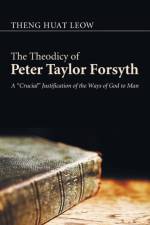
Description:The theodicy of the remarkable Scottish Congregationalist theologian Peter Taylor Forsyth has long been recognized as a vital and significant contribution to twentieth-century theology. Up until now, however, there has not been a substantial full-length treatment of Forsyth''s work on the problem of evil. The Theodicy of Peter Taylor Forsyth fills this lacuna by setting out, in a fairly systematic and comprehensive manner, Forsyth''s justification of God in the face of evil. In so doing, it also illuminates several other related areas of his thought, such as his epistemology and Christology, as well as his understanding of sin, the atonement, providence, divine passibility, human origins, and the God-world relationship.Bringing Forsyth''s approach to the subject into conversation with other prominent thinkers like Leibniz, Dostoyevsky, Camus, Moltmann, Hick, Bauckham, and Fiddes, this book also suggests ways in which Forsyth''s justification of God contributes to the current state of Christian theodicy. It highlights Forsyth''s ability to integrate insights from different approaches, even those that have hitherto generally been considered diametrically opposed notions. Forsyth''s theodicy therefore presents an integrative approach to the topic, with every theme flowing from and returning to a clear center: the cross of Christ. As the book also makes clear, Forsyth considers theodicy to be an immensely practical discipline, with significant implications for human life. In every sense, therefore, it constitutes a ""crucial"" justification of the ways of God to humanity.Endorsements:""Of all the theodicies published during World War I, P. T. Forsyth''s is the bravest and most significant. As one not inclined to book-cover hyperbole, I cordially welcome this book, which breaks new ground in the treatment of this crucial theme. No future study of Forsyth''s theodicy will be complete if account is not taken of the contextually grounded, bibliographically aware exposition so lucidly presented here.""-Alan P F SellMilton Keynes, UK""This valuable analysis of P. T. Forsyth''s work focuses on his significant 1916 wartime publication on theodicy. In doing so, it also offers a clear and consistent account of his wider theological contribution through dealing with themes of divine grace, the person and work of Christ, secondary acts of divine judgment, and universal human redemption. An informed and reflective study, this will establish Dr. Leow as one of the leading interpreters of P. T. Forsyth''s work today.""-David FergussonUniversity of EdinburghAbout the Contributor(s):Theng Huat Leow is a Lecturer in Theology at Trinity Theological College, Singapore.
"Description: Conservative Protestant views of Scripture have not moved much beyond the fundamentalist-modernist controversies of the early twentieth century. Today, discussions must evolve and become transparently conversant with recent scholarly developments. Interdisciplinary Perspectives on the Authority of Scripture provides contemporary reflections on the most pressing challenges facing inerrancy today. Whatever your current position, this volume will deepen your understanding of the authority of Scripture. TABLE OF CONTENTS and CONTRIBUTORS:Foreword by William Abraham / ixEditor''s Preface by Carlos R. Bovell / xviiHistorical Perspectives1 No Creed but the Bible, No Authority Without the Church:American Evangelicals and the Errors of Inerrancy-D. G. Hart / 32 The Subordination of Scripture to Human Reason at OldPrinceton-Paul Seely / 283 The Modernist-Fundamentalist Controversy, the Inerrancy ofScripture, and the Development of American Dispensationalism-Todd Mangum / 464 The Cost of Prestige: E. J. Carnell''s Quest for IntellectualOrthodoxy-Seth Dowland / 715 "Inerrancy, a Paradigm in Crisis"-Carlos R. Bovell / 91Biblical Perspectives6 Inerrancy and Evangelical Old Testament Scholarship: Challengesand the Way Forward-J. Daniel Hays / 1097 Theological Diversity in the Old Testament as Burden or DivineGift? Problems and Perspectives in the Current Debate-RichardSchultz / 1338 "But Jesus Believed That David Wrote the Psalms . . ."-Stephen Dawes / 1649 Some Thoughts on Theological Exegesis of the OldTestament: Toward a Viable Model of Biblical Coherence andRelevance-Peter Enns / 18310 Inerrantist Scholarship on Daniel: A Valid Historical Enterprise?-Stephen Young / 20411 The Implications of New Testament Pseudonymy for a Doctrine ofScripture-Stanley E. Porter / 236Theoretical Perspectives12 Issues in Forming a Doctrine of Inspiration-Craig Allert / 25913 How Evangelicals Became Overcommitted to the Bible and WhaCan Be Done about It-J. P. Moreland / 28914 Biblical Authority: A Social Scientist''s Perspective-Brian Malley / 30315 Authority Redux: Epistemology, Philosophy of Science, andTheology-Christian Early / 32316 Scripture and Prayer: Participating in God-Harriet A. Harris / 34417 "A Certain Similarity to the Devil": Historical Criticism andChristian Faith-Gregory Dawes / 35418 Critical Dislocation and Missional Relocation: Scripture''sEvangelical Homecoming-Telford Work / 371List of Contributors / 397Endorsements:""This collection of essays is a bold and high-quality reflection on how to hold to a ''high view'' of Scripture once the notion of ''infallibility'' is perforce given up. Since my entire life has been outside the orbit of the question of infallibility, much of this is new to me. I have learned a great deal from the judicious, disciplined, honest way in which Scripture is approached here. The wise foreword by William Abraham that functions as an overture is itself of enormous value and prepares the way for the thoughtful, critical, well-informed analyses that are to follow.""-Walter BrueggemannColumbia Theological Seminary""In recent years major questions about the nature of Scripture have been raised, questions which have given rise to academic and ecclesiastical warfare, with some urging continued defense of inerrancy and others advocating its complete abandonment. The time is ripe for the appearance of studies that explore this troubled landscape in new ways and try to explain how it all has come about. Carlos Bovell has assembled an impressive collection of essays that do just that. Major theological seminaries and major figures are treated in these interesting and thought-provoking essays. Anyone interested in the doctrine of Scripture and how it is debated today must consult Bovell''s book.""-Craig A. EvansAcadia Divinity College, Nova Scotia
Description:Maybe the only thing new about sexual abuse is quality discussion from several professions (psychology, theology, and pastoral care). Here are the insights of over two dozen psychologists, theologians, and those in pastoral care, all targeting the issue of sexual abuse. Designed as a resource for Christian educators, therapists, pastors, social workers, group leaders, and survivors, The Long Journey Home combines current research in mental health with rich theological reflection, global concern with fervent pastoral wisdom for the local faith community. Whether you are a counselor, professor, pastor, or spouse of a survivor, you hold in your hand a fresh resource of information and advocacy for those suffering from the devastating effects of sexual abuse and rape. The breadth of material, biblical insight, discussion questions, and helpful resources gathered here just may be the tool of a generation. Endorsements:""The Long Journey Home is a powerful and important work that addresses an issue the church has too often been reluctant to discuss, but must if it is to bring healing to the countless people who have been deeply wounded by sexual abuse. The book''s multidisciplinary approach reflects the complexity of the issue and provides a rich resource offering theology, theory, and practical advice. A necessary read for pastors and others who desire to minister in a biblical, scientifically informed, and empathetic way.""-Michelle Lee-BarnwellAssociate Professor of Biblical and Theological StudiesBiola University ""Christian mental health professionals are typically the ones most interested in discussing the integration of psychology and theology. How refreshing and encouraging it is to see a biblical scholar at the forefront of integration conversations. Dr. Andrew J. Schmutzer brings together many of today''s finest Christian thinkers to address a topic of essential importance to the church. The Long Journey Home is a valuable resource for all those who care for souls.""-Mark R. McMinnProfessor of PsychologyGeorge Fox University""The Long Journey Home is an impressive gathering of over twenty-six specialists who band together to bring clinical experience, academic depth, theological competence, compassionate hearts, and spiritual maturity to bear on the painful plague of sexual abuse. The expertise compiled in these chapters was summoned to speak boldly to those who minister to the broken in the healing power of the Gospel of Christ. The result is a significant compilation of definitions, insight, story, wisdom, and pathways to recovery. Unfortunately, there are no shortcuts for this journey; so this is no naïve portrayal of a complex issue. The One who created human beings male and female is ever faithful, always available, and sufficient to provide an escort home. Pastors, counselors, and people helpers who love others for Jesus'' sake are indebted to those who share their journey and counsel in these pages.""-Stephen P. Greggo Professor of CounselingTrinity Evangelical Divinity School""The Long Journey Home is an ambitious attempt to address the multifaceted problem of sexual abuse, an issue that is often overlooked in our churches. The book is comprehensive in scope, covering the prevalence and types of sexual abuse, its immediate and long-term consequences upon victims, survivors, and abusers, the theological and spiritual dimensions and implications, reviews of current research, and practical guidelines for ministry and healing. Over two-dozen contributors provide multiple levels of insight into sexual abuse, from scholarly investigation to the personal and practical. Most noteworthy is the emphasis on the use of Scripture in understanding the fundamental spiritual issues of sexual abuse and in directing survivors, perpetrators, ministers, counselors, and the community of faith toward ultimate healing found in God. I recommend this book for anyone dealing with sexual abuse, and, in particular
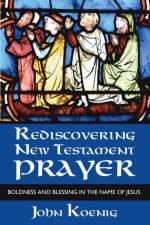
About the Contributor(s):John Koenig is Glorvina Rossell Hoffman Professor of New Testament Literature and Interpretation at General Theological Seminary in New York City. He is also the author of ''Charismata: God''s Gift for God''s People'', ''Jews and Christians in Dialogue'', and ''New Testament Hospitality''.
Description:Ganoczy provides a complete overview of the history of Catholic sacramental theology and a clear explanation of contemporary theological developments. The ""classical"" teaching of the Council of Trent and its later theological formulations are compared to the new theological language of the Second Vatican Council and the ""personalist"" theologies of modern thinkers such as Karl Rahner and Edward Schillebeeckx.Introduction to Catholic Sacramental Theology moves clearly from (1) a sketch of the historical development of the sacramental concept, to (2) the basic elements in a general theory of the sacraments, to (3) discussion of the individual sacraments. In the last chapter, the author introduces his own expanded understanding of the sacraments. Using the concepts of modern communication theory, he envisions the sacraments as events of communication in the life of the concrete faith community in which each sacrament has its own particular form and purpose.Endorsements:""Alexandre Ganoczy, one of Europe''s leading theologians, has provided a much-needed introduction to the sacraments. I cannot think of anyone who would not learn something from this masterful synthesis.""--Regis A. Duffy, OFMAbout the Contributor(s):Alexandre Ganoczy was born in Budapest, Hungary, in 1928. He is Professor Emeritus of Dogmatic Theology at the University of Wuerzburg, Germany. He has published numerous books, including Sprechen von Gott in heutiger Gesellschaft (1974) and Der sch├╢pferische Mensch und die Sch├╢pfung Gottes (1976).
More than half a century after Nazi Germany''s genocidal assault on the Jewish people, the Holocaust grips our attention as never before, raising hotly-debated questions: How is the Holocaust best remembered? What are its lessons? Who gets to answer those questions? Who owns the Holocaust? Those issues provoke disagreements that can be cutthroat or constructive. Taking its point of departure from the controversy that swirled around John Roth''s aborted appointment as director of the Center for Advanced Holocaust Studies, a senior post at the US Holocaust Memorial Museum in Washington, DC, Holocaust Politics shows how contemporary attitudes and priorities compete to determine that all-important difference.""To the often angry polemics on the place of the Holocaust in contemporary life, John Roth''s splendid new book brings a calm voice of reason: highly principled yet respectful in tone, clear-eyed yet open to alternate visions, deeply seasoned yet remarkably well-informed and up-to-date.""--Michael R. Marrus, Chancellor Rose and Ray Wolfe Professor Emeritus of Holocaust Studies, University of Toronto""Holocaust politics are a central but oft ignored facet of the Holocaust''s legacy. A veteran of some political battles himself, Roth courageously addresses the implications of this topic. He has written a book that is both compassionate and profound.""--Victoria J. Barnett, Director, Programs on Ethics, Religion, and the Holocaust, United States Holocaust Memorial Museum""Drawing on his authoritative knowledge and his own experiences with the best and worst of Holocaust politics, John Roth has written a singularly important book concerning the politics of preserving the memory of the Holocaust at a time when few survivors remain among us. This is an indispensable book for all those, both Jewish and Christian, who seek to understand the Holocaust''s complex legacy.""--Richard L. Rubenstein, President Emeritus, Distinguished Professor of Religion,University of BridgeportJohn K. Roth is the Edward J. Sexton Professor Emeritus of Philosophy and the founding director of the Center for the Study of the Holocaust, Genocide, and Human Rights (now the Mgrublian Center for Human Rights) at Claremont McKenna College. He is the author or editor of more than fifty books, including The Oxford Handbook of Holocaust Studies and The Failures of Ethics: Confronting the Holocaust, Genocide, and Other Mass Atrocities.
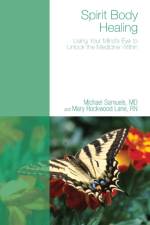
""Spirit Body Healing is filled with the truth about how spirit--and the creativity through which it is expressed--can heal us. I was very moved by this powerful book.""--Christiane Northrup, MD, author of Women''s Bodies, Women''s Wisdom""Dr. Michael Samuels provides us with new tools and ways of thinking about our capacity to heal. He has been a wonderful teacher for me and can be for you. . . . His work is inspiring.""--Bernie Siegel, MD, author of Love, Medicine, and Miracles""In this tender and caring book, we are reminded that healing is a creative process. These heartfelt stories and beautiful visualizations inspire the reader to see all life as a healing journey.""--David Simon, MD, Medical Director of the Chopra Center for Well Being; author of Vital Energy and Return to Wholeness""Dr. Michael Samuels is one of the leading pioneers in exploring creativity as an important part of every person''s healing journey.""--Dean Ornish, MD, author of Dr. Dean Ornish''s Program for Reversing Heart DiseaseBased on a landmark seven-year study, Spirit Body Healing is the first book on spiritual healing to emerge from a research study in a major university healthcare center. Through visualizations, meditations, and exercises to increase your creativity, Dr. Michael Samuels and Dr. Mary Rockwood Lane teach you the eight steps of spiritual healing. In this book, you will discover how to get in touch with your own spirit as a path to healing physical, emotional, and spiritual illness. Filled with inspiring, beautifully written stories, Spirit Body Healing offers practical, proven methods that you and your loved ones can use to create immediate positive changes in your lives.Michael Samuels, MD, has used art and guided imagery with cancer patients for over twenty-five years. He is the founder and director of Art as a Healing Force, a project devoted to incorporating art with healing. He teaches art and healing at San Francisco State University and John F. Kennedy University. The author of fourteen books, he gained national acclaim with his best-selling Well Body Book, Well Baby Book, Well Pregnancy Book, and Seeing with the Mind''s Eye.Mary Rockwood Lane, RN, PhD, is the co-founder and director emeritus of the Arts in Medicine program at the University of Florida, Gainesville. She is now Associate Professor of Nursing at the College of Nursing, University of Florida, where she teaches Creativity and Spirituality in Healthcare. Her books (with Samuels) include Shaman Wisdom, Shaman Healing and Creative Healing.
Professor Nelson Glueck's pioneer study of hesed and its meaning in the Bible has long been a basic source for biblical scholarship and theology. When the work first appeared as a published doctoral dissertation in 1927, titled Das Wort hesed im altentestamentlichen Sprachgerrauche als menschliche und gottliche gemeinschaftgemasse Verhaltunsweise, it was a methodological landmark study of the history of the ideas of the Bible. -- Alfred Gottschalk Hebrew Union College Los Angeles The importance of Nelson Glueck's monograph on hesed is, perhaps, best demonstrated in the use of his research in almost every important study involving the term since 1927, and in the relatively limited contribution made to Glueck's interpretation of the word. -- Gerald Larue
Ideas about education have consequences. This book, edited by Matthew Etherington, provides readers with ideas and insights drawn from fifteen international scholars in Christian thought within the fields of philosophy, theology, and education. Each author responds to the philosophical, historical, and sociological challenges that confront their particular line of educational inquiry. The authors offer a view of Christian education that promotes truth, human dignity, peace, love, diversity, and justice. The book critically analyzes public discourse on education, including the wisdom, actions, recommendations, and controversies of Christian education in the twenty-first century. This timely book will appeal to those concerned with Christian perspectives on education, Aboriginality, gender, history, evangelism, secularism, constructivism, purpose, hope, school choice, and community."In a world--and a church--where education (at all levels) is devolving toward basic technological skills training, random encounters with disconnected factoids on the internet, and subjectively preferred propaganda, Matthew Etherington's fine collection of essays on the foundations of education is most timely and welcome. Educational administrators, teachers, homeschoolers, pastors, parents--and thoughtful adults wishing to redress the weaknesses in their own education--are well-advised to reflect deeply on the ideas in this volume."--David W. Gill, Gordon-Conwell Theological Seminary, South Hamilton, MA"Etherington has put together a wide-ranging, engaging, and interesting collection of essays that deal with the interface between Christianity and education . . . Christianity has a necessary and fundamental role in education, from the lofty meanings of the field to the mundane exercises of the classroom. A valuable book, probably for different reasons, to both the Christian and non-Christian educator."--Douglas W. Allen, Simon Fraser University, British Columbia, Canada"This book is a thoughtful and inspiring collection of essays exploring the rich tradition of Christian understandings of education. Each chapter offers a unique perspective on relevant and important issues in education and encourages ongoing reflection and exploration in light of key Christian thinkers. It is a collection that lifts our eyes to horizons of what is good, true, and beautiful in education and reveals a timeless and timely vision that is hopeful and worthwhile. Beginning and experienced educators alike will be affirmed and reconnected to their own deeply held convictions arising from a desire to wholeheartedly serve God, their students, and communities through their practice."--Kimberly Franklin, Trinity Western University, Langley, British Columbia, Canada"Authors wrestle with the challenge of presenting a clear picture of Christian education that is embedded in a coherent historical and philosophical context, is cognizant of contemporary cultural trends, and emanates from a biblically faithful understanding of the world and our place and task in it. This is a worthy struggle in which all Christian educators are called to engage, and the foundations of education are a strategic tool in providing the understanding, training, and equipment necessary for such a task."--Richard J. Edlin, President, Edserv International, Warrawong, AustraliaMatthew Etherington is Associate Professor of Education at Trinity Western University in Langley, Canada.
Description:Anabaptists have often felt suspicious of American evangelicalism, and in turn evangelicals have found various reasons to dismiss the Anabaptist witness. Yet at various points in the past as well as the present, evangelicals and Anabaptists have found ample reason for conversation and much to appreciate about each other. The Activist Impulse represents the first book-length examination of the complex relationship between evangelicalism and Anabaptism in the past thirty years. It brings established experts and new voices together in an effort to explore the historical and theological intersection of these two rich traditions. Each of the essays provides fresh insight on at least one characteristic that both evangelicals and Anabaptists share--an impulse to engage society through the pursuit of active Christian witness.Endorsements:""From George Marsden''s wise foreword, the editors'' informative introduction, and Steve Nolt''s superb survey of Anabaptist-evangelical relationships in American and Canadian history, right through to the last chapter and Sara Wenger Shenk''s discerning afterword, this volume sparkles. Its examination of Anabaptists among North American evangelicals brims with discerning historical insight. For Anabaptists, evangelicals, and evangelical Anabaptists with eyes to see, it also provides a bracing challenge to live up to the best in these respective traditions. There have been good books before on the complexity of evangelical-Anabaptist relationships, but this one is the best.""--Mark A. NollFrancis A. McAnaney Professor of History, University of Notre DameAuthor of Protestantism: A Very Short Introduction (2011)""This is a very timely and helpful set of essays. It is timely because more than a few evangelicals are finding themselves attracted to Anabaptism. It is helpful because this set of essays offers many avenues through which to explore the tensions and intersections between these two traditions.""--Mark Thiessen NationProfessor of Theology, Eastern Mennonite SeminaryAuthor of John Howard Yoder: Mennonite Patience, Evangelical Witness, Catholic Convictions (2006)""A significant collection of essays by seasoned scholars and new voices to the conversation. . . . This is a cutting-edge volume of scholarship on the intersection of Anabaptist and evangelical history, theology, and political theory.""--Barry G. HankinsProfessor of History and Church-State Studies, Baylor UniversityAuthor of American Evangelicals: A Contemporary History of a Mainstream Religious Movement (2008)About the Contributor(s):Jared S. Burkholder is Associate Professor of History and Director of the Office of Faith, Learning and Scholarship at Grace College (IN). He has published articles or reviews in several journals, including Fides et Historia, The Pennsylvania Magazine of History and Biography, and The Mennonite Quarterly Review. David C. Cramer, previously Adjunct Professor of Religion and Philosophy at Bethel College (IN), is currently pursuing a PhD in Religion (Theology) at Baylor University. He has published articles or reviews in several journals, including The Mennonite Quarterly Review, Priscilla Papers, and Philosophia Christi.
Este libro surge de la conviccion de que necesitamos reflexionar sobre el sentido de ser Iglesia en el mundo contemporaneo. Vivimos en una epoca de crisis y de rapidos cambios sociales y culturales que han cuestionado el modo de ser Iglesia tanto desde afuera--desde la sociedad donde esta actua--como desde adentro de ella misma. Y ello nos conduce a repasar las preguntas esenciales de la fe: - ┬┐Cual es el fundamento de la Iglesia? - ┬┐Quienes somos? - ┬┐Quien es el Cristo en el cual creemos? - ┬┐Cual es la mision de la Iglesia? - ┬┐Que significan los sacramentos a los que recurrimos? - ┬┐De que nos salva el Evangelio? - ┬┐Que es el pecado?Pablo R. Andinach is Professor of Hebrew Bible at Pontificia Universidad Catolica Argentina. In 2004 and 2011 he was invited to be a visiting professor at Perkins School of Theology in Dallas, Texas. His publications include a commentary on Song of Songs (1997); ""Zechariah"" (International Bible Commentary, 1999); and ""Joel"" (Global Bible Commentary, 2005). He is an ordained minister in the Methodist Church in Argentina.
"If I had learned anything during the war, it was that our walk in the sun is brief, and so I resolved to wander from monastery to monastery, a sojourner in the world of last things." So poet and journalist Christopher Merrill tells us near the beginning of this gripping account of the transforming pilgrimages he made to Mount Athos, in Greece, in the aftermath of the Balkan wars of the 1990s. "It was time for me to come to terms with the way my life had turned out: the love I had squandered, the misgivings I had about my vocation and my faith, the dread I felt at every turn." In despair and out of a longing to end his spiritual desolation, Merrill became one of a handful of visitors permitted entry to Mount Athos-a mysterious land that for more than a thousand years has been the secret heart of the Eastern Orthodox Church. There, amid the beautiful terrain, the ancient rhythms, and the spiritual rigor of this holy place, he found a haven in dramatic contrast to the rest of the world. As Merrill's story unfolds, we, too, hike the rough trails of Athos, exploring a place and a way of life scarcely altered since medieval times. We share encounters with monks, wolves, and spiritual seekers; visit Athos's twenty monasteries, where exquisite art treasures are sequestered; make our way to lonely hermitages that clutch the cliffs above the sea. And like Merrill, we come to consider existence in a new and different light. Part journal of personal discovery, part meditation upon the history and traditions of the contemplative life, "Things of the Hidden God takes us where the temporal and the eternal intersect, where community and solitude coexist, and where centuries-oldpractices provide insight for how to live today.
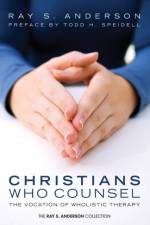
How does one view Christian counseling as a calling? What is the role and task of the counselor from a theological perspective? How does one strip away the ambiguity that is too often inherent in the words "therapy" and "counseling" in a religious setting?Ray S. Anderson has written this book as a theologian with a keen interest in helping Christian counselors fulfill their task more effectively by enabling them to see that task more clearly. Too often, even counselors who achieve effective results are beset by what Anderson calls "an uneasy conscience"--the realization that for some reason "a little transactional analysis once a week works better than a month of Sundays in curing the souls of troubled parishioners."This book seeks to put that uneasiness and ambiguity to rest by helping counselors see their work as a means of grace, rooted in a model of personhood that is both theologically and psychologically sound for realizing the full potential of each person.Christians Who Counsel has three parts, involving building a foundation for Christian counseling, exploring the spiritual dynamics in counseling, and describing counseling in a distinctly Christian mode. Written without either theological or psychological jargon, this book is for all Christians who counsel, whether pastors, lay counselors, psychotherapists, or family therapists. With clarity of vision comes the power of a renewed commitment.
A series of authors assert the premise that Sunday is "a new day of worship that was chosen to commemorate the unique, salvation-historical event of the death and resurrection of Christ, rather than merely being another day for celebrating the Sabbath."
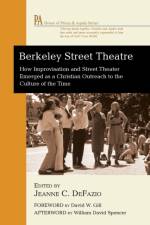
Berkeley Street Theatre chronicles Christian World Liberation Front''s 1969-1975 ministry to the counterculture. Founded by Jack Sparks, CWLF was featured in the June 1971 Time Magazine''s epic ""Jesus Revolution"" edition. Reverend Billy Graham sponsored the CWLF outreach and referred to CWLF as a highly effective outreach to the counterculture. The book included a foreword by David W. Gill, former CWLF leader, scholar, and author, contributing chapters from BST''s members: Gene Burkett, Charlie Lehman, Susan Dockery Andrews, Father James Bernstein, and Jeanne DeFazio, editor of the book. Part Two of this work outlines Christian Guerilla theater following the timeline of BST with contributing chapters from: JMD Myers, Joanne Petronella, Jozy Pollock, Olga Soler, and Sheri Pedigo. William David Spencer''s afterword details the cultural contributions of the Jesus movement. This book will appeal to the baby boom generation as well as millennials. It is a resource work for anyone interested in religious history, Christian theater and the arts, and in how baby boomers embraced the Jesus Movement. The photos of BST''s Sproul Plaza performances will charm all readers. ""Berkeley Street Theatre is a call for Christians to use theater to attract and convict seekers . . . I highly recommend the reading and use of Berkeley Street Theatre for those interested in history, thoughtful and creative outreach, and practical, hands-on information."" --Aida Besancon Spencer, Gordon-Conwell Theological Seminary; author of God through the Looking Glass: Glimpses from the Arts""Many people have had negative church experiences but still want to know more about God. If they are reluctant to step back into a church community, Christian theater is the perfect parable to bridge the gap. I wholeheartedly endorse this book because it models theater as Christian outreach."" --Teresa Flowers, author of How to Have an Attitude of Gratitude on the Night Shift""I recommend this book because it explains how Christian theater brings people to Jesus. This book combines love of Jesus and love of performing arts together. Bravo!"" --Monica ""Happy"" C. Valdivieso, performing artist ""Theatrical production is the perfect opportunity to show Christian truths modeled in everyday life. People don''t want to be talked at, but rather want to draw their own conclusions from entertaining productions. This book clearly shows faith in action through a theatrical approach to ministry."" --Gemma Wenger, M. Ed., Beauty for Ashes Television and Radio Ministry, Los AngelesJeanne C. DeFazio holds an MA in Religion from Gordon Conwell Theological Seminary. She is currently an Athanasian Teaching Scholar at Gordon Conwell Center for Urban Ministerial Education in Boston and a co-editor with William David Spencer of Redeeming the Screens (2016), a co-author with Teresa Flowers of How to Have An Attitude of Gratitude on The Night Shift (2014), and a co-editor with John P. Lathrop of Creative Ways to Build Christian Community (2013).
Front-ranking theologians speak out on the crisis of biblical authority and interpretation in the church, focusing in particular on the adequacy of the historical-critical method of hermeneutics. The essays in this volume address from various perspectives the notorious gap between the historical­ critical approach to the study of the Bible and the church''s liturgical and dogmatic transmission of biblical faith. The authors, following the central theme suggested by Brevard S. Childs''s ""canonical method"" of biblical interpretation, argue that the historical-critical method does not suffice of itself apart from faith and the church.""These vigorously written and boldly argued essays are not to be missed by anyone who cares about the vitality and authenticity of the church''s life. Many will disagree with them--perhaps vehemently--but those who do should be prepared to think as seriously and as deeply as these theologians have about the role of the Bible in the church.""-LEANDER E. KECK, Yale Divinity School""A compelling account of the dilemma caused by historical criticism of the Bible in the life of the contemporary church. An impressive array of scholarly authorities--Catholic, Protestant, and Orthodox--have come together to argue that while historical criticism is indispensable to the under­ standing of Scripture, it endangers Christian faith when it is used by educational and bureaucratic elites in mainline churches to accommodate Christ to the ideological demands of secular America.""-WALTER SUNDBERG, Luther SeminaryCarl Edward Braaten is an ordained minister of the Evangelical Lutheran Church in America. He served as a parish pastor of the Lutheran Church of the Messiah in Minneapolis from 1958-1961. From 1961-1991 Braaten served as a professor of systematic theology at the Lutheran School of Theology at Chicago. In 1992 he, together with Robert W. Jenson, founded the Center for Catholic and Evangelical Theology in Northfield, Minnesota. For fifteen years he served as the executive director of the Center, an ecumenical organization whose mission is to cultivate faithfulness to the gospel of Jesus Christ throughout the churches, and also as the editor-in-chief of Pro Ecclesia, a journal of theology published by the Center. Braaten has authored and edited over fifty theological books, including Principles of Lutheran Theology (Fortress, 1983), The Future of God: The Revolutionary Dynamics of Hope (Harper & Row, 1969), Mother Church: Ecclesiology and Ecumenism (Fortress, 1998), Because of Christ: Memoirs of a Lutheran Theologian (Eerdmans, 2010), and Who Is Jesus? Disputed Questions and Answers (Eerdmans, 2011), as well as hundreds of articles and editorials in various academic journals.Braaten was born on January 3, 1929 in St. Paul, Minnesota. He grew up on the island of Madagascar where his parents served as missionaries of the Norwegian Lutheran Church in America. He graduated from Augustana Academy, a Lutheran high school in Canton, South Dakota. He received degrees from St. Olaf College (BA), Luther Seminary (MDiv), and Harvard University Divinity School (ThD). In 1951 he was a Fulbright scholar at the University of Paris (Sorbonne), in 1957 a doctoral student at the University of Heidelberg where he wrote his dissertation, and in 1967 a Guggenheim Fellow at Oxford University. In 1974 he spent a sabbatical making a worldwide lecture tour of various colleges and seminaries in Japan, China, India, Kenya, Tanzania, Madagascar, Peru, Chile, Argentina, Brazil, and Mexico. This tour resulted in a book on the universal mission of the church entitled, The Flaming Center (Fortress, 1977).ROBERT W. JENSON is professor of religion at St. Olaf College in Northfield, Minnesota, and associate director of the Center for Catholic and Evangelical Theology. He is coeditor of the book Either/Or and author of Essays in Theology of Culture.
Abonner på vårt nyhetsbrev og få rabatter og inspirasjon til din neste leseopplevelse.
Ved å abonnere godtar du vår personvernerklæring.