












Gjør som tusenvis av andre bokelskere
Abonner på vårt nyhetsbrev og få rabatter og inspirasjon til din neste leseopplevelse.
Ved å abonnere godtar du vår personvernerklæring.Du kan når som helst melde deg av våre nyhetsbrev.

Most of what is written on Kierkegaard today is for the college classroom and academic conferences. The guiding question of this book is that if Kierkegaard's words about Christianity are true, how do they change the way we learn and practice the Christian faith today? This book is an answer to that question. It does not enter into an extended critical discussion over the truth of Kierkegaard's ideas. Instead it just believes what Kierkegaard said and runs with it. It does that by showing how his ideas change our understanding of Christian identity, suffering and illness, worship and preaching, the Bible, baptism, prayer, marriage and divorce, criticism, and the Christian minister. Interspersed are many quotations from Martin Luther, whose thought significantly shaped Kierkegaard's. At the end of the book is a hefty collection of sermons to show how all of this can be preached in the church.What Kierkegaard for the Church adds to our understanding of Kierkegaard is the place of the church in his thought. Because of his criticisms of the Danish state church and his stress on the need for the single individual to appropriate Christian teachings, it could be imagined that he rejected the church. But that would be to throw the baby out with the bath. The fact is that Kierkegaard remained a loyal son of the church even while he attacked it. And he did this only so he could strengthen what he loved.
Church-going in most Western societies has declined significantly in the wake of the social and cultural changes that began in the 1960s. Does this mean that people in these societies are losing any religious dimension in their lives, or is it being expressed in other forms and places? This study begins by looking at comparative data on how church-going patterns have changed in five countries--Britain, the United States, Canada, Australia, and New Zealand--examining reasons for the decline, how churches have responded to these changes, and why some churches have shown greater resilience. It then explores some of the particular challenges these changes pose for the future of churches in these societies and some of the responses that have been made, drawing on both sociological and theological insights. The conclusion is that, despite the loss of belonging, believing persists and religion continues to play a significant role in these societies, mediated in a variety of diffuse cultural forms. Cases illustrating these changes are largely drawn from New Zealand, which as the country most recently settled by Europeans has always been "secular" and thus provides helpful insights.
For centuries Augustine's theory of free will has been used to explain why God is not the author of evil and humans are morally responsible for sin. Yet, when he embraced the doctrines of unconditional election and operative grace, Augustine began modifying his theory of free will. His final works claim his evolved notion of free will remained consistent with his early view, but this claim has provoked significant debate. Some scholars take him at his word, interpreting his teachings on free will in light of his later predestination teachings. Others reject his claim of continuity and warn of great inconsistencies between his early and later works. Few have undertaken a thorough study of Augustine's works to compare his early notion of free will with his later theory of predestination. Free To Say No? is a detailed study of Augustine's work that presents clear evidence in Augustine's own words for a significant discontinuity between his early and later theories--especially the disappearance of the will's freedom to say "No"--and offers some fascinating insights as to why Augustine proposed such drastic changes.
Thoroughly God-centric and Bible-saturated, this book is a plea for the church and her missionaries to return to the biblical mandate and prescription for missionary activity. In God's infinite wisdom, he has determined to ransom men from among every tribe, tongue, people, and nation through the proclamation of the gospel. This is the greatest enterprise ever undertaken in human history, and it will culminate in success. God will see to it.The church has a principal role to play in the enterprise, but that role is not one of global philanthropy. The modern view of missionary activity has robbed missionaries of the authority to preach the gospel and has left the nations wanting of the joy of salvation . . . but there is yet time. The modern church may still find great success in the spread of the gospel to the remotest part of the earth. All that is necessary is that we would seek the revealed will of God in the Scriptures and put into practice that which it requires.
It has been said that history teaches us that history teaches us nothing. However true this may be in general terms, the fact that we so frequently look to the past in an attempt to shape our future by applying its lessons in the present suggests we remain keen to learn. In the context of the subject of this book, though the stalwarts of the faith can serve as tremendous examples, it is to the lessons of Scripture that we must turn if we are to have a better idea of what the kingdom of God is, what that means for us as believers, and how we can be better equipped to extend its values in today's world. Thus, what we understand by the term ""kingdom of God"" will not only determine whether we believe ourselves to be its citizens, but also how we think we should conduct ourselves in the light of such knowledge. It is the contention of this book that the biblical concept of kingdom as the expression of God's rule requires greater clarity of presentation in order to prevent it from confusion and/or distortion amongst Christians.
In a cinematic culture where multiple visions of reality "play" at the same time, it is critical that Christian believers know how to confidently identify and "discern," among other stories, the Jesus-story that defines their most important commitment in life. Using the optical metaphor of the "eye of faith," the author identifies the spiritual life as a "visual life." Through themes such as "looking through Jesus' eyes," the bible as a "visionary text," and the church as a "wide-eyed people," he builds a connecting bridge between the seeing-soul in Christian spirituality, and the twenty-first century as the "age of the eye." The key words for this exploration are spirituality, discipleship, insight, luminescence, and optical "therapy." The author proposes the need for a "catechism of the eye" that will lead to the renewal of Christian ministry, spirituality, discipleship, and identity.
""The Korean missions movement is perhaps the most significant story of the Church in the world over the past one hundred years. Today Korea can boast of being the leading sender of missionaries per head of population. Yet this movement has not been well integrated into the global mission community and also this community has at times failed to understand and learn from this tremendous work of God. I am excited that God has brought together a unique body of people to wrestle with these issues. This work will help bring about much needed collaboration and develop each other's strengths in an environment of mutual respect.""--MALCOLM L. McGREGOR, SIM International Director""Accountability in Missions is a remarkable book, exploring the full range of mission accountability issues--strategic, financial, and relational--from both Korean and North American perspectives. This is global missiology made practical and accessible to all missions practitioners. The many articles that penetrate the mysteries of Korean and North American interaction especially make it a must-read book for all Koreans and North Americans working together.""--STEVE STRAUSS, Professor of Mission and Intercultural Studies, Dallas Theological Seminary""This collection of essays provides a biblical and theological basis for accountability and brings voices East and West, demonstrating that accountability--to God and to others--is a universal principle, not linked to one culture or context (i.e., Western). Further, the collection is eminently practical, addressing matters of governance (decision-making), finance, and personal integrity. To all mission leaders I say: read this book! Actually, read it but also find colleagues with whom to discuss and digest these principles and review our mission practices.""--GORDON T. SMITH, President, reSource Leadership International
William Carey, often dubbed "The Father of Modern Missions," and Adoniram Judson, America's first intercontinental missionary, were pioneers whose missions overlapped in chronology, geography, and purpose. However, rarely are they both featured in the same volume or compared and contrasted. Here we have unique material by some of the world's leading experts on these two giants of missionary history, with perspectives on these men in ways never seen before. Especially relevant to this current age of World Christianity are the perspectives from India and Burma, the lands which received these men for their missionary enterprise.
Are the gospels found within the New Testament superior to others? Has the church unfairly chosen Matthew, Mark, Luke, and John while leaving out many others? Are there truly lost Christianities that would enrich our understanding of Jesus? Would modern-day seekers as well as followers of Jesus be better served by including gospels outside of the New Testament in their understanding of Jesus? Jesus Tried and True answers these questions by examining the date, source, and reception of the canonical gospels of Matthew, Mark, Luke, and John and then comparing this data with the other gospels. It assesses this information by looking within these gospels and also evaluating early church history, examining the writings of early church writers such as Papias, Ignatius of Antioch, Justin Martyr, Irenaeus, and Eusebius. It then compares these findings with the date, source, and reception of the non-canonical gospels that have received the most attention lately such as the Gospel of Thomas, Gospel of Mary, Gospel of Judas, Gospel of Philip, and Gospel of Peter. There is also a brief survey of thirteen of the most important non-canonical gospels. The survey provides an opinion on the dependence of these upon the gospels within the New Testament. Jesus Tried and True affirms the superiority of the New Testament gospels. It concludes by addressing whether non-canonical gospels are ""lost Christianities"" and also whether the designation ""apocryphal"" is appropriate for other gospels.
The human spirit seems incapable of being stagnant, ever pushing the boundaries of knowledge and experience. We try to understand life through questions regarding our own existence, the nature of the universe, and the nature of God. The question of our collective heart is the external manifestation of an internal longing--a quest, if you will. This thirst to understand reality can be seen in superstructures that are scientific, social, political, and especially religious.When considering the doctrines, institutions, and rituals of religions, we observe certain core aspirations expressed by the people of these communities. These aspirations generate from an underlying quest which seeks a way out of our perceived predicament: a salvific quest. Regardless of whether we view ourselves as religious, pre-religious, post-religious, or non-religious, we find ourselves involved in such a quest; it seems to be an integral part of our human personhood. Using a unique framework of analysis, this book explores Christ's relevance to the quest expressed by the communities of eight major living religions--a relevance that neither degrades Christ nor demeans other ""saviors."" Christ is not part of the human quest, but is well equipped to satisfy that quest.
Description:""I pray . . . that all of them may be one, Father, just as you are in me and I am in you. . . . May they be brought to complete unity to let the world know that you sent me."" --Jesus Christ What if? What if believers of multiple ethnicities manifested the diversity in unity for which Jesus prayed? What if largely separate, homogeneous congregations--which account for nearly 92.5 percent of all churches in the United States--increasingly became connected, multiethnic congregations? What if, at eleven o'clock on Sunday mornings--or whenever believers gather to worship--local congregations were comprised of believing whites, African Americans, Koreans, Hispanics, Romanians, Native Americans, as well as the diverse mosaic of other ethnicities represented in our increasingly multicultural society? Would this not say something about the supernatural character of the gospel of reconciliation we proclaim? Jesus believed it would. That is why after praying for such diversity in unity among his followers, Jesus Christ--the Man for all nations--extended his arms and laid down his life to make it happen. This book, God's New Humanity, examines the biblical-theological vision and motivation for living in response to Jesus' prayer. Endorsements:""God's New Humanity is a welcome, significant addition to the growing body of literature boldly proclaiming the biblical mandate for the multiethnic church. With the mind of a theologian, the heart of a pastor, and the insight of a practitioner, David Stevens effectively challenges systemic segregation and points the way to the coming integration of the local church for the sake of the Gospel.""--Mark DeYmazAuthor of Building a Healthy Multi-ethnic Church, and coauthor of Ethnic Blends: Mixing Diversity into Your Local Church""Stevens offers a fresh and much-needed theological approach to multiethnic ministry . . . This book encourages the reader to think theologically through the key issues in reaching across all barriers within the church, not just the most visible ones. If you are seeking a strong biblical and theological understanding of multiethnic ministry, God's New Humanity is a must-read.""--Rodney WooAuthor of The Color of Church""The greatest picture of the church is found on the pages of Revelation. There we see all of God's people gathered from around the world and down through the ages. There we can't help worshipping the One who paid the price to bring us together as one . . . If you're a Christian leader, this is must reading. Highly recommended!""--David SanfordExecutive editor of the acclaimed Holy Bible: Mosaic About the Contributor(s):David Stevens is Senior Pastor of Central Bible Church in Portland, Oregon. He is a graduate of Dallas Theological Seminary (ThM, 1982) and of the Faculté Libre de Théologie Evangélique (ThD, 1999) near Paris, France.
Who wrote the first five books of the Bible? Does it really matter who did? The Books of Moses Revisited explores this question by comparing the covenants of Exodus/Leviticus and Deuteronomy with the inter-state treaties of the late second millennium BC. Some compelling similarities come to light, both in the pattern adopted and in many small details. Lawrence clearly demonstrates this with many examples and diagrams, yet without assuming that readers possess a detailed knowledge of ancient history and linguistics. Despite the entrenchment of the widely held theory--the so-called Documentary Hypothesis--that the first five books of the Bible were the product of an anonymous editor living many centuries after Moses, this book argues that the first five books of the Bible bear many hallmarks of being late second millennium BC compositions and that Moses should not be ruled out as being the author. The book also explores how several ancient texts--the Egyptian Story of Sinuhe, the Mesopotamian Epic of Gilgamesh, and Homer's Iliad and Odyssey--were transmitted in antiquity and suggests that a similar process also lies behind the transmission of the first five books of the Bible.
The Courageous Gospel is intended for use alongside a commentary (Ashton, Brown, Bultmann, Barrett, other) in a class introducing the Fourth Gospel. The book has four parts:-A succinct summary of key matters of introduction;-A collection of sermons on the Gospel's core chapters, with reflective reminiscence and remembrance of what Raymond Brown said in lecture about the Gospel thirty years ago;-A series of background lectures that attempt, on the one hand, to honor the key insights of the current opinion communis (that Jewish apocalyptic explains John) and, on the other hand, to open the door to further insights from an older perspective needed for a full appreciation of John (that the Hellenistic Gnostic background explains John);-A set of pedagogical appendices, employable in the classroom, to aid discussion.Together these components attempt to provide the necessary second book for an introduction to the Fourth Gospel, engaging the commentaries with the hermeneutical, homiletical, exegetical, and pastoral implications of a first-level study of John.
A resurgence of Trinitarian interest gained momentum in the twentieth century and it is showing little sign of abating in the twenty-first century. This research endeavors to critically evaluate Miroslav Volf's ecclesial model for ""the church as the image of the Trinity,"" one that he presents with the English title, After Our Likeness. Volf proposes a social doctrine of the Trinity, one that is heavily influenced by the theological writings of Jurgen Moltmann, and he puts forward that this nonhierarchical Trinity should be reflected in the structures and theology of the church. If Volf is correct, then a radical reshaping is needed for the church to conform to an egalitarian pattern, one that is ""after the likeness"" (Gen 1:26) of an egalitarian God.In this critical examination, Kevin J. Bidwell begins by stating the theological influences that are pertinent to Volf's thesis in After Our Likeness and the assumptions that undergird and inform his whole theological paradigm. An important theological excursus is offered to assess the theology of John Smyth, the first English Baptist, who is Volf's representative figure for the location of his own ecclesiology, the Free Church. A critical analysis follows of Volf's engagement with his two chosen dialogue partners who represent both Western and Eastern theological traditions: Joseph Ratzinger and John D. Zizioulas.Volf presents five theses for ""the church as the image of the Trinity,"" which could be labeled as Volf's Free Church in the image of Volf's revised doctrine of the Trinity. This monograph offers extensive insight into the contemporary debate on the doctrine of the Trinity, but it also assesses many aspects of ecclesiology from both Eastern and Western perspectives.
Does the Apostle Paul have any use for the person of Jesus presented in the Gospels? Critical scholarship thinks not, but this book argues that Paul not only mentions more than seventy specific details of the historical Jesus, but he also commends the character of Jesus and echoes His teachings repeatedly in his letters and sermons-in full agreement with the Gospel accounts. Stout examines Paul's intriguing description of the ""Man Christ Jesus"" (1 Tim 2:5) and suggests that this title fulfills the OT expectation of God appearing in human history as a man. In his incarnated humanity, the Man Christ Jesus accomplished salvation in the historical events of his life and death, and in his resurrected humanity, he appeared to Paul on the Damascus Road-rooting Paul's Christology deeply in human experience.Furthermore, Stout shows how Paul rests his concept of salvation on a neglected aspect of his doctrine-that the entire church is associated with the historical events of the life, death and resurrection of Jesus, an association which also unites his church with one another in fellowship and service. This book, then, demonstrates that Paul's gospel rests upon Jesus as a man of history who brings salvation into human history in his life, death, and exaltation as the ""Man Christ Jesus.""
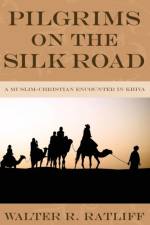
They were seeking religious freedom and the Second Coming of Christ in Central Asia. They found themselves in the care of a Muslim king. During the 1880s, Mennonites from Russia made a treacherous journey to the Silk Road kingdom of Khiva. Both Uzbek and Mennonite history seemed to set the stage for ongoing religious and ethnic discord. Yet their story became an example of friendship and cooperation between Muslims and Christians.Pilgrims on the Silk Road challenges conventional wisdom about the trek to Central Asia and the settlement of Ak Metchet. It shows how the story, long associated with failed End Times prophecies, is being a recast in light of new evidence. Pilgrims highlights the role of Ak Metchet as a refuge for those fleeing Soviet oppression, and the continuing influence of the episode more than twelve decades later.
When a newly called pastor enters a congregation, the first weeks and months are times of careful navigation and many hidden land mines. This veteran pastor shares his stories and insights with others who begin this ministerial journey. A delightful book, this volume is a "must read" for seminarians and all pastors who enter a new call. The reader will find helpful hints and wonderful appendices to help a pastor through such a perilous time. Issues around "entry" set the tone for one's tenure. This is a book for clergy gatherings, conferences, peer groups, and workshops with helpful questions for reflection after each chapter.
Early in his career, Newman immersed himself deeply in the study of the church fathers. This volume is a fine academic study, as well as a source of insight into the spirituality of Newman. Important for students of Arianism and Athanasius, as well as Cardinal Newman himself.
How deep has Pannenberg''s influence been on American theology? Which particular ideas or themes from his work have been most pervasive to Ameri­can thinkers, and which have encountered the greatest resistance? What implications does his work have beyond explicitly theo­logical contexts--e.g., for philosophy, ethics, environmental concerns, political ac­tion, and the natural sciences? What new forms have his ideas taken as they have been adapted to fit the very different context of American theology? The authors of the twelve critiques in this vol­ume represent a broad cross section of American thought on religion. The essays cover virtually all of the major areas in which Pannenberg has published. An intro­ductory survey provides a comprehensive overview of the critical literature on Pannenberg from the early 1960s to 1986. Together, the essays represent an ac­curate barometer of the influence Pannenberg has had in America, as well as the sorts of reservations that the English-speaking world brings to his work.It has now been many years since Pannenberg''s first visit to the United States. At that time the discussion with Pannenberg fo­cused on the radically historical character of his proposal for theology, centering around revelation and resurrection. In the meantime, Pannenberg''s thought has ex­panded almost encyclopedically into most of the major disciplines studied in a modern university. Without doubt the most comprehensive theologian at work today, his place in the history of twentieth-century theol­ogy is well assured.Carl E. Braaten, Professor of Theology at the Lutheran School of Theology at Chicago, is founding editor of Dialog: A Journey of Theology. Among his many books are Justification: The Article by which the Church Stands or Falls, Principles of Lutheran Theology, and, edited with Robert W. Jenson, Christian Dogmatics (2 vols.). Philip Clayton teaches in the Department of Philosophy at Williams college, Williamstown, Massachusetts.
First Corinthians 15:56, "The sting of death is sin, and the power of sin is the law," is both puzzling and neglected. It is puzzling since there appears to be no precursor in 1 Corinthians to the law-critical statement found there. It is neglected because of its size. Nevertheless, the short verse offers the opportunity to analyze in a rudimentary state Paul's law-sin notion that appears full-blown in Romans, and the absence of a polemical setting allows scholars to examine a law-critical statement issued during a polemical lull. In The Law and Knowledge of Good and Evil, Vlachos weighs attempts to explain the presence of 1 Cor 15:56 in 1 Corinthians and argues that the Genesis Fall narrative, where the tempter plied his seductions by way of the commandment, provides the theological substructure to Paul's understanding of the law's provocation of sin. In doing so, Vlachos contends that Paul reaches the historical high water mark of his polemic against the salvific efficacy of the law by locating a law-sin nexus in Eden, and, contrary to some recent perspectives on Paul, he argues that the edenically informed axiom in 1 Cor 15:56 suggests that Paul's fundamental concern with the law was rooted in primordial rather than ethnic soil. While studies of Paul and the law have tended to bypass Eden, The Law and Knowledge of Good and Evil breaks ground by moving the argument beyond Second Temple Judaism to the Genesis Fall account, where the prohibition against partaking of the knowledge of good and evil led to the knowledge of sin.
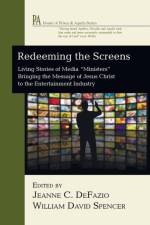
How does the future look to us? Well, clearly we realize we now live in a world of screens, from the microcosmic universe of to smartphone . . . to the imposing vigil of the multiplex giants, looming over us in Imax and 3-D--more ""real"" than real--and to all the screens in between, from computers to iPads, to muted, high definition flat-screens pouring out images in homes, restaurants, banks, businesses, schools, doctors' offices, and hospitals, and on and on everywhere we turn. We cannot change this reality, so what these Christians, and so many like them are doing is trying to find ways to redeem what we put on these screens: what message we are sending out in word and image to the watching world. So, clearly, our task, whether we have been called to create or not, is to join these artists as ""screen redeemers,"" assisting the Holy Spirit in reconciling the world to God (2 Cor 5:18-19) through helping the pervasively influential means of the media adjust its goals to the mission of Jesus Christ. ""Redeeming the Screens' words endorse the challenge of bringing Christ to the modern media. I am proud to be a Catholic priest as well as a member of SAG-AFTRA, sharing my love for Jesus on Christian TV stations each week and also doing films and commercials on the secular scene.""--Michael Manning, TV host of Word in the World; Author of 15 Faces of God""Redeeming The Screens makes such impressive sense that empowering entertainment for the sake of our Lord's glory has become possible. Anyone involved in media production will treasure this book because it provides live models of how ministers combine their passion, talents, and faith to deliver God's truth. This book has provided a superb example of how this is to be accomplished. A warm and glowing book which I will share with many of my personal and professional friends.""--Joseph Nassralla, CEO & Founder of The Way TV, Duarte, CA""Although all Christians are called to be lights, few will ever know the depth of this calling the men and women portrayed in this book have known. Their stories will challenge, humble, and inspire you to break out of your protective bubble and go into all the world and preach the gospel, even if that world is on Sunset Boulevard."" --Michele Pillar, Speaker; Author of Untangled; three-time Grammy Award-nominated singerJeanne C. DeFazio holds an MA in Religion from Gordon-Conwell Theological Seminary. She is currently an Athanasian Teaching Scholar at Gordon-Conwell's Center for Urban Ministerial Education in Boston and a co-author with Teresa Flowers of How to Have an Attitude of Gratitude on the Night Shift (2014) and co-editor with John P. Lathrop of Creative Ways to Build Christian Community (2013).William David Spencer is Distinguished Adjunct Professor of Theology and the Arts at Gordon-Conwell Theological Seminary's Boston Center for Urban Ministerial Education. He is the recipient of twenty one awards for writing and editing and is the author of several hundred articles, reviews, poems, stories, and thirteen previous books, including his latest, the urban adventure novel Name in the Papers.
All ministry leaders concern themselves with the intersection of Jesus-centered ministry and contemporary culture. They ask themselves questions such as,""What do we need to change in order to keep up with a wired world?""""What should never change?""""What are the nonnegotiables of faith in Jesus?""Many have attempted to answer these questions. However, most of these leaders offer solutions that the everyday ministry leader simply cannot replicate.Signs of the Times is a unique offering to those who wrestle with the mash-up of ministry and culture. All of the contributors have found success within their ministries, and yet most do not minister to thousands on a weekly basis. Additionally, all of them have had the privilege of studying directly with Dr. Leonard I. Sweet.Despite having authored more than fifty books, Sweet can still be a bit of an enigma. Many of his readers have been deeply influenced by him, and yet they may still struggle to understand what his insights might mean for their ministry.Each of the contributors to this work thoughtfully engages with a key idea that they personally learned from Sweet and they translate it for ministry in the early twenty-first century. ""There are so many words, titles, and descriptions you could use for Leonard Sweet. He is, without a doubt, one of the greatest gifts given to the church the past forty years. For him to be a blessing to your life you have to engage with his mind and heart, and this book shows how many people have done that--and for that reason alone it's a great gift to all who read it."" --Bob Roberts, Jr., Founder & Senior Pastor, Northwood Church; Author; Founder, GlocalnetBrian A. Ross is Assistant Professor of Pastoral Ministries at the Fresno Pacific Biblical Seminary and an adjunct professor at Toccoa Falls College. He is a seventeen-year ministry veteran, having served as a youth pastor, church planter, senior pastor, and church consultant. He is a minister with the Brethren in Christ Church.
In Writing Woman, Sheila Delany examines the artifact woman from a radical perspective. Each individual is seen by Delany as an artifact--made, not born --laboriously worked up, pieced together, written, and rewritten. Other qualities are added to this artifact through novels, poems, lyrics, ad copy, television scripts, nursery rhymes, and the English language itself. These layers of meaning result in the artifact--woman as topic. Sheila Delany traces her own development as a radical thinker in the opening chapter Confessions of an Ex-handkerchief Head, or Why This Is Not a Feminist Book. She discusses bourgeois women in medieval life and letters; womanliness, marriage, and misogyny in Chaucer; sex and politics in Pope's The Rape of the Lock; the feminist utopias of Charlotte P. Gilman and Marge Piercy; and--in considering woman as writer--the scene, or place, of writing in Christine de Pisan and Virginia Woolf.
Journal for the Evangelical Study of the Old Testament (JESOT) is a peer-reviewed journal devoted to the academic and evangelical study of the Old Testament. The journal seeks to fill a need in academia by providing a venue for high-level scholarship on the Old Testament from an evangelical standpoint. The journal is not affiliated with any particular academic institution, and with an international editorial board, open access format, and multi-language submissions, JESOT cultivates and promotes Old Testament scholarship in the evangelical global community. The journal differs from many evangelical journals in that it seeks to publish current academic research in the areas of ancient Near Eastern backgrounds, Dead Sea Scrolls, Rabbinics, Linguistics, Septuagint, Research Methodology, Literary Analysis, Exegesis, Text Criticism, and Theology as they pertain only to the Old Testament. JESOT also includes up-to-date book reviews on various academic studies of the Old Testament.
The call for gender equity in leadership has become a global concern. From a Christian perspective, all forms of gender prejudice are sinful because they violate God''s intention for creating both men and women in God''s image. Although many Christian authors have published books and journal articles to address gender-based injustice, very few publications have approached the subject from an African perspective. This book is meant to fill the existing gap. With a specific reference to the African context, this book explores the phenomenon of equity in leadership from various dimensions, such as African culture and traditional religion, church tradition, biblical interpretation, as well as from the perspective of contemporary socio-economic and political realities in Africa. By giving vivid examples of success stories of men and women working together, the authors have demythologized the view that women cannot be leaders. In addition, this book is intended for general readership by Christian men and women throughout the globe. For universities and colleges that teach gender studies as a subject, the book can serve as a class text or reference resource. Seminaries and theological institutions will also find it handy for training and mentoring Christians to promote equity in the church, ministry, business, and family.""The Quest for Biblical Equity in Leadership is good biblical scholarship and engaging story-telling from a fresh African perspective that will provide new insights to readers from any continent.""--Brad Smith, President, Bakke Graduate University""This book . . . takes a particular issue of vital significance in the modern world--gender equity--[and] provides fascinating insights into a number of African cultures. It showcases some excellent African scholarship from both male and female theologians . . . and provides a fine example to the rest of the world of using biblical principles to critique culture from the inside. Congratulations to the editors and the writing team for producing such a useful compilation.""--Mary Evans, Author; Former Vice-Principal and Old Testament lecturer, London School of Theology""I have witnessed first-hand how Jewel Hyun embodies the quest for Biblical equity in leadership in Africa. Her faith-filled ministry in Kenya is a wonder to behold, and transformational to experience. As a result, the book in your hands is filled with Biblical wisdom and practical implications that will stand the test of time."" --Stephen A. Macchia, Author; Founder and President, Leadership Transformations, Inc.KeumJu Jewel Hyun is founder and president of Matthew 28 Ministries, Inc., focusing on Christian women''s leadership development and economic empowerment in Kenya. She is adjunct professor of Theology of Work at Bakke Graduate University and co-editor of Some Men Are Our Heroes: Stories by Women about the Men Who Have Greatly Influenced Their Lives. Jewel holds a Master of Arts and a Doctor of Ministries degree from Gordon-Conwell Theological Seminary, South Hamilton, Massachusetts, as well as a Master of Science degree in Nuclear Physics from Yonsei University, Seoul, Korea. She and her husband have two adult children and four grandchildren.Diphus C. Chemorion, an ordained minister, is director of Postgraduate Studies and Associate Professor at St. Paul''s University, Kenya. He is the author of Community Participation in Scripture Version Design: An Experiment in Translating Jonah into Sabaot and Introduction to Christian Worldview: Meaning, Origins and Perspectives. He also co-edited Contested Space: Ethnicity and Religion in Kenya. He holds a Master of Theology from Candle school of Theology, Emory University, and a Doctor of Theology in Old Testament from Stellenbosch University, South Africa.
Were you intrigued, but disappointed by The Bible Code? Numerical Secrets of the Bible, written by one of Europe''s leading biblical scholars, gives you the actual facts about one of the most important recent discoveries in the field of biblical study, namely that the books of the Bible are numerical compositions. The biblical writings were not written in an off-hand manner, but were meticulously composed according to compositional techniques in which the counting of words played a crucial role. This discovery has far-reaching consequences for our views on the formation and the structure of the text of the Hebrew Bible and of the Greek text of the New Testament.Labuschagne introduces you to the fascinating world of number symbolism in biblical times. He demonstrates how well-known symbolic numbers, such as 7 and 12, and especially the lesser known holy numbers 17 and 26, which represent the numerical value of the name YHWH, were used to give structure to the text and to deepen its contents.Among other fascinating findings, this study confirms the medieval Jewish tradition that the name of God is interwoven in the fabric of the text of Holy Scripture.""This is a fascinating book and an important one. I heartily concur with the author''s opening remarks that we have here an account of the discovery of one of the most Important findings of our time in the field of biblical study. The Bible is no ordinary book and Labuschagne provides a welcome glimpse into the incredible labor on the part of ancient scribes (''counters'') who put the text in exact mathematical form to the glory of God.""--Dr. Duane L. Christensen, Professor of Biblical Studies and Ancient Near Eastern History, William Carey International UniversityCasper Labuschagne was born in Heilbron, South Africa in 1929. He studied Semitic languages and theology at the University of Pretoria and at the State University in Groningen, The Netherlands, from 1947 to 1956. He holds an MA in Semitic languages and a Doctor of Divinity from the University of Pretoria. He was a minister of the Dutch Reformed Church in South Africa in 1957 and 1958. He was a senior lecturer in Semitic languages at the University of Pretoria and from 1967 to his retirement in 1991, was lecturer and later professor of Old Testament at the State University in Groningen. He has published a major, four-volume commentary on Deuteronomy in Dutch.
Description:This book focuses on the imaginative character of Puritan writing, especially as revealed through the use of biblical images and themes. Knott illustrates the richness and power of the best Puritan writing by analyzing the work of five writers: Richard Sibbes, Richard Baxter, Gerrard Winstanley, John Milton, and John Bunyan. Although these writers differ from one another in many important respects, together they illustrate the range of responses to the Bible among those who in one way or another resisted the versions or orthodoxy imposed by the Anglican Church.The chapters on Sibbes, Baxter, and Winstanley implicitly make a case for considering these writers as part of the canon of seventeenth-century literature: Sibbes because he exemplifies the best qualities of ""spiritual preaching"" (as opposed to the witty or metaphysical preaching of John Donne); Baxter because his Saints Everlasting Rest, one of the most influential works in its time, offers a compelling statement on some of the central themes of Puritan spirituality; and Winstanley because his visionary prose offers perhaps the most vivid and powerful statement of the millenarian expectations rampant in mid-seventeenth-century England.The book concludes with chapters on two major figures of the era, Milton and Bunyan. In his consideration of Milton, Knott challenges the predominant critical emphasis on Milton''s Christian humanism and argues for the importance of Puritan strains in his writing. The analysis of Bunyan draws from the spiritual autobiography Grace Abounding, and from The Holy War, a relatively neglected epic of spiritual life, as well as from The Pilgrim''s Progress.These five writers, who make up a chronological sequence reaching from the 1620s to the 1680s, represent different moments in the evolution of a Puritan spirituality. In their distinctive ways they sought to recover the original simplicity of the Word of God and to express its extraordinary power to transform the individual and society.About the Contributor(s):John R. Knott, Jr. is professor of English at the University of Michigan and the author of Milton''s Pastoral Vision, published by University of Chicago Press.
Abonner på vårt nyhetsbrev og få rabatter og inspirasjon til din neste leseopplevelse.
Ved å abonnere godtar du vår personvernerklæring.