











Gjør som tusenvis av andre bokelskere
Abonner på vårt nyhetsbrev og få rabatter og inspirasjon til din neste leseopplevelse.
Ved å abonnere godtar du vår personvernerklæring.Du kan når som helst melde deg av våre nyhetsbrev.

The apostle Paul affirms in several places that there is only one God. Yet in the same letters Paul also gives praise to the Lord Jesus Christ, often using language similar to his descriptions of God. How can this self-avowed Hebrew of Hebrews reconcile these ideas? This book explores the strongest one-God statements in Paul's undisputed letters and asks how Paul's Jewish monotheistic understanding informs his overall argument. These three texts--1 Corinthians 8:6, Galatians 3:20, and Romans 3:30--occur in very different contexts and address different issues. By looking at the historical, cultural, and grammatical contexts of these passages, as well as Paul's language about God and Christ elsewhere in these letters, Dr. Nicholson argues that Paul's understanding of the one God is not static or perfunctory; rather, it is dynamic and flexible, influencing significant aspects of Paul's Gospel message. Paul's ethics, his view of salvation history, and his soteriology are fundamentally shaped by his understanding of the one God of Israel.
Around the world, thousands of grassroots movements are confronting issues like destruction of the environment, economic depression, human rights violations, religious fundamentalism, and war. This book tells the courageous story of one such group. Organizing in 1939, Northern Baptists formed the Baptist Pacifist Fellowship as part of the Fellowship of Reconciliation. Southern Baptists formed a parallel body. Like today, it was a time when sources of hope seemed hard to find. Discerning a need to support and connect Baptist conscientious objectors in the United States, members faced hostility in congregations and the nation. For the duration of the Second World War, the Korean War, war in Vietnam and elsewhere, Baptists sustained a witness for peace and justice. By 1984, threat of nuclear weapons led to formation of a wider circle of resistance to the culture of war. Subsequently, the Baptist Peace Fellowship of North America has brought together Baptist peacemakers from around North America and the world. However small in numbers or reviled, members have been building a culture of peace through an interracial and international community. This book is an invaluable resource for those seeking a new world of forgiveness, respect for human rights, nonviolence, and peace.
Clear and Definite Words is a lucid exposure of the present confusion within theological discourse. It charges and proves that avoiding or equivocating on the question of ontology is impossible. It thus undermines the premise of much theological discourse today and lays the way for greater theological clarity and commitment. This book goes head-to-head with great forcefulness and passion against anyone and anything that has served to impede the right of theology to speak with clear and definite words.
The rapid growth of the charismatic renewal in the Catholic Church has brought with it both controversy and confusion, and it has raised a number of important theological questions. Is it an authentic renewal movement? Exactly what is the baptism of the Holy Spirit? How should we understand the gift of tongues? What is prophecy? Does God really heal by supernatural means? One by one, Francis Sullivan takes up these controversial points in one of the most thorough theological investigations yet undertaken into the Catholic charismatic renewal. 'Charisms and Charismatic Renewal' is a scholarly analysis of this dynamic renewal movement for those who want to know more about its history, its theological and scriptural bases, its present impact on the church, and its probable future course.
Bread for the Journey stakes out new territory for all who are engaged in the many facts of mission, whether in the urban deserts of the modern United States, working with AIDS sufferers in rural Uganda, or trying to make sense of conflicting data on church, world, and gospel. This book makes available a wealth of mission experience, bread for the journey for all those engaged in ecclesial work, whether in the First World or the Third. While many speak about the importance of "wisdom theology" as something "there ought to be more of," Gittins simply does wisdom theology. Bread for the Journey bridges the boundaries between spirituality and theology, mission and anthropology. It will transform your view of Christian vocation.
No discipline has been more uniformly derided for a longer period than metaphysics. Of the ancient and medieval sciences now in disrepute, even astrology and alchemy get better press. The most devastating--and currently the most influential--attack on metaphysics has come from a broad spectrum of thinkers including Kierkegaard, Nietzsche, Heidegger, Arendt, Levinas, Derrida, and Milbank, who have argued that metaphysics is the root of modern nihilism and totalitarianism. Anthony Mansueto puts this claim to the test, developing a historical sociology of metaphysics that analyzes the social basis and political valence of metaphysical systems. Mansueto does this globally and cross-culturally, engaging not only the Hellenic tradition and its extension into medieval Christendom and Dar-al-Islam, but also the Indian and Chinese traditions. Specifically, Mansueto argues that far from representing the roots of nihilism or modern state terror, metaphysics emerges (and continues to be necessary) as a way to ground meaning and value in societies--especially in market societies in which these have become problematic. Metaphysics tends to restrain exploitation and to encourage the redirection of surplus toward activities that promote development of human capacities. Knowing God: The Journey of the Dialectic concludes with an outline of a new dialectical metaphysics that reconciles a Buddhist metaphysics of interdependence in the Hua-yen tradition with a historicized metaphysics of Esse, yielding results that look startlingly like the dao xue, or neo-Confucianism of Song China. Mansueto shows how such a metaphysics can ground meaning and value while answering postmodern concerns to safeguard difference.
Christian Spirituality and Ethical Life offers a helpful study of the place of the Spirit in John Calvin's theology. It also discovers a notion of the spiritual life in connection with ethical life. It thus overcomes the prevailing popular pictures about the theology of John Calvin in several significant ways, providing a refreshing alternative to the anemic spirituality so prevalent today. It can be stated confidently that Calvin was a theologian of the Holy Spirit in solidarity with the poor, standing in openness to others.
Philosophy begins with wonder, according to Plato and Aristotle. Yet Plato and Aristotle did not expand a great deal on what precisely wonder is. Does this fact alone not raise curiosity in us as to why this passion or concept is important? What is wonder's role in science, philosophy, or theology except to end thinking or theorizing as soon as one begins? The primary purpose of this book is to show how seventeenth- and eighteenth-century developments in natural theology, metaphysics, epistemology, ethics, aesthetics, and the philosophy of science resulted in a complex history of the passion of wonder-a history in which the elements of continuation, criticism, and reformulation are equally present. Philosophy Begins in Wonder provides the first historical overview of wonder and changes the way we see early modern Europe. It is intended for readers who are curious-who wonder-about how modern philosophy and science were born. The book is for scholars and educated readers alike.
""Revelation is sooo complicated!"" Wait a minute! If a Jewish fisherman understood what his Rabbi showed him, then it shouldn't be hard for us, either. We just need his tools. Fortunately, God left them for us in the same place John found them: the Bible.This Primer uses the rest of the Bible to explain Revelation in plain language. We've banned the big words professors use. We've thrown out their multi-part sentences, and we don't waste time explaining why we disagree with somebody. Instead, we try to let the text speak for itself.When you read this Primer, you'll see that it was written for you with great respect for God's word. By the way, Revelation isn't that complicated. After all, it's ""the revealing of Jesus Christ.""
The essays that follow attempt to address the important issues that must be addressed if we are to speak about atonement in a manner that is faithful to the biblical narrative. Chapter One asks, ""Is substitutionary atonement biblical?"" Chapter Two rehearses the traditional problems associated with substitutionary atonement. Chapter three looks at the soteriology of P.T. Forsyth, and Chapter Four details his kenotic theory. Chapter Five addresses the problem of appropriation as expressed through the writings of Paul Fiddes, a contemporary theologian. Chapter Six summarizes what we have learned from the other essays and lays out how we might now speak about atonement.--From the Introduction
This book brings together twelve essays on a wide and rich range of topics, discussions and methodologies in African theology today. Even the book's limitations provide an insight into the situation: its variety also indicates the absence of comprehensive and sustained discussion flowing from the economic and institutional limitation of Africa where research in theology is often beyond the means of many theologians. Then there is the difficulty of staying abreast of continually changing contexts and events in Africa itself. For all of these reasons then, a compelling introduction to a dynamic analysis and conversation.Emmanuel Katongole is associate professor of theology and peace studies at the University of Notre Dame, Indiana, and a Catholic priest of the Archdiocese of Kampala, Uganda. His other books include Mirror to the Church, The Sacrifice of Africa and Born From Lament.
"The following essays were among those presented in June 1983 at a consultation on hermeneutics and systematic theology convened by The Institute of Mennonite Studies in Elkhart, Indiana. Participants came from Canada and the United States. They represented the three largest Mennonite groups in North America." -- From the Introduction
My So-Called Biblical Life gives fresh perspectives to stories from the Bible, imbuing them with powerful, honest emotion. The editor's translation of biblical passages grounds twelve original narratives, which engage the reader and invite a personal response. Imagine sending away your precious daughter to be a concubine. Suppose your family's survival depended on the sacrifice of your brother's life. Picture Jesus looking you in the eye and telling you to sell everything you own. What would you do? The collected essays in this volume explore these scenarios and more. Readers easily learn about life in biblical times through well-researched stories with supporting footnotes. Questions follow each essay, stimulating individual reflection and group discussion, and making this book a unique resource for classes, book groups, seminars, sermons, retreats, and Bible studies. My So-Called Biblical Life transforms one-dimensional portrayals of Bible characters into vibrant portraits of men, women, and children from antiquity whose struggles and hopes still speak to us today. Three of the contributors to My So-Called Biblical Life are incarcerated; a portion of the royalties from this book are donated to the Exodus Transitional Community (www.etcny.org), which helps people re-enter into society after spending time in prison.""For millennia the Bible has required interpretation and inspired imagination. To the latter activity belong the essays in this volume. Written by people of diverse backgrounds, educations, and insights, they offer surprises and challenges as they testify to the enduring temptations and provocations of Scripture. Fantasy and faith engage stories; readers decide the outcome.""--Phyllis Trible, Baldwin Professor Emerita of Sacred Literature, Union Theological Seminary, New York ""These imaginative and thoughtful essays show the power of empathetic reading to bring the biblical text to life, regardless of the reader's credentials. A fine model for opening up the text.""-- John J. Collins, Holmes Professor of Old Testament, Yale University""Rarely does a book make the Bible come alive in such personal and meaningful ways. With some of the writers currently in prison, and half of the royalties going to help prisoners upon their release, My So-Called Biblical Life is a work of intelligence, creativity, and justice."" --Serene Jones, President, Union Theological Seminary, New YorkJulie Faith Parker is assistant professor of Old Testament at Trinity Lutheran Seminary in Columbus, Ohio. She is an ordained minister in the United Methodist Church and holds a PhD in Old Testament/Hebrew Bible from Yale University. Her most recent book, Valuable and Vulnerable (2013), analyzes texts related to children in the Hebrew Bible.
Conservatism, Republican politics, and traditional Christianity are thought by some to go together like baseball and apple pie. Yet, for a growing number of people, libertarian political thought provides an alternative to the traditional Christian right. That number includes the six young authors of this book who explore and expound the case that one can be both a Christian and a libertarian. Called to Freedom explores the major points of tension between the Christian faith and political liberty to demonstrate why the two can coexist in harmony. Through their own personal experiences, and from six different perspectives, the authors offer both thoughtful arguments and encouragement to anyone navigating the space between Christianity and libertarianism. It is in that space that the authors have found a home, one that prioritizes the kingship of Jesus Christ and the inherent dignity of the people created in his image.  If you are a Christian exploring libertarian thought, or if you feel caught between your Christian beliefs and libertarian political instincts, this book is written for you.Contributors:Jacqueline Isaacs is the inaugural Fellow in Strategic Communication at the American Studies Program in Washington, DC. She earned her MBA in marketing at Johns Hopkins University and her BS in government at Oral Roberts University.Jason Hughey is a certified personal trainer and group fitness instructor. He earned his BA in government from Regent University in 2012 and worked for several liberty-advancing nonprofits before switching to the fit-ness industry full-time.Taylor Barkley lives in Washington, DC with his wife and works at a public policy organization and part-time with Search Ministries. He graduated from Taylor University with a degree in history and political science.Leah Hughey is a graduate of Regent University, where she studied government and history. She works at a Christian ministry focused on fostering collaboration between charities and churches to solve social problems in the cities they serve. Leah has been happily married to coauthor Jason since 2013.Philip Luca is an award-winning marketing strategist working with tech companies and startups in the DC area. He currently serves on the board of the American Marketing Association, DC as the VP of Social Media. He holds two graduate degrees from Liberty University in digital media and theology.""The essays collected in this volume represent a wave of fresh and welcome voices in the age-old debates over the relationship between liberty and religious faith. If the so-called libertarian ''moment'' is to last, it will be due in no small part to the efforts of sharp, principled thinkers like these, who engage not only their reason but also their faith in efforts to live together freely and virtuously."" --Robert A. Sirico, President, Acton Institute ""This book is an exciting combination of personal intellectual journeys, public policy, and biblical exegesis all rolled into one. Anyone interested in the intersection (or separation) of church and state will enjoy it.""    --Roger Custer, Executive Director, America''s Future Foundation""As Called to Freedom makes clear, the only social/political arrangement that makes sense in a Christian context is one that allows each peaceful person to exercise his uniqueness. Whether it''s the personal decision to accept Christ, or making the daily choices that define one''s character, freedom is God''s intent for each of us.""--Lawrence W. Reed, President, Foundation for Economic Education""This book is mature, calm, and penetrating, while turning the focus constantly toward the freedom and dignity of all."" --Jeffrey Tucker, Director of Content, Foundation for Economic Education""Called to Freedom makes a compelling case that Christians should support liberty rather than any political party. In today''s difficult political environment, this book reminds us why we should not put our hope in politi
With a new afterword by Jacob Holsinger Sherman!""A Monument to Saint Augustine, now happily reprinted by Wipf and Stock, gathers many diverse strands of the early twentieth century Catholic thought within its pages: the creative transformation of neo-scholasticism through a kind of ressourcement, the Catholic literary intellectual renaissance in Europe and Britain, the focus upon the renewal of Christian humanism in the face of modernity's proliferating dangers, and the Augustinian turn as a resource for the theology of crisis. Were it to do nothing else, this volume would be of extraordinary historical importance insofar as it makes clear how central the legacy of St. Augustine was to the interwar renaissance in Catholic thought and culture, not only to Burns, Dawson, and the British Catholics but also to the great figures of the Continent: Blondel, Gilson, Maritain, and Przywara.But the volume does much more. The contributions themselves are of real, substantive, and lasting value. The essays contained in this volume are not in theology per se--though theology, especially the doctrine of creation and theological anthropology, lies ever just beneath the surface. Rather, they treat Augustine from the perspective of philosophy, history, religious studies, and the humanities more generally."" -- From the New Afterword by Jacob Sherman
There is an inherent connection between the Christian faith and special education. For example, both focus on the worth of the individual. Both also focus on fairness and on caring for, or helping, the weak. Similarly, both aim to equip and support others. This book helps the readers perceive this integral relationship that exists between the Christian faith and the special education discipline. This book utilizes the chapters that stem from real life professional experiences and scholarship of the contributors to model and encourage special education practice from a Christian faith angle. It is our view that special education practiced from this faith perspective will transform what is currently accepted as best practice, into a new system of special education experience that is wholesome, biblically-based, and characteristic of Shalom as wholeness (not just peace). Shalom in this sense has strong relevance in both the Christian faith and special education. The first three chapters highlight the connection between special education and Christian theology, and draw attention to the pivotal role worldview plays in being an effective special educator. The bulk of the body of the text looks at different aspects of instructional effectiveness in special education from a Christian faith perspective.
Printed in Partnership with The Center and Library for the Bible and Social Justice Can an economic system receive a response informed by biblical and theological ethics? This collection of five essays, first published in 1991, provides a solid yes to the way ""prophetic criticism,"" rooted in the Hebrew tradition of social justice, can assess the state of today's market economy. In strong contrast to the conservative and Religious Right orientations of the 1980s, the writers of this book ""crack the hegemony of neoconservatives in theology."" They also provide strong arguments for what H. Richard Niebuhr called a transformational ethic. Norman Gottwald discusses the rise of the Hebrew prophets and their call for economic justice. William Tabb evaluates contemporary political economies in light of the prophetic tradition. Beverly Harrison develops a prophetic approach to current socio-economic troubles of the middle class. Gregory Baum reviews Catholic perspectives on international economic arrangements and trends. And finally, Dorothee Soelle describes the economic and political implications of the Hebrew concepts of the Sabbath and the Year of the Jubilee.
With an eye toward reuniting the church and the academy, this book focuses on the role that scholarship can play in making good preachers into really great preachers. This is the bridge between scholarly and popular writing that informs the sermon and makes it more powerful and meaningful for the people who regularly listen to sermons. Preachers are challenged to raise the level of their commitment to scholarship as well as overcome any pre-existing prejudices with scholarship. The preacher as scholar is the perfect way for the pulpit to respond to the challenges of a secular, post-modern world that often wonders if smart people can even believe in God. ""Rodney Kennedy is a preacher of considerable courage! In this well written work he presents a variety of his own sermons drawn from various biblical texts and pastoral issues, with resulting responses from a group of scholar-analysts. The result is a resource for preachers and congregations alike. Preachers receive insights into sermon content linking scholarship, spirituality, and praxis in the work of the gospel. Congregations may be assisted in 'having ears to hear' both what the sermon says, and what it means."" --Bill J. Leonard, James and Marilyn Dunn Professor of Baptist Studies and Church History, Wake Forest UniversityRodney Wallace Kennedy is president of Celebrating Christian Scholarship in Baton Rouge, Louisiana. He is the author of Will Campbell: Preacher Man and Gathering Together.
Acts of terror are everywhere! Not one day goes by without hearing about the latest suicide bomb in Baghdad, knife stabbing in Germany, or shooting spree in France or in the United States. A Christian extremist preacher claims that homosexuals deserve to die because he considers their lifestyle to be sinful; groups like ISIS perpetrate genocide against religious minorities and call for global jihad against infidels; Buddhist monks in Myanmar persecute the Rohingya for fear that the Muslim minority destroy their country and religion. All these actions seem to be somehow religiously motivated, where the actors claim to act in accordance with their beliefs. In the midst of this spiral of violence seen across traditions and geographical locations, there is a pressing need to understand why people act as such in the name of their faith. The Global Impact of Religious Violence examines why individuals and groups sometimes commit irremediable atrocities, and offers some solutions on how to counter religiously inspired violence. ""The essays in this book explore the controversial thesis that religion itself leads to violence, rather than simply being used to justify the actions of angry activists. Though many will argue with this assumption, it contributes to the ongoing discussion about the role of religion in the violent encounters of contemporary public life."" --Mark Juergensmeyer, author of Terror in the Mind of God: The Global Rise of Religious ViolenceAndre Gagne is a tenured associate professor at Concordia University (Montreal). His most recent co-edited volume is entitled Constructing Religious Identities during the Second Temple Period.Spyridon Loumakis is a PhD candidate in Religion and part-time lecturer at Concordia University (Montreal).Calogero A. Miceli is a PhD candidate in Religion and part-time lecturer at Concordia University (Montreal) and Marianopolis College (Montreal).
Description:The human experience is an intimate, tough, and, at times, hilarious conversation with what is familiar and what is mystery. Poetry at its best turns this conversation into art and teaches by example how to employ language creatively and courageously--even coyly--in exploring the full range of human response to whatever life may deliver. Certainly the biblical Psalms set the highest of standards in this regard. In Opening King David, Davis takes aim at making contemporary poems in conversation with the Psalms; his personal, cultural, and natural surroundings; and the wonder and mess of his own soul. As a painter with all colors at his disposal, Davis writes with the full spectrum of his available vocabulary, sometimes reaching for the glorious ineffable, at other times bluntly telling it like it--darkly--is. Neither devotional nor inspirational nor religious, these human poems take God seriously and honor our common struggle toward what Saint Paul calls ""the measure of the stature of the fullness of Christ.""Endorsements:""Like a Rabbi opening the sacred text, then toiling further yet to open every word therein, Brad Davis has pored over both the scriptures and our common circumstance to prod, to raise our wits, that we might glimpse how every challenge, every adversity might be met with grace.""--Scott Cairnsauthor of Compass of AffectionAbout the Contributor(s):Brad Davis has taught at the College of the Holy Cross, Eastern Connecticut State University, Pomfret School, and The Stony Brook School. Winner of an AWP Intro Journal Award and the Sunken Garden Poetry Prize, he has had poems published in Poetry, The Paris Review, Image, Michigan Quarterly Review, Tar River Poetry, Ascent, Chautauqua, and elsewhere. He is the author of four books of poems from Antrim House.
Carl F. H. Henry has been called ""the Dean of evangelical theologians,"" and ""the premier theological representative of the evangelical movement in the last half of the twentieth century."" When his magnum opus, God, Revelation, and Authority, first appeared, it was hailed as ""the most important work of evangelical theology in modern times.""Carl Henry: Theologian for All Seasons not only introduces contemporary readers to Carl Henry the man, but also demonstrates that his theology possesses striking relevance for our own situation. We are introduced to his place in the complex mosaic of twentieth century theology, his simple but sophisticated doctrine of revelation, and his value for current discussions of a wide variety of issues.Henry's reflections on hermeneutics, philosophy, and faith; the nature of revelation and of God; the social implications of Christianity; and many other vital topics, turn out to be as pertinent now as when they were written.Not everyone agrees with Carl Henry's approach, of course, so this book features an extensive dialogue between Henry and his critics, making the case that his thought has been incorrectly described as outmoded and that he offers clear guidance for twenty-first century thinkers.To make the wealth of material on the many topics in God, Revelation, and Authority more accessible, the book includes a theological index, a macro index, and detailed outline of the entire six volumes.
Description:Every Tribe and Tongue offers a way, first, to rediscover biblical stories and principles that relate to questions about immigration and societal multilingualism, and, second, to outline possible ways to guide thoughtful engagement in the discourse of the ""public square"" based on the biblical witness. We will try to show that, far from being an afterthought in the Bible, the call to love our neighbors and to gather people of every nation together in the worship of God is at the very core of the gospel message.Two powerful passions animate this book from beginning to end. First, this work is saturated in a deeply rooted love of the diversity of human languages that are one of God's gracious gifts to human beings. Second, this book is dedicated to calling the North American church to take seriously its charge not simply to love the ""stranger and alien"" but to live as ""strangers and aliens"" within the American nation to which it has been called to witness to Jesus Christ.About the Contributor(s):Michael Pasquale is Associate Professor of Linguistics and Chair of the Humanities Division at Cornerstone University, Grand Rapids, Michigan.Nathan L. K. Bierma is Communications Coordinator for the Calvin Institute of Christian Worship in Grand Rapids, Michigan. He is the author of the Eclectic Encyclopedia of English.
Abortion. Poverty. Pornography. More than thirty years ago evangelical conservatives, moderates, and liberals alike began tackling these and other major social problems head on through concerted political effort. The intervening decades witnessed the rise of groups such as the Moral Majority and the Christian Coalition, which supported numerous politicians and religiously driven policies. Why is it, then, that despite the seemingly great potential of these and other similar groups, the same pervading social problems still persist? How is it that evangelicals have been so ineffective at changing the political and social landscape of the United States in a positive way?Based on a conference organized by Trinity Law School, God and Governing brings together theologians, politicians, law professors, and cultural critics in order to examine the root causes of evangelical political failure over the past thirty years. With a foreword by Charles Colson, contributors include David Wells, Paul Marshall, Os Guinness, Patrick Nolan, Vishal Mangalwadi, Dallas Willard, Donald McConnell, and Stephen Kennedy.
SOren Kierkegaard's Purity of Heart Is to Will One Thing is an astute analysis of inner dividedness. In this striking little book, Kierkegaard gently yet incisively specifies the precise forms it takes. Like many of SOren Kierkegaard's books, however, Purity of Heart contains a good deal of formidable prose.The aim of The Divided Soul: A Kierkegaardian Exploration is to make Kierkegaard's scrutiny of our inner terrain in Purity of Heart accessible and inviting. With clear, direct prose, Clifford Williams lays bare Kierkegaard's discerning descriptions of the tension between a desire for goodness and resistance to goodness. Williams then reflects on themes arising from Kierkegaard's conception of faith.
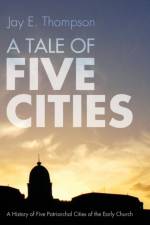
The worship and organization of the Christian church must be defined by the Hellenistic world in which it took root and emerged victorious over Roman Imperial paganism. The struggle of the early church to maintain a testimony and doctrine that would be faithful to the ""Rule of Faith""--which was established by the authority of certain Apostles who had the biggest impact in setting up the missional churches of the first century--and would conform to Jesus Christ's earthly ministry. Eusebia (piety) marks the Hellenistic understanding of all worship based on the relationships that are changed as a result of an encounter with a supreme being. This opens the door to explore all the aspects of Church History as a product of corporate worship. Five cities emerge in the apologetic and concilar church ages (150-850 CE) that have the greatest impact on the world of Christianity for all time. Those churches are called the Patristic churches because their bishops became the power holders of all the churches (for good or for bad). This book provides insight into the contribution of the five patriarchal cities (Jerusalem, Antioch, Alexandria, Rome, and Constantinople) to the worship, polity, doctrine, and traditions of the church. The account begins with the exegetical back-drop of the Hebrew and Greek words for worship and the impact of these in the milieu of a Jewish church and a gentile church. The study of the patriarchal leadership in the apostolic, apologetic, and concilar ages of the church marks a clear direction of the church to the beginnings of the medieval era. It clearly delineates the differences in the East and West and the struggles within the Empire to gain unity through preeminence of polity. A unique approach was taken to combine the historical events and activities of the leaders of each of the churches with motive and intent toward good or bad. It was written from a Protestant and Orthodox perspective, which adds insight to set up the spiritual and theological reasons for the Reformation that begun under Wycliffe, Huss, and later Luther.
Abonner på vårt nyhetsbrev og få rabatter og inspirasjon til din neste leseopplevelse.
Ved å abonnere godtar du vår personvernerklæring.