









Gjør som tusenvis av andre bokelskere
Abonner på vårt nyhetsbrev og få rabatter og inspirasjon til din neste leseopplevelse.
Ved å abonnere godtar du vår personvernerklæring.Du kan når som helst melde deg av våre nyhetsbrev.

Education within the Church and within the family is the only way to change old patterns and smash cultural stereotypes. Reid and Hawkley reexamine God's message of love for all people through the lens of Scripture. Children Together will help the church teach children about inequality and discrimination and help children learn to value themselves and others for who they are. Each age-appropriate lesson covers topics such as learning to work together, exploring individual potential, media and stereotypes, and sexual harassment. This resource will be a welcome addition to parents, pastors as teachers, Christian educators, and those who do ministry with children.
""Churches should be the backbone of our neighborhoods . . . Many American churches are faced with the decisions of their lives. Will we live? Or will we die? . . . the question of 'Will we live or will we die' is a question of will, as in having the will to live; and it is also a question of who is included in the 'we.'""--from Chapter One ""The State of Mainline Churches""Can This Church Live? is the true story of a church that had an opportunity to thrive in the midst of a community that greatly changed its demographics. Matthews directs readers through this painful process he experienced with the pastor and church leaders as they faced a harsh dilemma--a dilemma that more and more churches are facing today--can or will a predominantly white church embrace and welcome the people of color who live within the community? Using H. R. Niebuhr's famous text Christ and Culture, Matthews uses Niebuhr's five categories to analyze churches in crisis: 1) Christ against Culture; 2) Christ of Culture; 3) Christ above Culture; 4) Christ and Culture in Paradox; and 5) Christ the Transformer of Culture.The book also discusses moral and ethical issues as they relate to the Gospel and social transformation. Clergy and lay leaders will find this a valuable resource to help them discuss ways in which they can stabilize their church before they are confronted with a similar predicament.
Drawing together scholars from fields of biblical studies, systematic theology, liturgics, and pastoral theology, In Praise of Worship questions an overemphasis on singing and music (alone) as worship in today's church. Whilst not minimizing moments of conscious and deliberate worship, the authors show that according to a close reading of Scripture and a clear understanding of theology, the whole of our lives is to be considered as worship-glorifying to the Lord who deserves such honor.Contributors:Nancy AultAlastair CampbellDavid J. CohenDavid G. FirthTravis FitchMichael W. GoheenStephen HaarBrian S. HarrisChris JackAngela McCarthyAlan NivenJohn W. OlleyMichael O'NeilRobin ParryMichael ParsonsMichael J. Quicke
In a post-modern world leery of abstracted theology, might the answers to the deep question of why Jesus died on the cross be found, not in theology textbooks, but in the stories of the Bible? What if the playing out of one Hebrew word, hesed, tells us who we are, who God is, and what Jesus' life and death were all about? Embraced: Prodigals at the Cross tells the story of hesed, God's steadfast love, as it weaves its way from our creation for relationship, through our rejection of that relationship, to God's centuries-long pursuit of reconciliation. The story ends in embrace, the embrace of a good father who runs to his prodigal son, and a loving God who takes on human flesh to reach out to us on the cross. This book is God's story. This book is our story.""In a superbly-crafted, poignant, and powerful gift, Steve Sherwood portrays the profoundly simple message of Christ's redemption through the genre of story. In counterpoint to the traditional Western theology channeled through predominantly guilt-oriented legal metaphors, he picks up on the relational biblical themes of reconciliation, covenant commitment, grace, forgiveness, and restoration. He incarnates these in profound stories of estrangement and restoration in a kaleidoscope of transformingly beautiful art and stories of God's love. Sherwood presents a timely gift of a fresh interpersonal perspective long distorted by exclusively legal atonement categories.""--R. Larry SheltonProfessor of TheologyGeorge Fox Evangelical Seminary""Steve Sherwood has learned from the Master's storytelling skills. These echoes of the Atonement are wry and raw, passionate and poignant. Theology depends upon such refreshing and rekindling. Bravo!""--Craig DetweilerCenter for Entertainment, Media, and CulturePepperdine UniversitySteve Sherwood is Assistant Professor of Christian Ministries at George Fox University and a twenty-five year veteran of ministry to young people in Young Life. He lives, with his wife and two daughters, in Newberg, Oregon.
Freedom of the Self revitalizes the question of identity formation in a postmodern era through a deep reading of Christian life in relation to current trends seen in the Emergent and Missional church movements. By relocating deep identity formation as formed and released through a renewed appraisal of kenotic Christology coupled with readings of Continental philosophy (Derrida, Levinas, Marion) and popular culture, Keuss offers a bold vision for what it means to be truly human in contemporary society, as what he calls the ""kenotic self."" In addition to providing a robust reflection of philosophical and theological understanding of identity formation, from Aristotle and Augustine through to contemporary thinkers, Freedom of the Self suggests some tangible steps for the individual and the church in regard to how everyday concerns such as economics, literature, and urbanization can be part of living into the life of the kenotic self.""Take insights from the emergent church, add a strong dose of continental philosophy's focus on the other, sprinkle in insights from virtue ethics, include open theology's view of a loving God whom Christians should imitate, add missional theology's concern for engaging culture, and then place at the center a persuasive Christology of kenosis. Cook elements slowly; let ingredients intermingle and flavors mix. What emerges is this provocative book-a theological feast that nourishes and inspires!""--Thomas Jay Oord, editor of Creation Made Free: Open Theology Engaging Science""Impassioned, theologically astute, and deeply insightful, Freedom of the Self establishes Keuss as a provocative and exciting new voice in the Emergent church movement. What he brings to the table is sure to broaden and sharpen the ongoing conversation.""--Timothy Beal, author of The Rise and Fall of the Bible""Jeffrey Keuss models the wide-ranging discussions in the emerging conversation about the Emergent Church even as he expresses concern that in the haste to correct for an overemphasis on the self in modernity, the self may be left too far behind. He calls for a more robust view of the self and its freedom even while calling for a view of the kenotic self . . . It is a book full of insights. It makes one want to be in his classes!""--Dan R. Stiver, author of Life Together in the Way of Jesus ChristJeffrey F. Keuss is Professor of Christian Ministry, Theology, and Culture at Seattle Pacific University. He is the author of A Poetics of Jesus (2002) and editor of The Sacred and the Profane: Current Demands in Hermeneutics (2003).
Simone Weil is one of the few spiritual thinkers to give an adequate account for the place of suffering in our world. We traditionally view suffering as that which thwarts our most profound longings and happiness. Simone Weil insists that suffering is not a problem to overcome. Suffering, as it arises in the sacrifices of divine and human love is a fact of life, neither to be rejected nor invited, but also something that can shape human life by opening itself to the divine love. Here again is Springsted's comprehensive treatment of Simone Weil's religious insights, unique is her understanding of the scientific modern age without cynicism, meanwhile embracing much of traditional Christian spirituality without naivete. In her unusual approach that is new and yet draws on ancient thought, Weil supports a radical theology, insisting that the oppressed - with whom she identified - are not assisted by a transfer of power, but they must, like those in power, view suffering as a way of overcoming the human penchant for self-centeredness, and as a way of drawing closer to the world in love and as a whole.
Beyond Belief: Theoaesthetics or Just Old-Time Religion? explores the possible reemergence of a theological dimension to contemporary art. Long estranged from symbol and sacrament, contemporary artists--and those who think and write about them--seem to have turned once again to a vision rooted in the sacred. In an era marked culturally by world-weary cynicism and self-conscious irony, a new "humanism" may be emerging, one which aims to move beyond fragmentation and opposition to integration and unification. The aim of this book is not to propose a resurgence of religious iconography, but rather to give voice to long-suppressed--often maligned, and certainly professionally risky--positions informed by and reverberating with themes of the sacred. The essays included here, by a range of scholars working on these issues today, originated as a lively and spirited session of the 2008 College Art Association annual conference.
Latinas/os are the fastest growing "minoritized" ethnic group in the United States and Islam is one of the fastest growing religions in the United States. It is therefore no surprise that the Latina/o Muslim population is one of the fastest growing communities in the United States. As a minority within a minority, the ways in which U.S. Latina/o Muslims construct their identity is not only interesting in itself but also of interest for how they challenge traditional understandings of U.S. Latina/o identities. This book explores the process of conversion of U.S. Latina/o Muslims and how it becomes the foundation for the re-construction of their U.S. Latina/o identities. Furthermore, since Latina/o religious experience in the United States up until now has largely assumed Christianity as the de facto religion, Latina/o y Musulman brings a whole new angle to studies in this area. Martinez-Vazquez lays the broader analytical foundation for how the religious experiences of non-Christian U.S. Latinas/os shape the process of identity construction.
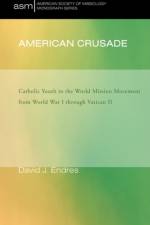
Perhaps no era in Christian history since the time of the apostles presented a greater challenge to the spread of faith than the twentieth century. The First World War in particular resulted in nearly disastrous losses for the world mission movement. Christian countries were engaged in fratricidal conflict, missionaries were forced to return to their homelands, and traditional sources of mission funding dried up.In response to the missions crisis, American Catholic youth devoted themselves to a program of ""prayer, study, and sacrifice""--the Catholic Students' Mission Crusade. Beginning with less than fifty members, the movement grew to over one million youth, and worked to foster support for missionaries in the field, promote missionary vocations, and educate youth about the needs of the church throughout the world. In the course of their ""crusade,"" the movement's youth were exposed the complexities and challenges of diverse religious, political, and cultural worlds, including illiteracy in rural America, communism in China and Eastern Europe, and famine and disease in sub-Saharan Africa. In light of this experience, as well as the Second Vatican Council's reformulation of the Catholic Church's approach to missions, by the late 1960s the movement began to question its goal of converting the world, leading to the Crusade's crisis of faith and eventually to its disbanding.By exploring the fascinating story of the Catholic Students' Mission Crusade, this study offers new insights into the growth of the church amidst contemporary obstacles and historically non-Christian cultures, providing a bridge to understanding the current challenges to Christian globalization.
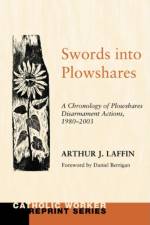
On September 9, 1980, the Plowshares Eight entered a General Electric plant in King of Prussia, Pennsylvania, and enacted the biblical command to ""beat swords into plowshares"" by hammering on the nose cones of two nuclear warheads and pouring blood on documents. Since that time, other small groups and individuals have entered manufacturing plants and military bases throughout the U.S., as well as in Australia, Germany, England, Ireland, Sweden, and Holland, to disarm components of nuclear and conventional weapons systems. As of Spring 2003 there have been over 150 people who, using hammers and other symbols, have carried out over 75 plowshares and related disarmament actions.This book recounts each of the actions that have occurred over the last twenty-three years and includes information about the trials and sentences plowshares activists have received. Photos of some of the actions and participants are also included in this chronology as well as other resources for peace and justice.""This book is an important contribution to the history of the peace movement in the U.S. It recounts the dramatic plowshares actions which, over the last twenty-three years, have kept alive the spirit of resistance to the arms race, and inspires us with the courage of all those who have gone to prison for their stand against the war makers . . . I hope it will be read by people all over the country to instruct and inspire them.""-- Howard ZinnAuthor, A Peoples History of the United States
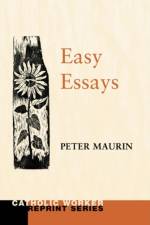
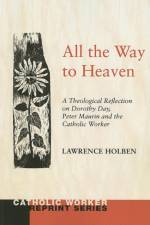
I first met Peter in December, 1932, when George Shuster, then editor of The Commonweal, later president of Hunter College, urged him to get into contact with me because our ideas were so similar, both our criticism of the social order and our sense of personal responsibility in doing something about it. It was not that ""the world was too much with us"" as we felt that God did not intend things to be as bad as they were. We believed that ""in the Cross was joy of Spirit."" We knew that due to original sin, ""all nature travailleth and groaneth even until now,"" but also believed, as Juliana of Norwich said, that ""the worst had already happened,"" i.e., the Fall, and that Christ had repaired that ""happy fault.""In other words, we both accepted the paradox which is Christianity . . . Peter's teaching was simple, so simple, as one can see from these phrased paragraphs, these Easy Essays, as we have come to call them, that many disregarded them. It was the sanctity of the man that made them dynamic. Although he synopsized hundreds of books for all of us who were his students, and that meant thousands of pages of phrased paragraphs, these essays were his only original writings, and even during his prime we used them in the paper just as he did in speaking, over and over again. He believed in repeating, in driving his point home by constant repetition, like the dropping of water on the stones which were our hearts. -- Dorothy Day
From the Author: ""What I've aimed for... in this book is neither academic analysis nor a history of the Worker movement per se. Rather, my interest has been a theological exploration of the Catholic Worker vision in all its rich and resonating breadth. The goal has been to present and ... to promote that vision as what I am convinced the movement's founders, Peter Maurin and Dorothy Day, understood it to be: not, finally, a matter of political theory or philosophy ... but rather of profound religious conviction and insight.""____________ ""Indeed, what is most striking about the now more than sixty years of Catholic Worker reflection, writing and living is the movement's audacity of conviction and action: the unflinching consistency of its call to discipleship; the comprehensiveness of its attempt to bring together all aspects of life into a divinely-ordered, balanced whole; the diversity of philosophical and theological sources it seeks to meld into a unified model for truly human living; the unembarrassed simplicity of its hope.""
Historians have noted the connections between the Wesleyan Methodist movement that began in the eighteenth century, the emergence of African American Methodist traditions and an interdenominational Holiness movement in the nineteenth century, and the birth of Pentecostalism in the twentieth century. This volume, written by historians, theologians, and pastors, builds on that earlier work. The contributors present a diverse array of key figures-denominational leaders and mavericks, institutional loyalists and come--outers, clergy and laity--who embodied these movements. The authors show that in spite of their differing historical and cultural contexts, these movements constitute a distinct theological family whose confident and expectant faith in the transforming power of God has significant implications for the renewal of the contemporary church and its faithfulness to God's mission in the world today.ContributorsCorky AlexanderEstrelda AlexanderKimberly Ervin AlexanderLeslie D. CallahanBarry L. CallenDouglas R. CullumDennis C. DickersonD. William FaupelPhilip HamnerDavid Aaron JohnsonJ. C. KelleyHenry H. Knight III William C. KostlevyDiane K. LeclercJoshua J. McMullenRodney McNeallStephen W. RankinHarold E. Raser Douglas M. StrongMatthew K. Thompson Wallace Thornton Jr.L. F. Thuston Arlene Sanchez WalshSteven J. LandLaura GuyJohn H. Wigger
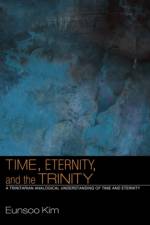
One of the vital issues in contemporary Christian theology is the problem of a renewed understanding of God's eternity and its relation to time. This is not merely a peripheral doctrinal issue, but lies at the heart of our understanding of God and humanity, and contributes to our entire worldview. This study focuses on a long-standing debate between two competing views on God's eternity: one focused on God's absolute timelessness in classical theism, and the other on God's temporal everlastingness in contemporary panentheism. In contrast to both of these well-worn options, this book presents an alternative Trinitarian analogical understanding of God's eternity and its relation to time, especially through a critical reflection on Karl Barth's and Hans Urs von Balthasar's engagement of the issue. This analogical approach, based on the dynamic and dramatic concepts of God's being-in-relation and of the Triune God's communicative action in eternity and time, has the potential to resolve the debate between absolute timeless eternity and temporal everlasting duration.
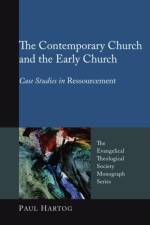
As ""evangelicals"" face future challenges, many are turning back to the ancient church for inspiration. But these ancient-future approaches remain diverse and sometimes even at odds with one another. This volume demonstrates and analyzes the complexity of such contemporary church-early church engagements. Six scholars share diverse insights from the Patristic period, including lessons on evangelism and discipleship, community formation and maintenance, use of the ""rule of faith,"" the preaching of social ethics, responses to cultural opposition, and Christological development. The volume closes with two critical responses, from confessional Lutheran and Baptist perspectives. These collected essays will remind contemporary readers of the importance of a reflective and responsible ressourcement of Patristic wisdom.With contributions from:Rex D. Butler Francis X. Gumerlock Bryan M. LitfinBrian J. MatzW. Brian SheltonEdward SmitherGlen L. Thompson
The post-millennial vision of nineteenth century America led to greater educational opportunities for women, but these were focused on women's domestic efficacy in developing ""messianic mothers"" to help create the kingdom of God on earth. Yet, by embracing the doctrine of sanctification, Wesleyan Holiness women were able to move from ""women's sphere"" (domesticity) to the public sphere (public ministry), which they had come to see as their intended place. Not only did they make this shift for themselves, but they created Christian institutions of higher education that provided opportunities for both women and men to prepare for public ministry.At the beginning of the twentieth century, a new force would enable women to further demonstrate their equality in the work of the Lord. In 1901, the Pentecostal movement was ushered in when Agnes Nevada Ozman became the first person in the modern era to speak in tongues. This movement saw the promise and fulfillment of equal empowerment of men and women for service by the Holy Spirit, which sent individuals throughout the world to further the kingdom of God. As the theological shift from a postmillennial to a premillennial view occurred, opportunity became necessity as priority was given to the creation of schools to prepare ministers to reach lost souls before the return of Jesus. The founding of such schools was pioneered by Wesleyan Holiness and Pentecostal women who carried the torch as their movement grew into the twentieth century.This book compiles the inspiring stories of some of the most notable women who, from society's perspective stepped outside established roles to claim a significant place in the history of American higher education.
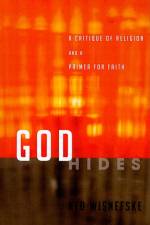
GOD HIDES is a critique of contemporary christian faith. It argues that faith should not be understood as the result of spiritual seeking, but rather as rooted in moral living. Starting with the challenge of Bonhoeffer's ""religionless Christianity,"" it argues for a common morality, and then shows how that morality leads to Christian faith. The thesis is that in order for us to serve our neighbor whom we see, and not seek God whom we cannot see, God hides. Drawing upon the rich tradition of religious thought from Luther, Kant, Kierkegaard, and Bonhoeffer, this book offers a way past the religious battles in the current culture war.Wisnefske points to the emptiness of the Christian promise of salvation in a time when virtually no one believes there is a hell to be saved from. Instead, he shows that it makes sense today--in view of our nuclear arsenals and environmental crisis--to claim that life is threatened by death. Our present circumstances provide new understanding into the biblical view that primeval chaos threatens creation. A distinctive feature of the book is that it develops the traditional understanding that sin and death are powers threatening creation. Christian faith, accordingly, is best understood as the living hope that creation will be saved from the violence and destruction that threaten to return it to chaos.
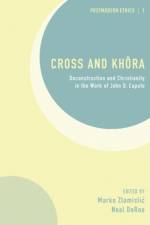
This volume poses the question of the relationship between the two main influences on the thought of John D. Caputo, one of the most well-known philosophers of religion working in North America today: Jacques Derrida and Jesus Christ. Given the seemingly abstract character of Derrida's account of the messianic, how can one reconcile deconstruction and the ""concrete messianism"" of Christianity, as Caputo tries to do over and over again? How can one hold together the love of a God willing to be crucified and the dry, desert khora, which doesn't care?This collection of essays from world-renowned scholars seeks to illuminate the difficulties inherent in this seemingly contradictory pair of influences. With his trademark wit and humor, Caputo responds to his interlocutors while clarifying his position on numerous matters of interest to the church and in the academy. In addition to dealing with the concern for issues of hermeneutics, phenomenology, and negative theology for which Caputo has become famous, these essays also evaluate Caputo's legacy in fields previously not thought to be affected by his ""deconstructive"" version of religion: feminism, sacramental theology, Analytic philosophy of religion, and Christology.
This important work not only contributes to understanding the origins and character of John's christological tensions, but it also outlines a new set of theories regarding several innovative dialogical approaches to the Johannine text. In his new introduction to this edition, Anderson engages constructively the responses of his reviewers and outlines his own theories regarding John's dialogical autonomy. Posing a comprehensive new synthesis regarding John's composition, situation history, relations to Synoptic traditions, agency Christology, historicity, and theological tensions, Anderson here summarizes his most significant theories published since it first appeared. In so doing, advances suggested by this pivotal text are laid out in a new set of paradigms addressing the Johannine riddles in fuller detail.
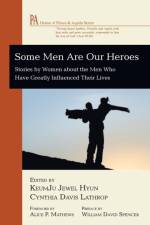
Do the little things we do and say really make a difference in the lives of others? Some Men Are Our Heroes answers this question with a resounding "yes" as eight accomplished Christian women tell the stories of the men in their lives who helped them achieve remarkable things for God's kingdom. These touching stories of women from around the world and the fathers, husbands, brothers, pastors, colleagues, and friends who encouraged, strengthened, and challenged them along their life journeys will warm the hearts of women and men alike.
Michael Haneke is one of Europe's most successful and controversial film directors. Awarded the Palme d'Or and numerous other international awards, Haneke has contributed to and shaped contemporary auteur cinema and is becoming more and more popular among academics and cinephiles. His mission is as noble as it is provocative: he wants "to rape the audience into independence," to wake them up from the lethargy caused by the entertainment industry. The filmic language he employs in this mission is both highly characteristic and efficient, and yet his methods are open to criticism for their violence toward and manipulation of the audience. The aim of this book is to analyze critically Haneke's aesthetics, his message, as well as his ethical motivation from an interdisciplinary and intercultural perspective. Contributors to the book come from a variety of academic disciplines and cultural backgrounds-European and North American.
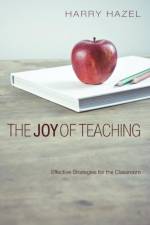
Over the centuries, multitudes of women and men have gone into teaching as their chosen profession. Most successful instructors find joy in teaching and are glad to share that joy with others. Harry Hazel is one teacher who has found his forty years in the classroom highly satisfying. In this book, he not only includes insights from other Canadian and American teachers he once interviewed, but he primarily reflects on a long and happy career.While the material in this book is slanted toward college teaching, many of the techniques could also be applied to other levels of instruction, such as elementary, secondary, or adult education. Key principles include Motivating yourselfMotivating studentsPolishing your speaking skills Taking the pain out of writingMaking the joy last
The book of Acts has served as the foundational biblical text for the development of Pentecostal theology and biblical studies since the outpouring of the Spirit at the Azuza Street Revival in 1906. Now, over one hundred years have past since the Azuza Street Revival and the book of Acts is still at the forefront of the Pentecostal dialogue. Trajectories in Acts draws together the work of leading Pentecostal scholars each bringing their expertise to bear in tracing and developing trajectories in Acts. These essays have been brought together as a Festschrift in order to celebrate the influence, scholarship, and teaching career of John Wesley Wyckoff, a noted figure in the Assemblies of God and a known voice in the Pentecostal dialogue.
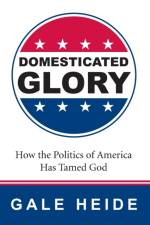
Domesticated Glory critically examines the marriage between Evangelicalism and American politics. The study begins by engaging popular political pundits who wish to transform Christianity into an arm of the state. It then moves to examine some of the theological foundations proposed as support for the church's propping up of American political ideology. Finally, the study provides a more robust politics of the church by outlining how the church might act as a politics in itself. Thus, the church may gain a political voice as church in such a way as to make the world know it stands in need of redemption. This is a far cry from the liberal attempt of the Social Gospel and many modern evangelicals to transform the world into a pseudo-church by cultural or social control. Unlike attempts to engage culture on its own terms in the political arena or to escape politics by avoiding any public testimony to the Gospel, this study lays out a way for the church to act as church in the public square, witnessing to a Gospel concerned primarily about the universe's King and His future Kingdom.
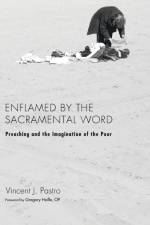
Christian proclamation, says Dietrich Bonhoeffer, is the living Christ walking among the people. Preachers know that Jesus is the living Word, and that the Spirit of Jesus animates the preaching event. Preaching is an epiclesis, an invocation of the Holy Spirit over God's holy people. As such, it must touch their imagination. Pastro proposes that preaching is the living ecclesial presence of Jesus Christ, Sacramental Word of the God of the poor. The Word speaks from the imagination of the poor-the economic poor, but also the "new poor" of the twenty-first century: entire indigenous cultures, women, those marginalized because of their sexuality, undocumented immigrants in dominant cultures, and many others. All Christian preachers in every context are called to solidarity with the poor.
Open Theology offers an advantageous framework for engaging the sciences. With its emphasis upon creaturely freedom, relationality, realist epistemology, and love, Open Theology makes a fruitful dialogue partner with leading fields and theories in contemporary science.In Creation Made Free, leading proponents of open theism explore natural and social scientific dimensions of reality as these dimensions both inform and are informed by Open Theology. Important themes addressed include evolution, creation ex nihilo, emergence theory, biblical cosmology, cognitive linguistics, quantum theory, and forgiveness.
Tithing is a well-known church practice in our day and age, but do church-goers really practice it? When did the concept of tithing begin? How is it justified? What does the Bible say about it?You Mean I Don't Have to Tithe? is a detailed study on the controversial topic of tithing, covering over 2,000 years of well-known theologians regarding this topic. Dr. Croteau's intense tithing investigation will enable you to explore tithing and related topics in-depth, expounding many misconceptions of tithing as well as aiding in a correct understanding of this popular topic.
In little over a century, the Pentecostal movement has emerged from small bands of revival seekers to become one of the largest Christian groups in the world. Primarily a movement within Western Christianity for much of its brief history, it is increasingly characterized as a global movement. Pentecostal theology and ministry in a Western context must engage global Pentecostalism and be willing to rethink its traditional patterns of thought and practice in light of the evolving nature of the movement.The essays in this book come mainly from the McMaster Divinity College 2008 Pentecostal Forum: ""The Many Faces of Pentecostalism: Pentecostalism and Globalization."" The first section outlines the nature of globalization and establishes it as the context for contemporary Pentecostal theology and ministry. The other contributions explore the impact of globalization on traditional areas of Pentecostal theology, such as Spirit baptism and speaking in tongues, and twenty-first-century Pentecostal ministry.
A fundamental requirement in an inclusivist understanding of the relationship between Christianity and other religions is evidence of God's salvific activity outside any knowledge of Christ. This is commonly identified in the religion of Old Testament Israel. On this basis an analogy (the ""Israel analogy"") is drawn between the religion of the old covenant and contemporary non-Christian religions. Closely related is the parallel argument that as Christ has fulfilled the Old covenant, he can also be seen as the fulfillment of other religious traditions and their scriptures.This study outlines the use of the Israel analogy and the fulfillment model, subjecting these concepts to a biblical and theological critique revealing that the exegetical and patristic data are misconstrued in support of these concepts. Furthermore, the Israel analogy and the fulfillment model undermine the sui generis relationship between the old and new covenants and fail to respect the organic, progressive nature of salvation history. They also misconstrue the old covenant and the nature of its fulfillment in the new covenant. The Israel analogy and fulfillment model rely on a correspondence between the chronologically premessianic (Israel) and the epistemologically premessianic (other religions), and therefore consider the ""BC condition"" to continue today. In so doing, they undermine the significance of the Christ-event by failing to appreciate the decisive effect of this event on history and the nature of existence. It marks a radical turn in salvation history, a crisis point, rendering the BC period complete and fulfilled. Therefore the concept of a continuing ""premessianic"" condition or state is seriously flawed, as are the Israel analogy and fulfillment model. Thus the inclusivist paradigm reliant in large part on these defective concepts is also problematic, and proponents of this paradigm need to reconsider its basis.
Abonner på vårt nyhetsbrev og få rabatter og inspirasjon til din neste leseopplevelse.
Ved å abonnere godtar du vår personvernerklæring.