










Gjør som tusenvis av andre bokelskere
Abonner på vårt nyhetsbrev og få rabatter og inspirasjon til din neste leseopplevelse.
Ved å abonnere godtar du vår personvernerklæring.Du kan når som helst melde deg av våre nyhetsbrev.

Morna D. Hooker is Professor Emerita of Divinity at Robinson College, University of Cambridge, England. She is coeditor of the Journal of Theological Studies and the author of nine books, including Pauline Pieces and From Adam to Christ.
American Theological Inquiry (ATI) reaches thousands of Christian scholars, clergy, and other interested parties, primarily in the U.S. and U.K. The journal was formed in 2007 by Gannon Murphy (PhD Theology, Univ. Wales, Lampeter; Presbyterian/Reformed) and Stephen Patrick (PhD Philosophy, Univ. Illinois; Eastern Orthodox) to open up space for Christian scholars who affirm the Ecumenical Creeds to contribute research throughout the broader Christian scholarly community in America and the West.The purpose of ATI is to provide an inter-tradition forum for scholars who affirm the historic Ecumenical Creeds of Christendom to constructively communicate contemporary theologies, developments, ideas, commentaries, and insights pertaining to theology, culture, and history toward reforming and elevating Western Christianity. ATI seeks a critical function as much or more so as a quasi-ecumenical one. The purpose is not to erase or weaken the distinctives of the various ecclesial traditions, but to widen the dialogue and increase inter-tradition understanding while mutually affirming Christ's power to transform culture and the importance of strengthening Western Christianity with special reference to Her historic, creedal roots.""Theologians, would-be theologians, and the theologically attentive will want to check out American Theological Inquiry.""~ Richard John Neuhaus (1936-2009), First Things
THE RAY S. ANDERSON COLLECTION by WIPF & STOCK PUBLISHERS Ray Sherman Anderson (1925-2009) worked the soil and tended the animals of a South Dakota farm, planted and pastored a church in Southern California, and completed a PhD degree in theology with Thomas F. Torrance in New College Edinburgh. He began his professional teaching career at Westmont College, and then taught and served in various administrative capacities at Fuller Theological Seminary for thirty-three years (retiring as Professor Emeritus of Theology and Ministry). While teaching at Fuller, he served as a parish pastor, always insisting that theology and ministry go hand-in-hand. The pastoral theologian who began his teaching career in middle age penned twenty-seven books. Like Karl Barth, Prof. Anderson articulated a theology of and for the church based on God's own ministry of revelation and reconciliation in the world. As professor and pastor, he modeled an incarnational, evangelical passion for the healing of humanity by Jesus Christ, who is both God's self- revelation to us and the reconciliation of our broken humanity to the triune God. His gift of relating suffering and alienated humans to Christ existing as community (Dietrich Bonhoeffer) is a recurrent motif throughout his life, ministry, and works.> Todd H. Speidell, General Editor
This study builds upon recent scholarship exploring the significance of the Old Testament covenant metaphor in the Johannine writings. By examining the Gospel of John as a whole through a narrative lens and focusing on several key dialogues, the author sheds light on the dialogical nature of the revelatory process and the central role of covenant for the Fourth Evangelist. Also incorporating recent scholarship that suggests the evangelist understood himself to be writing Scripture based upon fulfillment language present in summary statements across the Gospel, and demonstrating a relationship between the Fourth Gospel and ancient drama that renders speech as action, this work attempts to construct a new paradigm for reading John against the background of the Old Testament covenant metaphor. The claim is twofold: the Johannine story of Jesus Christ is a carefully crafted literary treatise theologically underpinned by discourse on covenant and Scripture, and the Fourth Evangelist provides catechesis to a believing community on the nature of its faith in the God of Israel's ongoing covenant with the created order. By grasping the theological fabric of the evangelist, the richness of the dialogue and imagery of his Gospel is allowed to have its full voice in terms of covenant fulfillment and the ongoing commitment of God to a believing people.
Adolescent girls between the ages of fifteen and eighteen shared with Parker and her co-authors life stories that show how they struggle to make sense of their experiences of racism, sexism, classism, and heterosexism in light of their belief in God or their concept of a higher divine power.The groups of adolescent girls interviewed include Korean Americans, African Americans, Native Americans, Latinas, working-class whites, and lesbians.The closing chapter revisits the prominent themes from each chapter, challenging those concerned about fostering a spirituality that is life giving for girls who struggle with racism, classism, sexism, and heterosexism. In addition, it explores the concepts of realization, resistance, resilience, and ritual as four essential components for nurturing a wholesome spirituality in adolescent girls
This is a reproduction of a book published before 1923. This book may have occasional imperfections such as missing or blurred pages, poor pictures, errant marks, etc. that were either part of the original artifact, or were introduced by the scanning process. We believe this work is culturally important, and despite the imperfections, have elected to bring it back into print as part of our continuing commitment to the preservation of printed works worldwide. We appreciate your understanding of the imperfections in the preservation process, and hope you enjoy this valuable book.
William Seymour Tyler (1810 - 1897) was born in Harford, Pennsylvania, where he grew up. He went to Hamilton College before coming to Amherst College for a year and graduating from Amherst in 1830. Afterwards, he attended Andover Theological Seminary while intermittently teaching at Amherst Academy, 1830-1831, and tutoring at Amherst College, 1832-1834. He pursued his theological course until 1836 when he became professor of Latin and Greek Languages and Literature at Amherst College, 1836-1847, and subsequently of Greek Language and Literature, 1847-1893. Following this, he was professor emeritus until his death in 1897.Tyler was an ordained preacher and throughout his teaching career delivered many sermons and eulogies. He was also a prolific author. Among his works are A History of Amherst College, Memoirs of Henry Lobdell, Prayer for Colleges, Germania and Agricola of Tacitus, Histories of Tacitus, Plato's Apology and Crito, Demosthenes de Corona, Philippics and Olynthiacs of Demosthenes, Plutarch on the Delay of the Deity, and Theology of Greek Poets.
Much has been written about marriage from the sociological and psychological point of view and as an object of civil and canon law. But in terms of systematic theology this treatment of marriage as a sacrament may very well be unique. Every effort has been made to keep the text from becoming too academic while at the same time providing the average educated reader with a wealth of original insights into the "mystery" of marriage: in creation and as transformed by Christ. Chapters cover sacramental consent, bond, and covenant as well as the quest for the sign. Such thorny problems as the role of faith in the sacrament, marriage with an unbaptized person, the most pressing ecumenical questions and the relationship between the sacrament and contraception are studied in depth. Finally, the "sacrament of family" is treated at some length with an eye to its social and redemptive dimensions.
During the mid-twentieth century Pentecostal theology was co-opted by fundamentalism and its dispensational brand of millennial eschatology. Fundamentalist dispensationalism not only reinterpreted the original Pentecostal vision of the latter-rain outpouring of the Spirit in the last days but undercut its raison d'etre as a people empowered by the Spirit of Pentecost to participate in the kingdom of God. Yet eschatology is much broader than twentieth-century dispensationalism, and Pentecostal eschatology is diverse, reflecting the diversity of Pentecostal and Charismatic spiritualities. There is no one Pentecostal eschatology but many Pentecostal eschatologies. This collection of essays from established scholars and rising stars offers fresh perspectives in eschatology for the Pentecostal and Charismatic movements. The fresh readings of eschatology in this volume are valuable because they demonstrate that Pentecostals no longer need to look to others to interpret their theology for them but can stand as scholars and thinkers in their own right.
Most Evangelical Christians only know and thoroughly believe the traditional doctrine of eternal torment in Hell for the lost and eternal bliss in Heaven for the saved. As a result, they neglect scores of Bible verses with that provide an alternative teaching. This book veers from some long-held assumptions while reinforcing others, as it humbly attempts to discover the truth of what the Bible teaches about the hereafter. Written for the serious layman, scripturally founded clergy, and open-minded scholar, Dead Soul Syndrome provides wisdom and thought-provoking insight for those interested in thinking anew about heaven and hell.
Sets thinking and preaching about atonement in new directions.
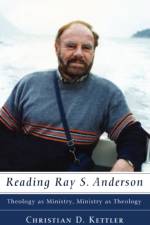
Why is theology often divorced from ministry? Why is ministry left bereft of a robust theology? Ray S. Anderson, a professor at Fuller Theological Seminary for over thirty years, has left a legacy of provocative reflections on these questions. In this book Christian Kettler provides a sure guide to major themes in the work of one of the most creative theological minds to have sought to integrate theology and ministry.Early experience on a South Dakota farm and in a California parish helped form the theologian whose radical incarnational theology of the ""kenotic community"" provided a new basis for a broader, risk-taking ecclesiology. Anderson also brought theological anthropology to the front of the agenda, and therefore into ministry to actual hurting human persons. His challenging theological reflections can provoke the mind, stir the heart, and guide compassionate and wise incarnational ministry.Each chapter ends with a case study from an actual life situation, to ""test out"" and work through the implications of Anderson's theology.
As an introduction to Christian systematic theology, this volume treats all the main theological topics-from God to last things-seeking to explicate critically the understanding of them implicit in Christian faith itself in terms at once appropriate to Jesus Christ and credible to human existence. Its criteria, accordingly, are the ultimate criteria of on the one hand, specifically Christian experience of Jesus as expressed by the apostolic witness, and on the other hand, generically human experience of existence as expressed by a sound philosophy. And, as befits an introduction, it employs these same criteria to clarify the process of actually doing Christian systematic theology. Thus it begins by explaining both what such a theology has to do and how it is to do it, and ends by considering what it means to do theology as a Christian calling, particularly as a professional theologian.
The Damascus road encounter between Jesus and Paul is foundational to understanding the early development of Christology, and, indeed, Christianity, since it is the first appearance of the post-ascension Jesus contained in the earliest Christian literature. This study examines the encounter as it is described in Paul's epistles and the book of Acts. Since Paul interprets his experience within the Jewish tradition, this study begins with a survey of epiphany texts in the Old Testament and other ancient Jewish literature. This reveals two new categories for appearances of God, angels, and other heavenly beings: Divine Initiative and Divine Response. This survey also finds two distinct patterns of characterization for God and other heavenly beings. These findings are then applied to Paul's accounts of his Damascus road encounter. Paul depicts the encounter as a Divine Initiative epiphany. This conclusion is significant, since it argues against the current view that the encounter was a merkabah vision. Paul's Christology in the Damascus road encounter is also significant, since Jesus is characterized as divine. Such divine characterization is not typical for heavenly beings in first-century CE epiphany texts. Thus, a high Pauline Christology appears to be present at a very early point. The three accounts of the Damascus road encounter in Acts also fit the pattern of Divine Initiative--not merkabah--and exhibit the high Christology of Paul's accounts. In fact, the three accounts in Acts are shown to form an intentionally increasing sequence culminating in the revelation that Paul was called to be an apostle by Jesus himself on the Damascus road.
G. Campbell Morgan (1863-1945) was a leading Bible expositor in England and the United States. Despite a lack of substantial formal training, Morgan was a prolific writer and teacher. Ordained into the Congregational ministry, he was the pastor of Westminster Chapel, London (1904-17 and 1933-45). Morgan also conducted two very successful teaching tours in the United States, including work with D.L. Moody's ministry.
1188 sermon suggestions -- One from every chapter in the Bible.Morgan's expositions sparkle as they enhance Bible texts from every chapter in the Bible. Concise and delightfully free of redundancy, these selections reveal the master expositor's keen, analytical insight into God's Word. To encourage preachers and Bible teachers to develop their own sermon and lesson themes creatively, the author mentions that these are sermon suggestions -- not sermons or sermon outlines. He intentionally left the notes untitled, ""preferring to let the text of Scripture be their only caption."" These penetrating truths, firmly anchored in Scripture, are best described by G. Campbell Morgan himself: On every page of...the ""God-breathed Writings"" there are many thoughts which stretch out like long, clear arms of light across the darkness, discovering things which otherwise were hidden, and often illuminating wider areas than those of the immediate context. They are searchlights. From the multitude of these, I have selected one in each chapter of the Bible. Perhaps the work will also serve to illustrate a method of showing how focal points of radiating light gather their radiance from the context.
G. Campbell Morgan (1863-1945) was a leading Bible expositor in England and the United States. Despite a lack of substantial formal training, Morgan was a prolific writer and teacher. Ordained into the Congregational ministry, he was the pastor of Westminster Chapel, London (1904-17 and 1933-45). Morgan also conducted two very successful teaching tours in the United States, including work with D.L. Moody's ministry.
Known as the ""Prince of Expositors,"" G. Campbell Morgan is at his best in this exposition of Paul's letters to the Corinthians. He makes these letters as timely and as applicable today as they were when written centuries ago. His lucid style and detailed interpretation illuminate the whole text, so that the Epistles become as fascinating to the lay reader as to the minister and Bible student. In this volume Dr. Morgan's sturdy faith stands out like a beacon, and his instinctive insight and close scrutiny bring out all the force of Christianity's greatest apostle. Here is a mine for preachers seeking new inspiration for their sermons and a handbook for Christian workers and laymen who wish to become better acquainted with the teachings of the Apostle Paul. G. Campbell Morgan is the author of more than seventy volumes, each of which shows its readers why this scholar and preacher could move more people with sheer exposition than any of his contemporaries.
Tom Dow asserts that Job does not go through his trials to somehow improve him. He is being tried by Satan, who seeks to break Job's and God's trust in one another. When that trust survives the worst that Satan and insensitive friends can do, both Job and God are vindicated. When Storms Come shows how the book of Job can be related to New Testament teaching, and how it can be a great help to people experiencing suffering and stress. It also serves as a resource for people ministering to those going through the storms of life.
The great American pastor-theologian Jonathan Edwards remains undeniably relevant today, more than 250 years after his death, as attested by the unending flurry of articles, books, and dissertations treating him. Despite this, virtually nothing has been written concerning Edwards's views on worship, a subject central to the Christian faith, and certainly to Edwards himself. This volume explores Edwards's perspective on both public and private dimensions of worship, aspects of which rise from well-understood Puritan categories, and proposes the practice of self-examination as a bridge between public and private devotion. As Ken Minkema, of the Jonathan Edwards Center at Yale, writes in the foreword, ""Ted Rivera's study is the first that systematically attempts to show us Edwards's views of worship, and so represents an important resource for scholars and religious practitioners alike who are interested in liturgy, 'the practice of piety,' and spiritual growth. Through an engagement with Edwards's own words--in letters, notebooks, and sermons--we learn of Edwards's own spiritual life, and of the nature of private and corporate devotion.""""Worship was a central feature of Jonathan Edwards's life, yet there has been little sustained study of this topic. Ted Rivera begins to fill that gap by providing a helpful account of some of the most important of Edwards's views and practices of worship.""--George MarsdenFrancis A. McAnaney Professor of History University of Notre Dame""The time is ripe for a book on Jonathan Edwards on worship, especially such a book as Ted Rivera provides. Many younger Christians, tired of modern and even postmodern novelties, are increasingly looking back for roots in Christian life, practice, and worship. Edwards was one of the foremost exemplars of Puritan worship . . . . [A]n entire chapter on self-examination, a practice at the heart of Edwards's preaching and personal devotional life . . . is reason enough for those interested in a deep Christian life to read, purchase, and 'go and do likewise.'""--John S. HammettProfessor of Theology and Associate DeanSoutheastern Baptist Theological Seminary""Early America was turbulent but full of adventure and excitement. The intellectual and spiritual engagement of Jonathan Edwards in the midst of that culture could not possibly have had worldwide implications without the remarkable grasp Edwards had of what it meant to walk with God in personal and corporate worship. Ted Rivera has captured in this volume the pathos of that walk with God. This is a unique volume.""--Paige PattersonPresidentSouthwestern Baptist Theological SeminaryTed Rivera is Assistant Professor of Religion at Liberty University in Lynchburg, Virginia.
""The essays in this book stress the importance of grandparents as bearers of the history, the values, and the traditions of each of the tribal units . . . The essays in this book take us into different tribal gatherings with their stories of family struggles and growth. They invite us to explore our memories of what we have experienced with our own grandparents and what we might yet find time to do with succeeding generations. We are shaped by our past and we have the capacity to shape those that come after us. What an opportunity; what a challenge.""--from the Foreword by James M. Wall, former editor and president of The Christian Century Foundation A distinguished group of Catholic and Protestant writers draw from their wealth of experiences as grandparents and those who have been ""grandparented."" They offer encouragement, insight, solace, and reminders to others who desire the spiritual and emotional wisdom of grandparents. These creative voices in the Christian community reflect on their experiences as and/or with their grandparents as a part of their faith journeys. Those contributors who are grandparents share their personal experiences and those who have been ""grandparented"" explore how their grandparents shaped their lives and faith journeys.Contributors - Paschal Baumstein - Gilbert H. Caldwell - Muriel Duncan - Cliff and Ulrike Guthrie - George McGovern - Donald E. Messer - Trish Muco-Tobin - M. Basil Pennington - Cora Crow Poteet - Bill Ritter - Donna Schaper - Robert C. Schnase - Donald B. Strobe - Stephen Swecker - Maren C. Tirabassi - Halbert Weidner
""Wimberly's latest work presents pastors, church lay leaders and scholars with a new lens to think critically and joyously about how Christian education undergirds and supports the worship experience in nurturing faith and hope in black parishioners.""--David L. Wallace, Sr., Dean, Johnson C. Smith Theological SeminaryThe Interdenominational Theological Center, Atlanta, Georgia ""This highly recommended work provides a thoughtful yet comprehensive framework of the black Christian worshipping community as the context where faith and hope are nurtured."" --Marsha Snulligan Haney, Associate Professor of Missiology and Religions of the World, The Interdenominational Theological Center, Atlanta, Georgia""This is a must read for all pastors and worship designers who desire to make worship relevant for African American Congregations."" --Cecelia M. Long, former General Secretariat of the General Commission on the Status and Role of Women in the United Methodist Church""Innovative, dynamic, thought provoking, and inspiring. A must read for pastors, church leaders, Christian educators, and anyone interested in revitalizing Christian education in the 21st Century.""--Yolanda Y. Smith, Assistant Professor of Christian Education,Yale University Divinity School, and author of Reclaiming the Spirituals: New Possibilities for African American Christian Education""Dr. Wimberly has seized upon the, heretofore, unspoken wisdom of the black church . . . Local church laity and clergy will easily access this fine work for local churches.""--Lynne Westfield, Assistant Professor of Christian Education, Drew Theological School, Madison, New Jersey""Wimberly understands comprehensively the ways education is embodied in congregational life. Indeed, she invites us to nurture faith and hope."" --Jack L. Seymour, Professor of Religious Education and Academic Dean, Garrett-Evangelical Theological Seminary, Evanston. IllinoisAnne E. Streaty Wimberly is Professor of Christian Education at The Interdenominational Theological Center in Atlanta, Georgia. She is the author of several books including Soul Stories: African American Christian Education (1994).
These Three reclaims the theological virtues of faith, hope, and love from a Protestant, scriptural perspective. Robinson surveys the current state of the church and the decline of morality and civility in American society; explores the history of the virtues from Greek thought through Aquinas and focuses on three virtues in order to concede that contemporary churches must reclaim and teach the interrelationship of the virtues as our lifelines to God and the good life.
Partners in Covenant is a guide for the personal formation and spiritual growth of those who seek to become more effective spiritual companions. Filled with concrete experiential examples and reflection tools, Barbara Sheehan's resource provides a practical way for individuals or groups to enter into a peer program. Her sensitivity to a wide variety of cultures and spiritual expressions enhances the book's ability to revitalize the spiritual caring ministry of Christian communities.
""Whenever I speak on the subject of multiculturalism and the church, someone inevitably laments, 'But our church is not located in a racially diverse neighborhood!' I respond by asking, 'Should the Christian church wait for our neighborhoods to become racially diverse or should it be a forerunner in teaching people how to relate to each other so that they can live side by side?' If persons from diverse cultures can learn how to interact with each other and realize the benefits from doing so, then they will transfer this learning to other settings. The Christian church should be leading this transition from segregated neighborhoods to racially diverse communities, especially in the middle and upper class areas. I believe that this is what Jesus means when he commissions us to build the kingdom of God here on earth.""--from the IntroductionIn Becoming a Multicultural Church, Bowers reflects upon and shows how churches can benefit from the experience of First Congregational Church of Randolph in Massachusetts. Once a historically ""traditional"" one social grouping church, First Congregational is now a ""multicultural"" church and one of the numerically largest churches in Randolph. Bowers offers practical strategies and explores the processes involved, in a conversational style that will make it an easy read for pastors.Laurene Beth Bowers is pastor of First Congregational Church of Randolph, in Randolph. Massachusetts.
""At last there comes a tool to help pastors and lay leaders of mainline Protestant churches to understand the importance in moving congregations from the mentality of 'surviving' to 'thriving!' A mainline church no longer has to be 'cold and dead.' No longer do we have to be seen as the 'frozen chosen!' We can be true to our intellectual heritage and love God with all our minds, while at the same time loving God with all of our hearts! Robert Schieler brings back together the Hellenistic split of dualism, which separated thinking from feeling. This work is a 'must' for mainline Protestants who want to be obedient to the Gospel of Jesus Christ and to the leadings of the Great Shepherd of the Sheep."" --The Rev. Dr. Jeremiah A. Wright Jr., Senior Pastor,Trinity United Church of Christ, Chicago, Illinois""Schieler has written an outstanding book on the 36 marks of a living church. I recommend a 37th--read Revive Your Mainline Congregation."" --The Rev. Dr. Walt Kallestad, Senior Pastor,Community Church of Joy, Glendale, Arizona""This book is a 'must read' for all Christians, laity, and pastors who are concerned about the continuing decline in mainline Protestant churches . . . after you read it, take action and help your church live again!""--Lyle Campbell, lay leader, Congregational Church of the Valley in Scottsdale, Arizona and First Congregational United Church of Christ in Downers Grove, IllinoisRobert D. Schieler is the Founder, Director, and Senior Consultant of The Church Vitality Center in Naperville, Illinois. He was Senior Pastor of First Congregational United Church of Christ in Downers Grove, Illinois for 17 years and was a staff member of the Illinois Conference of the United Church of Christ. He lives in Woodridge, Illinois.
Abonner på vårt nyhetsbrev og få rabatter og inspirasjon til din neste leseopplevelse.
Ved å abonnere godtar du vår personvernerklæring.