
















Gjør som tusenvis av andre bokelskere
Abonner på vårt nyhetsbrev og få rabatter og inspirasjon til din neste leseopplevelse.
Ved å abonnere godtar du vår personvernerklæring.Du kan når som helst melde deg av våre nyhetsbrev.

The New Testament. A Latin version prepared by Theodore Beza.
Seeking Wisdom: Inclusive Blessings and Prayers for Public Occasions provides clergy and laypersons with a unique resource to use in community settings, healthcare institutions, and faith communities. These blessings and prayers respect people from diverse religious traditions and use gender-inclusive language for humanity and divinity. Predominant themes are peace, justice, healing, hope, liberation, partnership in relationships, and caring for the earth. This collection includes blessings for such events as community Thanksgiving services, Martin Luther King Jr. Day celebrations, Women's History Month celebrations, Holocaust Remembrance Day services, breast cancer survivors celebrations, transplant survivors celebrations, chapel dedications, memorial services, lay ministers dedications, baby dedications, pastoral prayers, invocations, calls to worship, offertory prayers, benedictions, a lament for violence against women and girls, and a lament for other forms of injustice. This book also includes pastoral prayers, invocations, calls to worship, offertory prayers, benedictions, a lament for violence against women and girls, and a lament for other forms of injustice. Seeking Wisdom includes more than two hundred inclusive, interfaith blessings and prayers for public occasions. These blessings and prayers can be adapted or combined to fit specific occasions, providing a valuable resource for clergy and laypersons.
In Their Own Receive Them Not, Griffin provides a historical overview and critical analysis of the black church and its current engagement with lesbian and gay Christians, and shares ways in which black churches can learn to reach out and confront all types of oppression--not just race--in order to do the work of the black community.
Have you ever felt alone, facing the challenges life presents? Have you ever felt like you were parachuted onto an unpredictable path of leadership, with no road map? Then join us! Mirrored Reflections arose from the alienating experiences of a group of evangelical Christian women leaders known as AAWOL (Asian American Women On Leadership), who formed a community with the motto "Never Alone Again." Reflecting on how the stories of select biblical characters mirror their own stories, AAWOL core sisters reframe these biblical stories through a Yinist lens and envision fresh, powerful leadership principles. Reflection questions at the end of each chapter guide readers to discover and articulate their own stories and imagine how their own parallel those of the biblical characters. Read and be nourished, finding mirrored reflections of your own broken or unvoiced story--both female and male--and enjoy the redemptive nature of the stories' multivocality.
""To go back to tradition is the first step forward.""--African proverbIn Reclaiming the Spirituals, Smith encourages and aids contemporary African American churches in reclaiming their full heritage as Africans, African Americans, and Christians--their ""triple-heritage,"" and invites them to draw upon the wisdom of their rich cultural and spiritual heritage as viable and relevant resources for the development of a model of Christian education that will empower African American Christians as they face the challenges of the 21st century.While integrating the three distinctive components of the triple heritage, this model of African American Christian education emphasizes and illuminates the central role of the spirituals and the ways in which their usage shows how the triple-heritage can be appropriated as a broader resource for multicultural approaches in contemporary Christian education.Chapters include:- Ain't Dat Good News? Teaching the Triple-Heritage- Deep River: Exploring the Triple-Heritage- I'm Gonna Sing: Exploring the Spirituals- This Little Light of Mine: Theology and Christian Education in the African American Church- Balm in Gilead: The Theology of the Spirituals- Let Us Break Bread Together: Using the Spirituals to Teach the Triple-Heritage- My Soul's Been Anchored in de Lord: Insights for Building a Triple-Heritage Model of Christian Education
""Authors Stephen Rasor and Michael Dash of The Interdenominational Theological Center faculty arc uniquely prepared and positioned . . . Grounded in practical wisdom from their years of personal experience, scholarly research, and oversight of ministerial students, they have given us a truly and immanently useful report on African American congregational life at the new millennium.""Rasor and Dash record the views of leaders in 1,863 congregations in the black church tradition. Here for the first time, we can sec the similarities between black churches and other major religious movements throughout the nation . . . In this profile we also see the bold uniqueness of the black church tradition, its energy and tenacity across generations and throughout America.""--from the ForewordIn The Mark of Zion: Congregational Life in Black Churches, the companion book to The Shape of Zion: Leadership and Life in Black Churches, Rasor and Dash propose that the black experience in America offers a significant presence in the religious landscape of contemporary American society. In rural, urban, storefront, and mega-churches, African American congregations foster an inward journey of spiritual growth and an outward journey of community outreach.To illustrate their thesis, the authors--based on data supported by the Gallup poll--explore African American congregational life from four perspectives that include: a profile of black congregational life from a national perspective; an example of a local church setting that illustrates some aspect of that national profile; assistance to churches in considering the applicability of the profile and local example to their experiences; and an invitation for churches to consider future ministry in the light of these findings and the challenges that arise from this exploration.
Raymond R. Roberts makes a liberal's case for teaching religion and morality in public schools by first examining the intersection of religion and public education. He shows how proposals for moral education in public schools are shaped by definitions of religion. He argues that the public education's critics overstate the failures of public education because they examine public schools in isolation from negative trends in the family, the economy, the media, etc. From there he describes how a theory of spheres of influence gives us a better perspective from which to understand public education, including its relationship with religion.
""Glaser is clearly cloaked in Henri's mantle as he reflects on specific gems from Henri's works. The reader is treated to the enriched nourishment of Henri's thought enhanced by the insights and experience of his long-standing friend and colleague. Henri's Mantle is real food for the spiritual journey."" --Sue Mosteller, CSJ, literary Executrix of the Henri Nouwen Estate""Henri's Mantle is a cloak of many colors, interwoven with rich seams of theological insight and underlain with a perceptive appreciation of Nouwen's work. Glaser's personal reminiscences of his mentor are particularly compelling, allowing us to look over the author's shoulder and observe the intimate world of a spiritual master. But through these meditations, we are given a glimpse into the soul of Glaser himself--and sense he, too, is close to God."" --Michael Ford, author of Wounded Prophet: A Portrait of Henri J. M. Nouwen and Father Mychal Judge: An Authentic American Hero""Henri Nouwen's trapeze troupe trusted the firm grip of God's catching commitment to all of us: 'You are my beloved, on you my favor rests.' In this book, Glaser gracefully glides across various spiritual themes to illustrate God's grasp and how much Glaser is a full-fledged spiritual acrobat."" --Laurent Nouwen, Henri's youngest brother ""By weaving information about his own life and spiritual journey, Glaser shows how Henri's mantle has been gratefully received by him, and how eager he is to pass it on. This is a fine addition to the ever-expanding Nouwen collection.""--Wendy Wilson Greer, President, Henri Nouwen Society ""In life and death, Henri was in the vestibule of on incomplete Church and on unfinished world, welcoming others and their own experiences of God and justice. Glaser brilliantly evokes our own weaknesses, guiding us to keep our faith in the strength and love of the Divine Catcher who will lift us up and carry us home."" --Walter Sanchez, Universidad de ChileChris Glaser is the author of nine books on the spiritual life, including Reformation of the Heart and Communion of Life: Meditations for the New Millennium. A graduate of Yale Divinity School, he travels widely from his home in Atlanta, Georgia, as a speaker and as a leader of workshops and retreats.
""Being at risk is not unique to a few easily identifiable teenagers: those failing in school, those from broken homes, those from low-income neighborhoods, those with certain psychosocial development deficiencies, those for whom we hold low expectations. All teenagers are at risk. At risk is a trait common to all adolescents. They are born that way. Each one of them is dependent upon the society in which they grow up to provide for their needs, and when that society, that culture, those parents, those schools, those communities upon which they depend fail them, they face the consequence of becoming at risk. No single characteristics of which they are responsible can account for their risk of failure. It is the institutions, the culture, the society at large that fails them. The institutions we have established to serve the needs of adolescents are at risk; at risk of failing to provide for their needs.""--Peter Christian OlsenYouth at Risk is a resource designed for those who do ministry with at-risk youth. In his capacity as a youth minister and counselor to at-risk students, Olsen has become astutely aware of four very basic needs that affect the development of all young people:- acceptance - belonging- new beginnings and second chances - forgiveness- significance - generosity- freedom - independenceOlsen examines the derivation of these developmental needs and how they or their absence contribute to shaping the personality, maturation, responsibility, and emotional stability of young people. From there, he emphasizes the imperative of the Christian community to respond to these needs, and provides helpful narrative illustrations for accomplishing this difficult yet rewarding mission.
Valentino Lassiter has cast ""spiritual breads"" upon the waters with this compelling comparison of the historic tradition of African American preaching and the overwhelming spiritual preaching of Martin Luther King Jr.Martin Luther King in the African American Preaching Tradition details preaching by slave preachers to present day preachers. More importantly, it shows how King's sermon content was ""cut from the same loaf"" as those preachers who preached justice and God's assurance in the 1600s.Lassiter has written a book that will be an important resource for pastors, seminarians, and those who are interested in the never-ending fascination with dynamic African American preaching.
A penetrating study of the impact of culture on the Catholic Church in the U.S., and the importance of the Church to the culture.""Emmaus,"" writes the author, ""is not only the name of a town in the gospel of Luke. It is also a state of mind."" He portrays the American Emmaus as an ongoing conversion walk of twentieth-century Christians who attempt to recognize the crucified and risen Christ within the complex and pluralistic cultures of the United States. He focuses on the connections between being Catholic and American at this point in history, challenges the Church to give witness to the gospel message, and shows how it is through liturgy (the gathered American community) that the Church once again takes the walk to Emmaus. Here are insights not only for Catholics but for Christians of every denomination.
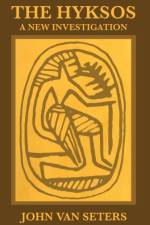
The Hyksos, foreign rulers of Egypt in the Second Intermediate Period--from about 1700 to 1550 B.C.--have been a source of continuing debate among archaeologists and historians. Mr. Van Seters approaches the problems of their rise to power, their dynasties, the nature of their rule, and their religion from the joint perspectives of archaeology and literary criticism. Archaeological investigation shows the Middle Bronze culture of Syria-Palestine to have had highly developed fortifications, advanced urban life, fine buildings and temples, and a high quality of practical and artistic craftsmanship. Based on a revised date for the long-known The Admonitions of Ipuwer, this study offers a fresh explanation of the Hyksos' rise to power. A new examination of the location of Avaris, their capital, indicates that the previous identification with Tanis must give way to the region near Qantir. The Hyksos were not Hurrians or Indo-Aryans, but Ammurite princes who rose to power in Egypt following the dynastic weaknesses at the end of the Middle Kingdom.""A fine piece of work on a difficult subject of historical importance. Mr. Van Seters has a new approach to the material which he presents with skill and authority. His ideas are of the kind which stimulate further discussion on a new basis.""-- William Stevenson SmithJohn Van Seters isUniversity Distinguished Professor Emeritus, University of North Carolina, Chapel Hill. He now resides in Waterloo, ON.
Philip Andrews arrives on the mission field with outwardly impeccable credentials. He's a preacher's kid and a lifelong evangelical Protestant who has been recruited to teach the seventh and eighth grade children of missionaries in the Philippines. What none of the missionaries who welcome him to Ilusan know is that he's also been expelled from Bible college for his relationship with the daughter of a prominent evangelist. Despite his shoulder-length hair, which causes him to be mistaken for both a woman and Jesus before he's been at the mission center for twenty-four hours, Philip's easy-going charm and skill at speaking "evangelicalese" soon win him a following, especially among the school children. But is Philip a bad seed, a wolf in sheep's clothing? Or is he an earnest seeker simply trying to find his way? Before this hilarious novel, which one evangelical literary agent said would never be published, reaches its shocking conclusion, every missionary at Ilusan and Philip himself will have to answer that question.
Why do church leaders and the leaders of their institutions of higher learning seem to speak different languages? Why are relationships between church and academy so filled with tension and misunderstanding? This insightful and provocative volume, written by one with leadership experience in both camps, explains those dynamics. Tony Blair parses the cultural and theological trends that have created this gap in recent decades and notes how those same patterns yet offer hope for the future. Blair delineates five models of more collaborative relationships between church and academy, three of which are drawn from the creative positioning of existing institutions that serve as case studies, and two of which describe the academy of the future. For church and university leaders alike, as well as all those who care about the relationship of these two essential institutions in the fulfillment of God's kingdom, Church and Academy in Harmony offers a readable and intelligent analysis.
Virtue theory has become an important development in Christian ethics. Efforts are made in this volume to bring pastoral theology into conversation with these developments. This book probes the philosophical theology of Jonathan Edwards, who proposed that virtue is a form of beauty defined as ""consent to being."" This leads to the notion of compassion as ontological consent. Since language is the vehicle by which our experiences are conveyed, the book probes the issue of how moral vision is expressed in ""experience-near"" language through parable, poem, and lament. Moral vision is articulated most adequately through such language, and finding it is a kind of quest. The last chapter is a proposal for a mature pastoral theology of virtue as an expansion of Edwards's concept of ""consent to being"" from the vantage point of pastoral theology. A dynamic vision of virtue requires some connection between the experience of suffering and the inward striving toward the greatest good. The essence of virtue can be best understood, from a pastoral theological perspective, as the relational dynamic of ""suffering with"" another human being.
Recent studies of medieval preaching have tended to focus on sermon texts. This is the first scholarly study in English of preaching and its social context in thirteenth-century Italy. Augustine Thompson O.P., both an academic and a preacher, reconstructs the "Great Devotion" of 1233 and analyzes its devotional, social, political, and legal elements. He shows how the preachers of this revival crafted an image of divine authority that supported their intervention in factional disputes and facilitated their arbitration in social and political conflicts. They exploited forms from revived Roman Law and developing city statutes in order to create flexible procedures for mediation, and ultimately were able to revise communal ordinances to enshrine their message of social harmony. This is a work of original scholarship, carefully researched and lucidly written, which is a valuable contribution to our understanding of religion and politics in the middle ages.
""A fascinating and long overdue look at advertising from a truly Christian perspective. Van Eman does a masterful job of demonstrating how the 'simulated gospel' of advertising perverts and distorts Jesus's radical message of love and compassion. Van Eman vividly illustrates that advertising's seductive promise of happiness and fulfillment through consumption and greed leaves us spiritually impoverished and endangers our world.""--Jean Kilbourne, author of Can't Buy My Love: How Advertising Changes the Way We Think and Feel""We all knew that advertising was making consumerism into a pseudoreligion, but Sam Van Eman is the first one to actually analyze what is going on in the advertising media and challenge its deceptions. This is a must-read for anyone who is trying to critique our culture and stand against its debilitating effects.""--Tony Campolo, author of Speaking My Mind""An important, urgent, penetrating analysis of how today's pervasive materialism seduces us and how biblical faith liberates us.""--Ronald J. Sider, author of Scandal of the Evangelical Conscience""The question of our time is whether we allow the consumer society to teach each of us to think of ourselves as the most important thing on the planet, or whether we manage to learn the lesson that maturity--that is, happiness--requires us to live in and for community, for things larger than ourselves. Sam Van Eman offers some very wise and very straightforward guidance in this fine and compassionate book.""--Bill McKibben, author of The Age of Missing Information""In a day and age when our children and teens are the most targeted market segment in the world, we are failing to understand just how deeply the pervasive marketing machine is shaping our individual and collective worldviews. Sam Van Eman has struck a chord with me as he takes us past advertising's surfacy and enticing fluff to get at the real messages we buy long before we purchase the goods and services. This book will help you and those you influence see through the fluff in order to become less like the world and more like Christ.""--Walt Mueller, Center for Parent / Youth Understanding""Van Eman's concise analyses and helpful prescriptions can equip us to negotiate the dangerous curves and slippery slopes of advertising so that we will be less likely to be distracted from our kingdom calling to live for Christ.""--T. M. Moore, author of Redeeming Pop CultureSam Van Eman is a staff resource specialist with the Coalition for Christian Outreach.
""This book is a fascinating journey--from Augustine's total ban on lying, through the compromises of philosophers like Plato and Aquinas, to the radical espousal of truth's impossibility in Nietzche. Griffiths takes us into the heart of Augustine's theology to show how the act of duplicity disfigures the image of God in us and exposes human sinfulness. From that perspective, all discussion of lying that is merely based on morality, justice, compassion, or humanism is shown to be inadequate, and truthfulness becomes a gift of God's grace.""-- Frances Young, University of Birmingham (England)""Elegantly composed conceptual clarity makes this sounding of Augustine a model for ethical inquiry: as the very paradigm of sin, lying (ubiquitous though it may be) cannot be countenanced if we are to become what we are called to be--animals whose speech reflects the Triune Creator by expressing our life as that Creator's gift. I have seldom been so impressed with a book.""-- David Burrell, C.S.C. University of Notre Dame""The great temptation in writing about lying is to find a way beyond the Augustinian dictum that a lie is wrong under any circumstances. Griffiths resists the temptation and does so with intelligence, wisdom, theological acuity, and, one should gratefully add, deep sympathy for human limitations and weakness. This is a challenging and rewarding book, unlike any written in modern times on the topic.""-- Robert Louis Wilken, University of Virginia""Griffiths' exacting and beautifully wrought analysis helps us to understand the centrality of deception in Western thought and practice: the lie resides silently at the center of our structures of speech and theoretical speculation as well as our equivocal practice. Most interestingly of all, he shows how Augustine's unequivocal ban upon lying, so unpalatable to our ears, provides a key to reordered ontology, moral philosophy, politics, and theory of language.""-- Catherine Pickstock, University of Cambridge""This book shakes the foundations. Griffiths is a modern-day Augustine in rhetorical power, social analysis, textual rigor, and theological vision. Reading Griffiths requires steely never as the persuasion of his prose, the elegance and rigor of his argument, leave the reader in the dock, with only God as our witness. This is a masterful essay in philosophical theology--erudite, scholarly, and graceful in its simplicity.""-- Gavin D'Costa, University of Bristol (England)""An excellent piece of scholarship that will intrigue anyone interested in the issues of morality and ethics.""-- Library JournalPaul J. Griffiths is Warren Professor of Catholic Theology at Duke Divinity School and the author of the much-acclaimed Christianity through Non-Christian Eyes.
Philip E. Hughes served as Vice Principal of Tyndale Hall, Secretary of the Church Society, and as visiting Professor at Westminster Theological Seminary, Philadelphia. His publications include Theology of the English Reformers, Commentary on II Corinthians, But for the Grace of God, and Confirmation in the Church Today.
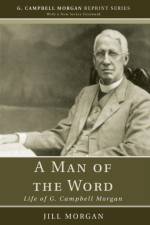
Since the death six years ago of that prince of Bible expositors, G. Campbell Morgan, there has been incessant demand from the Christian public for the publication of an official biography. Such a work was not to be lightly undertaken or swiftly completed, for it must be of heroic proportions in keeping with the character of the man. Now it is here, the product of Dr. Morgan's personal diary, the family's own records, and the contributions of a host of friends the world around. Dr. Morgan had four sons, all ministers; this book is the work of the wife of the eldest son, and is beautifully printed and illustrated. It is a success-story in the finest sense of the term. Rejected for ordination while he was quite young for what was considered the inferior quality of his preaching, Campbell Morgan by native ability and laborious toil achieved international fame. Under his preaching the Bible literally sprang into life and multitudes of people were enthralled. So great was the demand for his sermons that his books gained circulation throughout the English-speaking world. This biography deserves a permanent place in every Christian's library. It is the record of one who adorned the Gospel ministry--a profound thinker, an inspiring speaker, and a reverent humble servant of Christ.
In this thorough investigation of Calvinist doctrine, John Leith defines the Reformer's teaching on Christian life in the context of his theology. He begins with a discussion of what it means to say that the purpose of Christian life is the glory of God. He then discusses Christian life in relation to four aspects of Calvinist thought: justification by faith alone; providence and predestination; history and the transhistorical; church and society.Leith's concluding statement summarizes the importance of this book. ""Calvin's doctrine of the Christian life represents a magnificent effort to give expression to what it means to have to do with the living God every moment of one's life. No interpretation of the sola gloria Dei [""only God's glory""] has been more vivid and dynamic than Calvin's. For this reason he speaks to the needs of this generation, which, at least until recently, has been more frequently concerned about the glory of humankind than that of God and which has fallen victim to many false gods and vicious ideologies. Yet if Calvinism is to render its full service to our day, it must be interpreted in the context of the shared faith of the total Christian community. On the basis of Calvin's own principles, no human statement of Christian faith can ever be final and must be continually reformed by the Christian community's apprehension of the word of God as revealed in Jesus Christ.""
Consider the following situation: a mayor is holding captive the leader of a terrorist group that has placed bombs throughout the city. It is determined that the only way to get the terrorist to confess where the bombs are hidden is to torture his child in front of him. Should the mayor torture an innocent child to save the lives of many? In Perplexity in the Moral Life Santurri discusses how situations of moral perplexity are to be construed and how the interpretation of these situations might be constrained by the presuppositions of Christian ethics. Often in our practical lives we are perplexed about what morality requires of us: any course of action appears as a moral transgression. Santurri examines the thesis that situations of moral perplexity may actually be cases of genuine moral dilemmas in which a moral transgression is unavoidable. Proponents of the moral dilemmas thesis collide with an established philosophical tradition holding that no adequate ethical theory can countenance the existence of genuine dilemmas. It has been suggested that admitting the existence of dilemmas is tantamount to acknowledging the presence of a debilitating incoherence in one's system of moral reasoning. Santurri contends that the issue of whether or not genuine moral dilemmas exist cannot be resolved on the basis of philosophical arguments typically advanced either by the traditional or by the revisionist views, and maintains that moral perplexity is a phenomenon which cannot be interpreted apart from answering certain fundamental questions of moral ontology. He then goes on to consider what sort of constraints a Christian view of morality imposes on the interpretation of moral conflict and argues that there are good reasons for Christian ethics to deny the existence of genuine dilemmas. He concludes with a critical discussion of the positions that have been or might be employed in Christian ethical arguments for the reality of irresolvable moral conflict.
Sexual violence is rarely discussed in church, despite the rising incidents of rape, sexual assault, molestation and incest. The Dinah Project, which gets its name from Genesis 34 - the rape of Dinah, Jacob's daughter - was borne out of the author's decision to start healing through the church after being raped. The result is this book and an entire ministry program to assist churches in responding to sexual violence.The Dinah Project describes programmatic ways in which a local church can respond to the crisis of sexual violence in the community. By sharing the lessons of one church, this book proposes detailed methods for instituting a church program. The Dinah Project provides church activities ranging from providing resources for members to ways to organize a full-time church ministry, and many stages in between. Topics include planning worship services, conducting community education workshops, working with local agencies, establishing a board of directors and holding therapy groups at the church. With checklists, forms and detailed explanations, this user-friendly book guides any interested individual from basic information about sexual violence to tips on budgeting for programs.
""To mature spiritually, Christians need a place to develop and test their relationship with God, to reflect on the essential theological concepts that are part of the faith tradition, and to enjoy opportunities to serve others. These are the foundation stones of the rite of confirmation.""--from the IntroductionThe Rite of Confirmation is an adult study guide that allows clergy, Christian educators, and lay leaders to discuss and explore how confirmation can open the door to a lifelong ministry of recognizing ways to grow in faith.Monkres and Ostermiller's groundbreaking research provides information on new approaches to the teaching and understanding of confirmation, and includes the authors' concept of confirmation as a ""repeatable rite."" Existing models of confirmation are explored, leading to a discussion of the ways in which confirmation can be more meaningful in the church today.
Why does one die? How should one die? What happens after death? How do resurrection and reincarnation fit within various religious traditions?These are the four fundamental questions posed in Death and the Afterlife. The answers, from acknowledged authorities, give insights into the beliefs and traditions of these faiths and will help readers understand the similarities and differences among them.In this volume, Charles Hallisey presents the viewpoint of Buddhism, Jacob Neusner offers the perspective of Judaism, Jonathan Brockopp writes from the standpoint of Islam, Bruce Chilton discusses Christianity, and Brian K. Smith writes on Hinduism.
Abonner på vårt nyhetsbrev og få rabatter og inspirasjon til din neste leseopplevelse.
Ved å abonnere godtar du vår personvernerklæring.