












Gjør som tusenvis av andre bokelskere
Abonner på vårt nyhetsbrev og få rabatter og inspirasjon til din neste leseopplevelse.
Ved å abonnere godtar du vår personvernerklæring.Du kan når som helst melde deg av våre nyhetsbrev.

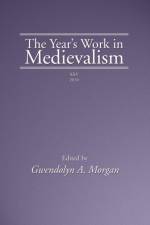
The Year's Work in Medievalism, volume XXV, is based upon but not restricted to the 2010 proceedings of the annual International Conference on Medievalism, organized by the Director of Conferences for the International Society for the Study of Medievalism, Gwendolyn Morgan, and, for 2009, Dr. Pam Clements. The Year's Work in Medievalism also publishes bibliographies, book reviews, and announcements for conferences and other events.Richard Utz, Pi(o)us Medievalism vs. Catholic Modernism: The Case Of George TyrellMartha Oberle, The Legacy of the Medieval Mendicant OrdersChelsea Gunter, Mysticism and Messianism in the Poetry of Paul CelanWilliam Calin, Postcolonialism and Medievalism: How French Regional Cultures/Literatures Reshape Their Past and PresentJana K. Schulman, Retelling Old Tales: Germanic Myth and Language in Christopher Paolini's EragonArthur Russell, From English Stage to American Page: The Transatlantic Dissemination of Leonard MacNally's Robin Hood; or, Sherwood ForestGwendolyn Morgan, The Battle of Maldon in Imitative TranslationEdward L. Risden, The Battle of Maldon: A One-act Play for Readers' TheaterT.S. Miller, A Look at Some New Lays of Beowulf: The Misunderstood Monsters of Contemporary Popular MusicAspen Hougen, Debilitating Dracula: Vampire as Illness Metaphor from the Middle Ages to the Present DayPeter Johnsson, Purged by Fire: The Influence of Medieval Visionary Literature on Post-Apocalyptic Science FictionGerald Nachtwey, Unburied Corpses: The Violence of the Past in William Morris's Froissartian PoemsKarl Fugelso, Dante as Surfer Medievalism: Sandow Birk's Commedia Illustrations
In The Spirit in Public Theology, Bacote shows how Dutch politician and church leader Abraham Kuyper lived a thoroughly Christian life, and explains why Christians need to follow Kuyper by taking their faith into the public sphere. Identifying the characteristics of a true Christian worldview, Bacote demonstrates the need for a public theology that stresses engagement between the church and the world. The Spirit in Public Theology should be required reading for pastors, students, and all Christians who want to take their faith beyond the four walls of the Church.""This fine book brings the profound insights of Abraham Kuyper's life and thought to bear on the recent explorations of public theology in the English-speaking world. Of special value is the focus on Kuyper's theology of the Holy Spirit. People who think a lot about the Holy Spirit do not often connect those thoughts to the public square, and people who care about public activism do not often claim the power of the Holy Spirit. We are in Bacote's debt for showing us--with great care and clarity--how Kuyper made the connection.""-- Richard J. Mouw, Fuller Theological Seminary""Bacote's profound encounter with the great Dutch neo-Calvinist exemplar of public theology, Abraham Kuyper, has given his understanding of the Holy Spirit a deeper and wider, even cosmic, dimension. In this book, Bacote shows the relationship of the Spirit to the preserving power of common grace as it is present in the providential dimensions of politics, science, and the mandate to be stewards of creation. It is a substantive contribution to our view of Kuyper, theology in general, and the convergence of the Reformed, evangelical, and Pentecostal traditions on these key issues of the common life.""-- Max L. Stackhouse, Kuyper Center for Public Theology, Princeton Theological Seminary""A useful book for Kuyper devotees as well as for students who want to examine current discussions of the interface between public policy/theory and theology.""-- John Bolt, Calvin Theological Seminary""Here is a balanced exposition on Kuyper's classic concept of common grace as a theological rationale for a Christian's involvement in public life. Bacote is a creative theologian--well versed in the history of both American and Dutch theology--who successfully appropriates Kuyper's thinking for the twenty-first century in a way that is promising for its influence in American culture.""--George Harinck, Historical Documentation Center for Dutch Protestantism, Free University of Amsterdam.""Bacote takes a fresh look at Kuyper's doctrine of common grace in conjunction with his doctrine of the Holy Spirit and the Spirit's work in the whole of creation. Along the way, Bacote engages in thoughtful dialogues with Arnold van Ruler, John McIntyre, and other writers in pneumatology and public theology. This lucid overview of Kuyper's public career, which analyzes both his guiding principles and their effecitve applications, is the best published in English thus far.""-- Harry Van Dyke, Redeemer CollegeVincent E. Bacote, Assistant Professor of Theology at Wheaton College, is President of the Christian Theological Research Fellowship and coeditor of Evangelicals and Scripture.
What do spiritual needs, health care, pastoral services, religious resources, statistics, and quantitative research methods have in common? Traditional literature in the pastoral care, counseling, and education movement probably would say, ""Not a great deal."" Indeed, the pastoral arts and sciences have tended to be high on art (especially praxis) but relatively low on science (especially quantitative research).That's too bad, claims Dr. Larry VandeCreek, who has gathered together a sample of previously published but widely scattered research reports which he hopes will inform hospital chaplains, congregational pastors, hospital personnel, and theological students on ways in which knowledge gained from carefully designed research can enhance their project of care.Selecting only quantitative research reports, the volume explores such topics as the role of spirituality in terminally ill hospitalized patients, the demonstrated helpfulness of prayer in health crisis, the possible impact of hope among women with breast cancer, the role and impact of chaplaincy services in general hospitals, as well as other studies demonstrating a variety of relationships between spirituality and health care.Larry VandeCreek, Assistant Director of Pastoral Care and Clinical Associate Professor in the Department of Family Medicine and in the Department of Neurology at the Ohio State University, has won many research awards, including the prestigious Association for Clinical Pastoral Education's ""Researcher of the Year"" award. A member of the Editorial Committee of The Journal of Pastoral Care, he is the author of A Research Primer for Pastoral Care and Counseling (1998) and one of the co-authors of Research in Pastoral Care and Counseling: Quantitative and Qualitative Approaches (1994), both JPCP books.
There are many Christian denominations in North America. Each one claims to be a part of the one, holy, catholic, and apostolic Church of God. Each one seeks to be loyal to Jesus of Nazareth as Savior and Lord. Yet each one is different from the others. For example, most of us are aware of the great difference between the Roman Catholic Church and the Southern Baptist Convention of churches. But only those who are closely involved know the subtle differences between one kind of Baptist group and another. This book is not about differences between denominations. It is about the Episcopal Church USA. The Episcopal Church is a member of the family of Anglican Churches whose mother Church is that centered on Canterbury, England. This book is not a history of the Episcopal Church or a statement of its doctrines. Rather, it is the presentation of an attractive and compelling way of understanding the distinctive claim that can and should be made for the Episcopal Church. In one sentence, the claim is that the Episcopal Church is called to be both evangelical and catholic. In other words, the call of God to the Episcopal Church in these times, when the one Church of God is sadly divided, is that it should be simultaneously evangelical and catholic. This doesn't not mean that she is to be evangelical in her preaching and catholic in her liturgy. It is not a matter of being sometimes evangelical and sometimes catholic. The Church is called to be catholic and evangelical all the time in all that she is and does.
The Sanctity of Human Life is Under Attack.Unborn Children Are Destroyed.The Poor Go Hungry.Families Are Broken Up.We Are All Endangered By Nuclear War.To be completely pro-life means to defend human life wherever it is threatened. Ron Sider provides a consistent vision of what it means to be pro-life. He cuts through party lines by holding fast to Scripture wherever it leads. The result is a refreshing and truly biblical stance on many current and vitally important issues. With the help of the staff of Evangelicals for Social Action, Sider gives us concrete steps to help change our world.
The psalms--the prayers of the chosen people, the prayers of the people of God--have a spontaneity and timeless pertinence which is unique. They are an integral part of Christian liturgies; yet they pose difficulties for many who sense that they have sprung from a cultural milieu which is totally alien to our own. This problem can only be solved by a careful study of their origins, their literary structures, their content, and their intent. A vast literature has grown up around the psalter. But modern biblical discoveries, research, and scholarship have opened the way to a greater understanding and finer appreciation of the inspired prayers. The author, one of the leading exegetes of our time, has produced a monumental and comprehensive work which reflects his vast research and erudite judgment. The scholar and the biblical student will find this thorough treatment invaluable. And educated men of all religions, who share a common invaluable scriptural tradition, should also find it essentially helpful and enlightening. This many-faceted work clearly illustrates that biblical scholarship knows no denominational boundaries. The psalter is a bridge of prayer in this ecumenical age, and readers will find the author's insights and analyses most helpful in making the psalms more vital in their lives and a more unifying bond in man's search for God in our time.
The value of systematic, disciplined reflection on biblical truth is the theme of this brief but convincing anthology. Writing from a variety of perspectives, the contributors present an excellent case for the necessity of systematic theology.The editor has drawn from a vast reservoir of literature on the subject. Included are excerpts from the works of such eminent writers of the past as C. S. Lewis (letter 1 of Screwtape Letters), Dorothy Sayers (""Creed or Chaos?""), Jonathan Edwards (""The Importance of Christian Knowledge""), B. B. Warfield (""The Idea of Systematic Theology""), Emil Brunner (""The Necessity for Dogmatics""), and Francis Pieper (""Nature and Character of Theology"").Other chapters are by: R. C. Sproul (""Right Now Counts Forever""), John H. Gerstner (""Everyman Must Be a Theologian""), Kenneth F. W. Prior (""The Minister As Teacher""), R. L. Saucy (""Doing Theology for the Church""), and John Jefferson Davis (""Contextualization and the Nature of Theology"").
An Indispensable Resource for Pastoral AgentsResponding to the need for resources to set up, sponsor, and lead retreats, Planning and Implementing Retreats: A Parish Handbook provides an array of simple yet creative tools to achieve a successful outcome. This book is a practical, time-saving guide for those who are involved in designing experiences to enhance people's spiritual lives--in parishes especially, but also in hospitals, campus ministries or other locales where Christian adults gather for spiritual formation. At the heart of this resource are five planning and design strategies for professionals and volunteers who want to create a well-organized and spiritually sensitive retreat experience. Other chapters deal with the theological and scriptural bases for retreat design, as well as special areas of concern, worship and liturgy, and participation evaluation. The strategies and tips outlined in this book can help planners--novice or experienced--nourish their own spiritual life as they prepare for the task of journeying with those in search of the living God. This is truly a fundamental and much-needed resource.Nicki Verploegen is co-founder of TATENDA International, a nonprofit started in 2007 to provide free rejuvenative retreats to caregivers in Africa and Asia. She has been conducting retreats and providing spiritual direction for over 25 years. She is a faculty member at the College of Mount Saint Joseph in Cincinnati and is author of.... Previously, she served as Director of Spiritual and Ministerial Development at Weston Jesuit School of Theology in Cambridge, Massachusetts.
Is God a delusion? Are science and Christian faith incompatible? Ten scientists tell their stories.There is a popular myth at large in both modern society and in many churches. According to this myth, science and Christianity have been engaged in a long battle over the centuries. For many secularists this means that we must embrace science and reject religion, whilst for some Christians it means the exact opposite. But are science and Christian faith really in conflict? In this book ten respected scientists share their life stories and their reflections on science and faith. What led them to become scientists? Why did they embrace Christianity? And how do they relate their religious beliefs to the science that they do in the lab? The stories that they tell help us to see that when it comes to answering some of ""life's big questions"" we do well to listen for the insights from both science and faith.Samples and DVD trailer at www.testofaith.comContributorsDr Francis Collins, Former Director, Human Genome ProjectRevd Dr Alasdair Coles, Cambridge University and St Andrews Church, CambridgeDr Jennifer Wiseman, Astrophysicist, NASA Goddard Space Flight CenterProf. John Bryant, Professor Emeritus of Cell and Molecular Biology, Exeter UniversityProf. Bill Newsome, Professor of Neurobiology, Stanford University School of MedicineProf. Rosalind Picard, Professor of Media Arts & Sciences, MITDr Ard Louis, The Rudolf Peierls Centre for Theoretical Physics, Oxford UniversityRevd Dr John Polkinghorne, Former President of Queens' College, CambridgeDr Deborah B. Haarsma, Associate Professor in Physics & Astronomy, Calvin CollegeProf. Alister McGrath, Professor of Historical Theology, Harris Manchester, College, OxfordDr Ruth Bancewicz, The Faraday Institute for Science and Religion, St Edmund's College, Cambridge
Current study of the New Testament features many new interpretations. Robert Gundry's book finds them largely wanting and defends traditional ones. Several of its essays have never been published before. Most of the rest, though previously published, have been updated and otherwise revised, sometimes heavily. The studies cover a wide variety of topics in New Testament study, ranging from the Gospels to Revelation and much in between, as for example theological diversity, symbiosis between theology and genre criticism, pre-Papian tradition concerning Mark and Matthew as apostolically Johannine, and mishnaic jurisprudence as compatible with Jesus' blasphemy. In its entirety, this collection of essays shows the weaknesses of many novel interpretations of the New Testament as well as the essential reliability of earliest traditions concerning the New Testament, and the essential reliability of New Testament traditions themselves.
Haig Khatchadourian is Emeritus Professor of Philosophy at the University of Wisconsin-Milwaukie. He received his PhD in philosophy from Duke University and has been awarded several prizes for poetry and literary essays. In 1973 he received the Outstanding Educator of America Award.
Does Civilization Need Religion? sets out from the fact that religion's inability to make its ethical and social resources available for the solution of the moral problems of modern civilization is one, and the neglected one, of the two chief causes responsible for its debilitated condition. It is convinced that if Christian idealists are to make religion socially effective they will be forced to detach themselves from the dominant secular desires of the nations as well as from the greed of economic groups. It aims to show that though neither the orthodox nor the modern wing of the Christian Church seems capable of initiating a genuine revival which will evolve a morality capable of challenging and maintaining itself against the dominant desires of modern civilization's needs, there are resources in the Christian religion which make it the inevitable basis of any spiritual regeneration of Western civilization. Does Civilization Need Religion? maintains that the task of redeeming Western society rests in a peculiar sense upon Christianity, which has reduced the eternal conflict between self-assertion and self-denial to the paradox of self-assertion through self-denial and made the Cross the symbol of life's highest achievement. It is persuaded that the idea of a potent but yet suffering divine ideal which is defeated by the world but gains its victory in the defeat must continue to remain basic in any morally creative worldview.
Arthur Michael Ramsey, the 100th Archbishop of Canterbury was born in 1904, the son of Arthur Stanley Ramsey. He trained at Cuddesdon College Oxford and was ordained deacon in 1928 and priest a year later in 1929. In 1961 he became Archbishop of Canterbury in succession to Geoffrey Fisher, his former headmaster.
Arthur Michael Ramsey, the 100th Archbishop of Canterbury was born in 1904, the son of Arthur Stanley Ramsey. He trained at Cuddesdon College Oxford and was ordained deacon in 1928 and priest a year later in 1929. In 1961 he became Archbishop of Canterbury in succession to Geoffrey Fisher, his former headmaster.
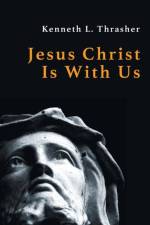
The nine chapters of Jesus Christ Is With Us are intended not just to explain the gospel but also to mediate it to the reader. These are: The Promise and the Presence The Gospel Accompanied by the Spirit Together in Heavenly Places The Capacity to Contain the Divine Presence God through All and God in You All The Eternal Word Steps Forth The Cross and the Atoning Sacrifice The Victor From the Dark Mountain The Metaphysic of Consecration Through these chapters the author's intention is to help recover two vital realities of the Christian faith -- the indwelling of Christ and its essential corollary, the Logos doctrine of Christ.
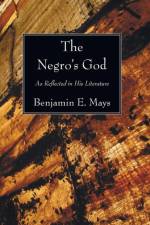
""The ideas of God in Negro literature are developed along three principal lines: (1) Ideas of God that are used to support or give adherence to traditional, compensatory patterns; (2) Ideas, whether traditional or otherwise, that are developed and interpreted to support a growing consciousness of social and psychological adjustment needed; (3) Ideas of God that show a tendency or threat to abandon the idea of God as a 'useful instrument' in perfecting social change.""From Chapter IX, Summation
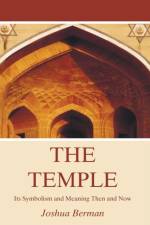
When thinking of the ancient Temple of Jerusalem, one often conjures up images of animal sacrifice, pilgrimages to the Holy City on religious festivals, and the High Priest solemnly entering the Holy of Holies on Yom Kippur. Indeed, each of these observances was a staple of Temple ritual, but it is easy to lose sight of the Temple as it impacted, and impacts, upon the daily life of Jews and their physical and spiritual responsibilities.Building the Temple is not merely one commandment of many; it cannot be examined in isolation. This volume shows how the Temple relates to the notions of Shabbat, the land of Israel, monarchy, Jewish independence and sovereignty, education, justice, covenant, Sinai, the garden of Eden, the Jewish relationship to the gentile world, and the very way the Jew relates to God. From a biblical viewpoint, the Temple is not only the central institution of the ideal Jewish society but also the central concept that binds and organizes all others.The minutiae of the Temple as portrayed in the liturgy and in the Bible often seem tedious and overritualistic. Classical sources of all genres abound to explain a particular passage or a particular rite. This book identifies broad themes that animate the meaning of the Temple, its rites, and the biblical passages that describe it. Details are probed as a larger conceptual whole. Animal sacrifice, particularly problematic to many on moral grounds, is examined in a new and revealing light.Many Torah commandments stand unchanged for all time regardless of historical events. Not so the commandment to erect the Temple. Social, economic, political, and religious currents were integral to the Temple's construction, destruction, and reconstruction. By probing these currents from the Bible's perspective, one can gain insight into the meaning of the times in which we live; we are in a process of rebuilding, even though we are far from redemption.
In this book, a physician, well-known for praying with his patients, and an award-winning professor of theology share their insights on how religious faith can provide help in the healing process of today's health care ministry. The authors avoid rehashing analytical theories on suffering and the "miracles" of healing they may have seen, instead examining how personal faith can enhance the immune system, how a spiritual outlook can help bear the burden of suffering and grief, and how forbearance and forgiveness are crucial in maintaining a healthy attitude toward life.
CONTENTS:Introduction Stephen J. ChesterConversion Studies, Pastoral Counseling, and Cultural Studies: Engaging and Embracing a New Paradigm Lewis R. RamboResponse to Rambo Phillis Isabella SheppardObservations on ""Conversion"" and the Old Testament J. Andrew DearmanResponse to Dearman Rajkumar Boaz JohnsonThe Conversion of Simon Peter Markus BockmuehlResponse to Bockmuehl Michael J. GormanZacchaeus's Conversion: To Be or Not To Be a Tax Collector (Luke 19:1-10)Wyndy Corbin ReuschlingResponse to Corbin Reuschling Elizabeth Musselman PalmerTowards Individual and Communal Renewal: Reflections on Luke's Theology of ConversionFrank D. MacchiaResponse to Macchia D. Christopher SpinksWas Paul a Convert? Scot McKnightResponse to McKnight Eric James Greaux Sr.Romans 7 and Conversion in the Protestant Tradition Stephen J. ChesterResponse to Chester Mary VeenemanAmbrose, Paul, and the Conversion of the Jews J. Warren SmithResponse to Smith George KalantzisI Thank Christ Jesus our Lord: 1 Timothy 1:12-17 Eric James Greaux Sr.
Abonner på vårt nyhetsbrev og få rabatter og inspirasjon til din neste leseopplevelse.
Ved å abonnere godtar du vår personvernerklæring.