









Gjør som tusenvis av andre bokelskere
Abonner på vårt nyhetsbrev og få rabatter og inspirasjon til din neste leseopplevelse.
Ved å abonnere godtar du vår personvernerklæring.Du kan når som helst melde deg av våre nyhetsbrev.

Describing the political effects of Original Sin, Professor Budziszewski shows how man's suppression of his knowledge of right and wrong corrupts his conscience and accelerates social collapse. The depraved conscience grasps at the illusion of "moral neutrality," the absurd notion that men live together without a shared understanding of how things are. After evaluating the political devices, including the American Constitution, by which men have tried in the past to work around the effects of Original Sin, Dr. Budziszewski elucidates the pitfalls of contemporary communitarianism, liberalism, and conservatism.
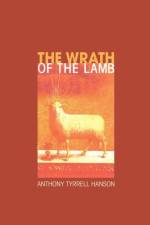
A study of the Book of Revelation suggested to Dr. Hanson the idea of tracing the conception of the wrath of God through the Bible, from its primitive and personalized form in the earliest strands of the Old Testament to its final development in the New. Under the impression that "the wrath of God" in the New Testament must be interpreted as if it had the same meaning as in the Old, some theologians have been driven to formulate a distorted doctrine of the atonement and others to repudiate the idea of the wrath altogether. Dr. Hanson shows that this is a false dilemma, and that there is a true New Testament doctrine of the wrath, profoundly influenced by the revelation of the love of God in Jesus Christ and at certain points essentially related to the Cross. This doctrine he finds most fully expressed in the Book of Revelation.
From the author of Faces at the Manger comes another delightful collection of prose and poetry. In J. Barrie Shepherd's book, Faces at the Cross, the visages are of persons in Jerusalem during Holy Week and at the scene of the Crucifixion. As you meet Mary, Peter, Pontius Pilate, Simon of Cyrene, and others, their dramatic sketches will engage you as they tell of their encounters with Jesus. In addition to monologues, Faces at the Cross is brimming with readings appropriate for congregational or family worship. It provides monologues and poetic verse for Lent and Easter.
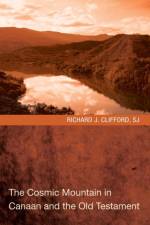
The term "cosmic mountain" is a rendering of the nineteenth-century German scholarly designation Weltberg, which was derived from ancient Mesopotamian sources. The book offers a critique of the concept, especially as it has been applied to West Semitic religion, chiefly that witnessed to in Ugaritic texts and the Bible. Chapter 2 examines the connection of various Ugaritic deities to sacred mountains--El, Baal, Mot, Anat, and other deities. Chapter 3 studies the concept in Genesis, in the Sinai and Zion traditions, and in the Solomonic Temple. The last chapter looks at the concept in some literature of Early Judaism.
Here is a new appreciation of the Old Testament, by outstanding Biblical scholars, for those who want to be informed about the most recent and creative thinking on the crucial problems and debates in Biblical study. As the distinguished European and American contributors explore the central current issues of Old Testament scholarship, they uncover a timeless message in Israel's prophetic voice and interpret its meaning for our times.
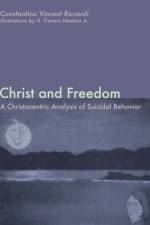
""... Riccardi draws a broad-gauged fork through a variety of thinkers who have spoken wisely or foolishly on suicide: Justin Martyr and Augustine, Aquinas and Luther, Calvin and Kierkegaard, Dostoevsky and Camus, and so on. Obviously here is the riskiest portion of such a study but the author has had the witty humility to give his reader excellent selections from these figures and has provided just the right, frequently brilliant, commentary on them to facilitate an encounter between them an the reader on the central issue of the meaning of Christ's freedom for the problem of suicide.""- David WillisProfessor Emeritus Princeton Theological Seminary
Ray Anderson, (1925-2009) was Senior Professor of Theology and Ministry at Fuller Theological Seminary and served on the faculty of the School of Theology since 1976. He has published over twenty books, including, Spiritual Caregiving as Secular Sacrament, The Soul of Ministry, Self Care, Living the Spiritually Balanced Life, and Dancing with Wolves While Feeding the Sheep: The Musings of a Maverick Theologian.
""Based on impressive research, the author has offered the spiritual heirs of A. B. Simpson, as well as the larger church world, an accurate interpretation of Simpson's spiritual pilgrimage. The information about Simpson's belief in speaking in tongues and the ministries of those who remained or left the Alliance over the issue, provides valuable insights into the close relationship between the organization and emerging Pentecostal movement.""-- Gary B. McGeeProfessor of Church History, Assemblies of God Theological Seminary""It is good news indeed that Charles Nienkirchen's A. B. Simpson and the Pentecostal Movement is being republished. This is a very important and well written work which sheds light not only on A. B. Simpson's quest for the tongues-attested baptism in the Holy Spirit but on the milieu surrounding the early spread of Pentecostalism in America and especially in the Christian and Missionary Alliance. This is a historical treasure.""--Vinson Synan, Dean EmeritusRegent University School of Divinity""Simpson has long deserved an in-depth study. A pivotal turn-of-the-century figure who never found full acceptance in any wing of American evangelicalism, this prolific Canadian nonetheless profoundly influenced popular evangelicalism and Anglo-American Pentecostalism. Nienkirchen makes careful use of long-unused primary sources to illuminate Simpson's relationship to early Pentecostalism. The result is a suggestive work that offers perceptive insights into early Pentecostalism and the context from which it emerged.""-- Edith L. BlumhoferProject DirectorInstitute for the Study of American Evangelicalism, Wheaton""Nienkirchen provides a splendid study of the relationship of A. B. Simpson to Pentecostalism. This book demonstrates wide knowledge of primary materials and great care in documentation (with about one-third of the text devoted to footnote material). Nienkirchen clearly delineates the major elements in Simpson's religious thought and gives attention to the most significant ways in which his thought changed. His major interest in this book focuses on the ways in which Simpson influenced the formation of early Pentecostalism. Pentecostals accept some elements of Simpson's teaching and rejected or modified others, but Nienkirchen argues persuasively the case for Simpson's importance in understanding Pentecostalism; moreover, he clearly illustrates specific ways -- both direct and indirect -- in which that influence was felt in the complex story of early holiness-pentecostal relationships.""-- William PittsProfessor of Church HistoryBaylor University""Charles Nienkirchen has supplied those interested in the history and theology of American Evangelicalism, the Christian and Missionary Alliance, or the Pentecostal movement with an invaluable reference tool and an interpretive lens through which to understand them. This 'must-read' has shown its worth by remaining as relevant, informative and provocative as when it first went to press.""--Bernie A. Van De WalleAssociate Professor of Historical and Systematic TheologyAmbrose University College and SeminaryCalgary, AB""In A. B. Simpson and the Pentecostal Movement, Charles Nienkirken has combined prodigious research with mastery of historical and theological sources to produce a superb study of Simpson's relationship with early pentecostalism. This is a most important and useful work."" -- Randall BalmerBarnard College, Columbia UniversityCharles W. Nienkirchen, PhD (University of Waterloo) is Professor of Christian History and Spirituality at Ambrose University College in Calgary, Canada and Visiting Professor of Christian Spirituality at Tyndale Seminary in Toronto, Canada. He has been a Scholar in Residence at Oxford University in England and Tantur Ecumenical Institute in Jerusalem as well as Visiting Professor in Residence at Tamilnadu Theological Seminary in Madurai, South India. His teaching, research, publications and ecu
It is generally agreed that Mark's Gospel was the first to have been written and that the Markan narrative created a literary form that inspired Matthew, Luke, and to a lesser extent, John to follow suit with the writing of their own gospels. But where did Mark go to find a framework that would shape his story? This question has been debated for more than two centuries. Several theories have been propounded but none without sufficient evidence to gain broad acceptance. It is the thesis of this book that Mark drew on the Greek tragedy, the most suitable literary genre of his time, to organize the oral and written traditions that he had collected. The Greek tragic genre had been created with the works of the great masters of the Fifth Century BC, and later, had been codified by Aristotle. The extraordinary points of congruence between the form of the Gospel and the canons of Greek drama are carefully explored in the Liberated Gospel. The compelling conclusion is that there is a relation of dependency whereas Mark used the form of Greek tragedy as a template without compromising the integrity of the story. As the title of the book suggests, the use of ancient tragedy by Mark served also another purpose. The Gospel was being written at a time during the early history of the church when its Judaistic faction attempted to impose the requirements of the Mosaic law on Gentile believers (as attested by Galatians and the Council of Jerusalem). By telling the very Jewish but universally relevant story of Jesus in the mode of the supreme Gentile literary genre of antiquity, Mark was proclaiming the manifesto that the gospel of Christ was not the exclusive property of a narrow ethnic group but that it belonged to all humanity. Gilbert Bilezikian, Professor Emeritus of Biblical studies at Wheaton College, graduated from Gordon-Conwell Theological Seminary (MD), from Boston University (ThD) and pursued for six years a post-doctoral program of studies at the Sorbonne under Professor Oscar Cullmann.
Long before the political mass-murders witnessed in the present century, western Europe experienced another kind of holocaust--the witch-hunts of the early modern period. Condemned of flying through the air, changing into animals, and worshipping the Devil, over a hundred thousand people were brutally tortured, systematically maimed and burned alive. Why did these persecutions take place? Was it superstition, irrationality, or mass delusion that led to the witch-hunts? This study seeks explanation in the tangible actions of human actors and their worldly circumstances. The approach taken is anthropological; inferences are grounded on a wide spectrum of variables, ranging from the political and ideological practices used to mystify earthly affairs, to the logical structure of witch-beliefs, torture technology, and the role of psychotropic drugs and epidemic diseases.Homayun Sidky is an anthropologist specializing in cultural ecology and the anthropology of religion. He is currently affiliated with the Department of Sociology and Anthropology, Miami University, Ohio. His Articles have appeared in many journals and he is the author of Hunza: An Ethnographic Outline, and Irrigation and State Formation in Hunza.
""Dostoevsky's thinking has two poles: life as it is, the world as it goes its way, is one, and the beyond, 'resurrection,' eternity, is the other. Here is man, there is God."" This is the central emphasis of Eduard Thurneysen as he considers the great Russian novelist not primarily as a psychologist, metaphysician, or social philospher, but as a theologian of the highest order. Drawing liberally from characters and incidents in Dostoevsky's books, Dr. Thurneysen shows how the apparent triviality of the lives of the men and women in the novels is latent with the secret of a wholly other life. Their hunger and thirst for the eternal, their passion for the infinite, is the essential trait of man for Dostoevsky. Yet no step leads over from man to God, for how would God still be God if man could become God? But if there is no path from us to God, then all the more certainly a path leads from him to us. If we come to Dostoevsky with the question of man, he answers us with the picture of man as nothing but a single great question, the question of the origin of his life, the question of God. Published in German in 1921, Dostoevsky has been translated into French, Italian, and Japanese. This is the first English edition. An added sidelight: Karl Barth has said that his friend Thurneysen ""was the one who first put me on the trail of . . . Dostoevsky, without whose discovery I would not have been able to write either the first or second draft of the commentary on Romans.""
The Sermon on the Mount is often considered a model for the moral and religious conduct of man. Such an interpretation defrauds the Sermon of its real meaning, according to Eduard Thurneysen, and results in a futile legalistic attempt to fulfill the Sermon's commands. Dr. Thurneysen insists that the Sermon on the Mount must be understood in terms of gospel and nothing but gospel. It is to be read with eyes directed only to Jesus and not to the problems of life as such. Then the problems will be set in true perspective, too. He further asserts that the Sermon is gospel in the form of law. Each ""thou shalt"" is the future promise--""you will""--because you have received the promise of the coming kingdom. The gospel demands obedience, but it is always the obedience of disobedient man--an obedience on the basis of grace.
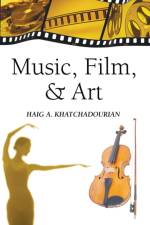
Music, Film, & Art presents 13 lively essays on current issues in aesthetics and philosophy of the arts, from classifying a work as good or poor to the difficulties contemporary audiences face in attempting to understand and appreciate the avant-garde. Offering fresh insights on music, painting, and film, as well as literature, dance, theater, and sculpture, this thought-provoking volume will be of considerable interest to the serious general reader and to students, critics, and aestheticians.
Dr. Beasley-Murray has made a special study of the Revelation, the notorious difficulties of which have challenged and fascinated him for many years. An essential key to the understanding of its enigmatic character is the realization that it comes within the category of apocalyptic literature, in which acknowledged symbols were used to disguise the real meaning. According to the author, that which ""to the uninitiated modern reader appears grotesque imagery spoke with power to John's fellow-Christians . . .""Due weight is also given to the Christology of the book, which the author sees as inseparable from its eschatology.
The revitalized ministry of spiritual direction is one of the surest signs of renewal in today's Church. In Spiritual Direction: Contemporary Readings, seventeen leading writers and spiritual directors discuss the history, meaning, demands, and practice of this ministry. Through timely articles by such recognized authors as William Barry, Sandra Schneiders, Louis Cameli, Kallistos Ware, and John Wright, one comes to see that spiritual direction belongs, not to a spiritual elite, but to the entire Church--men and women, clergy and laity, members of religious communities.Compiled especially for those entering spiritual direction, either as directors or directees, this book is an excellent introduction to an exciting ministry in today's Church.A valuable feature of this book is a concluding section with recommendations for further readings. Listing important articles and books on spiritual direction published in recent years, this section helps readers to continue exploring this vital area of contemporary spirituality.Kevin Culligan is a Discalced Carmelite priest who has devoted many years of his ministry to research, teaching, and practice in the field of spiritual direction. His articles and reviews have appeared in Spiritual Life, Carmelite Studies, Presence: an International Journal of Spiritual Direction, and The Way (UK). He is a member of the Institute of Carmelite Studies and the Carmelite Forum. He resides in the Carmelite monastery in Brighton, Massachusetts, where he regularly offers spiritual direction in the Carmelite tradition to clergy, religious, and laity.
These individually distinct yet interrelated essays offer grounds for a revised perspective on the figure of Pelagius as a controversialist and theologian of the late fourth and early fifth centuries. Three of its chapters proceed from the conviction that much of interest can be discovered about both the life and the thought of Pelagius if Jerome, as a source of information, is taken much more seriously than has been the case in scholarly work heretofore. It was Jerome against whom Pelagius wrote his two chief controversial treatises, and it is therefore of importance to discover the nature and grounds of the antagonism between these two figures. When the sources are approached in this light, three conclusions emerge: that Pelagius and Jerome were together involved in a genuine revival of the Origenist controversy, with Pelagius making an entirely justifiable point against his adversary; that Pelagius first comes into historical view as a critic of Jerome's ascetic teaching on marriage; and that an important source of Pelagius' thought is the much-neglected work The Sentences of Sextus. A fourth chapter argues that Augustine first took up serious polemic against Pelagius when the African doctor saw the British monk as attempting to support his theology by appeal to the authority of Catholic authors, eminent among whom was Augustine himself. The argument is also advanced that Pelagius could appeal with some real justice to an early writing of Augustine, a writing which the Bishop of Hippo in later life refused to see its original context.A fifth chapter presents a more comprehensive summary of Pelagius's theology than has yet appeared. Throughout, the author queries what revision in the notion of ""orthodoxy"" is required by honest historical investigation.
Why A Search for the Soul?Many Christians assume that it is biblically faithful and theologically noncontroversial to speak of humans having a soul. Yet a wide range of biblical scholars are questioning whether we have correctly understood what the Bible means when it speaks of the ""soul."" And contemporary neuroscience is laying more and more questions at the doorstep of the church, asking whether our human sense of self is intelligible on the basis of soul. But for thoughtful Christians, following science on this point looks like caving in to reductionism, while denying science gives off the door of obscurantism. In Search of the Soul provides a rare opportunity to listen in as four Christian philosophers set forth their best arguments for their distinct views and then respond to each other. While each of these views calls for careful framing and patient exposition, they are labeled as follows: - SUBSTANCE DUALISM (Stewart Goetz) - EMERGENT DUALISM (William Hasker) - NONREDUCTIVE PHYSICALISM (Nancey Murphy) - CONSTITUTION VIEW OF PERSONS (Kevin Corcoran)The editor introduces the debate by laying out the critical issues at stake, and wraps it up by considering the implications for the Christian life, particularly hospitality and forgiveness. This is a book of timely interest to philosophers, theologians, psychologists, and pastors. Whatever conclusions readers may draw, they will find here an instructive and engaging discussion of a controversy that will not go away any time soon. JOEL B. GREEN is Professor of New Testament Interpretation and Associate Dean for the Center for Advanced Theological Studies at Fuller Theological Seminary. His publications include Jesus of Nazareth: Lord and Christ and The Gospel according to Mark: Introduction and Commentary for the Asbury Bible Commentary. He has also authored numerous other books and articles both scholarly and popular.
What would happen when the Christian message is introduced to various groups of people? How would their contexts and worldviews influence their responses to the message? To this age-old missiological question, the study takes the readers to a narrowed and concerted question, "What is the effect of Pentecostal messages on animistic people," or in other words, "What are results when the (Holy) Spirit meets the spirits of the tribal people?" Julie Ma chose the Kankanaey tribe in the northern Philippines to prove that the Pentecostal type of Christian has invited a very positive response from the Kankana-eys. She approaches the matter from historical, anthropological and theological perspectives. This may challenge the readers to look more closely at the phenomenal Pentecostal movement, especially with their potential for mission. She also urges her fellow Pentecostals to be more appreciative of their heritage and to fully appropriate it to reach "the end of the earth."
These superb essays explore the phenomenon of individuals who identity themselves as followers of more than one religious tradition. The results prove that the late Joseph Kitagawa was prescient when he cautioned that the world is "Easternizing" as much as it is "Westernizing," and that "modernization" is a far from adequate key to name what is happening in world religious history in our age.
Fears of disunity, conflict and even legal problems have caused many church leaders to avoid confronting Christians who are living in sin. Challenging the church's reluctance, Dr. Laney provides a biblical, practical and loving handbook for pastors and lay leaders alike on church discipline.""Dr. Laney . . . encourages the Christian community to display both the compassion and concern that are needed in order to remain spiritually effective in the present age.""-- Don Baker, Author of Beyond Forgiveness""Dr. Laney's book will answer many questions we all have about church discipline.""--Erwin W. Lutzer, Pastor of Moody Church""Not only is the book thorough and accurate, but it is intensely practical.""-- Paul E. Steele, Pastor of The Valley Church""Laney's book will encourage many more of us to become involved in very practical ways in this ministry of restoration.""-- Don Bubna, Pastor of Salem Alliance Church""J. Carl Laney . . . thoughtfully and biblically pleads for a return to the proper practice of corrective church discipline.""-- From the Foreword, John MacArthur, Jr.J. Carl Laney is professor of biblical literature and coordinator for Israel study programs at Western Seminary in Portland, Oregon. He is the author of a number of books, including The Divorce Myth, Tyndale Concise Bible Commentary (with Robert B. Hughes) and Answers to Tough Questions from Every Book of the Bible.
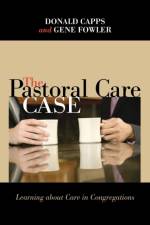
The case study method is popular and effective in the pastoral care of individuals. This book outlines a method for using the case study approach on a congregational level, offering guidelines for analyzing and refining such aspects of ministry as worship, preaching, and Christian education.
Social phobia is recognized by contemporary psychology as an anxiety disorder that significantly reduces effectiveness in personal interactions. Its exaggerated fear of negative evaluation in social situations leads people either to avoid social situations or to experience great discomfort in unavoidable ones. In this age of self-promotion, social phobics can find themselves at a distinct disadvantage in a society that values dominance. Social phobics rarely seek treatment for their disorder, but they do tend to seek out supportive social affiliation. They are likely to attend church services rather than more personally demanding social gatherings. Thus, religion can be a resource for creative adaptation to life with social phobia. This book helps pastoral counselors, ministers, and other religious partitioners understand social phobia from both the psychological and pastoral theological points of view. Donald Capps describes the condition and its psychological roots, surveys various therapeutic responses and their effectiveness, and points to the possibilities of religious alleviations. Throughout, he expresses a helpful sensitivity to the lived experience of social phobics and offers insights for healthy and adaptive ways of life. For those who experience social phobia and those who interact with them, this book will be a valuable resource.
For the past four decades this highly effective method of evangelism has been vastly overlooked. As a result, large segments of the population have remained unreached. No single church can meet every person's needs; that's why planting new churches--ones that will meet the needs of specific groups--is so necessary.Now, after ten years of research and teaching on the subject, C. Peter Wagner shares his knowledge and insight in this comprehensive guide on how to plant a church. It's an up-to-date textbook on church planting and a helpful summary of church growth principles in general.Church Planting for a Greater Harvest contains everything Wagner taught in his highly successful ""How to Plant a Church"" seminar--a presentation that was offered sixteen times and drew 5,000 participants!Today, as we see a renewed interest in church planting, the Lord is blessing the efforts of church planters everywhere. The future can be an exciting time of growth for churches. Get ready to be carried into what could be the greatest era of harvest the world has ever seen!""Church Planting for a Greater Harvest is a timely, much-needed book, offering useful insights into the process of church planting. Wagner provides a broad overview of how we can penetrate a resistant culture with the gospel.""George Barna, President, Brana Research GroupC. Peter Wagner, PhD, is the Donald A. McGavran professor of Church Growth at Fuller Theological Seminary, School of World Mission. His education includes a BS from Rutgers, a ThM from Princeton, a MDiv and MA from Fuller, and a PhD from U.S.C. The author of over thirty books including the best-sellers Your Church Can Grow and Your Spiritual Gifts Can Help Your Church Grow, Wagner is widely recognized as one of today's leading authorities on church growth.
Here is a fascinating study that contributes much to our understanding of the Gospel tradition and, in addition, provides evidence that biblical theology is still alive and flourishing.Morna Hooker reviews the prophetic actions in the Old Testament and compares these with the way in which prophetic figures behaved in Jesus' day, in particular John the Baptist and the so-called sign prophets.She then turns to Jesus and considers those actions that can be described as prophetic signs or dramas. Hooker discusses the sign of Jonah, Jesus' refusal to perform signs, the miracles and other prophetic actions like the renaming of Simon, Jesus' eating with tax-collectors and sinners, and the prophetic signs associated with Jerusalem, reaching a climax in the Last Supper.A final chapter examines the different ways in which the four evangelists interpreted Jesus' prophetic actions.
The apostle wrote: ""Whatever was written in earlier times was written for our instruction, so that through perseverance and the encouragement of the Scriptures we might have hope."" (Romans 15:4)Dr. Ray Stedman, in his book Man of Faith wrote, ""There is a simple secret that ties together the Old and the New Testaments and makes the study of the Old Testament a never-ending delight. The Old Testament is designed as a picture book, illustrating with fascinating stories the spiritual truths presented in the New Testament. This is especially true of the book of Moses and the book of Joshua; for in the life histories of men like Abraham . . . we have symbolized for us the progress of spiritual growth.""Abraham is set forth in Scripture as the father of the faithful and the ""friend of God."" His spiritual experience is presented in four far-reaching crises in which he was tested and matured. These are his responses to God's call to leave his country and relatives; his separation from his nephew Lot, leaving him completely isolated from all kindred in a land in which he was a stranger; his response to God's rejection of Ishmael and trust in His promise that Sarah would one day bear him a son; and his willingness to offer up Isaac, believing that he would be resurrected.Isaac was the child of promise, and though little is told of his long life, he remained faithful to the Lord in spite of many difficulties, and illustrates for us how a man can triumph over physical ailments and family discord. Of these Old Testament characters Paul wrote, ""Now these things happened to them as an example, and they were written for our instruction, upon whom the ends of the ages have come"" (1 Corinthians 10:11).
Why Plan Strategy?Is church growth theory incompatible with belief in the sovereignty of God? Does adherence to church growth principles leave out dependency upon the work of the Holy Spirit? C. Peter Wagner answers no to both questions. He further believes that no task could be more crucial than fulfilling the Great Commission in our generation, and how to approach and plan for the execution of this task is the questions of the day. Strategies for Church Growth addresses this key issue in a biblically pragmatic way. It brings together for the first time many principles of evangelism and missions which have proved, through recent research and experience, to be effective in implementing the Great Commission. It also unifies, in concise form, the latest research of the Church Growth Movement, the Lausanne Committee on World Evangelization, the U.S. Center for World Mission and numerous other key contributors to the recent explosion of evangelistic technology.Among the topics explored are:- the major components of strategy- choosing the appropriate strategy - advantages of having a strategy- the theology of church growth- the harvest principle and soil testing- why you should aim for church growth- characteristics of good goals- the meaning of mission and evangelism- how to target your outreach
Abonner på vårt nyhetsbrev og få rabatter og inspirasjon til din neste leseopplevelse.
Ved å abonnere godtar du vår personvernerklæring.