








Gjør som tusenvis av andre bokelskere
Abonner på vårt nyhetsbrev og få rabatter og inspirasjon til din neste leseopplevelse.
Ved å abonnere godtar du vår personvernerklæring.Du kan når som helst melde deg av våre nyhetsbrev.

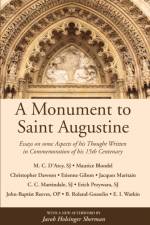
""A Monument to Saint Augustine, now happily reprinted by Wipf and Stock, gathers many diverse strands of the early twentieth century Catholic thought within its pages: the creative transformation of neo-scholasticism through a kind of ressourcement, the Catholic literary intellectual renaissance in Europe and Britain, the focus upon the renewal of Christian humanism in the face of modernity''s proliferating dangers, and the Augustinian turn as a resource for the theology of crisis. Were it to do nothing else, this volume would be of extraordinary historical importance insofar as it makes clear how central the legacy of St. Augustine was to the interwar renaissance in Catholic thought and culture, not only to Burns, Dawson, and the British Catholics but also to the great figures of the Continent: Blondel, Gilson, Maritain, and Przywara.But the volume does much more. The contributions themselves are of real, substantive, and lasting value. The essays contained in this volume are not in theology per se--though theology, especially the doctrine of creation and theological anthropology, lies ever just beneath the surface. Rather, they treat Augustine from the perspective of philosophy, history, religious studies, and the humanities more generally."" -- From the New Introduction by Jacob Sherman""A remarkable tribute."" -- The New Statesman""No more appropriate monument could have been devised."" -- Observer""Admirable . . . attractive . . . brilliant."" -- Spectator
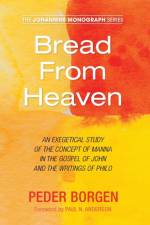
If John 6 can be considered ""the Grand Central Station of Johannine Critical issues,"" Peder Borgen''s 1965 monograph, Bread from Heaven, proved to be one of the most incisive and important monographs on that difficult chapter. With extensive implications for addressing a host of other New Testament issues--including the unity and disunity of John''s narrative, relations between Johannine and Synoptic traditions, and the socio-religious context of the Fourth Gospel--Borgen''s work argues hard for a unitive view of the Johannine text. Rather than seeing John''s story of Jesus as an amalgam of disparate sources, or as dependent on the Synoptics, Borgen explores a number of commonalities between contemporary Jewish writings, including the writings of Philo and haggadic midrashim. In so doing, new glimpses are also availed onto the dialectical Johannine situation, including an antidocetic thrust as well as Johannine-synagogue engagements. The enduring impact of Borgen''s work shows the Fourth Gospel to represent a self-standing tradition, characterized by Jewish engagements of biblical texts, contributing to homiletic expansions upon memories of the ministry of Jesus for later generations.--From the Foreword by Paul N. AndersonCritical praise for Bread from Heaven:""The thorough treatment of the Johannine ideas and the Christological teaching of the discourse makes this a book which no serious student of the Fourth Gospel can afford to neglect.""-- Barnabas Lindars, Journal of Theological Studies (1967)""Peder Borgen''s Bread from Heaven is a landmark in Johannine studies. It opened up new and compelling ways of understanding the Fourth Gospel''s composition and relationship to its Jewish context. His method of discerning homiletical patterns in the Bread of Life discourse, the writings of Philo, and rabbinic sources has helped interpreters appreciate the literary flow and rhetorical force of the John''s text. Now more than fifty years later, scholars continue to benefit by engaging Borgen''s pioneering study. It is rightly considered a classic study of the Fourth Gospel.""-- Craig R. Koester, Asher O. and Carrie Nasby Professor of New Testament at Luther Seminary in St. Paul, MNPeder Borgen is Professor Emeritus of the University of Trondheim in Norway and author of ten books and numerous essays. He served as President of the Studiorum Novi Testamenti Societas and was appointed Knight First Class of the Norwegian Order of St. Olav by the King of Norway.
""This is not a theological trestise on the one hand, nor on the other is it a volume of sermons. Like its predecessor, the volume on Prayer, it has a distinct office to fulfill, an office that in the judgment of the editor is of immense importance. For between and the professor''s lecture-room and the preacher''s study there is a great gulf fixed. In the lecture-room the lectures on systematic theology are laboriously entered into notebooks, which are useful for the exit examinations. But when the active work of the ministry begins and so many sermons have to be prepared every week, the cupboard into which those notebooks have been stowed away is left undisturbed. The preacher begins to spin his sermons out of his own brains, with the assistance of such popular books as happen to be at his hand."" -- From the Preface
From ""No Use Denying It"" to ""Keeping the Spirit Renewed,"" Dick Morgan here offers six themes right on target for older adults. The sixty-two meditations in No Wrinkles on the Soul are ideal for individual or small-group devotions. Each meditation presents a suggested Scripture reading, a printed Bible verse, and a reading for reflection. These meditations relate honestly to the variety of situations in which older adults may find themselves living--in their own home, in a retirement center, in a nursing home, or in the home of a relative.""These short meditations lend themselves nicely to the still busy lifestyle of many aging persons. However we use them, they can stir up the gift of God within us. As we struggle with the new problems of the graying of the West, we need to be enabled to live fully by the spiritual wisdom of our heritage.""-Eugene C. Bianchi, Author, Aging as a Spiritual Journey""From 'No Use Denying It' to 'Keeping the Spirit Renewed,' Richard Morgan here offers sixty-two meditations in No Wrinkles on the Soul. Each meditation presents a suggested scripture reading, a printed Bible verse, and a reading for reflection. In my pastoral care of older adults I have found that they need personal and biblical stories that encourage, give hope and comfort. No Wrinkle on the Soul is such a meditation that offers genuine spiritual wisdom.""-Bruce Mounts, Presbyterian PastorRichard L. Morgan is a retired Presbyterian minister and active writer, living in a retirement community near Pittsburgh, Pennsylvania. He is a national leader in aging and spirituality issues and has written many books including Remembering Your Story: Creating Your Own Spiritual Autobiography, No Act of Love Is Ever Wasted: Spiritual Care for Persons with Dementia, and Pilgrimage into the Last Third of Life: 7 Gateways to Spiritual Growth.
""This project began in a conversation with Ralph Lebold in the halls of Associated Mennonite Biblical Seminary in Elkhart, Indiana. Over the course of several years, I had been in many different locations where significant presentations had been made related to emerging understandings of pastoral ministry. I knew that important things were being spoken which had not been heard for three decades in most Mennonite settings. New wineskins were containing new ways of understanding ministry."" -- From the Preface
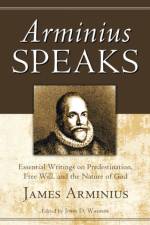
James Arminius is one of the most maligned and misunderstood theologians in church history. In an era of major debate over predestination, free will, and related concepts, Arminius was accused of being Pelagian, Semi-Pelagian, or a heretic of all sorts. This is a trend that started in his time and has continued to this day.The truth is that he was a brilliant theologian who shook the foundations of Calvinism to the core. Yet he was quite orthodox in his thinking, as he had come right out of the Protestant Reformation, though he sought to reform some ideas of Calvin and Luther. Contrary to common belief, Arminius believed in the utter depravity of man and that a major work of grace, i.e., prevenient grace, is necessary to bring a person to repentance. He also emphatically rejected Pelagianism and Semi-Pelagianism. He thoroughly answers every accusation against him and masterfully refutes William Perkins, a major Calvinist writer of that time.How do we ultimately understand what he thought? By carefully reading his writings. Until now, this was not an easy task. The only way has been to wade through his three-volume ""Works,"" totaling 2, 300 pages. Hence the need for a compendium of some of his best writings, edited for modern readers. Our hope is to help a new generation of Christians understand this much-misunderstood theologian, an understanding especially needed in an era in which Calvinism is experiencing a major resurgence.
The Year's Work in Medievalism, volume XXV, is based upon but not restricted to the 2010 proceedings of the annual International Conference on Medievalism, organized by the Director of Conferences for the International Society for the Study of Medievalism, Gwendolyn Morgan, and, for 2009, Dr. Pam Clements. The Year's Work in Medievalism also publishes bibliographies, book reviews, and announcements for conferences and other events.Richard Utz, Pi(o)us Medievalism vs. Catholic Modernism: The Case Of George TyrellMartha Oberle, The Legacy of the Medieval Mendicant OrdersChelsea Gunter, Mysticism and Messianism in the Poetry of Paul CelanWilliam Calin, Postcolonialism and Medievalism: How French Regional Cultures/Literatures Reshape Their Past and PresentJana K. Schulman, Retelling Old Tales: Germanic Myth and Language in Christopher Paolini's EragonArthur Russell, From English Stage to American Page: The Transatlantic Dissemination of Leonard MacNally's Robin Hood; or, Sherwood ForestGwendolyn Morgan, The Battle of Maldon in Imitative TranslationEdward L. Risden, The Battle of Maldon: A One-act Play for Readers' TheaterT.S. Miller, A Look at Some New Lays of Beowulf: The Misunderstood Monsters of Contemporary Popular MusicAspen Hougen, Debilitating Dracula: Vampire as Illness Metaphor from the Middle Ages to the Present DayPeter Johnsson, Purged by Fire: The Influence of Medieval Visionary Literature on Post-Apocalyptic Science FictionGerald Nachtwey, Unburied Corpses: The Violence of the Past in William Morris's Froissartian PoemsKarl Fugelso, Dante as Surfer Medievalism: Sandow Birk's Commedia Illustrations
Is God a delusion? Are science and Christian faith incompatible? Ten scientists tell their stories.There is a popular myth at large in both modern society and in many churches. According to this myth, science and Christianity have been engaged in a long battle over the centuries. For many secularists this means that we must embrace science and reject religion, whilst for some Christians it means the exact opposite. But are science and Christian faith really in conflict? In this book ten respected scientists share their life stories and their reflections on science and faith. What led them to become scientists? Why did they embrace Christianity? And how do they relate their religious beliefs to the science that they do in the lab? The stories that they tell help us to see that when it comes to answering some of ""life's big questions"" we do well to listen for the insights from both science and faith.Samples and DVD trailer at www.testofaith.comContributorsDr Francis Collins, Former Director, Human Genome ProjectRevd Dr Alasdair Coles, Cambridge University and St Andrews Church, CambridgeDr Jennifer Wiseman, Astrophysicist, NASA Goddard Space Flight CenterProf. John Bryant, Professor Emeritus of Cell and Molecular Biology, Exeter UniversityProf. Bill Newsome, Professor of Neurobiology, Stanford University School of MedicineProf. Rosalind Picard, Professor of Media Arts & Sciences, MITDr Ard Louis, The Rudolf Peierls Centre for Theoretical Physics, Oxford UniversityRevd Dr John Polkinghorne, Former President of Queens' College, CambridgeDr Deborah B. Haarsma, Associate Professor in Physics & Astronomy, Calvin CollegeProf. Alister McGrath, Professor of Historical Theology, Harris Manchester, College, OxfordDr Ruth Bancewicz, The Faraday Institute for Science and Religion, St Edmund's College, Cambridge
Have you ever felt alone, facing the challenges life presents? Have you ever felt like you were parachuted onto an unpredictable path of leadership, with no road map? Then join us! Mirrored Reflections arose from the alienating experiences of a group of evangelical Christian women leaders known as AAWOL (Asian American Women On Leadership), who formed a community with the motto "Never Alone Again." Reflecting on how the stories of select biblical characters mirror their own stories, AAWOL core sisters reframe these biblical stories through a Yinist lens and envision fresh, powerful leadership principles. Reflection questions at the end of each chapter guide readers to discover and articulate their own stories and imagine how their own parallel those of the biblical characters. Read and be nourished, finding mirrored reflections of your own broken or unvoiced story--both female and male--and enjoy the redemptive nature of the stories' multivocality.
Sehnsucht: The C. S. Lewis Journal, established by the Arizona C. S. Lewis Society in 2007, is the only peer-reviewed journal devoted to the study of C. S. Lewis and his writings published anywhere in the world. It exists to promote literary, theological, historical, biographical, philosophical, bibliographical and cultural interest (broadly defined) in Lewis and his writings. The journal includes articles, review essays, book reviews, film reviews and play reviews, bibliographical material, poetry, interviews, editorials, and announcements of Lewis-related conferences, events and publications. Its readership is aimed at academic scholars from a wide variety of disciplines, as well as learned non-scholars and Lewis enthusiasts. At this time, Sehnsucht is published once a year.
The period of history covered by this volume is full both of interest and importance. It embraces about seventy years, and treats of that grave period in the history of the Greeks when Sparta overran and subdued Athens, and destroyed its rule and power everywhere. This was followed by the rise and success for a time of Thebes. It was the transition period from the glories of the Athenian Empire to the degradation of the Macedonian Conquest. The stirring events of the time are remarkably well related, and the characters of great men who took a part in the momentous struggle are well portrayed. Spartan rule was a tyrannical and corrupt rule. It was under this rule that Socrates was condemned to death, and we have placed before us a vivid picture of the causes that led to that eminent man''s condemnation. The characters of the other important actors in the history of that time are equally well brought out, and the reader rises from the perusal of the work ready to carry his research further into more voluminous pages, with an increased zest in consequence of having had the whole train of events passed in a clear and rapid review before him. The Greeks carried their wars over that part of Western Asia where the Russians are now attacking the Turks, and Russians are now attacking the Turks, and the changes in modern nomenclature of the maps are so great that nothing but the conformation of the country remains the same. There are five maps and an excellent Index.
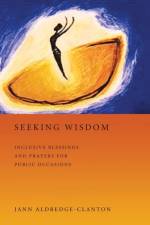
Seeking Wisdom: Inclusive Blessings and Prayers for Public Occasions provides clergy and laypersons with a unique resource to use in community settings, healthcare institutions, and faith communities. These blessings and prayers respect people from diverse religious traditions and use gender-inclusive language for humanity and divinity. Predominant themes are peace, justice, healing, hope, liberation, partnership in relationships, and caring for the earth. This collection includes blessings for such events as community Thanksgiving services, Martin Luther King Jr. Day celebrations, Women's History Month celebrations, Holocaust Remembrance Day services, breast cancer survivors celebrations, transplant survivors celebrations, chapel dedications, memorial services, lay ministers dedications, baby dedications, pastoral prayers, invocations, calls to worship, offertory prayers, benedictions, a lament for violence against women and girls, and a lament for other forms of injustice. This book also includes pastoral prayers, invocations, calls to worship, offertory prayers, benedictions, a lament for violence against women and girls, and a lament for other forms of injustice. Seeking Wisdom includes more than two hundred inclusive, interfaith blessings and prayers for public occasions. These blessings and prayers can be adapted or combined to fit specific occasions, providing a valuable resource for clergy and laypersons.
American Theological Inquiry (ATI) reaches thousands of Christian scholars, clergy, and other interested parties, primarily in the U.S. and U.K. The journal was formed in 2007 by Gannon Murphy (PhD Theology, Univ. Wales, Lampeter; Presbyterian/Reformed) and Stephen Patrick (PhD Philosophy, Univ. Illinois; Eastern Orthodox) to open up space for Christian scholars who affirm the Ecumenical Creeds to contribute research throughout the broader Christian scholarly community in America and the West.The purpose of ATI is to provide an inter-tradition forum for scholars who affirm the historic Ecumenical Creeds of Christendom to constructively communicate contemporary theologies, developments, ideas, commentaries, and insights pertaining to theology, culture, and history toward reforming and elevating Western Christianity. ATI seeks a critical function as much or more so as a quasi-ecumenical one. The purpose is not to erase or weaken the distinctives of the various ecclesial traditions, but to widen the dialogue and increase inter-tradition understanding while mutually affirming Christ's power to transform culture and the importance of strengthening Western Christianity with special reference to Her historic, creedal roots.""Theologians, would-be theologians, and the theologically attentive will want to check out American Theological Inquiry.""~ Richard John Neuhaus (1936-2009), First Things
In a post-modern world leery of abstracted theology, might the answers to the deep question of why Jesus died on the cross be found, not in theology textbooks, but in the stories of the Bible? What if the playing out of one Hebrew word, hesed, tells us who we are, who God is, and what Jesus' life and death were all about? Embraced: Prodigals at the Cross tells the story of hesed, God's steadfast love, as it weaves its way from our creation for relationship, through our rejection of that relationship, to God's centuries-long pursuit of reconciliation. The story ends in embrace, the embrace of a good father who runs to his prodigal son, and a loving God who takes on human flesh to reach out to us on the cross. This book is God's story. This book is our story.
Do the little things we do and say really make a difference in the lives of others? Some Men Are Our Heroes answers this question with a resounding "yes" as eight accomplished Christian women tell the stories of the men in their lives who helped them achieve remarkable things for God's kingdom. These touching stories of women from around the world and the fathers, husbands, brothers, pastors, colleagues, and friends who encouraged, strengthened, and challenged them along their life journeys will warm the hearts of women and men alike.
The book of Acts has served as the foundational biblical text for the development of Pentecostal theology and biblical studies since the outpouring of the Spirit at the Azuza Street Revival in 1906. Now, over one hundred years have past since the Azuza Street Revival and the book of Acts is still at the forefront of the Pentecostal dialogue. Trajectories in Acts draws together the work of leading Pentecostal scholars each bringing their expertise to bear in tracing and developing trajectories in Acts. These essays have been brought together as a Festschrift in order to celebrate the influence, scholarship, and teaching career of John Wesley Wyckoff, a noted figure in the Assemblies of God and a known voice in the Pentecostal dialogue.
As the world grows increasingly complex, human beings need more, not less, good counsel for Christian living. This book reaches into the treasury of Anglican spirituality and draws out pearls of wisdom for today's needs. The Anglican tradition has shown an abiding concern for a holy living that leads to a holy dying. Spiritual Counsel in the Anglican Tradition offers earnest, practical devotion to inspire and to instruct the Christian pilgrim in the path of discipleship. Here readers will find not a general collection of spiritual writings but direct words of spiritual counsel on such crucial subjects as discipleship, vocation, scripture, sacraments, vice and virtue, money, patience, forgiveness, perseverance, marriage and family, friendship, and the natural world. Readers will also encounter many passages selected for both authoritative content and surpassing beauty. Represented in these pages are fifty Anglican authors, including Lancelot Andrewes, John Donne, Austin Farrer, C. S. Lewis, Samuel Johnson, William Law, Hannah More, J. B. Phillips, Michael Ramsey, Frederick W. Robertson, Dorothy L. Sayers, Robert South, Geoffrey A. Studdert Kennedy, Jeremy Taylor, William Temple, Evelyn Underhill, and Olive Wyon. This book takes seriously the Anglican emphasis on a form of religion that quickens the mind, forms the conscience, guides the will, and lifts the spirit.
My So-Called Biblical Life gives fresh perspectives to stories from the Bible, imbuing them with powerful, honest emotion. The editor's translation of biblical passages grounds twelve original narratives, which engage the reader and invite a personal response. Imagine sending away your precious daughter to be a concubine. Suppose your family's survival depended on the sacrifice of your brother's life. Picture Jesus looking you in the eye and telling you to sell everything you own. What would you do? The collected essays in this volume explore these scenarios and more. Readers easily learn about life in biblical times through well-researched stories with supporting footnotes. Questions follow each essay, stimulating individual reflection and group discussion, and making this book a unique resource for classes, book groups, seminars, sermons, retreats, and Bible studies. My So-Called Biblical Life transforms one-dimensional portrayals of Bible characters into vibrant portraits of men, women, and children from antiquity whose struggles and hopes still speak to us today. Three of the contributors to My So-Called Biblical Life are incarcerated; a portion of the royalties from this book are donated to the Exodus Transitional Community (www.etcny.org), which helps people re-enter into society after spending time in prison.Contributors:Aundray Jermaine Archer Lawrence BartleyEvan CameronSarah CondonJoseph A. EbertClara Garnier-AmourouxKenyatta HughesEmily Phillips LloydWilliam H. MohrRichard P. PoirierEmily Sher
Conservatism, Republican politics, and traditional Christianity are thought by some to go together like baseball and apple pie. Yet, for a growing number of people, libertarian political thought provides an alternative to the traditional Christian right. That number includes the six young authors of this book who explore and expound the case that one can be both a Christian and a libertarian. Called to Freedom explores the major points of tension between the Christian faith and political liberty to demonstrate why the two can coexist in harmony. Through their own personal experiences, and from six different perspectives, the authors offer both thoughtful arguments and encouragement to anyone navigating the space between Christianity and libertarianism. It is in that space that the authors have found a home, one that prioritizes the kingship of Jesus Christ and the inherent dignity of the people created in his image.  If you are a Christian exploring libertarian thought, or if you feel caught between your Christian beliefs and libertarian political instincts, this book is written for you.Contributors:Jacqueline Isaacs is the inaugural Fellow in Strategic Communication at the American Studies Program in Washington, DC. She earned her MBA in marketing at Johns Hopkins University and her BS in government at Oral Roberts University.Jason Hughey is a certified personal trainer and group fitness instructor. He earned his BA in government from Regent University in 2012 and worked for several liberty-advancing nonprofits before switching to the fit-ness industry full-time.Taylor Barkley lives in Washington, DC with his wife and works at a public policy organization and part-time with Search Ministries. He graduated from Taylor University with a degree in history and political science.Leah Hughey is a graduate of Regent University, where she studied government and history. She works at a Christian ministry focused on fostering collaboration between charities and churches to solve social problems in the cities they serve. Leah has been happily married to coauthor Jason since 2013.Philip Luca is an award-winning marketing strategist working with tech companies and startups in the DC area. He currently serves on the board of the American Marketing Association, DC as the VP of Social Media. He holds two graduate degrees from Liberty University in digital media and theology.""The essays collected in this volume represent a wave of fresh and welcome voices in the age-old debates over the relationship between liberty and religious faith. If the so-called libertarian ''moment'' is to last, it will be due in no small part to the efforts of sharp, principled thinkers like these, who engage not only their reason but also their faith in efforts to live together freely and virtuously."" --Robert A. Sirico, President, Acton Institute ""This book is an exciting combination of personal intellectual journeys, public policy, and biblical exegesis all rolled into one. Anyone interested in the intersection (or separation) of church and state will enjoy it.""    --Roger Custer, Executive Director, America''s Future Foundation""As Called to Freedom makes clear, the only social/political arrangement that makes sense in a Christian context is one that allows each peaceful person to exercise his uniqueness. Whether it''s the personal decision to accept Christ, or making the daily choices that define one''s character, freedom is God''s intent for each of us.""--Lawrence W. Reed, President, Foundation for Economic Education""This book is mature, calm, and penetrating, while turning the focus constantly toward the freedom and dignity of all."" --Jeffrey Tucker, Director of Content, Foundation for Economic Education""Called to Freedom makes a compelling case that Christians should support liberty rather than any political party. In today''s difficult political environment, this book reminds us why we should not put our hope in politi
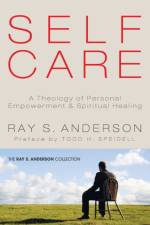
Life is not user-friendly, we all need some instructions along the way. But Self-Care is not just another self-help book. This is a book about the self, first of all, and then how that self, endowed by God with a divine image, can experience self-worth, emotional health, and a strong and vital faith in the face of life's inevitable and irrational pain and suffering. Self-Care goes beyond recovery from abuse and dysfunction. It is the realization of God's gift of personal empowerment and spiritual healing. The most difficult textbook is life itself, one that none of us can avoid reading and interpreting. This book will serve as a guide to interpret the text of life given to each of us and lead to more effective and creative living.
Bruce Malina provides the foundation for in-depth biblical interpretation using the tools of cultural analysis. As one of the pioneers in this field of biblical studies, Malina has taken the work of sociologist Mary Douglas, interpreted her ""Group/Grid"" model of cultural analysis, and applied it admirably to biblical studies and interpretation. He refines a new methodology of scholarly biblical interpretation. Since cultures differ, proper interpretation of one culture by another requires a method to compare and contrast the cultures. He has designed such methods and models using the principles of the Douglas method of sociological study. Malina's charts, models, and illustrations serve as study tools for other biblical scholars. His careful thorough work will enable these scholars to incorporate these new models for study into their own methods of biblical interpretation.
Christ, the Bread of Life, taught that if we give a cup of water to the thirsty, we are actually giving it to Him. Yet all too often, Christian organizations will fall into a one-sided mission. In Cup of Water, Bread of Life, Ron Sider documents ten ministries worldwide that help the poor and oppressed, and integrate much needed social action with evangelism. He focuses on key members of these missions, showing how they have learned from their past mistakes and how they are now impacting the world, both in word and in deed.
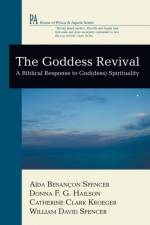
The Goddess Revival is a Christianity Today Book Award Winner, 1996. ""All of the authors are clearly sympathetic to the problems women have faced in the church throughout its history. They empathize with women who shun the patriarchal oppression of their churches to turn to goddess spirituality. They are also solidly grounded in the Scriptures, Christian theology and church history. They recognize the bondage imposed by goddess worship. This book presents a scholarly and clear consideration of the issues involved and builds a strong case for Christianity as the most woman-friendly alternative. While providing a comprehensive study of goddess spirituality and examining the roots of the movement, the authors focus primarily on God and the way people have understood God through the centuries--in both paganism and the Judeo-Christian tradition--as both male and female. They demonstrate how the uniqueness of God contrasts with the multiplicity of gods and goddesses in pagan spiritualities, while comparing the values in both traditions that are similar (that is, a search for what is good, inner empowerment, unity, positive social change). In the process of building a clear Christian theology, they gently counter the arguments of their pagan opponents. In the end, the reader is left with a glorious picture of the one true God and a clear apologetic for those in nursing who insist that the Christian God is too oppressive and patriarchal to merit our allegience. The appendixes provide a powerful case study of a young woman drawn into witchcraft. She explains why it appealed to her, then how it enslaved her and destroyed her marriage and other relationships. . . The two final appendixes offer some excellent biblical studies on the issues raised in the book. The total package provides an outstanding resource"" -- Journal of Christian Nursing
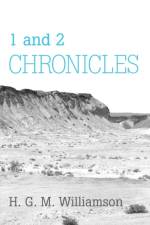
In this commentary on the books of 1 and 2 Chronicles, Dr. Williamson brings to light the theological and spiritual richness of these historical books. Composed in the era after the Babylonian Exile, they brought a new perspective to the idea of Israel and to the story of its past. Making full use of a wide range of studies by Jewish and Christian scholars, this commentary offers a wealth of new insights and conclusions.
The Pentecostal movement has been subject to some negative external assumptions. In this enlightening and challenging book, Cheryl Bridges Johns argues that, in fact, Pentecostals employ a powerful process of formation of catechesis, which has enabled millions of believers to own and articulate the Christian story. She engages dialectically with the work of Paulo Freire, a specialist in education among the marginalized.As well as looking more broadly at the nature of all catechesis, there is also an attempt to move beyond the rationalism found in a praxis epistemology.
Henri De Lubac's work on medieval exegesis and his ecclesiological works are too often studied in isolation from each other. In countering this tendency, Susan Wood argues that de Lubac's work on spiritual exegesis is ultimately not about biblical exegesis and the four different meanings of the text but instead is intimately related to issues within the life of the church. Standing as the only study of de Lubac that interprets his theology through the categories of medieval exegesis, this volume provides the intellectual tools for thinking about a theology of history, a theology of symbol and sacrament, and a theology of the church's relationship to Christ and the Eucharist. Including an extensive bibliography of the primary and most important secondary sources of the theology of de Lubac, this study attributes the organic unity found in de Lubac's work to his immersion in the principles of spiritual exegesis and interprets his ecclesiology in the light of these principles.
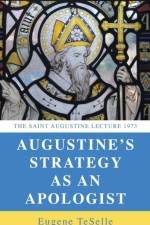
In this Saint Augustine Lecture, Professor TeSelle draws together from the various writings of Augustine the major themes in his approach to non-Christians. Highlighting Augustine's emphasis upon the moral and personal attractions of the Christian life that go beyond mere argumentation, he examines three successive concerns. During the years following his conversion, Augustine appealed to those who had some philosophical knowledge and tried to show how Christianity fulfills and puts into effect their highest aspirations. Then during the period between 399 and 410 he joined in the Empire's attack upon pagan religion, adding to his moral and intellectual claims a fateful justification of religious persecution. And at the last, in The City of God, he discovered that he must acknowledge the shortcomings, and not merely celebrate the glories, of "Christian times." It is here, Professor TeSelle suggests, that Augustine's apologetics comes to its appropriate climax--and perhaps speaks most eloquently to our contemporary situation.
""A poet of elegaic, quiet lyricism, Haig Khatchadourian writes verse of distinctive maturity which is the result of control and intellectual coherence.""-- Vaughn KoumjianHaig Khatchadourian is Emeritus Professor of Philosophy at the University of Wisconsin-Milwaukie. He received his PhD in philosophy from Duke University and has been awarded several prizes for poetry and literary essays. In 1973 he received the Outstanding Educator of America Award.
Abonner på vårt nyhetsbrev og få rabatter og inspirasjon til din neste leseopplevelse.
Ved å abonnere godtar du vår personvernerklæring.