












Gjør som tusenvis av andre bokelskere
Abonner på vårt nyhetsbrev og få rabatter og inspirasjon til din neste leseopplevelse.
Ved å abonnere godtar du vår personvernerklæring.Du kan når som helst melde deg av våre nyhetsbrev.

The dual purpose of this book is to point out the ways whereby reflective religious thinkers work and to suggest how these skills can be acquired. It is a manual of apprenticeship in acquiring religious understanding.The thought of Augustine, Anselm, Aquinas, Kierkegaard, and Jung on selected religious topics is developed expressly to show how each handled these issues and thus to provide living exemplars for religious understanding.The issues have an inherent unity in their dealing with man's knowledge of God, especially in their concern with the ways we treat what must be beyond our grasp.Augustine travels a journey of progressive awareness. As one scheme of understanding after another cannot offer an explanation, so it ends in confession. From his life we learn ""how to discriminate our action from God's while discerning God's action in ours.""In the case of Anselm and Aquinas the goal was to speak of divine things accurately enough to avoid misunderstanding, yet without giving a false impression that we have made clear what the divinity really is.Kierkegaard and Jung aim to clarify our experience of the transcendent. But this experience is expressed in a language whose success in removing the roadblocks to faith and understanding can be evaluated.
This book is a historical-theological study of the Reformed doctrine of Justification. After providing a brief history of the doctrine, the work focuses on analyzing the writings of John Calvin, Jonathan Edwards, and N. T. Wright to discern points of development, continuity, and discontinuity within the Reformed tradition itself. Drawing upon their works, this book argues for a "living" theological practice and identity for those who work to formulate Reformed Doctrine.
Journal for the Evangelical Study of the Old Testament (JESOT) is a peer-reviewed journal devoted to the academic and evangelical study of the Old Testament. The journal seeks to fill a need in academia by providing a venue for high-level scholarship on the Old Testament from an evangelical standpoint. The journal is not affiliated with any particular academic institution, and with an international editorial board, open access format, and multi-language submissions, JESOT cultivates and promotes Old Testament scholarship in the evangelical global community. The journal differs from many evangelical journals in that it seeks to publish current academic research in the areas of ancient Near Eastern backgrounds, Dead Sea Scrolls, Rabbinics, Linguistics, Septuagint, Research Methodology, Literary Analysis, Exegesis, Text Criticism, and Theology as they pertain only to the Old Testament. JESOT also includes up-to-date book reviews on various academic studies of the Old Testament.
The prosperity gospel is very influential in Africa, in Pentecostal churches, and in Reformed churches. But what is the prosperity gospel? Where did it originate? Is it biblically sound? How should we evaluate the prosperity gospel? Does it represent a wrong way of looking for health and wealth, or can we learn something from it? In this book the authors provide an analysis from different perspectives on the highly debated topic of the prosperity gospel. It is intended to be accessible and helpful both to academic colleagues and to ordinary ministers. Most of the authors are lecturers at Justo Mwale Theological University College in Lusaka (Zambia). Together with Prof. L. Togarasei from the University of Botswana, they use their theological skills to examine and assess this important topic from an African and Reformed perspective. The articles in this book will help anyone who wants to deeply explore and evaluate the intriguing phenomenon of the prosperity gospel in Africa.
The mission of the church to the Jews is a unique one. The biblical, theological and practical issues differ from those with other groups because Israel was, and is, the people to whom God gave his promises. However, the unbelief of many Jewish people and the persecution of Jewish people in the name of Jesus makes mission to the Jews uniquely difficult, requiring considerable sensitivity. But it is also full of hope, for there is promise of both a remnant and a fullness coming to faith in Jesus the Messiah. The lectures in this book were part of a series organized by Christian Witness to Israel in Australia to explore this unique challenge and to encourage an intelligent, heartfelt, and persevering interest in mission to the Jewish people. The studies focus on Biblical, theological, historical, and current issues. They were named the Edersheim Lectures after Alfred Edersheim, the well-known nineteenth-century Jewish Christian scholar and author who served in Romania as a missionary and in the United Kingdom as a pastor. Following in his example, The Gospel and Israel engages in an in-depth examination of themes relating to the Jewish people and the Christian faith.
We don't define home the same way anymore. School shootings and natural disasters populate the headlines. Tragedy and disease infiltrate our neighborhoods. We not only must survive in an unsafe world, but also persevere in it. By confronting fear and embracing family, Local News from Someplace Else rediscovers both grace and joy.
The task of this book is to examine the biblical and theological meaning of the city and our mission within it. It starts with the premise that the garden is lost, and we are headed toward the New Jerusalem, the city of God. In the meanwhile, we dwell in earthly cities that need to be adjusted to God's city: ""[T]he fall has conditioned us to fear the city . . . though, historically, God intended it to provide safety, even refuge. . . . We have to band together and act to take back our communities if we are to help God in the divine task of reconciling the world to Godself by assisting God in adjusting our communities to God's New Jerusalem, rebuilding our own cities of Enoch on the blueprints of Christ . . . to go into all the world and share his good news, building the Christian community along the lines of the New Jerusalem, a city of light in which God is revealed."" (from the Introduction by William David Spencer)Toward achieving this goal, this single, accessible volume brings together the biblical, the systematic, and the practical aspects of urban ministry by various contributors who are urban practitioners and theologians themselves, and have taught at Gordon-Conwell Theological Seminary, Boston Campus.
The contemporary church exhibits an elasticity and diversity of doctrine that at times sits oddly with biblical foundations. The presuppositions that God is and that God has spoken too often give place to the assumed priority of the explanatory competence of human reason. In that, the theology of the church is captive to the thought forms of an Enlightenment rationalism on one hand, or the looseness of postmodernist assumptions of individual autonomy on the other. In those respects, theological argument proceeds from man to God, and not--as in its biblically revealed contours--from God to man. The Divine Purchase calls the church back to a clear commitment to the gospel of redemption. The kernel of the gospel resides in the apostolic statement that Christ ""purchased the church with his own blood."" That divinely ordained accomplishment projects the only remedy for the human condition in the present decaying culture and its intellectual uncertainty and confusion.
It is hardly noteworthy in contemporary discourse when the phrase, "We'll just have to agree to disagree" actually means, "We plan never to speak to each other again." For members of Episcopal and other Anglican churches, however, the Anglican tradition's identity as a via media demands forthright engagement with difficult topics by Christians committed to remaining in prayerful relationship with each other. In the spring of 2013, Duke Divinity School's Anglican Episcopal House of Studies began a series of "fierce conversations" designed to expose seminary students to the profound and painful reality of ecclesial divisions in North American Anglicanism (revolving around issues of human sexuality, scriptural authority and interpretive practices, and church leadership) while cultivating skills for leading congregations to worship, pray, and serve in ways that contribute over time to the full, visible reconciliation of Episcopalians and other Anglicans in North America. This book presents this year of conversations as a way of inviting congregations to take up the challenge and joy of "fierce conversations" in their own common life.
Since the sixteenth century, the Protestant tradition has been divided. The Reformed and Lutheran reformations, though both committed to the doctrine of the sinners justification by faith alone, split over Zwingli and Luther's disagreement over the nature of the Lord's Supper. Since that time, the Reformed and Lutheran traditions have developed their own theological convictions, and continue to disagree with one another. It is incumbent upon students of the reformation, in the Lutheran and Reformed traditions, to come to an understanding of what these differences are, and why they matter.In The Great Divide: A Lutheran Evaluation of Reformed Theology, Jordan Cooper examines these differences from a Lutheran perspective. While seeking to help both sides come to a more nuanced understanding of one another, and writing in an irenic tone, Cooper contends that these differences do still matter. Throughout the work, Cooper engages with Reformed writers, both contemporary and old, and demonstrates that the Lutheran tradition is more consistent with the teachings of Scripture than the Reformed.
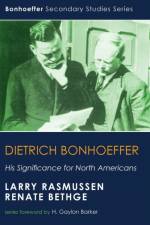
Dietrich Bonhoeffer (1906-1945) remains the most seminal theologian of those whose work was forged and tested in the worst years of the twentieth century. A German who loved his country and culture, and who mourned its crimes and actively resisted them, his ethic was wholly contextual, attuned to what he must do in his own land as a disciple of Jesus Christ. He might have been surprised to find that a half-century and more later his work has been widely appropriated by others in different circumstances for their exercise of Christian responsibility. This volume of essays is one example of Bonhoeffer's ongoing relevance.Rasmussen engages Luther, Barth, Niebuhr, Hauerwas, Yoder, and Berrigan as a way to illuminate aspects of Bonhoeffer's ethics. He also compares the post-holocaust theology of Rabbi Greenberg with Bonhoeffer's own treatment of divine presence and human responsibility in a world that has ""come of age."" One essay, ""The Meaning of the Theology of the Cross for Social Ethics in the World Today,"" pulls the main themes of the book together. This 2016 edition also includes a new chapter, which relates Bonhoeffer's ethics to the current environmental crisis.
The best manual of spiritual theology which has appeared to date--the most ordered and complete--a true summa of spirituality. This is a work of extraordinary informative value and yet possessing a notable doctrinal solidaity. This encomium of M. M. Philipon, laudatory as it is, does less than justice to this modern classic, now at last appearing in English in a smooth, readable translation and adaptation by Fr. Aumann. For in reality this is three books in one volume. First of all, this is a textbook, a manual whose lucid and orderly presentation of the basic principles of the spiritual life, of the supernatural organism, and of its progressive development recommends it unreservedly for seminarians and other serious students of spiritual theology. As Garrigou-Lagrange points out, the author's order has permitted him to treat all the important questions relative to perfection and to show clearly the basic unity of the Christian life. Thorough and solid as it is, however--firmly based on the chief masters of the spiritual life, St. Thomas, St. John of the Cross, and St. Teresa of Avila--this truly theological synthesis is set forth in clear and accessible form, as its widespread popularity in Spain (four editions in six years) attests. But The Theology of Christian Perfection is perhaps even more valuable as a work of spiritual formation. It is an eminently practical manual of sound advice, counsel, and direction with respect to the increasingly fruitful use of the means, negative and positive, for advancing in perfection. As such, it will be immediately valuable for spiritual directors, an indispensable aid for self-formation, and a work of precious merit for all souls desirous of spiritual advancement.
Close our eyes and most of us can recite the Lord''s Prayer by heart. It is as familiar as childhood memories. In some church traditions, we say the prayer together nearly every week, as a community standing before God. We call on those so familiar words and the comfort and direction they offer. The comfort that God is holy, that his kingdom is coming, that he provides just enough, and that he can protect us from ourselves and from evil. The direction that we are to worship him, that we are part of this kingdom-coming work, that we have the discipline of forgiveness as almost a daily task, and that we are vulnerable to temptation, so being on guard is a fine idea.The Wycliffe College faculty featured in this book take the Lord''s Prayer line by line and excavate it for its forgotten meaning and its neglected treasure. Each brief essay, pondering each line of this foundational prayer, guides us more deeply into the very things the Lord''s Prayer requests: a sense of God''s holiness, a sense of our own truest selves--broken and redeemed--and a glimpse of his kingdom, coming.""Don''t let the commonness of the title--The Lord''s Prayer--fail to hold your attention. Scholars with a warm and humorous touch bring into our conversation the very heart of the Gospel. I love its two-level input: as a guide in devotional prayer, and as a teacher/preacher utilizing its golden insights. Pick up multiple copies, making them special gifts to friends who, like me, need a refresher on what Jesus gave in modeling prayer.""--Brian C. Stiller, Global Ambassador, World Evangelical Alliance""Traditionally, Christian formation involved memorization of the Lord''s Prayer. Mere rote? Hardly. This series of sermons by the Wycliffe College faculty shows how rich and laden the prayer is with Christology and ecclesiology, and from these, with spiritual direction and cultural critique. This short book is highly appropriate for parish adult education or group devotion.""--George Sumner, Episcopal Bishop of Dallas""In an increasingly complex and fragmented world, The Lord''s Prayer takes us back to spiritual ground zero--rooting us in the fundamentals of faith and prayer. Karen Stiller deftly edits various reflections of a well-known and often assumed prayer in such a way that we can engage, interact, and learn. There is a consistency throughout these brief essays that serves the praying person living in an inconsistent world."" --Barry Parker, Rector, St. Paul''s Bloor Street, TorontoKaren Stiller is a senior editor of Faith Today magazine, freelance writer, and general editor of Evangelicals Around the World: A Global Handbook for the 21st Century, and co-author of Shifting Stats Shaking the Church: 40 Canadian Churches Respond and Going Missional: Conversations with 13 Canadian Churches Who Have Embraced Missional Life.
ELLICOTT'S COMMENTARY ON THE WHOLE BIBLE is a practical and ideal commentary for Sunday school teachers, Christian workers, Bible students, libraries, and ministers. Each of the durably bound volumes in this handsome set is designed with an eye to the convenience of the user. The large, double-column pages are distinctive and easy-to-read. The helpful running commentary is always on the same page with the actual Bible text, making it simple for the user to locate the information he or she seeks. The comments in every case are crisply written and wonderfully practical and up-to-date. You, the user, will not have to read pages of extraneous material to get the important information.If you ever need help for:Sunday sermonsPrayer Meeting talksMessages for Young People's Groups, etc.Sunday school lessonsPersonal Bible studyMessages for special occasionsyou will find it in ELLICOTT'S COMMENTARY ON THE WHOLE BIBLE.
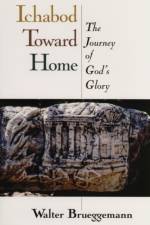
In today's confused and confusing world, it is good to be shown once more that God is never absent. That is the heartening message of 'Ichabod toward Home'. In this volume one of today's most respected biblical scholars explores the nature of God's glory, using the engaging story of the ark of the covenant to illuminate the meaning of God's presence - not only for the ancient Israelites but for the whole world. Offering a unique entry into Old Testament theology, Walter Brueggemann examines 1 Samuel 4-6, the biblical text in which the ark of God is captured by the Philistines, seen to be a dangerous threat, and finally returned to Israel. In looking anew at what this story reveals about God's glory - or kabod, from which the name Ichabod derives - Brueggemann builds a powerful new theology of God's sovereignty. Additionally, Brueggemann demonstrates that this ancient story of the ark has profound relevance today. The three-day story of the ark's capture, detention, and return is transposed, first, into the three-day Christian story of Easter and, second, into the three days of the modern consumer weekend. In a provocative contemporary application of Old Testament theology, Brueggemann shows that the Ark narrative, in its rendering of God's glory, strongly contradicts the dominant narrative of our own culture, with its strident emphasis on self-indulgence, narcissism, and self-sufficiency.
It is no secret that the author of this book believes in a large Gospel, an evangel co-extensive with the present needs of the depraved offspring of Adam; yea, more: he believes that where sin hath abounded, grace doth here and now much more abound to those believers who insist that Christ is a perfect Saviour from inbred sin, through the efficacy of His blood, in procuring the indwelling Comforter and Sanctifier. --From the preface.
""Uldine was born in rural Oklahoma to Hattie Ellen Bray and Azle Herbert Utley. Her family eventually settled in Fresno, California, where her parents owned a raisin farm. At the age of nine, she was converted at an Aimee Semple McPherson evangelistic meeting. Within two years, she began to preach first in small towns and then in increasingly larger cities across the USA and Canada. Her largest venue was Madison Square Garden, where at the age of fourteen, she preached to 14,000 people. When she had been preaching for about a year, at the age of twelve, Uldine began publishing a monthly magazine to keep in contact with those who had attended her meetings. Petals from the Rose of Sharon, later entitled, The Vision, contained one or two of her sermons, testimonies from people converted at her meetings, and reports about her upcoming meetings. As she grew out of childhood and into an adult, her popularity on the evangelistic circuit waned. She joined a Methodist congregation in Chicago and was given a Methodist preacher's license. A Methodist bishop endorsed her book, Why I Am a Preacher. At the age of twenty-three, she was ordained by the Methodists, an event noteworthy enough to be written up in Time magazine's religion page. The article on her ordination was accompanied by a picture of Uldine in a bathing suit. Her brief marriage to Wilbur Eugene Langkrop was annulled when she collapsed mentally. Her remaining fifty-seven years were spent in and out of convalescent institutions."" - Priscilla Pope-Levison, Professor of Theology and Assistant Director of Women's Studies at Seattle Pacific University http://myhome.spu.edu/popep/profiles/uldine_utley.html
Hoffmann's Marcion was the first work after Harnack (1924) to call into question the patristic testimony concerning the "arch-heretic." In his work, Hoffmann challenged the conventional wisdom concerning the date, sources, and accuracy of reports on Marcion through careful and critical examination of patristic evidence. In Hoffmann's view, Marcion was the creator of the two-part canon. Theologically, his attempts to elevate Paul above the gospels ensured the enduring role of Paul in the history of the early church. Contrary to early views that Marcion was a gnostic, Hoffmann argued that Marcion was a man from an "earlier time" who demonstrates in his theology the living controversies of the early period: whether the Old Testament should be accepted or rejected; whether the God of the Old Testament and the God of the gospel are the same deity; and finally, whether the revelation of God represented in the teaching and person of Jesus Christ is definitive for the church.
Recent studies of the Christology of John's Gospel have agreed in recognizing the centrality of the concept of messianism, but differ markedly in their interpretation of its character. Alongside the traditional understanding of messiahship in terms of a kingly role related to that of David, there is a newer understanding that is related to the role of Moses and has little or no Davidic background. Despite the broad scholarly consensus regarding the Johannine connection between crucifixion and messianism, little attention has been paid to the role of crucifixion in relation to the nature of messiahship and in particular to the possibility that this may shed light on whether or not John's messianism is decisively shaped by the kingly or royal background. In The Kingship-Cross Interplay in the Gospel of John Mavis Leung contends that the cross motif plays a major role in authenticating the royal character of messiahship in John over against views that deny or play down this element.
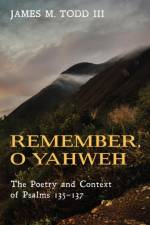
One of the major shifts in OT studies over the past half of a century has been the move away from studies dominated by diachronic matters toward more text-immanent, synchronic approaches. In Psalter studies, one can see such a shift on two levels. First, on the level of the individual psalm, there has been a general trend to focus on the literary and linguistic features as the proper means for discerning the meaning of the poem. Second, on the level of the Psalter as a whole, scholars have devoted significant attention to its canonical shape and the role of adjacent psalms in the interpretation of each individual psalm. In Remember, O Yahweh, Todd approaches Psalms 135--137 on both of these levels. After a detailed poetic analysis of each psalm, he proposes that Psalms 135--137 serve as a bridge between the Songs of Ascents (Pss 120--134) and the Last Davidic Psalter (Pss 138--145). As such, this group highlights Yahweh's past acts of deliverance as the basis for the post-exilic community's prayer for Yahweh to remember his people's lowly condition.
Timothy C. F. Stunt has gathered a range of his essays, both published and unpublished in a collection of largely biographical studies. His subjects range from discontented Quakers hesitating over their identity, to respectable Anglicans who were fascinated with the charismatic phenomena of tongue speaking and healing. Some of the characters with whom he is concerned can be described as "mavericks" on account of their strikingly individualist inclinations. Occasionally their unpredictability takes on a quasi-comic identity, which could even qualify them to be described as "loose cannons." On the other hand, some of them like Edward Irving, Norris Groves, and John Darby played a crucial part in the development of nineteenth-century evangelicalism. In their quest for the ideal church of their dreams, they were often disappointed but one cannot but admire the single-mindedness of their quest.
This book is intended as a devotional guide for the Advent season. Through the mediums of meditations, poetry, and prayer, it offers a spiritual resource for readers seeking to explore the many dimensions of this beloved season, and to deepen their appreciation of its mystery and wonder. Each day the reader is provided with either a prose meditation, based in Scripture, or a selection of poems, composed around the traditional themes of Advent/Christmas. The overall effect is that of a journey--a journey which moves, devotionally, through the days and weeks of December, toward Bethlehem, the stable, and the manger. Images, incidents, impressions, and items from the daily news are woven together to form a rich and rewarding tapestry, a pathway leading onward, an open door into the quiet places of the soul. Christmas Eve and Day are given special treatment, followed by a final section covering New Year's Day and the twelve days of Christmas. The book also provides a source of creative imagery and language for clergy, and other worship leaders, as they face the challenges of speaking traditional truths in a new and inviting way. Yet another use would be as a small group study guide for Advent.
This sesquicentennial project of Presbyterian College tells the stories of thirteen individuals, chosen from among its graduates, faculty and benefactors, whose still voices represent in unique ways the history and influence of the college over the past 150 years. Each chapter presents a biography, a sermon, address, letter or report, followed by a commentary showing how this still voice spoke to the issues of the time and why it still should be heard. The themes remind us of the college's continuing mission to provide the Church with strong and visionary leaders. The book concludes with useful lists of Presbyterian College's students, scholars, supporters and societies down through the years.""The editors have creatively combined biographical essays with addresses, letters, reports, and sermons to present the history of its ministry to both English and French Protestants, showing how its leaders, graduates, and supporters shaped Christianity and culture in and beyond Canada.""--Phyllis Airhart, Professor of the History of Christianity, Emmanuel College, University of Toronto""This book inspires! As an archivist, the concept of presenting the 150th anniversary history of Presbyterian College, Montreal, by way of well-chosen key 'voices' influenced by that institution is most effective, and makes for a compelling and Spirit-filled read."" --Kim Arnold, Archivist, The Presbyterian Church in Canada""What a wonderful way to celebrate an anniversary! The various lives chronicled here are testament to the vitality and witness of Presbyterian College, Montreal, and the changes in the Presbyterian Church in Canada, particularly the place of women within the church. The mix of biography and sources . . . brings these individuals and their times to life."" --Stuart MacDonald, Professor of Church and Society, Knox College""The publication of a sesquicentennial study of Montreal's Presbyterian College should excite anyone who wants to learn about our Canadian Presbyterian heritage. The recovery of the stories of many who provided leadership in the past is encouraging for our future."" --Don MacLeod, Research Professor of Church History, Tyndale University College and Seminary""This creatively edited book offers unusually effective insights for the Presbyterian College in Montreal's 150-year history. Each chapter features something written by a significant figure connected to the college, but also interpreted in context by a contemporary author. The result is an excellent account of the college, while illuminating much wider domains in Canada and beyond.""--Mark A. Noll, Francis A. McAnaney Professor of History, University of Notre DameJ.S.S. Armour, minister emeritus, The Church of St. Andrew and St. Paul, MontrealJudith Kashul, editor and member, The Church of St. Andrew and St. Paul, MontrealWilliam Klempa, principal emeritus, The Presbyterian College Montreal Lucille Marr, adjunct professor of Church History and course lecturer, Faculty of Religious Studies, McGill University, Montreal and chaplain at The Presbyterian College, MontrealDaniel Shute, librarian, The Presbyterian College, Montreal
A properly ecumenical theology, T. F. Torrance believed, points the church to Christ as the only source and reality of its own unity. Its only hope for unity must be discovered in him and unveiled to the church, rather than pieced together and manufactured through ecumenical slogans and well-meaning intentions. Acting on this belief, Torrance initiated an international dialogue of Reformed and Orthodox Churches, which culminated when the World Alliance of Reformed Churches and the Orthodox Church issued a groundbreaking joint statement of agreement concerning the Trinity in 1991, a move beyond the filioque controversy that has divided East and West for a millennium. The current volume on T. F. Torrance and Eastern Orthodoxy continues the theological and ecclesial work of the reintegration of Western and Eastern traditions on a classical patristic foundation.
Jesus made claims about redemptive community throughout his ministry when he called people to extravagant grace. Even in the midst of the oppression of his day, Jesus preached and taught that redemptive community was possible if his followers would simply stop hoarding, hiding, and excluding. What a prophetic word for today in the midst of modern day oppression and fears of scarcity! In this edited volume, in honor of religious education scholars Jack Seymour and Margaret Ann Crain, eight of their PhD advisees--each scholars in their own right--join Seymour and Crain to lay out their vision of redemptive community. Rooted in their own scholarship, each contributor proposes ways in which Jesus' vision of redemptive community can become reality in churches and congregations, and in our larger world. In addition to essays by Jack Seymour and Margaret Ann Crain, scholars contributing to this volume include Dori Grinenko Baker, Reginald Blount, Evelyn L. Parker, Mai-Anh Le Tran, Leah Gunning Francis, Carmichael Crutchfield, Debora B.A. Junker, and Denise Janssen. The foreword by Mary Elizabeth Moore and afterword by Seymour and Crain set the volume in the larger context of the church and academy.
Abonner på vårt nyhetsbrev og få rabatter og inspirasjon til din neste leseopplevelse.
Ved å abonnere godtar du vår personvernerklæring.