








Gjør som tusenvis av andre bokelskere
Abonner på vårt nyhetsbrev og få rabatter og inspirasjon til din neste leseopplevelse.
Ved å abonnere godtar du vår personvernerklæring.Du kan når som helst melde deg av våre nyhetsbrev.

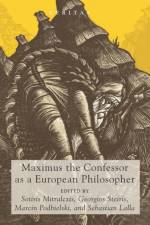
The study of Maximus the Confessor''s thought has flourished in recent years: international conferences, publications and articles, new critical editions and translations mark a torrent of interest in the work and influence of perhaps the most sublime of the Byzantine Church Fathers. It has been repeatedly stated that the Confessor''s thought is of eminently philosophical interest. However, no dedicated collective scholarly engagement with Maximus the Confessor as a philosopher has taken place--and this volume attempts to start such a discussion. Apart from Maximus'' relevance and importance for philosophy in general, a second question arises: should towering figures of Byzantine philosophy like Maximus the Confessor be included in an overview of the European history of philosophy, or rather excluded from it--as is the case today with most histories of European philosophy? Maximus'' philosophy challenges our understanding of what European philosophy is. In this volume, we begin to address these issues and examine numerous aspects of Maximus'' philosophy--thereby also stressing the interdisciplinary character of Maximian studies.""This groundbreaking volume correctly identifies an odious convention in the division of disciplines: while major thinkers such as Augustine or Aquinas self-evidently make their way into being part of philosophy''s legacy, equally major thinkers that are categorized as ''religious'' are exiled to the hermetically sealed domain of theology, even if their contribution to classical philosophical problems is unique, pertinent, and most fecund. The book at hand delivers on its promise of reclaiming Maximus the Confessor for philosophy and of recognizing his oeuvre as a critical contribution to its history; as such, it is one of those endeavors that contribute to nothing less than a paradigm change.""--Grigory Benevich, The Russian Christian Academy for the Humanities""This rich and diverse set of essays goes far in demonstrating not only the depth and nuance of Maximus the Confessor''s philosophical theology in its own context but its relevance to a wide array of contemporary theological concerns. They indicate very well why the study of Maximus has experienced a profound renaissance in the past several years, as this is a thinker whose stature matches the far more studied figures of Augustine and Aquinas. From metaphysics to theological anthropology, from apophaticism to ethics, this collection is a fine contribution to the expanding research on Maximus and will further generate interest in the Confessor among historical theologians, philosophers, and scholars from a wide variety of disciplines.""--Paul M. Blowers, Emmanuel Christian Seminary at Milligan CollegeSotiris Mitralexis is Assistant Professor of Philosophy at the City University of Istanbul and Visiting Research Fellow at the University of Winchester. Georgios Steiris is Assistant Professor of Medieval and Renaissance Philosophy at the National and Kapodistrian University of Athens. Marcin Podbielski is Editor-in-Chief of Forum Philosophicum, an international journal for philosophy, and teaches philosophy at the Jesuit University Ignatianum in Cracow, Poland. Sebastian Lalla is Assistant Professor (Privatdozent) at the Freie Universitat Berlin''s Institute of Philosophy and Guest Professor of Philosophy at the National University of Mongolia.
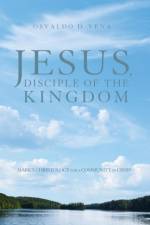
Description:That Jesus started his career as a disciple of John the Baptist is an idea that has gained almost universal recognition in the scholarly world. His coming from Galilee to be baptized by John in the river Jordan is the most compelling proof of Jesus'' subordination to John. But quickly after John was executed Jesus started his own career, not as a disciple anymore, but as a teacher in his own right. In this book Osvaldo Vena makes the claim that throughout his ministry Jesus remained a disciple, not of John, but of a higher power, God, and God''s kingdom. Thus, Jesus called men and women to join him as co-disciples as he went about proclaiming the nearness of the kingdom through word and action.In this work Vena contends that in the Gospel of Mark, Jesus is presented as a prototype of true and faithful discipleship, a model to be followed and imitated by ancient as well as contemporary believers. This presentation amounts to an emerging Christology espoused by the early Markan community on the verge of destruction from outside forces, specifically the Jewish-Roman war, as well as internal divisions resulting from struggles for power in the community.
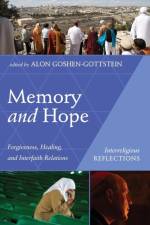
This book tackles the core problem of how painful historical memories between diverse religious communities continue to impact--even poison--present-day relations. Its operative notion is the healing of memory, developed by John Paul II. Chapters explore how painful memories of yesteryear can be healed and so address some of the root causes. Strategies from six different faith traditions are brought together in what is, in some ways, a cross-religious brainstorming session that identifies tools to improve present-day relations.At the other pole of the conceptual axis of this book is the notion of hope. If memory informs our past, hope sets the horizon for our future. How does the healing of memory open new horizons for the future? And what is the notion of hope in each of our traditions that could lead to a common vision of good?Between memory and hope, this book seeks to offer a vision of healing that can serve as a resource in contemporary interfaith relations.Contributors:Rahuldeep Singh Gill, Alon Goshen-Gottstein, Maria Reis Habito, Flora A. Keshgegian, Anantanand Rambachan, Meir Sendor, Muhammad Suheyl Umar, and Michael von Bruck""A great and often-neglected human challenge is how to manage individual collective memories of wrongs suffered and committed. World religions face the challenge, too, as violence has marked their internal and external relations. This book, unique in many ways, contains rich resources drawn from diverse world religions for figuring out how to remember rightly and hope boldly in a violent world.""--Miroslav Volf, Yale University, author of The End of Memory: Remembering Rightly in a Violent WorldALON GOSHEN-GOTTSTEIN is founder and director of the Elijah Interfaith Institute. A noted scholar of Jewish studies, he has held academic posts at the Hebrew University of Jerusalem and Tel Aviv University and has served as director of the Center for the Study of Rabbinic Thought, Beit Morasha College, Jerusalem.
Originally published: Oxford: Lion, 1999.
Metaphors We Teach By helps teachers reflect on how the metaphors they use to think about education shape what happens in their classrooms and in their schools. Teaching and learning will differ in classrooms whose teachers think of students as plants to be nurtured from those who consider them as clay to be molded. Students will be assessed differently if teachers think of assessment as a blessing and as justice instead of as measurement. This volume examines dozens of such metaphors related to teaching and teachers, learning and learners, curriculum, assessment, gender, and matters of spirituality and faith. The book challenges teachers to embrace metaphors that fit their worldview and will improve teaching and learning in their classrooms.
Fostering faith in children is a shared privilege and responsibility of parents, godparents, and the church community. We promise our children at baptism that we will support them in their faith formation--in the formation of their relationship with God. We need to take this promise seriously. This book is intended to be an accessible and helpful resource for parents and other adults who seek to foster children's faith.This book succinctly explores many ways we can support children's faith formation, including our day-to-day interactions with children, the images of God we share with them, how we pray together, the rituals we create, service opportunities we provide, music we share together, the stories we tell and listen to, our celebration of the sacraments, and more. While this book has a distinctly Roman Catholic orientation, much of the content will be relevant for a wider Christian audience.Lastly, but perhaps most importantly, this book is rooted in the conviction that the God we seek relationship with and that we hope to foster our children's relationship with is one who is infinitely loving, welcoming, and always yearning for deeper connection with us.
Martha Gatkuoch is a young Sudanese woman who lived through unthinkable trauma. She was a child when her idyllic rural village in Southern Sudan was attacked. She and her brothers were separated from their parents in a heartbreaking journey that took them from their homeland to a refugee camp in Uganda, and then through a difficult journey in the American foster care system. Against all odds, Martha has maintained a resilient peace. In this touching memoir, Martha shares the difficulties and joys of her adventures as a Sudanese woman forging her new life. Martha can recite her lineage twelve generations back, remembering hundreds of years of peace isolated from the rest of the world along the Nile River. Martha's adoptive father, Brett Bymaster, traces the history of Sudan through the eyes of Martha's forefathers, in an attempt to explain Martha's experience in the broader global context. For centuries the impenetrable Sudd, the Sudanese swampland, held back Arab Islamic militants. When the British conquered the Sudd, the floodgates of war broke open. The civil war recently ended and Southern Sudan gained independence. With Martha's generation of resilient Sudanese nationals, there is again hope for peace and tranquility.
These reflections, based on the seven last words of Jesus from the cross (including an Easter message) invite readers to contemplate the spiritual, theological, and biblical significance of the death and resurrection of Jesus. These meditations, which combine theological reflection, biblical interpretation, and spiritual application, provide Christians with a good resource for group study and personal growth in Christian discipleship during Lent and Holy Week. Pastors, teachers, Christian leaders, or anyone charged with the responsibility and privilege of presenting sermons, homilies, Bible lessons, or devotional talks during Lent and Holy Week will find rich material in these pages to spark the imagination.
This book is a picture of prison life from the inside. It illustrates prison life as, at turns, exciting, surprising, distressing and, often, amusing. Each day is different, and anyone who walks through a prison gate had better be alert. It tells of the small human dramas that play out daily among staff, prisoners, and others who enter this gated world. It calls the reader to see that justice begins by seeing each person, staff or prisoner, as an individual with his or her own story. The passion of the author is to portray prison life as continuous with life in broader society. In prisons, we meet the same cast of characters, the same temptations, the same dangers, and the same rewards as on the outside. Rather than regarding prisons as separate worlds, we should regard them as extensions of the society in which we live.This is important because there is a continuous flow between prisons and the broader society. Those who go to prison usually return to society. Understanding how prisons work will help us as we consider how to reintegrate former prisoners into our society. As the author argues, this is difficult but important work.
Description:An Apology for Apologetics argues that a vigorous apologetics is a vital component of any sound effort at interreligious dialogue. Griffiths shows that a spirited defense of each religious tradition must be made by people who are both committed to their "truth" and open to serious criticisms by members of other faith traditions. He demonstrates why and how such a recognition of the necessity of interreligious apologetics (the "NOIA principle") runs counter to the underlying presuppositions of many proponents of interreligious dialogue.Griffiths raises the specter of an unacceptable price that will be paid if the apologetic enterprise is abandoned. Religious traditions, he shows convincingly, will face relegation to the realm of purely private opinion and religious people will be denied the minimum plausibility they need to engage in public discourse. He argues ultimately that if basic doctrines cannot be defended against alien claims, religious tradition cannot survive.This book will without a doubt stimulate the debate it seeks to introduce: it unapologetically issues a challenge to teacup ecumenists and lazy pluralists. An Apology for Apologetics is for all who are seriously concerned with their own religious communities. It shows how to think about (and communicate with) those whose practices and convictions seem to differ significantly from one's own.Endorsements:""It is a delight to read this rigorously-argued analysis of the significance of religious differences. . . . No recent book in this area takes the realities of religious pluralism with such consistent and utter seriousness.""--J. A. DiNoia, OP, The Thomist""Refreshing, lucid, and penetrating. . . . Griffiths sets a rigorous new agenda for interfaith dialogue.""--Gavin D'Costa, West London Institute of Higher EducationAbout the Contributor(s):Paul J. Griffiths is Schmitt Professor of Catholic Studies and Chair of the Department of Classics Mediterranean Studies at the University of Illinois at Chicago and the author of the much-acclaimed Christianity through Non-Christian Eyes.
Origen and St. Augustine were the two greatest geniuses of the early Church. Origen's writings can be said to mark a decisive period in all fields of Christian thought. His researches into the history of the different versions of the senses of the Old and New Testaments make him the found of the Scientific study of the Bible. - From the Introduction
The inerrancy of God's Word has been attacked throughout church history. Today's assaults are unique since neo-evangelicals now surrender to post-modernistic ideas of history and historical-critical ideologies that assault this vital doctrine. They seek to redefine the orthodox meaning of inerrancy. Since the signing of the Chicago Statements, troubling signs have once again appeared in recent years among many who either did not fight the battles for the inerrancy of Scripture as did the International Council on Biblical Inerrancy, or who do not remember the troubling times that caused their development. The nature and definition of "inerrancy" are now being changed to include ideas of fallibility. History is forgotten. The need arises for sounding the alarm for Vital Issues in Inerrancy. Evangelical schools and churches that broke away earlier to defend inerrancy surrender now to academic prestige and scholarly fads instead of faithfulness to God's inerrant Word. The contributors pray that the Lord will raise up a new generation with the spiritual fervency of the International Council on Biblical Inerrancy to uphold the inerrancy of God's Word: Isaiah 40:8--"The grass withers, the flower fades, But the word of our God stands forever."
What does Jesus mean when he says, "A disciple is not above his teacher, but each disciple, after being fully trained, will be like his teacher" (Luke 6:40)? This verse has been quoted, cited, and referenced in vast amounts of Christian education and discipleship literature. Nevertheless, the verse is nearly untouched in exegetical discussions with the exception of source-critical analyses. From this verse arises an undeveloped theme in the Gospel of Luke and the New Testament--the theme of likeness education. Using content analysis methodology, Luke 6:40--one of the keystone passages in Christian education literature--serves as the starting point for mining out the theme of likeness education in the New Testament. This study consists of three concentric areas of investigation: (1) Luke 6:40 and its immediate context, (2) Luke-Acts, and (3) the New Testament corpus.
This book, written to honor Ben Witherington III, is a collaborative effort from the New Testament department at Asbury Theological Seminary. Essays are offered by five New Testament faculty and five New Testament students who have completed or are currently in the process of completing the PhD program. It is our hope that readers of this volume, which is divided into five sections and covers the breadth of the New Testament canon, will be encouraged in their own explorations and research of the New Testament, much as Ben and his works have encouraged us. For those who know Ben, they will know the last year or so has been quite a difficult one for him and his family. On Wednesday, January 11, 2012, Christy Ann, the daughter of Ben and Ann, passed on unexpectedly. Today, there exists a scholarship fund in Christy's name, The Christy Ann Witherington Scholarship Fund, at Asbury Theological Seminary, and readers should be aware that 100 percent of the proceeds from this book will go to that scholarship fund to assist female students in Asbury's biblical studies program.Contributors:David R. BauerJoseph R. DongellT. Michael W. HalcombCraig S. KeenerRobert Brian KidwellSusann LiubinskasFredrick J. LongJason A. MyersJudith OdorRuth Anne Reese
Results May Vary addresses the unspoken assumptions and unquestioned expectations about what it means to be a Christian woman in a complex world. Far from offering a simple checklist or selling advice, this collection of essays weaves together a rich variety of voices--from women of different ages, backgrounds, professions, disciplines, and life choices--speaking honestly about the unexpected yet grace-infused twists and turns of life that exude the faithfulness of God in every unanticipated detail. For young women in their twenties and thirties tackling post-college life, Results May Vary offers the wry and diverse stories of real women grappling with real-world issues like friendship, health, money, ambition, vocation, marriage, motherhood, sexuality, and spiritual life.
Creative Ways to Build Christian Community is exactly what its title says it is: a very personal, practical response to the present and future prospect of isolation, a treasure trove of examples and suggestions about how to accomplish the Great Commission from community builders telling how, over the years and the ministries, they have implemented creative ways to build up churches and organizations to develop more intensive Christian fellowship and, thereby, create community. --Dr. William David Spencer
Conservative evangelical women are least likely to be trained in the areas of teaching and preaching. It's a tragic state of affairs, given the central value that our tradition places on the Scriptures. In this book, Jackie Roese examines the forces, both past and present, that have discouraged women from becoming trained. We'll discover that women are indeed called, gifted, and mandated in Scripture to herald the Word of God. The first half of the book will focus on encouraging women to become as fully equipped as our male counterparts, and to use their uniquely female voice in proclaiming truth to other women in various settings outside pulpit preaching. But encouragement isn't enough. Many women who already teach Bible studies, or who desire to teach, are in no position to pursue formal studies in a seminary. To that end, the second half of She Can Teach is dedicated to developing homiletic skills. Together we will learn how to study a passage, find the main idea, and build and deliver a biblical message. By the end of this book, the reader will be better equipped to proclaim truth, through her uniquely female voice, to her female audience.
Description:The Bible's Prophets: An Introduction for Christians and Jews introduces the reader to the world of Joshua, Judges, 1 and 2 Samuel, 1 and 2 Kings, and the literary prophets: Isaiah, Jeremiah, and Ezekiel, plus the twelve ""minor"" prophets: Hosea, Joel, Amos, Obadiah, Jonah, Micah, Nahum, Habakkuk, Zephaniah, Haggai, Zechariah, and Malachi. These books form the second section of the Hebrew Bible--the Prophets/Neviim. Features: Introduction to the Bible; Introduction to the Prophets; and Do the Prophets predict the coming of the Messiah?Each chapter covers one particular biblical book. Chapter divisions: 1, 2 Introduction with chapter-by-chapter analyses or section-by-section analyses / geo-political and historical background / significant events / personalities / concepts and divisions.3. The biblical book and the Christian Scriptures. 4. The biblical book in rabbinic literature. How did the rabbis utilize quotations from the Prophets to teach their values? Extensive quotations.5. Text study. An excellent source for Christian, Jewish, or interfaith study of the Bible's Prophets.
Nurturing the Prophetic Imagination searches through biblical scholarship, theology, economics, sociology, politics, ecology, and history to discern the strands of God's justice and reconciliation at work in the contemporary world. Nurturing the Prophetic Imagination challenges Christians to engage the most troubling social problems of our time by first drinking deeply from the well of the historic prophetic traditions. Nurturing the Prophetic Imagination witnesses to a God that raises up prophets to speak at critical moments in every time, and to what it might look like for the Church to nurture the soil from which such prophetic voices spring. Rarely do such a wide variety of authors from such different backgrounds and vocations get together to name what the prophetic work of God looks like in our midst. The radical justice and reconciliation of God can be found in every corner of life, if we know where to look for it; Nurturing the Prophetic Imagination provides some guidance in this direction.Nurturing the Prophetic Imagination celebrates and seeks to build upon the legacy of eminent biblical scholar Walter Brueggemann's seminal work The Prophetic Imagination, first published in 1978, by assessing the core insights and themes he develops through a number of different lenses. These include contemporary biblical scholarship, theology, economics, sociology, politics, ecology, and church history. Nurturing the Prophetic Imagination also discusses the extent to which the Christian prophetic tradition continues to speak meaningfully within the contemporary world and thereby seeks to be a source for inspiring future generations of Christian prophets to do likewise.
The End of the Unrepentant stands as the most thorough exegetical analysis of the biblical teachings about the fate of the unrepentant ever written. Following up the author's acclaimed monograph, After the Thousand Years: Resurrection and Judgment in Revelation 20, this study makes use of the nexus of the Isaiah Apocalypse (Isa 24-27) and Revelation 20 as a paradigm or interpretive lens through which to understand the teachings of the Psalms, the Prophets, Jesus, and the NT about resurrection, judgment, and the divergent futures of the faithful and the unrepentant.The question of whether ""hell"" is everlasting has been a topic of interest for many decades now among evangelicals, and the controversy has only intensified in recent years. Many Christians feel uneasy about the idea of everlasting torment, but their belief in the authority of Scripture leaves them feeling that this doctrine is inescapable. The End of the Unrepentant is written for them. It mounts a unique, positive exegetical argument for annihilationism--an argument so thoroughly founded on the prophetic words of Jesus, Isaiah, and John that it shifts the exegetical burden of proof to those who would wish, for theological reasons, to affirm everlasting torment.
The God of Abraham, Isaac, and Jacob brings readers on a surprising journey from the dawn of divine-human communion to the present, showing how this mysterious, ongoing relationship holds the keys to true worship. Laying a new foundation for understanding worship, the book makes a compelling case for distinguishing the church's practices from those of the world. Recognizing the holiness of worship, the author observes that music itself, apart from language, conveys its own theological meaning; that, similar to Scripture, there is an evolving canon of sacred music; and that, to mitigate idolatry, the spirit of worship must be tested to ensure that it addresses the God of Abraham, Isaac, and Jacob. When this timeless liturgical journey with God is honored with vital commitment, worship will be compelling and transfiguring to all people, at all levels of religious experience.
This work proposes the model of translation for the incarnation. According to this model, in Jesus Christ the eternal Word of God was translated into human flesh and form. Thus in Jesus Christ the invisible became visible, the inaudible became audible, the intangible became tangible, and the impalpable became palpable (cf. I John 1:1-4). This translation is brought about inasmuch as the heart of Jesus is the heart of the Word-made-flesh because it is the heart-of-the-Word made flesh. All the sentiments of the Word towards his Father, towards the Holy Spirit, and towards the whole of creation find expression in the human heart of Jesus Christ. The very being of the Word is thus expressed for us in the humanity of Jesus. That humanity is taken up into and hypostatically united to the Word of God through the medium of Word-consciousness, namely the consciousness in the human mind of Jesus of being the Word expressed in human form.
There are numerous issues in the public square confronting the Western church. While there are any number of books available on each of the topics engaged in this collection of essays--just war, family planning, rest, immigration, politics, economic recession, fair trade, and health care--there is no compact guide that approaches each of these issues from an evangelical perspective. Coffee Shop Conversations does just that. The book does not aim to address each issue exhaustively; instead, it offers an evangelical approach to these topics, with the hopes that the door will be opened for further conversation. This book brings together the expertise of several evangelical scholars who are committed to serving the church through scholarship. The volume is therefore ideal for student ministry, Sunday school classes, small groups, and individuals interested in engaging the wider culture from a stance that is well reasoned and committed to biblical faith and practice.
We live in an era when the Bible appears to be less and less relevant to mainstream cultures. Those who do care about the Scriptures tend to derive their interpretations secondhand, from the preacher's pulpit or from generalized study guides written by complete strangers. These approaches overlook the communal and conversational nature of the Bible itself. If we hope to recover the transformative power of these ancient texts, and invite our world to reconsider their significance, we will need to engage whole communities together in the bottom-up task of interpretation. People of the Book was written to offer an organic-holistic approach to communal interpretation, an approach that can work for your community and appeal to your wider culture. Halcomb and McNinch envision the Bible as a conversation we are privileged to enter: listening, questioning, wrestling, reasoning, and responding together as authentic people of the Book.
We receive all our holiness of heart, as well as all our peace of conscience, out of Christ's fullness for both these things. Our holiness of heart is a thing already prepared for us and laid up for us in Christ. And thus, even as we are justified by a righteousness this is first wrought out for us by Christ, and which is, from Christ, imputed to us; even so, we are sanctified by a holiness that is first prepared for us in Christ, and is, then, imparted to us out of Christ's fullness. Every atom of our soul-sanctifying holiness is as truly and as wholly derived from Christ, as is every atom of our conscience-justifying righteousness. Many serious-minded men, says Marshall, make the greatest of mistakes here; just as he himself made this same greatest of mistakes at one time of his religious life. Many serious-minded men take an infinitude of pains to produce a true holiness for themselves out of their own corrupt heats; squeezing all the time oil out a flint. --From chapter 17, Squeezing Oil out of a Flint.
The most useful and available key to someone's position lies in the expressions he is prepared to make his own. Language clearly reflects the bearings we have taken as well as it reveals how aware we are that we have taken them. The language he uses not only shows us where someone stands but also lets us in on the extent to which he understands where he stands. And if the expressions we are prepared to utter are so revealing about our position in the world, perhaps the language we use can also reveal some basic facts about the world itself--or the world as we most basically see it. Language would then prove a valuable key to that style of question long called metaphysical. This book is an attempt to follow out some of the clues that language gives us about the world, specifically those offered by a privileged set of expressions: analogous terms.
Abonner på vårt nyhetsbrev og få rabatter og inspirasjon til din neste leseopplevelse.
Ved å abonnere godtar du vår personvernerklæring.