











Gjør som tusenvis av andre bokelskere
Abonner på vårt nyhetsbrev og få rabatter og inspirasjon til din neste leseopplevelse.
Ved å abonnere godtar du vår personvernerklæring.Du kan når som helst melde deg av våre nyhetsbrev.

Introducing new reprints by Gerald Heard: The Creed of Christ The Code of Christ Training for the Life of the Spirit Prayers and Meditations""There was a period in my early thirties when these four small books by Gerald Heard served almost as my bible. I read and reread them, and invariably found them to be uplifting and inspiring."" - Professor Huston Smith""Gerald Heard was an inspiring voice for the life of the spirit. Wipf & Stock is to be commended that Heard's remarkable work is being made available to a new generation of spiritual seekers."" - Dr. William H. Forthman""These prayers and meditations are traces of an experiment,"" writes Gerald Heard in his Introduction to Prayers and Meditations. ""Seven were written by one of our ablest authors."" That experiment was Trabuco College, which Heard founded in California in 1941. The ablest author was Aldous Huxley, Heard's sometime co-adventurer in mystical voyages.Along with Huxley's seven contributions are selections by St. Albert, St. Anselm, Dionysius the Areopagite, William H. Forthman, and Margaret Gage. Heard penned all the others. Altogether these powerful reflections, ""are present-day renderings of those thoughts and feelings which have been rising in men since they began to reach out to Him who is beyond the senses."" Prayers and Meditations equips the contemporary spiritual aspirant with a wellspring of inspirational devotions, ever invoking, ""the desire to remember constantly the all-pervading, transcendent Presence of God.""""Here is a book of almost white-hot spiritual intensity. The meditations are splendid...and often breath-taking in their spiritual insight."" - Christian AdvocateGerald Heard (1889-1971) was a well-known author, philosopher, and lecturer. Trained as a historian at Cambridge, he served as the BBC's first science commentator. Later, in California, he founded and directed Trabuco College, which advanced comparative religious studies. His broad philosophical themes and scintillating oratorical style influenced many people. Heard wrote thirty-eight books, including his pioneering academic works, several popular devotional books, and a number of mysteries.
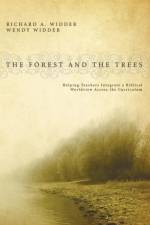
""Why do we have to learn this?""For as long as there have been students, teachers have been answering this question, but we haven't always answered it very well--for our students or for ourselves. We sometimes forget that everything we teach, whether ""sacred"" or ""secular,"" has value because it is part of God's truth, and integrating that truth across the curriculum is what makes an education Christian. This book from a father-and-daughter team of seasoned Christian educators offers a comprehensive, biblically based presentation of integration. Its goal is to help readers view all aspects of the curriculum within the framework of God's story as told from Genesis to Revelation. By organizing subject areas under five broad categories--nature, people, communication, beauty, and ultimate issues--the authors demonstrate that each subject area flows from the biblical story. Each chapter concludes with a summary of the truths presented, a set of teacher tips, and a list of additional resources. Richard A. Widder invested thirty-three years in public education as a teacher and school psychologist, followed by nine years in secondary administration and guidance work at Heritage Christian Schools, Milwaukee, Wisconsin. He has also served for more than thirty years on the board of Heritage Christian Schools.Wendy Widder taught elementary school at Heritage Christian Schools, Milwaukee, Wisconsin, for eight years. She is the author of Living Whole Without a Better Half (2000) and A Match Made in Heaven: How Singles and the Church Can Live Happily Ever After (2003).
Bianchi's wide-ranging book draws together insights from the social sciences, the humanities, and religion to establish a holistic framework for a spirituality of aging. He argues that middle life and late adulthood present opportunities for turning inward for a deeper contemplative life within the context of active, worldly endeavors. This can also augur a reform of social relationships--beyond individual development alone--toward the creation of a more cooperative, just society. In this way, physical decline is countered by a spiritual ascent. He summons aging persons, fortified with universal values and concerns gained from age and experience, to return to the centers of decision making.Throughout, the author ponders such questions as personal power, identity, fear, freedom, contemplation, sexuality, the church, faith, suffering, and hope. In candid interviews, older religious leaders reflect on their early value formation, personal traumas, choice of careers, midlife transitions, experiences of old age, and the prospect of death. In dwelling mainly on human spiritual dilemmas of the aging cycle, Bianchi offers a strong, clear message of hope--one that stands against the tide of our culture which tends to shunt older people to the outer eddies of life's stream.Aging as a Spiritual Journey is immensely valuable to all laypersons and those in the helping professions who are concerned about the quality of the aging process.
With the emerging vitality of the Hispanic church in the United States, the voices of Hispanic theology raise a new and vital challenge. A bridge between the North American church and the liberation theology of Latin America, Hispanic theology reflects on the experience of faith rooted in the cultures, histories, and hopes of the Hispanic people here in the U.S.Frontiers of Hispanic Theology in the United States draws on the key figures and explores the central themes of Hispanic theology, including such issues as popular religion, spirituality, liturgy, Hispanic feminist perspectives, and the meaning of ""mestizaje"" as a source of theological reflection. What emerges is a truly contextual theology, rooted in the unique cultures and tradition of Hispanic Catholics, a theology which also issues a wider challenge to the Anglo church and the world theological community.Jesuit Father Allan Figueroa Deck is Distinguished Scholar of Pastoral Theology and Latino Studies at Loyola Marymount University where he also serves as Rector of the Jesuit Community. He earned doctorates in Theology at the Gregorian University and in Latin American Studies at Saint Louis University. He is the author or editor of nine books and more than sixty articles and chapters on Pastoral Theology, Latino Theology, Faith and Culture, Intercultural Competence and Spirituality. He is co-founder and first president of the Academy of Catholic Hispanic Theologians of the United States (ACHTUS), and founder and first director of the Instituto Hispano of Jesuit School of Theology of Santa Clara University as well as of the Loyola Institute for Spirituality in Orange, CA. From 2008-2012 he served as first executive director of the Secretariat of Cultural Diversity in the Church of the United States Conference of Catholic Bishops.
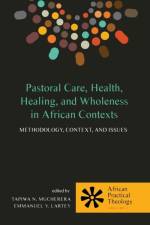
Pastoral theologians from Congo, Ghana, Kenya, South Africa, and Zimbabwe address, in this book, the issues of leadership, Ubuntu (community), gender-based violence, political violence, healing, and deliverance faced by pastors and ministers in African contexts today. Drawing on biblical, theological, social scientific, and cultural contextual perspectives, these African Christians offer much needed insights to assist in the care and counseling of persons towards healing, health, and well-being.""For many years I have drawn on seven African-born pastoral care and counseling colleagues for insights related to the cultural and religious models and practices of pastoral care and counseling needs of African-Americans. In this new book these practical theologians have deliberately turned their attention to the pastoral care needs of the African Christian community, and their focus is on the negative impact that colonialism has had on African traditional caring practices. Moreover, they have targeted the need to apply pastoral care resources to the ongoing current African problems such as HIV/AIDS, domestic violence, and political corruption.""--Edward P. Wimberly, PhD, Professor of Pastoral Care, Special Assistant to the President, Interdenominational Theological Center ""In this timely volume the authors demonstrate that it is impossible to talk about practical theology in an African context without discussing the issues of health, healing, and wholeness. Tapiwa Mucherera and Emmanuel Lartey assemble an impressive, important, and incisive collection of essays that deal with practical theological concerns and serve to illuminate the African experience. The essays speak to each other in ways that will greatly enhance the teaching, study, and practice of contextual pastoral care and counseling with a focus on Africa and the African Diaspora experiences.""--J. Kwabena Asamoah-Gyadu, PhD, Baeta-Grau Professor of Contemporary African Christianity and Pentecostal Theology, Trinity Theological Seminary, GhanaTapiwa N. Mucherera is Professor of Pastoral Care and Counseling, Asbury Theological Seminary, and the author of three books: Glimmers of Hope (2013), Meet me at the Palaver (2009), Pastoral Care from a Third World Perspective (2001).Emmanuel Y. Lartey is the L. Bevel Jones III Professor of Pastoral Theology, Care and Counseling in the Candler School of Theology at Emory University. He is the author of In Living Color: An Intercultural Approach to Pastoral Care and Counseling (2003).
This book while presenting the contribution of a variety of scholars also presents important statements of Churches today on the Jewish people and her place in God's purpose for the world. It also gives statistics of Jewish communities.
The 1980s produced an unprecedented large amount of literature and a vigorous debate on the purpose and nature of theological education in North America. Surveying and probing the major positions in this debate, David H. Kelsey argues in this book that the central differences between various voices in theological education emerge most clearly when viewed in light of ""Athens"" and ""Berlin.""For Kelsey, ""Athens"" and ""Berlin"" represent two very different--and ultimately irreconcilable--models of excellent education. In the case of de facto, says Kelsey, that modern North American theological education, for historical reasons, is committed to both models, resulting in ongoing tensions and struggles. Kelsey shows how a variety of significant thinkers--Newman, Niebuhr, Farley, Stackhouse, and several others--fit in the Athens-Berlin framework.In presenting a keen analysis of major themes and patterns of movement in the theological education debate, Between Athens and Berlin itself makes a significant contribution to the debate.
In twelve plays for broadcasting at monthly intervals, Dorothy L. Sayers drew on material from all four Gospels, keeping the theme of Jesus of Nazareth's divine kingship in focus throughout, while locating him firmly in the social and political context of his time. The first half cover episodes that precede the final journey to Jerusalem and the latter half primarily deal with Passion Week themes. It is the simplicity and profundity of Jesus' words in the Fourth Gospel especially that Sayers drew on in her own writing for the ""voice"" of Jesus ""on air."" The plays gave her an opportunity to explore the many gospel characters surrounding Jesus, not least that of Judas. And beyond the utter sorrow of Jesus' death, the King comes into his own in the garden of resurrection.""I am delighted at the long overdue re-publication of Dorothy L. Sayers' religious plays, which will help make these valuable texts available to the current generation. Let us hope that some theatre enthusiasts will be encouraged to re-stage them!""Suzanne Bray, Lille Catholic University ""As Ann Loades makes clear in her extremely informative introduction, Dorothy L. Sayers' plays are arguably the place where she did her best theological work. The re-publication of these plays makes it possible again for this remarkable writer to have the readers she so richly deserves."" Stanley Hauerwas, Duke Divinity SchoolDorothy L. Sayers (1893-1957), born and educated in Oxford, was an accomplished novelist, poet, playwright, scholar, and Christian apologist. Along with her religious drama, her numerous writings include translations of Dante, detective stories, theological works, and studies of the Middle Ages and Renaissance.
The first edition of this book, published in 1948, was widely discussed. ""There is hardly a page which does not bear evidence of shrewd insight, profound theological grasp and evangelistic passion,"" wrote Principal F. J. Taylor in The Churchman. Essentially, the book was an explanation of the theology behind the infant Church of South India in which Dr. Newbigin was a bishop.For this edition, first published in 1960, Dr. Newbigin wrote a new introduction. This drew out the significance of the Church of South India's experience after 1948, and was an important contribution to the continuing worldwide discussion. An outspoken commentary on the Lambeth Conference of 1958 is included.
Transforming the Parish: Models for the Future is the result of twenty years of work with parishes across the United States through the Parish Evaluation Project. It offers models for the future in the areas of spirituality, small faith communities, liturgy, faith development, volunteers and freeing structures. It provides ideas and suggestions about what parish life could be while at the same time paying close attention to what is. Transforming the Parish is a practical guide for pastors, staffs, parish leaders, pastoral ministers, diocesan personnel and those studying the future of parish life and operation. Parish Evaluation Project is a resource to Catholic parishes, dioceses, religious communities, and pastoral ministries throughout the United States. In March of 1993 it celebrated twenty years of service. It is based in Des Plaines, Illinois, a suburb of Chicago, and is listed in the Official Catholic Directory as an organization affiliated with the United States Catholic Conference.
In this play, Dorothy L. Sayers addressed the crimes and problems of human life, especially those of the victors in war, in an entirely novel way, by precipitating an airman in the very moment of his death back into the company of citizens of the "City," in this case, Lichfield. The citizens range from Adam and Eve (Adam himself the inventor of the axe which kills Abel) together with other biblical characters in the history of redemption brought to new life as members of the City (e.g., Judas is a common informer). Others bear burdens of shame, toil, fear, poverty, and ingratitude. Former inhabitants (e.g., George Fox, Dr. Johnson) help the airman see that no more than they can he shift the burden of guilt and grief that they all share. There is but one remedy, to join the "Persona Dei" carrying his cross, finding indeed that he bears their burdens for them. The "Persona Dei" is finally seen in resurrection and glory.
Dorothy L. Sayers took her inspiration from a monk's account of the fire of 1174, and the subsequent rebuilding of Canterbury Cathedral Quire. She portrays William of Sens, the chosen architect, as eaten away by pride in his splendid work, unable to give glory to God for his achievement. Enacted in the presence of a group of graciously influential archangels, the play reveals the carelessness of some of the monks, resulting in the terrifying fall that cripples William. His agony brings him to repentance and gratitude before God, and finally to the renunciation of his role, leaving the completion of the rebuilding to others. This edition also comes with an English translation of the Latin texts in the play.
In this first of her plays for religious broadcasting, a nativity play, Dorothy L. Sayers wanted to convince listeners of the truth that Christ was born into our deeply problematic world, in his case, in territory overrun by an army of occupation. Although framed as it were by the voices of the three 'wise men' asking whether the birth of a particular child could possibly fulfil their desires, the focus of the play is on the conflict of opinion (about roads, taxes, and so forth) expressed by those in the courtyard of the inn at Bethlehem. Joseph is given a most significant role, and it is the shepherds whose gifts are presented when the Holy Family is revealed.
A brief 'Prologue' by the 'Church' introduces the career of Constantine (from AD 305-337) with scenes from the empires of both west and east, concentrating on Constantine's progress to imperial power and inevitably in religious belief. He discovers Christ to be the God who has made him his earthly vice-regent as single Emperor. Summoning the Council of Nicaea in 325, an invigorating debate results in the acceptance of Constantine's formula that Christ is 'of one substance with God.' The implications of the Creed of Nicaea are revealed in the last part of the play in which it is Constantine's mother, Helena, who brings him to the realization that he needs redemption by Christ for his political and military life as well as for the domestic tragedy which has resulted in the death of his son.
In this play, Dorothy L. Sayers reworked the legend of Faustus as a serious 'comedy,' presenting Faustus as one who chooses wicked means as an end to an admirable goal: the relief of suffering (while becoming entirely focused on his own supposed satisfactions). In the last scene, in the Court of Heaven, Azrael, angel of the souls of the dead, claims Faustus' soul, opposing Mephistopheles' claim. With the knowledge of good and evil returned to him, Faustus finally accepts that his evil must be cleansed, with Mephistopheles serving as the agent of that purgation. Faustus accepts his need for cleansing, trusting that the divine Judge/Court President, will indeed in mercy meet him at the very gates of hell, finally redeemed.
This work gives readers a glimpse into the mind, heart, and vision of Pope John Paul II regarding the present and future life and role of laity in the Church, and his thoughts and reflections inspire us all in our daily living of the Lord's call. This is a collection of insightful teachings from over 300 of the Pope's sermons and speeches. Every word in the book, including titles and sub-headings, is directly from the Pope's sermons. John Paul II stands out as a religious leader who has himself been immersed in the daily grind and joys of lay life. He knew the hardships of the factory, the exhilaration of sport, the intellectual challenge of university life, and the daily pressures of unjust government. In his many journeys we saw him at home with church leaders, politicians, workers, and youth. He chose to address the laity of the world on a broad spectrum of topics, and it is truly exciting to read his reflections and respond to the challenges he presents.
An idol is a good thing. It is good because God created it. Nothing exists that God did not create and God created all things good. So sex can be an idol, but before it was an idol it was a good creation of God. Materialism is an idol, but to have a material world was God's idea in the first place. Workaholism is an idol, but work is itself a good gift of God. What turns these good gifts of God into idols is what we have done with them. So we have common forms of idolatry expressed in consumerism, individualism, narcissism, careerism, and hedonism; while there are less familiar expressions found in omnism, fatalism, Gnosticism, relativism, positivism, and reductionism. We have put these and other things on a pedestal and made them into mini-gods. In the end they fail to deliver what they promise.These twelve mediations on a scriptural passage by faculty members of Wycliffe College, Toronto, emphasize that the good news is that God can redeem idols. Each one can be restored to its proper place in God's created order and placed under God's authority. ""In Confronting the Idols of Our Age, the 'isms' of our era are addressed from the perspectives of the whole range of a theological faculty, each in his or her own unique voice. It offers a clear, coherent, and evangelically informed critique, while the wit and personal address of the seminary sermon seems an especially appropriate medium for the subject. It would be well suited for a lay audience thinking about the Gospel and postmodern culture, and I commend it highly.""--George W. Sumner, Episcopal bishop of DallasThomas P. Power is Adjunct Professor of Church History and Theological Librarian, Wycliffe College, Toronto.
Jim Alvin Sanders was Assistant Professor of Old Testament Interpretation at Colgate Rochester Crozer Divinity School in Rochester, NY.
""Heaven is one of those great mysteries that somehow symbolize what we don''t know about ourselves and the world around us. At the same time it lifts our vision from the mundane realities of our everyday lives and reminds us that beyond the daily grind of our existence there is another, unseen reality. A reality that is as real--if not more so--than our everyday lives. Heaven suggests an answer to the familiar human feeling that there must be more than this, and prompts us to wonder whether there is indeed more in heaven and earth than can be dreamt of in all our philosophies.""-Paula Gooder, from the Introduction""As Paula Gooder puts it, this book tackles all the ''weird stuff'' the church tends to shy away from. We are in the realm here not of fluffy clouds and harps but of God''s presence, angelic beings and mystical visions. Heaven, we discover, is not just about the afterlife but the here and now--about how we live with each other, the planet, and God. This is indeed the essential ''rough guide'' to heaven, and much more.""-Steve Hollinghurst, author of Mission-Shaped Evangelism""In this profound, lucid and compassionate book, Paula Gooder demonstrates that heaven is not a vague future hope but the presence of the God who made heaven and earth. This means that believing in heaven involves us in God''s passionate commitment to earth. A concept of heaven that is only about the fate of the pious individual after death is a meager diet compared with the feast that this book lays before us: heaven and earth renewed, restored, and reconnected.""-Jane Williams, author of Lectionary Reflections""Paula Gooder has an extraordinary ability to offer top-class biblical scholarship in an accessible form. She makes a complex topic interesting and surprisingly relevant.""-Christopher Rowland, author of Christian OriginsPaula Gooder is a freelance writer and lecturer in Biblical Studies. She is Canon Theologian of Birmingham and Guildford Cathedrals, Lay Canon at Salisbury Cathedral, Visiting lecturer at King''s College, London, Associate lecturer at St Mellitus College, London, and Theological Adviser to the Bible Society. She has authored numerous books including Journey with Mark: Bringing the Gospel Alive for Groups and Individuals (with Mark Pryce and James Woodward), This Risen Experience: The Spirit of Easter, and A Way Through the Wilderness: God''s Help in a Time of Crisis.
Zera S. Fink (d: 1979, Tucson, AZ) was Professor Emeritus of English at Northwestern University.
The idea of light as an integral part of all life and creation was evident since the beginning of time. From the very first sunrise, to the daily sunsets of the present, we continue to be awed by the beauty, power, life creating and life sustaining properties and emanations of light.The rainbow, truly a miracle of nature, confirms not only the importance of color, but specifically those portions of the spectrum for which the human organism is attuned.During the early 1920s, science had begun to speculate that the power of light was primarily transmitted to the core of the human organism by the organ of sight - the eyes. It was in that same period of time that one man, Dr. Harry Riley Spitler, theorized in great detail the role of the eyes in phototransduction, as well as the role of light and color in total organismic function and development. Most of his work has been scientifically validated, and represents the foundation of one of today''s most advanced approaches to phototherapy: syntonics.Syntonics, utilized clinically for more than sixty years within the field of Optometry, is that branch of ocular science dealing with the application of selected visible light frequencies through the eyes. This ocular application of light has been utilized with great success in the treatment of various visual dysfunctions associated with strabismus, amblyopia, accomodative/convergence problems, visual field constrictions, head trauma, and visually related learning problems.The results of these relatively short term treatments usually yield significant improvements in visual skills, visual field size, memory, general performance, behavior, mood, and academic achievement.Now we notice that phototherapy is becoming an increasingly prevalent therapeutic tool within the medical community. We are proud to be part of the lineage of vision specialists who discovered, researched and consistently cultivated the science of ocular phototherapy: Syntonics.Harry Riley Spitler, DOS, MD, MS, PhD, is a pioneer in light therapy and founded the College of Syntonics.
Original essays explore the effects and influences of the Second Vatican Council, particularly on its understanding of church, engagement with the modern world, and encounters with other religions. Contributors include: Philip A. Franco, St. John''s University, New York Peter C. Phan, Georgetown University Christopher D. Denny, St. John''s University, New York Harriet A. Luckman, College of Mount Saint Joseph Alice L. Laffey, College of the Holy Cross Francis Holland, St. John''s University, New York Jason King, St. Vincent College William French, Loyola University, Chicago Christine Firer Hinze, Marquette University Victor Lee Austin, Saint Thomas Church, New York John Sniegocki, Xavier University Elaine Catherine MacMillan, University of San Diego Paul F. Knitter, Xavier University Reid B. Locklin, St. Michael''s College, University of Toronto Elena G. Procario-Foley, Iona College Phillip Luke Sinitiere, University of HoustonWilliam Madges is Dean, College of Arts and Sciences at Saint Joseph''s University. He was previously Chair of Theology Department at Xavier College. He is author of God and Vatican H: Forty Personal Stories, The Core of Christian Faith: D.F. Strauss and His Catholic Critics, and The Many Marks of the Church.
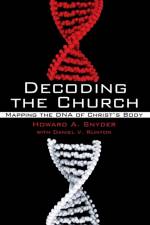
Using the genetic code as a model, this provocative book will provide you with theological analysis, biblical principles, and practical applications for understanding the structure and mission of today''s church and how it can transform the world""A superb guide to a biblical and dynamic ''ecology'' of worship, community, and witness.""-Marva J. Dawn, author of Reaching Out without Dumbing Down""The new interest in the missional church has been in need of a practical, hands-on blueprint for action. Here it is!""- Robert E. Webber, Myers Professor of Ministry, Northern Seminary""Snyder and Runyon help the reader ask tough questions and consider new possibilities that could make a world of difference for tomorrow''s communities of faith.""- Tom Sine, author of Living on Purpose""These two outstanding authors give biblically based theological perspectives on the structure and functions of the church, giving special attention as to how the church should respond to the urgent social concerns of the twenty-first century.""-Tony Campolo, Professor of Sociology, Eastern University""This is an important book that will challenge pastors and professors alike. I highly recommend it. ""- Vinson Synan, Dean of the School of Divinity, Regent University""This is a great resource for introducing church members and students to an examination of the DNA of the church, not only its theological identity but its role in today''s world.""-Susie Stanley, Professor of Historical Theology, Messiah CollegeHoward A. Snyder is Visiting Director of the Manchester Wesley Research Centre in Manchester, England. He has served as a pastor and as a professor at Asbury Theological Seminary (1996-2006), Tyndale Seminary in Toronto (2007-2012), and elsewhere. His books include The Problem of Wineskins, The Radical Wesley, Models of the Kingdom, and Salvation Means Creation Healed (with Joel Scandrett). Daniel V. Runyon is professor of English at Spring Arbor University, Spring Arbor, Michigan.
""This timely book addresses the problem of the family in crisis and challenges us to look at family values from a biblical perspective. Some of these are hard questions and we will not all agree on how to tackle them, but God, Family and Sexuality is a wonderful place to start.""--Linden Bowing, CARE""Christian faith should be marked by a distinctive lifestyle. Nowhere in our culture is that distinctiveness being challenged more than in the area of sexuality. This book is a very welcome contribution from a range of well-qualified people who argue convincingly that the future of the church and our civilization are at stake.""--Bill Wallace, Convener, Church of Scotland Board of Social Responsibility""... a series of well-informed and responsible engagements with questions relating to human sexuality... a serious attempt to hear God''s word speaking amidst the Babel of voices clamoring for attention on these topics... should be read widely within and outside the Christian community in the interest of a genuinely plural and balanced public dialogue.""--Trevor Hart, Professor of Divinity, University of St. Andrews
Emile Mersch, SJ (1890-1940) was one of the great systematic theologians of the 20th century and his masterpiece is The Theology of the Mystical Body.
Joseph T. Lienhard, SJ, earned a Dr. theol. habil. at the University of Freiburg in Freiburg im Breisgau, Germany, with two dissertations--on Paulinus of Nola and on Marcellus of Ancyra. He taught at Marquette University from 1975 to 1990. Since 1990, he has been at Fordham University. His works include Paulinus of Nola and Early Western Monasticism, Contra Marcellum: Marcellus Ancyra and Fourth-Century Theology, and a translation of Karl Suso Frank''s history of religious orders titled With Greater Liberty: A Short History of Christian Monasticism and Religious Orders. In 2010, a feshschrift, Tradition and the Rule of Faith, was published in his honor.
Abonner på vårt nyhetsbrev og få rabatter og inspirasjon til din neste leseopplevelse.
Ved å abonnere godtar du vår personvernerklæring.