













Gjør som tusenvis av andre bokelskere
Abonner på vårt nyhetsbrev og få rabatter og inspirasjon til din neste leseopplevelse.
Ved å abonnere godtar du vår personvernerklæring.Du kan når som helst melde deg av våre nyhetsbrev.

E.J. Bicknell's classic commentary on the Articles of Religion of the Church of England.
Pentecostalism in Context is a collection of essays produced by Pentecostal scholars from North America, Europe, and Asia. The essays, produced in their various geographical and cultural contexts, reflect the rich diversity that characterizes the Pentecostal movement. Biblical, theological, and missiological issues relevant to the Pentecostal movement are treated. The book thus represents a valuable resource for those seeking to understand better the key intellectual currents within this dynamic and influential movement. The essays are offered in honor of William Menzies, a leading Pentecostal scholar and Chancellor of Asia Pacific Theological Seminary (Baguio City, Philippines).Wonsuk Ma is a Korean Pentecostal minister currently serving as Executive Director of Oxford Centre for Mission Studies, Oxford, United Kingdom. He established the Asian Journal of Pentecostal Studies and the Journal of Asian Mission. Robert P. Menzies is an adjunct professor at Asia Pacific Theological Seminary in the Philippines and the Assemblies of God Theological Seminary in the U.S. He has authored several books on the work of the Spirit, including Spirit and Power: Foundations of Pentecostal Experience (2000), and is currently Director of Synergy, a rural outreach organization in Southwest China.
The object of this book is to provide a running commentary on the Book of Revelation, elucidating its meaning. Other introductory and technical considerations are subordinated to this main quest. Though a scholarly work, it is written in a manner free from technicalities so as to make it useful to the general reader. It was written with the hope that a simple treatise on Revelation's meaning would help clergy and others who often have to deal with people who take it in a false and literal sense. When the Revelation was originally written it was naturally accepted as an account of current events and of events ""shortly to come to pass""; that is how it describes itself (Rev 1:1, 3; 22:6, 10), and that is how it was naturally taken. Unfortunately, the key to its meaning was soon lost, and its mystical symbolism was taken as literal description. When it reflects events of history, it is current events that it reflects. The Revelation represents great principles working themselves out in actual history. The book is a literary unity stamped throughout by the mark of a great genius. It is one of the loftiest mystical poems the world has produced. Revelation insists that certain events of worldwide importance are coming immediately, following the same general lines as Christ's Olivet Discourse, which spoke to events of which the Lord himself declared: ""Truly I say to you, this generation will not pass away until all these things take place"" (Matt 24:34).
In Between Two Gardens, theologian and ethicist James B. Nelson seeks to stimulate a further reexamination of human sexuality and the Christian experience. Here he continues to explore concerns posed in his earlier work, Embodiment. Traditionally, the relationship between religion and spirituality has reflected this one-dimensional question: What does faith say about human sexuality? Nelson, however, takes a different tack and asks more pertinently: What does sexuality say about faith--theology, scripture, tradition, and the meaning of the gospel? With this more existential perspective in mind, he explores a wide range of sexual and medical issues.Nelson discusses men's liberation; sexuality in Jewish, Catholic, and Protestant interpretations; religious and moral questions of professionals working with homosexual counselees; singleness of the church; the family; and attitudes toward abortion. Reflecting on these topics, he writes out of a healthy conviction that the process of integrating human sexuality and the life of faith is an important journey.
Praying by Heart brings energy and solitude to the discipline of prayer. Using vivid imagery and dynamic rhythm, Kay Bessler Northcutt moves through the seasons of the liturgical year, covering Advent, Christmas, Epiphany, Lent, Easter, and Ordinary Time.An invaluable resource for clergy and lay leaders--in both public and private prayer--Praying by Heart echoes the poetry and spirit of the Psalms in a contemporary Christian voice. Northcutt's lyrical poetry will inspire the soul.""These are not sentimental or jargon-ridden 'care and share' outpourings. They aim to be directly about their business of carrying on the conversation between a self-disclosing God and the people collected. The agent will be the pastor who prays off these pages, using words by an expressive author who has the grace to move herself off stage and let the prayers be those of 'us' and not 'me.' Let us pray.""--Martin E. Marty, from the ForewordKay Bessler Nothcutt is a writer, retreat leader, spiritual formation director, and assistant conductor of the Tulsa Children's Choir. She is an ordained minister in the Christian Church (Disciples of Christ).
This study ponders different ways Christian thinkers understood humanity in its relationship to divine grace. It names fallacies that have in the past skewed theological understanding of that relationship. It argues that the philosophy of Charles Sanders Peirce avoided those same fallacies and provides a novel frame of reference for rethinking the theology of grace. The author shows how the insights of other American philosophers flesh out undeveloped aspects of Peirce's thought. He formulates a metaphysics of experience derived from his philosophical analysis. Finally, he develops an understanding of supernatural grace as the transmutation and transvaluation of human experience.Donald L. Gelpi, SJ, has been teaching historical and systematic theology at the Jesuit School of Theology at Berkeley since 1973. He is the author of many books including The Firstborn of Many: A Christology for Converting Christians, The Turn to Experience in Contemporary Theology, and Committed Worship: A Sacramental Theology for Converting Christians.
""She was dirty and dusty. Her curly hair had seen neither a comb nor water for months. In one hand she carried a package of cigarettes and in the other a solvent rag."" Young Namusisi had no home, no family, no money for school fees, and no one to love her or care for her. She survived in the culture of the buyaye on the streets, parking lots, and porches of the city of Kampala, Uganda. But one day she met Daddy Kefa and her life was changed. He took her to his children's home where she was provided for and was shown the love of Christ. Namusisi was just one of more than six thousand Ugandan street children who were rescued from a meaningless and hopeless life by the efforts of a compassionate, selfless, and godly man. From the Dust contains the poignant stories of many of those destitute children--stories of how they came to live on the streets and of how their lives were changed. Here are stories of a people ravaged by a demonic dictator, a people who had lost all sense of humanity and were struggling under emotional, physical, and spiritual poverty. From the Dust tells how the efforts of one man made a difference to so many who were groping in a dark world of sin and hopelessness. It is the story of the love of God to the lost and dying, and of how that love made a difference to so many Africans and can still make a difference to those who will trust in him. ""He raiseth up the poor out of the dust, and lifteth up the beggar from the dunghill, to set them among princes, and to make them inherit the throne of glory"" (1 Sam 2:8).Kefa Sempangi is a former minister and parliamentarian in the Ugandan government; the founder of Africa Foundation, a charity for displaced children; former chairman of the National Council for Children in Uganda; and pioneer and founder of the Presbyterian Church in Uganda. He is the author of A Distant Grief (1979). Jennifer Melvin has taught for thirty years in Christian schools and is presently teaching middle and high school English at Covenant Christian School in Panama City, Florida.
A Pastoral Letter to Theo addresses some of the fundamental concerns of recent research into biblical interpretation by Adele Berlin and Kenneth Archer. It also takes into account the communicative literary and rhetorical techniques that were prominent in the Greco-Roman world when the New Testament documents were composed. Elbert suggests that attention to levels of context, plot, repetition, and characterization or personification comprise a proper method for understanding a New Testament writer's original meaning and intent. Generally, the potentially groundbreaking thesis in much of Elbert's work is for a literary link between the ""Spirit"" language in Paul's letters and the later narrative of Luke-Acts. Specifically, A Pastoral Letter to Theo reflects heartfelt, pastoral concerns based on detailed contextual study of early Christianity and Christian experience. The book contextually examines in detail several passages pertaining to the ministry of women in missionary-minded early Christianity and concludes that this ministry was thought to be vital for the evangelistic enterprise. Written in the form of counsel offered by an experienced minister and scholar to a young man whose ministry is just emerging, Paul Elbert's Pastoral Letter to Theo cautions against the sort of simplistic proof-texting that some evangelical Christians use to exclude both the public ministry of women and the prophetic manifestations of the Spirit today. Elbert's Letter is a helpful and practical warning.Glen W. MenziesChair, Dept. of Bible and TheologyNorth Central UniversityIn this ""letter"" to a friend in ministry, Paul Elbert...is passionate in his pastoral concern to portray God's design to use all His children--men and women alike--in the service of His kingdom. Drawing upon the hermeneutical approaches forged in the Pentecostal/Charismatic movements, Elbert instructs his protege not only in the proper understanding of texts frequently used to prohibit women from exercising their ministry gifts, but also in proper interpretive technique. Letter to Theo will serve nicely as a primer for those interested in both of these issues.Jeffrey S. LampAssociate Professor of New TestamentOral Roberts UniversityStudents of the New Testament will find it profitable to read Letter to Theo's contextual interpretations from First Corinthians, Ephesians, Luke-Acts, First Timothy, and Romans. Here is a persuasive argument based on evidence that supports the heavenly calling of women into missionary and pastoral ministry in complete agreement with the work of the Holy Spirit. The cultural and secular norms of past centuries should not intrude on this very reasonable reading of the distinctive Christian writings originating within the first-century Greco-Roman world. Michael FullerDirector, Graduate Program in Biblical and Theological StudiesLee University Paul Elbert, physicist-theologian and New Testament scholar, teaches theology and science at the Church of God Theological Seminary. He is cochair of the Formation of Luke-Acts section in the Society of Biblical Literature and is a research advisor to the Dominican Biblical Institute, Limerick, Ireland. His writings have appeared, for example, in Zeitschrift fur die neutestamentliche Wissenschaft and in Catholic Biblical Quarterly. He served as editor of two anniversary volumes for Old Testament scholars, Essays on Apostolic Themes (1985) and Faces of Renewal (1988).
In this book, Johnson avoids the standard approach of many apologetic works that seek to "prove," in systematic fashion, that Christianity is true. Rather, he takes the position of orthodox Christianity and looks at various challenges that have been raised against it. For example, should the horrors of the Holocaust force Christian thinkers to alter their view of God's goodness? Is Christianity inherently anti-Jewish for claiming that Jews must embrace Jesus as Messiah? Are revived "hallucination theories" about Christ's resurrection tenable explanations of the birth of the Christian movement? Is the "presuppositional" approach of certain Reformed thinkers useful for doing Christian apologetics? These and similar questions are addressed in this book.
Social issues shape the news. Yet pulpit and pews maintain an awkward silence about them. One layperson said, ""I have been a member here for twenty-five years, but I have no idea what any member thinks about any social issue."" Op-ed pages and sound bites cause people to wonder if friends are ""red"" or ""blue"" on social issues, but in this book, content dips below the surface where the water is a bipartisan calm. Here is one example: for genuine competition to occur, the sides have to be fairly even. We do this in sports. Another example question is, why is health care so high when the healing is free? Hope is implicit in ""Thy kingdom come . . . on earth,"" recited by many churchgoers on a weekly basis as part of the Lord's Prayer. Hope becomes explicit when practical theology and applied sociology are joined, because they point to the same Source: ""the hidden pressure for justice and peace at work in the world."" This Source allows grace and truth to be discovered in social issues. Indeed, the grace of God generates compassion, a prerequisite for multifaceted social justice. Wrath has no capacity to foster anything but fear of being left behind. There are single-issue books of three-hundred-plus pages, but there are no books that speak to a variety of social issues. This one does speak to a variety of social issues with clarity, readability, and economy.Paul G. Johnson is a retired Lutheran pastor. He has a doctor of ministry degree in practical theology and teaches sociology in the Boston area. For ten years he was the project manager of studies for the parish services division of the former Lutheran Church in America. He has published a number of books and articles.
This study examines the use of the term ""sinner"" in Luke-Acts. There is at present no scholarly consensus on the identity of the ""sinner"" in the Synoptic Gospels. Although the term is important in the Gospel of Luke, few works target the role of the sinner in it. Even fewer address the curious absence of ""sinner"" in Acts. Luke's narrative of Jesus' mission to ""sinners,"" together with the comments about Gentiles in the gospel, prepare readers for the mission to Gentiles in Acts. Luke provides a link for readers by demonstrating how a Jewish religious sect made up of fishermen, toll-collectors, and ""sinners,"" who claimed to have found the Messiah, became a religion with a wide Gentile following. In his use of the term ""sinner,"" Luke suggests that ""repentant Jewish sinners"" and ""repentant Gentile"" followers of Jesus represent a fulfillment of God's promise of universal salvation.
When Paul pens his letter to the Roman believers, he writes as a missionary to strengthen a church at the center of imperial power, choosing language that is familiar to his recipients. Paul responds not only to the influence of Judaism but also to the wider culture by contrasting prominent Roman values. David Wallace argues that Paul's gospel in Romans rejects and countervails the significant themes of Virgil's Aeneid, the most well-known prophetic source that both proclaimed Roman ideology and assured Roman salvation. After demonstrating that a close but nonauthoritarian relationship existed between Augustus and Virgil, Wallace examines relevant literary aspects, symbolism, and key imagery of Virgil's epic. A discussion of Paul's contraliterary approach follows, drawing out possible parallels and echoes in Romans against the universal message of the Aeneid.
This volume examines the various theological aspects of divorce and remarriage--historical, contemporary, exegetical, and practical--recognizing that all are subject to the teaching of Scripture. This is done in such a way that readers may follow the author's thinking and so form their own practical theology of this difficult ethical issue.
Questions regarding the orthodoxy of Dale Moody and Ralph Elliott propelled the Southern Baptist Convention (SBC) toward a re-evaluation of its doctrinal statement, the Baptist Faith and Message (BFM). The SBC adopted this document in 1925 under the leadership of E. Y. Mullins when faced by the challenge of modernism. This dissertation argues that the 1962 Committee on Baptist Faith and Message produced a document that expressed subtle shifts in Baptist theology. This shift had the effect of assuring the conservative base while allowing enough latitude in interpretation for those serving in the academy to teach more ""progressive"" views.After a first, introductory chapter, chapters 2 and 3 trace the historical developments leading to the formation of the Committee. Biblical inspiration and interpretation were key concerns, but as chapter 3 demonstrates, other concerns drew the attention of the Committee. Chapters 4 and 5 deal with the ever-sensitive issue of the relationship between Baptist confessionalism, soul liberty, and soul competency. Each chapter examines how Baptist confessionalism functioned in relation to these concepts.Chapter 6 examines in detail the work of the Committee itself and looks at those persons or groups who influenced the outcome of the Committee's work. Of special note are the contributions made by Wayne Ward, Leo Garrett, the religion faculty of Mercer University, and the theology faculty of Southern Seminary.Chapter 7 examines four areas where the 1963 BFM altered the confessional expression of Baptist doctrines: (1) Scripture; (2) Man; (3) Salvation; (4) The Church. Chapter 8 is the conclusion. Four appendices contain early drafts of the Committee's work.A. J. Smith's work on the production of the 1963 version of the Baptist Faith and Message is fascinating. It is a case study of how culture, personality, theological conviction, and theological compromise all coalesce in producing a document that frustrated Southern Baptists on the left and on the right for 37 years. Smith shows the variety of theological dynamics that led to the necessity for such a confession and uncovers from archival material the complex interpersonal relationships that played such a large part in the final form of the ""Message."" This is a great read for anyone interested in Baptist theological dynamics or the nature of evangelical negotiation in the twentieth century. --Tom J. Nettles, Professor of Historical Theology at the Southern Baptist Theological Seminary, Louisville, KentuckyA. J. Smith is Associate Pastor for Worship and Administration at Seven Springs Baptist Church, Calera, Alabama, and an Adjunct Professor of Church History for Liberty Theological Seminary's Distance Learning Program. He taught at Simmons College of Kentucky from 2004 to 2006 and has spoken before professional societies on Baptist history, systematic theology, and patristic theology. He has authored an article that appears in the new Holman Illustrated Bible Dictionary.
At a time when ""fundamentalist"" evokes an image of a militant social reactionary, it is important to examine the original nature of historical American fundamentalism, from which the term originated. Rejecting as simplistic the stereotypes of fundamentalism in social, political, regional, economic, or psychological categories, this study argues that in the 1920s it was a complex social composite unified by common theological concerns. Among all the social issues confronting Americans in the rapidly changing and uncertain 1920s, fundamentalists reached a consensus only on those that had a direct connection with their biblical faith. The only theme that approximated their theological agreement was their nationalism, and only to the extent that it added urgency to their task of saving America from spiritual ruin. Even in this fundamentalists differed among themselves as to how biblical truth should affect the nation. An examination of fundamentalists' viewpoints toward the intellect, the minorities, and social reform further demonstrates that their common denominator was not a set of cultural characteristics or ideas. It was, rather, a biblically based core of Christian theology. A loose alliance by nature, fundamentalism would have had no cohesiveness at all apart from this core. While fundamentalists by no means escaped cultural influence, the ""fundamentals of the faith"" shaped their view of culture far more than culture shaped their theology. In a generation when the religious faith of many was becoming little more than ""the American way of life,"" they purported to speak to their contemporaries from an external authority--a divinely-inspired Bible.Robert E. Wenger has since 1983 been Professor of History at Philadelphia Biblical University (formerly Philadelphia College of Bible) in Langhorne, Pennsylvania. From 2001 to 2007 he also served as Dean of the School of Arts and Sciences. His special academic interest lies in American intellectual history..
The last few decades have seen a resurgence of the scholarly quest for the historical Jesus--for the words and deeds that probably can be attributed to the human Jesus who walked the hills of Galilee some two thousand years ago. You might not be aware of the recent scholarship, and the reason is simple. For the most part, many scholars write for and talk to other scholars, using their own technical language. This leaves huge numbers of Christians unaware of their discoveries. So even though you may have studied the Bible for years, you still may be a historical Jesus beginner. After the life of Jesus, his followers began to develop their memory of his sayings and actions. Then, year after year, and century after century, the tradition grew until it became Christianity as it is known in the twenty-first century. What if we could go back in time and delve under all the layers to find what Christianity would be if it were based upon the historical Jesus? If you are a person who would like to begin to be informed, this book is for you. ""This very helpful book delivers what it promises and more. It combines a lucid introduction to the basics of historical Jesus scholarship with extended excerpts from several of todays' scholars, thus putting the reader in touch with a number of voices. And more: it explores the implications of Jesus scholarship for those to whom it matters most, namely, Christians and churches in our time. Recommended not only for beginners, but also for those who already have some familiarity with this fascinating and important subject.""--Marcus J. Borg, Hundere Distinguished Professor of Religion and Culture, Oregon State University""Among the cacophony of voices surrounding the latest phase in the quest for the historical Jesus, Bill Linden is the thinking-person's guide to the heart of the matter. He knows the literature, the personalities, and the issues, and he knows how to focus our attention on what really counts in the larger scheme of things. If you're interested in the historical Jesus, but don't know where to start, start here.""--Stephen PattersonProfessor of New Testament, Eden Seminary, St. Louis, MissouriThis introduction to contemporary theology clears up many long standing questions that go unanswered at 11:00 a.m. on Sunday. As a result, theology now emerges for me as a scholarly study of scripture, uncolored by the lense of any particular religious affiliation. In seeing this more contextual approach to sacred text, I no longer feel constrained to check my spiritual-seeker hat at the front door of the church!Stephen G. SchollAttorney at law, Houston, TexasWilliam M. Linden holds a Postgraduate Diploma in theology from Oxford University and is chairman of the board of directors of the Foundation for Contemporary Theology in Houston, Texas. He is a retired partner of the law firm of Vinson & Elkins, LLP, where he specialized in federal income-tax law.
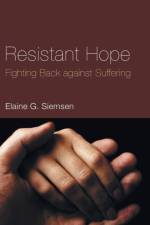
Many books on the market are designed to help us through times of suffering. They all offer answers and proposals for why we suffer, for what purpose is to be found in this experience, and for how can we go forward after our life has been shattered. Most approach the subject from the perspective of defending God. Historically the great and not-so-great thinkers of the Christian community have demanded that followers not blame God for their suffering or hold God responsible for the pain that they have experienced. Others have taught that God sends and uses pain to correct the wandering, wayward believer. I have found that the majority of these answers leave readers without hope. Through several years of teaching about suffering and a concept in Christian theology called theodicy, and through listening to the personal stories told through anger and tears, I have struggled to recover teachings that open our hearts to God's promised hope. Resistant Hope is the result of my faith journey. This book does not set out to defend God. God does not need my defense. Resistant Hope is about how God works alone and through us, to teach us to fight back when we stand at the abyss of despair. Resistant Hope is a pathway to finding hope in the midst of the pain of daily life and at the moments of greatest grief and sorrow. ""Resistant Hope is a breath of fresh air in the midst of the current dreary view of humanity and God's intentions for life. Rev. Elaine Siemson reintroduces us to the life-giving wisdom of St. Irenaeus of Lyon, an early Christian theologian who speaks to the human experience of suffering and hope. Readers will be encouraged to re-frame the question of suffering while learning how we have arrived at our current understanding. Resistant Hope offers the opportunity to engage personally with the writings of Irenaeus, as well as opportunities for small group conversation to share in wisdom. Enjoy!"" --Rev. Kathie Nycklemoe, Parish Pastor and Spiritual DirectorIn Resistant Hope Elaine Siemsen successfully retools the theodicy debate along Irenaean lines, offering her reader an open universe in which evil and suffering are more inevitable than calamitous and in which Christ grounds not only our eschatological hope that good will ultimately overcome evil, but also our immediate hope that evil and suffering can, will, and should be resisted. Like Harold Kushner in When Bad Things Happen to Good People she reframes the question, from ""Why is this happening to me?"" to ""What now?"" and in the process provides a pragmatic response to the problem of evil that avoids theologies of harm and stands firmly on the side of the sufferer. Her book will appeal to all who lament the damage that more traditional theodicies can do to innocent victims and who seek a Christian theodicy of practice. --Elizabeth Galbraith, Associate Professor of Religion, St. Olaf CollegeElaine Siemsen is a pastor in the Evangelical Lutheran Church in America. She has served congregations in Illinois, Minnesota, and Iowa. She has taught at Valparaiso University, Valparaiso, Indiana; Luther Seminary, St. Paul, Minnesota; and St. Olaf College, Northfield, Minnesota. She is the author of Constructing a North American Theology through the Work of Joseph Sittler: Embodied Words (2003). Her work has been published in The Lutheran, Lutheran Partners, Dialog, and Currents in Theology and Mission. Elaine and her husband, Dennis, both originally from Chicago, Illinois, live in Rochester, Minnesota.
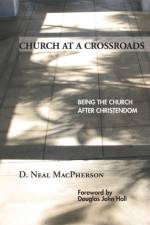
Facing the uncertainty of their present life and ministry, the American and Canadian churches of mainline Protestantism are, for the most part, responding in one of two ways. Some are simply choosing to ignore the process of their disestablishment. They continue to carry on with their church life as though nothing were happening, as though they were still occupying a place at the center of society. Others, knowing that they are being moved to the periphery of social and political life, are seeking to regain their past power and influence by adopting one or another program of church growth, many of which are being promoted by the newly emerging megachurches of the Christian right.Based upon the history and experience of a particular congregation, Church of the Crossroads in Honolulu, Hawaii, this book suggests a third option for the churches of mainline Protestantism: to embrace their ongoing disestablishment and to see it not as a burden or as something to be either ignored or reversed, but as an opportunity to envision a new way of being in the world.Readers of Neal MacPherson's book will find both encouragement and practical help in his depiction of this remarkable congregation.--Douglas John Hall, CM, Emeritus Professor of Christian Theology, McGill University, Montreal, Canada.""As Christendom dies, real Christianity, which, as Chesterton said, has been 'so little tried,' looks for a way into the future. And wherever Christians are serious enough to let go of the tired old forms their religion has assumed in its long and established past, they are discovering the courage and imagination necessary to put the good wine of the gospel into new ecclesiastical wineskins. Some of these wineskins will no doubt burst. Some already have. But some will survive and will prove sources of energy, wisdom, and human hope for the century ahead.The Church of the Crossroads, in my belief, is one of the latter."" --from the forewordFor the past nineteen years, D. Neal MacPherson has been the pastor of Church of the Crossroads United Church of Christ in Honolulu, Hawaii. This is his first book.
This study explores the theological presuppositions that have informed the major explanations of the work of Christ from the perspective of Wesleyan theology's commitment to the universality of the atonement and its provision for both justification and sanctification. The Whole Christ for the Whole World proposes a paradigm that the author describes as ""personal-relational"" for understanding the work of Christ. Dunning argues that this ""personal-relational"" paradigm more adequately captures the ""whole tenor of Scripture"" than do the legal paradigms that have dominated the Western church, and Dunning seeks to demonstrate that the Wesleyan understanding of the work of Christ has been significantly informed by the mentality of the Eastern church.H. Ray Dunning is professor emeritus of theology at Trevecca Nazarene University in Nashville, Tennessee, where he served for thirty-one years. He is the author of several books, including Grace, Faith, and Holiness (1988), a Wesleyan systematic theology.
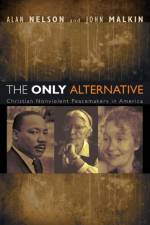
The radical message of Jesus is that there is only one alternative to the common method of confronting violence with more violence. The Only Alternative: Christian Nonviolent Peacemakers in America explores the spiritually active practice of compassionate nonviolence. Here is a journey through the lives of seven courageous American peacemakers who have embodied Christian nonviolence and dedicated their lives to addressing the suffering caused by racial discrimination, slavery, poverty, militarism, nuclear weapons, prisons, environmental degradation, and the psychology of fear and hatred. Here are highlights from the inspirational ideas and actions of Martin Luther King Jr., Dorothy Day, Thomas Merton, Rufus Jones, Thomas Kelly, Jim Douglass, and Kathy Kelly. They remind us that to be Christian is to use the power of love to transform spiritual, economic, and social violence. The great turning from violence to nonviolence is the story of Christianity in America. There has never been a more urgent time for this revolutionary teaching to be heard, understood, and lived.""It is no longer a choice, my friends, between violence and nonviolence. It is either nonviolence or nonexistence . . ."" --Martin Luther King Jr. Human beings are now facing the stark choice between survival and destruction amid myriad forms of violence. The nonviolent peacemakers within this book can inspire the peacemaker within each of us to cultivate a direct relationship with God and love through contemplation, meditation, writing, and compassionate action based in the life and teachings of Jesus.
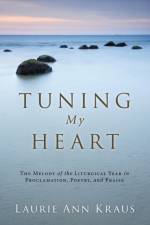
Even in a society as highly mobile as our own has become, change is unsettling, discomfiting. Like our ancestors in faith, we are more often than not on the journey, in the wilderness, seeking to know who we are as a people, and trying to comprehend the God who, we hope, is going up with us--wherever it is we end up going. The paths are not as familiar as they once were, and recognizable signposts are rare. It's easy to feel lost. The congregation I have now served in Miami, Florida, for nearly twenty years has, while remaining constant in size, changed faces, accents, and styles at a dizzying pace. People don't stay put anymore, and the folk who find their way to church these days are hungry for a home, longing for community, and hoping the God of their long-vanished, Sunday-school childhoods can find the way to their latest change of address. For this pastor and her congregation, the rooting of our common life and shared faith story in the fertile soil and the organic rhythms of the liturgical year has provided a permanent address that feels like home. Tuning My Heart is a collection of articles, sermons, and poetry based upon the movements of the liturgical calendar and shaped by one tropical congregation's life cycle as it seeks to bloom in the old, rich soil of the Christian tradition, and to flower in the exotically scented air of the vibrant, diverse city that is home.Laurie Kraus's witty and moving book asks the hard questions and refuses to offer easy answers. A natural story teller, she weaves stories from day-to-day life in South Florida together with the fabric of the Bible to offer direction, and peace, in a confusing world. It's the kind of book you'll want to read and re-read.--John Pancake, Arts Editor, The Washington PostLaurie Kraus writes with a poet's vision and a pastor's heart. Her passionate and thoughtful engagement with scripture brings biblical characters vividly alive and puts their stories into conversation with our lives. Without diminishing their strangeness, she shows their continuing power to move and critique. Graceful, sometimes humorous, and often touching, her imaginative and nuanced readings of lectionary texts show the real power of the always renewing and renewed word. --Pamela Byers, Executive Director, Covenant Network of Presbyterians: Presbyterian elder.As the son of a Presbyterian minister, I have listened to literally hundreds of sermons in my life. There are none better than those written by Laurie Kraus. Witty, articulate, logical, and moving, the sermons you are about to read will make you laugh, weep, and most importantly, grow deeper in your faith. They are, quite simply, brilliant.--James Mulder, Riviera Presbyterian ChurchLaurie Ann Kraus has been the pastor of Riviera Presbyterian Church in Miami, Florida, since 1988 and she currently teaches liturgy, preaching, and practical theology at the Florida Center for Theological Studies, a multicultural, multidenominational seminary in Miami. She is published in several journals and was the content editor and a contributor to Out of the Depths: Voices of Faith from September 11, a 9/11 anniversary collection of articles and liturgy released in 2002. This is her first book.
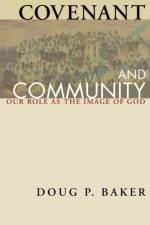
What if God's image is not the blueprint according to which God designed us but is rather the purpose for which he made us and the goal toward which he continues to shape his people? And what if we are not to be a pack of individual images of God but, rather, what if the many people in Christ's church are together meant to form a single image of our three-who-are-one God? What if the fulfillment of God's image was just as much a future hope for Adam and Eve as it is for us? And what if they and we will soon together experience life in a mutually self-giving relationship that mirrors and even participates in the community of the Trinity? How would that change our theology, our churches, our families, and our lives? What if our future hope is even greater than we ever realized?Doug P. Baker is a theologian, writer, and teacher. His work is often to be found in Reformation and Revival Journal, Act 3 Review, and Christianity and Society.
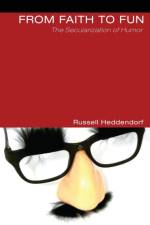
Abraham and Sarah were presented with a paradox when God told them they would have a son in their old age. Paradox in the Old Testament plays an important part in the dialogue between God and the Jews. In the New Testament, paradox is prominent in Jesus' teaching and helps to explain the Christian understanding of salvation. Today paradox arises when religious meaning of traditional culture conflicts with secular meaning of modern culture. Heddendorf argues that a subversive quality in humor gradually replaces traditional values with new cultural meanings. The resulting humor becomes a substitute for faith. As this secular humor becomes functional for society, it finds its way into many areas of the culture. This process of secularization in humor moves from faith to fun and, finally, to fun as faith. The result of this secularization could be called a ""fun culture."" Redemption of this culture, Heddendorf asserts, should be a continuing concern of the church.""In this fascinating study, Russell Heddendorf probes the deeper meaning of our post-Christian culture's obsession with 'fun.' He argues that as we trivialize our amusements, we lose touch with the profoundest vocation of humor: its ability to loosen the grip of the immanent, and to point us toward a transcendent reality."" --Wilfred M. McClay, author of The Masterless: Self & Society in Modern America""From the Genesis account of God telling Abraham and Sarah they would have a son in old age to twenty-first century jokes about priests and rabbis, the sacred and profane have been juxtaposed in jarring messages about the paradoxes of human life. Russell Heddendorf has done a masterful job of tracing the changing meanings of this complex cultural lineage. Whatever one may think about the current direction of religion and culture, this book offers a rich, thoughtful, and rewarding investigation.""--Robert Wuthnow, author of America and the Challenges of Religious DiversityRussell Heddendorf is Professor Emeritus of Sociology at Covenant College in Lookout Mountain, Georgia. He has founded the Association of Christians Teaching Sociology, and he has also served as president of the American Scientific Affiliation. Heddendorf has published a variety of materials describing the interface of sociology and Christianity.
Introducing new reprints by Gerald Heard: The Creed of Christ The Code of Christ Training for the Life of the Spirit Prayers and Meditations""There was a period in my early thirties when these four small books by Gerald Heard served almost as my bible. I read and reread them, and invariably found them to be uplifting and inspiring."" - Professor Huston Smith""Gerald Heard was an inspiring voice for the life of the spirit. Wipf & Stock is to be commended that Heard's remarkable work is being made available to a new generation of spiritual seekers."" - Dr. William H. ForthmanThe Code of Christ is Gerald Heard's sequel to The Creed of Christ. In this volume Heard emphasizes how, ""Christianity is in essence a way of life for us to live."" That way of life is systematically presented in the Beatitudes, which contain, ""a message needing decoding."" Heard authoritatively decodes this central message of Christ: ""The world exists for man to achieve union with God. The universe and life are the means whereby souls achieve Enlightenment and Liberation.""Once enlightenment is achieved, the ""perfected soul...turns back and stands incandescent with compassion, to light others on their way home."" The Code of Christ is essential reading for those desiring a deeper understanding of Christ's message. Gerald Heard's thoughtful musings skillfully expound the mystical truths of Christianity.""Gerald Heard's learned insights help one to climb from within the rungs of the spiritual ladder."" - Dr. (Hon.) Rhea A. White Gerald Heard (1889-1971) was a well-known author, philosopher, and lecturer. Trained as a historian at Cambridge, he served as the BBC's first science commentator. Later, in California, he founded and directed Trabuco College, which advanced comparative religious studies. His broad philosophical themes and scintillating oratorical style influenced many people. Heard wrote thirty-eight books, including his pioneering academic works, several popular devotional books, and a number of mysteries.
This is a volume of practical, scriptural, and contemporary essays exploring the idea of strength in weakness in the context of Christian life and ministry.Biblical scholars, theologians, and Christian ministry practitioners have thought about the biblical paradigm of strength in weakness within their own areas of expertise and interest. Biblical scholars encounter the idea of strength in weakness in both Old and New Testament passages that suggest human weakness and divine strength. The people of Israel, a community reliant on grace, exemplify this theme. Mark's portrayal of Jesus Christ indicates that it is in weakness that Christ saves. Paul's paradigm for ministry suggests the same. Theological chapters engage this teaching of strength in weakness as it surfaces in Luther's life, in Calvin's view of prayer, in Barth's theology, and ultimately in the divine dealing with the world. Pastoral theology demonstrates this theme's foundational significance for a suffering church in its mission to the world as well as the theme's importance for preaching the leading of God's people today. Drawing together scholars from fields of biblical studies, systematic theology, and pastoral theology, On Eagles' Wings questions an overemphasis on power in today's church. The authors propose various ways that ministry and mission may be best engaged with a biblical humility and with reliance on God's grace. ""This is a heart-warming, insightful, and deeply human collection of essays. Its contributors are diverse and international in flavor and context and bring to the important theme of 'strength in weakness' both a classical engagement with the text of Scripture and theology and a contemporary awareness of what living responses to that Scripture might look like today. Based on sound scholarly work and exegesis, this volume is winsomely and sometimes amusingly written. It is a book to be read in the high and the low times of the Christian life, especially by Christian leaders and workers who are expected in some greater measure than others to be incarnations of the faith of cross and resurrection. It exudes practical wisdom, realism, and devotion. It will not disappoint.""--Nigel G. Wright, Principal, Spurgeon's College, LondonMichael Parsons was most recently head of the Department of Christian Thought at Baptist Theological College of Western Australia. He is the author of Luther and Calvin on Old Testament Narratives (2004), Reformation Marriage (2005), and Calvin's Preaching on the Prophet Micah (2006). Parsons is also the editor of Text and Task: Scripture and Mission (2005). Parsons is currently a research supervisor for Spurgeon's College in London.David J. Cohen is Head of Biblical Studies and a lecturer in Hebrew Bible at the Baptist Theological College of Western Australia. He has written about the relevance of lament psalms for worship and pastoral care in Text and Task: Scripture and Mission (2005) and is currently examining the relationship between praying lament psalms and coping with stress.
""Descartes' attempt to ground the possibility of human knowledge in the existence of God was judged to be a complete failure by his contemporaries, and this remains the universal opinion of philosophers to this day, despite the fact that three and a half centuries of secular epistemology--which attempts to ground the possibility of knowledge either in the unaided human intellect or in natural processes--has failed to do any better. Further, the leading twentieth-century attempts at theistic epistemology reject both the conception of knowledge and the standards of epistemic evaluation that Descartes takes for granted.""In this book--partly an interpretation of Descartes and partly an attempt to complete his project-- the author attempts to show that a theistic epistemology incorporating Platonic and Aristotelian/Thomist elements can revitalize the Cartesian approach to the solution of the central problems of epistemology, including that most elusive of prizes--the proof of the external world.""--From the author's prefaceSteven Duncan has produced a rigorous and highly original contribution to one of the greatest philosophical problems of all time. Specialists in Descartes and philosophers doing epistemology will find this book very provocative and original, but The Proof of the External World will also appeal to the general reader interested in the history of philosophy. A wonderful contribution! -Paul Herrick, Professor of Philosophy, Shoreline Community College and author of The Many Worlds of LogicSteven M. Duncan is the author of A Primer of Modern Virtue Ethics (University Press of America, 1995) and Being, Truth and Knowledge (Wadsworth, 2000). He has taught philosophy in colleges and universities for over thirty years. Duncan is currently a member of the adjunct philosophy faculty at Bellevue College.
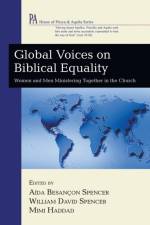
Global Voices on Biblical Equality is a fresh look at the contextualizing of gender equality throughout the world. Biblical equality is a burgeoning, global reform movement led by scholars and leaders not only in North America but also on every continental landmass in the world. What inroads is biblical equality making around the globe? What is its appeal? What still needs reform? How is biblical equality transforming each culture? In this book, female and male writers who are ethnically part of every continent explore the contextual challenges, successes, and adaptations of engaging the biblical text on gender and ministry.The contributors write on Asia and Asian America (India, China, Korean America), Africa (Zimbabwe)and African America Indigenous America and Latin America (Native America, Hispanic America, Brazilian America), and Western Europe and Australia and North America. The editors and authors are Aida Besancon Spencer, William David Spencer, Ranked Adjunct, and Mimi Haddad. Other contributors are Ellen Alexander, Beulah Wood, Cecilia Yau, Matthew D. Kim, Constantine M. Murefu, Darin Vincent Poullard, Sandra Gatlin Whitley, Awilda Gonzalez-Tejera, John Runyon, and Eliana Marques Runyon, Elke Werner, Roland Werner, Kevin Giles, and Roberta Hestenes.Aida Besancon Spencer is Professor of New Testament at Gordon-Conwell Theological Seminary in South Hamilton, Massachusetts. She is the author of Beyond the Curse: Women Called to Ministry, Paul's Literary Style, and 2 Corinthians (Daily Bible Commentary). She has coedited The Global God: Multicultural Evangelical Views of God as well as Joy through the Night: Biblical Resources for Suffering People.William David Spencer is Founding Pastor of Encouragement, Pilgrim Church, Beverly, Massachusetts, teaches theology for Gordon-Conwell Theological Seminary in Boston, and is the author or editor of ten books, including Mysterium and Mystery, Chanting Down Babylon, and Dread Jesus. He has also written more than one hundred articles, reviews, stories and poems.Mimi Haddad serves as President of Christians for Biblical Equality (www.cbeinternational.org) and as an adjunct professor of church history at North Park Theological Seminary in Chicago, Illinois. She has written numerous articles and contributed to seven books, and she speaks to diverse audiences on gender and faith.
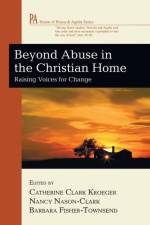
In January 2004 a newly founded evangelical organization called PASCH was formed. The word denotes the Passover or time of new beginnings--when God kept people safe in their own homes before leading them into freedom from abuse and oppression. Yet the word PASCH also stands for Peace and Safety in the Christian Home. PASCH began as a small group of therapists, sociologists, domestic-violence experts, clergy, biblical scholars, survivors--and dedicated Christians. In essence, PASCH was born out of the cries, confusion, and frustration of the people of God. As we encountered many horrifying situations of domestic abuse in Christian homes, those of us who seek to address various aspects of the issue concluded that we needed a fellowship of concerted study, prayer, and action. It was the dream of Catherine Clark Kroeger that an edited book might emerge from the 2005 and 2006 PASCH conferences in order that the papers, presentations, and discussions might be widely available. We found that to make that happen, we needed to work together: that each of us possessed one piece of the puzzle, and that by God's grace we could collectively begin to put the pieces together. The topic of abuse is ugly, which is why so many Christians shy away from discussing it. But in this volume we have tried to present an accurate, faith-based analysis of abuse in the Christian family context. We hope that various chapters stimulate discussion--sometimes debate--and in so doing prompt pastor and people to action.We call on you the reader to consider the various ideas and perspectives offered throughout the book. Hopefully each chapter will prompt you to consider afresh how you conceptualize violence among families of faith. Like you, the reader, the contributors to our collection come from various faith traditions, work in different contexts, and see the issue in part based on their own narrative and training. Yet, despite our differences--and our ongoing debates--we are unanimous that violence has no place in the home. Every home should be a safe place; every home a shelter. When abuse occurs in families of faith, it is the responsibility of the church to offer compassion and support to victims and to call those who act abusively to accountability and justice. Our edited collection includes¿ Dan Allender speaking from the heart about the impact of the fall on relationships between men and women;¿ Al Miles reflecting on his pastoral experience of the difficulties and opportunities of speaking out against violence in Christian families;¿ Bruce and Karen McAndless-Davis offering one couple's story of the long journey toward accountability and dramatic change;¿ Julie Owens retelling her own dramatic story of abuse, the life imprisonment of her ex-partner and what she wished every pastor knew about domestic violence.Catherine Clark Kroeger is an adjunct associate professor of classical and ministry studies at Gordon-Conwell Theological Seminary. With James Beck she edited Women, Abuse, and the Bible (1996) and Healing the Hurting (1998). With Mary Evans she edited the IVP Women's Bible Commentary (2002). With Nancy Nason-Clark she has written No Place for Abuse: Biblical and Practical Resources to Counteract Domestic Violence (2001) and Refuge from Abuse: Healing and Hope for Abused Religious Women (2004). Together with husband, Richard Kroeger, she wrote I Suffer Not A Woman (1992). She is cofounder of Christians for Biblical Equality.Nancy Nason-Clark is a professor of sociology at the University of New Brunswick, Fredericton, Canada, where she has taught for the past twenty years. She received her PhD from the London School of Economics and Political Science, London, England. Her books include The Battered Wife: How Christians Confront Family Violence (1997), No Place for Abuse: Biblical and Practical Resources to Counteract Domestic Violence (with Catherine Clark Kroeger, 2001), Refuge from Abuse: Healing and Hope for Abused Religio
Abonner på vårt nyhetsbrev og få rabatter og inspirasjon til din neste leseopplevelse.
Ved å abonnere godtar du vår personvernerklæring.