














Gjør som tusenvis av andre bokelskere
Abonner på vårt nyhetsbrev og få rabatter og inspirasjon til din neste leseopplevelse.
Ved å abonnere godtar du vår personvernerklæring.Du kan når som helst melde deg av våre nyhetsbrev.

Christians, the Care of Creation, and Global Climate Change is a wake-up call for Christians and others. It is a cogent and persuasive call to love God and our neighbors by caring for creation--especially in light of the dramatic climate changes occurring before our eyes. This book is not the final word on the subject, but it is a sincere invitation to examine the scientific evidence for global warming and to respond with individual and collective faithful actions.CONTRIBUTORS: Douglas Allen, Jeffrey K. Greenberg, P. J. Hill, Sir John T. Houghton, A. Duane Litfin, Ben Lowe, Vincent E. Morris, L. Kristen Page, Lindy Scott, Noah J. Toly
""This book will be an invaluable resource for all Christians who are concerned about implementing a holistic ministry of healing and wholeness in the spirit of the Great Physician. It is must reading for those in health care professions (usually sickness care), and those in chaplaincies and other ministries focusing on healing and wholeness including pastoral counseling. It will guide those who believe, as do I, that the health care crisis creates unprecedented opportunities for congregations to be major providers of preventative health care education that is so desperately needed in our society with its multiple levels of personal and social pathology and 'brokenness.'""--Howard Clinebell, author of Anchoring Your Well Being: Christian Wholeness in a Fractured World and Ecotherapy: Healing Ourselves, Healing the Earth""Advocates of the free market system often celebrate it as a mechanism, unabashedly driven by self-interest, that lets us exchange goods without the need for redemption. However, Dr. Abigail Evans calls for 'redeeming the marketplace' in the delivery of the fundamental good of healthcare. Why? Healing is more important than treating diseases; health care more than a commodity; and huge corporations not the vehicle of choice for its delivery. A widely experienced church leader and educator and a long-term student of the literature in health care, Dr. Evans maps out the role of the church in our national quest for a comprehensive and accessible health care system.""--William F. May, author of Testing the Medical Covenant: Euthanasia and Health Care ReformAbigail Rian Evans is Charlotte W. Newcombe Professor of Practical Theology and Academic Coordinator of Field Education at Princeton Theological Seminary. She founded and directed (1983-1991) the National Capital Health Ministries program in Washington, DC, and served on the Clinton Health Care Task Force (1993).
This compelling account of how Andean Christians have inculturated the Gospel and the challenges that confront them provides a real-world view of the urgent process of inculturation. In the context of ""pluri-cultural"" development of the church, this process is one that affirms that both culture and history are transformed by the Spirit of God.Inculturation surveys Andean culture and religious traditions, drawing from day-to-day experience in the transformation of education and social action, personal and communal life, spirituality, and the whole of Christian mission in today's world. It also discusses current evangelization trends worldwide, examining negative as well as positive examples of inculturation, and offers guidelines for future efforts.""With this groundbreaking book Diego Irarrazaval pushes the contours and frontiers of conventional understandings of inculturation. This valuable synthesis goes beyond the particularity of the Andean world to provoke important new questions and insights for the whole world Church in a globalized and postmodern context.""--Stephen P. Judd, MM""Diego Irarrazaval's refreshing and compelling reflections, rooted in decades of practical experience in the Altiplano, center on the processes of inculturation from below that operate in the everyday activities, beliefs, and celebrations of ordinary people of faith. This stimulating contribution to current debates points to some dangerous pastoral pitfalls while it enhances appreciation for what has been called 'the Catholic wisdom of the common people.'""--Thomas Bamat, Executive Director, Life and Peace InstituteDiego Irarrazaval is Director of the Institute for Aymaran Studies and Vice President of the Ecumenical Association of Third World Theologians (EATWOT). He holds degrees from the University of Notre Dame, the Catholic University of Santiago, Chile, and the Divinity School of the University of Chicago. A member of the Congregation of the Holy Cross, Irarrazaval also serves as associate pastor, Parroquia de Chucuito in Puno, Peru.
Immigration has in recent years become a hotly contested subject in public political and social discussions. Both in Europe and America, there is increased polarization, confusion, and anxiety about how to handle this challenging phenomenon. What has not been adequately discussed during these debates, however, is the influence of immigration on religion in the host countries. The increase in the number of Moslem immigrants in the West has been raised in some publications. However, this book is among the first to examine the impact of immigration on the Christian faith from a biblical perspective. The fact is, in many Western countries today, the future of Christianity is progressively becoming dependent on immigration. Is there any biblical perspective to the phenomenon? What should be the response of Christians to the debate? And how should Christian immigrants themselves interpret their experiences in the light of the Word of God? Asumang examines the lives and experiences of the giants of the Bible to answer these questions. And his conclusions are insightful and challenging both to immigrant and non-immigrant Christians alike. Annang Asumang is a medical doctor and Bible teacher in England. He is the author of Unlocking the Book of Hebrews.
Is abortion ethical? The answer to this question is often obscured by rhetoric, slogans, and politics. And the media message on abortion is often of little help. When the typical American opens up her morning newspaper, she sees the topic debated between pro-lifers and pro-choicers but receives little information that could help her make an informed moral decision. And as she reads further about the subject, it seems that the Christian church, often an ethical guide in many of her decisions, is of no use to her. Sadly, she is told that the church is just as divided as the rest of society on the topic. So our average American is left to fend for herself. She must somehow decide the right answer with little guidance from society, from the church, or even from God himself.But is our average American really without guidance? Has she gotten all the information she needs about abortion, or has she received only the five-second sound bite that leaves her as confused as she was before she heard about the abortion debate? And has God been silent on the abortion question? Has the church really shown a diversity of opinion on the sanctity of life?A Love for Life will provide Christians with the biblical and historical information that they need to make an informed decision on the abortion question. It will also take a critical and biblically-based look at the arguments and theologies of today's most prominent pro-choice clergy. And it will determine if abortion really fulfills the will of God, as many pro-choice Christians believe, or whether abortion is a clearly sinful act. In short, readers of A Love for Life will discover the real message of the church on abortion.""In this brief but comprehensive and well-researched book, Dennis Di Mauro traces the history of the Christian church's pro-life position, born from its Scriptures and theologically consistent until the latter part of the twentieth century. Di Mauro also demonstrates that the pro-life position represents the majority of the Christian world, even as he points to powerful pro-life voices within Christian traditions that are currently pro-choice. Christian people and churches on all sides of the abortion debate need to grapple seriously with these realities, and the first step in doing so is to read this book.""--Michael J. Gorman, author of Abortion and the Early Church""In A Love for Life, Dennis Di Mauro provides a much-needed review of Christian history that both preceded and followed the 1973 U.S. Supreme Court opinion which legalized abortion. It is a compelling chronicle of the consistent pro-life voice of Christianity through the ages as well as a disturbing review of the divided response of today's churches and religious organizations. In light of the 46 million legal abortions since 1973, Mr. Di Mauro's narrative ought to cause readers to consider a new (or renewed) commitment to restoring the historic Christian principle of the sanctity of all human life.""--Jean Garton, author of Who Broke the Baby?""A Love for Life is a splendid achievement. The author brings together the ancient and contemporary, biblical truth and today's political arguments, in a narrative that illuminates the ways in which Christians have engaged, and failed to engage, the great human rights question of our time.""--Richard John Neuhaus, former Editor in Chief, First Things ""Up until now, you might have thought you knew the outstanding Christian tradition in defense of children in the womb. But that was before you picked up this book."" --Frank Pavone, National Director, Priests for Life; President, National Pro-life Religious Council Dennis Di Mauro is Secretary of the National Pro-Life Religious Council, President of Northern Virginia Lutherans for Life, and a doctoral student in church history at the Catholic University of America in Washington DC.
The four canonical gospels are long set in established sequence as Matthew, Mark, Luke, and John. This book is about four other gospels, the Gospel of Thomas, the Secret Gospel of Mark; the Gospel of Peter, and Egerton Papyrus 2. These four other gospels have generally been regarded as mere digests or collages of the canonical gospels, whereas in fact, as Professor Crossan persuasively shows, the four others hold within their mutilated fragments independent or earlier traditions than those tradition has canonized. Four Other Gospels proposes a spectrum of relations between the canonical gospels and these others. This spectrum ranges from the Gospel of Thomas, which is a parallel and independent tradition, to Egerton Papyrus 2, on which both John and Mark are dependent, to the Secret Gospel of Mark, on which Mark directly and John indirectly are dependent, and on to the Gospel of Peter, which contains an original Passion-Resurrection source used by all four of the canonical gospels, but which submitted to their eventual ascendancy by attempting a harmonization between it and them, and placed the new complex under the authority and authorship of Simon Peter. Four Other Gospels does not propose a new or alternative canon. The canon is a fact both of history and of theology. But the thesis of this book is that anyone who takes the four other gospels seriously and thoughtfully will never again be able to read the four canonical gospels in quite the same way. A new light has been shed.
Here at last, in one book, is an account of the great movements that swept through Catholic theology since the middle of the nineteenth century. All the great personages are here--Newman, Blondel, Rahner, Chardin, Karl Adam, and the Modernists Loisy and Tyrrell. Fascinating and always readable, this book is a must for any library or person concerned with the development of modern religious thought.""I have the greatest admiration for Fr. Schoof's book--not only because, in it, he succeeds in putting a very complex history most suggestively into words, but above all because he also shows clear ability to make analytical distinctions and on this basis provides the reader with a very compelling synthesis.""--Edward Schillebeeckx OPT. Mark Schoof has been a member of the Dominican Order since 1951. After studying for four years at Oxford, he obtained his doctorate in theology at the Catholic University of Nijmegen, Holland. He taught history of theology at Nijmegen.
Life contains a rhythm when we see it from beginning to end. Our personal existence is not a series of individual episodes taking place as 'points in time.' Rather, life itself bears us along in a common pilgrimage. At any given time, we are part of a community where birth and death, joy and sorrow, pain and pleasure, as well as sowing and harvesting are taking place. This communal sharing of life replicates all the 'seasons of life.' For each time in our lives there is a corresponding season in the life of the human family. We empower faith by practicing hope every day of our lives.""In this book, Ray Anderson reinvigorates hope with its dynamic relationship to faith, and in turn puts meat on the bones of faith as 'the assurance of things hoped for.' Drawing on his personal experience of being raised with the seasons of life on the farm, Anderson explores the grace of God in the midst of a life lived in the rhythm of spring, summer, fall, and winter, and finds God in the midst of such experiences as 'preparing,' 'weeding,' 'waiting,' and 'visualizing.' Here is Anderson at his best and wisest: connecting the grace of God to real lives that experience the newness of spring, the promise of summer, the harvest of fall, and the vision of winter. Hope lives!"" Christian D. Kettler Professor of Theology and Philosophy, Friends University, Wichita, KS""For decades Ray Anderson has been one of the most imaginative and engaging theological writers, and he does not disappoint in The Seasons of Hope as he unpacks the virtue of hope through his own story of life on a South Dakota farm. Through rich metaphor and imaginative prose Anderson provides another significant thesis that is welcoming to both academic and lay theologians. This book portrays a beautiful theological vista through the eyes of a theologian who has been brave enough to plant himself in the soil of human existence, and seek God through the seasons and rhythms of life.""Andrew Root Assistant Professor of Youth and Family Ministry, Luther Seminary, St. Paul, MN""Ray Anderson's grasp of the human psyche is as lucid as his theological expertise. With characteristic insight and imagination Anderson demonstrates the inseparability of our souls from the soil. In addressing such themes as the mystery of faith, the virtue of patience, the distinction between longing and desire, the importance of timing as we participate in God's work, the tragic dimension of hope, and the power of visualization, Anderson draws from his early years of working on the land--through spring, summer, fall, and winter--in order to illuminate our understanding of the hope that summons faith into action. Read this book . . . but read it slowly. Savor it so that the harvest of hope may, by the grace of God, work its presence and power in your life, as it assuredly has in Anderson's own life."" Graham Buxton Director of Postgraduate Studies in Ministry and Theology, Tabor College, Adelaide, South AustraliaRAY S. ANDERSON (1925-2009) was Senior Professor of Theology and Ministry at Fuller Theological Seminary where he has taught for more than thirty years. He is the author of more than twenty-five books, including, The Seasons of Hope, Marriage and Family Ministry in a Postmodern Culture, The Soul of Ministry, Ministry on the Fireline, and The Shape of Practical Theology.
""Having devoted my life to the study of history, I am prompted in my latter days to ask whether one can make sense of it all.""--from the IntroductionIn this book, Bainton pauses to reflect on the importance of studying history because of what it can teach us about human nature. The study of history, then, is the study of human behavior and therefore it helps us understand ourselves. And with this greater self-understanding comes the further inquiry beyond the human--to God, Christ, and Christian ideals.Readers who think history is as dry as dust have never read Bainton! In this book, Bainton shows that history is not only interesting, it's also important. One can indeed ""make sense of it all.""
This book assembles the evidence for what the Greek Fathers, the men whose contructive thought underlies the creeds, really thought and taught about the nature of God. It shows that they were original thinkers, with a profound reverence for the text of the Scriptures, and minds keenly tranined to discuss what ultimate truths were expressed in the scriptural text and what reality should be ascribed to Christian religious experience. The results indicate that a good deal which is assumed in current theological text-books needs to be revised. The Fathers had to reconcile monotheism with faith in a Trinity of divine Persons. In the process, they pursued many lines of inquiry, often only to discard them after trial, but after following various clues and making various intellectual adventures they reached a solution of the problem, which was both true to their data and philosophically reasonable. Though the bulk of the book is concerned with the third and fourth centuries, during which the creeds were in the process of formulation, the story is carried down to the eighth century where the progress of original thought came to a standstill. It is shown that a great change came over the philosophical tradition during the sixth century, and owing to the consequent growth of formalism, a genuine outbreak of tritheism occurred. The book ends with the account of how this outbreak was met and overcome, largely through the efforts of a thinker whose very name is unknown, and whose book has only survived under the name of another man.
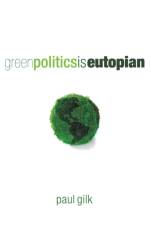
Various thinkers have attempted to explain the Earth-altering (even ecocidal) features in modern life. Jacques Ellul, for instance, a French intellectual, became famous for his exposition of ""technique."" But ""technique"" does not adequately address the institutional incubation out of which ""technique"" itself arises. In these essays, Paul Gilk stands on the shoulders of two American scholars in particular. One is world historian Lewis Mumford, whose career spanned fifty years. The other is classics professor Norman O. Brown, who brought his erudition into a systematic study of Freud. From these intellectuals especially, Gilk concludes that the accelerating ecocidal characteristics of ""globalization"" are inherent manifestations of perfectionist, utopian, predatory institutions endemic to civilization. Our great difficulty in arriving at or accepting this conclusion is that ""civilization"" contains no negatives. It is strictly a positive construct. We are therefore incapable of thinking critically about it. A corrective is slowly emerging from Green intellectuals. Green politics, says Gilk, is not utopian but ""eutopian."" It is not aimed at perfectionist immortality but rather at earthly wholeness. Yet the ethical message of Green politics confronts a society saturated with utopian mythology. The question is to what extent and at what speed ecological and cultural breakdown will dissolve civilized, utopian certitudes and provide the requisite openings for the growth of Green, eutopian culture.The fact that few of the books on Green Politics articulate the relevance of a neo-agrarian future makes Paul Gilk's book especially important as we face the end of cheap oil and/or climate change. Gilk's eutopian vision will help our bankrupt industrial civilization come to a soft landing rather than a crash. --Maynard Kaufman, Retired professor of religion and environmental studies at Western Michigan University and organic farmer.Paul Gilk is one of those who long ago foresaw the full extent of the environmental and social disasters facing the industrial world. In these essays, as in his earlier work, he dares to challenge not only the abuses and excesses of a global economy, but the very dream of urban civilization itself. With an eloquent voice and a ferociously independent mind, he examines our human condition in the 21st century.--Rhoda R. Gilman, Editor: Selections from Minnesota History (1968); Ringing in the Wilderness: Selections from the North Country Anvil (1996); Author: The Story of Minnesota's Past (1989); Henry Hastings Sibley, Divided Heart (2004); The Universality of Unknowing: Luther Askeland and the Wordless Way (2007).Paul Gilk serves as a powerful and prophetic voice for a profound and transformative Green Vision. His is not the green politics of trendy and upscale consumer alternatives. Gilk draws deeply from our history to chart a way to a genuinely sustainable future. Along the way he exposes many ""an inconvenient truth"" about our assumptions about society and the economy. Green Politics is Eutopian challenges the political practice of both mainstream environmentalists and militant Greens and calls them to an entirely different relationship with Nature.- Dennis Boyer, author and folklorist, co-founder of the Wisconsin Greens, co-editor of the land use anthology A Place to Which We Belong Paul Gilk is an independent intellectual who lives in the woods of northern Wisconsin. A long practitioner of ""voluntary poverty,"" he chose a life of deliberate retreat by building and living in a small cabin for nearly twenty years before reconstructing a nineteenth-century log house, both homes without electricity or running water. He is married to a Swiss citizen, Susanna Juon. Between them, they have seven grown children.
While the world knows Matthew Henry best for his time-enduring Exposition of the Old and New Testaments, the cultivation of personal piety in himself and others was the great business of his practical life; and his treatises on the godly life, while little known today, are among the finest ever written. Rich in and alert to the things of the spirit, they reveal, as so impressively shown in this volume, a spiritual mind of preeminent degree in the full and deliberate worship of God.The author here pleads with us to avail ourselves of the ""ornament of a meek and quiet spirit,"" and to apply this precious and comely grace in all our contacts in everyday living. No message could be more practical or fitting for this age, when the world, more than ever, is too much with us.This is a deep and tender, altogether winsome plea. Would you know the nature, excellence, and application of this meekness and quietness? Come then with the author to Him who said, "". . . learn of me, for I am meek and lowly."" And all the world will see and know that we have been with Jesus.Living and dying, let us be found among the ""quiet in the land.""We all wish to see quiet families, and quiet churches, and quiet neighborhoods, and quiet nations; and it will be so if there be quiet hearts; and not otherwise.
Supreme Authority is a book whose author's Commentary on the Gospel of Luke has been called by many Bible scholars the best modern commentary on the third gospel. This present volume deals with the subject on which the beginning and development of Christianity rests, the authority of Jesus and of his apostles. However obvious the relation between these two may seem to the reader, the author points out that in contemporary theology little appreciation is shown of the fact of the Lord's supreme authority in the New Testament and in the Early Church, and that much confusion exists in many modern theories concerning the history of primitive Christianity and of the formation of the New Testament. Second only to this, Mr. Geldenhuys shows, is the importance of understanding the authority of the apostles.To bring out most sharply the authority of Jesus and his apostles, the author allows the two primary sources of his subject, the New Testament and other Early Church documents, to speak for themselves as far as possible, thus presenting a positive exposition of his subject. The theories of Harnack, Enslin, Bousset, Manson, and many others who try to escape full acceptance of the New Testament or Early Christian presentation of the authority of the Lord and of His apostles, come in for discussion and comment.J. Norval Geldenhuys, perhaps best known for his Commentary on the Gospel of Luke (1951), was a minister in the Dutch Reformed Church of South Africa.Ned B. Stonehouse was Professor of New Testament at Westminster Theological Seminary and a minister in the Orthodox Presbyterian Church until his death in 1962.
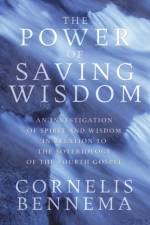
Cornelis Bennema explains the role of the Spirit in salvation according to John's Gospel against the background of intertestamental Jewish wisdom literature. He comes to the conclusion that the salvific function of the Spirit is that of a cognitive agent who, through the mediation of life-giving wisdom, creates and sustains a saving relationship between the believer and the Father and Son.""With meticulous detail, Bennema examines both prior scholarly works on related subjects and ancient sources relevant to the conceptual background of the Spirit in John. His examination strengthens the link between God's Spirit and Wisdom that scholars have sometimes noted in early Jewish sources, and contributes some different perspectives to current debates regarding Johannine pneumatology and soteriology.""-Craig S. Keener, Professor of New Testament, Palmer Theological Seminary""This book is one of the most interesting and informative books I have read recently on John's gospel...The book is lucidly written, interacts intelligently and informatively with a wide variety of other literature on John, and again and again says insightful things about John's gospel...Some books on John make the gospel seem more obscure not less; this is not one of them. Bennema I found illuminating and helpful.""-David Wenham, Trinity College, Bristol (Evangelical Quarterly, April 2006)""To draw the attention to the importance of the Spirit in relation to salvific knowledge is indeed an important contribution and makes Bennema's effort a worthwhile exercise. He is a good researcher who is able to present both his material and his arguments in a logical and consistent way. If one wants to disagree with him, one will have to engage in his well-motivated arguments. I regard Bennema's book as one of the better doctoral studies on Johannine theology to appear during the last decade. It therefore demands attention from Johannine scholars. Bennema's thesis indeed forces research to take cognizance of the role of the Spirit as well as a possible way in which the message of Jesus could be integrated as an affective force in the lives of the Christian community.""-Jan van der Watt, Professor of New Testament Studies, University of Pretoria (Review of Biblical Literature, July 2004)""Whether or not one finally agrees with Bennema's conclusions, he has indubitably done the guild a service by focusing so closely on a single aspect of the Fourth Gospel: pneumatology. Scholars will find the book useful to consult when treating any aspects of the Gospel that may intersect with spirit, wisdom, and salvation. Teachers could assign a particular section, such as that devoted to the Wisdom traditions in the Hebrew Scriptures, LXX, and Philo or that which provides an overview of Johannine soteriology, to provide a relatively brief overview of a particular aspect of the Gospel. Advanced students researching Johannine pneumatology might use the book as a dialogue partner more than an authoritative voice.""-Jaime Clark-Soles, Associate Professor of New Testament, Perkins School of Theology (Religious Studies Review, April 2006)Cornelis Bennema is Associate Professor and Head of New Testament at the South Asia Institute of Advanced Christian Studies (SAIACS, www.saiacs.org) in Bangalore, India. He has published various articles on the Fourth Gospel in international journals and is also the author of Excavating John's Gospel: A Commentary for Today (2005).
Frederick L. Ware provides a classification and criticism of methodological perspectives in the academic study, interpretation, and construction of black theology in the U.S. from 1969 to the present, and establishes and recognizes three different schools of academic black theology:The Black Hermeneutical SchoolThe Black Philosophical SchoolThe Human Sciences SchoolSimilarities and differences are delineated in the identification of each school's representative thinkers and their views on the tasks, content, sources, norm, method, and goals of black theology.
What does it take for a young minister in his first pastorate to thrive (not simply survive) in the local church? What personal, emotional, psychological, and spiritual issues must young ministers attend to in order to be successful in ministry? What role do character issues play in a successful ministry? These are just a few of the questions raised by Letters for Micah. Drawing on his ministry experience and study in the area of spiritual formation, Les Hardin blends practical, field-tested wisdom with sound, biblical advice to help ministry novices navigate the turbulent waters they often face in their first ministries.Letters for Micah allows the reader to enter into the conversation between a seasoned pastoral veteran and an apprentice who leans on him for guidance in the difficulties of his first days in ministry. Compiling letters written specifically for this project and actual correspondence with ministry novices, Hardin bridges the worlds of practical ministry training and spiritual formation to help novices grasp the responsibilities pastoral ministry entails. Rather than peddling contemporary, pop-leadership techniques to get the work done, this book encourages young ministers to form lifelong character habits and spiritual formation practices as the biblically ordained foundation for ministry.
When Lesslie Newbigin returned to Britain in 1974 after years of missionary service, he observed that his homeland was as much a mission field as India, where he had spent the majority of his missionary career. He concluded that the Western world needed a missionary confrontation. Instead of the traditional approach to missions, however, Newbigin realized that the Western world needed to be confronted theologically. From his earliest days at Cambridge University, Newbigin developed certain theological convictions that shaped his understanding of the Christian faith. Newbigin utilizes these theological convictions as criteria for evaluating the belief system of Western culture and for providing an answer to Western culture's dilemma. It is Newbigin's contention that the West is suffering from a loss of purpose because at the time of the Enlightenment, it rejected a belief system that gave it purpose. This was also a belief system that made it uniquely different from the rest of the world, particularly Asia. The Enlightenment reintroduced humanism and dualism into Western culture, which resulted in the loss of purpose and the rise of skepticism. Modern science and the scientific method, in the form of scientism, added to the problem, making human reason the measure of truth, and limiting facts to only that which could be verified through controlled experiment.Newbigin's solution is to reintroduce the Christian belief system into Western culture in order to restore purpose and truth to Westerners and to put them into contact with true reality through Jesus Christ. He desires to do this in the context of both modernism and post-modernism. This book will discuss Newbigin's theological convictions and how they factored into both his critique of and his solution for Western culture's spiritual and worldview problems.""This book will make a significant contribution to the burgeoning literature on Lesslie Newbigin, 'long-time missionary to India and global ecumenical leader' whose 'importance has never been as recognized as it is today.' Newbigin's prophetic call for a missionary encounter with the modern West is here extended by Donald Le Roy Stults through a vigorous plea to the churches for an evangelistic engagement with contemporary culture in all its intellectual and social concreteness.""-Geoffrey Wainwright is Robert Earl Cushman Professor of Christian Theology at Duke Divinity School, Duke UniversityDonald Le Roy Stults has lived and taught in undergraduate and graduate schools in South Korea, the Philippines, Germany, England, and the United States. He has also completed short-term teaching assignments in Taiwan and Albania. He is the author of Developing an Asian Evangelical Theology (1989).
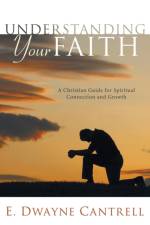
There comes a time in the lives of most people when faith and religion come into question. When this time in life approaches, it appears that there are more questions than answers. Why do we have these questions? What is it that we are looking for?Understanding Your Faith is designed for the person who is seeking answers to fundamental questions of the Christian faith in a simple yet thought-provoking format. This book is also designed to be a tool for mentors and leaders to assist seekers and new believers with the faith discovery process.E. Dwayne Cantrell is currently the Pastor of Ministry Development at Pasadena Church in Pasadena, California. He earned a master of arts degree in education from San Jose State University in San Jose, California, and a master of arts degree in theology from Fuller Theological Seminary in Pasadena, California. Dwayne also serves as an administrator at a Christian college preparatory high school in Pasadena. He and his wife Angel are the founders of Unlimited Impact ministries (www.unlimitedimpact.org) and have two children, a son, Jared, and a daughter, Jada.
The Clarity of God's Existence examines the need for theistic proofs within historic Christianity, and the challenges to these since the Enlightenment. Historically (and scripturally), Christianity has maintained that unbelief is inexcusable. If failing to know God is a sin, the implication is that humans can and should know God. Humans should know God because his eternal power and divine nature are clearly revealed in the things that are made. And yet, Anderson argues, more time is spent on avoiding the need for clarity to establish inexcusability than on actually providing an argument or proof. Proofs that rely on Aristotle or Plato and that establish a Prime Mover or designer are thought to be sufficient. But the adequacy of these, not only to prove the God of theism, but also to prove anything at all, has been called into question by Enlightenment thinkers like David Hume. After considering the traditional proofs, and tracing the history of challenges to theistic proofs (from Hume to Kant and down to the twentieth century), Anderson argues that the standard methods of apologetics have failed to sufficiently respond. Classical Apologetics, Evidentialism, Presuppositionalism, Reformed Epistemology, and others fail to adequately answer the challenges of the Enlightenment. If this is the case, what is the outcome for Christianity?Anderson offers an explanation as to why traditional proofs have failed, and for what is necessary to offer a proof that not only responds to Hume and Kant but also establishes the clarity of God's existence. The traditional proofs failed precisely in not aiming at the clarity of God's existence, and they failed in this because of a faulty view of the goal of Christian life. If the blessed life is to be attained in a direct vision of God in heaven, then there is little to no reason to ask for more than the bare minimum required to get into heaven (justification). Furthermore, if the highest blessing is this direct vision, then the glory of God revealed in his work is considered as less important and even set aside. By way of contrast, if God's eternal power and divine nature are clearly revealed in his works, and the blessing comes in knowing God, then it is of the utmost importance for Christianity to demonstrate the clarity of God's existence.Owen Anderson recognizes the necessity in Historic Christian Theism for clarity and inexcusability in contrast to skepticism and fideism. He responds to this legacy of the Enlightenment by showing the relevance ofproof for the existence of God. The shape of a classic problem is beingbrought to light. --Surrendra Gangadean, author of ""Philosophical Foundation: A Critical Analysis of Basic Belief""This is an exciting book that advances the status of philosophy of religion by analyzing and probing some fundamental issues incontemporary philosophy and theology. The emphasis on clarity is, to me, new and fresh and provocative. I'm really surprised that the constellation of clarity, responsibility, and inexcusability has not been examined in detail before. --Stephen Webb, Wabash CollegeOwen Anderson is Assistant Professor of Philosophy of Religion at Arizona State University West. He is the author of Reason and Worldviews (2008).
Peter Taylor Forsyth (1848-1921) preached and pastored for twenty five years before becoming principal of Hackney College in London where he taught Systematic Theology and Preaching. Forsyth converted from theological liberalism to classical Christianity in the mid 1880s. The theological transition was, in his own words, "from a lover of love to an object of grace." A theologian of the cross, Forsyth is well known for his publications The Work of Christ, Cruciality of the Cross, and The Person and Place of Jesus Christ.
Abonner på vårt nyhetsbrev og få rabatter og inspirasjon til din neste leseopplevelse.
Ved å abonnere godtar du vår personvernerklæring.