








Gjør som tusenvis av andre bokelskere
Abonner på vårt nyhetsbrev og få rabatter og inspirasjon til din neste leseopplevelse.
Ved å abonnere godtar du vår personvernerklæring.Du kan når som helst melde deg av våre nyhetsbrev.

Ellison and Thorson-Smith have coedited a collection of essays--in collaboration with two dozen prominent theologicans--that plays off the controversial 1991 Presbyterian study they coauthored entitled Keeping Body and Soul Together: Sexuality, Spirituality, and Social Justice; and takes stock of sexuality, religion, and ethics at the beginning of the new millennium. The cutting-edge analyses address the possibilities--and demands--of a justice-love ethic for individuals, church, and society.""This book challenges all persons of goodwill to reassess their moral presumptions about sexuality. Is sexuality singular or plural? Why have religious organizations found conversations about sexual justice issues so controversial and frightening? What capacities are needed to love and do justice to sexuality minorities? Well reasoned, challenging answers to these and many other related questions are provided by the authors of this excellent book. Clearly, this is not a book for the close-minded traditionalist.""--Peter Paris, Elmer G. Homrighausen Professor of Christian Social Ethics, Princeton Theological Seminary""Body and Soul is both good theological news about sex and an unflinching look at the role of organized religion in sexual injustice. A moving and provocative collection, it elucidates ethical dimensions of issues of sexualities and will inform any reader concerned with the challenges of gender and sexual justice as well as with justice-based sexual relationships.""--Charlotte Bunch, Executive Director, Center for Women's Global Leadership, Rutgers University""The longest revolution--the sexual one--is far from finished, but (hallelujah!) this volume takes a giant step. Ellison and Thorson-Smith have assembled a stunning group of prophetic theologians to explore the good news that our sexual pleasure is made godly by relationships of love, care, mutuality, and justice. Writer after writer shows how the personal is indeed public, and how the transformation of our human eros is intimately connected with enhanced justice in race, economics, and ecology. Such boldly incarnational theology might yet revive authentic spirituality in our churches.""--James B. Nelson, author of Embodiment: An Approach to Sexuality and Christian Theology and Professor Emeritus of Christian Ethics at United Theological Seminary of the Twin Cities""An excellent collection from progressive Christian voices that offers a thoughtful and profoundly faithful witness to the God-given gift and power of our sexualities.""--Emilie M. Townes, Carolyn Williams Beaird Professor of Christian Ethics, Union Theological Seminary, New YorkMarvin M. Ellison is Professor of Christian Ethics at Bangor Theological Seminary in Portland, Maine and an ordained minister in the Presbyterian Church (USA). He received his PhD from Union Theological Seminary in New York City and is the author of Erotic Justice: A Liberating Ethic of Sexuality (1996) and a principal author of Keeping Body and Soul Together: Sexuality, Spirituality, and Social Justice (1991).Sylvia Thorson-Smith is a lecturer in religious studies and sociology at Grinnell College in Iowa. A former consultant and writer of several studies for the Presbyterian Church (USA), she is the author of Pornography: Far From the Song of Songs (1988) and Reconciling the Broken Silence (1993), and coeditor of Called Out With: Stories of Solidarity (1997). Thorson-Smith lives in Grinnell, Iowa.
""This study has two aims. The first is to relate studies on symbolism and its modes to an understanding of the liturgy. The second is to relate these studies to the renewal of the liturgy in a time of crisis. Since the first aim is affected by the second, it may be well to say something about the nature of the crisis at this point . . . ""The crisis as it touches on liturgy is twofold. First there is a crisis of vision and second a crisis of hope. The churches are forced to ask how well the vision of reality, or the world view, projected in liturgical celebration expresses a sense of being in time and a sense of the holy that are pertinent to contemporary fact and contemporary models of reality. This is the crisis of vision. At the same time, the churches are part of a humanity which lives in a time of disintegration and destruction, a humanity continually compelled to consider whether there are any hopes by which it is possible to face the future. The despair of the age is represented in the twofold holocaust of the century. There is the holocaust of the Jewish people under the Nazi regime, and there is the imminent nuclear holocaust which threatens the entire world. Can those who profess faith in Jesus Christ profess it in such an age?"" --from the Introduction
This fascinating account of theologian Clodovis Boff's five-month missionary journey among the people of western Brazil offers a unique and inspiring view of a people in the process of liberation. Boff records the day-to-day details of his travels and encounters among the rubber gatherers of the remote jungle regions, with the members of basic Christian communities in small towns, and with the priests and lay leaders engaged in pastoral work among the poor. He shares the life, work, struggles, and concerns of these people engaged in their various tasks. From these observations and reflections one can see everyday experience and theological insight arising one from the other. Feet-on-the-Ground Theology reveals the basic dimensions of grassroots liberation theology, providing a portrait of the church of the poor.""It seems to me that this book introduces something new in theological literature. It is a new way to do theology and to pose the problems encountered in daily life, problems that do not always have an easy answer. It also reflects a new way of living Christian life, viewing everything in the light of the divine word that illuminates and guides. It is contemplation of the mysteries of faith in day-to-day life.""--From the Foreword by Cardinal Aloisio Lorscheider, Archbishop of Fortaleza, Ceara, Brazil""Clodovis Boff's theological journal on pastoral ministry is an original, insightful, and frequently inspiring example of a praxis approach to theology--so often discussed but less frequently seen. The book is sometimes poignant in the remarkable details it provides about the reality of Brazil's poor and powerless. the almost novelesque qualities of Boff's genre make the book even entertaining. Boff shows how the theologian's craft can be applied with ease and connaturality to the harsh and dramatic realities of a vibrant Third World church.""--Allan Figueroa Deck, SJ, Lecturer in Hispanic Pastoral Ministry, The Jesuit School of Theology at Berkeley""Father Boff's book is a 'jewel,' as we say here in the Northeast.""--Dom Antonio Batista Fragoso, Bishop of Crateus, BrazilClodovis Boff, born in Concordia, Brazil, is a Servite priest and a professor of theology at the Catholic University of Sao Paulo. He also works with the poor in basic Christian communities and assists in pastoral work in favelas. Among his books are Theology and Praxis and (with Leonardo Boff) Introducing Liberation Theology.
This notebook--a spiritual journal by noted evangelical theologian Donald Bloesch--covers a range of subjects, including sin and sainthood, heresy and orthodoxy, the church and the sacraments, marriage and celibacy, failure and success, despair and hope.Bloesch's lucid, concise writing style polishes and illuminates the gems of his thought. The result is a scintillating collection of precision and depth--a treasury of theological reflection.Donald G. Bloesch was Professor Emeritus at Dubuque Theological Seminary in Dubuque, Iowa. His other books include Essentials of Evangelical Theology, Is the Bible Sexist?, and The Future of Evangelical Christianity.
Women and Families explores the complex roles of women in Buddhism, Hinduism, Christianity, Judaism, and Islam. Each religion specifies a positive set of virtues, but these imply a negative set as well. If the virtuous woman is a faithful wife and a nurturing mother, then what does each religion say to a woman who remains celibate, childless, or unmarried? What about the circle beyond home and family? Five scholars draw out the ambiguity of women's relation to religion and also explore how women attempt to shape their own lives as well as the larger public life.Jacob Neusner is Research Professor of Religion and Theology at Bard College and Senior Fellow of the Institute of Advanced Theology at Bard. He has published more than 900 books and unnumbered articles, both scholarly and academic and popular and journalistic, and is the most published humanities scholar in the world. He has been awarded nine honorary degrees, including seven US and European honorary doctorates. He received his AB from Harvard College in 1953, his PhD from Columbia University and Union Theological Seminary in 1961, and rabbinical ordination and the degree of Master of Hebrew Letters from the Jewish Theological Seminary of America in 1960.
What are your values?What impact do they have on your personal growth, your family life, your professional life?'The Genesis Effect is' a groundbreaking exploration of the relationship between values and growth. Bringing twenty years of research to his subject, Dr. Brian P. Hall shows how human, spiritual, and institutional growth are interconnected and form a dynamic whole.The author explains how values develop when a person's internal images and ideas interact with the external world. The Genesis Effect is the growth that takes place when these values create transformations in ourselves, in others, and in the organizations we belong to.
Donna Schaper has written a thought-provoking book to assist readers in developing a way to move forward, a way to become persons of faith, and a way of becoming Christians by ""calmly plotting the resurrection."" Schaper provides a daily exercise for the seven weeks of the Lenten season, including a passage of Scripture, a brief reflection, and concluding questions for further consideration or group discussion. The themes for each week of reflections are:Week 1--Where Are We Going?Week 2--Are We There Yet?Week 3--Are We Lost?Week 4--Parabolic Thinking: The Land Beyond Lost, Next To DoubtWeek 5--What Is Enough Resurrection?Week 6--RisingWeek 7--RisenSchaper provides a daily guide for our journey through the Lenten season, filled with personal illustrations, inspirational stories, and words for reflection. Perfect for individual study and for adult groups, Calmly Plotting the Resurrection is a helpful resource for anyone seeking a meaningful journey toward Easter.Donna E. Schaper is the Senior Minister of the Judson Memorial Church, Washington Square South, New York City.
This landmark study in the history and theory of modern Christian socialism examines the work of such major figures as Rauschenbusch, Tillich, Moltmann, Gutierrez, and Miguez Bonino. Dorrien argues that these theologians provide a singular context for addressing questions of freedom and totalitarianism, sacralization and democratization, individual autonomy and the common good. He focuses on the differing conceptions of the common good that these major theorists have propounded, and explicates as well their theological arguments on the relationship between the Kingdom of God and projects of historical praxis. With a new Preface addressing the tumultuous events in Eastern Europe, Reconstructing the Common Good develops and sustains a forceful argument for the continuing relevance of a decentralized, pluralistic, democratic form of socialism."". . . A remarkable achievement. Dorrien's comparative look at the communitarian and democratic strands in religious social thought throughout the twentieth century breaks creative and original ground in religious studies and political theory alike.""--Harry Boyte, Humphrey Institute of Public Affairs, University of Minnesota""In the post-Reagan years it is surely time to reconstruct a sound theological basis for dealing with the larger social whoe. . . . An important book.""--Harvey Cox, Harvard Divinity School ""With his careful, thorough scholarship, his cogent, honest criticism, and hte moderate tone of his lucid prose, Gary Dorrien has written a book . . . that will help keep alive the vision of a cooperative commonwealth.""--Perspectives"". . . A first-rate, important work about the history and theory of modern Christian socialism. . . . Powerful, scholarly, human.""--The Book Reader""The unusual conciseness and clarity in this treatment of liberation and political theologies will commend [this] book for undergraduate studies.""--Theological Book ReviewGary J. Dorrien is the Reinhold Niebuhr Professor of Social Ethics at Union Theological Seminary and Professor of Religion at Columbia University. An Episcopal priest, he was previously the Parfet Distinguished Professor at Kalamazoo College, where he taught for eighteen years and also served as Dean of Stetson Chapel. He is also the author of Logic and Consciousness and The Democratic Socialist Vision.
In Good News for Animals? fifteen men and women debate the ambiguous legacy of Christian approaches to animals and their well-being. The book is structured by four questions: What has been said about animals in the past? What is being said about animals today? How should Christians respond to current concerns about animals?Contributors:Carol AdamsJohn BerkmanRichard M. ClugstonJohn B. Cobb Jr.Gary ComstockGeorge FrearWilliam FrenchStanley HauerwasL. Shannon JungAndrew LinzeyTheodore WalkerTom ReganRosemary Radford Ruether""We share this planet with thousands of species of animals. Yet, Christians have been all too deaf to the cries of our suffering fellow creatures, and blind to the complexity of animal cognition and feeling. Good News for Animals? alerts us to the compelling scriptural and ethical grounds for caring for animals and the earth. For those of us who have embraced animal protection as a necessary expression of Christian compassion, this is indeed good news."" --John A. Hoyt, President Emeritus, The Humane Society of the United States""Good News for Animals? moves what has been a marginal concern for the Christian community to center stage. In its fine essays by outstanding authors, this book lays out the connections between our treatment of other animals and such critical issues as human overpopulation, First World energy consumption, and feminism, with vegetarianism as a symbol of these connections as well as an immediate lifestyle change open to everyone.""--Sallie McFague, Distinguished Theologian in Residence, Vancouver School of TheologyCharles Pinches is Chair of the Department of Theology and Religious Studies at the University of Scranton.Jay B. McDaniel is Chair of the Department of Religion and Director of the Steel Center for the Study of Religion and Philosophy at Hendrix College.
The Caribbean, awash with sun and water, is a meeting place of many races, religions, and cultures. There North and South, Latin and Anglo, native Carib, African black, French and English white races and cultures meet. In a religious melting pot, Protestant and Catholic Christian, Afro-Caribbean, Hindu, and secularist faiths, intertwine, cross-pollinate, and go their ways, separate yet together, in the divine milieu.Such a place has a rich and revealing story to tell: of history, nature, and humanity; of the understanding of freedom; of the meaning and scope of theology itself. The key in Caribbean society, with its experiences of slavery, colonialism, neocolonialism, and structural dependence, is emancipation: the pursuit, proclamation, and practice of human freedom. Emancipation is the key to Caribbean theology as well.This is the focal point of Kortright Davis's work. He introduces the complex tapestry of this unique society: its social and cultural pluralism, its particular strengths and weaknesses: poverty, dependence, alienation, and divisiveness.Davis explores many aspects of Caribbean religion and spirituality, especially the complexities of carnival and its uniquely African soul. He notes too a theological dependency, and posits again a unique, Caribbean emancipatory theology to establish a theological ""self-reliance."" In emancipatory theology, as in Latin American liberation theology, the source for praxis and reflection is faith linked to historical experience. And the Caribbean experience, of continual struggle for identity, distinguishes and yet unites Caribbean Christians with Christians everywhere.""Deeply concerned with the historical and cultural contexts of theology, Professor Davis has developed a provocative argument that the reconstruction of Caribbean society and its spiritual integrity will be postponed until the emancipatory dimensions of its religious expression are embraced by the region's diverse constituencies. This is an important book.""--Michael R. Winston, President, Alfred Harcourt Foundation""Professor David's profound scholarship in church history and liturgy provides a sure foundation for his perceptive and well-researched assessment of the impact of the church on Caribbean society. Emancipation Still Comin' not only recounts the role of the church, it examines with sensitivity and candor the varied strands that are woven into the fabric of Caribbean life. The author's lucid and lively style make his monograph all the more readable, and further enhances its value as source-material for the study of the Caribbean.""--Sir William Douglas, Ambassador of BarbadosKortright Davis, an Anglican priest, was born in Antigua. He was one of the Archbishop of Canterbury's members on the Anglican-Roman Catholic International Commission II, and is Professor of Theology at Howard University School of Divinity.
In Many Paths, Eugene Hillman, a pioneer in the area of interreligious dialogue and Catholic thought, argues that the wider ecumenism to which Christians were summoned by Vatican II may prove to be the most radically demanding of the Council's many calls. It requires a reexamination of christology, of ecclesiology, of missiology, and a coming-to-terms with the reality of religious pluralism. By exploring religion's historico-cultural dimensions, examining the Church's tradition and practice vis-a-vis other cultures and religions, and explicating the challenges of a post-Vatican II ministry, Many Paths makes a vital contribution to the development of interreligious dialogue.""Writing out of many years of friendly dialogue with men and women of other religions and cultures, Fr. Hillman, in the spirit of Vatican II, offers us this important book to promote respect and openness among the great faiths of the world.""--John Macquarrie, Oxford University""With insightful clarity and expertise, Hillman integrates his own transcultural experience and academic professionalism to present an overview of Catholic thought on the world's living faith traditions. This work is an obvious choice for those grappling with Christian theological approaches to religious diversity and pluralism. . . . I consider it essential for courses on theology and world religions.""--James M. Kroeger, Loyola School of Theology, Manila""Christians everywhere are now plunged into questions that lie at the heart of their faith. Eugene Hillman deals with these questions in a perceptive way which will lead even those who disagree with him into a fuller understanding of their beliefs.""--Charles W. Forman, The Divinity School, Yale University""Hillman's path toward a 'wider ecumenism' has been hammered out of concrete experiences in Africa and especially among the Masai people. His cultural approach to religion and his emphasis on the role of symbol systems give his understanding of evangelization as inculturation plausibility. A good example of this is to be found in [his] relating of the Christian Paschal Mystery to the Masai's understanding of death. Here one can perceive how evangelization as inculturation demands ongoing dialogue at ever deeper levels.""--Lucien Richard, School of Theology, Boston UniversityEugene Hillman, CSSp, emeritus professor of humanities at Salve Regina University in Rhode Island, served as a missionary in Africa for over twenty-five years. He has been a visiting professor at the University of Nairobi, Yale University Divinity School, and Weston Jesuit School of Theology. He is the author of several books on missionary themes, most recently, Toward an African Christianity: Inculturation Applied (1993). His articles have appeared in such publications as Concilium, Louvain Studies, The Jurist, The Journal of Ecumenical Studies, Irish Theological Quarterly, and Africa Today.
What is the best way of getting interested in Bible reading? Why not start with the passages that the Church reads to us in the seasons dedicated to the great events in the life of Christ: Christmas, Lent, Holy Week, and Easter? That would truly be Reading the Gospels with the Church. This book with its reflections on the Gospels of these seasons offers a wonderful entry into appreciation of the Bible. And since many mainline Churches have the same Gospel readings on Sundays, it is a book that can serve all. Time magazine called Raymond E. Brown, ""probably the premier Catholic Scripture scholar in the U.S."" Brown wrote major books on those portions of the Gospels used by the Church in its most sacred seasons, and no surer guide can be found to their wealth. Best of all, he here digests his thought in the attractive syle employed in Catholic Update--a style aimed at enabling all to understand. This book is a fascinating introduction to the riches of the Gospels.
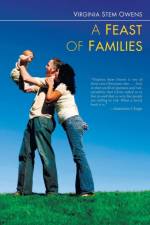
""What do you want for your children?"" Faced with that question, Virginia Owens searches deeply for an honest answer. Faith, she decides, is what she wants to pass on. But how do we transmit our faith to the next generation in a world that has lost its regard for the family? Owens shows in vivid detail how we can live in all the ups and downs of family life and still impart our faith as a true fulfillment, not merely as a cultural appendage.In a beautiful, sensitive, and heartwarming manner, Virginia Stem Owens evokes many memories as she recalls the joys and sorrows of her own large and sometimes difficult and eccentric Texas clan, as well as the experiences of others, from Russian novelists to Texas bank robbers. A Feast of Families is a rich and rewarding repast.""What a lovely book it is. Virginia Stem Owens is one of those rare Christians who doesn't draw legalistic lines around any part of her faith but lives in that world of openness and vulnerability that Christ called us to live in and that so very few people are willing to risk. In her accounting of her own particulars she strikes that note of universality which will make her book reach a wide audience.""--Madeleine L'EngleVirginia Stem Owens has written over fifteen books that include three mysteries and nonfiction on a wide range of topics from media to metaphysics. Her memoir of her grandfather's last years won the Texas Institute of Letters prize for best nonfiction book in 1990. Living Next Door to the Death House, written with her husband, David, takes readers inside the prison culture that pervades her hometown, Huntsville, Texas.
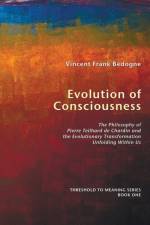
From the ""alpha"" to the ""omega,"" Pierre Teilhard de Chardin offers an evolution-of-consciousness paradigm of the universe and a triumphant vision of humankind and its future. Guided by a ""creative process"" that motivated Teilhard, Vincent Frank Bedogne aims to unite matter with consciousness, science with spirituality. He looks beyond Darwin and the big bang; beyond traditional ideas of God, religion, and the human role in existence. As he does, we realize that the universe is crossing the most profound threshold in its evolution since the dawn of reflective thought a thousand lifetimes ago; and, like the threshold to reflection, this blossom of transcendence is unfolding within us. The book philosopher Pierre Teilhard de Chardin would have written had he lived another fifty years.The author of the Threshold to Meaning series, Vincent Frank Bedogne has an academic background that ranges from business, accounting, and economics to physics, engineering, and physical anthropology. He has been a student of Teilhardian philosophy for nearly forty years.
Hilary of Poitiers is perhaps the most neglected of the great Patristic theologians. In particular, there has been little detailed analysis of the biblical interpretation that provides the central strand of his theological mind. His work on St. Matthew is almost the first extant commentary in the Latin West. It is analyzed here, with a survey, for the first time, of the growth of the commentary as a literary from. The relation between exegesis and theological method in his later work on the Trinity and the Psalms shows the development of his techniques and their theological consequences. The concluding sections provide a critical evaluation of the role of Patristic material in contemporary theology, with reference to the still intractable problem of the precise uses of the Bible in theology.
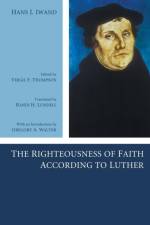
Hans Joachim Iwand's 1941 monograph, The Righteousness of Faith According to Luther, is an important contribution to contemporary appreciation of Luther's theological significance for today. Although Iwand wrote his study three decades after the beginning of the Luther Renaissance, it nevertheless developed some of the central insights of Luther scholarship during that period. Two concepts--in particular, promise and simultaneity--are crucial to an appreciative understanding of Luther's doctrine of justification. The language of promise presents justification to the believer as a reality that has yet to arrive or is hidden under present reality. And the language of simultaneity attests that humans remain throughout their lives one in the same, sinner and saint. This beautiful translation by Randi H. Lundell makes Iwand's down-to-earth presentation of the doctrine at the heart of Luther's theology, at long last, available to English-language readers.""Though not as celebrated, Hans Joachim Iwand was once described as the greatest Lutheran theologian of the twentieth century. A close friend of Karl Barth's, Iwand tested his heritage in the fires of Barth's critique. This tempering is evident in seminal work on Luther's doctrine of justification by faith and the distinction of law and gospel. I heartily recommend this volume as a starting point in studying Iwand and hope that it is the beginning of a new interest in his legacy.""--James Nestingen, Professor Emeritus of Church History, Luther Seminary""The appearance of this book in English is long overdue. Prior to the appearance of these essays in Lutheran Quarterly, little of Iwand had been translated into English and he was largely unknown in North America except, perhaps, from his influence on the thinking of Gerhard Forde. Hans Joachim Iwand's theological career was forged by an early and ongoing critical engagement with Barth, the necessity of confessional witness in the face of Hitler, and by a profound grasp of the heart of Luther's theology. Like Luther, Iwand's theological work is geared toward the proclamation of the righteousness of faith found only in Christ Jesus. Thus, the fundamental and critical distinction for theology is the distinction between the law and the gospel. Here Iwand is radically and refreshingly Lutheran in a way that deconstructs moralisms of the left and the right so that Christ alone is preached as the end of the law for all who believe. The Righteousness of Faith According to Luther is more than just another historical study of a Reformation theme; it is a vigorous exercise in pastoral dogmatics. Iwand teases out the nuances in Luther's distinction of the law from the gospel with provocative insights on nearly every page. This is a volume not simply for Reformation scholars but for seminarians, pastors and thoughtful laity. I look forward to using it in the classroom and beyond.""--John T. Pless, Assistant Professor of Pastoral Ministry and Missions, Director of Field Education, Concordia Theological Seminary, Fort Wayne, Indiana Hans J. Iwand (1899-1960), Professor of Theology at Gottingen and Bonn, was a prominent scholar of the Luther Renaissance who contributed to the contemporary understanding of Luther's significance for theology today.
Larry VandeCreek, DMin, the author of A Research Primer for Pastoral Care and Counseling (now Part One of the current volume), is the retired Assistant Director in the Department of Pastoral Care, University Hospitals of The Ohio State University, Columbus, Ohio. He also served as Clinical Associate Professor in the Department of Family Medicine and Neurology. His research interests and publications focus on quantitative research that elucidates the religious/spiritual needs of hospital patients and the impact of pastoral care.Hilary Bender, PhD, STD, is a clinical and research psychologist in private practice in Brookline, Massachusetts. He is a Boston University Professor Emeritus and is on the faculty of the Massachusetts School of Professional Psychology. His specialty in research and clinical work is the ""all-but-dissertation"" phenomenon and working with the many doctoral students who have completed all requirements for their degrees but the dissertation and become unable to make this final step.Merle R. Jordan, ThD, is the retired Albert V. Danielsen Professor of Pastoral Psychology at the Boston University School of Theology. He is a Diplomate in the American Association of Pastoral Counselors and a Fellow and Approved Supervisor in the American Association of Marriage and Family Therapists. He is the author of Taking on the Gods: The Task of the Pastoral Counselor.Margot Hover, DMin, is an Association of Clinical Pastoral Education supervisor and the coordinator of pastoral research at Duke University Medical Center, Raleigh, North Carolina. She has received the ACPE Research of the Year Award and the Council on Ministry in Specialized Settings Research Paper of the Year Award. She is also the author of Caring for Yourself When Caring for Others.
C. S. Lewis has been read and studied as though he were two authors--a writer of Christian apologetics and a writer of science fiction and fantasy. Only in recent years has there been any move to examine his work as the creation of a single, unique mind. This is the first major critical study to undertake that task. Chad Walsh, who wrote an earlier study of Lewis, Apostle to the Skeptics, reassesses the Oxford don's legacy fifteen years after his death--his poetry, visionary fiction, and space fiction; The Chronicles of Narnia; Till We Have Faces; his criticism; and his religious-philosophical writing. Lewis emerges as an archetypal Christian and the creator of some of the most original books of our century.
The Christian axis has shifted dramatically southward to Africa, Asia, and Latin America, so much so that today there are more Christians living in these southern regions than among their northern counterparts. In the case of Africa, the African Initiated Churches-founded by Africans and primarily for Africans-has largely contributed to the exponential growth and proliferation of the Christian faith in the continent. Yet, even more profoundly, these churches espouse a brand of Christianity that is indigenized and thoroughly contextual. Further, the power and popularity of the AICs, beyond the unprecedented numbers joining these churches, are attributed to their relevance to the existential everyday needs and concerns of their adherents in the context of a postcolonial Africa. At the heart of Christian theology is Christology-the confessed uniqueness of Christ in history and among world religions. Yet this key feature of Christianity, as with other important elements of the Christian faith, may be variously understood and re-interpreted in these indigenous churches.The focus of this study is the amaNazaretha Church, an influential religious group founded by the African charismatic prophet Isaiah Shembe in 1911 in the province of KwaZulu-Natal, South Africa. The movement today claims a following of some two million adherents and has proliferated beyond the borders of South Africa to neighboring countries in Southern Africa. The book addresses the complex and at times ambivalent understanding of the person and work of Christ in the amaNazaretha Church, presenting the genesis, history, beliefs, and practices of this significant religious movement in South Africa, with broader implications for similar movements across the continent of Africa and beyond.
Mission statement - coresci.org Series Editor: Todd Charles Wood Core Academy of Science encourages young Christian scholars to explore the hardest problems in creation. Engineers sometimes classify problems as easy, hard, and impossible. Easy problems are trivial because they can be solved merely by applying known principles. Impossible problems cannot be solved no matter how hard we try. Hard problems are the problems in between that require the most work but yield the greatest rewards. Sometimes hard problems are accumulations of many easy problems, and sometimes they turn out to be impossible. When a hard problem is solved, though, it is widely celebrated. For Christians and especially young-age creationists, understanding creation has many hard problems. Evidences of the great age of the universe and earth can be difficult to explain. Likewise with evidences of evolution. Creationists reject the conventional explanations that involve millions of years and humans evolving from animals, but alternative explanations that satisfy our scientific curiosity and our desire to remain true to the revealed Word of God are much rarer and not widely accepted. It is much easier to focus on the detection of error rather than the more difficult discovery of truth. This focus on error rather than truth pervades evangelical Christianity, because it's relatively easy. We all like the easy and impossible. We teach our children to recite verses from the Bible and answers to our catechisms, but when they ask difficult questions, we say, Only God knows. We might even scold them for being impertinent or irreverent. Core Academy equips the next generation to tackle these great mysteries by first and most importantly helping young scholars to develop a bold, confident faith. All too often, scholars who face challenging puzzles become disillusioned and stray from the faith. Our first goal, then, must be enriching and nurturing strong faith in Jesus Christ as Savior and Creator.
In her characteristic direct and forthright style, Marie Fortune tells the shocking true story of a scandal that took place in a typical church in an average city. It should never have occurred, but its telling helped to focus the national spotlight on a serious problem that is more pervasive than any of us would like to believe. The author founded and directs the Center for the Prevention of Sexual and Domestic Violence, Seattle, Washington.
Among the ambiguities, superficialities, uncertainties, and temporality of a contemporary day-to-day, rush-here, rush-there world, Mann beams a revelatory light on the ordinary things--bathing the baby or visiting an elderly day care center--and makes them glow with significance. It is a special gift to be able to uncover the spirituality in the familiar, to disclose the sacred in the ordinary, and the author effortlessly uncovers the epiphanies that wait patiently in the everyday for discovery.The reality of faith is at the core of these meditational explorations. To Taste and See not only illustrates how to think theologically about the ordinary events of life--it is a gentle challenge to do so. Mann draws his insights and inspirations from a variety of sources: the Bible, contemporary literature, swamp frogs, the life of the congregation, scholarly studies--all made accessible in a lively, informal, thought-provoking style. The riches of wisdom and the abundance of what it means to be Christian surround us. All we must do to partake of these gifts is to ""taste and see.""Thomas W. Mann, a widely published author, is the minister of the Parkway United Church of Christ, Winston-Salem, North Carolina.
Abonner på vårt nyhetsbrev og få rabatter og inspirasjon til din neste leseopplevelse.
Ved å abonnere godtar du vår personvernerklæring.