









Gjør som tusenvis av andre bokelskere
Abonner på vårt nyhetsbrev og få rabatter og inspirasjon til din neste leseopplevelse.
Ved å abonnere godtar du vår personvernerklæring.Du kan når som helst melde deg av våre nyhetsbrev.

An imaginative and illuminating study, Finding Is the First Act places historical thinking in creative tension with literary appreciation. The structures of Jesus's parable of the hidden treasure (Matt 13:44) are examined by mapping its plot options (finding, acting, buying) in view of other Jewish treasure stories and the vast array of treasure plots in world folklore. Startling differences emerge in the plot options chosen by Jesus that point to a new understanding of the directive to give up all one has for the Kingdom of God. ""Why Jesus' treasure parable? For three reasons that I am aware of. First, . . . the story has always fascinated me. . . . Second, in recent work on parables there has often been a tendency to concentrate especially on the longer parables of Jesus. I wanted deliberately to move in theopposite direction and to give full emphasis to a very short parable . . . . Third, this particular parable, in contrast, for example, to that of The Mustard Seed, does not furnish much grist for the diachronic mill of biblical studies. I was deliberately choosing an item which, in isolation from its Matthean context, could hardly sustain a monograph study along the standard lines of tradition criticism.""--from the Preface
After his definitive The Historical Jesus, John Dominic Crossan delivered Jesus: A Revolutionary Biography--a popularized, bestselling account of what we can know about the life of Jesus. Here he offers the core of his life's work--a concise and astonishing presentation of the authentic teachings and earliest images of the revolutionary Galilean sage. Crossan's fresh translations of Jesus' sayings show Jesus to be a teacher whose radical message that all are equal before God is as timely today as it was two thousand years ago. This picture is dramatically confirmed by the preConstantinian, Christian renderings of Jesus, which show that he was remembered by the first Christians not as God but as a revolutionary healer and leader.
When John Dominic Crossan's book, In Parables: The Challenge of the Historical Jesus, was published in 1973, it was heralded as a major development in research both on the parables and on the historical Jesus. This was due not only to its sophisticated use of historical, literary, and philosophical disciplines but also to the sensitive way in which they were combined and to the novel insights that resulted when this combination was focused on individual parables.The present book continues most directly and explicitly the study initiated by In Parables and may be regarded as bringing that earlier volume up to date on three major issues.Conceptually, the emphasis on metaphor from In Parables has led to the discussion of polyvalence, or semantic pluralism, in Jesus's parables. Pluralistic meaning is an intensely paradoxical concept and it raises issues that touch the very roots of our consciousness and our reality. Metaphor is now no longer a clearing within the forest of language but is rather the very ground of that language itself. Any given metaphor illumines and reveals the radical metaphoricity of all reality.Philosophically, the question is raised whether the polyvalence inherent in metaphor, along with the critically iterated claims for its untranslatability, may be better explained as a surplus of meaning, or as an absence of the meaning, a refusal of canonical meaning which is then the necessary but negative basis for the plurality of meanings and the abiding fecundity of interpretations.Exegetically, as specific example and deliberate narratival metaphor of the entire book, Jesus's serenely pastoral parable of the Sower, with its specified triad of gains, its plurality or polyvalence both of failure and success, is centrally discussed as textual focus for the volume.
John Dominic Crossan's In Parables demonstrated how Jesus's parables demolished an idolatry of time. In this book, he shows how the parables likewise preclude an idolatry of language.In a new, creative synthesis, Raid on the Articulate juxtaposes the sayings and parables of Jesus with the works of modern Argentine writer Jorge Luis Borges to reveal fresh interpretations. Crossan locates both men as literary iconoclasts, parablers who can evoke for us the other side of silence. The gift they bring is ""cosmic eschatology,"" the ability to ""stand on the brink of nonsense and absurdity and not be dizzy.""The discussion begins with Comedy and Transcendence, ""a comedy too deep for laughter."" Language is seen most openly and acknowledged most freely as structured play, opening the narrow gate to transcendence. This precludes language being mistaken for the gate itself.This in turn raises the question of Form and Parody. As Crossan writes, ""Why mock the craftsman skilled in silver and gold and not mock the artisan skilled in form and genre? What if the aniconic God became trapped in icons made of language?"" In Jesus we find the most magisterial warning against graven words and encapsulation of God in case law, proverb, or beatitude.When Jesus says, ""Whoever seeks to gain his life will lose it"" he presents a paradox insoluble by faith in language. Borges performs a similar function in literature when he inserts footnotes referring to nonexistent books. Both are arguing against the idolatry of imprisoning reality in the words that point to it.Parable and Paradox makes the case for parable as paradox formed into story. It is in this context that Jesus and Borges must be understood. Analyzing many of Jesus's parables, especially ""The Good Samaritan,"" and comparing them structurally to Borges's work, Crossan sees them as single or double reversals of their audiences"" most profound expectations. It is these that lend them both their power and their paradox.Raid on the Articulate concludes with considerations of the plasticity of time in Jesus and Borges and what, finally, we can say about them as men from their ""fragile and aphoristic art.""Emphasizing both biblical and literary materials, John Dominic Crossan achieves a deepened understanding of New Testament texts and forms, an understanding possible only when the unique literary aspect of Jesus's sayings is acknowledged.
The aphoristic form conveys universal truths in a distinctive, compressed format. Such sayings go straight to the heart of the matter and linger long afterward in the memory. Curiously enough, the greatest aphorist of all time, Jesus, often goes unrecognized as such; and, more importantly, his aphorisms--a major part of his teachings--have been largely overlooked by biblical scholars. Now, In Fragments offers the first comprehensive analysis of Jesus's aphorisms as an area of study distinct from, but equal in importance to, the parables and dialogues.The heart of Crossan's groundbreaking work is his discussion and interpretation of over one hundred thirty aphorisms of Jesus culled from the narrative Gospel of Mark, the discourse Gospel Q, their dependent versions in Matthew and Luke, and their independent versions in such works as the Gospel of John, the Gospel of Thomas, and the Apostolic Fathers. This representative selection inaugurates a landmark discussion of Jesus's aphorisms, raising the aphoristic tradition to the level of interest that the parabolic tradition has always received.In Fragments offers an original method for identifying, organizing, and correlating these sayings that results in a whole new analysis of the stages of New Testament development for this genre. Crossan suggests answers to a variety of critical questions about the historical transmission of these sayings of Jesus, including the shift from the spoken to the written tradition; analyzes their internal structure and dynamic; shows how individual aphorism can be grouped to shed light on each other; discusses how they are transformed into dialogues and stories, and the effect on the original sayings; and, above all, distinguishes what is the ""peculiar gift"" of the aphoristic mode, as opposed to teachings embodied in the narrative or dialogue forms.
In this revolutionary work, John Dominic Crossan reveals that the Passion and Resurrection Narratives in the four canonical Gospels are radical revisions of an earlier Gospel account. He argues boldly that the apocryphal Gospel of Peter, discovered in the grave of a Christian monk in Egypt circa 1886, contains the earliest version of the death, burial, and resurrection of Jesus. He describes how the authors of the four Gospels revised the early account of how their revision predominated as Roman authority grew. Lacking in the revision, he suggests, is the very heart of the earlier Passion: its depiction of Jesus' death as the consummation of Israel's pain and the resurrection as the vindication of Israel's faith.
The scholars who have contributed to this volume of essays are Jewish and Christian thinkers who, without melding their different religious traditions and scholarly methods, have developed complementary responses to what they believe is wrong with contemporary biblical scholarship in Judaism and Christianity. The purpose of this collection is to draw attention to the similarities among these responses and to the possibility that they may contribute to a family of postcritical methods for interpreting the scriptural traditions.The postcritical scholars employ current methods of critical, scientific inquiry to clarify the language, the historical contexts, and the didactic messages of the biblical traditions. They do not, however, find these methods sufficient. They argue that the biblical traditions communicate to their practitioners some rules of action that cannot be deciphered within the terms set by canons of critical reason that emerged in the European Renaissance and Enlightenment. Rather, among the Bible's unique rules of action are the principles for interpreting the traditions themselves.Postcritical scholars attempt to identify these rules of interpretation, producing what editor Peter Ochs has come to term ""postcritical Scriptural interpretation."" It is neither strictly modern nor premodern. This form of inquiry emerges in the dialogue that is now unfolding between a contemporary family of scholars and their scriptural traditions.
William Griffin, the author of this enormously witty epistolary novel, takes his cue from C. S. Lewis. Like Lewis's beloved Screwtape Letters, the letters of a master tempter to his protege, this novel contains a packet of letters from one devil to another.The correspondent is an accomplished young demon named Fleetwood. He's taking a break from his high-powered position in the American mass-temptation industry to answer his uncle's challenge to successfully tempt just one individual, a young woman who's recently moved to Manhattan. Though Fleetwood's elderly uncle is only an ember of his former self, he can still make his nephew burn, and Fleetwood outdoes himself trying to show up the older devil. The demonic minion tries every technique at his disposal--from whispering philosophical arguments in her ear to tapping her phone to tipping hot food into her mail friend's lap--to win the soul of the beautiful woman. And as if that isn't enough for an upwardly mobile young demon, Fleetwood also has to content with a bevy of belligerent of angelic bouncers.Will Fleetwood win, or might the road to Heaven be paved with diabolic intentions? Find out in this hilarious yet thoughtful satire in which the arena where souls are lost (or won) is modern-day America.
Any scholarship that addresses the evolution of Christian perspectives on warfare generally references this book. first published in 1960. Although the scholarship of this work is now outdated and critiqued, Bainton's work is foundational in the area. Bainton believes that the Christian community started out pacifistic, then developed the just war doctrine, and finally adopted holy war ideals. He traces this trajectory from the Early Church up through the wars and conflicts of the 20th century. Finally, Bainton adds his critique of current militaristic ideas, especially in regards to atomic warfare. (from a review by Andrew Lumpkin)
Do we touch God and meet Jesus in a church or a soup kitchen? In a monastery or on skid row? In a Bible camp or a housing project? In heaven or on earth?Such distinctions are false, says Arthur Paul Boers. We can't experience God in heaven without loving the needy on earth. Nor can we truly love the needy on earth if not empowered by God in heaven.""Too often personal spirituality and social justice pass each other as ships in the night. Based on biblical insights and rich personal experience, Arthur Boers creatively links them together in true biblical fashion.""--Donald B. Krayhill, author of The Upside-Down Kingdom""Boers attests to the huge necessities of worship and prayer in our lives. He shares his much-tested conviction that a contemplative life is not an alternative to--but the root and foundation of--active life.""--from the Foreword by Eugene H. Peterson, author and former pastor of Christ Our King Presbyterian ChurchArthur Paul Boers teaches pastoral theology at Associated Mennonite Biblical Seminary. A Mennonite minister and Benedictine oblate, he has pastored in rural and urban settings in the U.S. and Canada. The author of six books, his degrees include the following: DMin, MTh in Pastoral Counseling, MDiv, and an MA in Peace Studies. Boers, a Canadian, is the oldest child of Dutch immigrants. He and spouse Lorna McDougall are the parents of two young adults.
Whatever happened to happily-ever-after?For the woman physically abused by her husband, home is a nest of nightmares. She's too afraid to stay. It only gets worse . . . One day he'll kill me . . . the kids will be next . . .And she's too afraid to leave. I know he wants to change . . . there's still a chance . . . it's all over if I leave--and anyway, where could I go?This book helps the abuse victim think through her fears--and then take positive, loving action. In a marriage chronically infected by violence, she'll learn why the very best first step--best for all concerned--is often simply to get out for a time.She'll learn how to take that step with courage and wisdom . . . and without losing hope for her marriage.Kay Marshall Strom has written more than thirty books. Her writing also appears in many periodicals in compilations including the NIV Devotional Bibles. Kay is also a sought-after speaker--she and her husband Dan Kline have spoken to well over one hundred thousand people in more than twenty countries. For more information on Kay, check her Web site: www.kaystrom.com.
""Wellness is a way of life, a life-style that is based on an experience of God and shaped in response to that experience. this life-style views and lives life as purposeful and pleasurable, seeks out life-sustaining and life-enriching options that are freely and personally chosen at every opportunity. It enhances self-esteem and continually challenges one's values, striving always to sink ever-deeper roots into spiritual values and religious beliefs.""--from the Introduction
The mind-body problem, which Schopenhauer called the ""world-knot,"" has been a central problem for philosophy since the time of Descartes. Among realists--those who accept the reality of the physical world--the two dominant approaches have been dualism and materialism, but there is a growing consensus that, if we are ever to understand how mind and body are related, a radically new approach is required.David Ray Griffin develops a third form of realism, one that resolves the basic problem (common to dualism and materialism) of the continued acceptance of the Cartesian view of matter. In dialogue with various philosophers, including Dennett, Kim, McGinn, Nagel, Seager, Searle, and Strawson, Griffin shows that materialist physicalism is even more problematic than dualism. He proposes instead a panexperientialist physicalism grounded in the process philosophy of Alfred North Whitehead. Answering those who have rejected ""panpsychism"" as obviously absurd, Griffin argues compellingly that panexperientialism, by taking experience and spontaneity as fully natural, can finally provide a naturalistic account of the emergence of consciousness--an account that also does justice to the freedom we all suppose in practice.
This volume investigates the plots of the Genesis stories. Rather than fragmenting Genesis into hypothetical sources and reading each inisolation from the others, as has often been the case in scholarship, this final-form reading exposes the coherence and complexity of the book. Inparticular, the initial ""announcements of plot"", prefacing each major block of the book are shown to exercise an intimate yet surprisinginfluence over the narratives they govern. The seemingly naive stories of Genesis, when read wholistically, offer profound insights into theinterplay between divine providence and human free will.
""My task . . . is to rely as much as possible on both written and visual sources, although I obviously must consider the discoveries and insights of modern scholarship, in order to present Francis of Assisi as a major figure in the mystical tradition. This means I will not be much concerned with Francis as the founder of a religious order. I will not present a detailed biography, although the first chapter provides a general overview in order to make the more detailed discussions of his spirituality more intelligible. Rather than attempt to discuss all texts by and about Francis of a mystical nature, I shall instead focus on six elements of his life and spirituality--his conversion; his relationship to the created world; the creation of the Christmas crib at Greccio; the role of learning; the relationship between the active and contemplative life; and his stigmatization at LaVerna in 1224, two years before his death. I believe that a detailed discussion and analysis of these aspects of Francis's life will best introduce the reader to Francis of Assisi.""--from the IntroductionWilliam R. Cook received his PhD in medieval history from Cornell University. At present, he holds the rank of Distinguished Teaching Professor at the State University of New York at Geneseo. Professor Cook has taught and lectured on St Francis throughout the United States and has directed summer seminars on Francis's life for the National Endowment for the Humanities in Assisi and Siena.
Does the Bible have anything to say to the challenge of the environmental crisis? In a thorough and responsible investigation, Odil Hannes Steck examines this survival question in the light of biblical thought.According to Dr Steck, although the Bible reflects a pre-industrial, pre-pollution world, certain fundamental biblical facts that embrace theological truths for our time can be extracted. Dr Steck does this expertly, demonstrating vividly the Old Testament worldview of man and nature closely linked in a divine order. He then discusses eight themes that relate this particular perspective to the basic environmental questions and problems of today. The remainder of the study reveals the New Testament's reinforcement of these concepts.Dr Steck resolutely dispels the cold, indifferent view of man and nature held by much of the scientific community, and upholds the biblical truth that ""God's creative activity takes place in the natural world and environment, as it has done from time immemorial and as it will continue to do until God brings his new world, opened up in Christ, to a full and ultimate consummation."" The reader's reward is a much greater appreciation of God's work as Creator and Sustainer of the world.
Stephen Long opens his erudite discussion of theology and ethics with the insistence that moral critique must emerge from a particular location, rather than from the fluid values of any ""neutral"" observer.Long sets out to put theology and ethics--as well as the church--in proper relation to one another. Ethics must be based in theology, not the other way around. Our ""finite participation in the infinite makes possible participation in a goodness beyond us."" That goodness comes to us in the flesh of Jesus Christ, and the church is indispensable in drawing all people toward God's goodness. The church, a social ethic in itself, gives purpose and order to other social institutions, including family, government, and the market.""'The goodness of God'--such a simple phrase, such a profound (and maybe even disruptive) concept if we dare explore its implications. Not only does Steve Long lead us skillfully and smoothly through potentially difficult matters of theology and philosophy, he also brings home how our lives might be different if we really took the goodness of God to heart.""From the matters of violence and economics to sexuality and family, Long takes his readers through a thicket of competing ideas, and leads them out the other side into greater clarity of vision, unity of purpose, and passion for God's good kingdom. Seminaries and Sunday schools alike will benefit from this scholarly but accessible volume.""--Michael Budde, DePaul UniversityD. Stephen Long is Professor of Systematic Theology at Marquette University. He has published a number of works including The Goodness of God, The Divine Economy, John Wesley's Moral Theology, and Theology and Culture (Cascade Books, 2007).
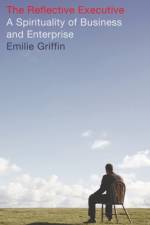
This profoundly practical book is for businesswomen and businessmen who wish to integrate spiritual values with day-to-day decision-making, tight scheduling, and high-pressured management of multimillion-dollar responsibilities.Emilie Griffin--a veteran in the marketing field and the author of several acclaimed books on spirituality--draws on time-honored scriptural resources and management principles to unpack the spiritual meaning of executive life. Her central premise is that the spiritual imagination must be refreshed to see God's presence in the work itself--even the details. Her approach is wide-ranging, drawing on the poetic mysticism of Gerard Manley Hopkins and Teilhard de Chardin and the practical wisdom of such business thinkers as Peter Drucker and Rosabeth Moss Kanter.The Reflective Executive eschews dualism and provides spiritual insights on such themes as effectiveness, time, contribution, decision-making, setting goals and priorities, weighing failure and success, building on strength, and envisioning God as lord of the marketplace. The book also includes practical exercises and themes for reflection.
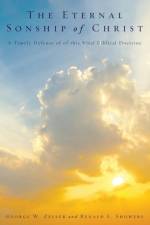
The doctrine of eternal Sonship declares that the second person of the triune godhead has eternally existed as the Son. There was never a time when he was not the Son of God. At the incarnation he became a man; he did not become the Son. Those who deny this foundational truth teach that Jesus became the Son of God at some point in history. Some say that he became the Son at his baptism; others at his resurrection. Most, however, say that he became the Son at the incarnation. In this timely book the authors present with clarity the scriptural basis for the doctrine of the eternal Sonship of Christ, deal thoroughly with alternate views that deny this essential doctrine, and conclude with an explanation of why this truth is so vital to evangelical Christianity.
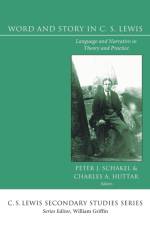
Word and Story has broken new ground by enlisting well-known scholars in the examination of Lewis's ideas about language and narrative, both as stated in theory and as exemplified in practice. Never before has such clear, significant, and thorough work in these areas been brought together in one place.This compilation of sixteen essays demonstrates how an awareness of Lewis's ideas about language and narrative is essential to a full understanding and appreciation of his thought and works. The contributors examine Lewis's poetry, The Dark Woods, Studies in Words, and other works that have so far received little attention, in addition to more familiar parts of the Lewis canon. By approaching Lewis primarily as an artist and theorist, not just a Christian apologist, these essays offer new insights into his creative imagination, critical acumen, and his craftsmanship as a writer. One comes away from this book with a fresh vision and with heightened expectation, eager to return to Lewis's works.""[Word and Story is] superior . . . to any other collection that has so far appeared [on C. S. Lewis]. . . . One comes across many observations in this book that evoke the response, not just of an acquiescent nod, but also of further reflection.""--Owen Barfield, from the afterwordPeter J. Schakel is the Peter C. and Emajean Cook Professor of English at Hope College. He is the author of five books on C. S. Lewis: Reading with the Heart, Reason and Imagination in C. S. Lewis: A Study of ""Till We Have Faces"", Imagination and the Arts in C.S. Lewis, The Way into Narnia: A Reader's Guide, and Is Your Lord Large Enough? He has also coedited several literature textbooks with Jack Ridl. Charles A. Huttar is Emeritus Professor of English at Hope College. He is the editor of Imagination and the Spirit: Essays in Literature and the Christian Faith presented to Clyde S. Kilby, coeditor of The Rhetoric of Vision: Essays on Charles Williams and Scandalous Truths: Essays by and about Susan Howatch, and author of many essays on Lewis, Tolkien, and Williams.
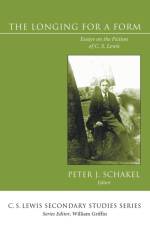
C. S. Lewis's extremely popular works of fiction have been widely discussed in terms of the ideas and religious themes they express and defend, but less often in terms of their purely literary qualities. Ironically, Lewis, himself a noted literary critic, would have objected to any such one-sided analysis of his works. To concentrate exclusively, or even primarily, on the content of a work without a consideration of its form and style was, in his view, a seriously unbalanced method of criticism.The Longing for a Form corrects this critical imbalance by supplying a theoretical background and detailed close readings for a better understanding and appreciation of Lewis's fiction as works of art. Following three general studies, a section of the book is devoted to each to Lewis's major efforts in fiction--the Ransom trilogy, the Chronicles of Narnia, and Till We Have Faces--considering the distinctive literary features of each group and individual books within the group.Running through the book is an emphasis on form--as literary kind and as structure--and a recurrent attention to three themes of particular importance in Lewis as a writer of fiction: objectivism, longing, and the literary artist as creator. Individually, the essays supply fresh insights into the style and meaning of specific works by Lewis; as a group they illustrate a depth, technical skill, and unity of thought and theme which have not previously been accorded Lewis as an artist in fiction.Peter J. Schakel is Professor of English at Hope College in Holland, MI.
The island of Crete was a tough place. It was to the Roman world what the urban ghettos and favelas of today's great cities are to our neighborhoods. Paul needed a young missionary with energy, zeal, wisdom, determination, faith, and courage to embark on a mission to the fabled but fateful home of the Minotaur and the mythological birthplace of Zeus. Charged with the task of finding elders for the churches and grounding these churches in the faith of the Apostles was the unenviable task given to a driven, passionate young preacher named Titus. The instruction of the missionary-theologian Paul to one of his sons in the ministry beckons the reader to follow into the Labyrinth of Crete and see that in both the first century and in the contemporary urban setting, God's redemptive grace is adequate to change both life and eternity.Paige Patterson is President and Professor of Theology at Southwestern Baptist Theological Seminary in Fort Worth, Texas. He previously served as President of Southeastern Baptist Theological Seminary in Wake Forest, North Carolina; President of Criswell College in Dallas, Texas; and he was twice elected President of the Southern Baptist Convention. His passion is expressed as scholarship on fire with and manifested in missions and evangelism.
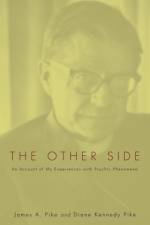
Introducing new reprints by and about Bishop James Pike: The Other Side SearchThe Other Side is a moving narrative of a father's efforts to save his son from enslavement to psychedelic drugs, a tragic story of a young and giftedman's premature death, a startling story of poltergeist occurrences that ledthe father and other witnesses to believe that from beyond the grave his sonwas trying to get in touch, a detailed account of how this communicationproceeded during a time when the father was under accusation for heresyfor believing too little. Above all, it is an analysis by one of America'skeenest minds of what all these experiences may mean.The Other Side certainly reads like a suspenseful novel, yet every phrase ofthe narration is painstakingly documented by eyewitness accounts of thestrange occurrences that led the Bishop Pike to consult mediums in England andAmerica, and by several word-for-word tape recordings of such seances. Allreaders will find here an honest and lucid exploration of psychic phenomena, and those who have lost a loved one to suicide will find reason to take heart and find hope.James A. Pike was bishop of the Episcopal diocese of California and a staff member of the Center for the Study of Democratic Institutions. Prior to becoming an Episcopal priest he was a prominent lawyer in Washington D.C. He authored many books on law, theology, and ethics, including Doing the Truth, You and the New Immorality, and If This be Heresy.Diane Kennedy Pike is the widow of James A. Pike. She graduated fromStanford University with a BA in education and earned her master's degreein English from Columbia University. She currently resides in Scottsdale, Arizona.
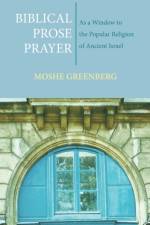
Some degree of spiritual enlightenment must be supposed to account for the overall tolerance, even receptivity, of the people; though they refused to comply with the prophets' uncompromising demands, and occasionally persecuted one or another of them, as a rule they allowed them to preach, and even spawned devotees who reverently preserved their speeches until canonization. Unsupported by power and wealth, the classical prophets can have persisted for centuries only because they were rooted in loamy spiritual soil. The populace constituting that soil deserves to be appreciated no less than the exotic flowers that towered above it.What was the spiritual loam that prepared Israel's soil so that prophecy could thrive in it? Any answer to this question must give due consideration to the popular life of prayer. For it was in extemporized praying that the Israelites experienced a nonmagical approach to God in which form was subordinate to content; here, in immediate contact with a God who ""searched the conscience and the heart,"" they were sensitized to sincerity in self-disclosure to God; and, finally, it was in prayer that they had constantly to face the issue of adjusting their ways to God's in order to obtain his favor.Greenberg finds in this rich life of private prayer a setting for the high religious ideas--and the scathing critique of worship--which characterized the ""genius"" of the prophets of the eighth and ninth centuries BC. This masterful evaluation of biblical prose prayer, a tradition independent of experts and special places, suggests an explanation for the unprecedented democratization of worship in postbiblical Judaism.Moshe Greenberg is Emeritus Professor of Bible at the Hebrew University in Jerusalem. Prior to teaching at the Hebrew University, he taught courses in Bible and Judaica at the Univerity of Pennsylvania, Swarthmore College, the Jewish Theological Seminary of America, and the University of California at Berkeley.
Introducing new reprints by Gerald Heard: The Creed of Christ The Code of Christ Training for the Life of the Spirit Prayers and Meditations""There was a period in my early thirties when these four small books by Gerald Heard served almost as my bible. I read and reread them, and invariably found them to be uplifting and inspiring."" - Professor Huston Smith""Gerald Heard was an inspiring voice for the life of the spirit. Wipf & Stock is to be commended that Heard's remarkable work is being made available to a new generation of spiritual seekers."" - Dr. William H. ForthmanIn The Creed of Christ, Gerald Heard masterfully examines the Lord's Prayer, which he describes as, ""the real creed of Christianity."" Heard interprets Christ's supplication as the key to unfolding an entirely new way of life: ""The task is nothing less than the shift of the whole being, the entire consciousness, until it alters from self-consciousness to...God-consciousness.""This supreme quest first calls for the transcendence of self: ""I must start, before anything else, by clearing myself out of the way."" Heard then reaffirms Christ's rousing words that the Kingdom is found within us: ""Our Lord evidently held that the Kingdom...is already here, around us, within us."" A modern spiritual classic, The Creed of Christ challenges all seekers to grow spiritually. Gerald Heard beckons us to enter the very heart of religious experience, leading to pulsating union with God.""An extraordinarily fresh and compelling study of the Prayer."" - Dr. Edwin McNeill Poteat Gerald Heard (1889-1971) was a well-known author, philosopher, and lecturer. Trained as a historian at Cambridge, he served as the BBC's first science commentator. Later, in California, he founded and directed Trabuco College, which advanced comparative religious studies. His broad philosophical themes and scintillating oratorical style influenced many people. Heard wrote thirty-eight books, including his pioneering academic works, several popular devotional books, and a number of mysteries.
Introducing new reprints by Gerald Heard: The Creed of Christ The Code of Christ Training for the Life of the Spirit Prayers and Meditations""There was a period in my early thirties when these four small books by Gerald Heard served almost as my bible. I read and reread them, and invariably found them to be uplifting and inspiring."" - Professor Huston Smith""Gerald Heard was an inspiring voice for the life of the spirit. Wipf & Stock is to be commended that Heard's remarkable work is being made available to a new generation of spiritual seekers."" - Dr. William H. ForthmanRequired reading for those walking the spiritual path, Gerald Heard's Training for the Life of the Spirit methodically outlines the entire course of the aspirant's journey. Heard provides a time-tested roadmap for the wayfarer: ""There is a purpose in evolution - to evolve consciously, to evolve consciousness. That evolution is achieved only by the skilled, conscious training of our spirits."" The aspirant works to subdue their ego: ""For in so far as we are emptied of self, so far are we freed from accident. Our habit patterns, our moods...our natures can be reconditioned, re-freed. We will be inwardly reunited, our fissured selves re-fused.""Training for the Life of the Spirit contains Gerald Heard's essential observation: ""Our whole life must become intentional and purposive, instead of a series of irrelevant events, adventures, and accidents, happy or unhappy.""""...a diagram of the inner life and an explanation of the philosophy held in common by the great mystics of all ages and religions."" - Rev. Edmund A. OpitzGerald Heard (1889-1971) was a well-known author, philosopher, and lecturer. Trained as a historian at Cambridge, he served as the BBC's first science commentator. Later, in California, he founded and directed Trabuco College, which advanced comparative religious studies. His broad philosophical themes and scintillating oratorical style influenced many people. Heard wrote thirty-eight books, including his pioneering academic works, several popular devotional books, and a number of mysteries.
The language of the Bible has no inconsiderable influence in forming and preserving our national language. On this account, the language of the common version ought to be correct in grammatical construction, and in the use of appropriate words.This is the more important, as men who are accustomed to read the Bible with veneration, are apt to contract a predilection for its phraseology, and thus to become attached to phrases which are quaint or obsolete.This may be a real misfortune; for the use of words and phrases,when they have ceased to be part of the living language, and appear odd or singular, impairs the purity of the language,and is apt to create a disrelish for it in those who have not, by long practice, contracted a like predilection.It may require some effort to subdue this predilection;but it may be done, and for the sake of the rising generation, it is desirable.The language of the scriptures ought to be pure, chaste, simple, and perspicuous, free from any words or phrases which may excite observation by their singularity; and neither debased by vulgarisms, nor tricked out with the ornaments of affected elegance.Noah Webster, 1833
""The Present volume consists of a series of articles on the Atonement contributed to The Christian World newspaper during the winter of 1899-1900. It may be taken as an answer to the question whether the Christian consciousness of today, in the view of modern historical, critical, and ethical investigation, has any fresh affirmation to make, or any new attitude to assume, on this central doctrine of the Church's faith. The response comes, as will be seen, from distinguished representatives, not only of different ecclesiastical communions and of different nationalities, but of widely separated schools of religious thought."" -- Original Publishers' Note
Abonner på vårt nyhetsbrev og få rabatter og inspirasjon til din neste leseopplevelse.
Ved å abonnere godtar du vår personvernerklæring.