












Gjør som tusenvis av andre bokelskere
Abonner på vårt nyhetsbrev og få rabatter og inspirasjon til din neste leseopplevelse.
Ved å abonnere godtar du vår personvernerklæring.Du kan når som helst melde deg av våre nyhetsbrev.

Rufus M. Jones (1863-1948) was a Quaker historian, theologian, and Professor of Philosophy at Haverford College. He was a prolific writer, including such works as 'A Dynamic Faith,' 'Spiritual Reformers of the 16th and 17th Centuries,' and 'Practical Christianity.'
A man takes the Qur'an in his hand, carefully pronouncing each syllable of Arabic, repeating the language of Allah. A family gathers together to read the story of Christ's passion. A young nun pores over the sutras, searching for an answer.Sacred Texts and Authority probes what five great world religions mean by the term ""sacred text."" For many religions a text might include a person or drama or dance--as much as a document--informing teachings that will be remembered through the passage of time. How are such texts related to authoritative teachings? What sorts of claims does a traditional authority hold on current believers and seekers? These insightful questions are answered by authorities on each tradition.Jacob Neusner is Research Professor of Religion and Theology at Bard College and Senior Fellow of the Institute of Advanced Theology at Bard. He has published more than 900 books and unnumbered articles, both scholarly and academic and popular and journalistic, and is the most published humanities scholar in the world. He has been awarded nine honorary degrees, including seven US and European honorary doctorates. He received his AB from Harvard College in 1953, his PhD from Columbia University and Union Theological Seminary in 1961, and rabbinical ordination and the degree of Master of Hebrew Letters from the Jewish Theological Seminary of America in 1960.
Like a good gumbo from the author's hometown of New Orleans, this book is rich fare. SALTED WITH FIRE blends the realities of social justice and the burdens of working for justice and peace with a hopeful spirituality, all brewed in the cauldron of the 1960s, 70s, 80s, and 90s. The book is for the young, who dream dreams of a more just world, and for their elders, who have grown bone weary fighting the good fight for justice and peace. Community organizers, social service workers, political activists, and parish social justice ministers will find here a sympathetic spirit. The author is himself a social service practitioner, who can deal both with the intracacies of social analysis as well as with a sprituality of coping, hoping, surviving, and even flourishing amidst often discouraging conditions and bureaucratic red tape. Adopting a four-fold ""pastoral circle"" as his conceptual tool, Kammer offers a solid, practical, and pastoral primer for those seeking to build a more humane and just society. Readers will find here a resonant voice and a spiritual diet to nourish ans sustain them over the long haul.FRED KAMMER was president of Catholic Charities USA, the nation's largest voluntary social service network, from 1992 to 2001. From 2002 to 2008 he has served as provincial superior for the Jesuits of the New Orleans Province, guiding their post-Katrina recovery and service to the devastated region's poor and needy. An attorney, a Jesuit priest, and an advocate for the poor and powerless, he writes personally and passionately to encourage and strengthen those committed to make this a more just and compassionate world. A former legal services attorney, Catholic Charities director, and Washington public policy advocate, this New Orleans native received his J.D. from Yale University and M. Div. from Loyola University in Chicago.
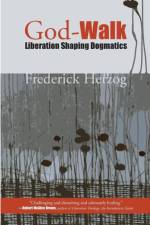
""Challenging and disturbing and ultimately healing."" --Robert McAfee Brown, author of Liberation Theology: An Introductory GuideFrederick Herzog was Professor at the Duke University Divinity School. He served on numerous commissions of the World Council of Churches and the United Church of Christ. In the spring of 1970 he wrote the first North American article on liberation theology, and in 1972 his 'Liberation Theology' was published, a study of the Fourth Gospel described by Robert McAfee Brown as a ""pioneer North American work."" In 'Justice Church' Herzog continues his pioneering work with a North American methodology of liberation theology.
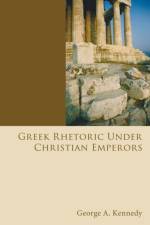
""Kennedy's exposition is lucid and elegant, his enthusiasm for his subject infectious. Accordingly, the reader approaching that subject for the first time will be frequently enlightened, but never bored: indeed he will probably be stimulated to turn to the author's earlier works for further enlightenment.""--From the review of the original printing by J. D. Frendo in The Classical Review, vol. 34, no. 2, 1984, pp. 204-5:George A. Kennedy is Paddison Professor of Classics, Emeritus, at the University of North Carolina at Chapel Hill, a Fellow of the American Academy of Arts and Sciences, an elected Member of the American Philosophical Society, and Fellow of the Rhetoric Society of America. Under Presidents Carter and Reagan, Dr. Kennedy served as member of the National Humanities Council. He was earlier President of the American Philological Association and of the International Society for the History of Rhetoric. He is author of fifteen books, including Classical Rhetoric and its Christian and Secular Tradition from Ancient to Modern Times, New Testament Interpretation through Rhetorical Criticism, Comparative Rhetoric: An Historical and Cross-Cultural Introduction, Aristotle On Rhetoric: A Theory of Civic Discourse, and Progymnasmata: Greek Textbooks of Prose Composition, as well as numerous articles and translations into English from Greek, Latin, and French.
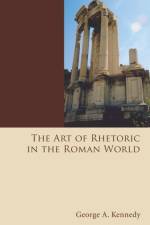
Recipient of the Charles J. Goodwin Award of Merit from the American Philological Association in 1975. The Goodwin Award is the only honor for scholarly achievement given by the Association. It is presented at the Annual Meeting for an outstanding contribution to classical scholarship published by a member of the association within a period of three years before the ending of the preceding calendar year. ""A remarkable and valuable achievement, balanced in judgment and attractively presented."" Journal of Roman Studies, ""This book is a reissue of the important 1972 work on the development of Greek and Latin oratory and rhetorical theory... Many students of the classics, and people interested in later European literatures as well, will find themselves turning to it again and again."" The Times Literary SupplementGeorge A. Kennedy is Paddison Professor of Classics, Emeritus, at the University of North Carolina at Chapel Hill, a Fellow of the American Academy of Arts and Sciences, an elected Member of the American Philosophical Society, and Fellow of the Rhetoric Society of America. Under Presidents Carter and Reagan Dr. Kennedy served as member of the National Humanities Council. He was earlier President of the American Philological Association and of the International Society for the History of Rhetoric. He is author of 15 books, including Classical Rhetoric and its Christian and Secular Tradition from Ancient to Modern Times, New Testament Interpretation through Rhetorical Criticism, Comparative Rhetoric: An Historical and Cross-Cultural Introduction, Aristotle On Rhetoric: A Theory of Civic Discourse, and Progymnasmata: Greek Textbooks of Prose Composition, as well as numerous articles and translations into English from Greek, Latin, and French.
""Our subject is the lost sayings of our Lord, or--to give them their Greek name--the ""the agrapha,"" which means literally the ""unwritten sayings,"" saying which are not recorded in the four Gospels. As a matter of fact, we possess a not inconsiderable number of sayings which have come down to us outside the canonical Gospels, a fact of great importance not only for the study of the Gospels themselves, but also for the Church and its message . . . ""How does it come about, we immediately ask, that there are such things as sayings of Jesus outside the Gospels? Why were they left out of our Gospels? How did these two parallel streams of tradition arise, sayings in the Gospels and sayings outside them?"" --from chapter 1
""The problem of the way in which patristic exegetes viewed the New Testament, and indeed the whole Bible, has concerned scholars a good deal in recent years, especially since it has been discovered that many of the Fathers' methods were analogous to our own. The problem of historical criticism, however, does not seem to have occupied so much attention. . . .""By concentrating on one problem, that of the life of Jesus, I have sought to see how early Christians up to and including Origen faced it, and what there is in their work which deserves retention or rejection.""--from the Preface
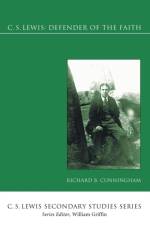
C. S. Lewis was a man of many talents: a literary critic, a Medieval and Renaissance scholar, a stimulating lecturer, a prolific writer, a perceptive critic of Western civilization, and the author of highly acclaimed children's books. But he is perhaps best known as the ""unorthodox defender of orthodoxy,"" the most popular and influential Christian apologist of his time. His literary skill, his brilliant and wide-ranging mind, and his multi-layered imagination made him a master of communication and gave him insight into what should be communicated. This study of his work inquires what it is about his faith, his view of the world, and his apologetic methods that strikes such a responsive chord in the hearts of unchurched people; and it shows how he made the old ideas of traditional Christianity ""glimmer and glow with simplicity and attractiveness.""Lewis took up his apologetic pen because he felt that most theologians are talking jargon. ""Any fool can write learned language,"" he said. ""The vernacular is the real test. If you can't turn your faith into it, then either you don't understand it or you don't believe it."" His books are unusual because he believed that ""reason is the organ of truth; imagination is the organ of meaning."" In the infernal correspondence of Screwtape, the haunting myths of his trilogy of space fiction, and the allegories of the Narnia books, he tries to bring the reader suddenly face to face with transcendental values and existential questions. Richard Cunningham evaluates the different kinds of literature Lewis uses as apologetic instruments, studies the devices and techniques of debate he employs to communicate his faith to unbelievers, and deduces some pertinent principles to help others define and understand the Christian faith.Richard B. Cunningham retired in 1999 as Professor of Christian Philosophy at The Southern Baptist Theological Seminary in Louisville, Kentucky. Prior to that he was Professor of Systematic Theology and Philosophy of Religion at Golden Gate Baptist Theological Seminary in Mill Valley, California, and at the Baptist Theological Seminary in Ruschlikon, Switzerland. After his 1999 retirement, he served as Director of Graduate Studies and Professor of Theology and Philosophy at the Hong Kong Baptist Theological Seminary. He now resides in Estes Park, Colorado.
How can we make theology more constructive? Twentieth-Century British discussion about the Christian 'image' of God and 'myth' of the Incarnation has been widely admired for its honesty but criticized as being too insular and too negative. Neither criticism applies to this book, the first major publication to come from the author, who is now Professor Emeritus of Divinity at the University of Glasgow. He offers a systematic exposition of the most characteristic Christian doctrine in dialogue with other thinkers around the world and across the centuries. His aspiration is to do for 'love' what eminent German theologians have recently done for 'faith' and 'hope.' He knows well that the idea of the love of God, although so prominent in the Bible, has been under fire in the modern world -- for many serious reasons, here taken seriously. 'Talk to God is notoriously complex,' he writes, 'and talk of love notoriously sentimental.' But he carefully demonstrates that the tradition that begins in the Bible is still vital enough to help crucially in the new urgent reconstruction of Christian belief. From a more profound theology of the love of God at work in the creation and redemption of man, a renewal of faith and hope would follow. ""This book brings theology to focus in terms of its central truth. It is a book written lucidly and with a refreshing unwillingness to be satisfied with conventional rhetoric. The readership will consist not only of professional theologians and their students but also of reading clergymen of all denominations and lay people who recognize the importance of the subject.""-- Professor John Hick University of BirminghamGeorge Newlands is Professor Emeritus of Divinity in the University of Glasgow and an Honorary Fellow in the University of Edinburgh. A Fellow of Royal Society of Edinburgh, he is a former Dean of Trinity Hall, Cambridge. Recent publications include Christ and Human Rights (2006) and Hospitable God (2010).
Based on the 1995 Henson Lectures, delivered in the University of Oxford, this study takes as its theme the Christian future, and the development of a theology of generosity in response to the challenges likely to face Christian faith in the twenty-first century. In particular, Professor Newlands wishes to explore the suggestion that Christ represents the ultimate generosity of God for humankind. This leads him to concentrate on the contribution made by Christian doctrine to public issues, and especially the relationship between Christology and human rights. The author is centrally concerned that faith should remain in the public square, and that the circle of faith should always be outward facing. The result is a liberal, pluralistic theology, which regards the generous love of God, in incarnation and reconciliation, as a powerful stimulus to imaginative Christian thought and action. In its robust portrayal of what Christianity ought properly to look like, this book--which emerges from the pen of the leading Scottish liberal theologian of his generation--will be sure to stimulate and engage a wide variety of readers.'As in his other published works, George Newlands shows here an astonishing command of the theological and other related literature, and sustained good judgment in applying his key criterion of the self-giving costly love of God revealed in Christ and his cross. Newlands is the best sort of liberal--radical and positive, yet balanced and open to dialogue on all sides, with conservatives as well as with humanists and people of other faiths. Pluralism is embraced without surrender of the mainstream tradition. I read this stimulating and wide-ranging book with interest and admiration, and recommend it strongly.'- Brian Hebblethwaite, University of Cambridge'This is a powerful book characterized by humor, subtlety, and moral passion. While very learned, it wears its erudition lightly. There are passages of great theological insight, and one chapter of sustained fantasy and humor where an American Baptist minister becomes Pope--except that she is also a woman called Flora and the setting is a space-age Vatican X in Oxford one thousand years after the Reformation.'-- Peter Sedgwick, Board for Social Responsibility, General Synod of the Church of EnglandGeorge M. Newlands, PhD, DLitt, FRSE, FRSA, is Professor Emeritus of Divinity at the University of Glasgow and an Honorary Senior Research Fellow.
The Church of God is a compact yet comprehensive account of the nature and activity of the Christian Church. George Newlands provides a most reliable guide to the main features of doctrinal development, considering the development of the Church, ministry, and sacraments up to the present day, and beyond this to consider requirements for effective ministry of the Church in the future.George M. Newlands, PhD, DLitt, FRSE, FRSA, is Professor Emeritus of Divinity at the University of Glasgow and an Honorary Senior Research Fellow.
The life of faith in God constantly involves thinking for others, acting in concern for other people. Reflection upon such action involves Christian ethics. As individuals we are concerned with personal ethics in our relationships with other individuals. As persons in society and members of the Christian community, we are concerned with social ethics, with relationships in society as a whole and in Christian responsibility towards all human beings. The purpose of this thought-provoking book is to provide an account of the implications of God's love for our response to a number of highly particular and urgent ethical issues in the modern world. In it, George Newlands examines the major issues of the Church and the social order, peace and war in a nuclear age, personal relationships -- sex and moral values, legal and medical ethical issues -- respect for life and respect for persons, and the meaning of justice within the conflicting interests of society. What Dr. Newlands offers are not authoritative pronouncements on these issues, but considered suggestions, and he shows how no area of life is excluded from the reality, and the opportunity, of making Christian decisions. George M. Newlands, PhD, D.Litt, FRSE, FRSA, is Professor Emeritus of Divinity at the University of Glasgow and an Honorary Senior Research Fellow.
The landscape photographed and the reflections on the sites of the Sunday Gospels paint a geography little changed since the time of Jesus and his followers. To see the Judean Wilderness or the River Jordan or the hills of Jerusalem is to see the topography, the land features that existed two thousand years ago. And in seeing them we are reminded that this is what Jesus saw. The dust and heat are the reality of his day and time as much as they are ours. To encounter that land if only through word and image is to touch the world of Jesus.""Here are creative and informative reflections on the Sunday readings from the Lectionary that preachers and teachers alike will want to savor. The authors, veteran travelers to the Holy Land and thoughtful students of the Bible, blend their love of the land and their love of Scripture to make the readings and their setting in the liturgical seasons come alive in a fresh way.""--Donald Senior, CP, Catholic Theological Union, President, Catholic Biblical Association of AmericaSr. Marianne Race, CSJ, continues to lead pilgrims on retreat in the Holy Land and at home. She also teaches in a diocesan lay ministry program. She has a particular interest in women in the Bible.Sr. Laurie Brink, OP, is Assistant Professor of Biblical Studies at Catholic Theological Union, Chicago. She investigates the ancient social, religious, and cultural world out of which early Christianity emerged. Having worked as a senior staff member for the Combined Caesarea Expeditions, Brink continues to do research in the archaeology of ancient Israel. She also edited, along with Deborah Green, Commemorating the Dead: Texts and Artifacts in Context (2007). Brink is a Dominican Sister of Sinsinawa.
At a time of great material comfort and increasing prosperity more and more people are having that old ""is that all there is?"" feeling.Many of those enjoying newfound prosperity are now looking for a larger life. Clifford Williams responds to their spiritual restlessness with an engaging book of short, pointed meditations that are sympathetic, timely, and challenging.""This is a book,"" writes the author, ""for those who pause now and then in life's mad rush to think quietly about where they are headed.""A ""larger life"" is the promise of this book to those who wonder why, with all they have, they are still unsatisfied.
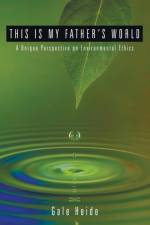
This Is My Father's World critically engages contemporary environmental ethics and provides Christians with a theological foundation for appropriately relating to the world they call God's creation--a creation ethic. It is refreshingly and thoroughly scriptural. However, what the Bible says may shock people with conservative or liberal presuppositions already in mind. This book is a challenge to both sides of the debate.
In this profound look at the academy, John Bennett reminds us that our leadership decisions always presuppose our philosophies of life and that understanding precedes practice. How we understand the communities we lead informs the many practical judgments we make about directions to take, structures to create, processes to initiate, and values to uphold.Bennett argues that faculty may understand their departments or institutions in one of two ways: as simply aggregations of individuals or as communities of intertwined persons. From these views, two different leadership values and positions emerge. The first disposes us toward seeing academic conflict as inevitable and elevates heroic leadership styles where power is understood in terms of advancing one agenda over competitors. The second underwrites leadership as supposing openness to others and emphasizes the vital contributions that can follow.By providing specific illustrations of the two modes of leadership and the nature of hospitality and openness, Academic Life presents a strong platform from which to build a rich and rewarding academic community.Contents include:The nature of insistent individualismWhy the prevalence of insistent individualism?Hospitality as an essential virtueSelf, others, institutions, and the common goodConversation as an essential metaphorThe uses of conversationCommunity and covenantEngaged, but not heroic, leadershipJohn B. Bennett is former Provost and Senior Vice President for Academic Affairs, Quinnipiac University.
In the story of the church's continuing theological dialogue, the Westminster Confession stands as a towering accomplishment. Persons in the Reformed tradition, especially English-speaking Calvinists, have been shaped by the Westminster Confession as by no other Christian creed. Even in rebellion against it, men and women continue to be formed by it.John Leith focuses on the background and character of the assembly that wrote this document. After placing the Confession in its historical, political, cultural, and theological contexts, Dr. Leith examines its major themes--the Bible, the lordship and sovereignty of God, the covenant, and the Christian life. Finally, he looks at the question of the Westminster Confession as normative, authoritative theology.The Westminster Confession should be neither idolized nor rejected, says Dr. Leith. ""It should be accepted for what it is, a remarkable theological achievement of the Reformed community in the seventh century, and received with gratitude for the guidance that it may give for the theological task today.""
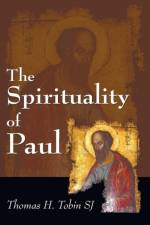
We know more about Paul of Tarsus than we know about any other New Testament author. During his lifetime he was also one of the most controversial figures in early Christianity. He was a Pharisee, a Christian missionary, a community organizer, and someone who was both deeply committed and highly opinionated. Tobin gives the reader an understanding of Paul as a human being as well as a sense of his faith, his vision, the major themes of his theology, and especially the overarching metaphors that lie at the root of his religious outlook.
""Dr. Saarnivaara's . . . book . . . is a valuable help . . . to remove obstacles set up by unbelieving criticism and to help Christian people to a joyful certainty that 'Still, the Bible is right,' not only according to its own words but also when it is studied in the light of historical and other scientific facts.""--Aapeli Saarisalo, University of HelsinkiUuras Saarnivaara (1908-1998) was born in Finland, and he received his theological education at the University of Helsinki. After ten years in the parish ministry, he traveled to the United States to teach in the theological seminary of the Suomi Synod (a Finnish-American Lutheran body) in the years 1939-1954. He returned to Finland, where he served several evangelical organizations within the Lutheran Church of Finland in a teaching and preaching capacity. In the 1960s he taught in several seminaries in the Minneapolis MN area, continuing part-time for another decade while working in Finland. Early on, Saarnivaara engaged in Luther studies. The dissertation for his PhD at the University of Chicago (1945), published under the title Luther Discovers the Gospel, dealt with Luther's reformation crisis and the dating of it. It received international attention. For a ThD degree from the University of Helsinki (1948) he produced a dissertation on Luther's doctrine of justification, followed by a treatise on Luther's understanding of sanctification. The two latter volumes were written in Finnish. Saarnivaara was a prolific author, writing on a variety of topics of concern to conservative Lutherans. Most of his books were published in Finland. His English language books are: Scriptural Baptism and Luther Discovers the Gospel (these two were published in one volume in the Concordia Heritage Series); Hath God Said: Who is Right--God or the Liberals?; Armageddon--Before and After; The History of the Laestadian or Apostolic Lutheran Movement in America; The Power of the Keys; The Way the Truth and the Life: The Christian truths of the way of salvation and new life set forth in quotations from the Bible, The Lutheran Confession and Martin Luther: Can the Bible be Trusted? Some of Saarnivaara's books have also been translated into several other languages.
""That a writer of Dr. Lewis's scholarly and literary stature should publish more than a dozen books directly or indirectly defending Christianity is news; that his works should have such wide repercussions is still more significant news and merits a second thought. What does it mean when his books become best-sellers? Does the fact indicate anything about the intellectual currents of the present decade? If so, it seems time to examine more closely the exact kind of Christianity and philosophy presented in Dr. Lewis's writings, and the literary techniques that have brought him into the forefront of authors dealing with religious themes.""""In this book I hope to add something (though not too much) to the scanty supply of biographical information available about Dr. Lewis, but my main concern will be with his ideas, the way he presents them, and the significance of his popularity. ""--from the foreword by the author
""To many students of the New Testament the environment into which the Christian gospel was born is an unknown world. They read it only in the light of their own time and interpret it by their own experience. In reality, its several books were written for a culture that has long since passed out of existence and for modes of thought that are not remembered or understood by the modern world, except for professional scholars. That culture, however, bears a remarkable parallelism to our own in many ways; and while its terminology is very different, its basic philosophical principles still survive.""This volume will clarify many obscure allusions and illuminate a number of difficult texts in the New Testament. It will provide a better knowledge of the Palestinian background of the life of Christ and the church of the first century, as well as aid in understanding the struggle of the church as it confronted the complex social and religious world around it. It should assist any reader as he/she attempts to interpret the nature and problems of the present church in light of its past problems.""--from the prefacePriscilla (Patten) Benham (1950-2000) earned her PhD from Drew University and served as President of Patten University from 1983 to 2000.Rebecca (Patten) Skaggs (1950-) also earned her PhD from Drew University. She served as Academic Dean of Patten University from 1977 to 2003, where she continues to serve as Priscilla Benham Chair of New Testament Studies and Professor of New Testament and Greek.
There's a war going on . . . and you have what it takes to win. Christians are engaged in a cosmic war between good and evil, a war waged on many fronts -- in our hearts and minds, in our churches, and in our world. How can we be equipped for the fight? Is God still in control? How did Jesus engage in spiritual warfare? How powerful is Satan, and how can we resist him? With clarity and depth, Scott Moreau answers these questions and more as he maps out a biblical overview of spiritual warfare. He encourages us to put truth into action and to stand firm in our personal battles and against evil in the world.""The best introduction to spiritual warfare on the market."" -Clinton E. Arnold, Professor of New Testament Language and Literature, Talbot Theological Seminary""This book offers a balanced understanding of spiritual warfare that is biblically based, personally relevant, and culturally sensitive."" -Neil T. Anderson, founder and president of Freedom in Christ Ministries""Scott Moreau reminds us that the battle lies at the heart of our calling to righteousness and life."" -Paul G. Hiebert, former Professor of Anthropology and Missions, Trinity International UniversityA. Scott Moreau worked in Africa for ten years in student ministry and teaching at the Nairobi International School of Theology. He is currently a professor in the Intercultural Studies program at Wheaton College Graduate School and has authored several other books.
If Genesis and Exodus had been written by a woman, what would they be like?Re-imagined from a woman's perspective, these familiar events delight the imagination and stir the soul in refreshing new ways. Miriam Therese Winter retells our ancient myths of Creation, the Garden, and the Flood, and chronicles the adventures of the remarkable women of Genesis and Exodus: Sarah and Hagar, Rebekah, Leah, Rachel, Miriam, and many more. According to the author, she is presenting us with an ancient manuscript that was written long ago by one of the many wives of Solomon. This woman writer, named Noah, feared the loss of women's perspective as written records began replacing oral traditions. She wrote these Chronicles to offer another side to the story of our shared myths and memories. The Chronicles of Noah and Her Sisters is wonderful spiritual reading, and a must for all women - and men - concerned about handing on the essentials of faith to their daughters and granddaughters.Miriam Therese Winter, a Medical Mission Sister, is professor of liturgy, worship, spirituality, and feminist studies and director of the Women's Leadership Institute at Hartford Seminary in Connecticut. She is author of award-winning books and songs, which include WomanWisdom, WomanWitness, and WomanWord, a trilogy of books on all the women of the Bible, and the recording Joy Is Like the Rain.
Speaking in tongues, or glossolalia, is practiced in many different religions around the world. Dismissed as meaningless gibberish by some observers, it has been the subject of only a few fragmentary studies. The work of Felicitas D. Goodman represents the first cross-cultural analysis of this enigmatic behavior, and she brings to her research an extensive background in linguistics and anthropology.Dr. Goodman's fieldwork included living with apostolic congregations in Mexico City, in the Yucatan with Maya Indians, and visits with a congregation in Hammond, Indiana. Her observations were preserved on a remarkable collection of sound recordings and films. For this book she presents a selection of conversion stories that highlights the personality structure and experiences of the speakers.A detailed analysis of the phonological and suprasegmental features of the recorded utterances show a surprising cross-cultural agreement. This led Goodman to believe that glossolalists speak the way they do because their speech behavior is modified in a particular mental state, often termed trance, into which they place themselves. In this light the glossolalia utterance is seen as an artifact of a hyperaroused mental state, or, in Chomskyan terms, as the surface structure of a nonlinguistic deep structure, that of the altered state of consciousness. Goodman describes the hyperaroused mental state as a neurophysiological phenomenon, as well as the associated patterns of movement, and the problems of waking from it.Goodman's diachronic approach yielded equally surprising data about the changes and the waning of the behavior over time. But, as she observes, ""we have barely touched the edge of a very large area of inquiry."" Her fascinating study opens a number of new avenues of research for anthropologists, such as the study of physiological states accompanying linguistic and ritual behavior.
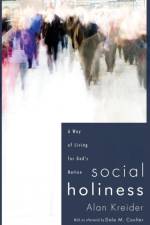
Rarely does one find a book on the topic of holiness with such depth as well as breadth. Kreider takes us on a journey deep into biblical territory and back again into the lives of nations, churches, familiesand individuals. In this journey the reader is convicted and drawn by the beauty of holiness. We Pentecostals need this word. --Cheryl Bridges Johns, Church of God Theological SeminaryKreider's Social Holiness surprises! While holiness indeed owns the otherness of God and the call to be God's separated people, it does much more. Holiness unleashes in history a living force, a dynamism that envisions the sanctification of God's entire creation. Holiness is positive, the 'heartbeat' of Missio Dei. I highly recommend this book for its life-changing potential, both personally and for the church as God's new nation. --Willard M. Swartley, Associated Mennonite Biblical SeminaryAlan Kreider writes a masterful narrative about social holiness from which Pentecostals can learn much as they reaffirm and recover this important dimension of their heritage. Its familiar terrain serves not only as a timely reminder of a way of life Pentecostals still cherish, but also as a challenge to reconsider crucial features of that way of life long forgotten. --Dale M. Coulter, Regent UniversityAlan Kreider has gifted us with an inspiring, hopeful, and transformative invitation to follow Jesus on the journey toward personal and social holiness. His prophetic call to participate in Jesus' transnational renewal movement challenges families, congregations, students, and all Christians with practical ideas emerging from the biblical story of God's kingship and our citizenship in the holy nation. [ I appreciate his emphasis on moral zeal, experience, liberating action, storytelling, praise, and the risk of repentance and trust, and think] this book can be a great resource for helping the church with our public witness to Christ's shalom in a broken world. --Paul Alexander, Azusa Pacific UniversityKreider's Social Holiness breaks new ground and makes new connections, both in his overview of biblical history and in his application of social holiness to the contemporary church. I hope this book will help many believers today - Wesleyans, Anabaptists, and those from other traditions - become more fully and authentically a part of God's 'holy nation' in the world today. --Howard A. Snyder, Asbury Theological SeminaryOurs is the age of bombast, exaggeration, hyper-activism and self-importance--all of which leaves us feeling empty. We have lost the capacity for reverence, awe, and experience of the transcendent. Alan Kreider has the audacity to call us back to the transforming presence of God so that we become God-like. This book's message can help set us free from the bondage of our self-centeredness and liberate us to participate in the mission of God. --Wilbert R. Shenk, Fuller Theological SeminaryLively, gutsy . . . Holiness is about practical social matters--such as economic relationships, making peace, working for justice . . . Kreider takes us through the Bible to show how deeply these themes are embedded in the text and how persistent has been the failure of the community of faith to be true to them . . . A must for serious-minded Christians today. --Rt. Rev. John Gladwin, Bishop of Chelmsford, in Third WayAlan Kreider is Associate Professor of Church History and Mission, Associated Mennonite Biblical Seminary, and author of English Chantries: The Road to Dissolution and The Change of Conversion and the Origin of Christendom.Dale M. Coulter is Associate Professor of Historical Theology, Regent University, and author of Per Visibilia ad Invisibilia: Theological Method in Richard of St Victor (d 1173) and Holiness: The Beauty of Perfection
Abonner på vårt nyhetsbrev og få rabatter og inspirasjon til din neste leseopplevelse.
Ved å abonnere godtar du vår personvernerklæring.