










Gjør som tusenvis av andre bokelskere
Abonner på vårt nyhetsbrev og få rabatter og inspirasjon til din neste leseopplevelse.
Ved å abonnere godtar du vår personvernerklæring.Du kan når som helst melde deg av våre nyhetsbrev.

Gordon Christensen and Geneva Noren were born in different parts of the country and into different hard times. Gordon grew up in the south end of Seattle in the 1920s, where his family faced many struggles in the ""New Land"" to which they had moved after World War I. Geneva was raised on a small farm in Dust Bowl Kansas where faith in God was the family's greatest hope.God proved His love and care for these young people as they learned to trust in Him in any adversity--lessons that would be the key to life or death as these young Christians found each other, and found their way onto the mission field in the Belgian Congo. Their adventures, escapes, and discoveries underscore these truths about their God: He is all powerful, all loving, and everywhere present.
Often viewed as the archaic rules of a civilization long past, the Ten Commandments have been pushed aside and ignored by modern society. Even strong Christians maintain a diverse collection of opinions about the Ten Commandments--a miracle cure-all, a holy obligation, laws irrelevant in an age of grace, and many more. No matter how they are viewed, these deceptively simple words are packed with meaning and hold a power and significance many Christians have lost sight of. Written Upon the Heart reveals the necessity of God's Law for contemporary believers by studying the historical purpose, meaning, and modern relevance of the Commandments. Presented with rich background and compelling humor, Written upon the Heart shows that the words of God should not just be read or simply commited to memory, but written upon the heart of every believer. ""I will put my law in their minds and write it on their hearts. I will be their God, and they will be my people."" --Jeremiah 31:33
Contemporary writers who have chosen to comment on the lives of people mentioned in the Bible invariably fall into one of two groups: the first provide us with pen portraits that paint the individual(s) without a single failing; the second appear to be so intent on portraying the weakness(es) of those whom they write that there is little or nothing for us to emulate. This work attempts to be different. By paying attention to the literary nuances in the original text, as well as the history, geography and social milieu of the different people, an attempt has been made to provide an accurate description of each person and his/her work. Next to our Lord Jesus Christ there is no one in the New Testament who can be compared with the Apostle Paul. Around the life of the Lord Jesus there clustered, on the one hand, His disciples, and on the other, His malignant adversaries. Similarly, around the life of Paul we read of his loyal friends as well as his relentless enemies. Paul's friends and foes, who are mentioned in the book of Acts, are treated in this book. When Paul was nearing the end of his earthly pilgrimage, he was languishing in the Mamertine Prison in Rome. It was then and still is a cold, comfortless dungeon. Paul wrote to Timothy and urged him to come to him before winter and bring with him certain of his possessions, including a cloak, that he had left in Troas. Paul, of course, had many friends, but Timothy was closest to Troas. Who were his friends, and what did they do? They are representatives of the multitude of people who, often unhonored and unsung, are worthy of our attention, for in many respects they are like us. It is the hope of the author that reading about these men and women will encourage a fresh study of the book of Acts.
Robert B. Eno, S.S., held his doctorate in theology from Institute Catholique de Paris. His work in ecumenical and historical studies was widely recognized, and he devoted much research to the focal question of doctrinal authority. He was professor of church history at the Catholic University of America.
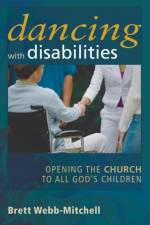
""Dancing with Disabilities is about the ever-changing relationship between two groups...locked like dancers in either a passionate embrace or a dance of separareness, trying to move to the rhythm of the music that one or the other hears.""- from the Introduction Imagine what a church could be if those who are ""disabled"" and those who are ""able-bodied"" were to understand them-selves to be equal partners in the faith community.Writing personally and passionately on this compelling subject, Brett Webb-Mitchell relates the struggles and triumphs, frustrations and joys, of the children and adults with disabilities whom he has met through his ministry. It is these persons who put a genuinely human face to ""disabilities"" - and those presence challenges the church to welcome all God's children to their rightful place in the Christian community.
In Afrian American Christian Ethics, Samuel K. Roberts builds an ethic upon a Trinitarian foundation and explores scripture, tradition, human experience, and reason as sources for such an ethic. Using this framework he examines critical issues, including human sexuality and family life, medicine and bio-ethics, and the pursuit of justice.
Preaching Justice brings together eight very diverse voices from eight distinct cultural/ethnic communities, challenging them to articulate the specific justice concerns, issues, and passions that give rise to a preaching ministry within the their own community and beyond. Theological analyses are offered by theses persons representing their particular communities:Kathy Black - persons with disabilitiesMartin Brokenieg - Native AmericansTeresa Fry Brown - African AmericansEleazar Fernandez - Filipino AmericansJusto Gonzalez - HispanicsEunjoo Mary Kim - Korean AmericansStacy Offner - JewsChristine Marie Smith - lesbians and gaysThis volume offers a rare vision of what transforms preaching might sound and look like, and urges that all preaching - whatever community it comes from, whatever community it hopes to reach - be grounded in the sacred acts of listening and knowing.
This work has been selected by scholars as being culturally important, and is part of the knowledge base of civilization as we know it. This work was reproduced from the original artifact, and remains as true to the original work as possible. Therefore, you will see the original copyright references, library stamps (as most of these works have been housed in our most important libraries around the world), and other notations in the work.This work is in the public domain in the United States of America, and possibly other nations. Within the United States, you may freely copy and distribute this work, as no entity (individual or corporate) has a copyright on the body of the work.As a reproduction of a historical artifact, this work may contain missing or blurred pages, poor pictures, errant marks, etc. Scholars believe, and we concur, that this work is important enough to be preserved, reproduced, and made generally available to the public. We appreciate your support of the preservation process, and thank you for being an important part of keeping this knowledge alive and relevant.
Utilizing Mark and Luke-Acts as case studies, Norman Petersen moves beyond redaction criticism to show both the necessity and the possibility for literary criticism to be an integral part of the historical-critical study of biblical writings.
This provocative study of the language of the Fourth Gospel pursues the complicated but intriguing thesis that the Gospel's language is a blend of everyday, ordinary language and a ""special language"" suitable to the Johannine community. This ""special language"" transforms the ordinary language in a way that makes it into an anti-language. The oppositional character of the language, then, fuctioned socially to distinguish the Johannine believers from their opponents. By addressing the perplexing issue of the language of the Fouth Gospel in a way that has not yet been done, Professor Petersen has made his work essential for specialists in New Testament and especially in Johannine studies. The work deals with the literary, historical, and sociological features of the Fourth Gospel. Its use of diverse methodologies is one of the book's extraordinary values, reflecting the current need for interdisciplinary efforts in Johannine studies.
Jesus as God stands as one of the significant exegetical-theological contributions of the century. With linguistic and exegetical skill befitting his ranking as a leading international scholar, Murray J. Harris discusses the New Testament us of the Greek term theos ("God") as a christological title.
Murray J. Harris's Three Crucial Questions about Jesus deals with three pillars of the Christian faith in creatively different ways. Harris so frames these christological studies that they serve as model apologetic approaches for defending the validity of Christianity.- Did Jesus exist?Harris first addresses Jesus' historical existence, surveying four early classical writers for evidence that a person named Jesus of Nazareth lived in Israel in the first century.- Did Jesus rise from the dead?In debate format, Harris counters the most convincing arguments that Jesus did not return from the dead. The debaters discuss, among other issues, the so-called swoon theory, alternative explanations for the empty tomb, psychological explanations for the recorded appearances, and the Shroud of Turin- Is Jesus God?Finally, Harris amasses the New Testament evidence that teaches that Jesus is God, thereby countering those who believe that Jesus' godhood has been read into the Bible by overzealous believers. Harris discusses the divine status claimed by or accorded to Jesus, the divine functions exercised by Jesus, and the divine title God used of Jesus.
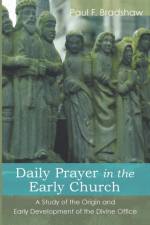
'In liturgical study, and especially in English liturgical study, the subject of the daily office has always been something of the poor relation', writes the author in his preface. This volume aims to do something to fill that gap. It begins with a detailed examination of the Jewish background and of the practice of daily prayer in the first three centuries of the Church, and goes on to trace the evolution of the divine office in both its monastic and secular forms in East and West down to the time of St. Benedict. Intended as a replacement for The Influence of the Synagogue upon the Divine Office by C. W. Dugmore (Alcuin Club Collection No. 45), it not only incorporates the results of recent research by continental scholars and others but also challenges traditional assumptions at a number of important points, offering a fresh interpretation of the evidence.
Professor Carmichael here proposes a convincing solution to a perplexing problem in biblical studies--the order and arrangement of the Deuteronomic laws. He shows that Deuteronomy is not a haphazard collection of fragments, but rather a carefully constructed, coherent literary work with a definite purpose. Through his analysis, many of the peculiar features of the code are made intelligible, for example, the relationship between the laws and earlier stories, sagas, and historical narratives. Opening up a new approach to the interpretation of the laws, this book makes an important contribution to the understanding of biblical material.Calum M. Carmichael is Professor of Comparative Literature and Biblical Studies at Cornell.
Life-Changing Attitudes Mark the Lives of Inspiring Women from Yesterday to TodayA godly woman is marked by a godly attitude. Dorothy Kelley Patterson looks to the Bible for the timeless principles of virtuous character sought by godly women today. BeAttitudes for Women is an interactive devotional commentary. - Interactive - You will be drawn to participate through appropriate charts, study maps, and opportunities to meditate on the meaning of the text. - Devotional - You will be richly blessed by the inspirational quotations, hymns, poems, and vignettes coupled with the experience of the many years Dorothy Kelley Patterson has spent living in a family and ministering to women. - Commentary - You will find the Bible comes alive through brief and readable commentary sections of explanation, including studies of key words, grammatical notes, historical allusions, and explanatory information. Virtues, from humility to courage, are carefully examined in the Bible and applied to today's culture, exploring the remarkable lives of some extraordinary women.
The student of Hebrew need master a vocabulary of less than 800 words to have learned all the verbs occurring twenty-five times or more and all other words used more than fifty times in the Hebrew Old Testament. The lists that Dr. Watts has prepared are taken from W. R. Harper's Hebrew Vocabularies, which has been revised and corrected in comparison with Kohler-Baumgartner, Lexicon in Veteris Testamenti Libros. Where a verb occurs in only one stem, this is noted in the Hebrew list. When a verb has different meanings in different stems, this is noted in the English list. Nouns and adjectives from the same root are listed together so that the student may learn to distinguish them immediately. Words are arranged according to the frequency of their occurrence. The author has used these lists in mimeographed form for more than five years in teaching elementary Hebrew to theological students.
""Craig Dykstra has done it: he has written a readable, engaging book which does justice to the complex texture of moral existence as we experience it. His exposition shows the real but limited usefulness of cognitive theories of moral development and education. In a simple, penetrating prose, rich in narrative quality, he sets forth an account of visional ethics and a corresponding ethics of character. After helping us see clearly what moral growth means, he offers one of the most truly humane and inspiring approaches to Christian moral education you will encounter. This is a superb book for any thoughtful reader. No professional in ministry or religious education can afford to be without it.""--James W. Fowler, Emory University""For Christian educators this book is going to mark the end of the Lawrence Kohlberg era in moral education and open up a fresh understanding of how repentance, prayer, and service nourishes moral development.""--C. Ellis Nelson, Louisville Presbyterian Theological Seminary""Dykstra emphasizes the formative role of revelation and imagination, of the spirit of repentance, prayer, and service, as well as the intentional direction of the Church community and the teacher in the dynamic of Christian education. Drawing on insights from literature, psychology, and experience, his work is at once informative and inspirational.""--Berard L. Marthaler, Catholic University of America""Vision and Character is a book for which I have been waiting and longing. Character, value, and moral education have long been concerns of religious educators. Today's literature is dominated by developmentalism and the work of Kohlberg. . . . Here, at last, in this thoughtful, readable, useful book is a true alternative. Dykstra has provided us with the best foundation for Christian moral education to date.""--John H. Westerhoff III, Duke University""Dykstra is one of today's new group of brilliant young Christian education thinkers, and this is his first book. Dykstra is a person to hear carefully both now and in the future.""--D. Campbell Wyckoff, Princeton Theological SeminaryCraig Dykstra is Vice President for Religion for the Lilly Endowment, Inc. He previously taught Christian education at Louisville Presbyterian Theological Seminary (1977-84) and served as Thomas W. Synnott Professor of Christian Education at Princeton Theological Seminary (1984-89), where he was also editor of the journal Theology Today. An ordained minister in the Presbyterian Church (USA), Dykstra is a graduate of the University of Michigan (BA) and Princeton Seminary (MDiv, PhD). Dykstra is also the author of Growing in the Life of Faith: Education and Christian Practices (1999, 2005), and has published over 100 monographs, chapters of books, articles, editorials, and other commentaries.
Abonner på vårt nyhetsbrev og få rabatter og inspirasjon til din neste leseopplevelse.
Ved å abonnere godtar du vår personvernerklæring.