










Gjør som tusenvis av andre bokelskere
Abonner på vårt nyhetsbrev og få rabatter og inspirasjon til din neste leseopplevelse.
Ved å abonnere godtar du vår personvernerklæring.Du kan når som helst melde deg av våre nyhetsbrev.

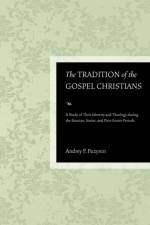
The Tradition of the Gospel Christians explores the post-Soviet tradition of evangelical Christians originating from the ministry of the Victorian revivalist preacher Lord Radstock in St. Petersburg in the 1870s. In an effort to resolve the current evangelical crises of theology and identity, this study provides an analysis of the tradition's history reflecting on its restorationist tradition, the contours and vectors of its theology, and its practice of biblical interpretation. The historical analysis reveals that the major causes of the crises of identity and theology pertain to the socio-political upheavals, which, in turn, led the tradition to develop strategies to maintain relevance in its changed contexts. The socio-political shifts were also responsible for the lack of emphasis on research and scholarship, which contributed to a difficulty in finding the necessary resources and intellectual virtues to deal with the collapse of the Soviet Union. Building on the discoveries of the historical analysis, Andrei P. Puzynin offers a new historical and theological paradigm by reconstructing the self-identifying narrative and theological framework in critical dialogue with recent developments in Anglo-American evangelicalism and postliberalism. Following the trajectory of the evangelical tradition in the post-Soviet context, a trajectory which relies on Western thought, the book adopts the narrative theological method of reading the world though the lens of Scripture. The self-identifying narrative of the community is reconstructed through a theological reading of the previous identity-constructions, in the light of recent discussions on Christ and the powers. The result of this study helpfully explains the dynamics of Eastern evangelicalism in a traditionally Russian Orthodox setting.
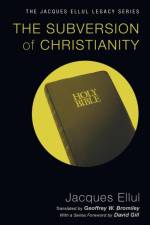
Pointing to the many contradictions between the Bible and the practice of the church, Jacques Ellul asserts in this provocative and stimulating book that what we today call Christianity is actually far removed from the revelation of God. Successive generations have reinterpreted Scripture and modeled it after their own cultures, thus moving society further from the truth of the original gospel. The church also perverted the gospel message, for instead of simply doing away with pagan practice and belief, it reconstituted the sacred, set up its own religious forms, and thus resacralized the world. Ellul develops several areas in which this perversion is most obvious, including the church's emphasis on moralism and its teaching in the political sphere. The heart of the problem, he says, is that we have not accepted the fact that Christianity is a scandal; we attempt to make it acceptable and easy--and thus pervert its true message. Ultimately, however, Ellul remains hopeful. For, in spite of all that has been done to subvert the message of God, the Holy Spirit continues to move in the world. ""Christianity,"" writes Ellul, ""never carries the day decisively against Christ.""
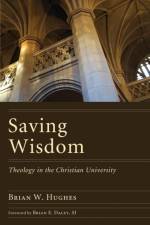
Is theology possible within a Christian university? Beneath the emphasis of contextual, philosophical, and ecclesial pluralism, what is its academic nature? Further, who can participate in it? Recent debates and discussions by theologians that touch upon these questions seem to run in circles: theology is an academic specialty enjoying academic freedom; theology must bolster ecclesial identity, become more catechetical, and serve the church; theology must contribute to and shape public policy. Though such positions recur, they overlook latent but interrelated characteristics embedded within the nature and place of theology within the Christian university that affect them all. Upon analysis of four major theologians, Friedrich Schleiermacher, John Henry Newman, Avery Cardinal Dulles, S.J., and Edward Farley, I argue that there are two major patterns at work. First, theology is more a sapientia or wisdom than a traditional academic discipline. Second, all descriptions of theology in the university possess an inclusive or exclusive soteriological character. These patterns pervade diverse topics: the relationship of theology to the church authority, a theologian's ecclesial and academic commitments, the preconditions of faith for theological understanding, participation in a religious symbol system, theology as wisdom, and the difference between religion and theology. How one implicitly defines Christian salvation regarding the place of theology in the Christian university opens or closes the practice of theology to those who teach and learn it.""In Saving Wisdom, Brian Hughes has made a very important contribution to the question of the place of theology in the modern university. His lucid and detailed comparative analysis of four outstanding Christian thinkers is a must-read for those seeking to place this debate in its broader intellectual and historical context.""--Dominic DoyleAssistant Professor of Systematic Theology, Boston College""Saving Wisdom offers a fresh take on a nexus of questions surrounding the relationship of theology to the university, and on the connection between faith and reason. Using two of the nineteenth centuries greatest minds---the recently beatified Cardinal Newman and the progenitor of modern theology, Friedrich Schleiermacher--Hughes faithfully and artfully traces their positions on this set of questions. This is a learned and careful book, of interest to any academic theologian and any intellectual concerned and invested in the fate of religiously affiliated universities. Saving Wisdom ushers in a fresh perspective that will keep this important discussion about the role of theology in the university moving forward.""--Grant KaplanAssociate Professor of Theological Studies, Saint Louis UniversityBrian W. Hughes is Associate Professor of Theology at the University of Saint Mary, Leavenworth, Kansas.
My Father's World is a memorial volume celebrating the life of Dr. Reuben G. Bullard and it focuses on the archaeology and history of the Mediterranean world. The essays in this volume are all written by former students of Dr. Bullard, and the diverse range of topics highlights his broad interests in geology, archaeology, and biblical studies. Bullard was a long time Professor of Geology and Archaeology at Cincinnati Christian University. He pioneered the field of Archaeological Geology in the 1960s at Tell Gezer.
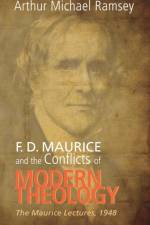
Though the literature about Maurice is growing, I hope that the distinctive aim of this volume may give it a place within that literature. I have not attempted to provide a systematic account of Maurice's teaching, but to trace the theological conflicts which Maurice faced and to relate them to the chief theological tendencies of the last 150 years. I do not think that any previous attempt has been made to evaluate Maurice's teaching on Atonement and Sacrifice as a whole, or to examine his methods of Biblical exegesis in relation to subsequent trends of Biblical study. On no two subjects did Maurice more originally anticipate some of the theological work of the present day, and speak in a way which comes home to us with relevance and force.Arthur Michael Ramsey, the 100th Archbishop of Canterbury was born in 1904, the son of Arthur Stanley Ramsey. He trained at Cuddesdon College Oxford and was ordained deacon in 1928 and priest a year later in 1929. In 1961 he became Archbishop of Canterbury in succession to Geoffrey Fisher, his former headmaster.
Viktor Frankl, an Auschwitz survivor, once said that to be human is to suffer. Suffering is an unavoidable part of life, but how do we engage our suffering in a culture that teaches us to avoid suffering at all costs? Through the telling of two stories, the horrific death of his parents and the exiled Judeans of the sixth century BCE, Chris Williams offers a way of engaging suffering that questions the dominant voices of popular culture. Perhaps hope is not found in avoiding suffering at all costs, but by inviting others into our darkest moments.
Finding Salvation in Christ brings together some of the most important figures in contemporary theology to honor the work of William Loewe, systematic theologian and specialist in the theology of Bernard Lonergan, SJ. For over three decades Loewe's writings have sought to make classic christological and soteriological doctrines comprehensible to a Catholic Church that is working to integrate individual subjectivity, communal living, and historical consciousness in the wake of the Second Vatican Council. Essays included in this volume assess Loewe's reinterpretation of patristic and medieval Christology from Irenaeus to Anselm of Canterbury, and explain the significance of the theology of Lonergan and Loewe for the fields of soteriology, economics, family life, and interreligious theology.While some recent postliberal theologies have polarized the church's relationship with contemporary culture by minimizing similarities between Christianity and other worldviews, the contributors in this volume continue Lonergan's project of integrating the findings of various intellectual disciplines with Christian theology, and use Loewe's historical and systematic work as a guide in that endeavor. While Lonergan's ""transcendental Thomism"" has been criticized by both traditionalists and revisionists, essays in this collection apply Loewe's theological methodology in a variety of ways to demonstrate that time-honored doctrines about Christ can be transplanted into new cultural contexts and gain intelligibility and credibility in this process. Having lived and labored through the far-reaching changes in Catholic thought introduced in recent decades, Loewe's career provides a model for theologians attempting to build bridges between the past and the present, and between the church and the world.""This collection serves as a bracing introduction to many of the most important issues facing Christology today, and in so doing rightly celebrates William Loewe's contribution to Catholic theology. Even, indeed precisely, when they push back against his positions (and Loewe's own perceptive questions in response are worth the price of admission), his students and colleagues demonstrate the continuing fertility of the questions Loewe has asked, and the theological pathos out of which he asks them."" --J. Matthew AshleyUniversity of Notre DameChristopher D. Denny is Associate Professor in the Department of Theology and Religious Studies at St. John's University in New York City.Christopher McMahon teaches in the Department of Theology at St. Vincent College, Latrobe, Pennsylvania. He is the author of Jesus Our Salvation (2007) and Called Together: An Introduction to Ecclesiology (2010).
This book is a constructive attempt at formulating a contemporary Pentecostal theology grounded in worship and witness. The theological vision expounded here is grounded in the Pentecostal story with its emphasis upon the fivefold Gospel. The doxological confession of Jesus as Savior, Sanctifier, Spirit Baptizer, Healer, and soon coming King provide the basic organizational structure of a Pentecostal narrative theology. Each chapter takes seriously these central convictions and allows them to shape, form, and reform various theological loci. Important issues such as methodology, hermeneutics, and theology as embodied worship and witness are addressed. The result is a vibrant and integrative theology fueled by a dynamic spirituality.
Many in Victorian England harbored deep suspicion of convent life. In addition to looking at anti-Catholicism and the fear of both Anglican and Catholic sisterhoods that were established during the nineteenth century, this work explores the prejudice that existed against women in Victorian England who joined sisterhoods and worked in orphanages and in education and were comitted to social work among the urban poor. Women, according to some of these critics, should remain passive in matters of religion. Nuns, however, did play an important role in many areas of life in nineteenth-century England and faced hostility from many who felt threatened and challenged by members of female religious orders. The accomplishments of the nineteenth-century nuns and the opposition they overcame should serve as both an example and encouragement to all men and women committed to the Gospel.""I highly recommend this work; it is essential and fascinating reading for all those interested in the history of English prejudice--especially on those inflammatory topics of the (Roman) Catholic Church, monasticism, and the emancipation of women.""--Hugo Meynellauthor of Redirecting Philosophy and Postmodernism and the New Enlightenment (2000)""In 2010, the Smithsonian Museum in Washington, D.C. hosted the exhibit, 'Women and Spirit: Catholic Sisters in America.' It was a must-see testament to their magnificent accomplishments. A Foreign and Wicked Institution? by Fr. Rene Kollar is further testament to the role Catholic and Anglican sisters fulfilled in Victorian England. Despite outstanding accomplishments, they confronted bigotry and scandals within their ranks. This book is a must-read for a deeper understanding of the joys and pains of institutions devoted to God's work."" --Eugene HemrickColumnist for the Catholic News ServiceDirector of the Institute for the Renewal of the PriesthoodDirector of Institutional Research at Washington Theological Union""Rene Kollar focuses on congregations of religious women in this clear, concise examination of popular anti-Catholicism. He deftly interweaves their confessions with Catholic attempts to explain the true nature of religious life, and to discredit their opponents. Demands that society correct these atrocities through abolition or control threatened not only the sisterhoods themselves, but the Roman Church. In separate but interrelated chapters, Kollar considers the legends, the stories, the lies and the works of Roman and Anglican sisterhoods. Neither blind to faults nor ignorant of abuses, Kollar writes with an eye on the present in which a way of life is again judged by the faults of a few.""--T. M. McCoog, S.J. Fordham University""Using a rich variety of sources, Rene Kollar has given us excellent essays on the struggles for the establishment of Anglican and Roman Catholic religious orders in Victorian England against social, and mostly male, prejudice, suspicion and ignorance. The essays deal with particular episodes and contribute color and depth to our understanding of religious prejudice in Victorian England and the sheer persistence and resilience of these women of faith. Richly textured, thoroughly researched and elegantly written.""--The Revd Dr Bruce KayeEditor, The Journal of Anglican StudiesFr. Rene Kollar is a Benedictine monk and a Professor of History at Saint Vincent College, Latrobe, Pennsylvania. He has written extensively on nineteenth- and twentieth-century English ecclesiastical history.
Many scholars during the late nineteenth and early twentieth centuries argued that ancient Israel simply borrowed most of its culture and religion from Babylonia. In this volume Clay counters that West Semitic cultures (the Amorites) were already a developed civilization before Israel came under Babylonian influence. Writing a decade before the discoveries of Ugarit and Mari, Clay noted that there were numerous clues to West Semitic cultures. While some of his arguments and conclusion are no longer tenable, this work retains its interest for its place in the discussion. Without directly referring to Clay, George Mendenhall affirms Clays fundamental point in this volume: from the MB Age on there was no region of the Levant that had not been influenced by the Amorite language and culture in various ways and various degrees. Their cultural and linguistic influence was a lasting one that is gradually coming to light, especially in the areas of religion and law (The Amorites, in 'Anchor Bible Dictionary').
Leadership is a subject that has gained impressive visibility in the past two decades. The number of books, monographs and articles, as well as seminars, devoted to the development of one's leadership skills has been almost exponential growth. This study is an attempt to forge a full-orbed theology of Christian leadership grounded in the teaching of Scripture. What emerges from tracing the theme of leadership through the biblical record is a servanthood pattern, one that is wholly distinct from prevailing secular models. Our exposition begins with the biblical language of the servant, the term of choice for those great leaders used of God to further his saving purposes in the world. Eleven Old Testament and five New Testament leaders are profiled. The portrait of Jesus Christ focuses on three motifs that governed his training of the twelve for kingdom ministry. The Pauline letters are mined for those convictions that governed Paul's practice of leadership, both of his mission team and of the faith communities that emerged from that mission. The treatment of each leader, from Joseph to Paul, begins with a series of preliminary questions and concludes with a mini-profile that correlates the biblical data with these questions. The final chapter offers a summary profile of the servant leader, one whose character, motives and agenda align with the divine purposes. Though designed as a textbook for upper level college and seminary courses on leadership, the book's readable format is ideal for churches and parachurch organizations in their leadership training programs. The author's prayer is that this work will serve as a catalyst to call God's people back to Scripture and thereby raise up a whole new generation of authentic servant-leaders.
Like Leonard Smith's larger study, Religion and the Rise of History, this essay, Martin Luther's Two Ways of Viewing Life, asserts that Luther's well-known ""at-the-same-time,"" simul, or paradoxical way of viewing life does not capture Luther's thought as a whole, because it does not represent his deeply incarnational and dynamic, mystical and holistic, particularizing and historical way of viewing life based on the power of the Word and the Spirit of God either in his own life or in human history.Smith contends (1) that the best way to capture Luther's ""second"" basic way of thinking and of viewing life is through the connected prepositions (connected especially for Lutherans) ""in, with, and under""; (2) that this second basic way was based primarily on the Gospel of John and its great Prologue, which shows how God is acting, creating, and redeeming, and how Jesus is ""the Word become flesh""; and (3) that understanding both of Luther's ways of viewing life is helpful for understanding Lutheran education and ""a Lutheran ethos"" since the sixteenth century. Since this brief essay is written primarly for a general audience, it can easily be used as a text or supplementary reading for a class, seminary, or group discussion.
Introducing two Stringfellow/Towne reprints about Bishop Pike: The Bishop Pike Affair The Death and Life of Bishop PikeThe Bishop Pike Affair presents the climactic showdown between James A. Pike and his peers at the Wheeling meeting of the Episcopal House of Bishops, in October 1966. It dramatized for millions the struggles for reform and relevance within the church in the mid-twentieth century.This book reveals the whole chronicle of the historic controversy. Thousands of documents were researched. The authors disentangle the web of political, racial, theological, traditional, and personal interests that account for the accusations that Bishop Pike is a heretic and that culminated in his censure at Wheeling.The authors relate The Bishop Pike Affair to celebrated heresy trials of the past, probe the issues of fairness and due process of law, explore the ethics of the fraternity of bishops, examine the dynamics of the Episcopal Church as an institution, and expose the design of the ""ultra-right whites"" to stage a coup d'eglise in America.
WE LIVE IN A CULTURE THAT IS DESPERATE TO AVOID LOSS.We choose to fight it because we assume that it has come only to unfairly steal and inflict terrible pain. Loss is seen as the rogue enemy and heartless foe, rather than an opportunity for immense and improbable growth. It's in loss that some of the richest and rarest of life's lessons lay buried, eagerly waiting to be deeply mined and unearthed. In the deepest pain God does the deepest work. An Autumn's Journey - Deep Growth in the Grief and Loss of Life's Seasons does not loosely gloss over loss or provide shallow prescriptions and weak formulas for our grieving. Rather, it aggressively embraces both grief and loss, bringing fresh eyes to these times in our lives in order to draw out of them the marvelous riches that we all too often miss.Craig D. Lounsbrough's background includes over twenty-nine years experience as a counselor in a variety of treatment settings that include psychiatric hospitals, outpatient clinics, facilities for the blind, agencies that serve both the physically handicapped and developmentally disabled, churches and various ministries. He also possesses ten years' experience in pastoral ministry as a youth, associate and senior pastor. Craig spent two years broadcasting in Christian radio and has published both nationally and internationally. He is a Licensed Professional Counselor in Colorado, an Ordained Minister, as well as a Certified Professional Life Coach.
The voices of Messianic rabbis and believers have been collected in this volume to share concerns about the gap that remains between Jews and the church. For the past fifteen centuries, the church has been predominantly Gentile. Jews of faith were not considered Jews, but as ""converted."" Today, as Messianic congregations multiply and church denominations try to find their way back to the original principles of the early church, the church is challenged to repair this relationship, deepen its understanding of the apostles' vision of one new man, and be edified by the meaning in appointed observances that extended to graft in the wild olive branches. ""For he himself is our peace, who has made the two groups one and has destroyed the barrier, the dividing wall of hostility"" (Eph 2:14).""The concepts and teaching in The Jewish Concern for the Church are both Biblical and profound. As you read this amazing book your worldview of Christianity and our Creator's intent for his church may change. Read, explore, and learn what true peace, true Christianity, and true reconciliation mean from Jesus' perspective. This is an absolutely recommended read for all who are sincerely searching for genuine meaning in a confused world."" --Thom Mc Donald, President, Great Peace Native Fellowship of Canada and USAChristine Graef is author of Mending the Broken Land, The Journey to the Edge of the Woods, Our Trees of Life, and More Than the Sound of Many Waters. She lives by the St. Lawrence River in northern New York.
While there were earlier biographies and memoirs of Jonathan Edwards, the great eighteenth-century religious figure, than the one written by A. V. G. Allen, they were apologetic versions that had been produced by Edwards's disciples. Allen's stands out as the first to approach the life of Edwards comprehensively and critically, attempting to discern the positive and negative elements in his thought. Nearly forgotten today, Allen's book deserves a place among the landmark studies on Edwards. Alexander Viets Griswold Allen (1841-1908) was an Episcopalian priest and theologian educated at Andover Theological Seminary. After being the first rector of St. John's Church, Lawrence, Massachusetts, he was appointed Professor of Church History in the Episcopal Theological School, Cambridge, Massachusetts. His principal writings are Continuity of Christian Thought; Freedom in the Church, or, The Doctrine of Christ; Christian Institutions; and Life and Letters of Phillips Brooks.
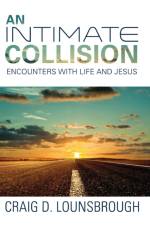
Many of us live out flat, marginalized and ineffectual Christian lives. We fall achingly short of intimately connecting with and deeply interjecting the truths of scripture into the everyday realities of our lives, as we live them out amidst the incessant demands and tangled complexities of the 21st century. We therefore miss a sweeping and torrential infusion of what God intends for our lives. Because we miss it, we are left abysmally poorer when that need not be the case. An Intimate Collision arises out of the belief that people sense there to be a far greater reality to our portrayal of God and the Christian life than that which we have grasped.Craig D. Lounsbrough's background includes over twenty-nine years experience as a counselor in a variety of treatment settings that include psychiatric hospitals, outpatient clinics, facilities for the blind, agencies that serve both the physically handicapped and developmentally disabled, churches and various ministries. He also possesses ten years' experience in pastoral ministry as a youth, associate and senior pastor. Craig spent two years broadcasting in Christian radio and has published both nationally and internationally. He is a Licensed Professional Counselor in Colorado, an Ordained Minister, as well as a Certified Professional Life Coach.
Black theology of liberation in the USA and South Africa (SA) both began from the mid-1960s to the early 1970s. They carried the energy of the youth who were eager to change the world so that all peoples would enjoy life and live as neighbors. Legal racial laws still existed in parts of the US in the mid-1960s. And apartheid laws on separation of races were as normal and accepted as breathing air. Given the major racial divides and the presence of human differences in all of society, concerned individuals, in both countries, realized that religious practice or the study of religion could not be done separate from the everyday lives of ordinary people.In response to racial laws, blacks created a vibrant renaissance of black culture and organizations. Song, stories, histories, and coalitions flourished. Blacks of all classes became energized and participated in a rebirth of what it meant to be black. What was a true citizenship rooted in justice? In fact, it was a profound striving to produce a new vision of the US and South Africa. Deep and broad hope filled these communities and many throughout both countries. Black religious leaders and ordinary people of faith were heavily impacted by this bubbling and creative black renaissance. The founders of black liberation theology in both countries emerged out of this larger movement to redefine what is a healthy community with healthy individuals.In recent years, USA and SA have had their first black elected presidents (i.e., Nelson Mandela and Barack Obama). Such historic and amazing developments show strides in both countries across the Atlantic.Yet, the economic success after US legal segregation and SA apartheid seemed to have gone primarily to only the top 5 percent of black people. The republication of We Are One Voice is still needed today. Questions of poor and working people, women's rights, and the importance of connecting spiritualty and faith to culture, politics, and economics are even more pressing in the twenty-first century than they were in the last.""The republication of We Are One Voice gives us an amazing opportunity to reconsider the incredible insights gained from these pioneering dialogues and ask ourselves new questions. What have we forgotten, forgone, or lost sight of? Can we revive, restore, and reengage these relevant ideas and reassess the similarities and differences of black theology in North America and South Africa to aide us in our collective search for ways to address the issues confronting the Black communities today? We need this book for now and the future.""Addie Lorraine Walker, SSND, PhD and Director, Sankofa Institute for African American Pastoral Leadership, Oblate School of Theology""The development of Black theology is indebted to the powerful resistance of African Americans and Black South Africans in their respective fights against White supremacy. We Are One Voice: Black Theology in the USA and South Africa remains the pivotal text in outlining the groundbreaking emergence of Black theology in both contexts. This book remains a must read!""Anthony G. Reddie - Editor of Black Theology: An International Journal. Extraordinary Professor, University of South Africa.""The republication of this book reaffirms the fact that we are still one voice. At the same time, it begs of us to be self-critical of how far we have come. It realises that the issue of race and racism is as relevant as it was when black theology was first conceptualised. More than that, in a context were we have noted that our histories were deliberately distorted and contorted, we are called to assert that for black theology to be relevant today in the USA and South Africa, it must insist that African epistemologies and worldviews become central in our theological reflections.""Rothney Tshaka, Acting Director of the School of Humanities and Prof. of Theology, University of South AfricaSimon S. Maimela is a retired Professor of Theology from the Univers
The language of the Bible has no inconsiderable influence in forming and preserving our national language. On this account, the language of the common version ought to be correct in grammatical construction, and in the use of appropriate words.This is the more important, as men who are accustomed to read the Bible with veneration, are apt to contract a predilection for its phraseology, and thus to become attached to phrases which are quaint or obsolete.This may be a real misfortune; for the use of words and phrases,when they have ceased to be part of the living language, and appear odd or singular, impairs the purity of the language,and is apt to create a disrelish for it in those who have not, by long practice, contracted a like predilection.It may require some effort to subdue this predilection;but it may be done, and for the sake of the rising generation, it is desirable.The language of the scriptures ought to be pure, chaste, simple, and perspicuous, free from any words or phrases which may excite observation by their singularity; and neither debased by vulgarisms, nor tricked out with the ornaments of affected elegance.Noah Webster, 1833Noah Webster, Jr. (October 16, 1758--May 28, 1843) was an American lexicographer, textbook pioneer, English-language spelling reformer, political writer, editor, and prolific author.
The Curetonian Version of the Four Gospels, with the readings of the Sinai Palimpsest and the early Syriac Patristic evidence, edited, collected, and arranged by F. Craw Burkitt, MA University Lecturer in Palaeography.
Effective churches understand the need for effective families.We know you're concerned with the state of family today. What if you could turn your church into a powerful family of families? Now you can!This comprehensive guide recognizes that each church and its families are unique. So it provides you a variety of clear and practical tips on . . .-Building strong family foundations-Enriching family ministries-Connecting families to other families - both inside and outside the church-Building a happier, healthier, and more effective church
Dr. Montgomery contends that no one can "sit in a house by the side of the road and watch the world go by." Everyone is caught up in the flux of human life, and there is no naturalistic resting resting place within human history from which one can gain a universal, absolute perspective on man's life. Christianity is the only answer to this basic human predicament, for it claims, and by the resurrection backs up its claim, that there is a God and that He entered human history and revealed its essential nature.
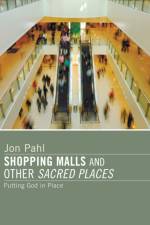
Christian historian Sidney Mead has observed: ""In America space has played the part that time has played in older cultures of the world."" In Shopping Malls and Other Sacred Spaces, Jon Pahl examines this provocative statement in conversation with what he calls the ""spatial character"" of American theology. He argues that places are always imaginatively constructed by the human beings who inhabit them. Sometimes this spatial theology works to our benefit; other times it poses spiritual risks. What happens when our banal ""clothing of the sacred"" violates our genuine need for comfort and intimacy? Or when we remember that the fleeting pleasures of a shopping trip or a Disneyland escape are designed to fill someone else's pocket rather than the spiritual emptiness in our own hearts?Pahl develops several ways to ""clothe the divine from within the Christian tradition."" He introduces a theology of place that reveals aspects of God's character through biblical metaphors drawn from physical spaces, such as the true vine, the rock, and the living water. Accessible and thought provoking, this enlightening book provides a better grasp of our particularly American way of lending religious significance to spaces of all kinds.
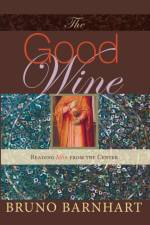
The Good Wine is an exciting and challenging overview of the gospel of John. Bruno Barnhart has created a mystical roadmap of the biblical book, which is often considered the most difficult and theological of the four gospels. Following the lead of Peter Ellis, Barnhart has organized the whole of John's gospel around a single truth: that God poured divine reality into humankind through the person of Jesus Christ. This belief stands at the center of the gospel, and every episode in the narrative refracts the light of that core affirmation. The gospel, when interpreted this way, assumes a mandalic pattern in which all parts are related to the center and through it to each other. The mandalic pattern is also a gate of entry for believers who seek to relate their own destinies to the Source of Life. This book differs from other treatments of John's gospel in that its method is sapiential, following the wisdom-tradition of the church fathers. It explores the symbolic significance of the gospel and pays attention to chiastic textures which establish patterned, repetitive relationships between narrative episodes. The result is a deeply spiritual work that explodes with flashes of illumination for persons who come to the gospel jaded with traditional scholarship.
An enjoyment of the poet's art, as seen in the words of T. S. Eliot, Robert Frost, and Wallace Stevens.""As a Protestant theologian,"" writes McGill in his preface, ""I have always been puzzled that within the Christian community, poetry is often used for its insight into our modern miseries, but that it is rarely enjoyed as poetry. This book seeks to redress the balance.""McGill focuses on three American poets--Eliot, Frost and Stevens--all of whom belong to the same poetic generation and thus provide a microcosm of poetry from this era. Influenced by Owen Barfield, John Crowe Ransom, and Cleanth Brooks, he identifies poetry with the fleshly aspect of experience, yet never as distinct from a spiritual aspect. ""In the kingdom of God, people are created with flesh, reconciled through flesh, and glorified as flesh. To hide from the flesh for the sake of the spirit is to miss the Christian life. It is this danger which gives special meaning to the enjoyment of poetry."" This experience of poetry, according to McGill, ""is always a healthy antidote to spiritual pride.""
Abonner på vårt nyhetsbrev og få rabatter og inspirasjon til din neste leseopplevelse.
Ved å abonnere godtar du vår personvernerklæring.