









Gjør som tusenvis av andre bokelskere
Abonner på vårt nyhetsbrev og få rabatter og inspirasjon til din neste leseopplevelse.
Ved å abonnere godtar du vår personvernerklæring.Du kan når som helst melde deg av våre nyhetsbrev.

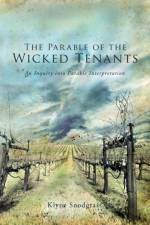
Despite its importance, the parable of the wicked tenants has been an enigma to modern interpretation. The approaches to the parable have been quite varied. Some interpreters place this parable at the apex of the ministry of Jesus, while others assign little importance to it or virtually ignore it. In some cases the conclusions drawn have been unsatisfactory either because of presuppositions that are too rigid or that have been shown to be erroneous by recent developments. Any discussion of the parable is necessarily a complex one in that it involves the relation of the three Synoptic accounts, an assessment of the account in the Gospel of Thomas, the religious and economic background in Palestine, the self-designation of Jesus, and the theological shaping of the parable by the tradition and by evangelists. Because of the importance of this parable as a possible key to understanding the ministry of Jesus, particularly since its relevance has often been minimized, this parable deserves closer analysis.
""This volume is exemplary of evangelical scholarship at its best. The theme is pertinent, indeed basic, to all expressions of Christianity, and the contributors engage their subject with the passionate inquiry and critical acumen it deserves. The essays are comprehensive in scope but unpredictable in conclusion, displaying a diversity of perspective united only by common allegiance to the advancement of biblical understanding. Anyone interested in biblical prophecy or a historical understanding of Jesus will find here a useful survey of the relevant materials and some surprising new insights.""--Mark Allan Powell,Trinity Lutheran Seminary""Israel's Messiah is a very timely, helpful work on one of the more important topics for our day. In fairly short compass, it manages to cover nearly everything the student will want to know about the development of the messianic idea in Judaism and the early church. It is a must reading!""--Grant R. Osborne,Trinity Evangelical Divinity School""There has been a notion circulating in certain circles of New Testament scholarship that the concept of a messiah was of little significance in early Judaism. This volume helps dispel that notion and in the process gives us some keen insight into how the messianic material in the New Testament fits into the larger matrix of Old Testament and early Jewish messianic thought. Highly recommended.""--Ben Witherington III,Asbury Theological Seminary""The complexities of biblical scholarship are all too often hidden from most students of the Bible. This collection of essays, however, opens up contemporary issues concerning the concept of the messiah. The main authors and respondents offer helpful and insightful presentations on the messiahship of Jesus Christ. The format of essays and responses enriches the volume by permitting the reader to weigh differing viewpoints on the vitally important topic. Here we have constructive, critical, evangelical scholarship of the highest quality.""--T. D. Alexander,Union Theological College,Belfast, IrelandRichard S. Hess (Ph.D., Hebrew Union College) and M. Daniel Carroll R. (Ph.D., University of Sheffield) are professors of Old Testament at Denver Seminary.
Reduced to its simplest form, The Dysfunctional Church maintains that: -The Catholic church is an addict, an institutional addict.- It's addicted to preserving the male, celibate, clerical model of the church.- Many Catholics exhibit patterns of classic codependency which reinforce this addiction.- The result is a dysfunctional church unable to confront a problem many members know is there.Michael Crosby breaks the silence to talk openly about the abuse of authority in the Catholic church. He does this in a way that offers comfort, hope, and challenge to the frustrated but caring members of its family.He traces the historical gathering of powers by the hierarchy into its own hands and its ramification for today. Applying the approach that Matthew's Jesus took to the church leaders of his day, Crosby brings the discerning light of scripture into the dark corners of growing addiction.The Dysfunctional Church is a clear, loving, and unequivocal intervention. The author calls on church leaders and all other codependents in the church to face their addiction and seek recovery through spiritual conversion. Acknowledging that he himself is a recovering codependent, he invites us all to turn to God to fill the ""hole"" in our wholeness. This involves coming under the authority of a higher power as well as finding support in prophetic communities modeled on the Twelve Steps.For those who left the church in anger, Crosby's analysis invites compassion; for those who remain in frustration, it offers hope; and for the many who feel condemned to the church's use of authority, if offers a way of recovery.Michael Crosby belongs to the Midwest Province of the Capuchin Franciscans. He lives in a Capuchin Community in downtown Milwaukee. His recent books on the gospels of Matthew and John have received awards from the Catholic Press Association. He has a Masters in Economics as well as a Doctorate and Licentiate in Sacred Theology.
June 10, 1923: It came over me vividly at Communion today, that the whole of the life of Christ consists and always has in nothing at all but giving himself--to everyone who asks--pleasant or not--dingy beasts like me--anyone--making no demands back, cultivating no heavenly joy for Himself--an eternal Risen Life of self-outpouring. It may sound obvious but when you see it, it's pretty overwhelming.Evelyn Underhill kept notebooks during her crucial mid-life years, while she was a successful writer and scholar. These private documents comprise one soul's journey in the life of the Spirit, yet with a universal dimension. Underhill's reflections are the only known sustained records of her private life, her doubts and failings, obstacles to growth, and her gradual awakening to God's grace and presence. In his ""Foreword"" A. M. Allchin writes, ""Evelyn Underhill's inner world, which was one of contrasts and conflicts, of darkness as well as light, can stand for the inner world of us all . . . these fragments from her inner story will continue to remind us of the price that was paid for the serenity and wisdom of her latter years.""These notes and journal entries have the immediacy of spiritual autobiography and the detail that give texture to her otherwise elusive life history. In order to be best understood, they need to be viewed within the context of her ""public"" writings. Her personal speculations and correspondence give depth and nuance to the mystic and theologian now commemorated in the church calendar and read by Christians of many communions.""Dana Greene's theological astuteness coupled with her skill as a historian shapes the fragments of Underhill's notebooks into a coherent mosaic. . . . Even long time students of Underhill will find here fresh perspectives on her life and work. First time readers will long for more. The result is a preveleged intimacy with Underhill . . . an exprerience of being with one of the great spiritual lights of the twentieth century, an experience of truth, beauty, and surprising peace.""--Dolores R. LeckeyExecutive Director, Secretariat for Family, Laity, Women and YouthNational Conference of Catholic BishopsDana Greene is Dean Emerita of Oxford College at Emory University. She is author and editor of several books on Evelyn Underhill.
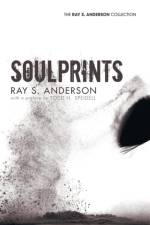
Soulprints, like fingerprints are unique to each person and invisible to the naked eye. When dusted with the whisper of words, soulprints, like fingerprints, can be transferred as images, leaving traces of the self for others to discover if they wish. This slice of my soul is cut straight through the center. If these pages are a pilgrimage, it is not from then to now but from fear to faith, from no to yes and from me to you!Ray Anderson, (1925-2009) was Senior Professor of Theology and Ministry at Fuller Theological Seminary and served on the faculty of the School of Theology since 1976. He is the author of more than twenty books, including, Spiritual Caregiving as Secular Sacrament, The Soul of Ministry, Self Care, Living the Spiritually Balanced Life, and Dancing with Wolves While Feeding the Sheep: The Musings of a Maverick Theologian.
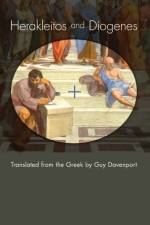
All the extant fragments of Herakleitos and a collection of Diogenes' words from various sources.Herakleitos' words, 2500 years old, usually appear in English translated by philosophers as makeshift clusters of nouns and verbs which can then be inspected at length. Here they are translated into plain English and allowed to stand naked and unchaperoned in their native archaic Mediterranean light.The practical words of the Athenian street philosopher Diogenes have never before been extracted from the apocryphal anecdotes in which they have come down to us. They are addressed to humanity at large, and are as sharp and pertinent today as when they were admired by Alexander the Great and Saint Paul.
In this deeply felt book, nine American writers and thinkers from different points of the religious compass discuss how their work is nourished by spiritual concerns.Diana Ackerman explains why she calls herself a ""messenger of wonder"" and how, in her observations of the natural world, ""there is a form of beholding that is a kind of prayer.""David Bradley recalls how his inheritance as the son, grandson and great-grandson of black preachers has enabled him, at considerable pain, to be ""touched by the word.""Frederick Buechner makes an intensely personal journey to his roots as a novelist: ""In fiction, as in faith, something outside ourselves is breathed into us if we're open enough to inhale it.""Allen Ginsberg describes how his poetry is grounded in the Buddhist idea of renunciation of ""hand-me-down conceptions"" and the meditative practice of ""letting go of thoughts.""Mary Gordon retraces an odyssey in which the religious beliefs and forms of a Catholic girlhood turned out to be ""as useful as a wiretap"" to the grown-up novelist.Patricia Hampl describes how the writing of Virgin Time took her on a series of pilgrimages to explore the contemplative life.Hillel Levine tells of his search for the mystery of goodness, exemplified by a Japanese diplomat in Lithuania who saved thousands of Jews on the eve of World War II.Hugh Nissenson explains how his work as a Jewish writer has been animated by ""a sense of the holy"" and shaped by the ""poetry, drama and narrative"" of the King James Bible.Jaroslav Pelikan revisits three religious writers--Augustine, Newman, and Boethius--whose influence on other religious writers over the centuries has never gone out of fashion.Together, as William Zinsser notes in his introduction, these writers are on a ""pilgrimage to find the source of their faith as individuals and their strength as artists.""""This collection is joyous. A spur to discussions of the ephemeral boundaries between things sacred and things aesthetic.""--Chicago Tribune""This is a favorite book of mine.""--Anne Lamott, author of Traveling Mercies and Bird by BirdWilliam Zinsser is a writer, editor, and teacher. His fifteen books include On Writing Well, now in its sixth edition.
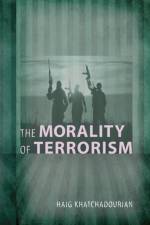
The Morality of Terrorism argues that terrorism violates certain human rights, just war, and consequentialist moral principles, and so is always wrong. In distinguishing "freedom fighting" from terrorism, this study lays down stringent conditions derived from just war theory, for the moral justifiability of "freedom fighting" such as some revolutions, civil wars, and guerrilla warfare. This book then evaluates the morality of actual and possible judicial and military responses to terrorism by targeted governments. An appendix provides a case study (the Palestinian problem) of root causes of political and moralistic-religious terrorism.
A Palestinian state alongside a secure Israel is the sine qua non of a stable peace between Arabs and Israelis, and at this late date would realize a modicum of the Palestinians' moral and legal territorial rights (roughly equal to those of the Jews/Israelis), and a long-standing aspiration for self-determination. A defense of the "two-state" option, and a qualified defense of the Oslo Accords against Islamist and radical Jewish rejectionist critics is therefore offered. Besides satisfying Palestinian aspirations, Palestinian statehood would help open the way to a comprehensive peace between the Arabs and Israel, through a just, negotiated settlement of the Syrian/Lebanese-Israeli territorial disputes. A comprehensive peace, in turn, should stimulate economic and cultural cooperation between Israel and the Arab countries (the "peace dividend"), lending it additional strength. Increased stability should also result from the hoped-for liberalization and democratization of the region's Arab regimes.
Community and Communitarianism presents--and defends in detail--a care-centered ideal of a good and moral community: a form of social organization imbued with the virtues of a care-centered ethic, such as cooperation (in "teleological communities," cooperation in the realization of communal goals); mutual concern and solidarity; sympathy and empathy; benevolence; a spirit of sacrifice; and affection, love, and caring. It is argued that a care-centered ethic, hence a care-centered community, needs to be constrained and fortified by equal respect for the participants' basic human right to be treated as moral subjects, together with fair and just treatment. Besides contributing to social philosophy, the book contributes significantly to ethics.
Quantitative analysis is a fundamental mode of thought in the modern world, and quantitative reasoning is one of the most powerful tools available for the study and interpretation of historical events. By using examples from published historical works, Understanding Quantitative History provides historians and nonhistorians with an introductory guide to descriptive statistics, sampling and multivariate analysis, and formal reasoning. The book will prepare readers to understand and critique quantitative analysis in history and related disciplines such as sociology and political science. More broadly it will allow readers to participate more effectively in a wide range of public-policy discussions that use - or misuse numbers.One of the best ways to gain proficiency as a reader of quantitative history is to practice on published books and articles. Understanding Quantitative History reprints brief examples from a wide range of published works in American history, covering such topics as black women's, labor, and family history from early colonial times to the post-World War II era.Each chapter includes thirty to fifty questions with answers provided at the end of the chapter. The authors rely on ordinary language rather than mathematical terminology and emphasize the underlying logic of quantitative arguments rather than the details of the calculations.Understanding Quantitative History was sponsored by the Alfred P. Sloan Foundation.Loren Haskins is Professor of Mathematics and Kirk Jeffrey is Professor of History, both at Carleton College.
Richard R. Niebuhr is Hollis Professor of Divinity Emeritus at Harvard Divinity School.
""This work is embarrassingly elementary, embarrassing for the reader, not the writer. Father Barreiro states with the power of simplicity the privileged place of the poor in the eyes of God and the mission of the church and presents the basic ecclesial communities as incarnations of that privilege. This is a short work well worth reading."" Philip J. Murnion, Director, The Parish Project, National Conference of Catholic Bishops""The comunidades de base of Latin America have been giving me hope and inspiration for many years. Their roots are as ancient as the Gospel and their development in these times almost as spontaneous as the spread of Christianity in the early days of the Church.""Unfortunately, Americans in general do not know the poverty in their own country and don't understand people who are poor anywhere. While they pour out money and supplies with enormous generosity whenever disasters of famine and earthquake and war are made known to them, most do not see the spiritual potential in the people in poverty in the United States and throughout the world whom they want so much to help.""Leaders of America's churches, clergy and laity, of all denominations can learn this potential from Barreiro's book.""Norman C. Eddy, Coordinator, East Harlem Interfaith""Father Barreiro combines solid scriptural and theological resources with first-hand knowledge of these communities themselves.""The appearance in English of Fr. Barreiro's book is very timely. North American Christian communities need to be informed about the good news coming out of Latin America.""Allan Figueroa Deck, SJ, Director of Hispanic Ministry, Diocese of Orange in CaliforniaAlvaro Barreiro, SJ, was Professor of Systematic Theology at the Catholic University of Rio de Janeiro and is currently with the Centro de Espiritualidade Inciana de Itaici.
It has been almost fifty years since theological educators first began talking about contextual theology. Today, in every country of the global South, their home schools require them to contextualize theological education and construct contextual theologies that would be helpful for their local churches. In spite of this expectation there are few helps available. The expectation is clear, but an understanding of the process by which this may occur is lacking. Educators often complain that they are led to adapt Western theology to their context rather than developing theology for their churches. Arguments for contextual theology are proposed often, but there has been little debate explaining and defending the methods involved. This book is intended to enter that debate and invite others who should help appreciate the gravity of our situation and join the conversation. The epicenter of Christianity has shifted to the global South. Yet, contextual theology, which seeks to preserve the integrity of the faith, has not been met with generosity among scholars in the US and Europe. This book intends to forge helpful bridges that encourage mutual regard to develop among scholars across the globe. The bubble of the Western academy needs to be breached.
Even under the best circumstances in life, we all suffer psychological injuries to our self. These injuries from others can range from passive hurtful comments to intentional abusive assaults. The end result is that our sense of being a cohesive and secure self is threatened. We may begin to experience degrees of vulnerability and self-doubts, or of rage and desire for revenge. We may even feel as if we were ""falling apart."" In all cases these self-injuries chip away at our self-cohesion and self-esteem.Grace for the Injured Self helps us to better understand the significance of these injuries to our self, as well as how these injuries can be healed through the self psychology approach of Heinz Kohut. Throughout its pages, this book emphasizes the empathic presence of another as a source of grace. Empathy is the most powerful means by which the self is reassured, strengthened, and ultimately restored. It is this empathic responsiveness of others that holds our self together and helps us daily maintain our self-cohesion and self-esteem. The self psychology perspective of Heinz Kohut, who many consider the most significant psychoanalyst since Sigmund Freud, is made available here as a primary means by which clergy and other helping professionals can provide a healing context for the restoration of injured selves.""This fine book elucidates a vital area of the thought of Heinz Kohut that has been undervalued: his contribution to pastoral counseling. Kohut himself was always interested in theology and was himself a deeply spiritual man. His psychology of empathy should claim the attention of all those interested in healing within the context of religion. This book should be read by all professionals in the field.""--Charles B. Strozierauthor of Heinz Kohut: The Making of a Psychoanalyst""Grace for the Injured Self is a clear, readable, and down-to-earth introduction to the self psychology of Heinz Kohut. It demonstrates the practical relevance of Kohut's central ideas for understanding ourselves and our relations with others. It explains how mutual expressions and acts of empathy enable our lives to reflect more fully the essence of the human spirit. It also shows how attention to the conflicting self-issues of the pastor and congregation may produce fundamentally positive changes in their life together. Personal interviews with Heinz Kohut on religion and the courageous life are an added bonus. A gracefully written book by two thoughtful and perceptive self psychologists.""--Donald CappsProfessor of Pastoral Psychology, EmeritusPrinceton Theological Seminary""Atheists, agnostics, and true believers will all benefit from and enjoy this clearly written and cogent blending of psychoanalytic self psychology and religious thought. Faithful both to the ideas of Heinz Kohut and to the tenets of religious thinking, the authors achieve a rare integration of fields that need never stand in opposition."" --Arnold Goldberg, MDCynthia Oudejans Harris, MD ProfessorRush UniversityTerry D. Cooper, EdD, PhD, is Professor of Psychology at St. Louis Community College at Meramec, and Adjunct Professor of Religious Studies at Webster University. He has authored or coauthored eleven books.Robert L. Randall, PhD, is a clinical psychologist and an ordained minister of the United Church of Christ, now in private practice. He is the author of seven books and numerous articles.
Is America a Christian nation? This question has loomed large in American culture since the Puritans arrived on American shores in the early seventeenth century. More recently, the Christian America thesis has been advocated by many evangelical leaders across the denominational spectrum. This book contributes to the conversation by critiquing, from an evangelical perspective, the idea that America is a Christian nation as articulated by specific writers over the past three decades. Wilsey asserts that the United States was not conceived as a Christian nation, but as a nation with religious liberty. Herein lies the genius of the Founders and the uniqueness of America.""For generations, American evangelicals have confused biblical and theological conservatism with a rightist political stance. When combined-as it generally is-with a chauvinistic Americanism (the founding documents of the Republic being viewed as the rough equivalent of Holy Scripture), the result has been a gross weakening of the prophetic perspective of historic Christianity. John Wilsey's book is the badly needed corrective. It demonstrates that biblical truth must not be confused with the American story and that God's common grace has used even the pagan influences of the major Founding Fathers to achieve His ends.""-John Warwick MontgomeryProfessor Emeritus of Law and Humanities, University of Bedfordshire, EnglandDistinguished Professor of Philosophy and Christian Thought, Patrick Henry College, Virginia, U.S.A.""It takes some courage to tackle the 'Christian America' thesis. But it also takes grace to offer a truly Christian critique. John Wilsey possesses both qualities. He offers an astute theological and historical analysis of America's past, debunking the deeply entrenched notion of 'American exceptionalism.' Even better, Professor Wilsey offers a clear-headed call to seek first the kingdom of God in the present.""-Stephen J. NicholsResearch Professor of Christianity & Culture, Lancaster Bible Collegeand author of Jesus Made in America ""There are always some who have wanted to make America a Christian nation from its inception till the present. Others on the opposite extreme wish to deny the obvious biblical influences on our social order. John Wilsey gets it right. Though America may never have been a 'Christian republic,' as few other countries in history, it has felt the impact of the biblical witness. One Nation Under God? sets the record straight. Do not miss this book. -Paige PattersonSouthwestern Baptist Theological SeminaryJohn D. Wilsey earned his PhD from Southeastern Baptist Theological Seminary in Wake Forest, NC. He has served in pastoral and Christian school ministries in North Carolina and Virginia for nearly twenty years. He currently serves as Assistant Professor of History and Christian Apologetics in the J. Dalton Havard School of Theological Studies at Southwestern Baptist Theological Seminary in Houston, TX. He is married to his wife, Mandy, and they have two daughters.
C. K. Barrett has taught in the theological faculty of Durham University in England. His books include Epistle to the Romans, Gospel according to St. John, Luke the Historian in Recent Study, Biblical Problems, and Biblical Preaching.
During the seventeenth and eighteenth centuries, modern thinkers came to believe that our notion of truth should be objective, certain, and precise. Mathematics became the model for how truth should be conceptualized, and we sought to eliminate ideas that were vague, ambiguous, or contradictory. This inevitably led to our belief that the truth of the Gospel must be conceptualized in the same way, and much of modern theology saw the defense of the Gospel in these terms as its task. The teachings of Jesus, however, are often vague, ambiguous, and even contradictory. Fortunately, a twenty-first century understanding of the human condition has debunked the modern notion of truth, showing it to be truncated at best. Truth, at least as we have access to it, is very different from what our early modern ancestors imagined. This is especially good news since the truth of the Gospel was never compatible with modernity's notion of truth as objective, certain, and precise. Consequently, we are now free to rethink our notion of truth in a way that is compatible with the things that Jesus said and did, and equally compatible with what we now know to be our access to truth given the limits of our human condition. This volume sets out to explore these issues in depth and examine what it might mean for us to speak of the truth of the Gospel in a twenty-first century context.""We in religion concentrate so much on what we know for certain, but there has always been too little self critique about 'How do we know what we think we know?' This clear and well-written book is both very honest and very helpful on the subject. No one will lose their faith here--perhaps many will find it for the first time! I am happy someone has written this much-needed book, and I hope it is used in classrooms, by many seekers, and in the churches."" --Richard Rohr, OFM Center for Action and Contemplation ""Jim Danaher, as an author and a friend, is a man who has challenged my long-held assumptions, inspiring me to wrestle with new, fresh perspectives. He has motivated me to pray: 'I want to know Jesus better.' And through his example he has roused me to love God and love others with greater passion. Jim is a brilliant philosopher-theologian for the twenty-first century. While his writing may provoke you in places, I believe reading this text will lead you to think deeply, pray passionately, and love God and His people with greater zeal.""--Ronald WalbornDean of Alliance Theological SeminaryNyack College""James P. Danaher is a rare philosopher who has an unusual skill for saying things with incredible clarity. For this reason Jesus after Modernity is a splendid little book. It bridges the academic worlds of philosophy and theology and takes the reader right into the experience of God's love in Jesus Christ. I happily encourage you to read it, even several times if you want to grasp how important his message is for our time.""--John H. ArmstrongAuthor of Your Church Is Too Small: Why Unity in Christ's Mission Is Vital to the Future of the Church James P. Danaher is Professor of Philosophy and Head of the Philosophy Department at Nyack College. He is the author of Eyes that See, Ears that Hear: Perceiving Jesus in a Postmodern Context (2006), and Postmodern Christianity and the Reconstruction of the Christian Mind (2001).
Sets of seven. 666. The Whore of Babylon and the Seven-headed Beast. How would first-century readers have heard these things? One can get at an answer by asking, How does the Book of Revelation compare with contemporaneous Jewish apocalypses? God's Timetable unlocks the hitherto unseen Jewish background to the Apocalypse based on the seven weeks leading up to Pentecost, the Harvest Feast. The meaning of Revelation suddenly becomes clearer. Stramara situates the Book of Revelation in its original context as a prophetic work regarding the end of the world, the final harvest, and Jesus as the fulfillment of expectations.
Heyward directly addresses our vulnerability to terror, especially its religious and political aspects. Examining six images of God--God of War, God of Peace, God as Father, God as Spirit. God in us, and God in all--the author locates an authentic religious response in a healthy balancing of God-images, while religiously motivated violence stems from absolutist theories that fix on only one image of an inexhaustible deity. Stressing mutuality and openness, Heyward sketches a creative Christian response to violence, terror, and war.
The collaborative work of a biblical scholar and a biology professor, Science, Scripture, and Homosexuality addresses scripture passages relating to homosexuality and explains the foundation of genetics and the growing evidence suggesting an organic basis for sexual orientation. The authors argue that "the role of the homosexual, as well as the heterosexual, within the Church should be based upon common criteria for all." Written in a highly accessible manner, the book is ideal for congregational discussion.
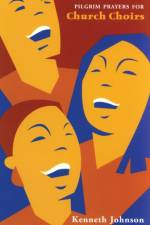
""Loving God, you who deserve the best and want the best from each one of us--singer, musician, and pastor, take our preparation for this service and bless it with your Holy Spirit; that in our different roles we may serve you faithfully and well this day and, thereby, advance your realm on earth as it is in heaven; through Jesus Christ, our leader and our God. Amen.""--from Pilgrim Prayers for Church ChoirsBefore worship, pastors and choir directors usually gather with the choir for prayer. This unique resource provides more than 80 short prayers for use by pastors, music directors, and all those involved in music ministry. Based upon the Revised Common Lectionary, Pilgrim Prayers for Church Choirs follows the liturgical year. Scripture references are provided at the end of each prayer, and a page for prayer reflections is included at the end of each chapter, making this unique music ministry resource even more versatile.There are also prayers for special occasions including weddings, funerals, Native American Awareness Sunday, National Day of Prayer, Mother's Day, Memorial Day, Father's Day, Independence Day, and Thanksgiving.
There is a seeming dichotomy in C. S. Lewis's writing. On the one hand we see the writer of argumentative works, and on the other hand we have the imaginative poet. Lewis also found this dichotomy within himself. When he was a rationalist and atheist he found that these two sides of him were pulling in different directions: he believed that his rationalist side could not be reconciled with his imaginative side. Once he became a Christian, he eventually found a means of marrying the two--principally, through story and myth.Within C. S. Lewis studies, there is also a common conception of Lewis as a modern rationalist philosopher, i.e., a rationalist who thinks arguments (and his arguments in particular) are the last answer on the questions he undertakes. Reasoning beyond Reason attempts to take this view to task by placing Lewis back into his pre-modern context and showing that his sources and influences are classical ones. In this process Lewis is viewed through the idea that imagination and reason are connected in an intimate way: they are different expressions of a single divine source of truth, and there is an imagination already present upon which reason works. Lewis's ""transpositional"" view of imagination implicitly pushes towards a somewhat radical position: the imagination is to be seen as theological in its reliance upon something more than the merely material; it necessarily relies on a transcendent funding for its use and meaning. In other words, the imagination is a well-source for what we might normally label ""rational.""
What is the theologia crucis--the theology of the cross--and what are its radical claims? Which theologians stood within this subversive tradition, and is Karl Barth amongst them? In this volume New Zealand theologian Rosalene Bradbury throws light on these--surprisingly contentious--questions. She argues convincingly that tethered to the tradition that gave rise to it, the term theologia crucis references a theological system centered around notions of false and true glory, and an ancient conviction that from the cross of Jesus Christ comes a revelatory and a saving Word. The apostle Paul, Athanasius, a school of medieval mystics, and the Reformer Martin Luther, are all shown to be significant classical representatives of these ideas. Bradbury then argues that seminal twentieth-century theologian Karl Barth exhibits many of the classical crucicentric system's defining characteristics, so that he himself might fairly be deemed a modern theologian of the cross. Until now Barth's pivotal role in this long, thin, crucicentric tradition has been unsung. This book thus sheds important new light on Barth's theology.
Thousands have already been encouraged by this man's inspiring story.""It was the worst imaginable nightmare. In the midst of total darkness, I was searching for those most precious to me. . . . I struggled to maintain my footing on icy pavement. I was enveloped in darkness and the only sound was the wind, howling as if someone had turned on the sound track to a horror movie.""Andre Thornton's nightmare turned out to be reality. On an icy turnpike, his van lay overturned with his wife and two children trapped inside. An hour later, he learned the awful news. ""It was as if a limb had been cruelly amputated from my body.""Where does a man go when those, whom he loves the dearest, are suddenly, without warning, wrenched from his life? For Andre Thornton, there was only one place to go. Years spent nurturing and developing a relationship with God were his sole of strength.Could God heal such agonizing pain? Could He put the pieces of Andre's life back together? Could any good come from such a devastating loss?In the following weeks and months, Andre Thornton found answers to those questions and discovered God's incredible power to heal even the most agonizing hurt. He learned that he could, indeed, experience Triumph Born of Tragedy.Andre Thornton is currently Chairman and CEO of ASW Global, a supply chain management company that specializes in end-to-end logistics and distribution management solutions. Andre has twenty years of experience in executive leadership development, organizational change, and training. Other credentials include being one of the founding principals in Apple Partners, a highly successful restaurant management group that was acquired by Applebee's International.Prior to joining Apple Partners in 1988, Andre played professional baseball for twenty-one years with five different teams and joined the Cleveland Indians in December, 1976.He and his wife, the former Miss Gail E. Jones reside in Chagrin Falls, Ohio. They have three sons, Andre Jr., Jonathan David, and Dean Michael.
This study of the work of noted liberal theologian Gordon Kaufman tracks his career from his first published book, Relativism, Knowledge, and Faith (1960) through his 2006 book, Jesus and Creativity, in light of recent conversations about divine action and modern scientific knowledge. James interprets Kaufman's mature position as a sophisticated reconstruction of divine activity that makes use of recent scientific theory and its naturalistic assumptions in order to revitalize a theocentric frame of reference rooted in classical theological tradition. Though there are costs to be paid in the construction of a theology of ""radical naturalism,"" particularly with respect to the relation between divine action and the human good, Kaufman's program offers a distinctive way forward. After developing a critical analysis of the limitations and possibilities of Kaufman's mature position, James suggests that a christological reconsideration of the meaning of human flourishing offers the prospect of an even more radically naturalistic and theocentric theology.""In this fine book James gives a sympathetic albeit critical analysis of Kaufman's constructive theology. James has thereby paid Kaufman the highest compliment any theologian can hope to receive, namely, to have his work taken with utter seriousness by a first-rate mind. This study is a model of intellectual clarity and incisive argument.""-Paul E. CapetzProfessor of Historical TheologyUnited Theological Seminary of the Twin Cities Thomas A. James is Assistant Professor of Theology at Union Presbyterian Seminary in Richmond, Virginia.
All theories of social change, says Alves, rest squarely on the economic and structural forces operative in society at any given moment in history. Thus many of the proposals offered by today's futurologists fall considerably short of social revolution. They are, in effect, extrapolations from the functional matrix of our society. Like the dinosaurs who ""disappeared not because they were too weak but because they were too strong,"" our civilization is motivated less by the desire for internal growth and existential relevance than it is by blind outward expansion. We are determined by a triangle of interlocking systems, each deriving and giving life to the others: the power of the sword, the power of money, and the power of science. In this context, to be a realist is to accept the rules of the game, laid down by the power lords of our ""rational"" society, whose goals are war, production, and consumption. But the utopian mentality, argues Alves, wants to create a qualitatively new order in which economy must abandon the goal of infinite growth. The only way out, then, is to abort ""realism"" from the body politic and impregnate it with the power of the imagination. This book clears away the debris of realism and lays the groundwork for a constructive theory of creative imagination, moving us toward new forms of social organization where the community of faith can be found.""My late mentor Ladon Sheats, about whom Alvez writes in his new Foreword, said that Tomorrow's Child best expressed his own theology; this book thus helped fuel not only imagination, but embodied Christian activism, and can do so again.""Ched MyersRubem Alves was educated at the Campinas Presbyterian Seminary in Brazil (Union Theological Seminary New York), and Princeton Theological Seminary. A Presbyterian minister and professor at the University of Campinas in Brazil, Alves is the author of What is Religion? and Theology of Human Hope.
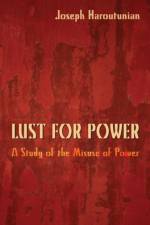
This book is a study of the misuse of power, which has become the chief social problem of our time. The usual attitude towards will to power is that it is a source of evil and should be held in check as much as possible. There is also the contrary attitude that will to power is a natural impulse that is indispensable for a good life. Our judgment in this matter depends upon whether it is we who seek power, or someone else.There is a natural love of power for a good end. There is also an unnatural lust for power that makes the exercise of power an end in itself. This lust is the corruption of love by a radical distemper in the human soul. It cannot be explained in terms of the quest for security, freedom, prosperity, or any other rational good. It is not caused, either by biological traits or by any particular environment. It is generated by man's despair with his destiny, by the ""power of death"" and the anxious guilt that prevail in human existence.Lust for Power is primarily a description of the process by which love of power is changed into lust for power, with special emphasis on the new power available in our technological society and upon the despair evoked by ""the modern world."" In the last chapter, faith and culture are presented as the double antidote to lust and as the conditions of a life at once natural and good.
Abonner på vårt nyhetsbrev og få rabatter og inspirasjon til din neste leseopplevelse.
Ved å abonnere godtar du vår personvernerklæring.