









Gjør som tusenvis av andre bokelskere
Abonner på vårt nyhetsbrev og få rabatter og inspirasjon til din neste leseopplevelse.
Ved å abonnere godtar du vår personvernerklæring.Du kan når som helst melde deg av våre nyhetsbrev.

CONTENTS:IntroductionKlyne Snodgrass""In Him All Things Hold Together"": An Ecology of AtonementWilliam P. BrownResponse to BrownMichael LeFebvreEffecting the Covenant: A (Not So) New, New Testament Model for the AtonementMichael GormanResponse to GormanTroy MartinResponse to MartinMichael Gorman""Anyone Hung On A Tree Is Under God's Curse"" (Deuteronomy 21:23): Jesus' Crucifixion and Interreligious Exegetical Debate in Late AntiquityPeter W. Martens""Happily Ever After?"" Paul Peter Waldenstrom: Be Ye Reconciled to GodMichelle A. Clifton-SoderstromResponse to Clifton-SoderstromTimothy L. JohnsonThe Social Dimension of Atonement in the Torah Viktor BerResponse to BerJeremy J. Wynne""To Those Who Were Distant and Those Who Were Near"": Atonement, Identity, and IdentificationBrian BantumAn Evangelical Feminist Perspective on Traditional Atonement ModelsLinda D. PeacoreResponse to PeacoreJo Ann DeasySaving Bodies: Anagogical Transposition in St. Gregory of Nyssa's Commentary on the Song of SongsHans BoersmaRansomed, Healed, Restored, Forgiven (John 5:1-16)Carol Noren
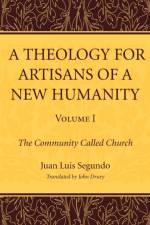
A THEOLOGY FOR ARTISANS OF A NEW HUMANITY Volume 1 The Community Called Church Volume 2 Grace and the Human Condition Volume 3 Our Idea of God Volume 4 The Sacraments Today Volume 5 Evolution and Guilt For many generations Christians have considered sin almost exclusively in terms of the individual person: ""my sins"" and ""your sins."" These sins, moreover, have been thought to have their roots in our ""fallen human nature,"" the consequence of original sin. Recently, however, the bishops and theologians of Latin America have begun to speak of ""sinful structures,"" ""sinful institutions,"" and even ""sinful societies."" These terms sound rather strange to North American ears, but an understanding of them is vital if Christians here are to live up to their calling to be both prophetic and creative agents for change within their communities-global as well as national. These communities are scarred by sinful structures and sinful institutions, if we but had the eyes to see them as they are. For the love taught and lived by Christ has ""a creative obligation,"" in Segundo's phrase: the obligation to move evolution forward into ever more truly human forms and structures. ""I have come to give life, and that more abundantly."" Segundo's reflections on the nature and meaning of that life make Evolution and Guilt a signal contribution to pastoral as well as political theology. It is paramount, however, a breakthrough in Christian moral theology, speaking to the major issues of our times.
A THEOLOGY FOR ARTISANS OF A NEW HUMANITY Volume 1 The Community Called Church Volume 2 Grace and the Human Condition Volume 3 Our Idea of God Volume 4 The Sacraments Today Volume 5 Evolution and Guilt
A THEOLOGY FOR ARTISANS OF A NEW HUMANITY Volume 1 The Community Called Church Volume 2 Grace and the Human Condition Volume 3 Our Idea of God Volume 4 The Sacraments Today Volume 5 Evolution and Guilt
A THEOLOGY FOR ARTISANS OF A NEW HUMANITY Volume 1 The Community Called Church Volume 2 Grace and the Human Condition Volume 3 Our Idea of God Volume 4 The Sacraments Today Volume 5 Evolution and Guilt
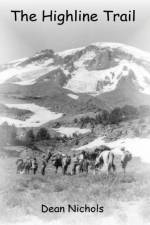
Mountain peaks, especially, are often shrouded in a mantle of cloud; their sides shrouded in a mantle of snow. But to the observant, listening heart, they are also shrouded in a mantle of mystery, a mantle of Spirit. And that Spirit speaks, and flows, and calls. Thirty miles north of our home, in White Salmon, Washington, ""Our"" Mountain, 12,307 foot, Mt. Adams, waits, and calls, and sends out her silent, inviting song.Summer, 1955: It has been written, ""Without dreams, even unfulfilled dreams, we should die.""Our family was very much alive. And so it was really not unexpected that the dream of walking the nearly sixty mile, ""Round the mountain trail,"" should begin taking the form of a vision.According to U.S. Forest Service maps; there was an ""Around the mountain trail."" And, the Forest Service people assumed us, dangerously, what we were to find, ""Oh yes, there is a good trail, all the way around the mountain."" Ah, but the irrepressible optimism of the human spirit. This story chronicles the results of that optimism, optimism held by two pairs of very ordinary parents, and by seven, very ordinary, but vibrantly alive, young children.It wasn't until we were well out on the trail, that that Spirit of the Mountain began to really stir the soul of this young, unpolished author, that here, indeed, was a dramatic, family adventure unfolding. So stay with this simple story, and travel the Highline Trail with us.Dean Nichols was born on the Yakima Indian Reservation in Washington in 1919, although his Indian forebears lived in Northern Maine. Dean grew up on the banks of the Columbia River. His high school days were spent working on water-rafting logs, running boom boats and decking on the tugs.A licensed tugboat captain and purser, he has worked as a port manager, an electrical and civil engineer, an air-traffic controller, a boat officer for the Alaskan Department of Fish and Game, and a marine-traffic officer for the Alaska Marine Highway. He followed in his father's footsteps to become a tugboat captain in the Pacific Northwest. He has studied the social and natural sciences, humanities, and business administration at Anchorage Community College.
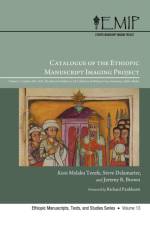
The Catalogue of the Ethiopic Manuscript Imaging Project (EMIP), volume 7, provides a full catalog for the collection of fifty-four manuscripts in the Meseret Sebhat Le-Ab collection at Mekane Yesus Seminary in Addis Ababa, Ethiopia. These include one late fifteenth- or early sixteenth-century manuscript of Jubilees and the Minor Prophets. Each catalog entry provides a full physical description, a listing of contents (with incipits), illuminations, varia (known works added later), notes on codicology and scribal practice, as well as a full quire map. Opening articles provide an introduction to the collection, a biography of Alaqa Meseret's life and work, an introduction to the Ethiopian musical tradition of Saint Yared, and a study on the textual character of the manuscript of Jubilees. Four indices (works, names, miniatures, and scribal practice) provide quick access for the researcher.""We are indebted to the Mekane Yesus Seminary in Addis Ababa for preserving the small, but interesting collection of 54 manuscripts here catalogued. Special thanks should go to its scholarly Librarian, Alaqa Meseret Sebhat Le-ab, who collected these works between 1977 and 1980.We are all no less grateful to the dedication of Professor Stephen Delamarter, and to his Ethiopic Manusript Imaging Project team from George Fox University in Portland, Oregon, who have expertly digitized this collection, as well as the considerably larger one at the Institute of Ethiopian Studies.""--From the foreword by Richard PankhurstKesis Melaku Terefe served the church in Ethiopia for several years in various positions in Awasa (southern Ethiopia) and Harar (eastern Ethiopia). For the last nine years he has served as priest in the Virgin Mary Ethiopian Orthodox Tewahedo Church in Los Angeles, California. He is in frequent demand, speaking in various churches through North America. He served as cataloger of the Wolf Leslau collection of Ethiopian manuscripts at the Charles E. Young Research Library at UCLA.Steve Delamarter is Professor of Old Testament at George Fox Evangelical Seminary, Director of the Ethiopic Manuscript Imaging Project (EMIP), Chair of the Society of Biblical Literature's Consultation on the Ethiopic Bible and Literature, and Project Co-Director with Ato Demeke Berhane in the British Library Endangered Archives Programme project (#286) to digitize and catalogue 5,749 items in the Manuscripts and Archives Department of the Institute of Ethiopian Studies in Addis Ababa, Ethiopia. Delamarter is also head of the steering committee for the Textual History of the Ethiopic Old Testament (THEOT) Project.Jeremy R. Brown works in the EMIP as director of digitization and technology. In December of 2008 and January of 2009, he served on a digitization team that worked in Ethiopia to digitize about 1,200 manuscripts. Between January and June 2010, he served as Director of Digitization and Conservation in the Endangered Archives Programme grant to digitize the collection at the Institute of Ethiopian Studies, Addis Ababa, Ethiopia.
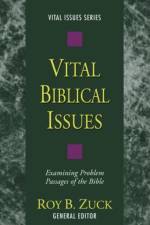
Vital . . . pertaining to life; essential; of critical importance.Biblical . . . in or according to the Bible.Issues . . . a point of mater, the decision of which is of special or public importance.A dictionary can define the terms, but deciding on the proper interpretation of tough biblical passages demands skillful study and mature reflection on the Scriptures.Vital Biblical Issues: Examining Problem Passages of the Bible draws upon the insights and study of numerous evangelical scholars and writers to address difficult interpretive issues from both the Old and New Testaments. Included are articles by Merrill F. Unger, Gleason F. Archer Jr., Michael P. Green, and S. Lewis Johnson Jr.Some of the issues discussed in this volume include: ""Did God curse one race of people?""""Did the Old Testament prophesy the Virgin Birth?""""What about the violence of the book of Psalms?""""Should Christian women cover their heads in worship?""Christian readers, church leaders, and pastors alike will appreciate the insights and scholarship of Vital Biblical Issues.Roy B. Zuck is Senior Professor Emeritus of Bible Exposition at Dallas Theological Seminary, where he taught for twenty-three years, including seven years as Vice President for Academic Affairs. He is editor of Bibliotheca Sacra and coeditor of the widely acclaimed two-volume Bible Knowledge Commentary. He has written or edited more than seventy books on Christian education and biblical and theological topics. His books include Teaching as Paul Taught, Spirit-Filled Teaching, and Basic Bible Interpretation.
Are children little angels or little devils, or are they like their parents a little of each? Must they go through a definite moment of conversion or can they grow up always knowing themselves to be Christian? How do theological ideas about human nature, sin and salvation affect how parents see and treat children? Starting with Horace Bushnell's classic 19th-century study, Christian Nurture, Leander Harding brings the discussion up to date with the help of insights from contemporary psychoanalytic thought and Family Systems Theory. Included are practical suggestions for parents and parishes.""This is a striking work, rich with concrete applications for faith development in families and ministry in the church.""--S. Mark Helm, Samuel Abbot Professor of Christian Theology, Andover Newton Theological School""Dr Harding shows us how to understand the child in a realistic way . . . and shows the way forward for the church . . . cooperating with God's grace to overcome the destructive forces that threaten the church's ability to be nourishing and full of wonder today.""--Jerome W. Berryman, Founder of Godly Play, Center for the Theology of Childhood""Bushnell's ground-breaking argument for the organic view of growth in the families of faith and home is as timely as ever in the midst of today's individualisms in culture and religion. Leander Harding makes that case persuasively in this important work.""--The Rev. Dr. Gabriel Fackre, Abbot Professor of Systematic Theology Emeritus, Andover Newton Theological SchoolLeander S. Harding, PhD, is ordained as a priest in the Episcopal Church. After many years of service in parish ministry he now teaches pastoral theology at Trinity School for Ministry in Ambridge, Pennsylvania, an evangelical seminary in the Anglican tradition. He is also the author of, In the Breaking of the Bread: A User's Guide to a Service of Holy Communion in the Anglican Tradition.
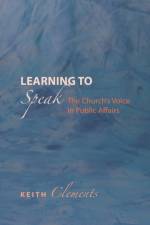
Churches and ecumenical bodies are often criticized for saying too much, or too little, on social and political affairs. But how can churches speak out on such affairs? How can churches participate effectively?Keith Clements questions the present preoccupation with making 'statements', which not only presupposes that a church has ready-made 'answers', but is also symptomatic of modern Western society's obsession with publicity and instant 'solutions' to what are often complex problems.Clements examines such historically famous statements as the German Barmen Declaration of 1934 and the South African Kairos Document of 1985, before exploring the biblical and theological roots of the key motifs of prophesy and discipleship. He suggests that Western churches must continue to listen and learn, not least from the way churches in regions such as South Africa, the Middle East, and Eastern Europe are relearning their roles.Clements concludes that Western churches must be prepared to talk modestly. They must be prepared to be both more disciplined and more imaginative. They must also be prepared to be more theological.Drawing on a wide range of sources, Catholic and Protestant, contemporary and historical, Clements points the way forward for a Christian community learning to speak in the world and to the world.
Sehnsucht: The C. S. Lewis Journal, established by the Arizona C. S. Lewis Society in 2007, is the only peer-reviewed journal devoted to the study of C. S. Lewis and his writings published anywhere in the world. It exists to promote literary, theological, historical, biographical, philosophical, bibliographical and cultural interest (broadly defined) in Lewis and his writings. The journal includes articles, review essays, book reviews, film reviews and play reviews, bibliographical material, poetry, interviews, editorials, and announcements of Lewis-related conferences, events and publications. Its readership is aimed at academic scholars from a wide variety of disciplines, as well as learned non-scholars and Lewis enthusiasts. At this time, Sehnsucht is published once a year.Grayson Carter is Associate Professor of Church History at Fuller Theological Seminary, where he has taught since 2002. Since its inception, Carter has served as General Editor of Sehnsucht: The C. S. Lewis Journal, the only peer-reviewed journal devoted to the study of C.S. Lewis and his writings published anywhere in the world.
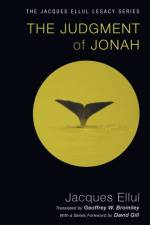
""This is not a commentary in the traditional sense. One might call it an existential commentary. An important aim of the author is to bring out the relevance of the story, of the person, mission, and situation of Jonah, to Christians in our own time."" ""Above all, this is a theological, or --more specifically -- a christological commentary. The author's chief aim is to relate the book, not to Christians, but to Christ. Ellul thinks Christ is the center of all Scripture, and he also takes seriously the specific reference which Christ makes to the sign of Jonah. If this reading is correct, and the Bible is indeed a unity, the exposition of Ellul, though not developed in detail, has a distinctive theological contribution to make."" ""Those who want acute theological insight, and are not afraid of plain, hard-hitting application, will read this vivid study with relish and profit."" -- From the Preface by G. W. Bromiley
Drawing on both pastoral and scholarly experience, John Holbert offers a fresh approach to the preaching of a familiar scripture.To be a Joban preacher, he says, is to draw on the pain and honesty inherent in the text. Holbert understands the preacher's task as interpreting the whole of the book of job, not just the narrative and the poetry.This integrative approach allows the book's entire theology to inform sermons. Included for illustration are an embodied sermon and a narrative sermon based on passages from Job.
Mobilizing a Great Commission Church for Harvest addresses practical aspects of evangelism in the local church, with the voices and views of nineteen current Southern Baptist professors of evangelism. They address important topics to local church evangelism, such as ""Invitations with integrity"" and ""Preparing for Spiritual Warfare."" Key leaders and professors write in their areas of expertise. For examples, Alvin Reid writes on ""Mobilizing Students,"" David Wheeler on ""Servant Evangelism,"" Josef Solc on ""Sports Evangelism,"" and Darrell Robinson on ""The Evangelist."" In addition, the book begins and ends with two different applications of Matthew's Great Commission.Mobilizing a Great Commission Church for Harvest is a gold mine of information for both pastor and deacon, as it is for students considering the importance of evangelism to local church ministry. It is fresh, new, and true--as all of its authors teach at SBC-affiliated schools and are grounded in the Bible as the inerrant Word of God!Contributors Include: Eddie PateDavid MillsWill McRaneyBill HenardChuck LawlessDarrell RobinsonJake RoudkovskiPaul ChitwoodMark TolbertKen HemphillPreston NixJ. D. PayneAdam GreenwayDavid WheelerJosef SolcAlvin ReidEddy PearsonTim BeougherThomas P. Johnston is Associate Professor of Evangelism at Midwestern Baptist Theological Seminary. He is the author of Examining Billy Graham's Theology of Evangelism (Wipf & Stock, 2003), Charts for a Theology of Evangelism (2007), Evangelizology (2010), and A Historical Theology Duo: Inquisition and Martyrdom + Chronological Theology (2010).
""Michael Pasquarello has written a 'must read' book articulating a Trinitarian vision for preaching. His compelling argument is richly informed by traditional biblical hermeneutics, creedal history understood as storied attestation of the witness of Scripture, and liturgical theology and practice considered as embodied performance of the Bible's divine narrative. Here is a clear summons to the church to abandon all lesser homiletic aims and to prayerfully and faithfully proclaim the holy gospel to the glory of God.""--Charles L. Bartow, Princeton Theological Seminary""Like all of Michael Pasquarello's work, his newest book not only upholds the classical Christian tradition but also breathes new vitality into it. In an era in which preaching is reduced to persuasive communication, Pasquarello reminds us that the Christian message has a content that originates in and gives expression to the Father, Son, and Holy Spirit.""--Richard Lischer, Duke Divinity School""One of the refreshing things about this fine book by Michael Pasquarello is that, when he thinks about the ministry of preaching, he is not afraid to measure the breadth historically or plumb the depths theologically. Pasquarello has written this book like a good sermon--faithfully, thoughtfully, prayerfully, and with a profound word to speak. We are in his debt.""--Thomas G. Long, Candler School of Theology""Boldly challenging homiletical accommodation to American culture, Pasquarello seeks to change the subject of preaching from method and 'marketing' to the Triune God, who is the source and goal of our speech. A welcome theological vision of preaching.""--Charles L. Campbell, Columbia Theological Seminary""Christian Preaching brings together two disciplines that have sadly grown apart such that they almost developed irreconcilable differences--preaching and theology. Pasquarello offers a brilliant critique of theology as technique and draws on the theology and sermons of Irenaeus, Augustine, Luther, Wesley, and others, convincingly demonstrating that effective, pragmatic preaching requires substantive theological engagement (and vice versa). This book accomplishes its purpose so well that it should be used not only in preaching courses but also in basic theology courses. No preacher should be let loose on a congregation without passing through Pasquarello's Christian Preaching.""--D. Stephen Long, Marquette UniversityMike Pasquarello III (PhD, University of North Carolina, Chapel Hill) is Granger E. and Anna A. Fisher Professor of Preaching at Asbury Theological Seminary. He is the author of Sacred Rhetoric: Preaching as a Theological and Pastoral Practice of the Church.
Dale Patrick examines the first five books of the Bible--the Pentateuch--the Law.He provides an effective method for studying and understanding this vital part of the canon. His introduction concentrates on the exposition of the major thrust of Old Testament Law: the Ten Commandments, the Book of the Covenant, the Deuteronomic Law, the Holiness Code, and the Priestly Law.Law--rules and regulations, concepts and principles, legal codes--written and unwritten. Patrick tackles important questions surrounding the formation of the Law. What is the Law? How was it formulated? What implications does the Law of the Israelites have for Christians today? Patrick's deft handling and answering of these questions results in a book that provides a means to understand the specific rules governing the concepts and principles of the written law so that we may grasp the unwritten law; i.e., the justice, righteousness, and holiness required by God.Patrick offers critical exposition in a format that makes a seemingly difficult and esoteric part of the Bible accessible to the reader. This introductory text serves as a springboard to further study.
The United Church of Christ was formed in 1957 to be first and foremost a proactive agent in the often tangled but nonetheless breathtaking ministry and mission of ecumenicity in the pursuit of ever greater visible unity among the diversity of Christian churches. This singular task of ecumenicity is arguably the most crucial in the formulation of an ecclesiology essential to the United Church of Christ as a ""united and uniting"" church; a mission Albert Walsh refers to in this book as her God given ""vision-and-vocation."" In United and Uniting, Walsh contends that the identity and self-understanding of the UCC at both national and local levels is best comprehended as a ""Christ-centered"" and ""conciliar"" fellowship, and therefore her ecclesiology must be fundamentally ecumenical. A Christ-centered ecumenicity must shape, inform, and characterize the whole of her ecclesiology, and membership in the UCC is defined almost exclusively in terms of a ""conciliar"" identity. Walsh advocates a return to ecumenical formation at the level of the grassroots or membership in the local congregation as holding the greatest promise for furtherance of the wider ecumenical mission.""In United and Uniting Bert Walsh offers a clarion call to the church to revive its ecclesiology. Rather than focusing on self-preservation, marketing gimmicks, or current social issues, Walsh passionately argues for an ecumenical ecclesiology that is Christ centered. While primarily addressed to the United Church of Christ, anyone interested in promoting an ecclesiology that is one, holy, catholic, and apostolic in our age of pluralism and relativism will appreciate Walsh's enthusiasm.""-H Drake Williams, IIIAssociate Professor of New TestamentTyndale Theological Seminary in Badhoevedorp, the Netherlands ""Albert Walsh has written a passionate appeal to fellow members of the United Church of Christ that should be of interest to all persons committed to the unity of the church. He provides a clear and well-written call to a renewed concern for unity and the common faith of the church. Engagement with his own tradition is combined with a vision for the wider fellowship.""-Michael Root DirectorCenter for Catholic and Evangelical TheologyAlbert J. D. Walsh is pastor of Heidelberg United Church of Christ in Hatfield, Pennsylvania, where he has held office for twelve years. Ordained in 1981, Pastor Walsh has served churches throughout the Pennsylvania Southeast Conference. Pastor Walsh's sermons have been published in The Minister's Manual (1989-2007) and INSIGHTS (1991-2010). He is the author of Reflections on Death and Grief: Pastoral Insights (2010).
In Beyond Rhetoric, the late Samuel Hines and Curtiss DeYoung place reconciliation at the very center of God's agenda for humankind. In so doing, they provide both inspiration and guidance for faithful Christian living that embraces a passionate pursuit of reconciliation.
This book examines 2 Cor 6:14--7:1 and argues that its theological message is communal holiness. It culminates in an attempt to posit a Pauline theology of corporate sanctification in the Corinthian correspondence. Paul's view of sanctification, it is argued, should be seen as multifaceted: relational, communal, ethical, and mission-oriented. Thus, a coherent picture of Pauline teaching on holiness in the Corinthian correspondence emerges from this book. For Paul, the focus of God's redemptive activity is, primarily, the community and not the individual. Paul's view on holiness has to do with communal holiness within the people of God, the goal of which is to make God known to the wider society. In sum, this book argues that the teaching on holiness should not be, and cannot be, satisfactorily explained in terms of the individual, but only as the individual stands in relation to the community of faith. Thus, the conclusion offers a corrective to some strands of modern interpretation that emphasize the individualistic, experiential aspects of Christian holiness, thus tending to reduce Christian holiness to morality.""Many studies of holiness from within the holiness movement in the Christian church tend to view the topic in terms of relationship of individual believers to God and their growth toward personal perfection. J. Ayodeji Adewuya rightly recognizes that there is also a call to the church to be holy, as befits its status as the people of God, and in this book he develops this theme on the basis of a careful exegetical study of 2 Cor 6:14--7:1. This book is significant not only for its firm academic grounding of its thesis but also for its relevance to the life of Christian congregations as they seek to become all that God intends them to be.""-- I. Howard Marshall, Honorary Research Professor of New Testament, University of Aberdeen, Scotland""Scholars have long debated whether 2 Cor 6:14--7:1 actually fits either in the context of 2 Corinthians or within the larger Pauline corpus. Dr. Adewuya ably demonstrates that this passage fits well both in its literary context and within the larger Pauline theological context as an expression of Paul's theology of holiness. This serves as a welcome corrective to those who have assumed that Paul had little to say about personal holiness. I highly recommend this book.""-- Ben Witherington, III, Professor of New Testament Asbury Theological Seminary, Lexington Kentucky""Dr. Adewuya's reading of this notoriously difficult passage in Paul's 2nd Corinthians has been informed quite positively by his unique blending of African communal experiences and traditions with his thorough education in the historical methods of Euro-American exegesis. The result is the most illuminating and convincing contextualizing of this perplexing passage known to me. I urge all who seek to grasp more closely Paul's assumptions, strategies, and goals in his letters to the Corinthians to examine the treasures in this book with great care.""-- S. Scott Bartchy, Professor of Christian Origins and History of Religion, University of California, Los AngelesJ. Ayodeji Adewuya PhD (University of Manchester), pastor and former missionary in the Philippines, is Professor of New Testament at the Pentecostal Theological Seminary, Cleveland, Tennessee. He is also the author of Transformed by Grace: Paul's View of Holiness in Romans 6-8, and A Commentary on 1 & 2 Corinthians.
Domestic abuse is a horror. It lurks beneath the surface of our collective existence, sometimes raising its ugly head where least expected-in the church or within families of faith. Are we-individually or collectively-ready to respond? What can, or should, congregations and their pastoral leaders do? And, as we survey the Christian landscape across the United States and Canada, are we as the community of faith stepping up to the challenge presented by violence in the family?There is no easy answer to the problems that surface when abuse impacts the Christian family. But each of the authors contributing to this volume believes fervently that it is imperative that followers of Jesus and their spiritual shepherds respond to the cries for help. To respond well necessitates both knowledge and a willingness to act.This book is here to help. It represents a collective effort to bring all of us a step farther in our journey of walking with Christ over a sea of troubled waters. None of us know as much as we should, but all of us can learn from one another. Throughout the collection we provide an opportunity to examine a diversity of perspectives, with the hope that each will in some way advance our understanding of the complexity of domestic violence issues in our midst-within our churches and the communities where our churches minister.Nancy Nason-Clark is Professor of Sociology at the University of New Brunswick in Fredericton, Canada. She is the author of many books including, The Battered Wife: How Christians Confront Family Violence (1997), No Place for Abuse: Biblical and Practical Resources to Counteract Domestic Violence (2nd edition, 2010; with Catherine Clark Kroeger), and Refuge from Abuse: Hope and Healing for Abused Religious Women (2004; with Catherine Clark Kroeger). Catherine Clark Kroeger was Adjunct Associate Professor of Classical and Ministry Studies at Gordon-Conwell Theological Seminary. With James Beck she edited Women, Abuse, and the Bible (1996), and with Mary Evans she edited the IVP Women's Bible Commentary (2002). She is a co-founder of Christians for Biblical Equality, and with her late husband Richard Kroeger, she wrote I Suffer Not a Woman (1992).Barbara Fisher-Townsend is an Assistant Professor of Sociology at the University of New Brunswick in Fredericton, Canada. Since 2005 she has been involved in the Lilly funded RAVE Project. She co-edited Beyond Abuse in the Christian Home: Raising Voices for Change (2008). At present, she is working on a co-authored book manuscript with Nancy Nason-Clark on religious men who act abusively.
CONTENTSPreface, by Anthony Bellagamba, IMCPart One: Mission in the World Today1. Conversion and Mission, by Enda McDonagh2. New Challenges--New Hopes, by Donal Dorr3. The Message of Puebla, by Marcos McGrath4. The Church in Latin America, by Jose Comblin5. The Future of Mission in Asia, by Parmananda Divarkar6. The Church in Africa, by Brian HearnePart Two: Pastoral Aspects of Mission7. The Church, the Icon of the Trinity, by Brian Hearne8. Mission Today, by Walbert Buhlmann9. Dialogue with Other Religions, by Parmananda Divarkar10. Recognizing Our God, by Priscilla Sequeira11. Christian Witness in Today's World, by Cahal Daly12. The Role of Women in the Church, by Mary Motte13. Basic Christian Communities, by Brian Hearne14. Basic Communities--The African Experience, by Raphael Ndingi15. A Layman's View of the Future of Mission, by August VanistaendalPart Three: The Spiritual Life of thee Missionary16. Missionary Spirituality, by Walbert Buhlmann17. A Missionary Reflection from St. John, by John Quinlan18. Faith--A Personal Encounter, by Finbarr Connolly19. Poverty in the Church, by Jose ComblinPart Four: The Challenge of Justice20. From Development to Justice, by Richard Quinn21. The National Security State, by Jose Comblin22. The Situation of Violence, by Jose Comblin23. Love of God Leads to Justice, by Peter J. Butelezi Part Five: Making the Church Incarnate24. Inculturation, by Parmananda Divarkar25. Incarnating the Message of Christ in Different Cultures, by Walbert BuhlmannPadraig Flanagan, SPS is a priest of St. Patrick's Missionary Society, Ireland. He was a missionary in Nigeria for fifteen years.
More than two hundred years ago, John Wesley declared: ""There is no holiness save social holiness!"" He meant thereby to reject an exclusively individualistic version of Christianity, and to affirm his intention to ""spread scriptural holiness across the land, and reform the nation."" In Wesley's view, the spheres of influence denoted in the biblical terms ""sin"" and ""salvation"" thus have communal dimensions which both engage and encompass every individual life. This collection of affirmations of faith, based on sermons delivered from a United Methodist pulpit, stands under the long shadow of Wesley's view. Sin is a corporate and cultural manifestation of separation from God. Salvation occurs through the invasion of God's grace, remaking common life. Preaching describes the separation and announces the invasion.Robert Allan Hill teaches in the areas of Biblical Studies and Practical Theology. Since 1981 he has taught in several schools including McGill University, Syracuse University, Lemoyne College, Colgate Rochester Crozer Divinity School, Northeastern Seminary, United Seminary, and various church settings. His passionate interest lies at the intersection of Scripture and life, especially in the work of preaching. Hence his research has combined publications related to the Gospel of John and Gnosticism, on the one hand, and preaching in ministry, on the other. For example, An Examination and Critique of the Understanding of the Relationship between Apocalypticism and Gnosticism in Johannine Studies appeared in 1997, while Snow Day: Reflections on the Practice of Ministry in the Northeast was published in 2000. Most of his writing, however, has been devoted to weekly sermons, over thirty years, in seven pulpits, some of which are collected, taped, and published. Hill has taught Greek, New Testament, Preaching, The Practice of Ministry, Church Administration, and other courses. His perspective on pastoral theology focuses on the special needs of the church in the northeastern USA in the twenty-first century. Hill is currently Dean of Marsh Chapel and Professor of New Testament and Pastoral Theology at Boston University.
Sean M. McDonough traces the story of the name YHWH in the New Testament era, and its bearing on the interpretation of Revelation 1:4.
How was the scriptural imagery used in the Song of Songs to speak of the Bridegroom and the Bride? Mark W. Elliott presents a range of interpretations paying attention to the context of the commentators in the Early Church.
Darrell D. Hannah engages the debate over 'angelomorphic Christology'. He shows that more than one form of angel or angelomorphic Christology was current in early Christianity and that Michael traditions in particular provided a conceptual framework in which Christ's heavenly significance was understood.
Abonner på vårt nyhetsbrev og få rabatter og inspirasjon til din neste leseopplevelse.
Ved å abonnere godtar du vår personvernerklæring.