












Gjør som tusenvis av andre bokelskere
Abonner på vårt nyhetsbrev og få rabatter og inspirasjon til din neste leseopplevelse.
Ved å abonnere godtar du vår personvernerklæring.Du kan når som helst melde deg av våre nyhetsbrev.

Is there a basic difference in thinking between Western and non-Western societies? This long-debated yet highly topical problem forms the central question to which distinguished contributors in the fields of psychology, linguistics, history, and sociology and, more particularly, of social anthropology and philosophy, address themselves in this interdisciplinary collection. They are: Barry Barnes, Benjamin N. Colby and Michael Cole, Ruth Finnegan, Ernest Gellner, Robin Horton, J. M. Ita, Hilary Jenkins, Steven Lukes, Nobuhiro Nagashima, S. J. Tambiah, W. H. Whiteley, and Sybil Wolfram.The central ideas of this classic work are reformulated and refined in the various contributions with different possible dichotomies discussed such as: 'traditional/modern', 'industrial/non industrial', or 'scientific/non-scientific', and 'thinking,' analyzed in terms of its thought processes, content, logic or social background.The material in the book, which is dedicated to Sir Edward Evans-Pritchard, falls within the general area of the comparative sociology of knowledge, and will thus particularly interest philosophers, social anthropologists, and sociologists. The volume is however conceived in an interdisciplinary spirit and will be of interest to anyone seriously concerned to examine the nature of thinking in our own and other societies.
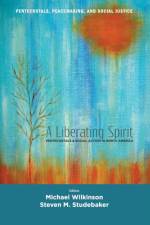
The historical ambivalence among Pentecostals about their relationship to culture and society needs evaluation. How do we understand Pentecostal engagement with society, and how are Pentecostals in North America engaging issues of race, class, gender, and ecology? What theologically motivates North American Pentecostals to respond to social issues? What categories best explain Pentecostal responses to social issues in North America? How do they compare to Pentecostal responses elsewhere? Recently, scholars of global Pentecostalism have proposed that the experience of the Spirit among Pentecostals has elicited the development of a Pentecostal ""theology of liberation,"" which has implications for understanding Pentecostal responses to social issues. These projects primarily explore the Pentecostal response to cultural issues in areas outside of North America and especially focus on Africa, Asia, and Latin America. This volume assesses whether the categories of social liberation applied to non-Western Pentecostalism characterize Pentecostalism in North America. Is there evidence of a Pentecostal ""theology of liberation"" that explains Pentecostal engagement in North America? Do social-liberation categories fit the North American Pentecostal responses to social issues or are others more suitable? These and other important questions about the relation between liberation theology and North American Pentecostalism are thoroughly explored in this important collection of essays.""This significant collection of essays by theologians and social scientists addresses an important but understudied topic: the relationship between Pentecostalism and social action. By going beyond surface images and simple dichotomies (e.g., ''liberal'' and ''conservative''), the contributors demonstrate that contradictory forces in Pentecostalism have both constrained and liberated. More importantly, they point the way toward a more socially engaged future. Anyone with an interest in social justice or Pentecostalism should read this book."" --Matthew LeeUniversity of Akron""This is an important, thought-provoking, and timely collection with an array of burning issues in today''s world that are seldom discussed in Pentecostal academia. It is one of those paradigm-changing publications that should be read widely.""--Allan AndersonUniversity of Birmingham, UK""This book can be seen as a manifesto for a progressive North American Pentecostalism that connects the freedom of the Holy Spirit granted at Pentecost with social liberation and renewal. One finds a number of essays here that break through deprivation theories and assumptions concerning the inherently otherworldly nature of Pentecostalism to uncover another, much more liberating direction to the movement. This book is a must read for theologians, social scientists, religious historians, and anyone interested in the social witness of the churches.""--Frank D. MacchiaVanguard University of Southern CaliforniaMichael Wilkinson is Associate Professor of Sociology and Director of the Religion in Canada Institute at Trinity Western University. His is the author of The Spirit Said Go (2006) and the editor of Canadian Pentecostalism (2009). Steven M. Studebaker is Assistant Professor of Systematic and Historical Theology at McMaster Divinity College. He is the editor of Defining Issues in Pentecostal Theology (Pickwick, 2008).
This volume of ecumenical documents, key texts, and critical essays is the first collection of its kind exclusively dedicated to Pentecostalism and its contributions to Christian unity. In the first part, a cadre of internationally renowned scholars addresses the ecumenical heritage and perspectives of the Pentecostal movement since the early twentieth century. Part 2 offers a collection of final reports from international dialogues with Pentecostal participation. The final part contains programmatic essays in response to The Nature and Mission of the Church, a major study on the doctrine of the church published by the World Council of Churches. Most of these essays were first presented by the ecumenical-studies group of the Society for Pentecostal Studies, currently the only organized ecumenical think tank among Pentecostals in North America. Since its formation in 2001, the group has encouraged Pentecostal participation in ecumenical concerns, has hosted Roman Catholic-Pentecostal conversations at the annual meeting of the Society, has invited international scholarly debates on ecumenical matters, and has engaged in the study of ecumenical consensus statements. The essays and documents in this collection model the dedication and commitment among Pentecostals today that engage the challenges and opportunities of Christian unity from the perspective of a tradition that has often been falsely accused of being anti-ecumenical. This collection presents an invaluable resource for teachers, scholars, and pastors interested in engaging the global Christian arena from the worldwide and ecumenical image of Pentecostalism.Contributors Carmelo E. AlvarezHarold D. HunterDouglas JacobsenVeli-Matti KarkkainenFrank D. MacchiaRaymond R. PfisterCecil M. Robeck Jr.Paul van der LaanWolfgang Vondey""Of all of the dialogues with whom the Roman Catholics have been involved in the evangelical community, the Pentecostal may be the most interesting and influential. The Pentecostal and Catholic communities have experienced serious tension in certain parts of the world, especially in Latin America. Therefore these dialogues, and the reflections brought together in this book, should be a rich source for the task of making the results of the dialogues a common heritage in Catholic and Pentecostal seminaries, colleges and universities, and congregations around the world. Dr. Vondey has assembled a line-up of Pentecostal scholars known for their depth, scope, and fairness, a set of essays that should be of interest well beyond the Catholic and Pentecostal communities.""--Jeffrey Gros, FSCMemphis Theological Seminary""In the field of ecumenism the common perception is that the youngest and fastest growing movement in global Christianity has been absent. Pentecostalism and Christian Unity will not only expose this misunderstanding, but also prove to be an invaluable resource. Along with official bilateral documents, a series of essays documents the nature of Pentecostal ecumenical engagement and provides mature theological reflection on how to proceed. The ecumenical movement will be both enriched and challenged by this contribution.""--Ralph Del ColleMarquette UniversityWolfgang Vondey is Associate Professor of Systematic Theology at the School of Divinity of Regent University. He is the author of Beyond Pentecostalism: The Crisis of Global Christianity and the Renewal of the Theological Agenda (2010) and People of Bread: Rediscovering Ecclesiology (2008).
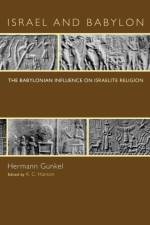
Franz Delitzsch''s lectures in 1902 and 1903 set off the Babel-Bible controversy, which rocked Europe and North America. In this searing critique of Delitzsch, Gunkel provides his own analysis of the relationship between ancient Israel and Babylon. In this edition, Gunkel''s original work is newly translated, with a new Foreword, notes, bibliographies, and indexes.""Hanson''s new translation and edition of Gunkel''s classic response to the Delitzsch''s views of the Babel-Bible controversy is a welcome addition to the growing work on the relationship of Mesopotamia and Israel in antiquity. The new edition of Gunkel''s work places in historical context the sometimes overly strong reaction against Delitzsch, headed in part by Gunkel. Hanson has provided scholars a great service in this edition, as he has composed an excellent Foreword, which contains a contemporary evaluation of Delitzsch''s claims, as well as a solid review of the comparative method used today to investigate Mesopotamian and Israelite connections. Hanson deserves thanks from those of us in the field of Mesopotamian and Biblical studies."" --Mark W. Chavalas, University of Wisconsin-La Crosse""Hermann Gunkel was one of the ''greats'' of modern Biblical scholarship . . . Written in the context of the famous ''Babel-Bible'' debate of the beginning of the twentieth century, this book, in a lively, even passionate way, raises some important questions about how to compare cultures and assess their relationships to each other--questions that have not lost their value more than a century later. We must be grateful, therefore, to K.C. Hanson for bringing Gunkel''s book back into print in a revised translation with helpful introduction, notes, and up-dated bibliography.""--Peter Machinist, Harvard Divinity SchoolHermann Gunkel (1862-1932) was Professor of Old Testament at the universities in Berlin, Giessen, and Halle, Germany. Among his major works in English are Genesis, Introduction to the Psalms, and Creation and Chaos in the Primeval Era and the Eschaton.K. C. Hanson, editor and translator, is editor in chief at Wipf and Stock Publishing. He is the co-author of Palestine in the Time of Jesus, 2nd ed. (with Douglas E. Oakman).
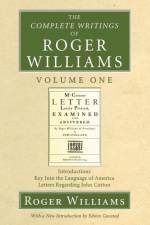
Ten years after the U. S. Civil War, a group of men in Rhode Island made a conserted effort to rescue the widely scattered writings of Roger Williams. Few sets were printed though, and under the guidance of Perry Miller, The Complete Writings of Roger Williams were brought back in 1963, but still in short numbers. The present collection now makes these volumes available to readers in their original orthography.The theme of religious liberty is dominant in these volumes, running through Williams''s correspondence with John Cotton and on through his famous pair of works on The Bloudy Tenent of Persecution. All of the extant shorter writings and letters of Roger Williams are included in this set, along with two significant works resulting from his engagement with Native Americans: his seminal Key into the Language of America and Christenings Make Not Christians.""Roger Williams was one of those rare individuals who took the accepted ideas of his time and followed them to conclusions that challenged his contemporaries and still challenge us. To have his complete writings once again available is a great service to all who would understand American religion and political institutions at the deepest level.""Edmund S. MorganSterling Professor of History Emeritus Yale University""It has been America''s great good fortune that Roger Williams''s career stood at the beginning of its history. Just as some experience in the youth of a person is ever afterward a determinant of his personality, so the American character has inevitably been molded by the fact that in the first years of colonization there arose this prophet of religious liberty. Later generations could not forget him or deny him. The image of him in conflict with the founders of New England could not be obliterated; all later righteous men would be tormented by it until they learned to accept his basic thesis, that freedom is a condition of the spirit.""Perry Miller (1963)Roger Williams (1603-1683) grew up in Puritan circles in London, sailed to Massachusetts in 1630, and, having been banished for his controversial views on the separation of church and state, founded Rhode Island on the basis of his new principles of religious liberty.
Sehnsucht: The C. S. Lewis Journal, established by the Arizona C. S. Lewis Society in 2007, is the only peer-reviewed journal devoted to the study of C. S. Lewis and his writings published anywhere in the world. It exists to promote literary, theological, historical, biographical, philosophical, bibliographical and cultural interest (broadly defined) in Lewis and his writings. The journal includes articles, review essays, book reviews, film reviews and play reviews, bibliographical material, poetry, interviews, editorials, and announcements of Lewis-related conferences, events and publications. Its readership is aimed at academic scholars from a wide variety of disciplines, as well as learned non-scholars and Lewis enthusiasts. At this time, Sehnsucht is published once a year.Bruce R. Johnson (DMin, Fuller Theological Seminary) is Pastor of Scottsdale Presbyterian Church in Scottsdale, Arizona, and President of the Arizona C. S. Lewis Society. He has lectured on C. S. Lewis in Britain and the United States, and written on Lewis for SEVEN: An Anglo-American Literary Review, The Journal of Inklings Studies, CSL: The Bulletin of the New York C. S. Lewis Society, and Sehnsucht: The C. S. Lewis Journal, as well as contributing a chapter to C. S. Lewis''s Perelandra: Reshaping the Image of the Cosmos (2013). The focus of his current research is the work of C. S. Lewis with Royal Air Force Chaplains'' Branch during World War II.
The thesis shows that the Song of Songs can be read as a circular sequence of sub-poems, that follow logically from one another if they are understood as contributing to two main points, made in a woman''s voice. The woman urges men to take romantic initiative to be committed exclusively and for life, and urges women three times to wait until they are approached by such men. If this reading is the best explanation of the text of the Song, then the Song is a unified work centered on a woman singing about human romantic love from a woman''s perspective.""Alastair Haines presents a masterful examination of the purpose and function of Song of Songs within the biblical canon. Through in-depth analysis of the literary structure of the book, character presentation, and the kind of language utilized, he brings a fresh appreciation of the rich textures within the book and its enduring importance within the biblical canon.""--David J. Cohen, Head of Biblical Studies and Lecturer in Hebrew Bible and Language, Vose Seminary, Australian College of TheologyAlastair Ian Haines is an independent researcher in the theology of gender. He has also had articles published in other areas of interest. He lives in Sydney with his wife and son and attends church with an ethnically Indonesian congregation.
The Curetonian Version of the Four Gospels, with the readings of the Sinai Palimpsest and the early Syriac Patristic evidence, edited, collected, and arranged by F. Craw Burkitt, MA University Lecturer in Palaeography.
This is the first of three essays in fundamental theology--along with Religious Pluralism and Christian Truth (1996) and Conventional and Absolute Truth (2015)--which attempt to reassess the status of Christian doctrinal language within the contemporary ""regime of truth."" In light of Heidegger''s ""overcoming of metaphysics,"" it revisits the age-old tension between Athens and Jerusalem--between the metaphysical structures of the Greek mind and the texture of the biblical events of revelation and salvation. A deconstructive reading that traces this tension in classical Christian texts--continued in later studies. Including Christianisme et philosophie chez Origene, Editions du Cerf, 2011--clears the ground for a step back to biblical realities as they are apprehended in contemporary consciousness.""This book elaborately and masterfully provides the sort of rethinking of Christian doctrine which I proposed two decades ago in The Future of Belief. It is a superlative achievement of scholarly yet lucid reasoning. It will answer the needs of many contemporary Christians.""Leslie Dewart, St. Michaels College, University of Toronto""O''Leary writes with great imagination, Nietzschean skill, zest, and profound fidelity to Christian revelation. An exemplary book in every sense.""Fergus Kerr, OP, Theology Faculty, Oxford University""Many have written about the crisis of faith and theology; O''Leary provides a remarkably penetrating diagnosis of the sickness and offers an original treatment. A remarkable and provocative analysis of what has gone wrong with the Christian enterprise.""Paul M. van Buren, Religious Studies, Temple University""The author breaks the conspiracy of silence that now surrounds the theological bankruptcy of the churches. He really confronts the crisis of faith and understanding that stems from this metaphysical tradition and its world negating images, a crisis which is certainly one of the main factors generating new fundamentalisms and dogmatic orthodoxies.""Gibson Winter, Social Ethics, Princeton Theological SeminaryJoseph S. O''Leary is an Irish theologian resident in Japan since 1983. He was a professor at Sophia University, Tokyo, from 1988 to 2015, and held the Roche Chair for Interreligious Research at Nanzan University, Nagoya, 2015-16. His current research is devoted to a philosophical and theological dialogue with Indian Mahayana Buddhism.
""Here at last we have in Professor Phillips' book an indispensable road map to guide us in our understanding of Christianity in postwar Japan. His research is impressive, prodigious, and carefully conceived. His findings are illuminating, disturbing, and hopeful. I predict that this book will remain definitive in its field for many years to come."" Robert Lee, San Francisco Theological Seminary, author of Stranger in the Land: The Church in Japan ""A helpful survey and source book for the understanding of the historical development of Christianity in Japan since 1945."" Masao Takenaka, Doshisha University, Kyoto, Japan ""This is an illuminating and scholarly study of the churches in Japan since 1945, churches of special interest because they have faced momentous changes and in some cases have been in continuous ferment. This book has significance also because it is about churches in which there has been intensive theological and social activity as they have gained more and more independence of the west; they have become a relatively new and very distinctive arena of Christian life."" John C. Bennett, former president, Union Theological Seminary, New YorkJames M. Phillips served for seventeen years as a church fraternal worker in Japan, teaching church history at Tokyo Union Theological Seminary. He also served as Visiting Professor of Church History at San Francisco Theological Seminary and the Graduate Theological Union.
Publication date: 1898 Notes: This is an OCR reprint. There may be typos or missing text. There are no illustrations or indexes. When you buy the General Books edition of this book you get free trial access to Million-Books.com where you can select from more than a million books for free. You can also preview the book there.
In this book, the problem of the reality of salvation is addressed by T.F. Torrance's doctrine of ""the vicarious humanity of Christ."" Through this approach, salvation as humanization is affirmed, yet without the problems of anthropocentric theologies. This book is unique in that it offers both a survey of contemporary Christian thinking on salvation as well as a constructive alternative based on Torrance's doctrine, a significant yet neglected contribution to modern theology.Christian D. Kettler is Professor of Theology and Philosophy, Director of the Master of Arts in Christian Ministry program at Friends University in Wichita, Kansas, an ordained minister in the Presbyterian Church (USA), and Theologian in Residence at the Church of the Savior in Wichita. He is the author of The God Who Believes: Faith, Doubt, and the Vicarious Humanity of Christ (Cascade, 2005), Reading Ray S. Anderson: Theology as Ministry, Ministry as Theology (Pickwick, 2010), and coeditor (with Todd H. Speidell) of Incarnational Ministry: The Presence of Christ in Church, Society, and Family: Essays in Honor of Ray S. Anderson (Wipf and Stock, 2009).
The assumption that Romans 6 and 1 Corinthians 15 reflects a borrowing of ideas from Graeco-Roman mystery initiations is not the likeliest explanation of these texts nor does justice either to recent studies of the mysteries nor to the difficulty in reinterpreting ""resurrection"" to refer to a spiritual state which the baptized enjoyed in the present.Spiritual phenomena may have shown early Christians in the Graeco-Roman world that they had ""life,"" but not ""resurrection."" ""Dying with Christ"" has other roots than the mysteries and the latter should not be interpreted in the light of Paul, but dying and coming to life again is a theme common to a great many rites of passage.
Everyone, it seems, struggles with moral and ethical issues. On a daily basis, newspapers, television, radio, and magazines feature the moral scandals of political, religious, and business leaders, not to mention entertainers. Moral failure has become so common that it no longer shocks us. We wonder whether it is possible to be morally good in a largely secular society. What is the source of moral authority? Do we need God to be good?In Why Bother Being Good? John Hare explores the nature of goodness, the human condition, the role of reason and the value of community in moral development, and shows how these relate to the doctrines of atonement, justification and sanctification. Writing for a general audience, Hare carefully defines terms and uses poetry and narrative to help the reader follow his arguments. He says, ""If all the arguments in this book work, what I have shown is that the morality we are familiar with requires a theological background if it is going to make sense.""Unique and surprisingly fresh, this book is an excellent introduction to moral philosophy.John Hare is Noah Porter Professor of Philosophical Theology at Yale Divinity School. He is the author of The Moral Gap and God's Call.
""Situated as they are within the Philippine Evangelical tradition, yet supported by wide reading in other traditions, the reflections of Melba Padilla Maggay come through to the Roman Catholic reader as both strikingly similar to and interestingly different from our own tradition. The similarities stem from the fact that we all see the same issues and problems in the world around us, and the same approaches to them; moreover, we share a common Christian concern for our less fortunate brothers and sisters. The main difference lies in the methodology: Maggay focuses strongly on Scripture in building a case for social involvement and in evaluating possible approaches; the Catholic would look also to the body of social thought developed by the Popes over the past 100 years or so. Yet for the Catholic the emphasis on Scripture can itself be refreshing and stimulating, and an incentive to dialogue with the Evangelical tradition.""The book makes other interesting contributions as well. It brings to the fore the ferment now taking place within the Philippine Evangelical churches. And it offers useful reflections on attitudes and strategies, dangers and traps in the arena of social involvement. In particular it offers a timely reminder to keep our focus on God and His work in the world, in the midst of our own 'worldly' involvement. Finally, it all rings true as coming from one who has been deeply involved in that same work.""--Fr. Bienvenido F. Nebres, SJPresident, Ateneo de Manila University ""Dr. Melba Maggay writes on the Church as an agent for transforming society from her experience of Martial Law and her participation in the 1986 EDSA Revolution. She disavows being a theologian but she only means she is not an academic theologian! Or perhaps that she is not a dogmatic/systematic theologian. Despite her disavowal, what we have in this book is an outstanding piece of theological writing on the task of the Church in the world, particularly in Philippine society. She has no simple solutions to complex social situations. But she dares to dream because she knows that the Kingdom of God has come, and will yet come in blazing splendor when King Jesus returns. Meanwhile, in her words, she is 'one beggar telling another beggar where to find bread to sustain the journey towards liberation and social justice and righteousness.' I commend these essays wholeheartedly.""--Dr. Isabelo F. MagalitPresident, Asian Theological Seminary""Transforming Society is the kind of book one could put into the hands of a senator, a human rights lawyer, a journalist with a political conscience and a community development worker, whether they are Christians or not, The better they were not, for non-Christians might better understand the passion and pain of Melba Maggay's writing than triumphalistic Christians with their ready made answers to a superficial assessment of society's problems.""She is writing as a social activist who has taken time to reflect on Scripture and theological tradition in order to make better sense of the Christian's role in society . . . Her involvement in working for justice in the Philippines leading to the euphoric EDSA 'revolution' gives the book concrete particularity. Her reflections on Scripture and the role of the church give the book usable generality for other social contexts and for other times.""Transforming Society is written in a bitter-sweet note. There is no frothy idealism in this book. But neither is it pessimistic. Instead a wary realism is reflected throughout its pages . . . Its lyrical language will inspire. Its sound concepts will provide direction. Its realism will help in being credible. Its hope is Christological. The overall impact of this book will be both challenging and prophetic.""Melba Maggay is undoubtedly the finest protestant theological writer in the Philippines, and possibly in the Third World . . .""--Charles Ringma, PhDProfessor, Asian Theological Seminary and founder of Tee
During the past three years Peter Toon published articles dealing with various facets of Calvinistic theology in the Age of Reason. These articles were by-products of research he was conducting at London University into the origins of a logical, arid form of Calvinism (hyper-Calvinism) found among Congregationalists and Baptists in the first half of the 18th century. His thesis was completed in March 1967, and with some modifications is now published as a book. Though his study has particular relevance to Strict Baptist, who have become the custodians of hyper-Calvinism, it is also a contribution to our knowledge of the 18th century Nonconformity as well as the history of the development of Reformed doctrine. In the Preface Dr. J. I. Packer states: ""The story is a cautionary tale with timely lessons for those who seek a revival of Reformed Christianity today.""The Reverend Dr. Peter Toon (1939-2009) was born in Yorkshire, England, and educated in Hemsworth Grammar School, Yorkshire, Cliff College, Derbyshire, and King's College, University of London. He was ordained a priest in the Church of England in 1973, and taught theology in both England and America, and was also a visiting professor and guest lecturer at a variety of seminaries and universities in Asia, Europe, and Australia.
What does the Wesleyan message have to say to the greater theological world? This is a question that Laurence Wood has taken up as his concern throughout his career. In order to honor his work, this collection takes up this question through a series of essays designed to show how Wesleyan Theology, while distinctive, has a continued relevance to the wider world of theological scholarship. This collection does this in two ways. First, by showing how the Wesleyan distinctives have been present throughout the history of theology. And secondly, the collection brings the Wesleyan distinctives into conversation with various contemporary theological conversations, ranging from theological hermeneutics and the science-religion dialogue to the practice of preaching and spirituality. The result is a volume that puts Wesleyan theology into continued dialogue with the broader theological world, showing its vitality and importance for the contemporary situation.""The Continuing Relevance of Wesleyan Theology offers a treasure trove of new resources for the contemporary interpretation and reinterpretation of the Wesleyan theological and spiritual tradition . . . Scholars as well as reflective practitioners of the Wesleyan tradition will find in this volume a series of interesting new historical as well as theological perspectives that will move forward our contemporary reception of the Wesleyan spiritual and theological heritage. Thanks be to God for the contributions of Laurence Wood and his own interpreters who have brought us this rich volume.""-Ted A. Campbell Associate Professor of Church History Perkins School of Theology ""For the past three decades, whether he is writing about a historical figure like John Fletcher or a contemporary theologian such as Wolfhart Pannenberg, Larry Wood's passion and purpose has always remained the same: to deepen and enhance Wesleyan theology both by furthering its own historical self-understanding and broadening its dialogue with contemporary theology, philosophy, and science. These essays-written by friends, colleagues, and former students-are a fitting tribute to Larry because they so clearly reflect his lifelong concern and richly contribute to it. Read them and be both challenged and inspired.-Stephen SeamandsProfessor of Christian DoctrineAsbury Theological SeminaryCONTRIBUTORS:William J. AbrahamKimberly Ervin AlexanderChristopher T. BoundsBarry L. CallenNathan CrawfordJonathan DodrillD. William FaupelJoel B. GreenStanley HauerwasKevin KinghornBradford McCallGraham McFarlaneJ. Steven O'MalleyMichael Pasquarello, IIIAaron PerryMichael L. PetersonTony RichieDon ThorsenLaurence W. WoodNathan Crawford is an Adjunct Professor at Indiana Wesleyan University and a Ph.D. Candidate at Loyola University of Chicago.
""For many Christians and others, the idea of covenant, the mutual obligation and shared sense of purpose is an understandably desirable vehicle to bring an ethic of love into important relationships. Ken Estey, in this important book, shows the danger of applying such an idea to the workplace. Looking at the GM Saturn plant in Spring Hill, Tennessee against the background of a critique of Christian business ethics, company unionism, and broader labor history, Estey offers an alternative labor ethic striving to transform structural inequalities now central to corporate dominance, which truly respect the personhood and collective aspirations of working people. This is a very insightful essay, a useful discussion of crucial issues of work and community.""--William K. Tabb, Queens College, City University of New York, and author of Unequal Partners: A Primer on Globalization""Labor/management cooperation programs are uncritically supported by many theologians and ethicists. Estey draws on the seldom heard voices of workers for a much-needed assessment of both covenantal business ethics and theologies of work. His new Protestant labor ethic is an accessible and timely alternative to the traditional Protestant work ethic."" --Pamela J. Brubaker, California Lutheran University, and author of Globalization at What Price?""Estey brings to the fore perhaps the single most important fact of life at work, the inherent conflict of interest that permeates labor management relations and divides the working class from the capitalists. Looking into this class conflict with clear eyes and a sympathy for workers, Estey presents an important challenge to the usual Christian business ethics. In its place he formulates an ethic that lifts the dignity of workers, as well as work, to the center of our attention.""--Michael Zweig, Professor of Economics and Director of the Center for Study of Working Class Life, State University of New York, Stony BrookDr. Ken Estey is an assistant professor at Brooklyn College, City University of New York, in the Department of Political Science and he is also the Coordinator for the Studies in Religion Program.
This is an OCR edition without illustrations or index. It may have numerous typos or missing text. However, purchasers can download a free scanned copy of the original rare book from GeneralBooksClub.com. You can also preview excerpts from the book there. Purchasers are also entitled to a free trial membership in the General Books Club where they can select from more than a million books without charge. Original Published by: Pilgrim Press in 1912 in 527 pages; Subjects: Sociology, Christian; Christian sociology; Religion / Christian Theology / General; Religion / Christian Theology / Ethics; Religion / Theology; Social Science / Social Work; Social Science / Sociology of Religion;
The thesis shows that the Song of Songs can be read as a circular sequence of sub-poems, that follow logically from one another if they are understood as contributing to two main points, made in a woman''s voice. The woman urges men to take romantic initiative to be committed exclusively and for life, and urges women three times to wait until they are approached by such men. If this reading is the best explanation of the text of the Song, then the Song is a unified work centered on a woman singing about human romantic love from a woman''s perspective.""Alastair Haines presents a masterful examination of the purpose and function of Song of Songs within the biblical canon. Through in-depth analysis of the literary structure of the book, character presentation, and the kind of language utilized, he brings a fresh appreciation of the rich textures within the book and its enduring importance within the biblical canon.""--David J. Cohen, Head of Biblical Studies and Lecturer in Hebrew Bible and Language, Vose Seminary, Australian College of TheologyAlastair Ian Haines is an independent researcher in the theology of gender. He has also had articles published in other areas of interest. He lives in Sydney with his wife and son and attends church with an ethnically Indonesian congregation.
In these times of increasingly contentious politics and uncivil discourse in the United States, the ongoing encounter of adherents of the Abrahamic faiths in the American heartland offers a model of positive interfaith relations. Edited by a Muslim, a Jew, and a Christian, this volume describes the three goals of the Central Ohio Abrahamic encounter: Enhancing mutual understanding and relationships, disseminating accurate information about the three major Abrahamic traditions (Judaism, Christianity, and Islam), and contributing to the general betterment of society. Here is a local story that can inform--even inspire--other communities across the country and around the globe. Topics include beliefs, scripture and interpretation, historical illustrations and legacies, contemporary challenges and possibilities, and group dynamics, especially majority-minority relationships among American Christians, Jews, and Muslims.This volume will appeal to the growing audience for interfaith resources. The inclusion of several essays by noted religious scholars and leaders, chosen for their significance to the Central Ohio Abrahamic encounter, sets this volume apart from other publications on local initiatives. It is well suited for individual or group study in churches, synagogues, mosques, and interfaith organizations, and can be assigned for undergraduate and graduate/seminary courses on Abrahamic relations or interfaith relations generally.""This ambitious collection celebrates and analyzes the dialogue of civilizations that is taking place right in the heart of America. Dr. Jalil, Dr. Hosansky, and Dr. Numrich are true leaders in interfaith bridge-building and, along with their contributors, shed light through this collection on how others--both here in America and throughout the world--can begin the vital work of healing a fractured world."" --Ambassador Akbar Ahmed, Ibn Khaldun Chair of Islamic Studies, American University, Washington, DC""Three prominent interfaith leaders in Columbus, Ohio, Dr. Mazhar Jalil, a Muslim, Dr. Norman Hosansky, a Jew and Dr. Paul Numrich, a Christian commenced a still ongoing public dialogue about their respective faiths. These admirable men have inspired hundreds of Jews, Muslims and Christians in Greater Columbus to build ties of communication and cooperation, and have successfully role modeled how it can be done in metropolitan areas across America.""--Marc Schneier, Rabbi; President, Foundation for Ethnic UnderstandingMazhar Jalil received his PhD in biology from the University of Waterloo, Canada, and serves as a trustee of Islamic Foundation of Central Ohio, Columbus. Norman Hosansky received his PhD in organic chemistry from Rutgers University and serves as a lay leader of Congregation Tifereth Israel, Columbus. Paul D. Numrich received his PhD in religion from Northwestern University and serves as a professor at Methodist Theological School in Ohio and Trinity Lutheran Seminary.
Bioethics is vitally important in our day because it represents the critical expression of interest in the proper use of medical science to provide health care. Secular humanism is important because it is a central factor in constructing a common morality that does not make special appeal to such things as religious assumptions.The argument of this book, therefore, will be of profound interest to all who are concerned for the well-being of humanity in today's world.Imagine, the author says, Roman Catholics and committed atheists disputing over proper abortion policies. Imagine individuals who wish to organize a for-profit surrogate mother service, confronting individuals who view such endeavors as exploitation of women. To what moral premise do they appeal? Are power and influence the deciding factors, or is it possible to establish certain principles to which all may appeal?In answer, Professor Engelhardt examines the various meanings of secularity and humanism, clearly showing how complex they are. Alongside this he demonstrates the diversity of bioethics and the problems of laying a foundation for it. Based on these considerations, he identifies which ways forward are the most promising.The urgency of the task is clear. New biomedical possibilities are surfacing at the very time that demands to contain health care costs pose difficult ethical problems.
""Tithing is biblical but not Christian."" So asserts Dr. Stuart Murray in this radical examination of the contemporary practice of tithing in which the author comes to some surprising conclusions. Stuart Murray clearly explains tithing in the Old Testament and in Christian history, but then probes further, asking penetrating questions such as: ""Is tithing Christian?"" ""Did Jesus tithe?"" ""Does tithing function as a regressive tax, burdening the poor while the rich get richer?"" ""Does tithing lead to a legalistic approach that alienates us from Jesus?"" The author suspects that a lot of the current lack of interest in the church stems from deep-seated memories of the church as oppressive, uncreative, and money-grabbing. In response we should therefore learn not to calculate percentages but explore creative ways of developing communities of justice and generosity that are good news to the poor. Beyond Tithing will stimulate your thinking and challenge the dominant influence of the practice of tithing as the model for Christian stewardship.
This is both a historical and a systematic exploration of the basic Christian belief in God's self-emptying in creation and redemption. In Christ, God has ""emptied himself, taking the form of a servant."" Not only does the author review the thinking on the kenotic motif from earliest Christian times (even antedating the Pauline Epistles) to the present, but he views it as a source of fresh insight for Christology today.Kierkegaard introduced the kenotic motif to contemporary theology, which views it as the ultimate paradox. In Barth's doctrine of the freedom of God, kenosis means God is free to become a man. Thus, says Dr. Dawe, kenosis is to be interpreted in dynamic, personalistic modes of thought and is the key to a fresh understanding of creation, history, and redemption.Seminary students will welcome this book for its wealth of biblical and historical theology. But because of its nontechnical vocabulary, adult study groups will find much material for interesting and rewarding discussion
Jared Wicks makes available for the first time in English eleven controversial works of the Dominican theologian, Cardinal Cajetan. This collection gives, in full translation or synopsis, Cajetan's arguments against the claims and teachings of the early Reformation. It begins with his painstaking analyses of Luther's published views on purgatory, penance, and indulgences in preparation for the Augsburg meeting of 1518, and follows his work up to a belated appeal in 1534 begging King Henry VIII to correct the scandalous error of his divorce and remarriage.The genre is controversial theology, where the author analyzes the position of a doctrinal adversary and marshalls arguments in refutation. Where many early Catholic defenders attempted line-by-line rebuttals of Luther's tracts, Cajetan isolated major dogmatic issues and clustered his theological arguments around a few central convictions. He placed a high premium on clarity of conception and avoided all semblance of polemic against personalities. Cajetan was no ordinary Reformation controversialist, and his works deserve the attention of anyone seeking a clear grasp of the issues argued as the great confessional divide opened between Catholics and Protestants in the early sixteenth century.
Abonner på vårt nyhetsbrev og få rabatter og inspirasjon til din neste leseopplevelse.
Ved å abonnere godtar du vår personvernerklæring.