







Gjør som tusenvis av andre bokelskere
Abonner på vårt nyhetsbrev og få rabatter og inspirasjon til din neste leseopplevelse.
Ved å abonnere godtar du vår personvernerklæring.Du kan når som helst melde deg av våre nyhetsbrev.

The history of Jews from the period of the Second Temple to the rise of Islam. From 'A History of the Mishnaic Law of Appointed Times, Part 1' This volume introduces the sources of Judaism in late antiquity to scholars in adjacent fields, such as the study of the Old and New Testaments, Ancient History, the ancient Near East, and the history of religion. In two volumes, leading American, Israeli, and European specialists in the history, literature, theology, and archaeology of Judaism offer factual answers to the two questions that the study of any religion in ancient times must raise. The first is, what are the sources -- written and in material culture -- that inform us about that religion? The second is, how have we to understand those sources in reconstructing the history of various Judaic systems in antiquity. The chapters set forth in simple statements, intelligible to non-specialists, the facts which the sources provide. Because of the nature of the subject and acute interest in it, the specialists also raise some questions particular to the study of Judaism, dealing with its historical relationship with nascent Christianity in New Testament times. The work forms the starting point for the study of all the principal questions concerning Judaism in late antiquity and sets forth the most current, critical results of scholarship.
The history of Jews from the period of the Second Temple to the rise of Islam. From 'A History of the Mishnaic Law of Appointed Times, Part 1' This volume introduces the sources of Judaism in late antiquity to scholars in adjacent fields, such as the study of the Old and New Testaments, Ancient History, the ancient Near East, and the history of religion. In two volumes, leading American, Israeli, and European specialists in the history, literature, theology, and archaeology of Judaism offer factual answers to the two questions that the study of any religion in ancient times must raise. The first is, what are the sources -- written and in material culture -- that inform us about that religion? The second is, how have we to understand those sources in reconstructing the history of various Judaic systems in antiquity. The chapters set forth in simple statements, intelligible to non-specialists, the facts which the sources provide. Because of the nature of the subject and acute interest in it, the specialists also raise some questions particular to the study of Judaism, dealing with its historical relationship with nascent Christianity in New Testament times. The work forms the starting point for the study of all the principal questions concerning Judaism in late antiquity and sets forth the most current, critical results of scholarship.
The history of Jews from the period of the Second Temple to the rise of Islam. From 'A History of the Mishnaic Law of Appointed Times, Part 1' This volume introduces the sources of Judaism in late antiquity to scholars in adjacent fields, such as the study of the Old and New Testaments, Ancient History, the ancient Near East, and the history of religion. In two volumes, leading American, Israeli, and European specialists in the history, literature, theology, and archaeology of Judaism offer factual answers to the two questions that the study of any religion in ancient times must raise. The first is, what are the sources -- written and in material culture -- that inform us about that religion? The second is, how have we to understand those sources in reconstructing the history of various Judaic systems in antiquity. The chapters set forth in simple statements, intelligible to non-specialists, the facts which the sources provide. Because of the nature of the subject and acute interest in it, the specialists also raise some questions particular to the study of Judaism, dealing with its historical relationship with nascent Christianity in New Testament times. The work forms the starting point for the study of all the principal questions concerning Judaism in late antiquity and sets forth the most current, critical results of scholarship.
The history of Jews from the period of the Second Temple to the rise of Islam. From 'A History of the Mishnaic Law of Appointed Times, Part 1' This volume introduces the sources of Judaism in late antiquity to scholars in adjacent fields, such as the study of the Old and New Testaments, Ancient History, the ancient Near East, and the history of religion. In two volumes, leading American, Israeli, and European specialists in the history, literature, theology, and archaeology of Judaism offer factual answers to the two questions that the study of any religion in ancient times must raise. The first is, what are the sources -- written and in material culture -- that inform us about that religion? The second is, how have we to understand those sources in reconstructing the history of various Judaic systems in antiquity. The chapters set forth in simple statements, intelligible to non-specialists, the facts which the sources provide. Because of the nature of the subject and acute interest in it, the specialists also raise some questions particular to the study of Judaism, dealing with its historical relationship with nascent Christianity in New Testament times. The work forms the starting point for the study of all the principal questions concerning Judaism in late antiquity and sets forth the most current, critical results of scholarship.
The history of Jews from the period of the Second Temple to the rise of Islam. From 'A History of the Mishnaic Law of Appointed Times, Part 1' This volume introduces the sources of Judaism in late antiquity to scholars in adjacent fields, such as the study of the Old and New Testaments, Ancient History, the ancient Near East, and the history of religion. In two volumes, leading American, Israeli, and European specialists in the history, literature, theology, and archaeology of Judaism offer factual answers to the two questions that the study of any religion in ancient times must raise. The first is, what are the sources -- written and in material culture -- that inform us about that religion? The second is, how have we to understand those sources in reconstructing the history of various Judaic systems in antiquity. The chapters set forth in simple statements, intelligible to non-specialists, the facts which the sources provide. Because of the nature of the subject and acute interest in it, the specialists also raise some questions particular to the study of Judaism, dealing with its historical relationship with nascent Christianity in New Testament times. The work forms the starting point for the study of all the principal questions concerning Judaism in late antiquity and sets forth the most current, critical results of scholarship.
In answer to Pauline scholarship that tends to explain the origin of Paul's gospel in Palestinian Judaism, Hellenistic Judaism, mystery cults, or Gnosticism, Seyoon Kim here argues that the origin lies in Paul's own testimony that he received the gospel from the revelation of Jesus Christ on the Damascus road. Only when this insistence of Paul is taken seriously, says Kim, can we really understand Paul and his theology.Kim begins his investigation of Paul's interpretation of the Damascus event by examining Paul's Rabbinic background. He then takes a more detailed look at just what occurred on the Damascus road, and follows this with a thorough discussion of Paul's gospel--the revelation, its Christology, and its soteriology--keeping in mind at all times how it relates to the Damascus event.To American readers this title will be reminiscent of 'The Origin of Paul's Religion' by J. Gresham Machen, published well over a half a century ago. As Dr. Machen took full and critical account of Pauline scholarship in his day, so Dr. Kim does today. The upshot of Dr. Kim's carefully argued study is that all the main elements in Paul's gospel represent the logical outworking of that 'revelation of Jesus Christ' which he received from God on the Damascus road. Kim's book, then, does for this generation what Dr. Machen's book did for his contemporaries.--F. F. Bruce, the late Rylands Professor of Biblical Criticism and Exegesis, University of ManchesterA most impressive thesis which goes right to the heart of contemporary study of Paul's theology and can be unreservedly recommended to students in this area.--I. Howard Marshall, Honorary Research Professor of New Testament, University of Aberdeen, and author of 'Witness to the Gospel: The Theology of Acts'Seyoon Kim received his PhD (under the direction of F. F. Bruce) from the University of Manchester, England. He is Associate Dean for the Korean DMin Program and Professor of New Testament at Fuller Theological Seminary.
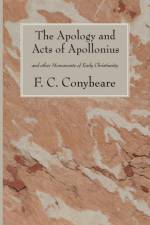
F.C. Conybeare (1856-1924) was a British Orientalist, Fellow of University College, Oxford, and Professor of Theology at the University of Oxford. He was particularly noted for his attainments in Armenian and was a member of the Venetian Armenian Academy. He is also the author of 'Myth, Magic, and Morals'; 'The Historical Christ'; and 'History of New Testament Criticism'.George Stock also authored 'Stoicism', 'The Apology of Plato', and, with Conybeare, 'A Grammar of Septuagint Greek'.
Introducing new reprints by and about Bishop James Pike: The Other Side SearchSearch is the complete story of how Bishop James A. Pike disappeared in the Judean wilderness in 1969 while pursuing his interest in the historical Jesus. His was a lifelong search for truth, and his interest in the new light cast by the Dead Sea Scrolls had caused him to reexamine who Jesus was in the context of the times in which he lived.Bishop Pike and his wife of eight months, the author of this account, wanted a direct experience of the Judean wilderness in which Jesus had fasted and meditated for forty days and nights. They drove their rented car on a little-used road and, after getting stuck, tried to walk to the caves at Qumran. Emotion radiates from every page of this swiftly paced, unsparingly honest and revealing account-a narrative that will make you not only identify and understand how it all could have happened, but also feel as if you were there yourself and-probably-would have acted as the Pikes did.The story of Search is tragic, but the author has a faith in God and in an afterlife that makes it possible for her to conclude her narrative by stating that she knows that ""Jim is alive and so am I.
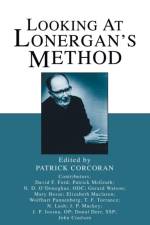
Bernard Lonergan, SJ, (1904-1984) was one of the most original and important Catholic theologians writing in English. His work in the main is directed to the difficult area of the foundations of theology. Combining the insight of St. Thomas and Kant, he has been hailed as the pioneer of a new way forward and criticized for constructing a labyrinth from which there is no exit.'Looking at Lonergan's Method' is a collection of essays by theologians, philosophers, and scientists, Catholic and Protestant, English-speaking and continental, who offer their assessment of Lonergan's important work, 'Method in Theology.' 'Looking at Lonergan's Method' is a sequel to a conference held at St. Patrick's College, Maynooth, Ireland, in the spring of 1973.
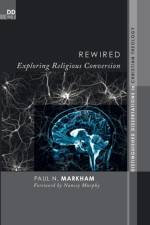
Rewired begins with the claim that contemporary views of Christian spirituality, particularly in the American evangelical tradition, concentrate too exclusively on the interior and individual nature of spiritual experience. Paul Markham argues that a reexamination of the doctrine of religious conversion is needed within American evangelicalism and finds resources for such a model in the Wesleyan theological tradition and from philosophical and scientific insights into a "nonreductive physicalist" view of human nature. In considering "data" from theology and science, this book represents an integrated work in science and religion.
Montague Rhodes James (1862-1936), the translator, was educated at King's College, Cambridge University. He continued at King's as Fellow, Lecturer, Tutor, and Provost. He spent the last part of his career as Provost of Eton. He is also the translator of 'The Apocryphal New Testament' and numerous other ancient works.
This is just what we need in our congregations and classrooms -- a truly inclusive collection of resources for children. . . . This creative collection offers some hope that the next generation will grow up convinced that God is a God for girls as well as boys and will act accordingly.-- Miriam Therese Winter, Professor of Liturgy, Worship, Spirituality, and Feminist Studies, Hartford Seminary, Hartford, CT[A] terrific collection of inclusive language resources [and] a powerful tool that needs to be in every minister's toolbox! Jann Aldredge-Clanton has made an excellent contribution to Christian worship and education.-- Cheryl Collins Patterson, Director of Early Childhood Ministries, Myers Park Baptist Church, Charlotte, NCWhat an exciting collection! I can't wait to order copies for all of our children's workers. We have waited far too long for the kind of balanced recognition of the feminine face of God reflected in this book.-- Paul Smith, Senior Pastor, Broadway Baptist Church, Kansas City, MOThese stories empower girls and boys to say, 'Yes! I'm created in the image of the living God!' . . . Parents, pastors, teachers, and anyone who loves God and children need this imaginative and faithful resource.-- Rev. Trish Holland, Associate Pastor, Central Presbyterian Church, Waco, TXJann Aldredge-Clanton, PhD, is a Chaplain Coordinator at the Baylor University Medical Center, Dallas, Texas. Her previous works include 'In Whose Image? God and Gender'. She is married and the mother of two children.
Behind the triumphant proclamation of Jesus as God in the Fourth Gospel stands a history of alienation, intense conflict, and crisis.Jerome Neyrey unearths that history by showing how the Gospel's Christology functions as a cipher for the Johannine community's estrangement -- and eventual revolt -- from its roots in the synagogue.In Part One, Neyrey offers a fresh, full exegesis of the controversies over Jesus's eschatological and divine powers, which underlay the Gospel's confession of Jesus as equal to God. Part Two deftly employs social-science modeling for a rigorous and enlightening reconstruction of the worldview of John's community as it evolved through stages of controversy that propelled Christians into an exaltation of Christ and a radical devaluation of this world -- an ideology of revolt.A paradigm of interdisciplinary biblical research, An Ideology of Revolt discloses the irony and scandal of John's community and of John's Christ.This is a daring, intriguing, and notable book, the first to treat a Johannine theme employing the methods of social-science research. While buiding on recent insights into the Gospel and its setting, Neyrey forges beyond what has been proposed to a new and bold suggestion for ways of penetrating the enigmatic view of Christ found in John. This book will become an exemplary study of Johannine theology that will provoke and lead scholarly research in years to come. The controversy it is bound to stir will help to refine methods of invesitgating other Johannine themes.-- Robert Kysar, Lutheran Theological Seminary, PhiladelphiaJerome H. Neyrey, SJ, was educated at St. Louis University (BA, MA); Regis College, Toronto (MDiv and MTh); and Yale University (PhD). He is currently Professor of New Testament at the University of Notre Dame. His other books include 'The Resurrection Stories', 'The Passion According to Luke', and 'Give God the Glory: Ancient Prayer and Worship in Cultural Perspective' (2007).
""Here is a clear presentation of the salient features of Niebuhr's thought and, at the same time, a very acute appraisal of it from the standpoint of early Reformation theology. . . . This book is written by a disciplined mind. Its thought is sharp and clear. It offers the reader an adequate summary, and a very cogent criticism of an influential, contemporary school of theology. A wide audience could profit from its reading.""--John Wild, former Professor of Philosophy, Harvard Divinity School and Northwestern University""Edward John Carnell was--in my estimation--the brightest and the best of the neo-evangelical leaders. He was a courageous thinker who was not afraid to think new thoughts in the service of biblical orthodoxy.""--Richard J. MouwPresident, Fuller Seminary""[Carnell's] fertile mind and ready pen blazed fresh theological trails as he sought to defend and proclaim the Christian faith as a world and life view."" --David Allan HubbardFormer President of Fuller Theological SeminaryEdward John Carnell was one of evangelical Protestantism's most gifted younger minds. His books have long been a bulwark of evangelical Christian faith. Not only did he unmask weaknesses of liberal and neo-orthodox views, but he also effectively displayed the power and relevance of evangelical orthodoxy.--Christianity Today""In this welcome collection of Carnell books, we are offered an inside view of a radical shift in American religious thinking -- the emergence of twentieth-century evangelicalism out of Protestant fundamentalism.""--Rudolph Nelson, author ofThe Making and Unmaking of an Evangelical Mind: The Case of Edward CarnellEdward John Carnell was an ordained Baptist minister, born in Antigo, Wisconsin. For three years he served as Associate Professor of Philosophy of Religion at Gordon Divinity School. He was appointed as the second president of Fuller Theological Seminary from 1954 to 1959. Carnell resigned his position in 1959 to give himself fully to teaching, serving as Professor of Apologetics at Fuller for eight additional years. Dr. Carnell contributed to many religious journals and authored several books including An Introduction to Christian Apologetics, Television: Servant or Master?, The Theology of Reinhold Niebuhr, A Philosophy of the Christian Religion, and Christian Commitment.
Renewal has always been a concern of God's people. This present volume, a tribute to Pentecostal Bible scholar Stanley M. Horton, offers biblical and historical glimpses into the various facets of renewal throughout the history of the church. It further provides fresh insights into the outworkings of this renewal throughout the history of the church today.Essays examining the biblical themes of renewal include J. G. McConville's study of Renewal as Restoration in Jeremiah and J. Massyngberde Ford's inquiry into the Social and Political Implications of the Miraculous in Acts. Among the essays in Part 2, Historical Studies, Donald Dean Smeeton discusses how William Tyndale was a theologian of renewal. Church historian Richard Lovelace honors Professor Horton with an essay on Baptism in the Holy Spirit and the Evangelical Tradition. Part 3, Contemporary Studies, explores some of the effects of the modern charismatic renewal, including the appearance and growth of loving communities and the impact of renewal movements on society. These essays truly take a new tack towards understanding the various faces of spiritual renewal. They offer the specialist a challenge to see things in a new light, while they afford the non-specialist some practical models of renewal that can affect how he or she views Christian experience. Overall, the editor and respective authors submit this anniversary volume to their colleague and friend, Dr. Stanley M. Horton, and to its readers everywhere with the hope that these sixteen studies may make a useful international contribution to scholarship and that 'Faces of Renewal' may be found helpful to preachers, teachers, and students of God's Word.
These days ""getting religion"" is generally considered a rather quaint thing of the past. ""Getting spirituality,"" on the other hand, is the hottest thing on the market. In fact, corporate-sponsored spiritual salve is becoming the most popular prescription for the overworked and soul-weary employees. But for many Christians, this antidote has become its own epidemic. How is this epidemic infecting the church? How should the church respond as a community of believers?According to authors Michael Budde and Robert Brimlow, the church must resist becoming the ""chaplain to capitalism."" Christianity Incorporated reminds us that Christ-centered discipleship is fundamentally at odds with consumer capitalist priorities. The church must have a mission and a voice in society that is distinct from, rather than in chorus with, watered-down corporate spirituality.Christianity Incorporated is a wake-up call for all Christians. Courageous, current, and accessible, this book will provide guidance and insight to anyone concerned with pursuing Christian discipleship in our consumer culture.""This is not a pleasant book. It is bitter and bracing like the wormwood tea my grandmother used to make--something I remember with gratitude and affection. And so I will remember this book.""--Albert Borgmann, author of Holding on to Reality""A deeply important analysis of the relationship between the ideological power of capitalism and the radical claims of discipleship central to Christian faith. Budde and Brimlow explicate the aggressive totalism of consumer capitalism in its capacity to preempt Christian faith and reduce it to a chaplaincy function for the defining ideology of our society. ""The analysis is offered on two distinct levels. First, corporations find the facade of Christianity useful and amenable for the whole-life environment they seek to create. Second, Budde and Brimlow show how Lockean (possessiveness) permeates thinking even among the churches in their critical posturing. ""The book is sure to be in dispute, but the disputes it may evoke are simply signals of the powers of the analysis offered here and the expose of what is happening among us, both practically and intellectually. The authors trust that truth is not for sale, but their own analysis is enough ground for anxiety and alertness.""--Walter Brueggemann, Columbia Theological Seminary""Budde and Brimlow have given us a dose of a new reality. Combining wit, hard social-science evidence, and a passion for true Christian discipleship, they show how the political and economic entities that promise us comfort and prosperity have, in fact, captured Christianity and warped it to their own self-serving, power-centered ends. ""Without moralisms or cant, the authors point out Christian failures in the face of late modern capitalism, showing ways in which we may yet become rich, clothed, and aware of what kills and what saves. this book is a must read for everyone who thinks that Christianity is synonymous with the celebration of American prosperity and freedom, and for everyone who has doubts but cannot quite say why.""--Thomas Heilke, University of KansasMichael Budde is Professor of Political Science at DePaul University. He is the author of The (Magic) Kingdom of God.Robert Brimlow is Assistant Professor of Philosophy at St. John Fisher College. Budde and Brimlow previously coedited The Church as Counterculture.
In the wake of suggestions that the doctrine of the atoning death of Christ did not come into being in the earliest stages of Christianity, Martin Hengel forcefully argues with impeccable scholarship that the doctrine can be traced back to the earliest church, indeed to the sayings of Jesus himself.In the first part of this examination, Hengel explores a wide area of classical antiquity. Would it have made sense to Greeks and Romans of the first century to say that Jesus had died for them? Were there points of contact in their traditions? Surveying Greek and Latin literature, Hengel shows just how widespread the theme ""dying for actually was, from Homer, through the Greek tragedians and orators, to Plutarch, Livy, and Caesar. The second part of the book is devoted to tracing the doctrine of atonement, moving back from the letters of Paul, through the pre-Pauline tradition, to Jesus.
In our communities composed of people from various cultures, countries, and backgrounds, where does the church stand? How representative is it? And how can local churches best minister and evangelize within an increasingly multicultural society?'Cultural Change and Your Church' is an invaluable resource for understanding the transformation of our cultural landscape and, most importantly, for learning how to embrace the resulting opportunities to minister to all people. Michael Pocock and Joseph Henriques consider the Bible's examples and teaching related to diversity, introduce several churches currently modeling cross-cultural ministry, and suggest hands-on ways for church leaders to encourage change and proactive thinking.This outstanding volume will challenge church leaders and lay persons alike to be culturally sensitive to America's kaleidoscope society and winsome in winning people of other backgrounds to Christ.-- Roy B. Zuck, Dallas Theological Seminary; editor, 'Bibliotheca Sacra'This volume will assist the church in carrying out the Great Commission in the 21st century.-- Manuel Ortiz, Westminster Theological SeminaryMichael Pocock and Joseph Henriques have cast strong vision for outreach into our ethnically diverse communities and given us models to guide the way.-- Aubrey Malphurs, author of 'A New Kind of Church: Understanding Models of Ministry for the 21st Cenutry'This remarkable book comes out of the trenches, not the ivory tower. As a guide for cross-cultural ministry, it is solidly based on Scripture, not the latest fads. You will be educated and motivated by reading this book. I can't recommend it too highly.-- Warren W. Wiersbe, author, Bible teacher, and speakerMichael Pocock is Senior Professor of World Missions and Intercultural Studies and chairman of the department at Dallas Theological Seminary in Dallas, Texas. Joseph Henriques is Vice President and Dean of Moody Graduate School in Chicago, Illinois.
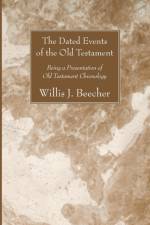
The tables in this little volume present a reasonably complete list of the events narrated in the Old Testament, with their time relations: first of all the relations of each event to other near events, Israelitish or foreign, also its date in terms of the Christian era. They also present to the eye a conspectus of the evidence by which each event is dated. - from the Preface.Willis Judson Beecher (1838-1912) was a professor of Hebrew language and literature at Auburn Theological Seminary. He delivered the Stone lectures at Princeton in 1902 (which became 'The Prophets and the Promise'). Among his other writings are 'The Teaching of Jesus concerning the Future Life' and 'Drill Lessons in Hebrew'.
Presented here is the third edition of John Brown's definitive biography of the great English preacher and writer John Bunyan (1628-1688). Bunyan is best known for his allegory 'The Pilgrim's Progress' but wrote numerous other works including Grace Abounding to the Chief of Sinners. A tinker by trade, he was a popular preacher whose call to preach was recognized by his congregation. This was no formal recognition and upon the restoration of 1660, Bunyan was imprisoned when he refused to cease preaching without a license. A twelve-year imprisonment followed, during which Bunyan did much of his writing. During his later years Bunyan enjoyed immense influence, and his services were demanded in almost every part of England. He died August 31, 1688, in London.
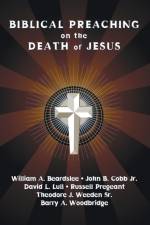
How can one preach effectively on the death of Jesus to a world jaded by stories of suffering and violence?This exegetical book -- written collectively by six authorities on Scripture -- sheds new light on the tremendous power of preaching to challenge and enlarge the world of the listeners. By probing the accounts of Jesus' death in the Gospel of Mark and in Paul's letters, 'Biblical Preaching on the Death of Jesus' uncovers a vision of divine power and justice that calls us to become partners in God's struggle to overcome suffering and injustice in the world. In the cross, the authors demonstrate, we as Christians are given a symbol of both weakness and defeat and of power and victor. This symbol is a magnificent reminder of the redemption and transformation of lives and situations through Christ's identification with suffering.With unusual success, the six authors have written the entire book as a group undertaking. The result is a testimony to the interrelatedness that is central to the vision of process theology. 'Biblical Preaching on the Death of Jesus' will be of immense help to preachers and to students and scholars of New Testament interpretation and systematic theology.
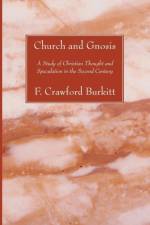
Originally presented as five lectures at Union Theological Seminary in New York, this volume by F. Crawford Burkitt considers the origins of Gnosticism within the context of early Christianity and apocalypticism. Burkitt thinks that Gnosticism was an expression of ordinary Christianity in terms and categories that suited the science and philosophy of the day. He holds that if we can make our way through the unfamiliar imagery to the ideas that they attempt to express, some of these forms will appear thoughtful to us and will show kinship with some modern philosophical and psychological conceptions. To him Gnosticism was a Christian product, albeit a heretical one. Nevertheless, he views Gnosticism as a serious attempt to fill the void left by the failure of apocalypticism and the eschatological hope
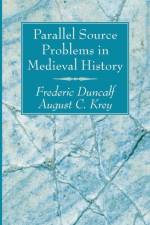
This classic in the study of medieval history provides parallel source translations, so arranged and equipped with descriptive information that effective training can be given in the use of source material. Duncalf and Krey provide five events with source problems to be considered: the coronation of Charles the Great, Canossa, the capture of Jerusalem in 1099, the departure of the University from Paris, and the coronation of Cola Di Rienzo. The intent is that students would be able to work inductively, obtaining elementary training in the fundamentals of historical method, while at the same time becoming familiar with basic medieval source material. Frederic Duncalf (1882-1963) taught at Bowdoin College in 1910-1911 and at The University of Texas at Austin from 1911 to 1913. After a brief tenure at the University of Illinois in 1913-14, he joined the permanent faculty of the University of Texas in 1914. Professor Duncalf was the coauthor of several books, including 'Old Europe and Our Nations' and 'Ancient and Medieval History: The Rise of Classical Culture and the Development of Medieval Civilization'.August C. Krey (1887-1961) was Professor of History at the University of Minnesota. His other publications include 'History and the Social Web'.
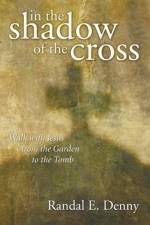
How could things deteriorate so quickly in twenty-four hours? From a banquet to a burial! The dark shadow of the executioner's cross sliced across that unforgettable day. A tragic day -- yet planned by a sovereign God.Watch anew as Jesus prays his prayer of submission to the Father's will, as he passes through the sting of betrayal, as he faces undaunted the inhumane and hateful treatment, and as he speaks unexpected last words that leave a legacy of love. Walk with Jesus from the garden to the tomb, to that first Easter morning, the dawning of hope and joy. For the shadow of the cross is the anguished prelude to the best news you will ever hear: ""He is risen!
Abonner på vårt nyhetsbrev og få rabatter og inspirasjon til din neste leseopplevelse.
Ved å abonnere godtar du vår personvernerklæring.