
Gjør som tusenvis av andre bokelskere
Abonner på vårt nyhetsbrev og få rabatter og inspirasjon til din neste leseopplevelse.
Ved å abonnere godtar du vår personvernerklæring.Du kan når som helst melde deg av våre nyhetsbrev.

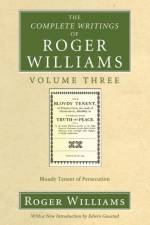
Ten years after the U. S. Civil War, a group of men in Rhode Island made a conserted effort to rescue the widely scattered writings of Roger Williams. Few sets were printed though, and under the guidance of Perry Miller, The Complete Writings of Roger Williams were brought back in 1963, but still in short numbers. The present collection now makes these volumes available to readers in their original orthography.The theme of religious liberty is dominant in these volumes, running through Williams's correspondence with John Cotton and on through his famous pair of works on The Bloudy Tenent of Persecution. All of the extant shorter writings and letters of Roger Williams are included in this set, along with two significant works resulting from his engagement with Native Americans: his seminal Key into the Language of America and Christenings Make Not Christians.""Roger Williams was one of those rare individuals who took the accepted ideas of his time and followed them to conclusions that challenged his contemporaries and still challenge us. To have his complete writings once again available is a great service to all who would understand American religion and political institutions at the deepest level.""Edmund S. MorganSterling Professor of History Emeritus Yale University""It has been America's great good fortune that Roger Williams's career stood at the beginning of its history. Just as some experience in the youth of a person is ever afterward a determinant of his personality, so the American character has inevitably been molded by the fact that in the first years of colonization there arose this prophet of religious liberty. Later generations could not forget him or deny him. The image of him in conflict with the founders of New England could not be obliterated; all later righteous men would be tormented by it until they learned to accept his basic thesis, that freedom is a condition of the spirit.""Perry Miller (1963)Roger Williams (1603-1683) grew up in Puritan circles in London, sailed to Massachusetts in 1630, and, having been banished for his controversial views on the separation of church and state, founded Rhode Island on the basis of his new principles of religious liberty.
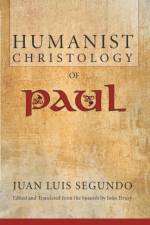
Segundo's groundbreaking exegesis focuses chiefly on Paul's treatment of sin, faith, and the impact of their intersection on human existence. In a brilliant concluding chapter, Segundo rejects liberation theology's reading of Paul as apolitical and shows how Paul's thought opens up for us a ""humanizing political realm that no repression can control or render useless."" This profound and passionately written study will fascinate advanced students and scholars for years to come.""Secundo once again demonstrates that he is among the most creative and challenging liberation theologians. As an interdisciplinary study that spans the gap between theology and exegesis, this book challenges the methodological presuppositions of both. Segundo's christology exemplifies the maturity of a movement which does not shrink from self-criticism and which has thus continued to deepen and expand its theological reflection.""--Roberto S. Goizueta, Boston College""Although an integral part of his five-volume work in christology, this work stands apart as a constructive hermeneutical study of Paul and a theological anthropological groundwork for liberation theology.""--Roger Haight, SJ, Union Theological Seminary""As a political scientist sympathetic to the theological argument of the liberationists, I have been worried by the naivete of much of their political analysis. Segundo's exploration of Romans is provocative and exciting. Paul's apparently 'apolitical' approach is shown to be extraordinarily relevant to our times. . . . A book to be read and pondered.""--David Skidmore, Drake UniversityJuan Luis Segundo completed his theological studies at Louvain and received his Doctorate of Letters from the Sorbonne. Before his death in 1996 he was chaplain to various groups in his native Uruguay. He taught theology at the Universities of Harvard, Chicago, Toronto, Montreal, Birmingham, and Sao Paulo. His other works include the five-volume Theology for Artisans of a New Humanity, The Liberation of Theology, and The Hidden Motives of Pastoral Action.
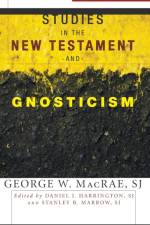
George W. MacRae, S.J. (1928-1985) was an internationally known scholar in the filed of New Testament studies. He received his doctorate from Cambridge University in New Testament studies, taught New Testament at Weston School of Theology and was Stillman Professor of Roman Catholic Studies at Harvard University, where he was serving as acting dean of the theology faculty at the time of his death. He was a renowned scholar on the Gospel of John.
Introducing the Edward Carnell Library (Nine Titles Listed Inside)The Kingdom of Love and the Pride of Life is indeed about love. Carnell evidences deep insight into what love is and what it is not. He richly develops Jesus's statement, ""Whoever becomes humble like this child is the greatest in the kingdom of heaven."" He affirms that happy children have intuitive knowledge of the nature of love, which is kindness and truth. They have a God-given ability to see through hypocrisy and recognize the good person. This book is an invaluable exposition of the biblical doctrine of love.
How shall we interpret the stories of miracles, particularly the resurrection, in this secular age? The author calls us to look beyond the fact of a miracle to faith in what the miracle means. To do this, he tells us, we must first of all try to understand what actually happened in history. However, he warns us that merely knowing what happened will not necessarily lead to vital Christian faith. In developing his theme, the author discusses the way in which each of the Four Gospels presents miracles, the meaning of exorcism in the New Testament and today, and the significance of the resurrection accounts. Throughout, the author suggests significant themes for preaching.
Written by current and former faculty members of Dallas Theological Seminary, Devotions for Kindred Spirits serves up a daily portion of spiritual bread to nourish the soul and enrich one's spiritual life. Each month's readings follow a different theme--a Bible character, an individual book of the Bible, or a group of Bible books. Each of the twelve sections provides the reader with practical expositions of God's Word written with the reader in mind. Each day's focus is on the clear understanding of the Scripture and the personal application of the Bible's truth to daily life. All believers are ""kindred"" in the deepest sense of the word. We belong to the family of God and share a common spiritual life with Christ Jesus. Let Devotions for Kindred Spirits nourish your heart with encouragement from the Bread of Life Himself.
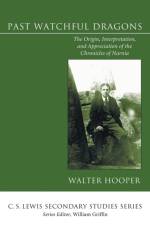
""I thought I saw how stories of this kind could steal past a certain inhibition which had paralysed much of my own religion in childhood. Why did one find it so hard to feel as one was told one ought to feel about God or about the sufferings of Christ? I thought the chief reason was that one was told one ought to. An obligation to feel can freeze feelings. And reverence itself did harm. The whole subject was associated with lowered voices, almost as if it were something medical. But supposing that by casting all these things into an imaginary world, stripping them of their stained-glass and Sunday school associations, one could make them for the first time appear in their real potency? Could one not steal past those watchful dragons? I thought one could.""--C. S. Lewis on The Chronicles of Narnia
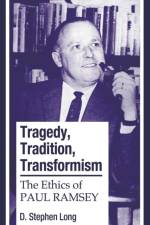
In his original interpretation and critique of Paul Ramsey's ethical thought, D. Stephen Long traces the development of one of the mid-twentieth century's most important and controversial religious social thinkers. Long examines Ramsey's early liberal idealism as well as later influences on his work, including the just war doctrine, Reinhold Niebuhr's realism, H. Richard Niebuhr's historical relativism, Karl Barth's neo-orthodoxy, and Jacques Maritain's integralism. Long overcomes obstacles confronting any Ramsey scholar--such as a theology that cannot be systematized and the complexities of Ramsey's own writing--and lends sharp insight to the philosophical, theological, and moral issues we face today. Scholars of religious ethics and intellectual thought will find this work to be essential reading.""Paul Ramsey's contribution to twentieth-century Christian ethics in this country was immense, and it deserves attention and careful study. Stephen Long provides just that--offering a thorough account of the development of Ramsey's thought, some little-known information (from the Ramsey papers at Duke) about Ramsey's early years, and the kind of probing theological analysis that Ramsey himself always attempted. This book will help make possible a continued reappropriation of the riches of Ramsey's writings.""--Gilbert Meilaender, Oberlin CollegeD. Stephen Long is Professor of Theology at Marquette University. He has published a number of works including The Goodness of God, The Divine Economy, John Wesley's Moral Theology, and Theology and Culture (Cascade Books, 2007).
ContributorsFred A. BaileyRobert F. Hull, Jr.David B. JacksonEarl LavenderJack P. LewisBill LoveRick MarrsAllan McNicolJohn McRayMichael S. MooreFrederick W. NorrisTom OlbrightCarroll D. OsburnDale PaulsKathy J. PulleyCharme E. RobartsGary SelbyJames ThompsonGerald C. TiffinJack W. VancilJames WaltersFrank WheelerJohn T. WillisTimothy M. Willis Wendell Willis
ContributorsFrederick D. AquinoAllen BlackMark C. BlackBarry L. BlackburnRandall D. ChesnuttJeffrey W. ChildersLarry ChouinardEverett FergusonThomas C. Greer Jr.Jan Faver HaileyStanley N. HeltonA. Brian McLemoreMarcia D. MooreKenneth V. NellerL. Curt NiccumCarroll D. OsburnJ. Paul PollardKathy J. PulleyGregory E. SterlingJames W. ThompsonJames WaltersJohn Willis
The Year's Work in Medievalism:2005-2006 is based upon but not restricted to the proceedings of the International Conference on Medievalism for those years. The International Conference on Medievalism is organized by Gwendolyn Morgan for the International Society for the Study of Medievalism and, for the subject volume, Karl Fugelso of Towson University (2005) and Claire Simmons of Ohio State University (2006). This first volume of this double issue focuses on medievalism as a means of exploring gender issues and identity,while the second examines the juxtaposition of modern to medieval society as a means of curing present ills.The editor of this volume and General Editor of The Year's Work in Medievalism series, Gwendolyn A. Morgan, is Professor of British Literature and Languages at Montana State University-Bozeman.
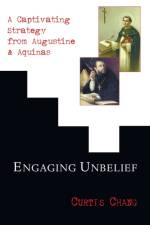
How can we present the truth about Jesus to a world that rejects all truth claims as arbitrary? Can we find way to engage in meaningful conversation without appearing arrogant or manipulative? Can we witness to the gospel without simply enlisting in the ongoing ""culture wars""?Curtis Chang has found a unique way to address these pressing questions of our age. He argues that similar challenges confronted Christians at two key moments in church history and stimulated creative responses by two monumental thinkers. Augustine (AD 413) faced a fragmenting society where pagans accused Christians of causing the mounting social ills afflicting Rome. Thomas Aquinas (AD 1259) pondered the disorienting Muslim challenge that provoked most medieval Christians to crusade rather than converse. Through a careful study of Augustine's City of God and Aquinas's Summa Contra Gentiles, Chang argues that both followed a brilliant rhetorical strategy for engaging unbelief.Such a captivating strategy is critical in our cultural context where Christian witness seems as difficult as ever. Connecting these ancient writers to the contemporary analysis of thinkers like Alasdair MacIntyre, James Davison Hunter, Lesslie Newbigin, and Stanley Hauerwas, Chang puts forth his own bold recommendations for Christian rhetoric in the twenty-first century.This book will be of vital interest to a wide audience. Scholars will find a fresh reading of these important texts. Pastors and teachers of evangelism and apologetics will discover crucial resources from our Christian past. And all Christians seeking a faithful strategy for communicating the gospel will receive inspiration and hope for today.
The book of Proverbs is a large collection made up of diverse wisdom sayings emanating from different wisdom circles in different times. The author investigates the vocabulary of the book in order to interpret the distinctive wisdom characteristics of the seven collections of Proverbs. He argues that exclusive words of a collection will best reveal the peculiar nature of the collection, and that the collections which exclusively share common wisdom words are inevitably coherent in terms of wisdom traditions.This book provides a new understanding of Proverbs, especially with regard to the relationship between collections I (chs. 1-9) and VII (ch. 31), collections II (10:1-22:16) and V (chs. 25-29), and collections VI (ch. 30) and VII (ch. 31).In addition to the investigation of more than three hundred words, this volume contains the lists of exclusive words of the seven collections and thirty-four tables of words related to wisdom. Kim's work will prove a useful resource to those who want to study Proverbs.
Joy Through the Night uniquely combines personal experience and scholarship in order that readers may face the most difficult questions Christians can ask: If God is good and all-powerful, how can the world be so shot through with evil? What about the pain of so many children and other innocent people? And why is God letting me hurt so much, so long?Aida and William Spencer draw on the suffering they have faced--including chronic disease and the untimely death of a sibling--to ask these questions on a practical, down-to-earth level. But they also draw on their extensive theological training and ministry experience to present biblical resources for dealing with suffering.In the end, this is a book both realistic and hopeful, offering reassurance that even in the midst of pain we can know joy as we learn to rely on God and the communal care of the church. It will prove a valuable aid to those who minister to them.Aida Besancon Spencer is Professor of New Testament at Gordon-Conwell Theological Seminary and author of Beyond the Curse. Her spouse, William David Spencer, is a pastor, Adjunct Associate Professor of Theology and the Arts at Gordon-Conwell, and author of Mysterium and Mystery.
Jacob Neusner makes the astonishing claim that Judeo-Christian dialogue is nonexistent. . . . This book is substantive. It suggests what both parties [Christians and Jews] might do and say as first works and words when they undertake dialogue. If they are realistic, frank, aware of their own stories, they can further such dialogue. If they keep making up 'soft versions' of their own tradition, they will produce mush or hypocrisy (from the Foreword).Instead of having dialogue, Christians and Jews have been exchanging monologues--parallel lines that never meet, says Jacob Neusner. This is because neither Christians nor Jews have viewed each other according to each other's terms. Neusner proposes a new way of beginning dialogue by suggesting that Jews and Christians exchange stories. This, he says, will help Christians and Jews understand each other and ultimately provide a way of making sense of the other party's ""nonsense.""
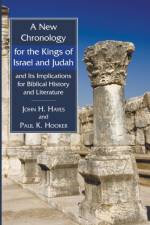
For generations, scholars have attempted to solve the chronological problems associated with ""the mysterious numbers of the Hebrew kings."" In this volume, the authors provide a coherent, sensible, and believable chronology for the Israelite and Judean kings. In their reconstruction, Hayes and Hooker take into consideration not only all of the biblical data but also all relevant ancient Near Eastern sources. Utilizing all available and reliable evidence, they establish not only regnal years for all the rulers but also specific dates for numerous events in Israelite and Judean history. In their opening chapters, the authors explain the scheme of chronological reckoning found in the books of 1-2 Kings. Their calculations are then computed without recourse to shifting understandings of the methods of reckoning or to a theory of co-regencies. The value of this work is not limited to purely chronological matters. Its implications extend to the dating of biblical sources such as the Book of the Covenant, D, P, and the Deuteronomistic History. The volume also provides insights into the socio-cultic life of biblical times.
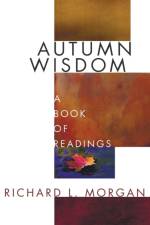
""Compelling . . . a rare find . . . a very special gift. This book of growing older stories is must reading for all ages, especially older adults. Written in fascinating style, these stories can do more to combat ageism than any book I have read in recent years."" -- Miriam Dunson, former Associate for Older Adult Ministry, Presbyterian Church (USA)""Most older people we have known may not have made the history books, but they have made the history--of our families, our churches, our communities, our nations. Richard Morgan teaches us to once again listen to the stories of our elders because they are our history, our real history. Morgan helps us see--through the stories and words of those best suited to offer useful answers, namely those who have already been there--that for Christians aging is an experience we do not have to confront alone."" -- Stephen Sapp, Dean of Religious Studies, University of Miami, Coral Gables, Florida""As one highlight involved in recording life biographies of people of all ages, Autumn Wisdom has special meaning for preserving the stories of people in the third age of life. If we don't preserve these stories in some way, they are lost. As the ancient saying states, 'If we lose the stories of older people, we lose a library!' These are eighty-one stories of older people which will not be lost."" -- Beth Sanders, Director of Life Bio (www.lifebio.com)Richard L. Morgan is a retired minister and a writer residing in a retirement community in North Huntington, Pennsylvania. He continues his work of preserving the life stories of older people through interviewing them and recording their stories for their families. He is also the author of Remembering Your Story (2nd edition). His Web site is www.richardmorganauthor.com
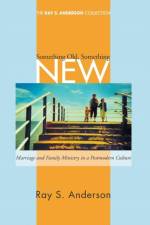
""No one has contributed more substantially to creative, orthodox Christian thinking about human nature, pastoral theology, and counseling over the past 30 years than Ray Anderson. His latest book is most welcomed, particularly given its focus on the family, a pivotal cultural institution of obvious developmental importance, which radical postmodernism has attempted to radically redefine, but which always warrants a fresh, practical, Christian approach and critique.""--Eric L. Johnson, Southern Baptist Theological Seminary""Combining the wisdom accumulated in his years as a seminary professor and scholar, pastor, and counselor, Ray Anderson has given us an outstanding book on marriage and family ministry in contemporary culture. Even more than this, it is the best statement I know of on a theology of the family, including the place of family in the church and wider society. . . . [H]ard issues in family life such as violence and abuse, homosexuality, care for the elderly, and death are addressed with a combination of biblical truth and grace. Something Old, Something New is must reading for all persons involved in ministry today!""--Jack Balswick, Fuller Graduate School of Psychology""For a Church often despairing of biblically based resources in ministering to the family in our postmodern culture, Ray Anderson's twenty-fifth book focuses on recovering a theology of the family. His seminal volume (written with Dennis Guernsey), On Being Family: Toward a Social Theology of the Family (1985), virtually created the new genre of the 'theology of the family.' In Something Old, Something New: Marriage and Family Ministry in a Postmodern Culture, we find the fruit of Anderson's mature reflections that will give hope and guidance to the Church of the twenty-first century. He discusses marriage and parenting, divorce and remarriage, singleness and cohabitation, and other issues within the diversity and relativity characterized by our postmodern context. His decades of experience as a seminary professor and church pastor enable him to articulate a theology of family ministry that offers concrete help for families, churches, and pastors based on the healing ministry of Christ in today's society.""--Chris Kettler, Friends University, and Todd Speidell, Webb School of KnoxvilleRAY S. ANDERSON (1925-2009) was Senior Professor of Theology and Ministry at Fuller Theological Seminary where he has taught for more than thirty years. He is the author of more than twenty-five books, including, The Seasons of Hope, Marriage and Family Ministry in a Postmodern Culture, The Soul of Ministry, Ministry on the Fireline, and The Shape of Practical Theology.
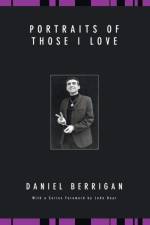
The Monk - The Artist - The Aunt - The Essayist - The Woman - The Jesuit - The Mother - Self-PortraitBerrigan's Portraits is his first completely biographical work, and it is perhaps his most intimate book. Here he speaks candidly of some of the people he has known and admired, people of fame and people who will probably never be memorialized or even remembered outside these pages.Here are Thomas Merton, Dorothy Day, Peter Maurin--guides to the vision that has inspired Berrigan's own witness to Christian peace. Here is an unknown woman painter, dying of cancer but gifted with uncanny powers of insight. Here are members of Berrigan's own family: a tough-minded aunt, who found in the currently outmoded pieties of the past a remedy for the terrible day-in-and-day-out of the religious life; his own mother, providential, foreseeing, compassionate. Lastly there is a self-portrait--not in a convex mirror, not a picture at an exhibition--of what has been the meaning of these various people and of their influence on him and his work.
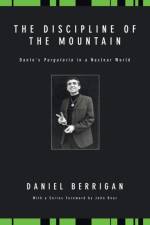
In The Discipline of the Mountain Daniel Berrigan offers ""ways of imagining our plight"" through the poetic vision of Dante's Purgatorio. There can be found ""a faithful vision, an alternative, a truthful image of God, of ourselves, of history."" Berrigan employs free, poetic adaptation of the original--its themes, moods, discourses, encounters--with a prose commentary relating the text to political-moral issues of the present day. With its themes of lust and hatred, religious strife and ecclesiastical corruption, military power and oppression, the Purgatorio is an apt allegory of modern society. Thirteenth-century kings and princes shade into twentieth-century colonels and shahs and juntas. The Discipline of the Mountain is evocatively illustrated by Robert F. McGovern.
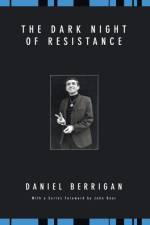
This extraordinary book, written during the four months that Daniel Berrigan was resisting arrest and living underground, is an unexpected gift. Rather than being merely an account of a fugitive's life, this is a spiritual work of the highest order, the work of an unusual man brooding over injustice, war, and love and setting forth his vision of what a man can become.His starting point is St. John of the Cross, from whom the author draws the inspiration that informs his unorthodox ""commentary"" on The Dark Night of the Soul. Here, John is the guru, the master to whom the disciple comes for enlightenment, the one whose vision inspires the disciple as he searches for his own vision.As the ""commentary"" moves on, it becomes the instrument by which Father Berrigan extends his own moral commitment to explore and reaffirm his spiritual philosophy, his concern for the world, his intense desire to awaken and move society in a nonviolent way. The result is a magnificent outpouring of prose and poetry--intense, personal, witty; the exposition of the heart of a man.
Adolf Deissmann (1866-1937) studied at Tuebingen and Berlin. In 1897 he was appointed to a professorship at Heidelberg where he taught until 1908, when he was called to succeed Bernhard Weiss at Berlin. Deissmann made important contributions to biblical philology and sociology. His research into the papyri remains important for Biblical scholarship today.
Originally published as a special issue of Exemplaria, these essays deserve a much wider audience. They deal with Jewish studies and the medieval historian, rabbinic ecclesiology and the synods of Nicaea and Yavneh, Jewish women martyrs, sexual politics and marriage, late-medieval Castile, nation and miscegenation, cultural hybridity, and Kabbalistic anthropology. The authors are widely published scholars and critics in various fields of Jewish studies. The volume will be valuable to many scholars, teachers, and students. The essays open up so many interesting avenues of inquiry that they will enlighten and challenge not only specialists in Jewish studies but also scholars, critics, students, and teachers of medieval literature and Jewish literature, medieval history and culture, women's studies, and religious studies.""This superb collection of essays exemplifies the benefits of employing critical theory in Jewish studies research. It also demonstrates the importance of including the textual traditions of Jewish culture in any serious study of the middle ages. The essays will appeal to medievalists, intellectual historians, literary theorists, researchers in gender studies, religious studies specialists, and those engaged in cultural studies. Anyone working in Jewish studies will profit from the authors' textually grounded, theoretically sophisticated analysis."" -- Robert A. Daum Diamond Chair in Jewish Law & Ethics University of British ColumbiaSheila Delany is Professor of English Emerita at Simon Fraser University. Her many books, articles, essays, and reviews helped open up Anglophone medieval studies, especially in Chaucer, to modern critical theory, gender-oriented work, andclass-based historicism.
In this work about a land of two dimensions we have at once social satire, as pointed today as when it was written, and insights into theoretical science. The author, posing as a square inhabitant of Flatland, first describes his country. Then he tells of his visions of Lineland and Pointland, his trip to Spaceland, and his fate when he preaches the Third dimension in Flatland.
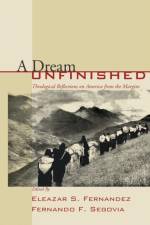
Theologians ""on the margins"" reflect how their experience of ethnic and racial minority has influenced their theology and how this relates to the ""American Dream.""""This book works like a most welcome midwife for the 21st century, birthing 'America' and 'theology' from lives that are African-American, Asian-American, Latino/a, and more. You thought you knew what 'America' and 'theology' were. Think again, and welcome the gift of this new book!""--Mark Taylor, Princeton Theological Seminary""This book shows the future of North American theology--and it not only works but thrives.""--David Tracy, University of Chicago Divinity School""The collective voice of A Dream Unfinished is the voice of the 21st century asking, 'Why are we always only given two choices? Why just margin or center, white or nonwhite, rich or poor; why always just one or the other?' And that leads to the most liberating question of all: 'Who set things up this way?' What an enormous help this book is.""--Susan Brooks Thistlethwaite, Chicago Theological SeminaryEleazar S. Fernandez is Professor of Constructive Theology at the United Theological Seminary of the Twin Cities, New Brighton, Minnesota. Fernando F. Segovia is Oberlin Graduate Professor of New Testament and Early Christianity at Vanderbilt University Divinity School.
Abonner på vårt nyhetsbrev og få rabatter og inspirasjon til din neste leseopplevelse.
Ved å abonnere godtar du vår personvernerklæring.