















Gjør som tusenvis av andre bokelskere
Abonner på vårt nyhetsbrev og få rabatter og inspirasjon til din neste leseopplevelse.
Ved å abonnere godtar du vår personvernerklæring.Du kan når som helst melde deg av våre nyhetsbrev.

Every generation has sought to make teaching and learning more inclusive and equitable, but pesky questions always remain, such as, how can teaching and learning be conducted in ways that satisfies and respects everyone? What are the parameters of an inclusive pedagogy? Who defines its principles? How should these principles be taught and by whom? And by what authority shall they be grounded? These types of thorny questions occupy the essence of educators and the authors of this book. This book is about teachers, educators, and topics related to inclusion. Teachers and educators have a lot to know, therefore the topics are broad and relevant to the times. What should teachers know about special needs, religion and spirituality, Aboriginality, the environment, tolerance, and school choice? Although teachers have knowledge of their subject matter, knowledge alone is not sufficient. They must know and understand how people learn. A teacher must also care deeply about who they teach. And this ""teacher knowledge"" grows and changes over time as teachers become more experienced, informed, skilled, and wiser. At the same time no teacher preparation will be sufficient because there will always be discussions that were never had and knowledge that was never shared. Time has its costs and there is only so much a formal education can prepare someone. This book helps to satisfy a cavity in learning for teachers and educators in general.""Different perspectives in education are necessary, not to reach some common synthesis, but to make our different 'faith' commitments apparent, especially to those who imagine they represent Reason, pure and simple. This book makes the issues clearer than we've seen them before.""--C. John Sommerville, Emeritus, University of FloridaMatthew Etherington is an Associate Professor of Education at Trinity Western University, Langley, British Columbia. He is the director of the Institute of Indigenous Issues and Perspectives.
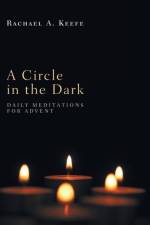
This book invites the reader to experience Advent as a spiritual journey to Bethlehem, a journey from darkness to light. Each week explores the traditional themes of Hope, Peace, Joy, and Love that are present throughout the season. It begins on the first Sunday of Advent inviting the reader to be open to new or unexpected encounters with God, to find the mystery and wonder so often missed in day-to-day life. Each daily meditation offers a poetic, insightful reflection on scripture verses that voice the human spirit's longing for the Holy Spirit--the continued struggle to find light in a dark world. As the journey unfolds, the reader will walk through the cold bleakness of the winter season and the bitterness of despair, guided by the hope, peace, joy, and love promised in Christ, fulfilled on Christmas Day. Those familiar with biblical texts will be drawn in by the vivid images and relevant messages of the poems. Similarly, those for whom biblical texts are less well known will find intriguing and accessible images that might prompt a desire to learn more. Laypeople and clergy across denominations will find comfort and challenge in the familiar being made new should they accept the invitation to seek the Light of Christ on the long, often difficult, journey to Bethlehem.
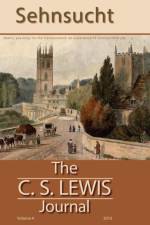
Sehnsucht: The C. S. Lewis Journal, established by the Arizona C. S. Lewis Society in 2007, is the only peer-reviewed journal devoted to the study of C. S. Lewis and his writings published anywhere in the world. It exists to promote literary, theological, historical, biographical, philosophical, bibliographical and cultural interest (broadly defined) in Lewis and his writings. The journal includes articles, review essays, book reviews, film reviews and play reviews, bibliographical material, poetry, interviews, editorials, and announcements of Lewis-related conferences, events and publications. Its readership is aimed at academic scholars from a wide variety of disciplines, as well as learned non-scholars and Lewis enthusiasts. At this time, Sehnsucht is published once a year.
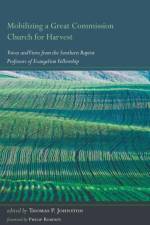
Mobilizing a Great Commission Church for Harvest addresses practical aspects of evangelism in the local church, with the voices and views of nineteen current Southern Baptist professors of evangelism. They address important topics to local church evangelism, such as ""Invitations with integrity"" and ""Preparing for Spiritual Warfare."" Key leaders and professors write in their areas of expertise. For examples, Alvin Reid writes on ""Mobilizing Students,"" David Wheeler on ""Servant Evangelism,"" Josef Solc on ""Sports Evangelism,"" and Darrell Robinson on ""The Evangelist."" In addition, the book begins and ends with two different applications of Matthew's Great Commission.Mobilizing a Great Commission Church for Harvest is a gold mine of information for both pastor and deacon, as it is for students considering the importance of evangelism to local church ministry. It is fresh, new, and true--as all of its authors teach at SBC-affiliated schools and are grounded in the Bible as the inerrant Word of God!
The United Church of Christ was formed in 1957 to be first and foremost a proactive agent in the often tangled but nonetheless breathtaking ministry and mission of ecumenicity in the pursuit of ever greater visible unity among the diversity of Christian churches. This singular task of ecumenicity is arguably the most crucial in the formulation of an ecclesiology essential to the United Church of Christ as a "united and uniting" church; a mission Albert Walsh refers to in this book as her God given "vision-and-vocation." In United and Uniting, Walsh contends that the identity and self-understanding of the UCC at both national and local levels is best comprehended as a "Christ-centered" and "conciliar" fellowship, and therefore her ecclesiology must be fundamentally ecumenical. A Christ-centered ecumenicity must shape, inform, and characterize the whole of her ecclesiology, and membership in the UCC is defined almost exclusively in terms of a "conciliar" identity. Walsh advocates a return to ecumenical formation at the level of the grassroots or membership in the local congregation as holding the greatest promise for furtherance of the wider ecumenical mission.
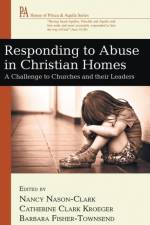
Domestic abuse is a horror. It lurks beneath the surface of our collective existence, sometimes raising its ugly head where least expected-in the church or within families of faith. Are we-individually or collectively-ready to respond? What can, or should, congregations and their pastoral leaders do? And, as we survey the Christian landscape across the United States and Canada, are we as the community of faith stepping up to the challenge presented by violence in the family?There is no easy answer to the problems that surface when abuse impacts the Christian family. But each of the authors contributing to this volume believes fervently that it is imperative that followers of Jesus and their spiritual shepherds respond to the cries for help. To respond well necessitates both knowledge and a willingness to act.This book is here to help. It represents a collective effort to bring all of us a step farther in our journey of walking with Christ over a sea of troubled waters. None of us know as much as we should, but all of us can learn from one another. Throughout the collection we provide an opportunity to examine a diversity of perspectives, with the hope that each will in some way advance our understanding of the complexity of domestic violence issues in our midst-within our churches and the communities where our churches minister.
The story of Koinonia Farm and Clarence Jordan is as important today as it was in 1971 when Dallas Lee first recorded the history, shortly after Jordan's death. This is a story of the enduring witness of Christian communal living that continues to influence the faithful around the world.In 1942, Clarence and others set out to live as the early apostles, following Christ's teaching and sharing all things in common. Everyone was welcome. When word spread that a Negro farmhand shared their communal table, the consequences exploded fast and hard as the Ku Klux Klan came calling with bombs, gunfire, and boycott.This edition concludes with a new afterword by director of Koinonia Farm Bren Dubay that highlights the continuity of Koinonia's originalmission today, despite all the challenges and changes since 1942.
Sehnsucht: The C. S. Lewis Journal, established by the Arizona C. S. Lewis Society in 2007, is the only peer-reviewed journal devoted to the study of C. S. Lewis and his writings published anywhere in the world. It exists to promote literary, theological, historical, biographical, philosophical, bibliographical and cultural interest (broadly defined) in Lewis and his writings. The journal includes articles, review essays, book reviews, film reviews and play reviews, bibliographical material, poetry, interviews, editorials, and announcements of Lewis-related conferences, events and publications. Its readership is aimed at academic scholars from a wide variety of disciplines, as well as learned non-scholars and Lewis enthusiasts. At this time, Sehnsucht is published once a year.Grayson Carter is Associate Professor of Church History at Fuller Theological Seminary, where he has taught since 2002. Since its inception, Carter has served as General Editor of Sehnsucht: The C. S. Lewis Journal, the only peer-reviewed journal devoted to the study of C.S. Lewis and his writings published anywhere in the world.
When Gavin Barnett was four years of age, Fred, his missionary father, was taken by a crocodile in the Zambezi river at Chavuma in the Northwest Province of Northern Rhodesia (now Zambia). As the oldest of four children, he was suddenly propelled into cooperating with his remarkable mother in facing the family's formidable challenges. Instead of returning to her native Australia where her talents could have ensured her a comfortable career, his mother chose to continue her work sustained by here steadfast faith and determination to fulfill her mission. Dorothy's sterling character and example of fortitude had a salutary effect on Gavin. This is the story of his mother's life as seen through the author's eyes. Poignant, moving, and wry in parts, the story unfolds in the harsh and inhospitable landscape of mid-twentieth century Africa with its tribalism and a constant struggle for survival against a hostile environment, its tropical diseases, superstitious practices, dangers from wild animals, and travel hazards. Schooled at the central African Sakeji Missionary School and Ermelo High School in South Africa, where he matriculated as Dux Scholar, Gavin Barnett embarked on a business career. He graduated and later became a Fellow and Honorary Life Member of the Institute of Chartered Secretaries and Administrators (ICSA). Rising to the position of executive director of a listed retail organization in South Africa, Gavin held portfolios of retail operations, human resources, and manufacturing over a period of twenty-one years. While running a consulting business which he founded at the age of 56, Gavin used his client base to research the viability in new ventures. The result was an academically recognized dissertation entitled 'Predictive Criteria for Entrepreneurial Performance.' His leadership in professional business administration was recognized in his election to the position of International President of ICSA in 1993.
In this brilliant work, Gerstenberger examines the Israelite legal tradition. He argues against the thesis that the so-called apodicitic laws in the Old Testament were distinctively Israelite, a single form, or originating in the liturgy and covenant-making. Using the story of Jonadab and the Rechabites in Jeremiah 35 and the incest prohibitions in Leviticus 18, the author argues that the setting in life of prohibitions was the ethos of the tribe. The literary settings in the Covenant Code, Holiness Code, and Deuteronomic are all secondary uses.
In this book, Lochman presents an ethic illuminated by the Ten Commandments. In wrestling to discover the meaning of human life, both individual and social, his deepest concern has been with freedom under the law. Lochman points out that no human society, however well equipped technologically, can exist without a moral basis, without convictions that are more than mere opportunism, pragmatism, and calculated self-interest. This moral basis is provided by the Ten Commandments, the Magna Charta of freedom.Lochman discusses current problem areas of personal, sexual, and social ethics: worship of false gods, anxiety, the work ethic and the cult of success, murder, terrorism, suicide, abortion, euthanasia, the death penalty, war, the new morality, and new understandings of shared life in marriage.We have not been left to fend for ourselves in the ordering of our lives. The guidance afforded by the Ten Commandments, far from hindering or enslaving, in fact encourages and liberates us. The Ten Commandments are 'signposts to freedom.'--from the PrefaceOf the fifty or more books I have read on the Ten Commandments, Jan Milic Lochman's Signposts to Freedom has to be in the top two or three. His biblical scholarship is impeccable. His grasp of the positive, inspiring meaning of the commands is second to none. And his ability to communicate these powerful insights to a broad readership is impressive. Four stars on all counts!-David W. Gill, author of Doing Right: Practicing Ethical Principles All who teach the faith and all who seek faith and understanding will find treasure here.--David Lewis, translatorJan Milic Lochman was a professor of theology at Basel, lived in Czechoslovakia until 1968 where he was a pastor and professor. He also wrote 'Living Roots of Reformation', 'Encountering Marx, and Church in a Marxist Society.'
This volume celebrates the unique contributions of Helmut Koester, who has been a leader for fifty years as scholar, professor, editor, and mentor. Having studied at the universities of Heidelberg and Marburg, Koester was a student of both Gunther Bornkamm and Rudolf Bultmann. He began teaching at Harvard Divinity School in 1958, where he is currently John H. Morison Research Professor of Divinity and Winn Research Professor of Ecclesiastical History. He is the chair of the New Testament Editorial Board of Hermeneia: A Critical and Historical Commentary on the Bible and long-time editor of Harvard Theological Review (1975-1999). Among his numerous publications are Trajectories through Early Christianity (with James M. Robinson); Ancient Christian Gospels; History, Culture, and Religion of the Hellenistic Age; History and Literature of Early Christianity; and The Cities of Paul: Images and Interpretations from the Harvard Archaeology Project (CD-ROM). He was President of the Society of Biblical Literature in 1991 and was awarded an honorary doctorate from Humboldt University (Berlin) in 2006.
This book represents the history of the New England theology from 1750 to 1830, revealing a significant conflict of attitudes and ideals involved in the decline of orthodoxy and the rise of the modern spirit in religion. It follows the course of theological discussion from Jonathan Edwards to Nathaniel W. Taylor, in whom liberalism triumphed. It shows how and why historical Christianity became unpalatable and unreasonable to the cultured in New England, how a great spirit was lost with the passing of the Edwardean theology, and how a new Christianity appeared in the place of the old. The author gives some clues to the source and nature of the weaknesses in present-day religious thought and makes a timely contribution to the launching of that reconstruction in Protestant theology, which is, admittedly, very much needed.Joseph Haroutunian's 'Piety Versus Moralism 'presents a signal interpretation of developments in American Protestant theology from Jonathan Edwards to his successors in the early national period. As intellectual history, it stands as one of the most compelling analyses of a transition from Edwards's Augustinian piety to the rational moralism of his successors. As theological history, it offers an acute dissection of the challenges to a truly evangelical witness in the American context. Mark ValeriUnion Theological Seminary in Virginia""This is the most influential book ever written on the New England Theology, America's first indigenous school of Christian thought. I continue to disagree with Haroutunian's manner of speaking of the 'passing' of this theology, but all will be grateful to Wipf and Stock Publishers for this timely new edition of a truly classic piece of American scholarship.Douglas A. Sweeney, Trinity Evangelical Divinity SchoolJoseph Haroutunian (1904-1968) was an American Presbyterian theologian known for his sharp mind and lively spirit. Haroutunian's Columbia University Ph.D. dissertation, supervised by Herbert W. Schneider, was published as 'Piety Versus Moralism. ' Haroutunian taught at Wellesley College, McCormick Theological Seminary, and the University of Chicago, where he was Professor of Systematic Theology.
The history of Jews from the period of the Second Temple to the rise of Islam. From 'A History of the Mishnaic Law of Appointed Times, Part 1' This volume introduces the sources of Judaism in late antiquity to scholars in adjacent fields, such as the study of the Old and New Testaments, Ancient History, the ancient Near East, and the history of religion. In two volumes, leading American, Israeli, and European specialists in the history, literature, theology, and archaeology of Judaism offer factual answers to the two questions that the study of any religion in ancient times must raise. The first is, what are the sources -- written and in material culture -- that inform us about that religion? The second is, how have we to understand those sources in reconstructing the history of various Judaic systems in antiquity. The chapters set forth in simple statements, intelligible to non-specialists, the facts which the sources provide. Because of the nature of the subject and acute interest in it, the specialists also raise some questions particular to the study of Judaism, dealing with its historical relationship with nascent Christianity in New Testament times. The work forms the starting point for the study of all the principal questions concerning Judaism in late antiquity and sets forth the most current, critical results of scholarship.
The history of Jews from the period of the Second Temple to the rise of Islam. From 'A History of the Mishnaic Law of Appointed Times, Part 1' This volume introduces the sources of Judaism in late antiquity to scholars in adjacent fields, such as the study of the Old and New Testaments, Ancient History, the ancient Near East, and the history of religion. In two volumes, leading American, Israeli, and European specialists in the history, literature, theology, and archaeology of Judaism offer factual answers to the two questions that the study of any religion in ancient times must raise. The first is, what are the sources -- written and in material culture -- that inform us about that religion? The second is, how have we to understand those sources in reconstructing the history of various Judaic systems in antiquity. The chapters set forth in simple statements, intelligible to non-specialists, the facts which the sources provide. Because of the nature of the subject and acute interest in it, the specialists also raise some questions particular to the study of Judaism, dealing with its historical relationship with nascent Christianity in New Testament times. The work forms the starting point for the study of all the principal questions concerning Judaism in late antiquity and sets forth the most current, critical results of scholarship.
The history of Jews from the period of the Second Temple to the rise of Islam. From 'A History of the Mishnaic Law of Appointed Times, Part 1' This volume introduces the sources of Judaism in late antiquity to scholars in adjacent fields, such as the study of the Old and New Testaments, Ancient History, the ancient Near East, and the history of religion. In two volumes, leading American, Israeli, and European specialists in the history, literature, theology, and archaeology of Judaism offer factual answers to the two questions that the study of any religion in ancient times must raise. The first is, what are the sources -- written and in material culture -- that inform us about that religion? The second is, how have we to understand those sources in reconstructing the history of various Judaic systems in antiquity. The chapters set forth in simple statements, intelligible to non-specialists, the facts which the sources provide. Because of the nature of the subject and acute interest in it, the specialists also raise some questions particular to the study of Judaism, dealing with its historical relationship with nascent Christianity in New Testament times. The work forms the starting point for the study of all the principal questions concerning Judaism in late antiquity and sets forth the most current, critical results of scholarship.
The history of Jews from the period of the Second Temple to the rise of Islam. From 'A History of the Mishnaic Law of Appointed Times, Part 1' This volume introduces the sources of Judaism in late antiquity to scholars in adjacent fields, such as the study of the Old and New Testaments, Ancient History, the ancient Near East, and the history of religion. In two volumes, leading American, Israeli, and European specialists in the history, literature, theology, and archaeology of Judaism offer factual answers to the two questions that the study of any religion in ancient times must raise. The first is, what are the sources -- written and in material culture -- that inform us about that religion? The second is, how have we to understand those sources in reconstructing the history of various Judaic systems in antiquity. The chapters set forth in simple statements, intelligible to non-specialists, the facts which the sources provide. Because of the nature of the subject and acute interest in it, the specialists also raise some questions particular to the study of Judaism, dealing with its historical relationship with nascent Christianity in New Testament times. The work forms the starting point for the study of all the principal questions concerning Judaism in late antiquity and sets forth the most current, critical results of scholarship.
The history of Jews from the period of the Second Temple to the rise of Islam. From 'A History of the Mishnaic Law of Appointed Times, Part 1' This volume introduces the sources of Judaism in late antiquity to scholars in adjacent fields, such as the study of the Old and New Testaments, Ancient History, the ancient Near East, and the history of religion. In two volumes, leading American, Israeli, and European specialists in the history, literature, theology, and archaeology of Judaism offer factual answers to the two questions that the study of any religion in ancient times must raise. The first is, what are the sources -- written and in material culture -- that inform us about that religion? The second is, how have we to understand those sources in reconstructing the history of various Judaic systems in antiquity. The chapters set forth in simple statements, intelligible to non-specialists, the facts which the sources provide. Because of the nature of the subject and acute interest in it, the specialists also raise some questions particular to the study of Judaism, dealing with its historical relationship with nascent Christianity in New Testament times. The work forms the starting point for the study of all the principal questions concerning Judaism in late antiquity and sets forth the most current, critical results of scholarship.
The history of Jews from the period of the Second Temple to the rise of Islam. From 'A History of the Mishnaic Law of Appointed Times, Part 1' This volume introduces the sources of Judaism in late antiquity to scholars in adjacent fields, such as the study of the Old and New Testaments, Ancient History, the ancient Near East, and the history of religion. In two volumes, leading American, Israeli, and European specialists in the history, literature, theology, and archaeology of Judaism offer factual answers to the two questions that the study of any religion in ancient times must raise. The first is, what are the sources -- written and in material culture -- that inform us about that religion? The second is, how have we to understand those sources in reconstructing the history of various Judaic systems in antiquity. The chapters set forth in simple statements, intelligible to non-specialists, the facts which the sources provide. Because of the nature of the subject and acute interest in it, the specialists also raise some questions particular to the study of Judaism, dealing with its historical relationship with nascent Christianity in New Testament times. The work forms the starting point for the study of all the principal questions concerning Judaism in late antiquity and sets forth the most current, critical results of scholarship.
The history of Jews from the period of the Second Temple to the rise of Islam. From 'A History of the Mishnaic Law of Appointed Times, Part 1' This volume introduces the sources of Judaism in late antiquity to scholars in adjacent fields, such as the study of the Old and New Testaments, Ancient History, the ancient Near East, and the history of religion. In two volumes, leading American, Israeli, and European specialists in the history, literature, theology, and archaeology of Judaism offer factual answers to the two questions that the study of any religion in ancient times must raise. The first is, what are the sources -- written and in material culture -- that inform us about that religion? The second is, how have we to understand those sources in reconstructing the history of various Judaic systems in antiquity. The chapters set forth in simple statements, intelligible to non-specialists, the facts which the sources provide. Because of the nature of the subject and acute interest in it, the specialists also raise some questions particular to the study of Judaism, dealing with its historical relationship with nascent Christianity in New Testament times. The work forms the starting point for the study of all the principal questions concerning Judaism in late antiquity and sets forth the most current, critical results of scholarship.
The history of Jews from the period of the Second Temple to the rise of Islam. From 'A History of the Mishnaic Law of Appointed Times, Part 1' This volume introduces the sources of Judaism in late antiquity to scholars in adjacent fields, such as the study of the Old and New Testaments, Ancient History, the ancient Near East, and the history of religion. In two volumes, leading American, Israeli, and European specialists in the history, literature, theology, and archaeology of Judaism offer factual answers to the two questions that the study of any religion in ancient times must raise. The first is, what are the sources -- written and in material culture -- that inform us about that religion? The second is, how have we to understand those sources in reconstructing the history of various Judaic systems in antiquity. The chapters set forth in simple statements, intelligible to non-specialists, the facts which the sources provide. Because of the nature of the subject and acute interest in it, the specialists also raise some questions particular to the study of Judaism, dealing with its historical relationship with nascent Christianity in New Testament times. The work forms the starting point for the study of all the principal questions concerning Judaism in late antiquity and sets forth the most current, critical results of scholarship.
The history of Jews from the period of the Second Temple to the rise of Islam. From 'A History of the Mishnaic Law of Appointed Times, Part 1' This volume introduces the sources of Judaism in late antiquity to scholars in adjacent fields, such as the study of the Old and New Testaments, Ancient History, the ancient Near East, and the history of religion. In two volumes, leading American, Israeli, and European specialists in the history, literature, theology, and archaeology of Judaism offer factual answers to the two questions that the study of any religion in ancient times must raise. The first is, what are the sources -- written and in material culture -- that inform us about that religion? The second is, how have we to understand those sources in reconstructing the history of various Judaic systems in antiquity. The chapters set forth in simple statements, intelligible to non-specialists, the facts which the sources provide. Because of the nature of the subject and acute interest in it, the specialists also raise some questions particular to the study of Judaism, dealing with its historical relationship with nascent Christianity in New Testament times. The work forms the starting point for the study of all the principal questions concerning Judaism in late antiquity and sets forth the most current, critical results of scholarship.
The history of Jews from the period of the Second Temple to the rise of Islam. From 'A History of the Mishnaic Law of Appointed Times, Part 1' This volume introduces the sources of Judaism in late antiquity to scholars in adjacent fields, such as the study of the Old and New Testaments, Ancient History, the ancient Near East, and the history of religion. In two volumes, leading American, Israeli, and European specialists in the history, literature, theology, and archaeology of Judaism offer factual answers to the two questions that the study of any religion in ancient times must raise. The first is, what are the sources -- written and in material culture -- that inform us about that religion? The second is, how have we to understand those sources in reconstructing the history of various Judaic systems in antiquity. The chapters set forth in simple statements, intelligible to non-specialists, the facts which the sources provide. Because of the nature of the subject and acute interest in it, the specialists also raise some questions particular to the study of Judaism, dealing with its historical relationship with nascent Christianity in New Testament times. The work forms the starting point for the study of all the principal questions concerning Judaism in late antiquity and sets forth the most current, critical results of scholarship.
The history of Jews from the period of the Second Temple to the rise of Islam. From 'A History of the Mishnaic Law of Appointed Times, Part 1' This volume introduces the sources of Judaism in late antiquity to scholars in adjacent fields, such as the study of the Old and New Testaments, Ancient History, the ancient Near East, and the history of religion. In two volumes, leading American, Israeli, and European specialists in the history, literature, theology, and archaeology of Judaism offer factual answers to the two questions that the study of any religion in ancient times must raise. The first is, what are the sources -- written and in material culture -- that inform us about that religion? The second is, how have we to understand those sources in reconstructing the history of various Judaic systems in antiquity. The chapters set forth in simple statements, intelligible to non-specialists, the facts which the sources provide. Because of the nature of the subject and acute interest in it, the specialists also raise some questions particular to the study of Judaism, dealing with its historical relationship with nascent Christianity in New Testament times. The work forms the starting point for the study of all the principal questions concerning Judaism in late antiquity and sets forth the most current, critical results of scholarship.
The history of Jews from the period of the Second Temple to the rise of Islam. From 'A History of the Mishnaic Law of Appointed Times, Part 1' This volume introduces the sources of Judaism in late antiquity to scholars in adjacent fields, such as the study of the Old and New Testaments, Ancient History, the ancient Near East, and the history of religion. In two volumes, leading American, Israeli, and European specialists in the history, literature, theology, and archaeology of Judaism offer factual answers to the two questions that the study of any religion in ancient times must raise. The first is, what are the sources -- written and in material culture -- that inform us about that religion? The second is, how have we to understand those sources in reconstructing the history of various Judaic systems in antiquity. The chapters set forth in simple statements, intelligible to non-specialists, the facts which the sources provide. Because of the nature of the subject and acute interest in it, the specialists also raise some questions particular to the study of Judaism, dealing with its historical relationship with nascent Christianity in New Testament times. The work forms the starting point for the study of all the principal questions concerning Judaism in late antiquity and sets forth the most current, critical results of scholarship.
The history of Jews from the period of the Second Temple to the rise of Islam. From 'A History of the Mishnaic Law of Appointed Times, Part 1' This volume introduces the sources of Judaism in late antiquity to scholars in adjacent fields, such as the study of the Old and New Testaments, Ancient History, the ancient Near East, and the history of religion. In two volumes, leading American, Israeli, and European specialists in the history, literature, theology, and archaeology of Judaism offer factual answers to the two questions that the study of any religion in ancient times must raise. The first is, what are the sources -- written and in material culture -- that inform us about that religion? The second is, how have we to understand those sources in reconstructing the history of various Judaic systems in antiquity. The chapters set forth in simple statements, intelligible to non-specialists, the facts which the sources provide. Because of the nature of the subject and acute interest in it, the specialists also raise some questions particular to the study of Judaism, dealing with its historical relationship with nascent Christianity in New Testament times. The work forms the starting point for the study of all the principal questions concerning Judaism in late antiquity and sets forth the most current, critical results of scholarship.
The history of Jews from the period of the Second Temple to the rise of Islam. From 'A History of the Mishnaic Law of Appointed Times, Part 1' This volume introduces the sources of Judaism in late antiquity to scholars in adjacent fields, such as the study of the Old and New Testaments, Ancient History, the ancient Near East, and the history of religion. In two volumes, leading American, Israeli, and European specialists in the history, literature, theology, and archaeology of Judaism offer factual answers to the two questions that the study of any religion in ancient times must raise. The first is, what are the sources -- written and in material culture -- that inform us about that religion? The second is, how have we to understand those sources in reconstructing the history of various Judaic systems in antiquity. The chapters set forth in simple statements, intelligible to non-specialists, the facts which the sources provide. Because of the nature of the subject and acute interest in it, the specialists also raise some questions particular to the study of Judaism, dealing with its historical relationship with nascent Christianity in New Testament times. The work forms the starting point for the study of all the principal questions concerning Judaism in late antiquity and sets forth the most current, critical results of scholarship.
This publication of 'Women: Alcohol and other Drugs' is a contribution by the Alcohol and Drug Problems Association (ADPA) to the understanding of and in response to gender differences in addictions. Here is a tool for understanding and a guide for more effective treatment of women by the programs and professionals in the drug and alcohol treatment field. Authored by women for the treatment of women, this volume deals with all aspects of the field including research, intervention, treatment, prevention, and education at the community, academic, government, public, and private levels.
The history of Jews from the period of the Second Temple to the rise of Islam. From 'A History of the Mishnaic Law of Appointed Times, Part 1' This volume introduces the sources of Judaism in late antiquity to scholars in adjacent fields, such as the study of the Old and New Testaments, Ancient History, the ancient Near East, and the history of religion. In two volumes, leading American, Israeli, and European specialists in the history, literature, theology, and archaeology of Judaism offer factual answers to the two questions that the study of any religion in ancient times must raise. The first is, what are the sources -- written and in material culture -- that inform us about that religion? The second is, how have we to understand those sources in reconstructing the history of various Judaic systems in antiquity. The chapters set forth in simple statements, intelligible to non-specialists, the facts which the sources provide. Because of the nature of the subject and acute interest in it, the specialists also raise some questions particular to the study of Judaism, dealing with its historical relationship with nascent Christianity in New Testament times. The work forms the starting point for the study of all the principal questions concerning Judaism in late antiquity and sets forth the most current, critical results of scholarship.
The theology of the cross is indisputably a trendy concept today. Numerous seminars, books, and dissertations tackle the topic. But The Theology of the Cross in Historical Perspective demonstrates that theology of the cross is no passing fancy. Theologies of the cross appear at the beginnings of the church, in the sixteenth-century reformations of the church, and in the more contemporary modernization of the church. Without theologies of the cross, what the church is called to be and to preach becomes unclear. So then, what is the theology of the cross?Anna Madsen surveys the theology of the cross in the thinking of Paul and Luther. She also outlines several important twentieth-century contributions to the subject. On the basis of her analysis, Madsen suggests that the theology of the cross reveals God to be found even in death. In death, after all, boundaries disappear. The theology of the cross assures Christians that God is present in the death of sin and in the realities of suffering and uncertainty. Given that it announces God's presence, the theology of the cross is ultimately a theology of grace, freedom, and trust.
Abonner på vårt nyhetsbrev og få rabatter og inspirasjon til din neste leseopplevelse.
Ved å abonnere godtar du vår personvernerklæring.